
The role of Research in OP Experiments OPERATIONAL
- Slides: 26
The role of Research in OP
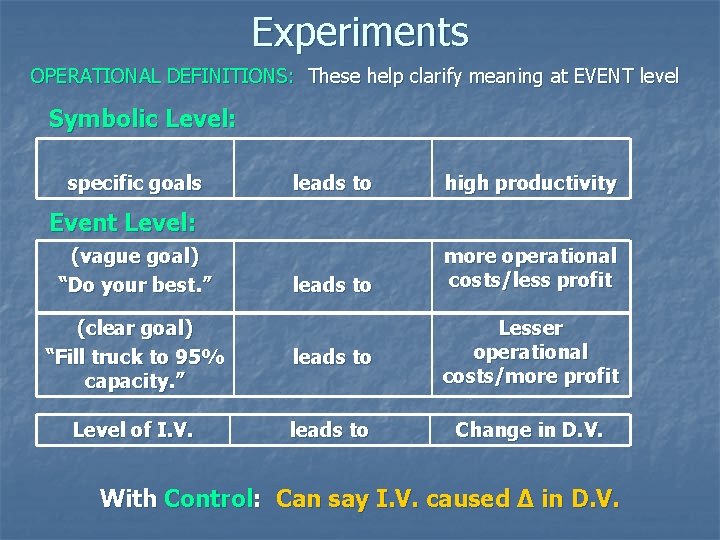
Experiments OPERATIONAL DEFINITIONS: These help clarify meaning at EVENT level Symbolic Level: specific goals leads to high productivity leads to more operational costs/less profit Event Level: (vague goal) “Do your best. ” (clear goal) “Fill truck to 95% capacity. ” leads to Lesser operational costs/more profit Level of I. V. leads to Change in D. V. With Control: Can say I. V. caused Δ in D. V.
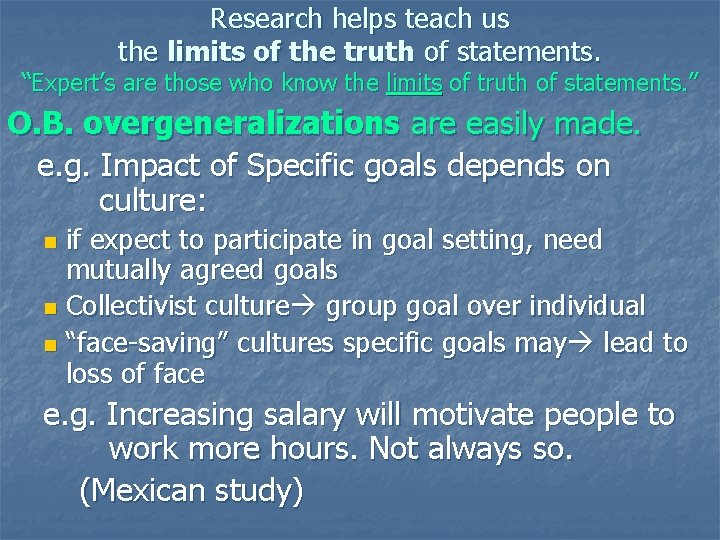
Research helps teach us the limits of the truth of statements. “Expert’s are those who know the limits of truth of statements. ” O. B. overgeneralizations are easily made. e. g. Impact of Specific goals depends on culture: if expect to participate in goal setting, need mutually agreed goals n Collectivist culture group goal over individual n “face-saving” cultures specific goals may lead to loss of face n e. g. Increasing salary will motivate people to work more hours. Not always so. (Mexican study)
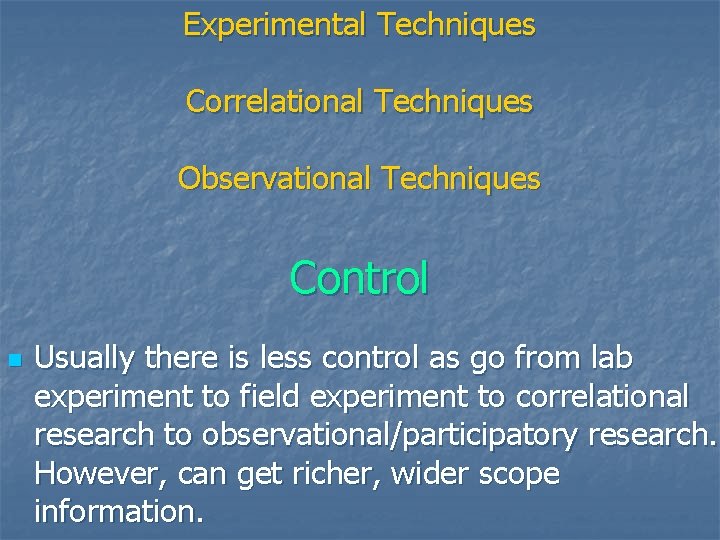
Experimental Techniques Correlational Techniques Observational Techniques Control n Usually there is less control as go from lab experiment to field experiment to correlational research to observational/participatory research. However, can get richer, wider scope information.
Research in O. P. Basics: n Hypothesis n Reliability n Validity
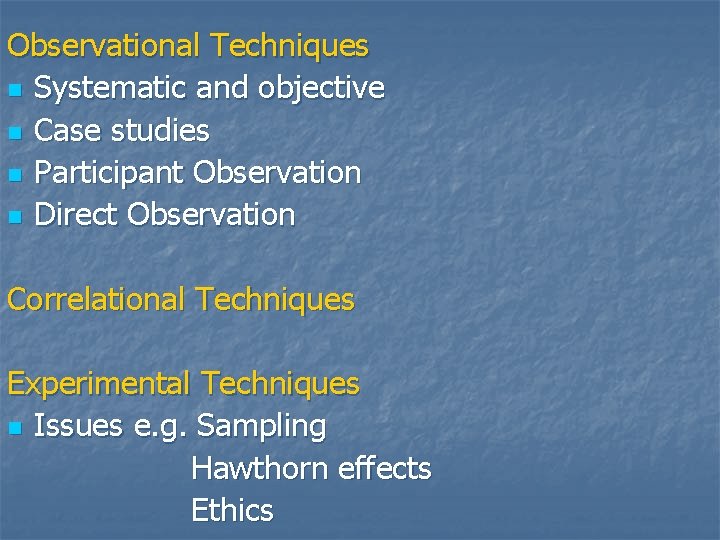
Observational Techniques n Systematic and objective n Case studies n Participant Observation n Direct Observation Correlational Techniques Experimental Techniques n Issues e. g. Sampling Hawthorn effects Ethics
Stress, Coping and Health n A reaction to environmental demands n Stressors versus stress
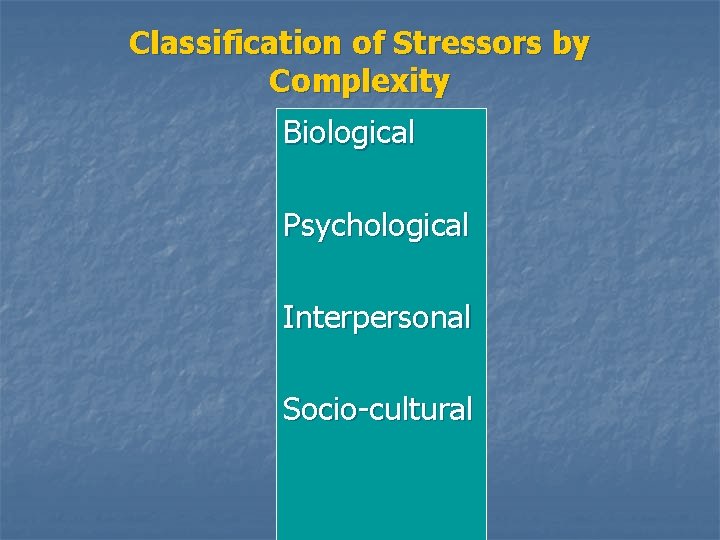
Classification of Stressors by Complexity Biological Psychological Interpersonal Socio-cultural
A Definition of Stress is the nonspecific response of the body to any demand placed upon it. (Hans Selye) Reaction: Flight, flight or freeze A mobilization to action
Reaction: Flight, flight or freeze mobilization to action
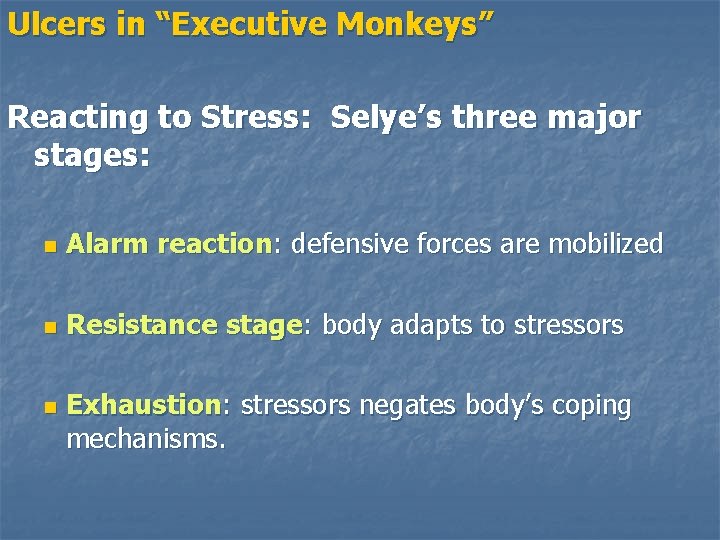
Ulcers in “Executive Monkeys” Reacting to Stress: Selye’s three major stages: n Alarm reaction: defensive forces are mobilized n Resistance stage: body adapts to stressors n Exhaustion: stressors negates body’s coping mechanisms.
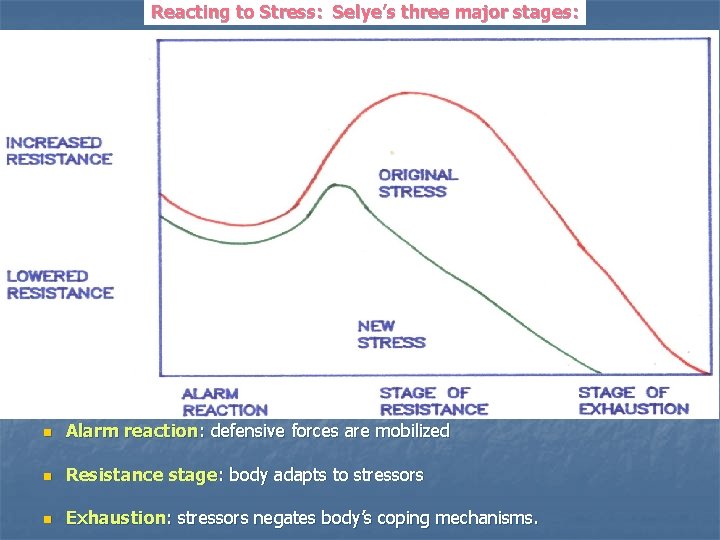
Reacting to Stress: Selye’s three major stages: n Alarm reaction: defensive forces are mobilized n Resistance stage: body adapts to stressors n Exhaustion: stressors negates body’s coping mechanisms.
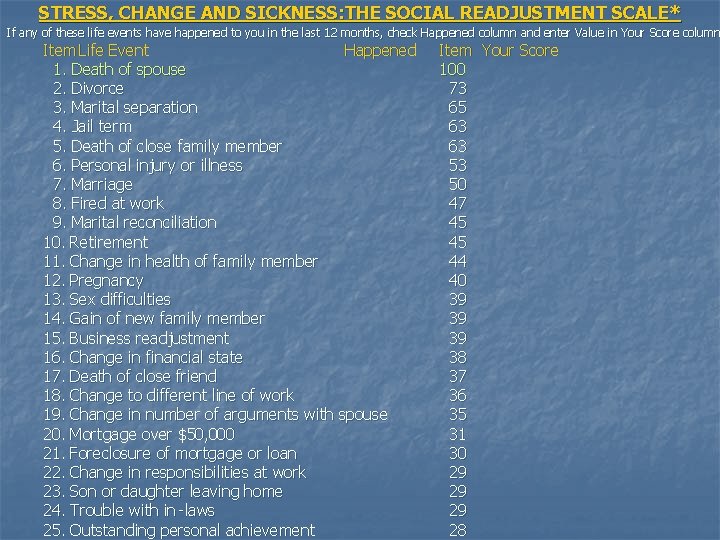
STRESS, CHANGE AND SICKNESS: THE SOCIAL READJUSTMENT SCALE* If any of these life events have happened to you in the last 12 months, check Happened column and enter Value in Your Score column Item Life Event Happened 1. Death of spouse 2. Divorce 3. Marital separation 4. Jail term 5. Death of close family member 6. Personal injury or illness 7. Marriage 8. Fired at work 9. Marital reconciliation 10. Retirement 11. Change in health of family member 12. Pregnancy 13. Sex difficulties 14. Gain of new family member 15. Business readjustment 16. Change in financial state 17. Death of close friend 18. Change to different line of work 19. Change in number of arguments with spouse 20. Mortgage over $50, 000 21. Foreclosure of mortgage or loan 22. Change in responsibilities at work 23. Son or daughter leaving home 24. Trouble with in‑laws 25. Outstanding personal achievement Item Your Score 100 73 65 63 63 53 50 47 45 45 44 40 39 39 39 38 37 36 35 31 30 29 29 29 28
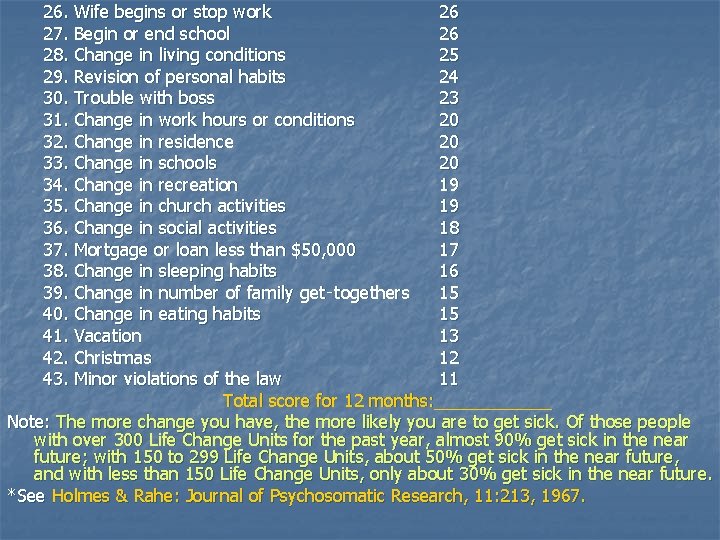
26. Wife begins or stop work 26 27. Begin or end school 26 28. Change in living conditions 25 29. Revision of personal habits 24 30. Trouble with boss 23 31. Change in work hours or conditions 20 32. Change in residence 20 33. Change in schools 20 34. Change in recreation 19 35. Change in church activities 19 36. Change in social activities 18 37. Mortgage or loan less than $50, 000 17 38. Change in sleeping habits 16 39. Change in number of family get‑togethers 15 40. Change in eating habits 15 41. Vacation 13 42. Christmas 12 43. Minor violations of the law 11 Total score for 12 months: ______ Note: The more change you have, the more likely you are to get sick. Of those people with over 300 Life Change Units for the past year, almost 90% get sick in the near future; with 150 to 299 Life Change Units, about 50% get sick in the near future, and with less than 150 Life Change Units, only about 30% get sick in the near future. *See Holmes & Rahe: Journal of Psychosomatic Research, 11: 213, 1967.
Dealing with Stress: The organizational/ergonomic approach (eliminating or reducing unnecessary stressors) The Individual Approach (living in an imperfect world)
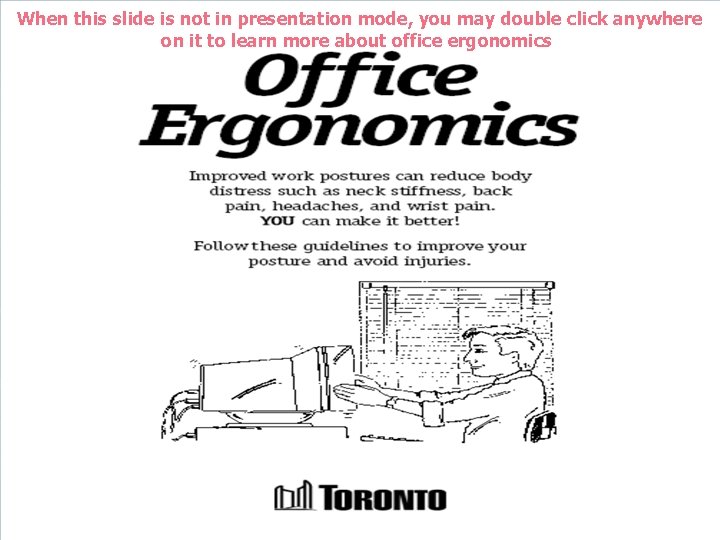
When this slide is not in presentation mode, you may double click anywhere on it to learn more about office ergonomics.
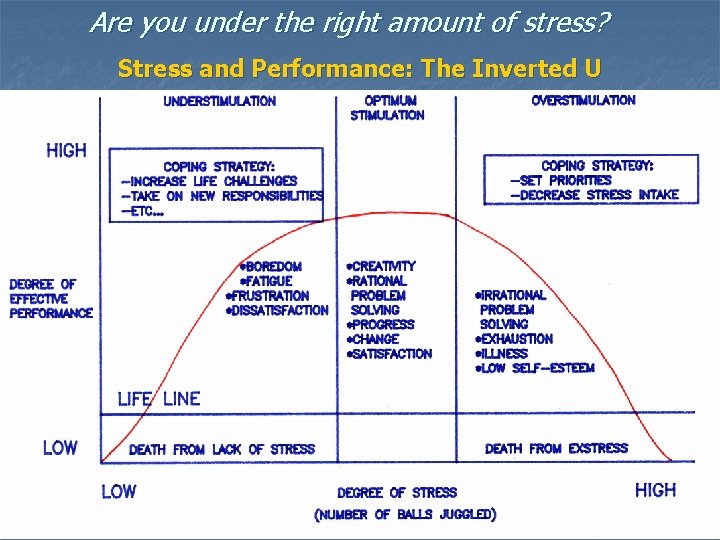
Are you under the right amount of stress Too much (or too little) challenge can make you sick.
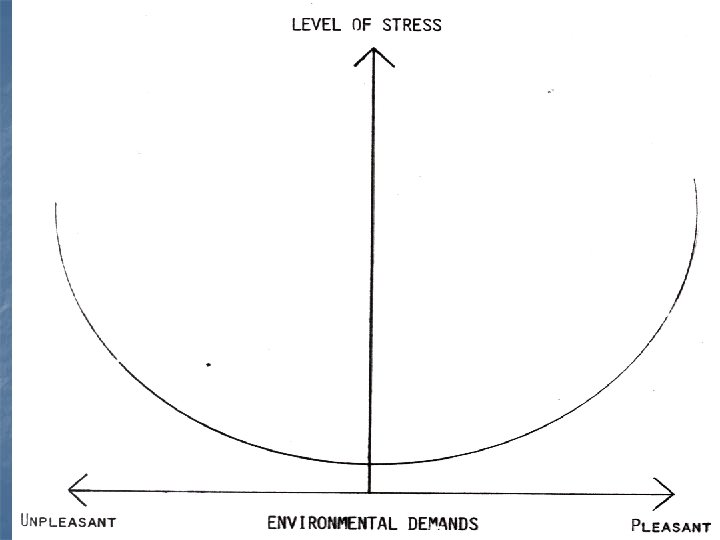
Are you under the right amount of stress? Stress and Performance: The Inverted U
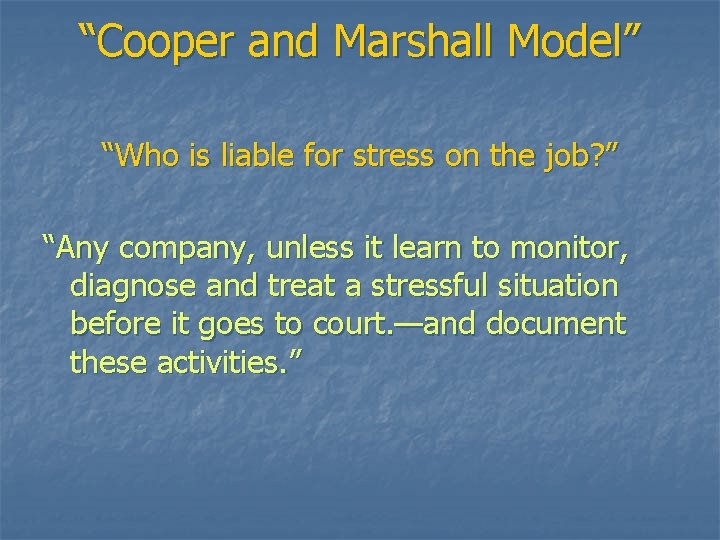
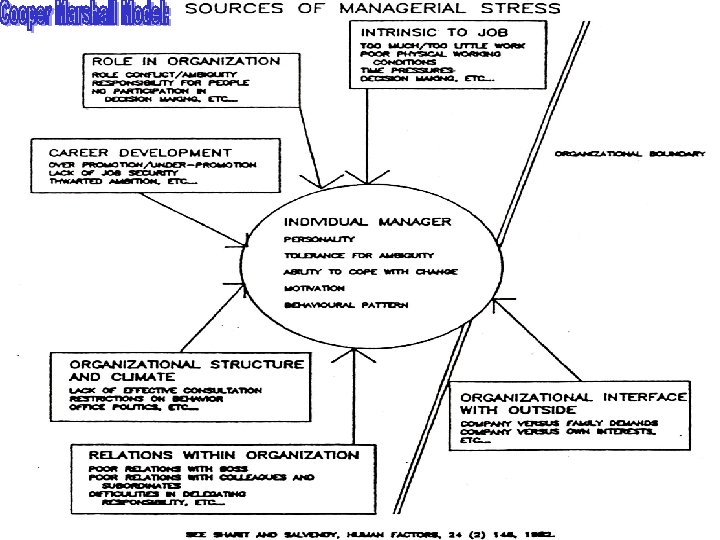
“Cooper and Marshall Model” “Who is liable for stress on the job? ” “Any company, unless it learn to monitor, diagnose and treat a stressful situation before it goes to court. —and document these activities. ”
Role conflict n Interrole conflict n Intrarole conflict n Role ambiguity
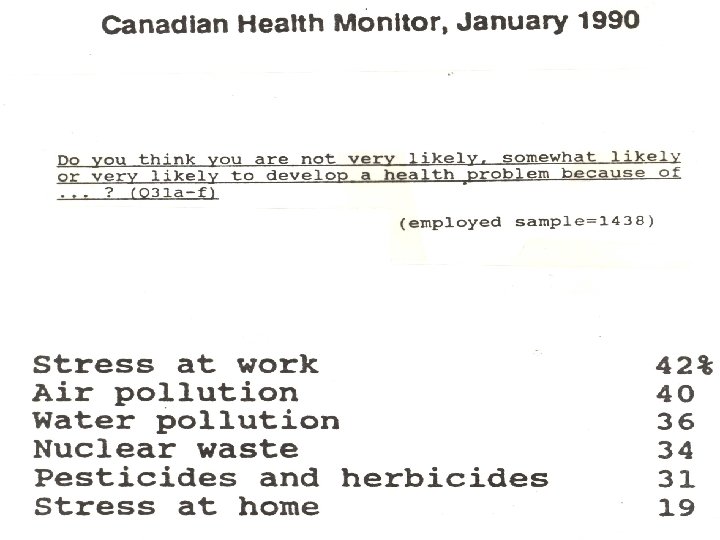
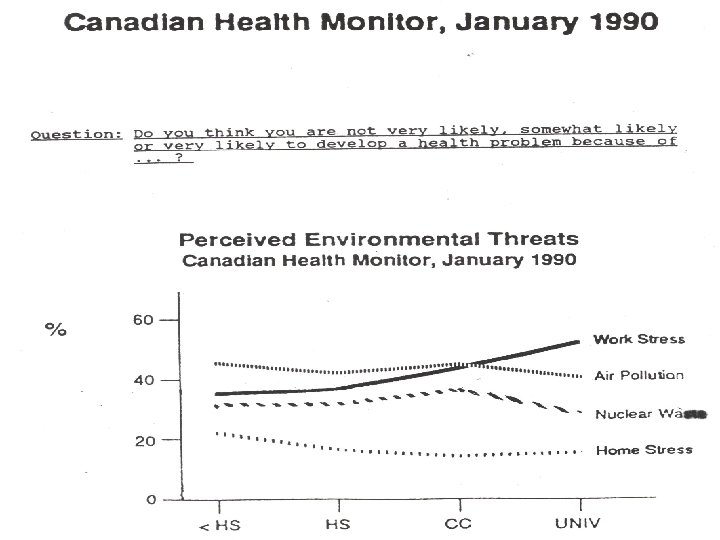
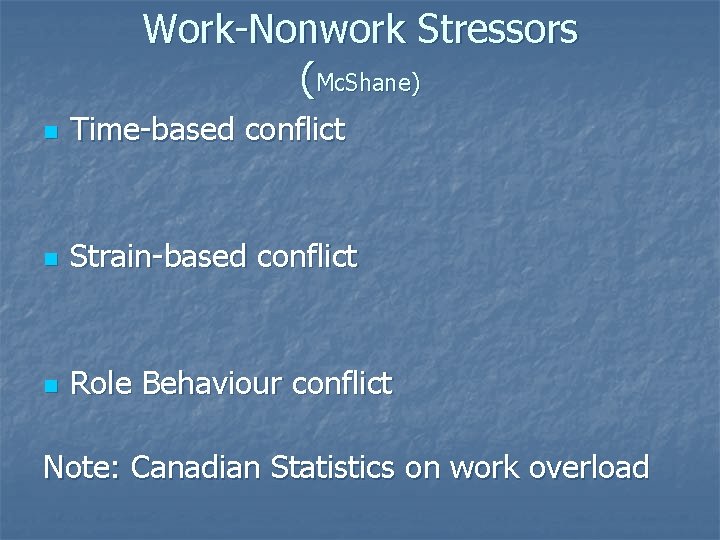
Work-Nonwork Stressors (Mc. Shane) n Time-based conflict n Strain-based conflict n Role Behaviour conflict Note: Canadian Statistics on work overload