
THE ROLE OF REQUISITE VARIETY IN MANAGEMENT Stuart

- Slides: 16
THE ROLE OF REQUISITE VARIETY IN MANAGEMENT Stuart A. Umpleby Department of Management George Washington University Washington, DC 20052
Ashby’s definition of a system • A set of variables selected by an observer • Assumes the variables are related and the observer has a purpose for selecting those variables • Multiple views of copper as a material • Multiple views of a corporation
Variables: Vector descriptions • Weather: temperature, pressure, humidity • Automobile instrument panel: speed, fuel, temperature, oil pressure, generator • Medical records: height, weight, blood pressure, blood type • Corporation: assets, liabilities, sales, profits or losses, employees • Stock exchange: high, low, close, volume
The law of requisite variety • Information and selection • “The amount of selection that can be performed is limited by the amount of information available” • Regulator and regulated • “The variety in a regulator must be equal to or greater than the variety in the system being regulated” • W. Ross Ashby
The law of requisite variety examples • A quantitative relationship between information and selection: admitting students to a university • The variety in the regulator must be at least as great as the variety in the system being regulated: buying a computer • Example of selling computers to China
The Conant and Ashby theorem • Based on the Law of Requisite Variety • Every good regulator of a system must be a model of that system: statements linking cause and effect are needed • Jay Forrester’s corollary: the usefulness of a mathematical simulation model should be judged in comparison not with an ideal model but rather with the mental image which would be used instead
Amplification examples • A hydraulic lift in a gas station • A sound amplifier • Reading the President’s mail
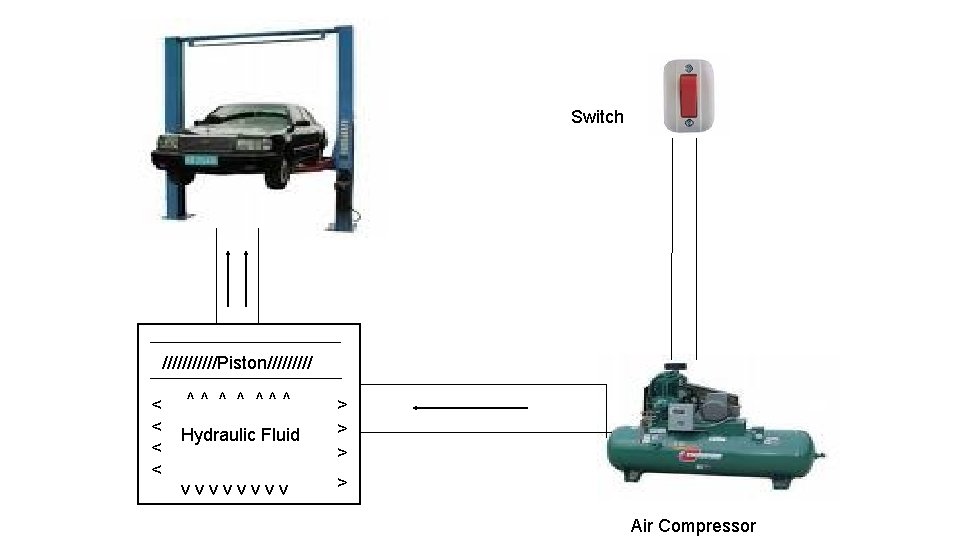
Switch //////Piston///// < < ^^ ^ ^ ^^^ Hydraulic Fluid > > > vvvv > Air Compressor
Mechanical power amplification • Simply by moving a switch an average person, indeed a child, can lift an automobile • How is that possible? • Electricity powers a pump that uses compressed air to move hydraulic fluid • The fluid presses with the same force in all directions • A large piston creates a large force
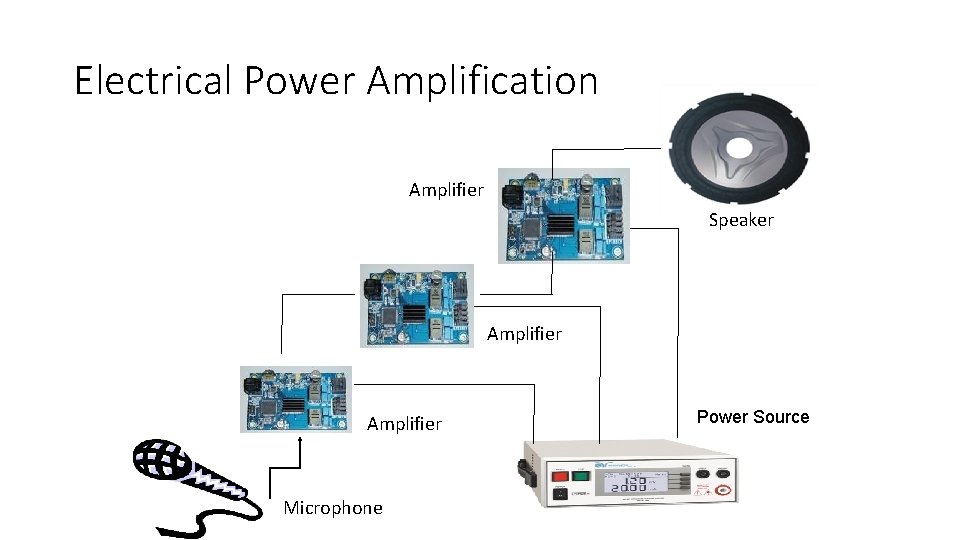
Electrical Power Amplification Amplifier Speaker Amplifier Microphone Power Source
Electrical power amplification • At a rock concert a person speaking or singing on stage can be heard by thousands of people • How is that possible? • Electricity flows through a series of “valves” • Each “valve” uses a small signal to control a larger flow of electricity
Amplification of decision-making • A grade school child who writes a letter to the President of the United States receives a reply • How is that possible? The President is very busy • In the White House a group of people write letters for the President • An administrator manages the letter writers
Amplifying regulatory capability • One-to-one regulation of variety: football, war, assumes complete hostility • One-to-one regulation of disturbances: crime control, management by exception • Changing the rules of the game: anti-trust regulation, preventing price fixing • Changing the game: the change from ideological competition to sustainable development
Coping with complexity When faced with a complex situation, there are only two choices 1. Increase the variety in the regulator: hire staff or subcontract 2. Reduce the variety in the system being regulated: reduce the variety one chooses to control
Contact information Stuart A. Umpleby Department of Management The George Washington University Washington, DC www. gwu. edu/~umpleby@gmail. com
Prepared for the annual Du. Pont Summit of the Policy Studies Organization Washington, DC December 2, 2016