
The Role of Philanthropy in Movement Building AMERICAN

The Role of Philanthropy in Movement Building AMERICAN EVALUATION ASSOCIATION “THINK TANK” NOVEMBER 4, 2011 1: 35 PM – 2: 20 PM PALOS VERDES B BARBARA MASTERSPOLICYCONSULTING
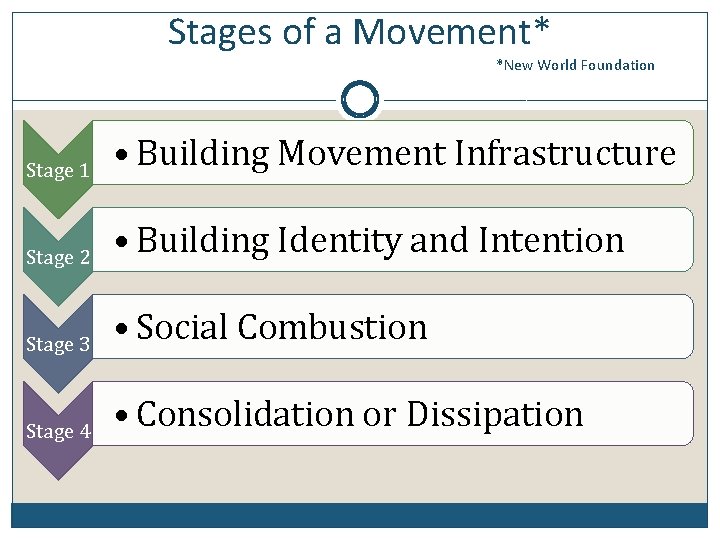
Stages of a Movement* *New World Foundation Stage 1 • Building Movement Infrastructure Stage 2 • Building Identity and Intention Stage 3 • Social Combustion Stage 4 • Consolidation or Dissipation
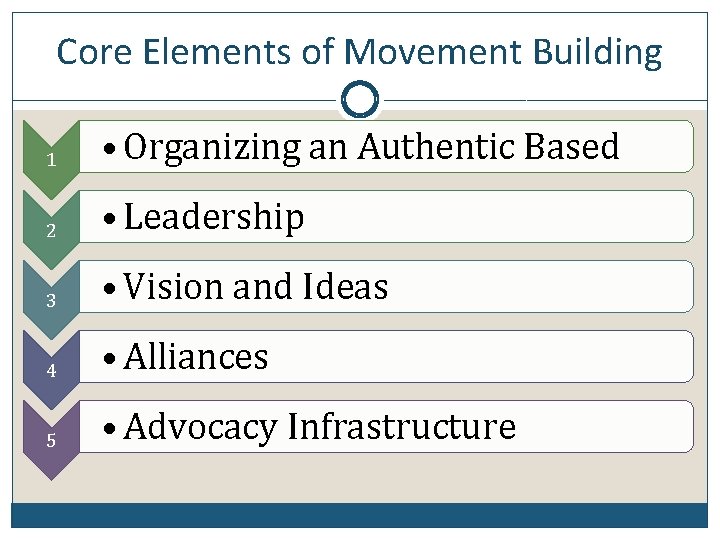
Core Elements of Movement Building 1 • Organizing an Authentic Based 2 • Leadership 3 • Vision and Ideas 4 • Alliances 5 • Advocacy Infrastructure
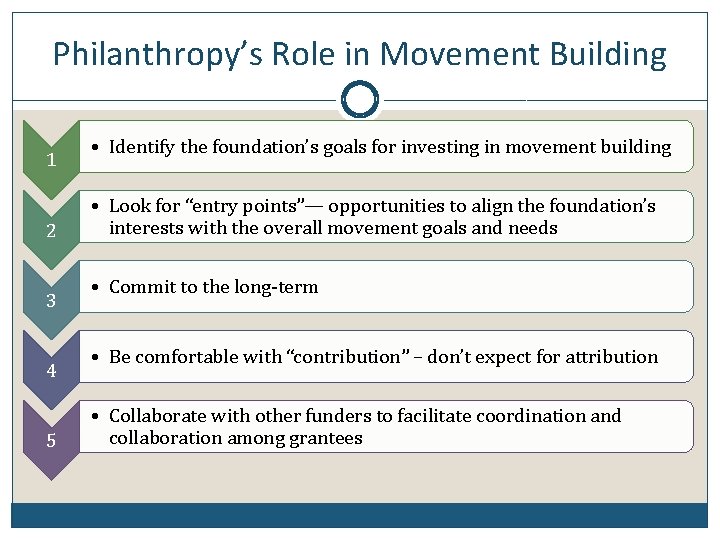
Philanthropy’s Role in Movement Building 1 2 3 4 5 • Identify the foundation’s goals for investing in movement building • Look for “entry points”— opportunities to align the foundation’s interests with the overall movement goals and needs • Commit to the long-term • Be comfortable with “contribution” – don’t expect for attribution • Collaborate with other funders to facilitate coordination and collaboration among grantees
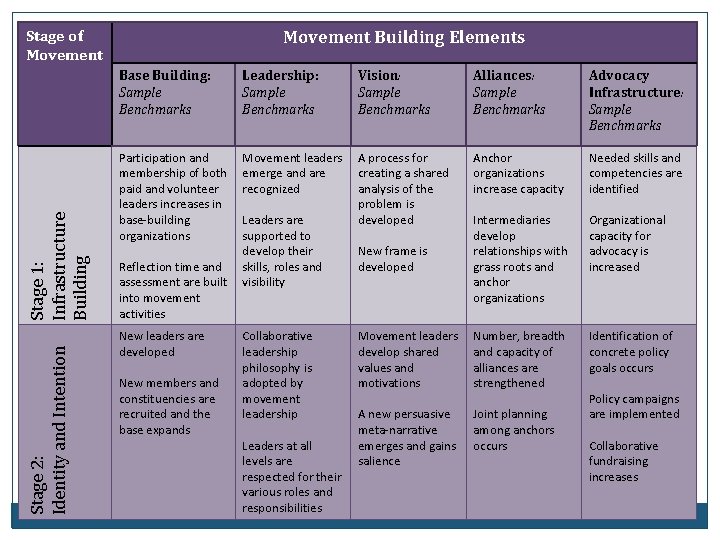
Stage 2: Identity and Intention Stage 1: Infrastructure Building Stage of Movement Building Elements Base Building: Sample Benchmarks Leadership: Sample Benchmarks Vision: Sample Benchmarks Alliances: Sample Benchmarks Advocacy Infrastructure: Sample Benchmarks Participation and membership of both paid and volunteer leaders increases in base-building organizations Movement leaders emerge and are recognized A process for creating a shared analysis of the problem is developed Anchor organizations increase capacity Needed skills and competencies are identified New frame is developed Intermediaries develop relationships with grass roots and anchor organizations Organizational capacity for advocacy is increased Movement leaders develop shared values and motivations Number, breadth and capacity of alliances are strengthened Identification of concrete policy goals occurs A new persuasive meta-narrative emerges and gains salience Joint planning among anchors occurs Reflection time and assessment are built into movement activities New leaders are developed New members and constituencies are recruited and the base expands Leaders are supported to develop their skills, roles and visibility Collaborative leadership philosophy is adopted by movement leadership Leaders at all levels are respected for their various roles and responsibilities Policy campaigns are implemented Collaborative fundraising increases
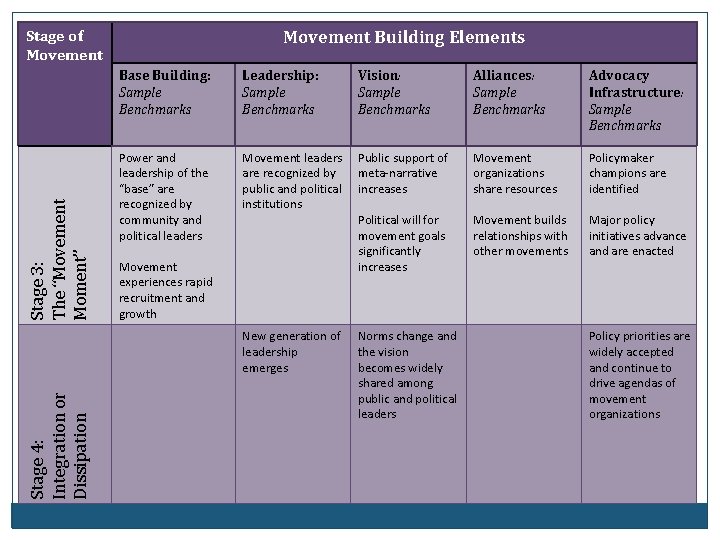
Stage 4: Integration or Dissipation Stage 3: The “Movement Moment” Stage of Movement Building Elements Base Building: Sample Benchmarks Leadership: Sample Benchmarks Vision: Sample Benchmarks Alliances: Sample Benchmarks Advocacy Infrastructure: Sample Benchmarks Power and leadership of the “base” are recognized by community and political leaders Movement leaders are recognized by public and political institutions Public support of meta-narrative increases Movement organizations share resources Policymaker champions are identified Political will for movement goals significantly increases Movement builds relationships with other movements Major policy initiatives advance and are enacted New generation of leadership emerges Norms change and the vision becomes widely shared among public and political leaders Movement experiences rapid recruitment and growth Policy priorities are widely accepted and continue to drive agendas of movement organizations
Further Information 1 2 3 4 • Masters, B. & Osborn, T. Social Movements and Philanthropy: How Foundations Can Support Movement Building. Foundation Review Vol. 2: 2 October 2010 • Pastor, M. & Ortiz, R. Making Change: How Social Movements Work and How to Support Them. University of Southern California. July 2009 • Asian Communities for Reproductive Justice. Movement Building Indicators. 2009 • Contact information: Barbara@Masterspolicy. com or 626 -616 -2272
- Slides: 7