
The Role of Non Communicable Diseases in Aviation
The Role of Non. Communicable Diseases in Aviation and Aerospace Dr Anthony Renshaw Medical Director, Medical Services. NEU With thanks to: Dr Rodrigo Rodriguez-Fernandez
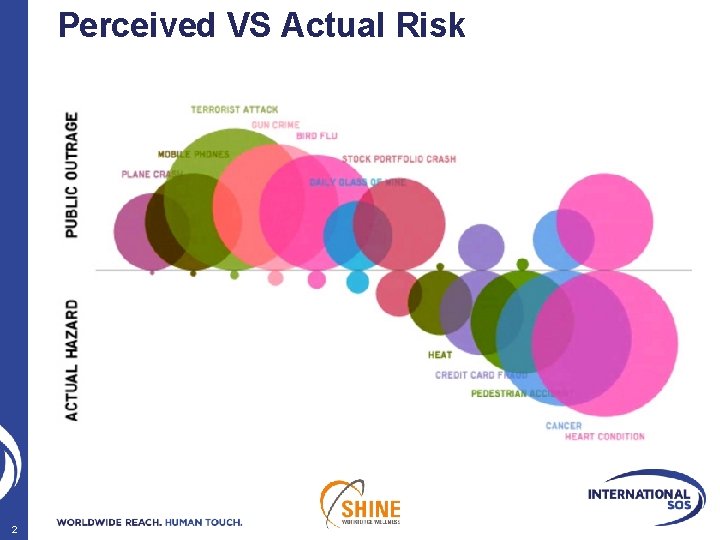
Perceived VS Actual Risk 2
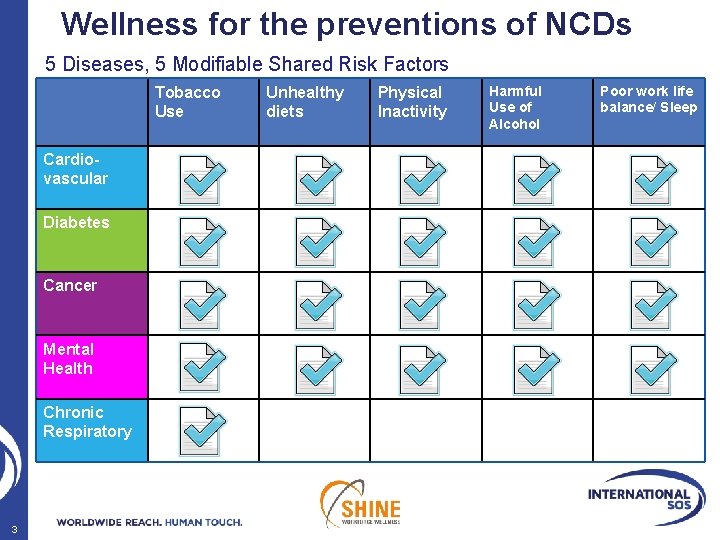
Wellness for the preventions of NCDs 5 Diseases, 5 Modifiable Shared Risk Factors Tobacco Use Cardiovascular Diabetes Cancer Mental Health Chronic Respiratory 3 Unhealthy diets Physical Inactivity Harmful Use of Alcohol Poor work life balance/ Sleep
4
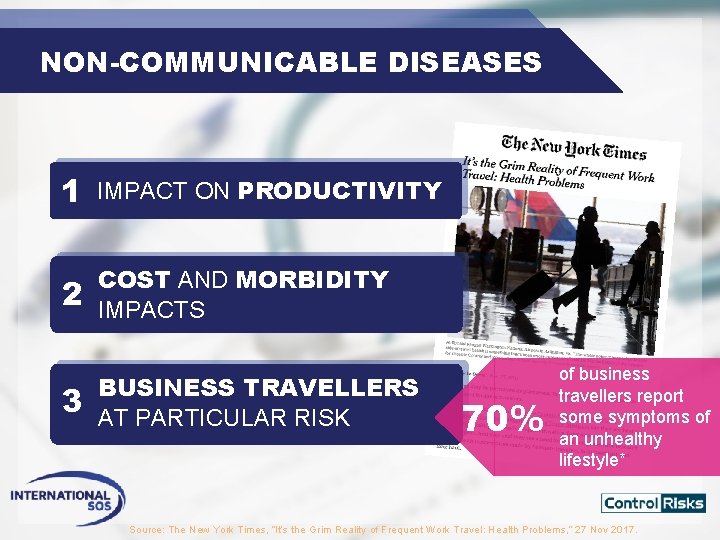
NON-COMMUNICABLE DISEASES 1 IMPACT ON PRODUCTIVITY 2 COST AND MORBIDITY IMPACTS 3 BUSINESS TRAVELLERS AT PARTICULAR RISK 70% of business travellers report some symptoms of an unhealthy lifestyle* Source: The New York Times, “It’s the Grim Reality of Frequent Work Travel: Health Problems, ” 27 Nov 2017.
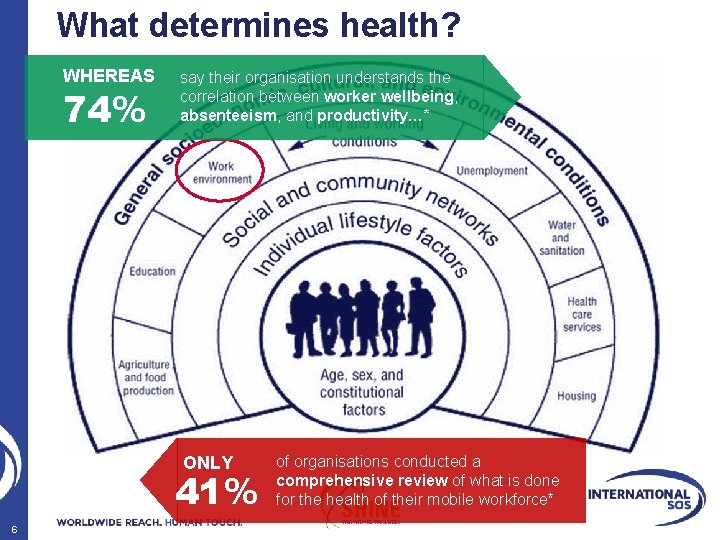
What determines health? WHEREAS 74% say their organisation understands the correlation between worker wellbeing, absenteeism, and productivity…* ONLY 41% 6 of organisations conducted a comprehensive review of what is done for the health of their mobile workforce*
Country that spends the most on CVD?
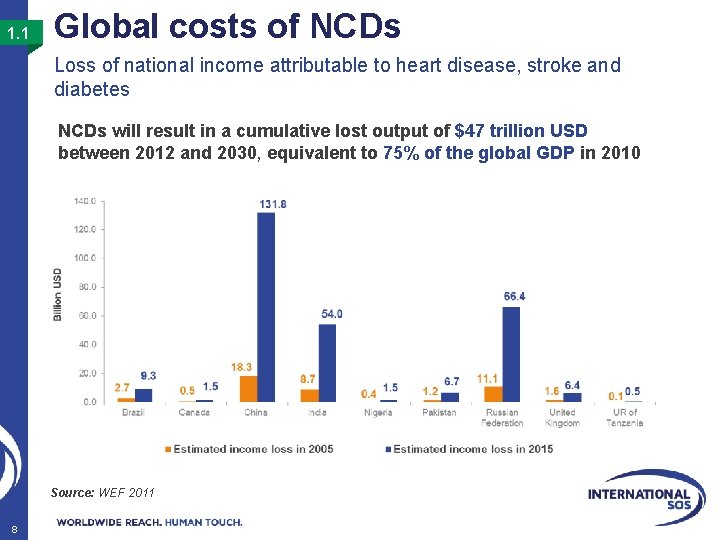
1. 1 Global costs of NCDs Loss of national income attributable to heart disease, stroke and diabetes NCDs will result in a cumulative lost output of $47 trillion USD between 2012 and 2030, equivalent to 75% of the global GDP in 2010 Source: WEF 2011 8
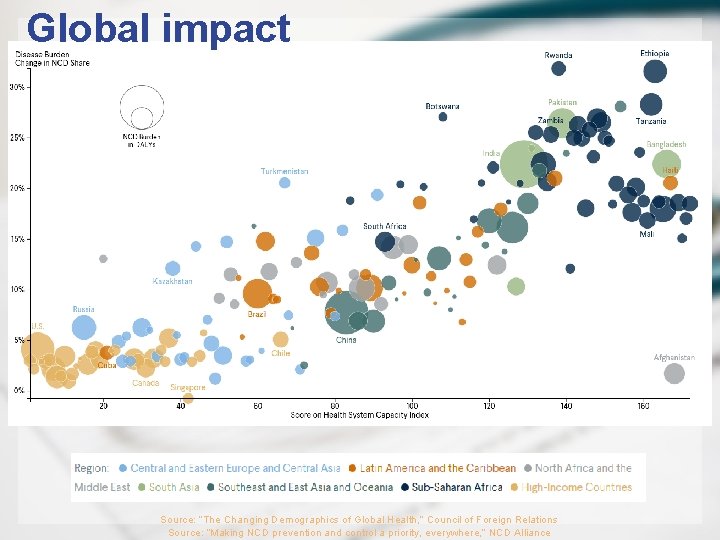
Global impact Source: “The Changing Demographics of Global Health, ” Council of Foreign Relations Source: “Making NCD prevention and control a priority, everywhere, ” NCD Alliance
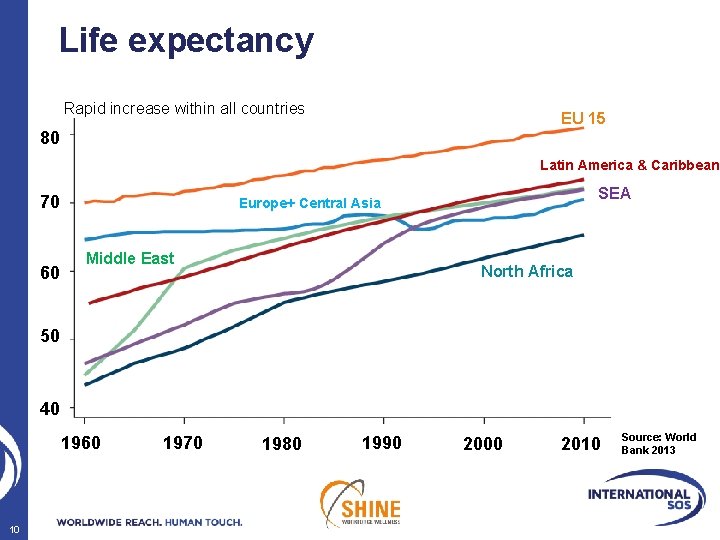
Life expectancy Rapid increase within all countries EU 15 80 Latin America & Caribbean 70 60 SEA Europe+ Central Asia Middle East North Africa 50 40 1960 10 1970 1980 1990 2000 2010 Source: World Bank 2013
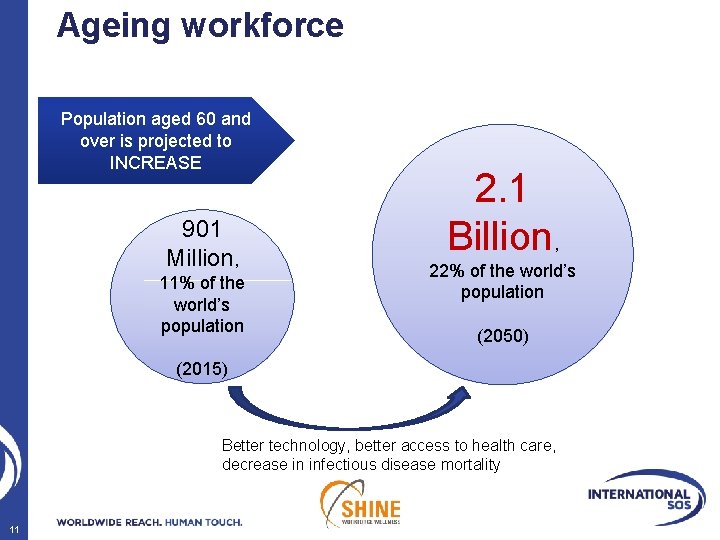
Ageing workforce Population aged 60 and over is projected to INCREASE 901 Million, 11% of the world’s population 2. 1 Billion, 22% of the world’s population (2050) (2015) Better technology, better access to health care, decrease in infectious disease mortality 11
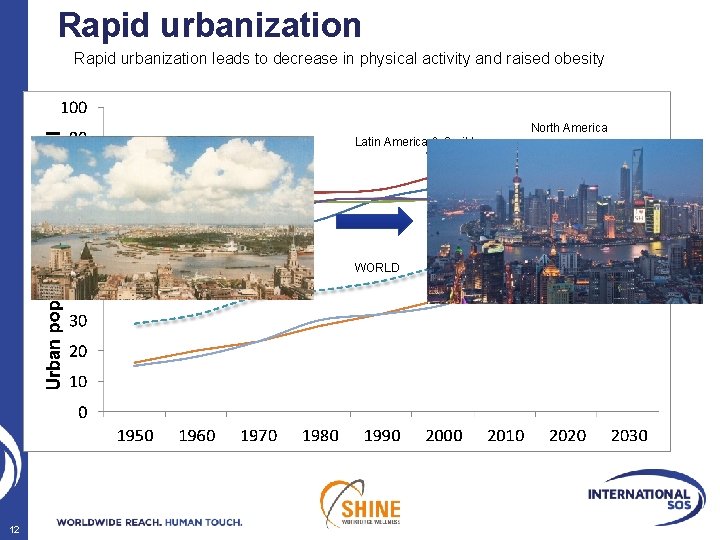
Rapid urbanization leads to decrease in physical activity and raised obesity North America Latin America & Caribbean Europe Oceania WORLD 12 Asia Africa
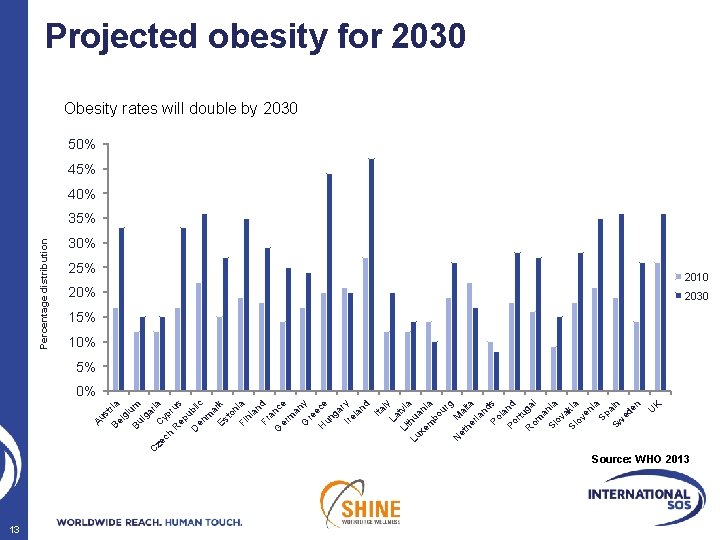
st Be ria lg i Bu um lg ar C ze C ia ch yp R rus ep u D blic en m a Es rk to n Fi ia nl an Fr d a G nce er m an G y re e H ce un ga r Ire y la nd Ita ly La Li tvia Lu thu xe an m ia bo ur g M N et al he ta rla nd Po s la Po nd rtu R ga om l a Sl nia ov a Sl kia ov en ia Sp Sw ain ed en U K Au Percentage distribution Projected obesity for 2030 Obesity rates will double by 2030 50% 45% 40% 35% 13 30% 25% 2010 20% 2030 15% 10% 5% 0% Source: WHO 2013
Highest NCD mortality rate? High income? Low income? Middle income?
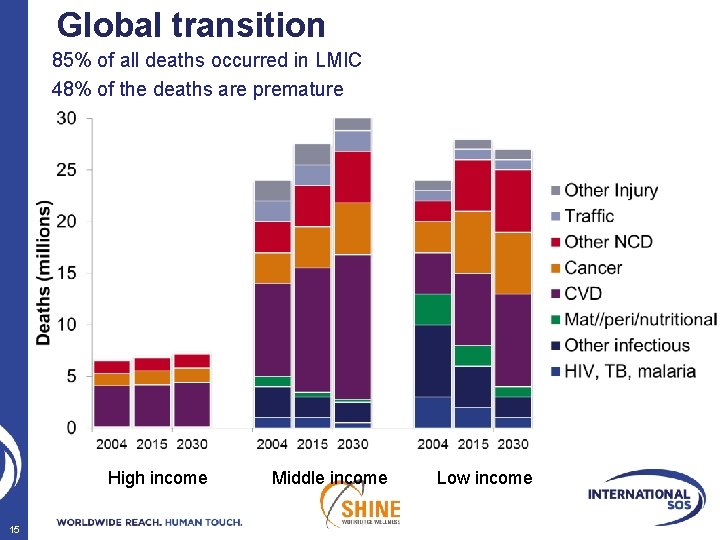
Global transition 85% of all deaths occurred in LMIC 48% of the deaths are premature High income 15 Middle income Low income
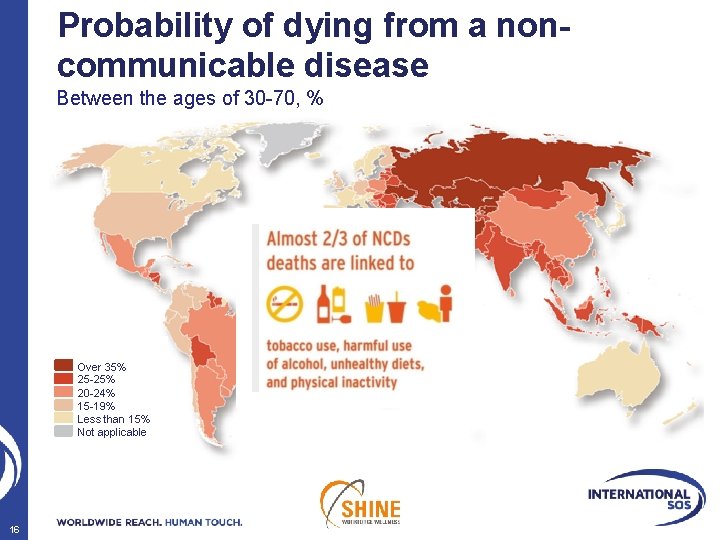
Probability of dying from a noncommunicable disease Between the ages of 30 -70, % Over 35% 25 -25% 20 -24% 15 -19% Less than 15% Not applicable 16
Highest smoking rate in the world?
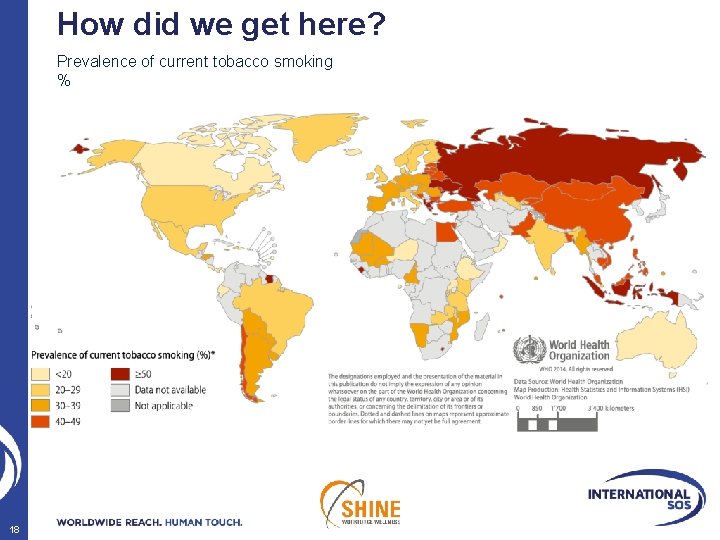
How did we get here? Prevalence of current tobacco smoking % 18
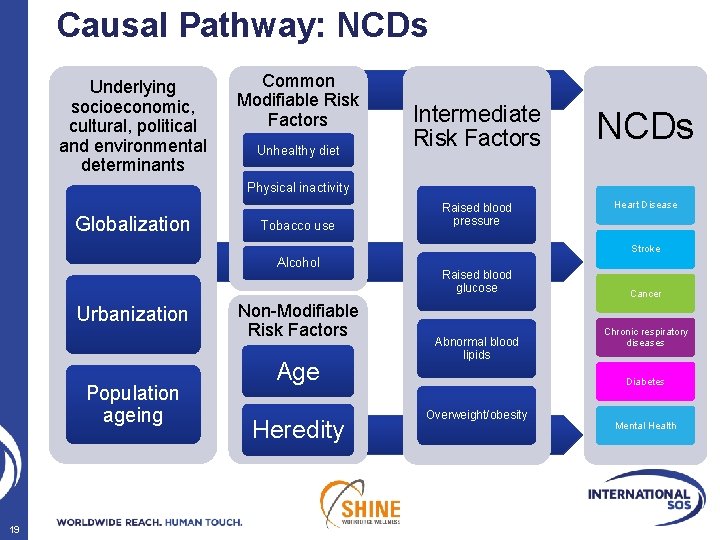
Causal Pathway: NCDs Underlying socioeconomic, cultural, political and environmental determinants Common Modifiable Risk Factors Unhealthy diet Intermediate Risk Factors NCDs Raised blood pressure Heart Disease Physical inactivity Globalization Tobacco use Stroke Alcohol Urbanization Population ageing 19 Non-Modifiable Risk Factors Age Heredity Raised blood glucose Abnormal blood lipids Cancer Chronic respiratory diseases Diabetes Overweight/obesity Mental Health
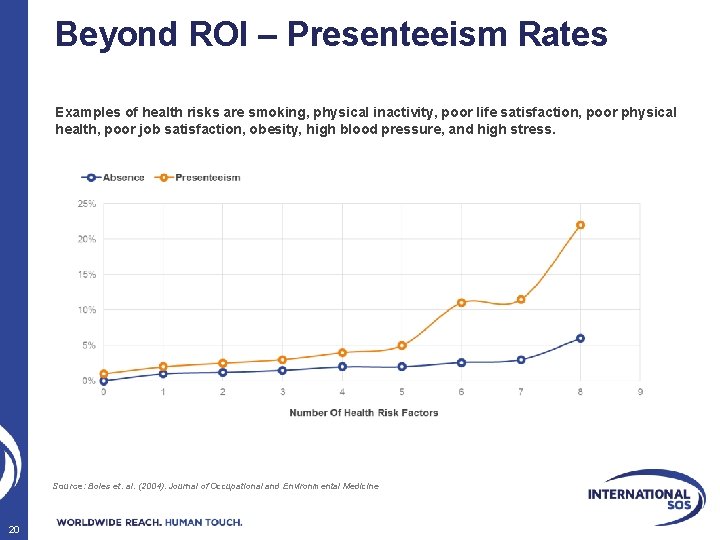
Beyond ROI – Presenteeism Rates Examples of health risks are smoking, physical inactivity, poor life satisfaction, poor physical health, poor job satisfaction, obesity, high blood pressure, and high stress. Source: Boles et. al. (2004). Journal of Occupational and Environmental Medicine 20
Most important risk factor impacting productivity?
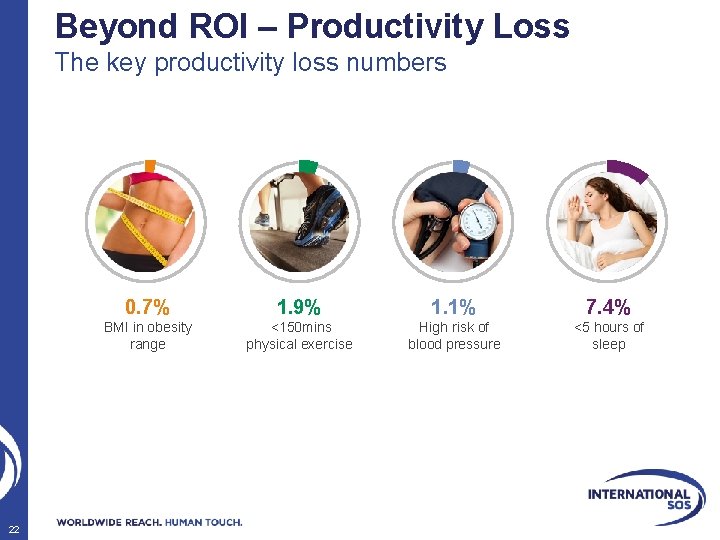
Beyond ROI – Productivity Loss The key productivity loss numbers 22 0. 7% 1. 9% 1. 1% 7. 4% BMI in obesity range <150 mins physical exercise High risk of blood pressure <5 hours of sleep
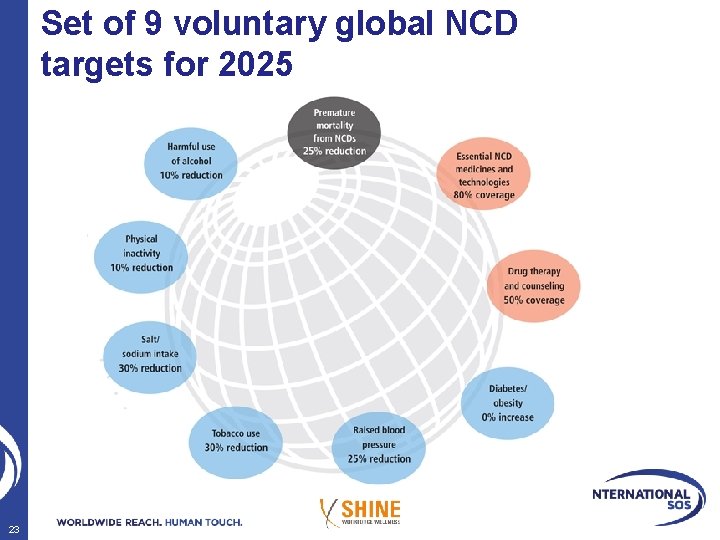
Set of 9 voluntary global NCD targets for 2025 23
Making a change
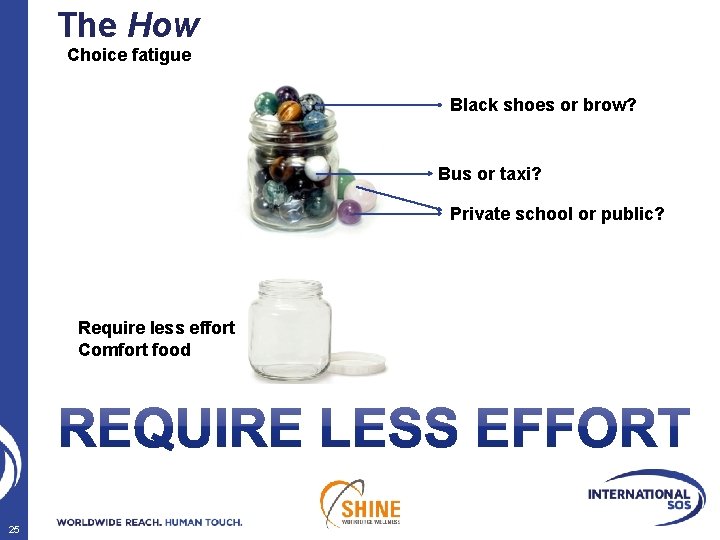
The How Choice fatigue Black shoes or brow? Bus or taxi? Private school or public? Require less effort Comfort food 25
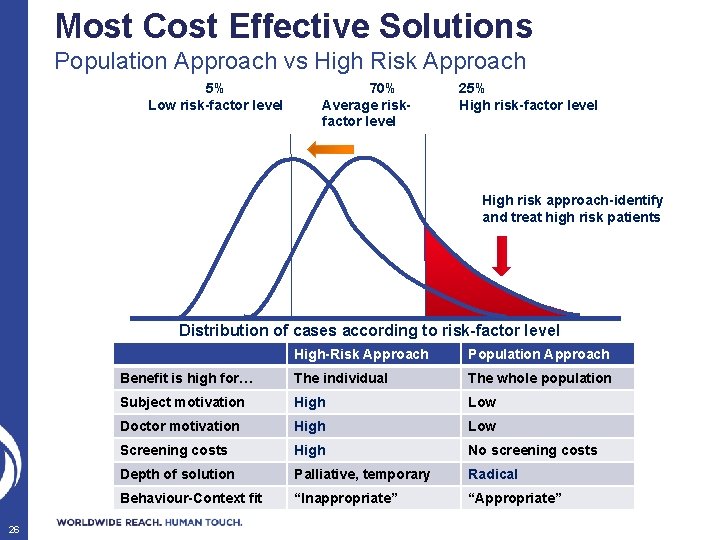
Most Cost Effective Solutions Population Approach vs High Risk Approach 5% Low risk-factor level 70% Average riskfactor level 25% High risk-factor level High risk approach-identify and treat high risk patients Distribution of cases according to risk-factor level 26 High-Risk Approach Population Approach Benefit is high for… The individual The whole population Subject motivation High Low Doctor motivation High Low Screening costs High No screening costs Depth of solution Palliative, temporary Radical Behaviour-Context fit “Inappropriate” “Appropriate”

Who won the Nobel prize in economics 2017?
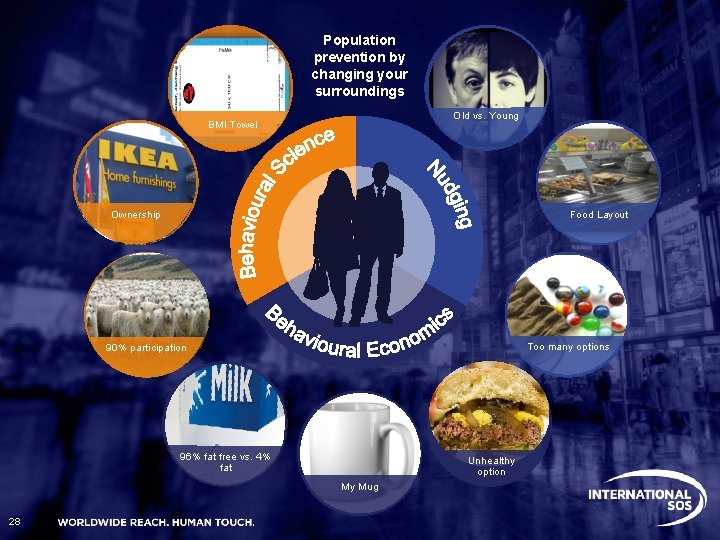
Inertia Population prevention by changing your surroundings Priming Old vs. Young 90% participation BMI Towel IKEA Choice Effect/Bias Architecture Ownership Food Layout Herd Decision Behavior/Effect Fatigue 90% participation Too many options Framing Effect 96% fat free vs. 4% fat Decoy Effect Loss Aversion My Mug 28 28 Behavioral Unhealthy option
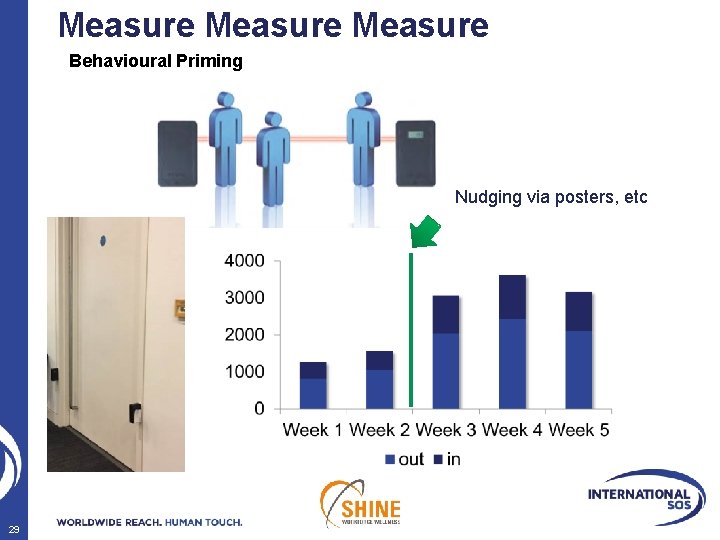
Measure Behavioural Priming Nudging via posters, etc 29
How does relocating abroad affect your health?
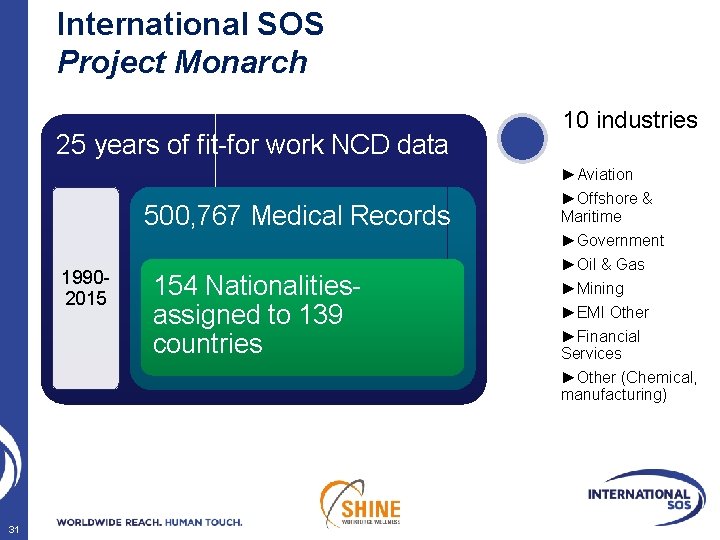
International SOS Project Monarch 25 years of fit-for work NCD data 10 industries ►Aviation 500, 767 Medical Records 19902015 31 154 Nationalitiesassigned to 139 countries ►Offshore & Maritime ►Government ►Oil & Gas ►Mining ►EMI Other ►Financial Services ►Other (Chemical, manufacturing)
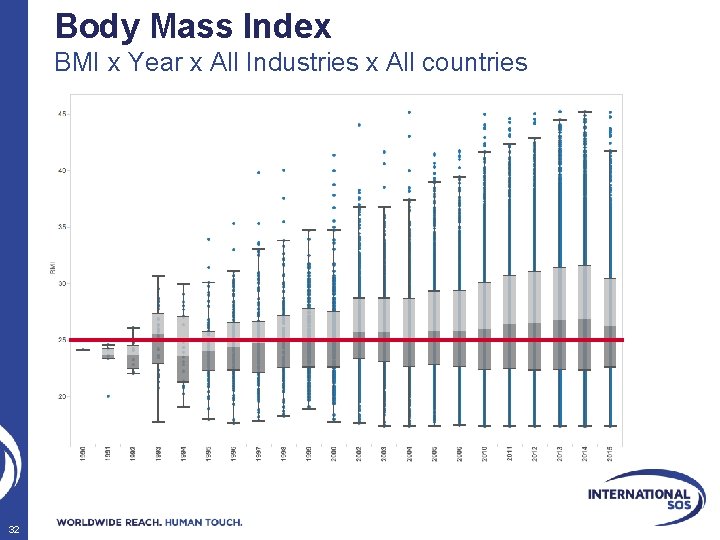
Body Mass Index BMI x Year x All Industries x All countries 32
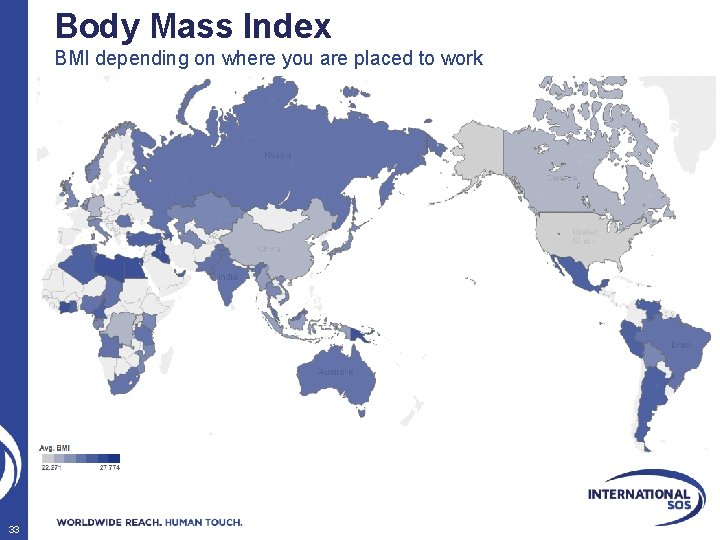
Body Mass Index BMI depending on where you are placed to work 33
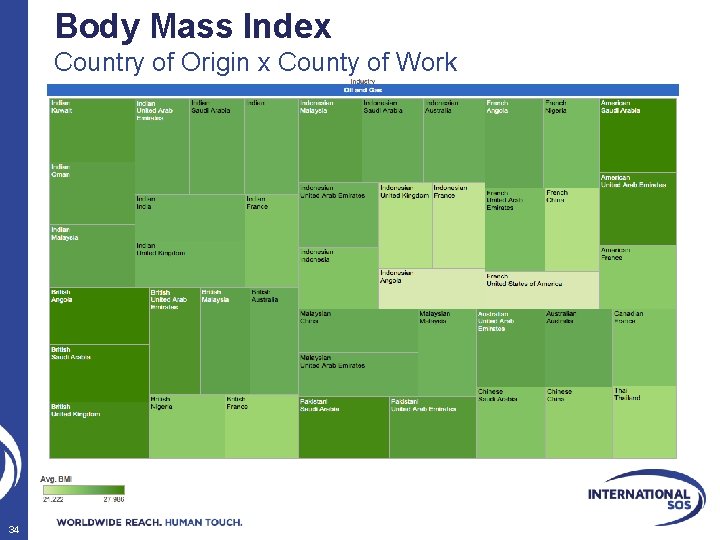
Body Mass Index Country of Origin x County of Work 34
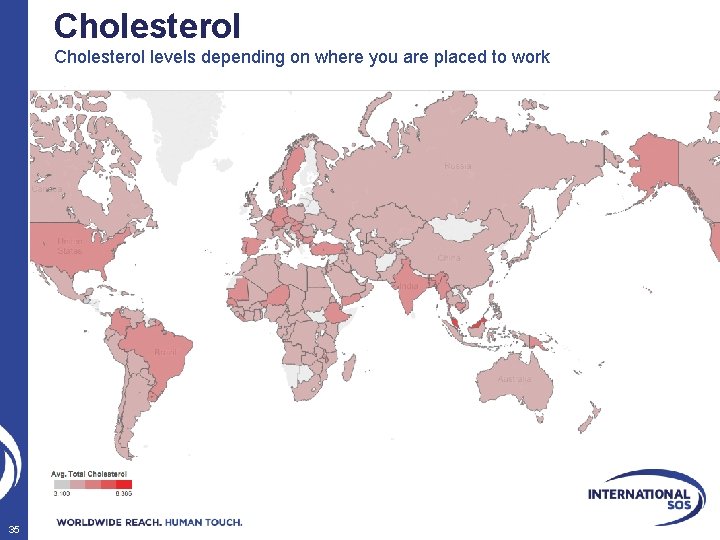
Cholesterol levels depending on where you are placed to work 35
Where does health improve?
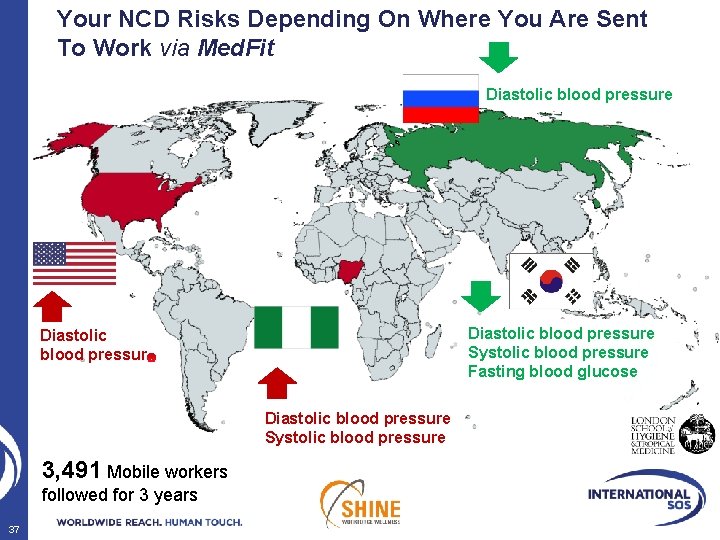
Your NCD Risks Depending On Where You Are Sent To Work via Med. Fit Diastolic blood pressure Systolic blood pressure Fasting blood glucose Diastolic blood pressure Systolic blood pressure 3, 491 Mobile workers followed for 3 years 37
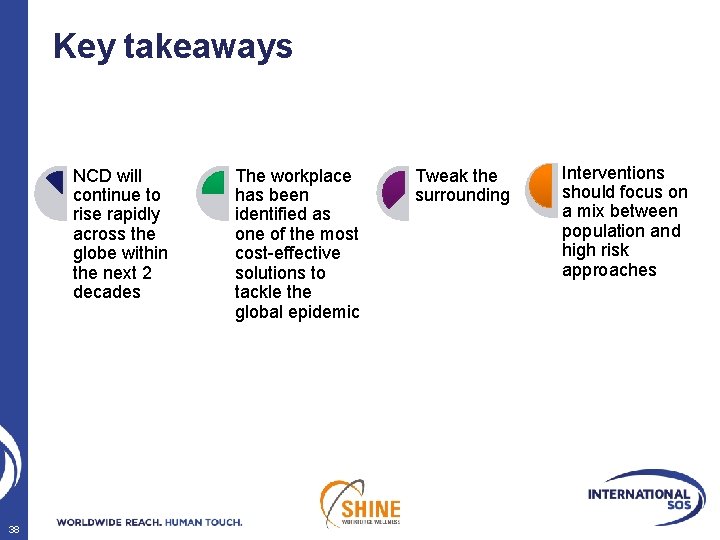
Key takeaways NCD will continue to rise rapidly across the globe within the next 2 decades 38 The workplace has been identified as one of the most cost-effective solutions to tackle the global epidemic Tweak the surrounding Interventions should focus on a mix between population and high risk approaches
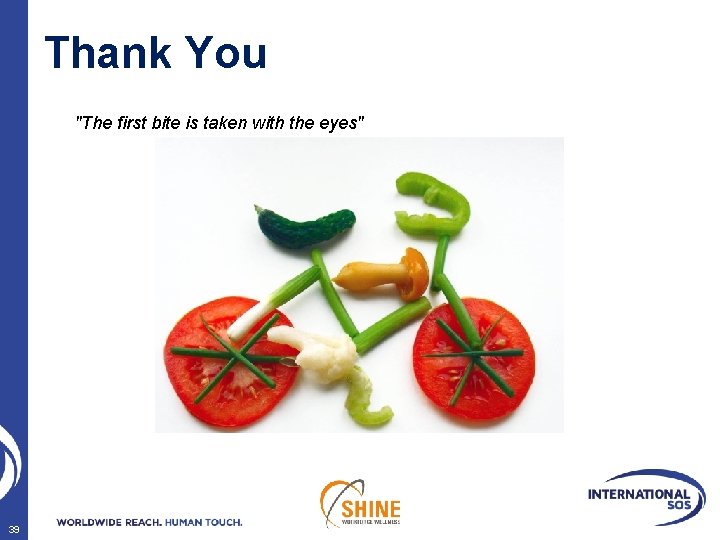
Thank You "The first bite is taken with the eyes" 39
- Slides: 39