
The role of multidisciplinary teams in decision making



- Slides: 12
The role of multi-disciplinary teams in decision making for patients with recurrent malignant disease S Strong 1, 2, NS Blencowe 1, 2, T Fox 1, C Reid 3 , T Crosby 4, H. Ford 5, J M Blazeby 1, 2 1 School 2 Division of Social and Community Medicine, Canynge Hall, University of Bristol, Bristol UK. of Surgery, Head & Neck, University Hospitals Bristol NHS Foundation Trust, Bristol, UK. 3 Division of Specialised Services, University Hospitals Bristol NHS Foundation Trust, Bristol, UK. 4 Velindre 5 Addenbrooke’s NHS Trust, Unit 2 Charnwood Court, Nantgarw, Cardiff Department of Oncology & Cambridge Cancer Trials Centre, Cambridge
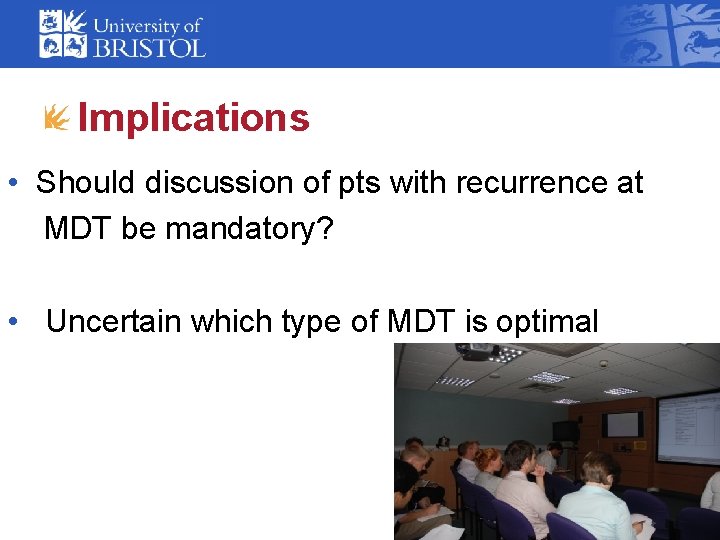
MDT meetings • Picture of mdt team
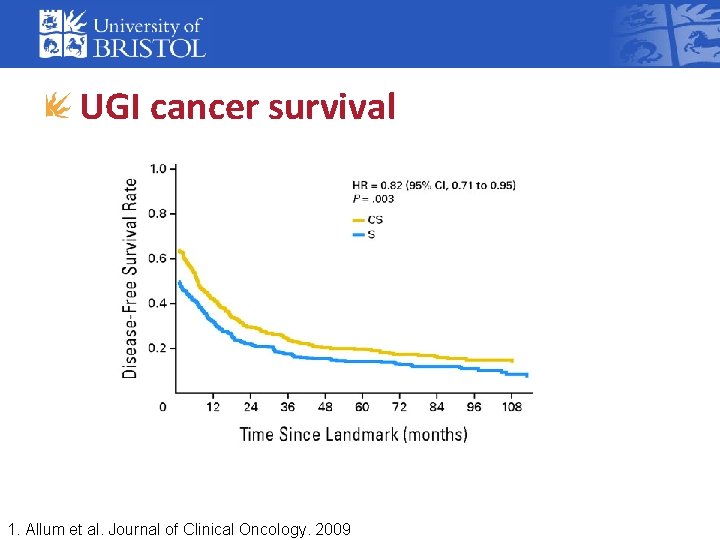
UGI cancer survival 1. Allum et al. Journal of Clinical Oncology. 2009
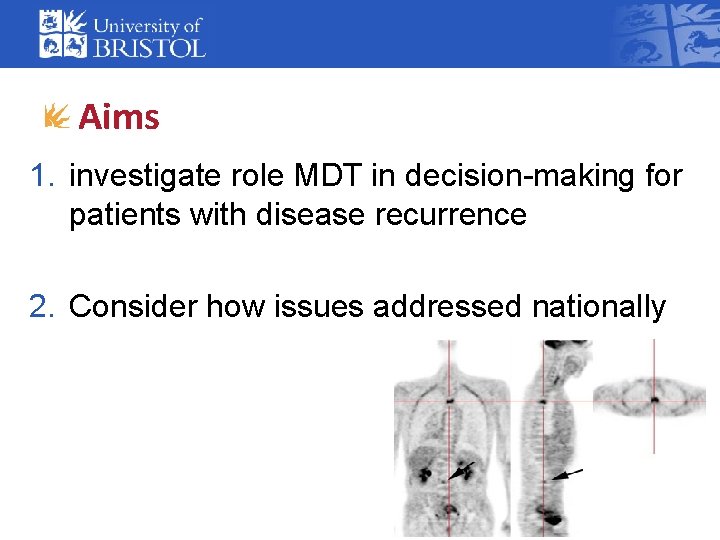
Aims 1. investigate role MDT in decision-making for patients with disease recurrence 2. Consider how issues addressed nationally
Methods • Sequential MDT records screened • Patients with possible recurrence identified • Notes reviewed and info recorded about: symptoms reason for referral & source treatment decision & implementation
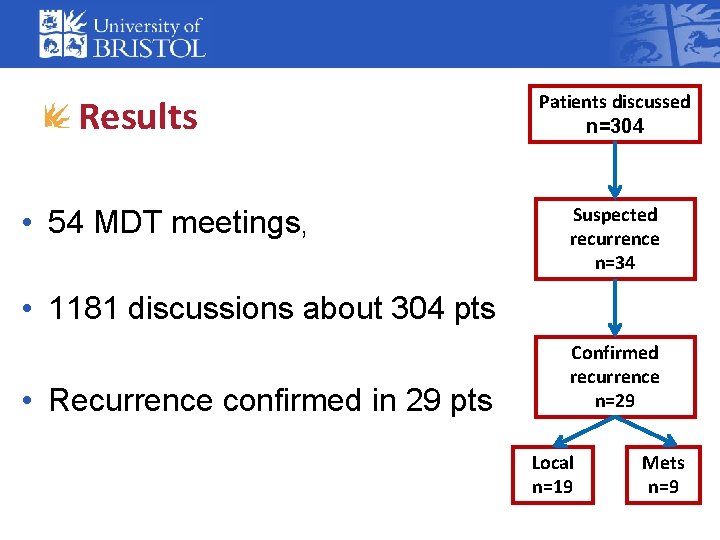
Results • 54 MDT meetings, Patients discussed n=304 Suspected recurrence n=34 • 1181 discussions about 304 pts • Recurrence confirmed in 29 pts Confirmed recurrence n=29 Local n=19 Mets n=9
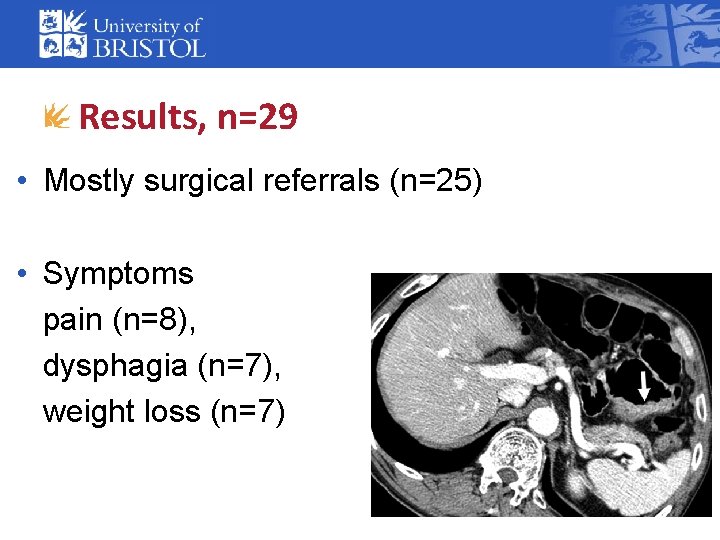
Results, n=29 • Mostly surgical referrals (n=25) • Symptoms pain (n=8), dysphagia (n=7), weight loss (n=7)
Results, n=29 • MDT treatment decisions, best supportive care (n=10), chemo (n=9), stent (n=5), radio (n=3), surgery (n=2) • 19 (65. 5%) reviewed by oncologist after MDT
Results, n=29 • 25 (86. 2%) recommendations implemented • Reasons for non-implementation were; declining health (n=2) patient preference (n=2)
Summary • 29 patients (9%) of new MDT patients recurrence discussed • Majority 19 (66%) were offered further treatments and all received CNS support • Pts with recurrence benefit from MDT
Implications • Should discussion of pts with recurrence at MDT be mandatory? • Uncertain which type of MDT is optimal