
The Role of Libraries in Advancing Open Science
The Role of Libraries in Advancing Open Science Kristiina Hormia-Poutanen Service Director at the National Library of Finland Adviser of LIBER OSPP member, DORA Advisory Board member THE NATIONAL LIBRARY OF FINLAND
Agenda PLAN S LIBER – The Network of European Research Libraries • LIBER Strategy 2018 -2022 • LIBER Open Science Roadmap Open Science Policy Platform • Integrated Advice


PLAN S – Accelerating the transition to full and immediate Open Access to scientific publications ▪ After 1 January 2020 scientific publications funded by public grants must be published in compliant Open Access Journals or on compliant Open Access Platforms. ▪ Initiated by the Open Access Envoy, Robert-Jan Smits, of the European Commission ▪ c. OAlition. S was signed by 11 national research funders on August 30 2018 – the coalition is growing ▪ National Science Centre, NSC, Poland ▪ LERU, Liber, Sparc Europe and others have issued statements in support of PLAN S
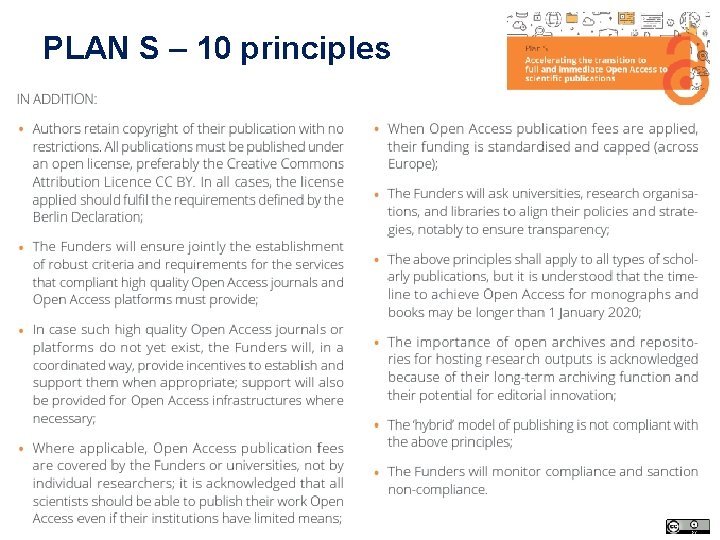
PLAN S – 10 principles
Further information ▪ ▪ ▪ Preamble to Plan S (Target and Principles) 10 principles National Funders forming c. OAlition. S Statement by Commissioner Carlos Moedas Statement by the European Research Council
LIBER – The Network of European Research Libraries
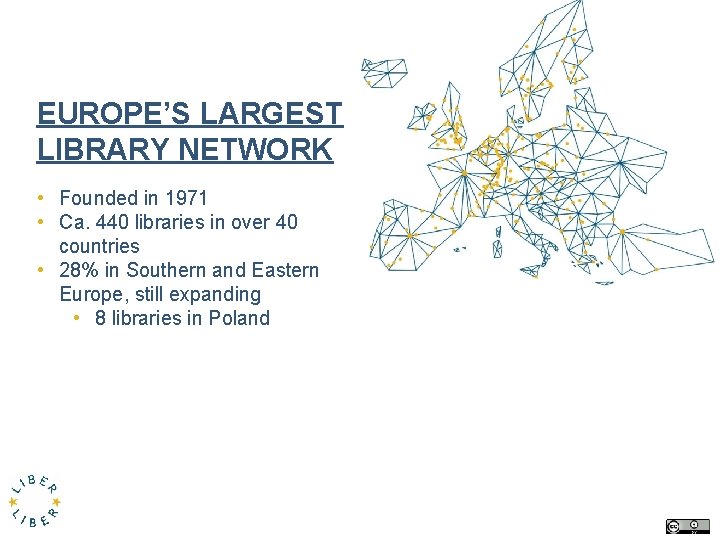
EUROPE’S LARGEST LIBRARY NETWORK • Founded in 1971 • Ca. 440 libraries in over 40 countries • 28% in Southern and Eastern Europe, still expanding • 8 libraries in Poland
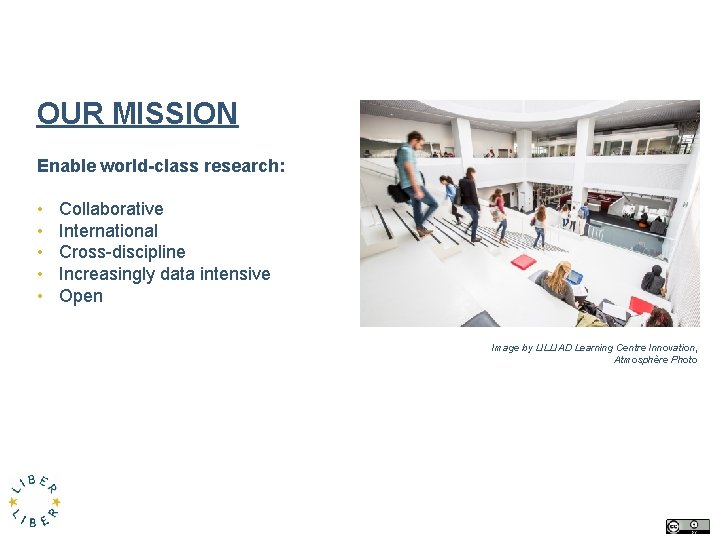
OUR MISSION Enable world-class research: • • • Collaborative International Cross-discipline Increasingly data intensive Open Image by LILLIAD Learning Centre Innovation, Atmosphère Photo
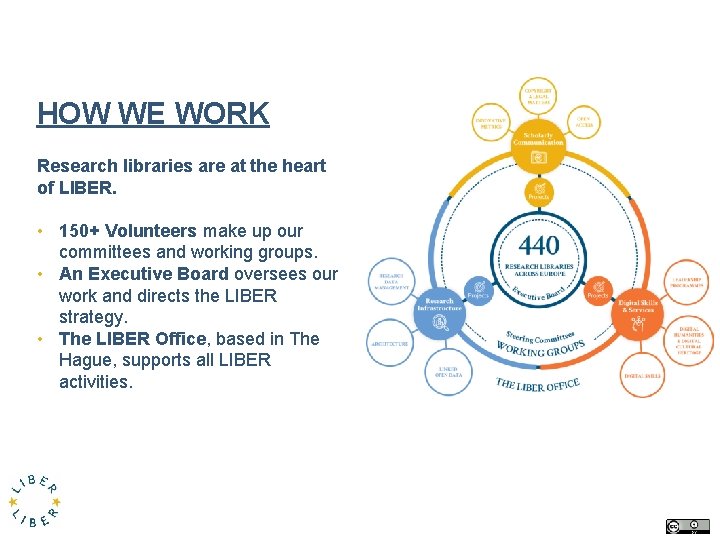
HOW WE WORK Research libraries are at the heart of LIBER. • 150+ Volunteers make up our committees and working groups. • An Executive Board oversees our work and directs the LIBER strategy. • The LIBER Office, based in The Hague, supports all LIBER activities.
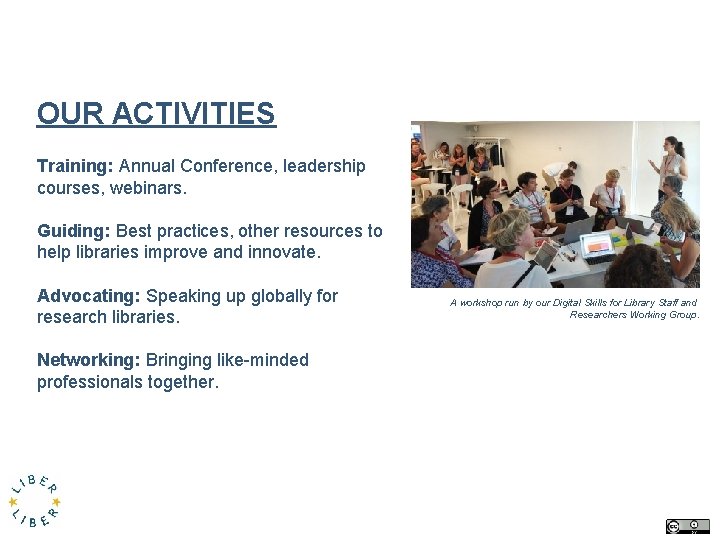
OUR ACTIVITIES Training: Annual Conference, leadership courses, webinars. Guiding: Best practices, other resources to help libraries improve and innovate. Advocating: Speaking up globally for research libraries. Networking: Bringing like-minded professionals together. A workshop run by our Digital Skills for Library Staff and Researchers Working Group.
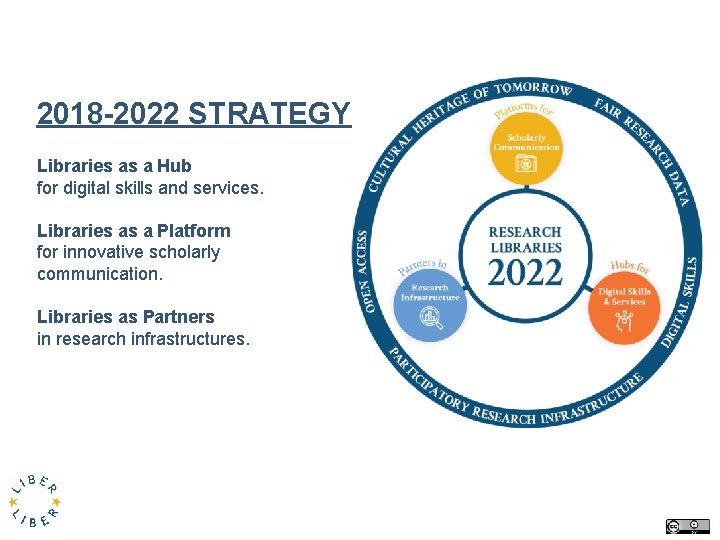
2018 -2022 STRATEGY Libraries as a Hub for digital skills and services. Libraries as a Platform for innovative scholarly communication. Libraries as Partners in research infrastructures.
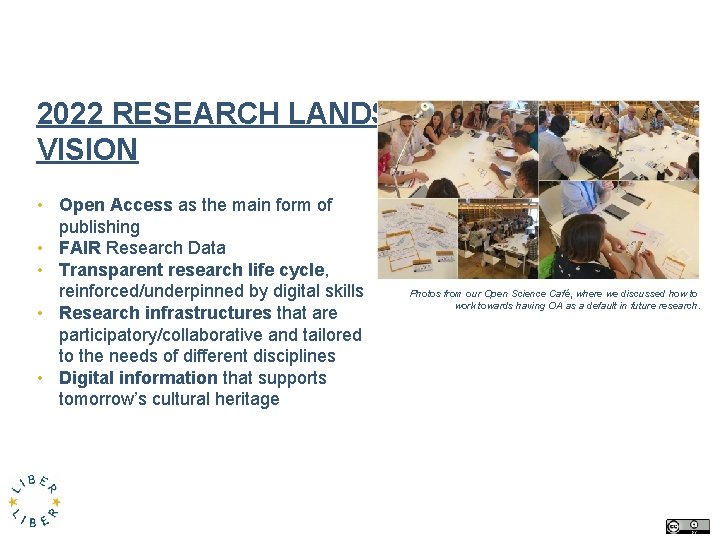
2022 RESEARCH LANDSCAPE VISION • Open Access as the main form of publishing • FAIR Research Data • Transparent research life cycle, reinforced/underpinned by digital skills • Research infrastructures that are participatory/collaborative and tailored to the needs of different disciplines • Digital information that supports tomorrow’s cultural heritage Photos from our Open Science Café, where we discussed how to work towards having OA as a default in future research.

OPEN SCIENCE ROADMAP • Supporting and inspiring LIBER libraries to do more with Open Science • • • Principles Cultural Change Seven Focus Areas Recommendations Case Studies • Together with the LIBER strategy the OSR guides and inspires libraries to advance Open Science
THREE KEY PRINCIPLES 1. TRANSPARENCY The whole research cycle should be as transparent as possible ▪ Research outputs, code, methods, peer review Libraries should support transparency by, for example, sharing licensing information (costs, contracts, etc. ) 2. SUSTAINABILITY Research outputs, infrastructures and funding should all be sustainable Libraries should provide services for standardised metadata including persistent identifiers and long term preservation solutions + make sure the contracts made contain archival rights 3. COLLABORATION The spirit of collaboration on a local, European, and global level is deeply embedded in libraries. This is why libraries are powerful in fostering Open Science • Sharing best practices, case studies and by developing common standards and services
CULTURAL CHANGE The openness I am advocating would be a giant cultural shift in how science is done, a second open science revolution extending and completing the first open science revolution, of the 17 th and 18 th centuries. (Bartling & Friesike, 2014) Open Science is very much about cultural change Libraries can advance the change of culture by ▪ ▪ ▪ Raising awareness and training students, researchers, staff members and citizens on the different aspects of Open Science Communicating inspiring outcomes of Open Science Embedding openness in all library activities and services Sharing inspiring examples Making sure the institution has an Open Science policy
SEVEN FOCUS AREAS Focus areas are based on the OSPP action lines ▪ ▪ ▪ ▪ Scholarly Publishing FAIR Data Research Infrastructures and the EOSC Metrics and Rewards Open Science Skills Research Integrity Citizen Science
LIBER RECOMMENDATIONS 30 recommendations for Open Science, for example: ▪ ▪ ▪ ▪ Publish without delays Recruit staff with good data skills and train personnel to promote FAIR principles Contribute to the ongoing development of the EOSC by offering feedback, either directly or through LIBER, and by sharing best practices that support Open Science Endorse the San Francisco Declaration on Research Assessment (DORA) and the Leiden Manifesto Coordinate with other partners to provide a multidisciplinary one-stop-shop for researchers to support them at every stage of the research process in their Open Science workflow Participate in establishing a Code of Conduct for Research Integrity within your institution. This code should align with the core principles for Open Science, such as openness, transparency, and accountability in all aspects of research Promote the library as an active partner in Citizen Science and develop the necessary infrastructure to effectively support the public in their research work
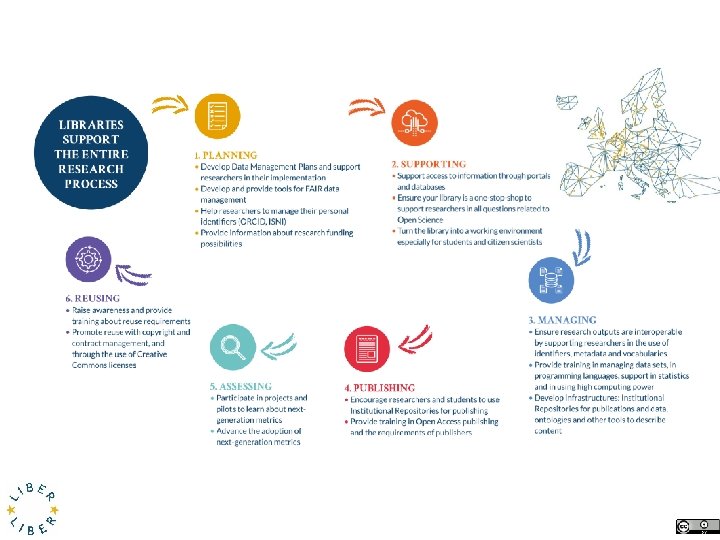
BACKGROUND LIBER roadmap was inspired by the work of the OSPP & The Integrated Advice of the Open Science Policy Platform LERU has published: Open Science and its role in universities: a roadmap for cultural change ▪ ▪ LERU roadmap is aimed at the whole university LIBER’s roadmap is focused on research libraries
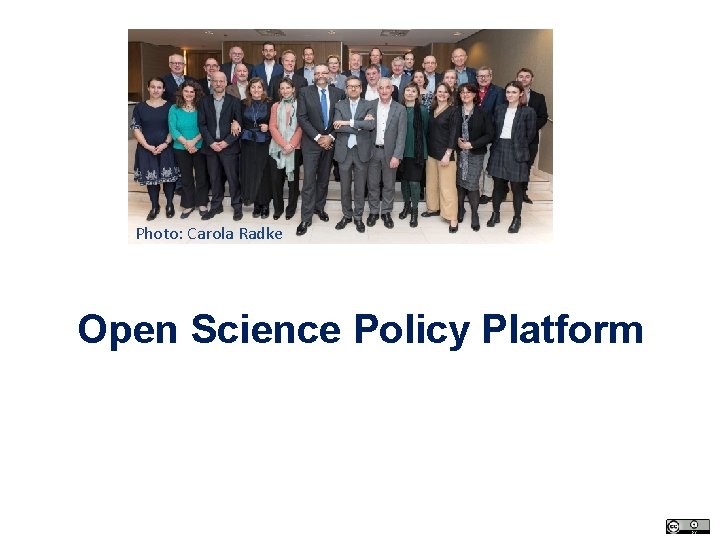
Photo: Carola Radke Open Science Policy Platform
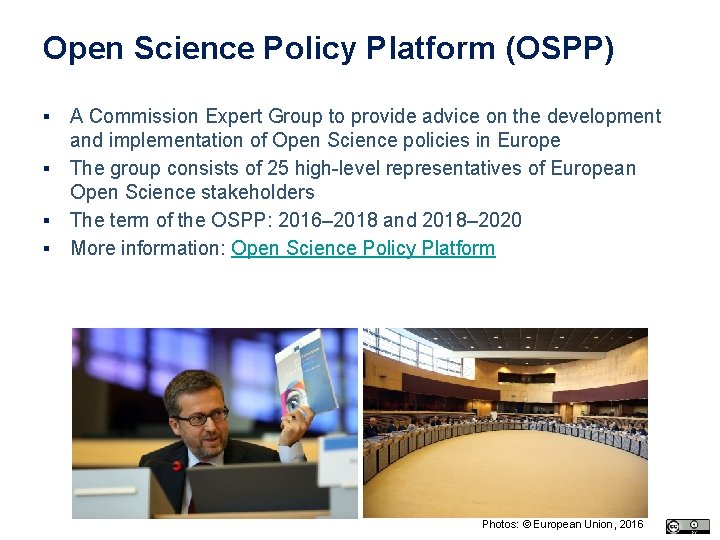
Open Science Policy Platform (OSPP) ▪ A Commission Expert Group to provide advice on the development and implementation of Open Science policies in Europe ▪ The group consists of 25 high-level representatives of European Open Science stakeholders ▪ The term of the OSPP: 2016– 2018 and 2018– 2020 ▪ More information: Open Science Policy Platform Photos: © European Union, 2016
Open Science Policy Platform: aims ▪ advise the Commission on how to develop and implement Open Science policies in practice ▪ function as a dynamic, stakeholder-driven mechanism to bring up and address issues of concern in the European science and research community ▪ support policy formulation by helping to identify issues to be addressed and providing recommendations on needed policy actions ▪ support policy implementation by contributing to reviewing best practices, drawing up policies/guidelines and encouraging stakeholders to actively realise them ▪ provide recommendations on the eight action points
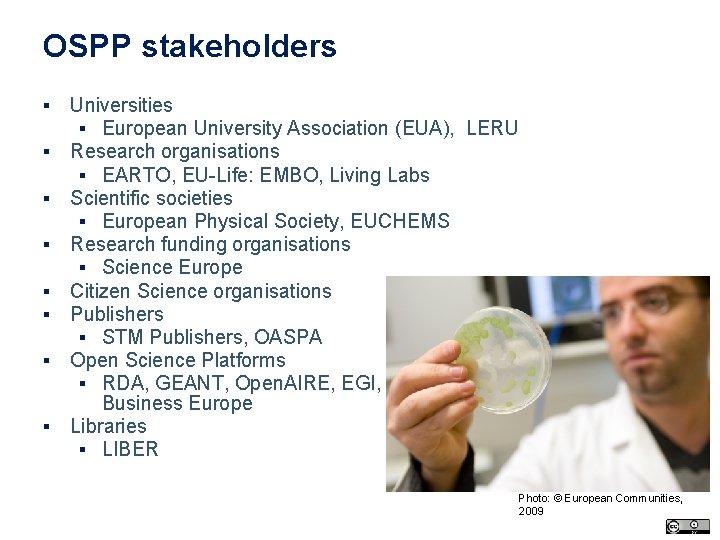
OSPP stakeholders ▪ Universities ▪ European University Association (EUA), LERU ▪ Research organisations ▪ EARTO, EU-Life: EMBO, Living Labs ▪ Scientific societies ▪ European Physical Society, EUCHEMS ▪ Research funding organisations ▪ Science Europe ▪ Citizen Science organisations ▪ Publishers ▪ STM Publishers, OASPA ▪ Open Science Platforms ▪ RDA, GEANT, Open. AIRE, EGI, Business Europe ▪ Libraries ▪ LIBER Photo: © European Communities, 2009
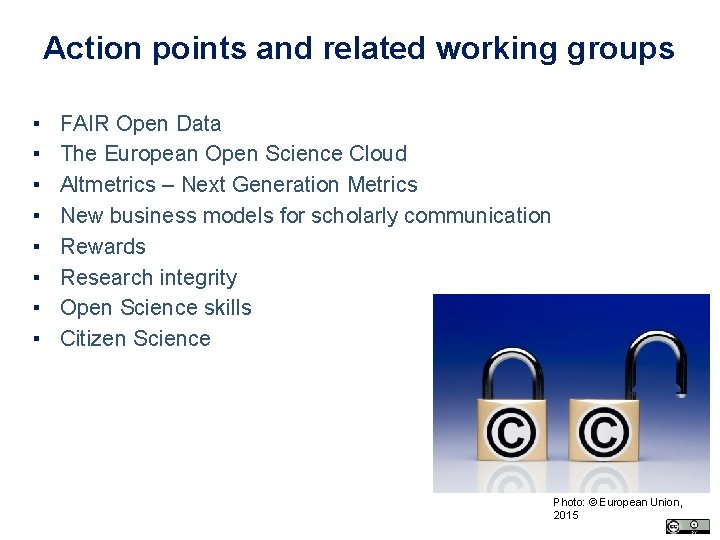
Action points and related working groups ▪ ▪ ▪ ▪ FAIR Open Data The European Open Science Cloud Altmetrics – Next Generation Metrics New business models for scholarly communication Rewards Research integrity Open Science skills Citizen Science Photo: © European Union, 2015
OSPP Integrated Advice 2018 ▪ OSPP-REC: Open Science Policy Platform Recommendations ▪ General recommendations: ▪ ▪ ▪ National coordinators Interoperable infrastructure Open Science skills Open Science literacy Raising awareness ▪ Recommendations for the eight prioritised Open Science ambitions
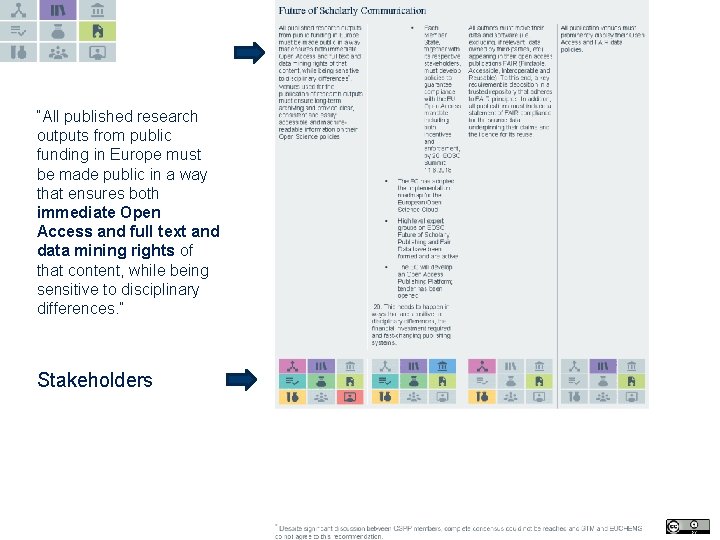
“All published research outputs from public funding in Europe must be made public in a way that ensures both immediate Open Access and full text and data mining rights of that content, while being sensitive to disciplinary differences. ” Stakeholders
All stakeholders have to be active to make Open Science happen- it is about collaboration!
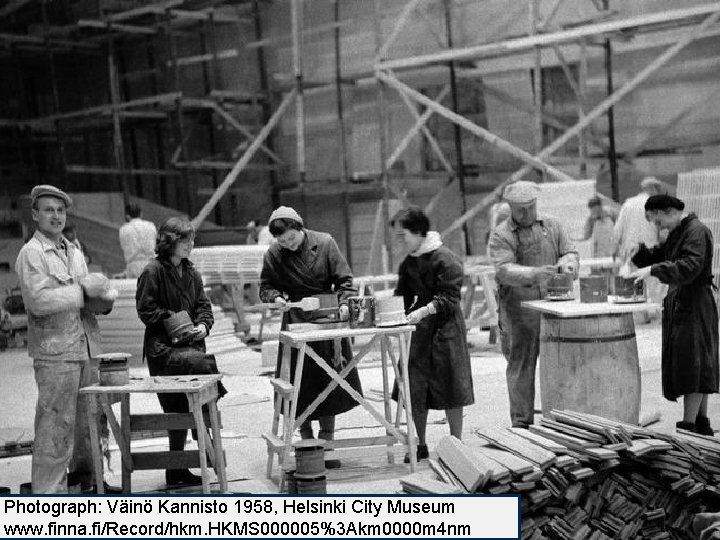
Photograph: Väinö Kannisto 1958, Helsinki City Museum www. finna. fi/Record/hkm. HKMS 000005%3 Akm 0000 m 4 nm
Thank you! kristiina. hormia@helsinki. fi @Hormia. Kristiina https: //www. nationallibrary. fi/ THE NATIONAL LIBRARY OF FINLAND
- Slides: 31