
The role of landmarks in the development of


- Slides: 13
The role of landmarks in the development of object location memory Jessie Bullens http: //wayfinding. fss. uu. nl
- Introduction - Object Location Memory & Orientation • Egocentric ‘snapshot’ • Local landmark cues • Distal landmark cues: allocentric representation • Egocentric spatial updating
- Introduction - Nardini et al. , 2006
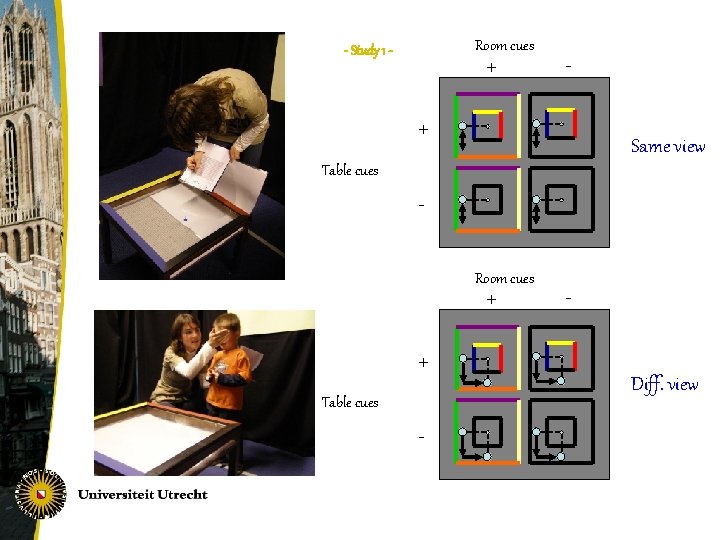
Room cues - Study 1 - + Same view Table cues - Room cues + - + Diff. view Table cues -
- Results Study 1 - • Radial error: age effect, children 5 years of age differed year-olds • Angular error: no age effect > table cues available > room cues available when viewpoint changed from 7 and 10 -
- Introduction - Kiel Locomotor Maze Leplow et al. , 2003
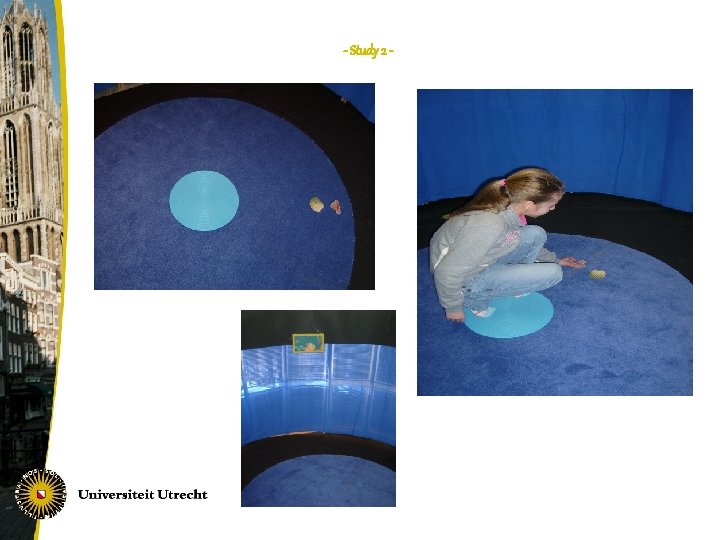
- Study 2 -
- Results Study 2 -
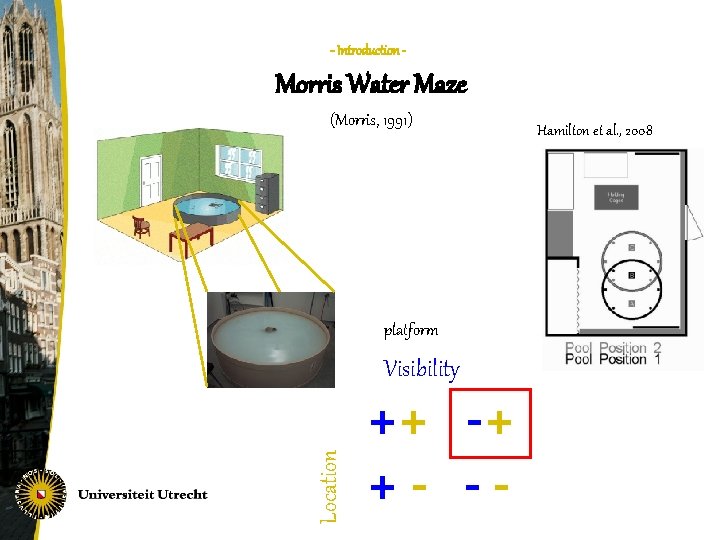
- Introduction - Morris Water Maze (Morris, 1991) Hamilton et al. , 2008 platform Visibility Location ++ -+ +- --
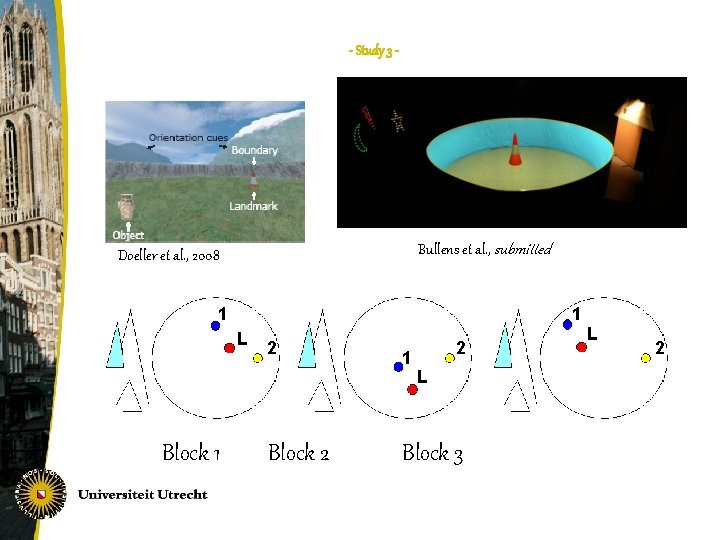
- Study 3 - Bullens et al. , submitted Doeller et al. , 2008 1 1 L Block 1 2 Block 2 1 2 L Block 3 L 2
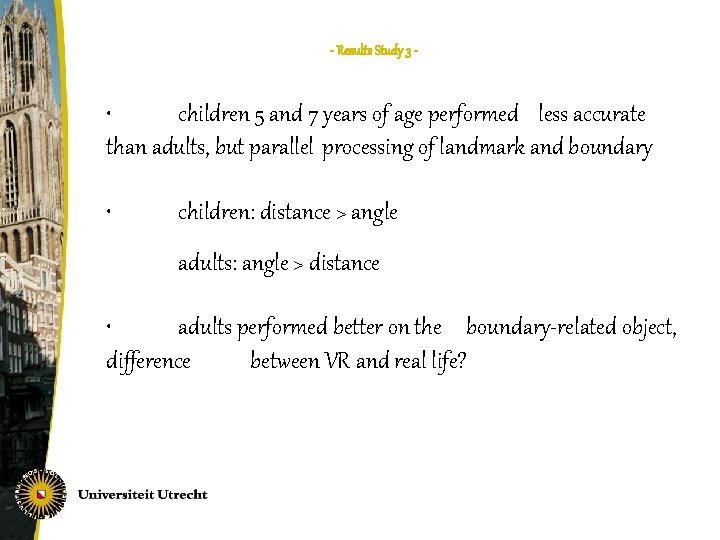
- Results Study 3 - • children 5 and 7 years of age performed less accurate than adults, but parallel processing of landmark and boundary • children: distance > angle adults: angle > distance • adults performed better on the boundary-related object, difference between VR and real life?
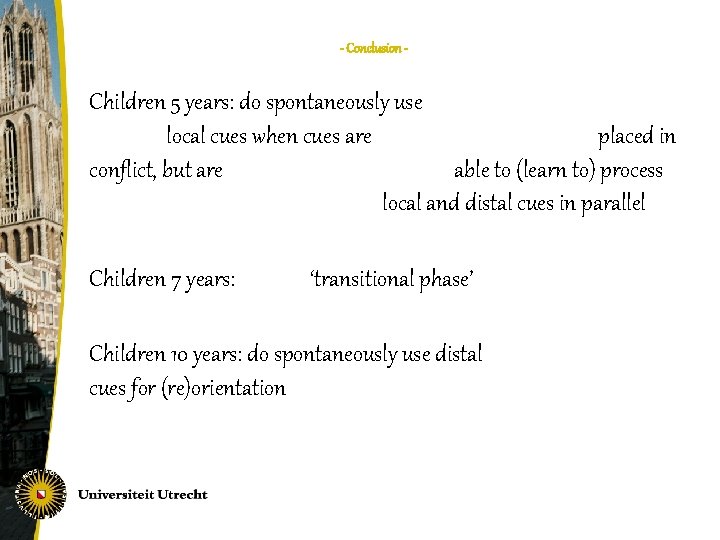
- Conclusion - Children 5 years: do spontaneously use local cues when cues are placed in conflict, but are able to (learn to) process local and distal cues in parallel Children 7 years: ‘transitional phase’ Children 10 years: do spontaneously use distal cues for (re)orientation
Questions?