
The role of interoperability in the digital energy
The role of interoperability in the digital energy vision Marcelo Masera Joint Research Centre
Topics • Digital energy: what’s new? • From standards to SGAM to interoperability • Interoperability testing • Interoperability & laboratories
DIGITAL ENERGY Digital transformation of energy systems – all stages, all levels • Already being deployed: smart meters, energy management systems, automated demand response, microgrids, markets, services to end consumers… • And parallel items: Io. T, devices and appliances, autonomous vehicles… It is not the patchwork: it is about the system effect Main characteristics: • Connectivity: within the power system, and with the power system (houses, cars…) • Data accessibility, processing and brokering: integration, analytics, etc. • Smartness: contextual awareness, anticipation…
Digital energy investments and impact Impressive global investment growth in digital electricity infrastructure and software • over 20% annually since 2014, reaching USD 47 billion in 2016 • digital investment in 2016 was almost 40% higher than investment in gas-fired power generation worldwide (USD 34 billion) and almost equal to total investment in India’s electricity sector (USD 55 billion) (Source IEA) Potential impact: • better integration of RES, storage, Evs… • reduce the energy intensity of providing goods and services • Better management of grids and markets But • induce rebound effects that increase overall energy use • raising new security and privacy risks • disrupting the industrial landscape with loss of capabilities wrt reliability, quality, etc.
Standards Coordination Group on Smart Energy Grids (CG-SEG) • 2011 Smart Grid Mandate M/490 • Until 2016 CEN-CENELEC-ETSI Smart Grid Coordination Group • 2014: Smart Grid Interoperability IEC Sy. C Smart Energy And many industrial initiatives: SAREF, smart meters… EC Smart Grids Task Force, Expert Group 1 – Standards and Interoperability 5
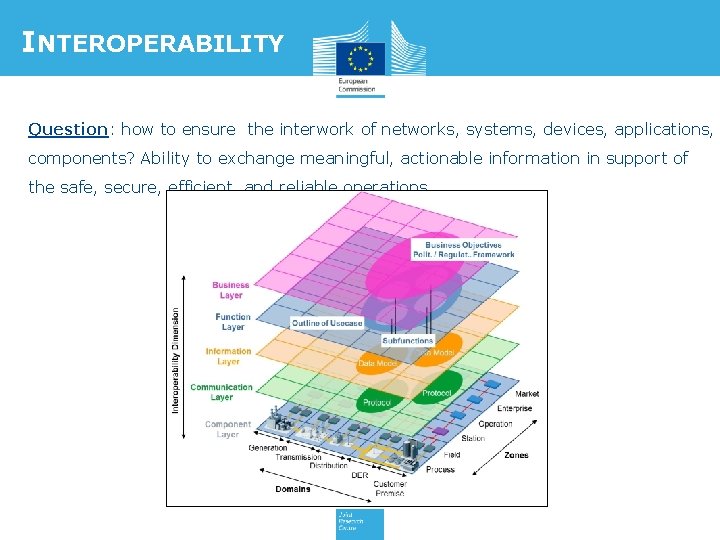
INTEROPERABILITY Question: how to ensure the interwork of networks, systems, devices, applications, components? Ability to exchange meaningful, actionable information in support of the safe, secure, efficient, and reliable operations
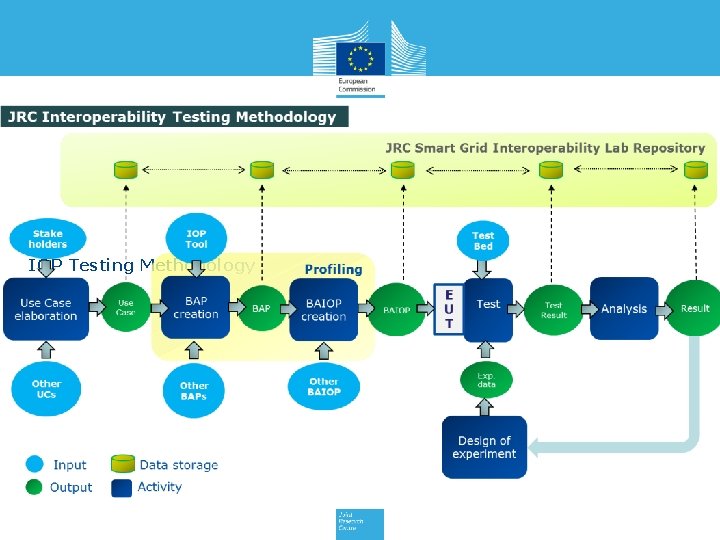
IOP Testing Methodology
Why we need interoperability testing? SG IOP METHODOLOGY Ensure integration and market creation Integration, affecting components, information, systems and applications Standards Different standards can have overlapping or interrelated requirements Few standards have been through in light of future interoperability Technologies Incompatible implementations e. g. Smart Meters Technical issues (e. g. EMC) to implement functions and interfaces BAP and BAIOP specification needs to be further explored – a template is needed Regulatory Barriers or challenges preventing implementations of functions and/or interfaces
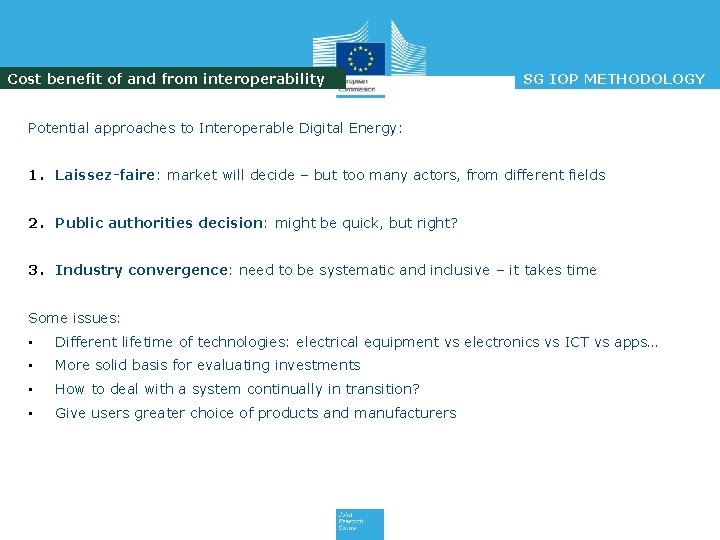
Cost benefit of and from interoperability SG IOP METHODOLOGY Potential approaches to Interoperable Digital Energy: 1. Laissez-faire: market will decide – but too many actors, from different fields 2. Public authorities decision: might be quick, but right? 3. Industry convergence: need to be systematic and inclusive – it takes time Some issues: • Different lifetime of technologies: electrical equipment vs electronics vs ICT vs apps… • More solid basis for evaluating investments • How to deal with a system continually in transition? • Give users greater choice of products and manufacturers
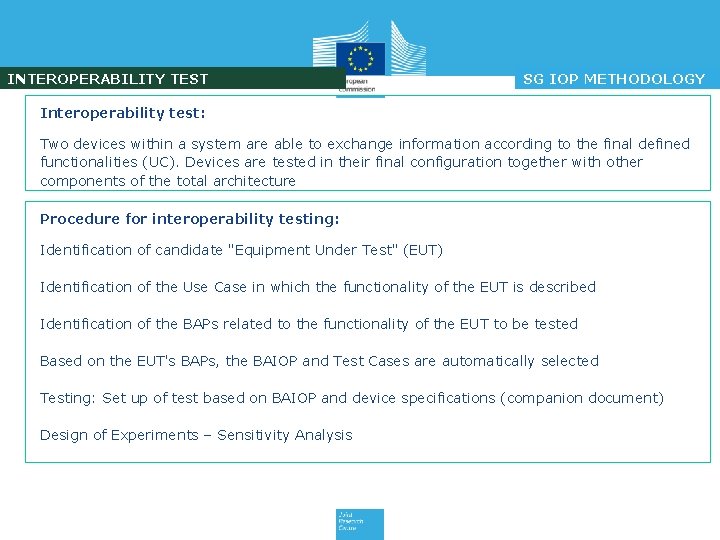
INTEROPERABILITY TEST SG IOP METHODOLOGY Interoperability test: Two devices within a system are able to exchange information according to the final defined functionalities (UC). Devices are tested in their final configuration together with other components of the total architecture Procedure for interoperability testing: Identification of candidate "Equipment Under Test" (EUT) Identification of the Use Case in which the functionality of the EUT is described Identification of the BAPs related to the functionality of the EUT to be tested Based on the EUT's BAPs, the BAIOP and Test Cases are automatically selected Testing: Set up of test based on BAIOP and device specifications (companion document) Design of Experiments – Sensitivity Analysis
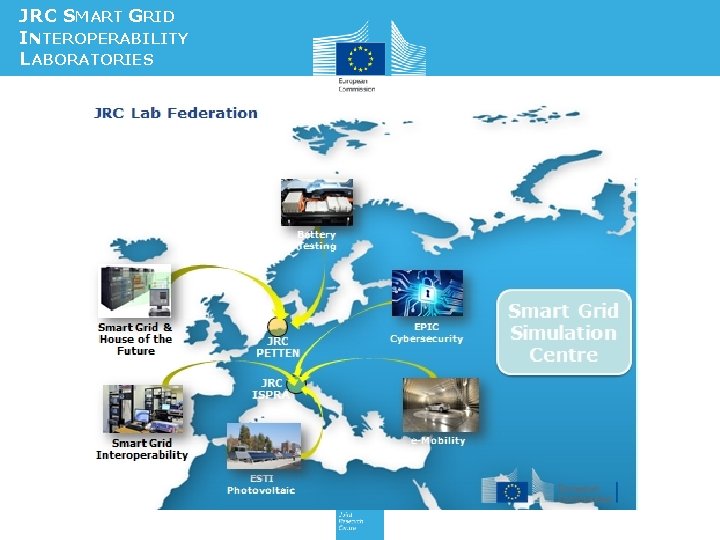
JRC SMART GRID INTEROPERABILITY LABORATORIES
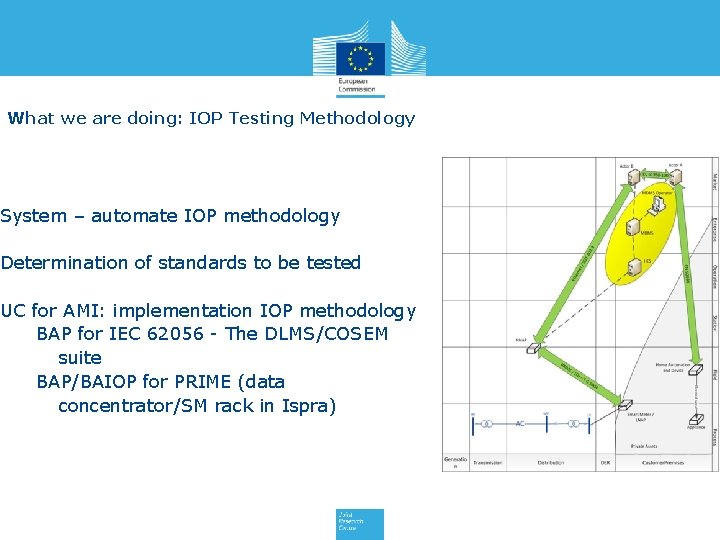
What we are doing: IOP Testing Methodology System – automate IOP methodology Determination of standards to be tested UC for AMI: implementation IOP methodology BAP for IEC 62056 - The DLMS/COSEM suite BAP/BAIOP for PRIME (data concentrator/SM rack in Ispra)
Vision • Promote a common approach to IOP testing • Facilitate the establishment of a network of IOP Test Beds • Offer a proven IOP Testing methodology • Create a neutral testing environment as proof of concept • Offer an environment for the promotion of UC, BAP, BAIOP and test results • Support innovation – pioneering ideas
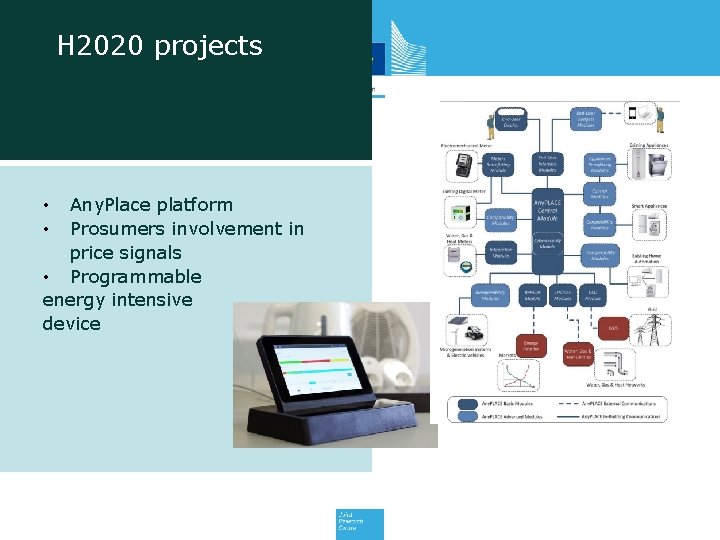
H 2020 projects Any. Place platform Prosumers involvement in price signals • Programmable energy intensive device • •
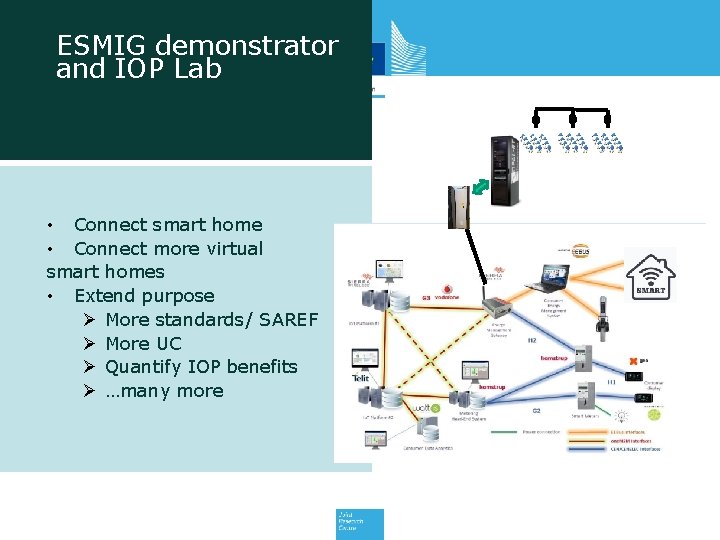
ESMIG demonstrator and IOP Lab • Connect smart home • Connect more virtual smart homes • Extend purpose Ø More standards/ SAREF Ø More UC Ø Quantify IOP benefits Ø …many more
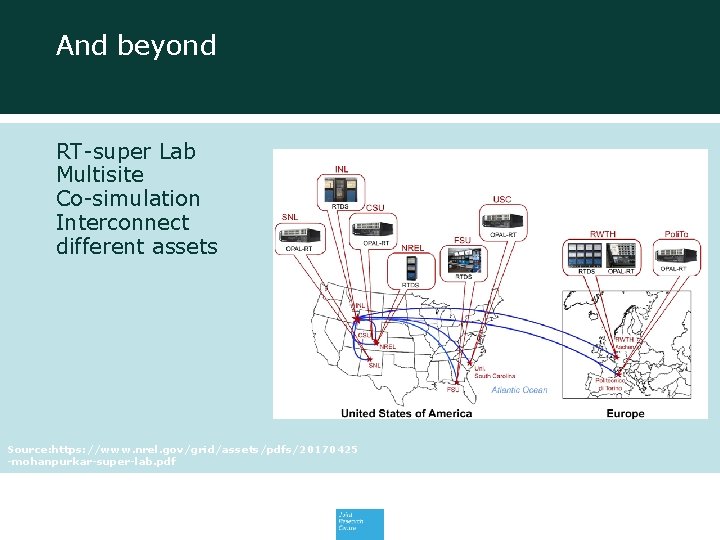
And beyond RT-super Lab Multisite Co-simulation Interconnect different assets Source: https: //www. nrel. gov/grid/assets/pdfs/20170425 -mohanpurkar-super-lab. pdf

Thanks for your attention! http: //ses. jrc. europa. eu/
- Slides: 17