
The Role of IMC in the Marketing Process
- Slides: 30
The Role of IMC in the Marketing Process Chapter 2
Learning objectives • To understand marketing process • To understand the concept of target marketing • To recognize the role of market segmentation • To understand the use of positioning • To know various decision area under marketing mix
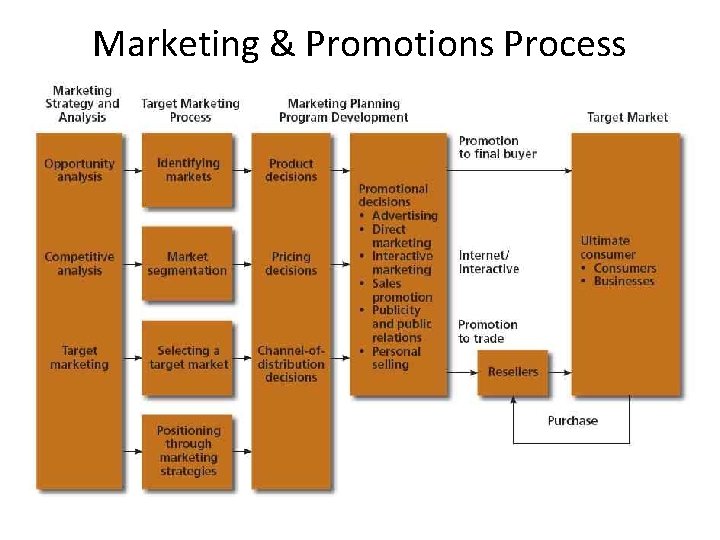
Marketing & Promotions Process Model
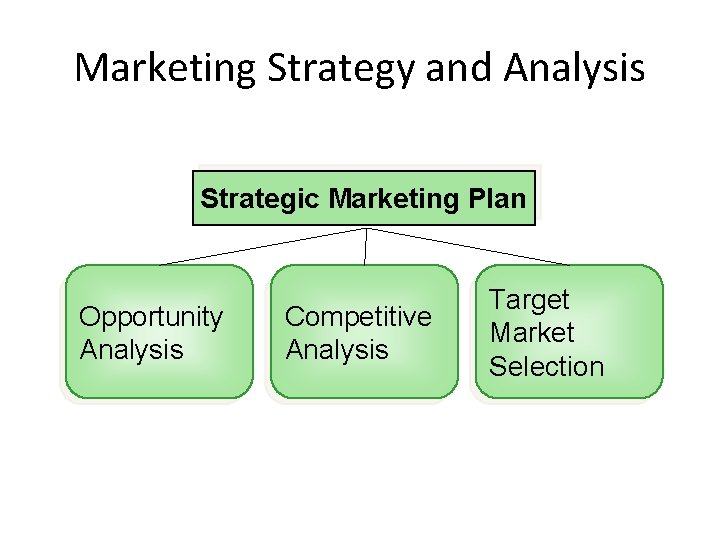
Marketing Strategy and Analysis Strategic Marketing Plan Opportunity Analysis Competitive Analysis Target Market Selection
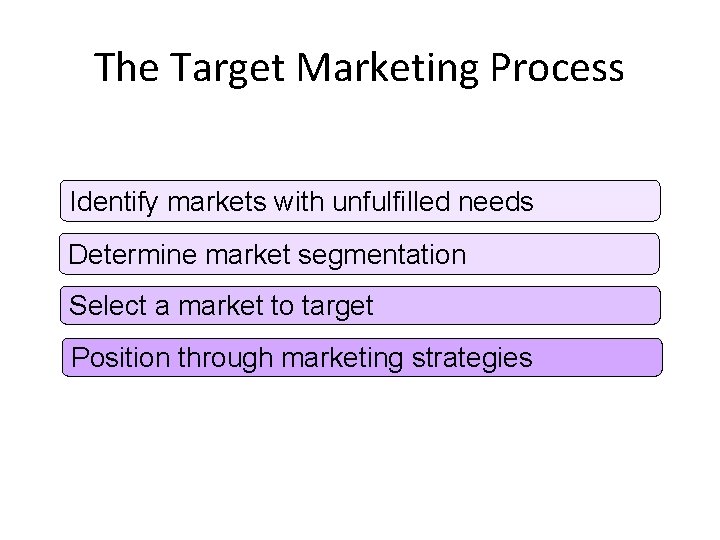
The Target Marketing Process Identify markets with unfulfilled needs Determine market segmentation Select a market to target Position through marketing strategies
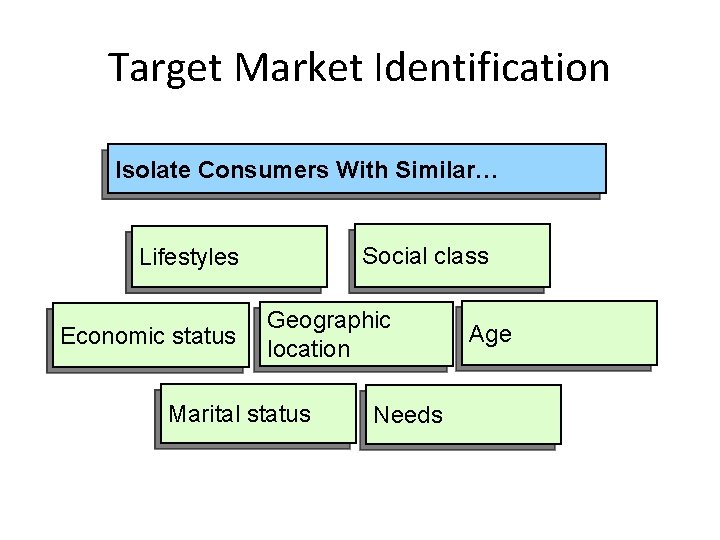
Target Market Identification Isolate Consumers With Similar… Social class Lifestyles Economic status Geographic location Marital status Needs Age
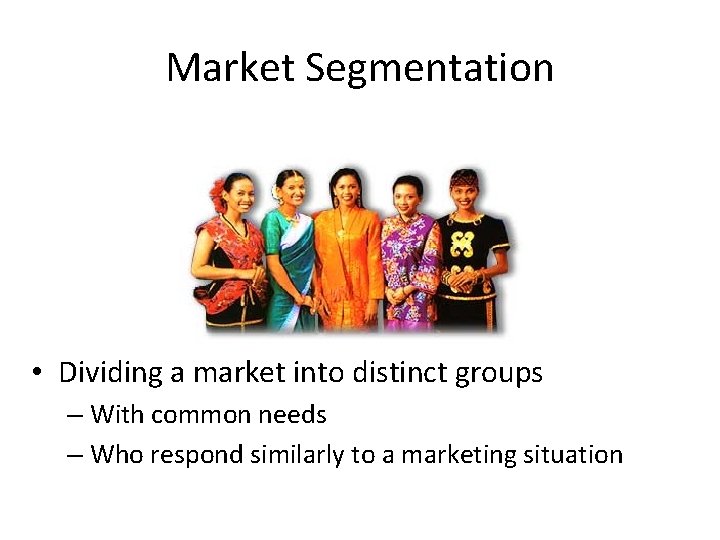
Market Segmentation • Dividing a market into distinct groups – With common needs – Who respond similarly to a marketing situation
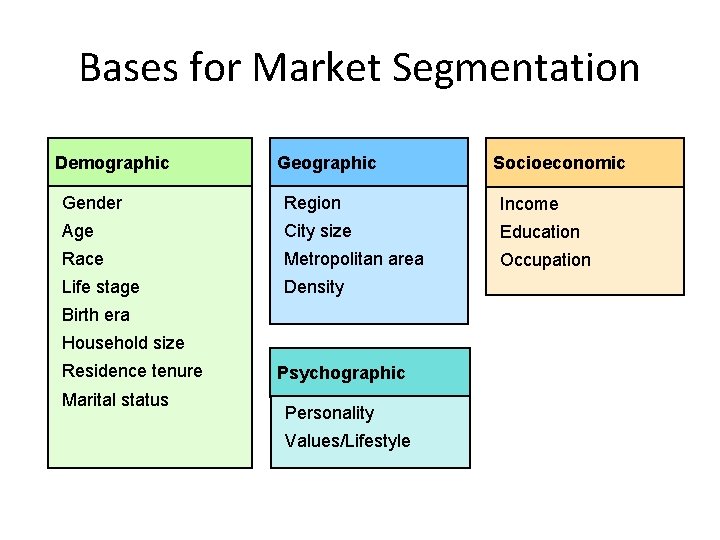
Bases for Market Segmentation Demographic Geographic Socioeconomic Gender Region Income Age City size Education Race Metropolitan area Occupation Life stage Density Birth era Household size Residence tenure Marital status Psychographic Personality Values/Lifestyle
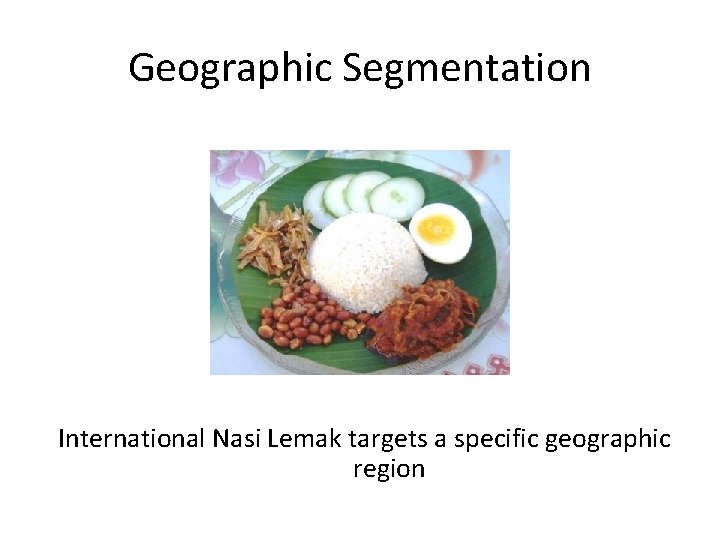
Geographic Segmentation International Nasi Lemak targets a specific geographic region
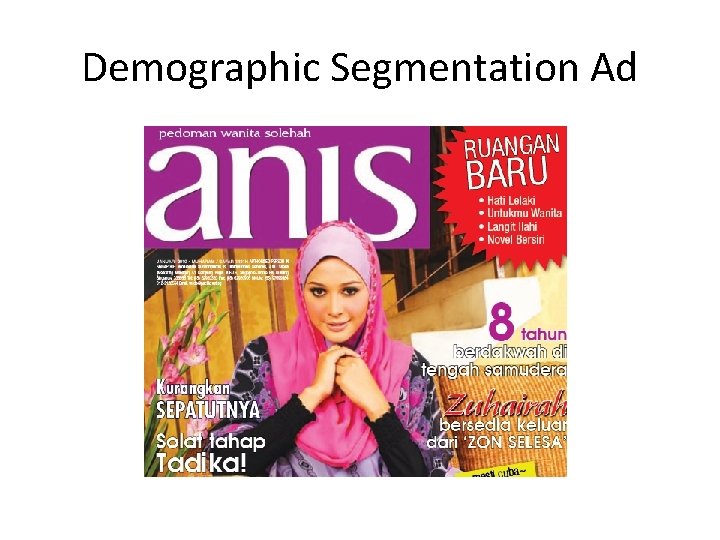
Demographic Segmentation Ad
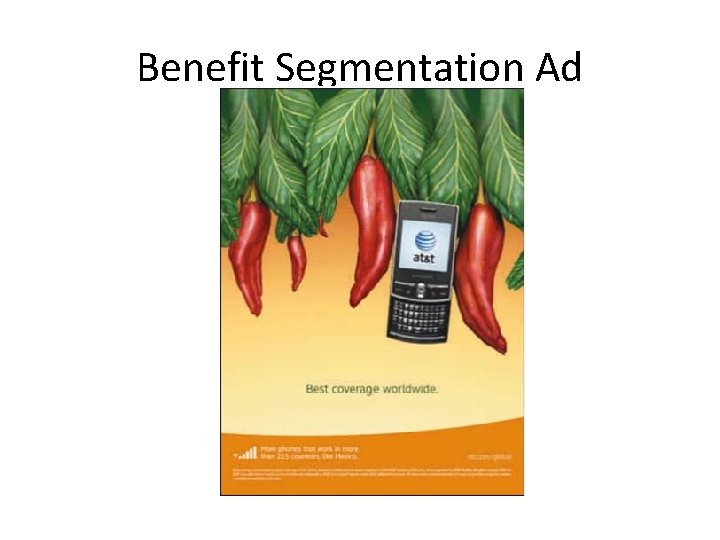
Benefit Segmentation Ad
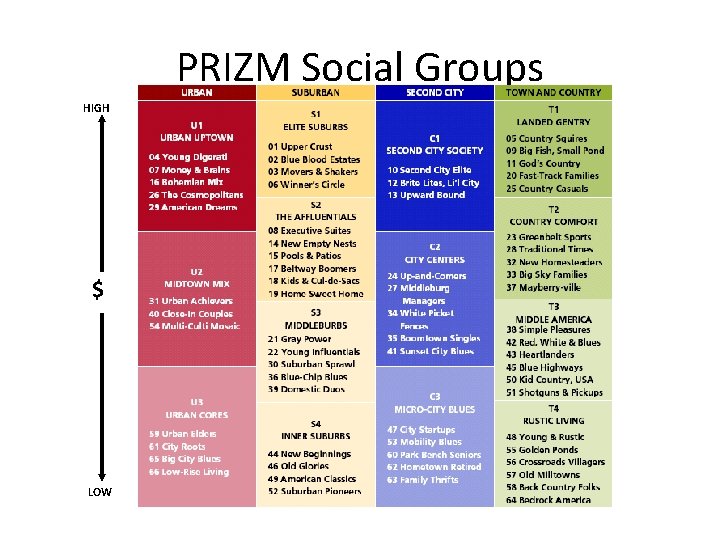
PRIZM Social Groups HIGH $ LOW
Test Your Knowledge All of the following are considered market coverage alternatives except: A) Undifferentiated B) Differentiated C) Concentrated D) Dispersed
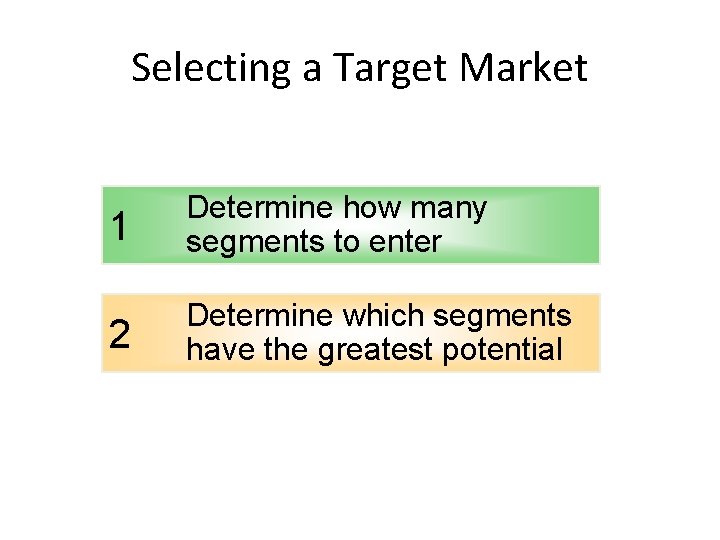
Selecting a Target Market 1 Determine how many segments to enter 2 Determine which segments have the greatest potential
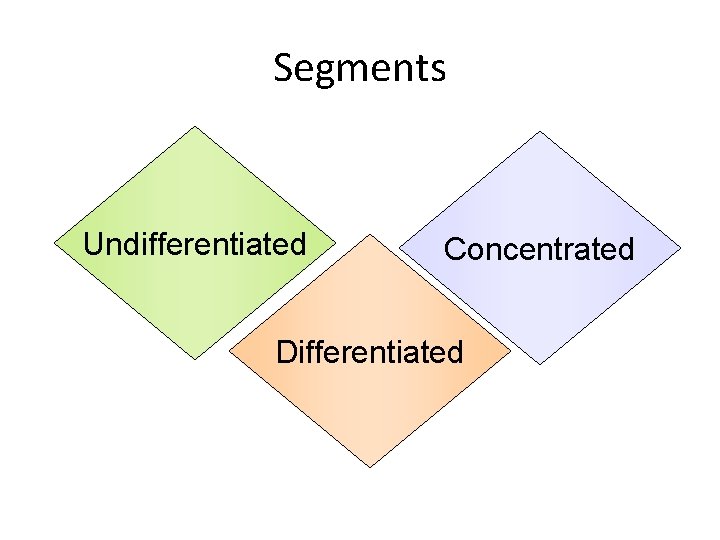
Segments Undifferentiated Concentrated Differentiated
Market Positioning Fitting the product or service to one or more segments of the broad market in such a way as to set it apart from competition
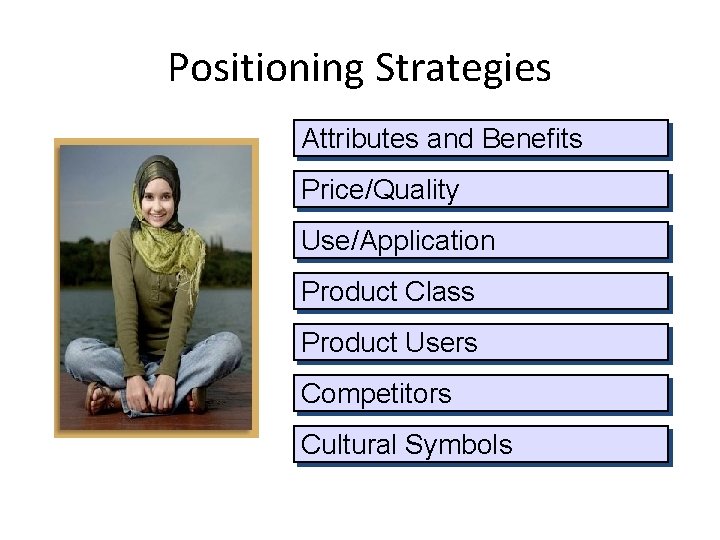
Positioning Strategies Attributes and Benefits Price/Quality Use/Application Product Class Product Users Competitors Cultural Symbols
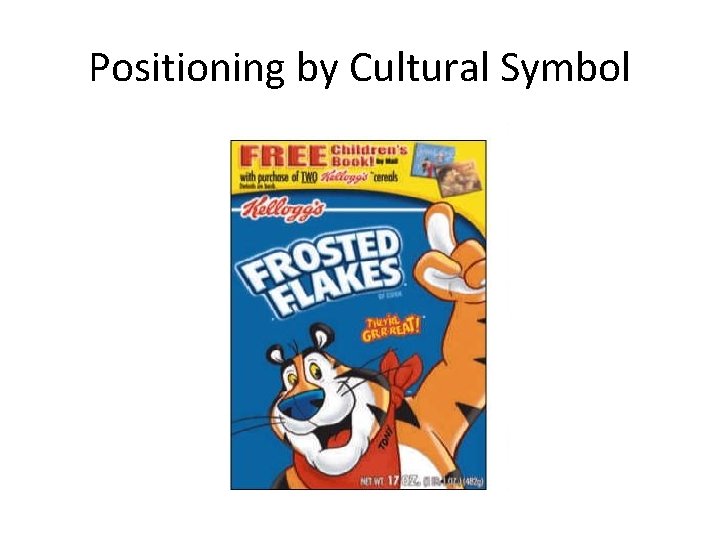
Positioning by Cultural Symbol
The Marketing Planning Program Product Decisions Promotional Strategy Distribution Channels Price Decisions
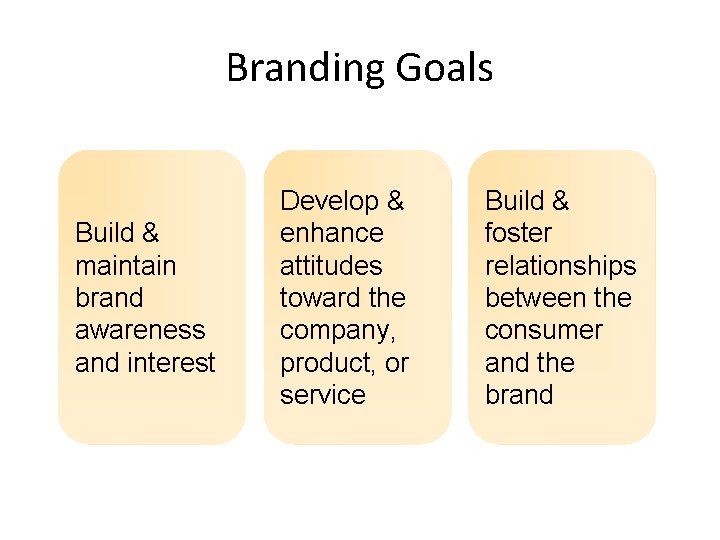
Branding Goals Build & maintain brand awareness and interest Develop & enhance attitudes toward the company, product, or service Build & foster relationships between the consumer and the brand
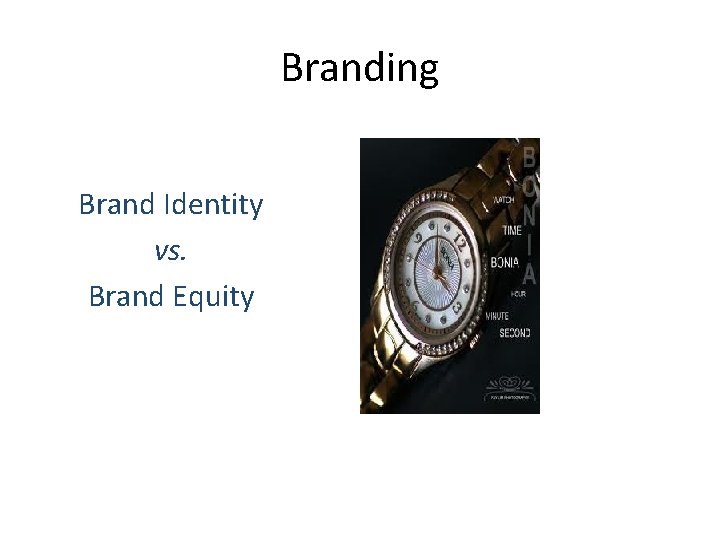
Branding Brand Identity vs. Brand Equity
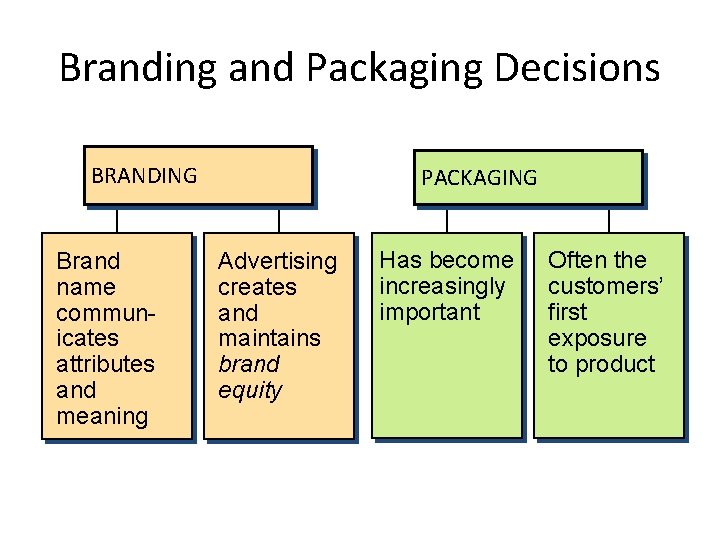
Branding and Packaging Decisions BRANDING Brand name communicates attributes and meaning PACKAGING Advertising creates and maintains brand equity Has become increasingly important Often the customers’ first exposure to product
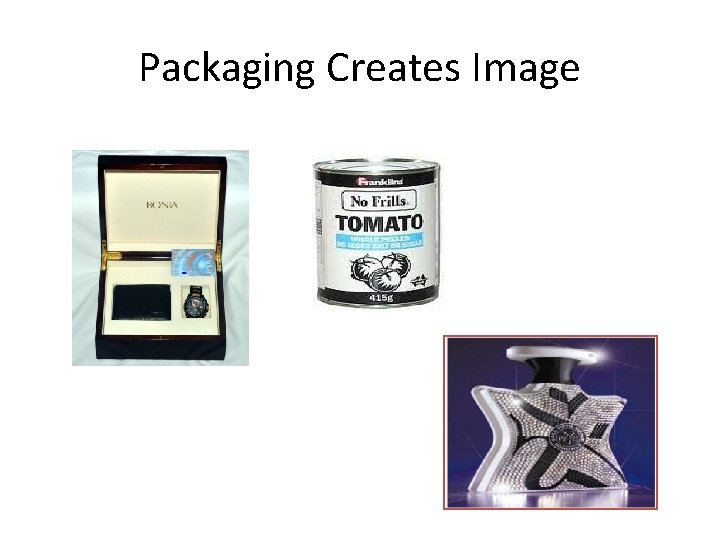
Packaging Creates Image
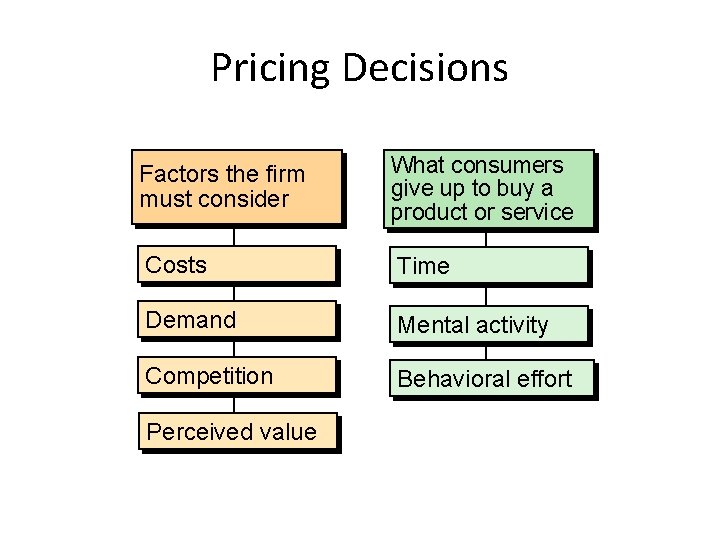
Pricing Decisions Factors the firm must consider What consumers give up to buy a product or service Costs Time Demand Mental activity Competition Behavioral effort Perceived value
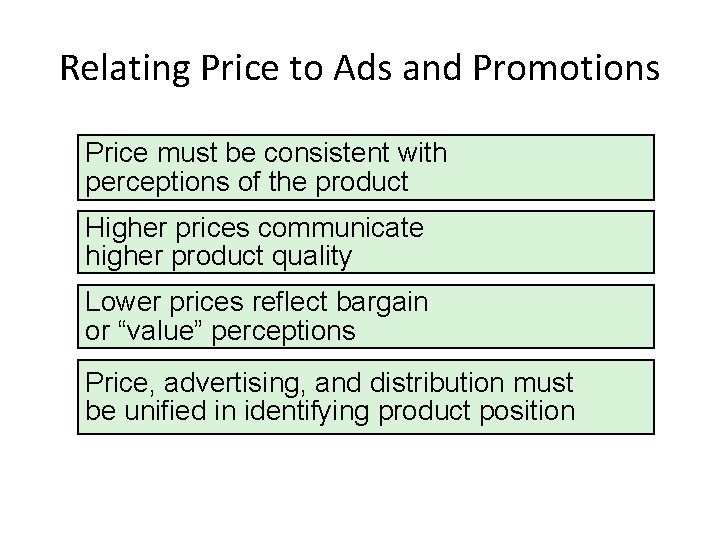
Relating Price to Ads and Promotions Price must be consistent with perceptions of the product Higher prices communicate higher product quality Lower prices reflect bargain or “value” perceptions Price, advertising, and distribution must be unified in identifying product position
Market Channels Sets of interdependent organizations involved in the process of making a product or service available for use
Channels and Image • Channels can impact communication objectives – Image – Store displays – Point-of-purchase merchandising – Shelf footage
Types of Channels • Direct – Driven by direct-response ads, telemarketing, the Internet – Often used when selling expensive and complex products • Indirect – Network of wholesalers and/or retailers
Push vs. Pull Strategies
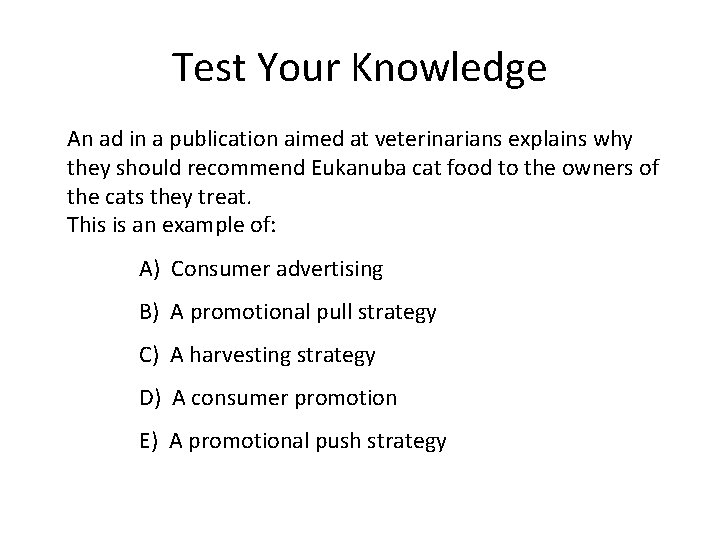
Test Your Knowledge An ad in a publication aimed at veterinarians explains why they should recommend Eukanuba cat food to the owners of the cats they treat. This is an example of: A) Consumer advertising B) A promotional pull strategy C) A harvesting strategy D) A consumer promotion E) A promotional push strategy