
The role of Government in fostering competitiveness and
- Slides: 31
The role of Government in fostering competitiveness and growth Ken Warwick Deputy Chief Economic Adviser UK Department of Trade and Industry 1
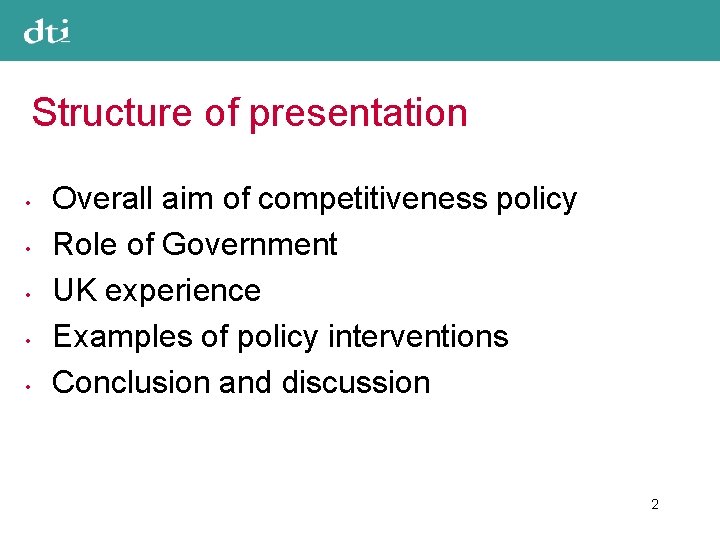
Structure of presentation • • • Overall aim of competitiveness policy Role of Government UK experience Examples of policy interventions Conclusion and discussion 2
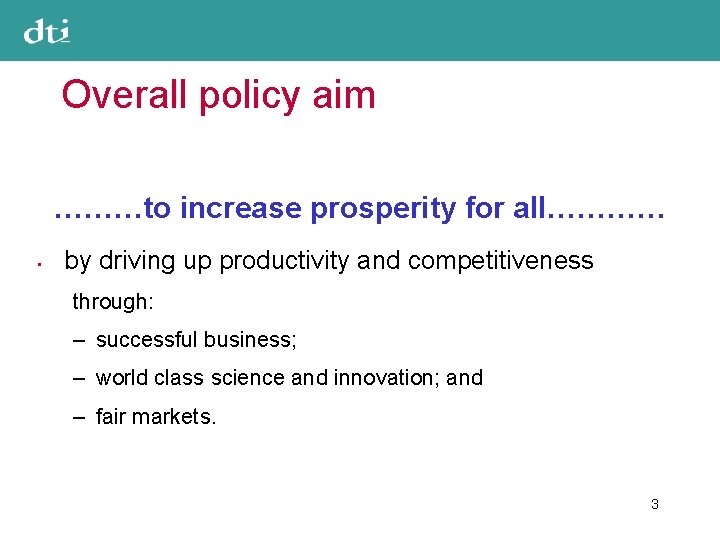
Overall policy aim ………to increase prosperity for all………… • by driving up productivity and competitiveness through: – successful business; – world class science and innovation; and – fair markets. 3
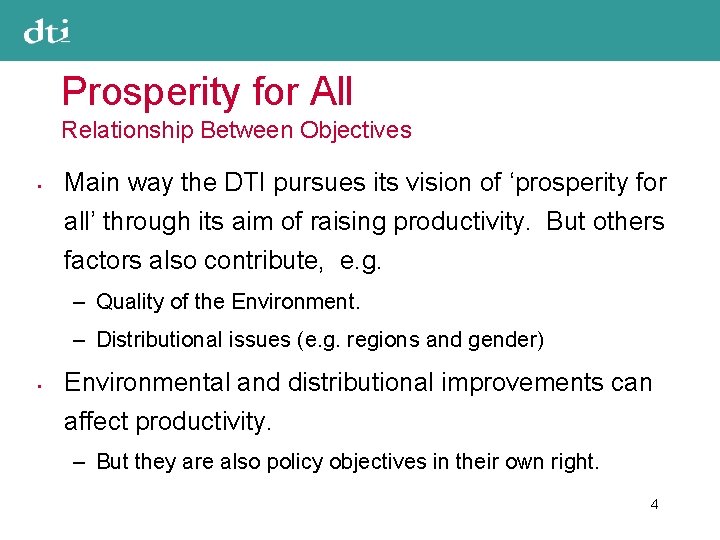
Prosperity for All Relationship Between Objectives • Main way the DTI pursues its vision of ‘prosperity for all’ through its aim of raising productivity. But others factors also contribute, e. g. – Quality of the Environment. – Distributional issues (e. g. regions and gender) • Environmental and distributional improvements can affect productivity. – But they are also policy objectives in their own right. 4
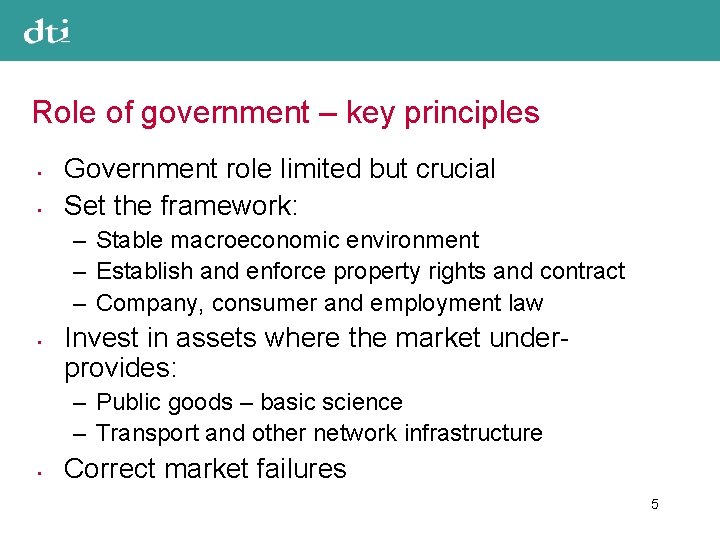
Role of government – key principles • • Government role limited but crucial Set the framework: – Stable macroeconomic environment – Establish and enforce property rights and contract – Company, consumer and employment law • Invest in assets where the market underprovides: – Public goods – basic science – Transport and other network infrastructure • Correct market failures 5
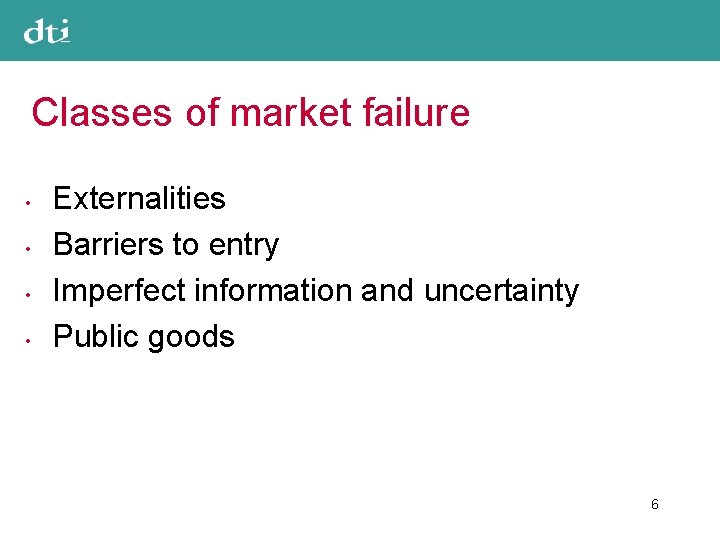
Classes of market failure • • Externalities Barriers to entry Imperfect information and uncertainty Public goods 6
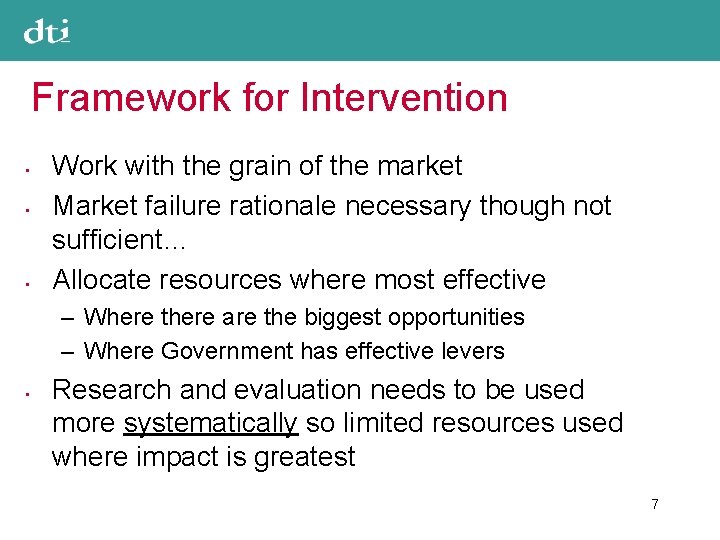
Framework for Intervention • • • Work with the grain of the market Market failure rationale necessary though not sufficient… Allocate resources where most effective – Where there are the biggest opportunities – Where Government has effective levers • Research and evaluation needs to be used more systematically so limited resources used where impact is greatest 7
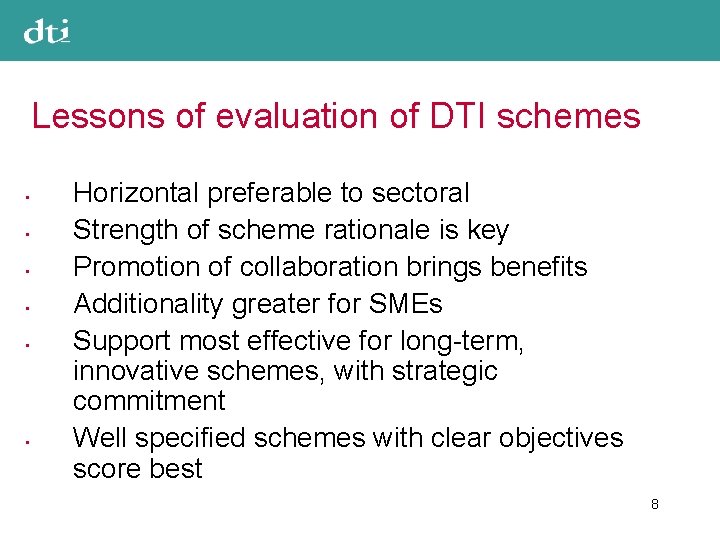
Lessons of evaluation of DTI schemes • • • Horizontal preferable to sectoral Strength of scheme rationale is key Promotion of collaboration brings benefits Additionality greater for SMEs Support most effective for long-term, innovative schemes, with strategic commitment Well specified schemes with clear objectives score best 8
DTI Business Support Review • New business support system will: – Have clear market failure rationale – Be more focused on investments to drive up productivity – Focus on improved delivery & customer relationships • • • Smaller range of products Customer access through Business Links, DTI relationship managers or delivery partners such as banks Improved monitoring and evaluation to ensure ongoing improvement in impact 9
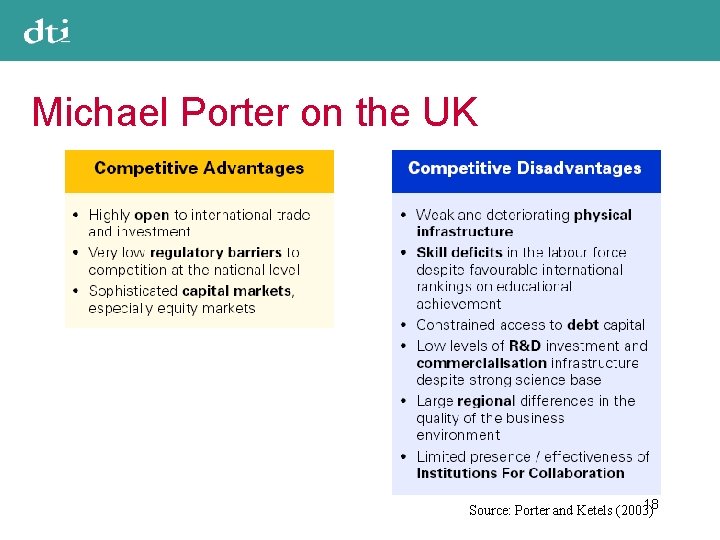
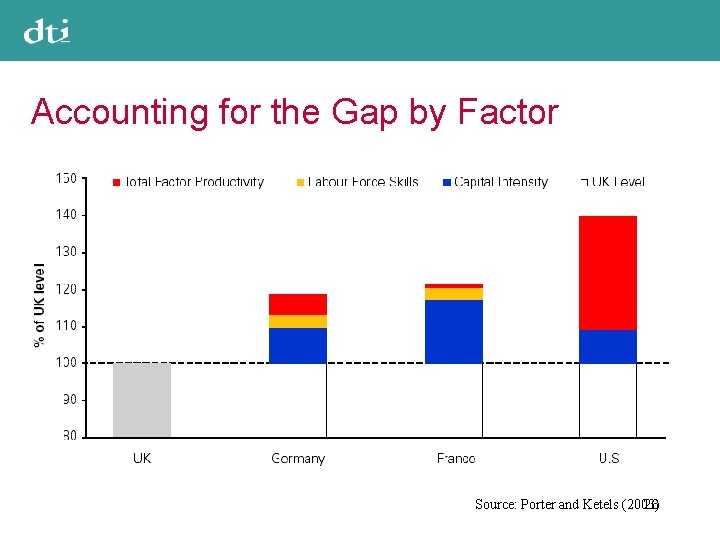
The UK experience • • UK Competitiveness: moving to the next stage, Porter and Ketels 2003 Porter identified two periods of UK economic reform – 1980 s framework improvement – 1990 s/2000 s – rebuilding the asset base 10
1980/90 s – framework reform • 1980 s - Injection of market mechanisms – De-regulation, privatisation, labour market reform • 1990 s reform of macro environment – Inflation targeting post ERM, independent central bank/fiscal rules post 1997 • Late 90 s – Reform of competition policy, company law, corporate governance 11
1990 s/2000 Asset building • Major investments in UK national assets – Science base – £ 180 bn transport programme – Education (significant improvements in literacy and numeracy) – Institutional reform 12
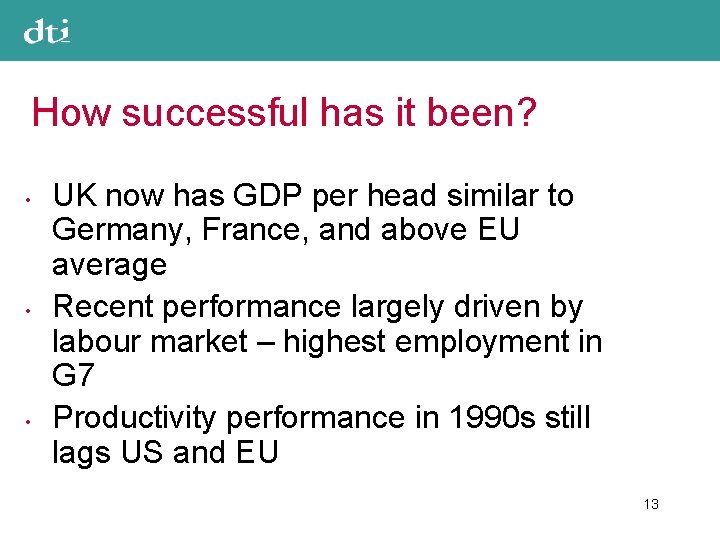
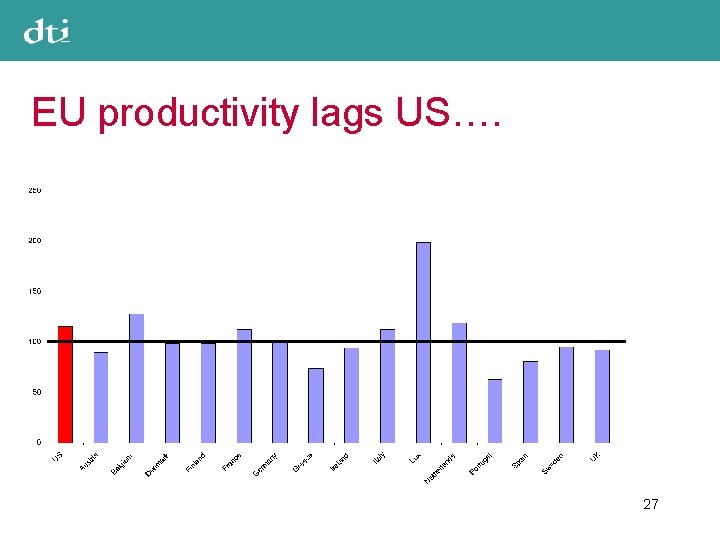
How successful has it been? • • • UK now has GDP per head similar to Germany, France, and above EU average Recent performance largely driven by labour market – highest employment in G 7 Productivity performance in 1990 s still lags US and EU 13
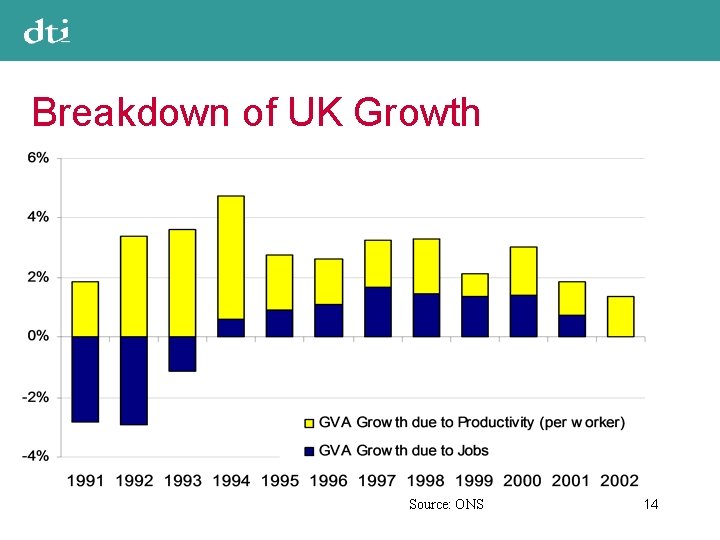
Breakdown of UK Growth Source: ONS 14
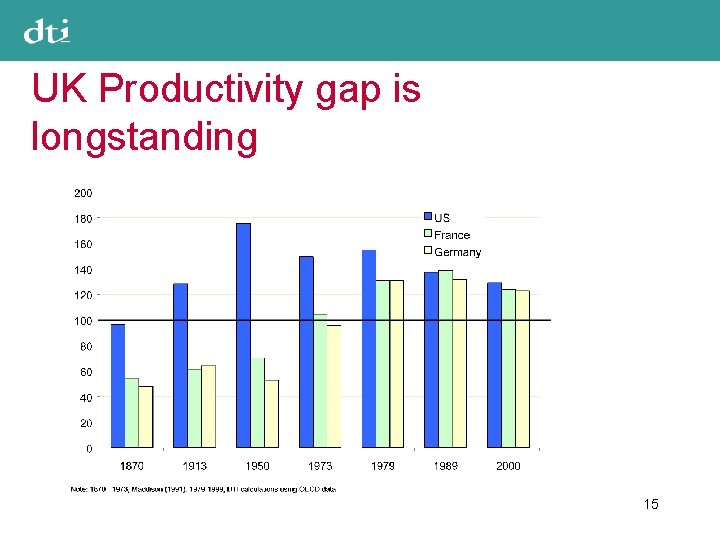
UK Productivity gap is longstanding 15
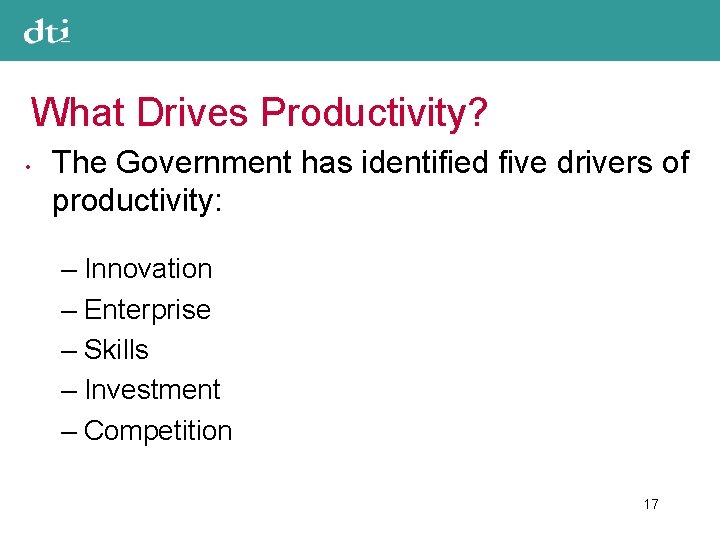
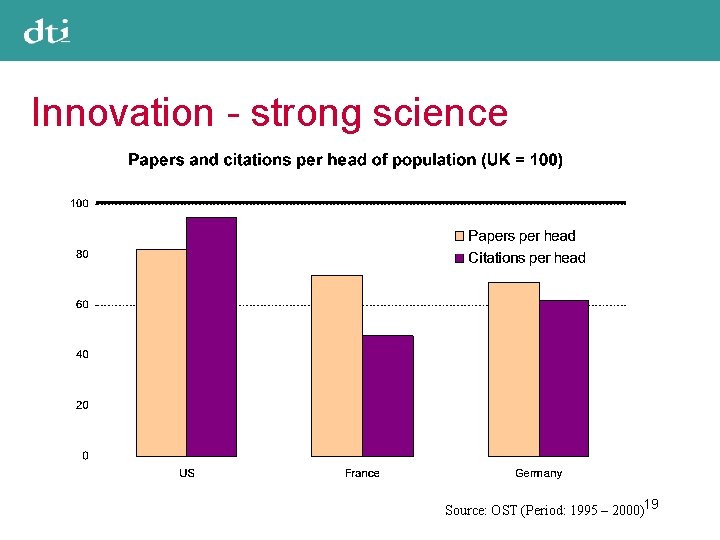
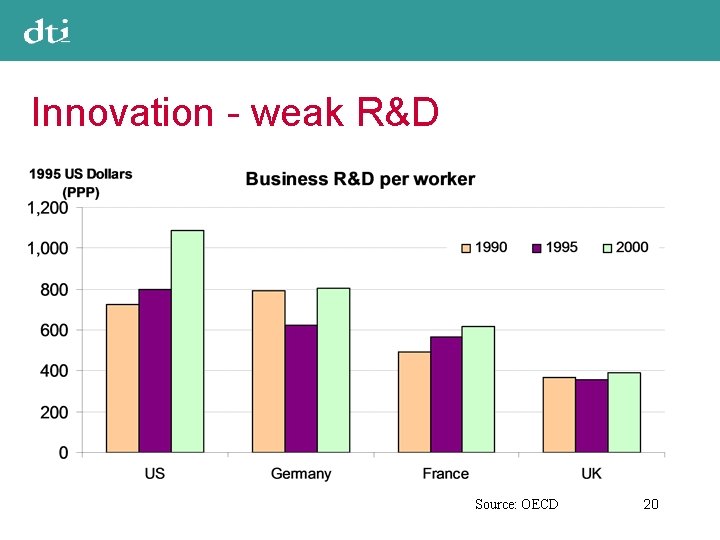
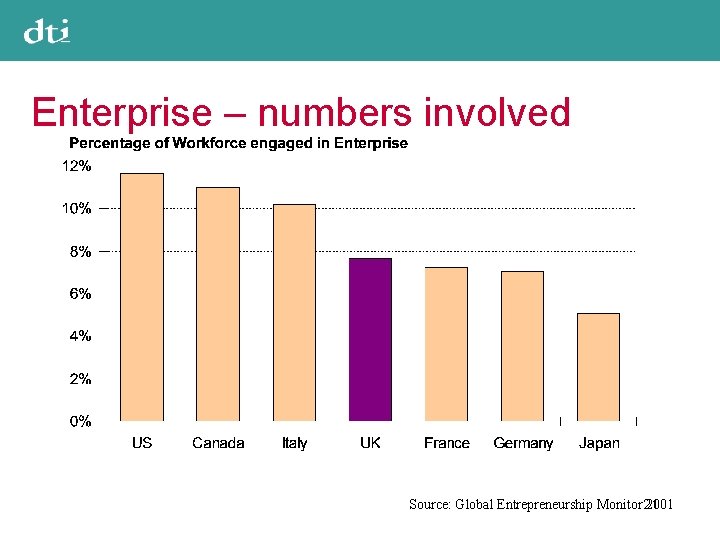
What Drives Productivity? • The Government has identified five drivers of productivity: – Innovation – Enterprise – Skills – Investment – Competition 17
Michael Porter on the UK 18 Source: Porter and Ketels (2003)
Innovation - strong science Source: OST (Period: 1995 – 2000)19
Innovation - weak R&D Source: OECD 20
Enterprise – numbers involved Source: Global Entrepreneurship Monitor 21 2001
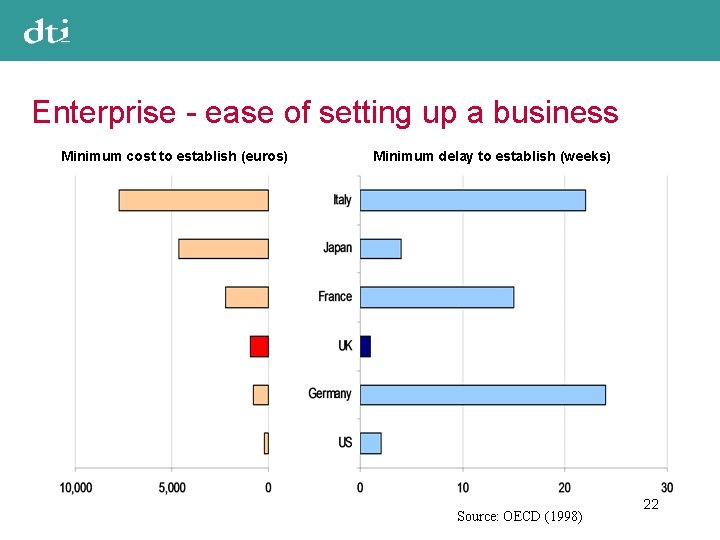
Enterprise - ease of setting up a business Minimum cost to establish (euros) Minimum delay to establish (weeks) Source: OECD (1998) 22
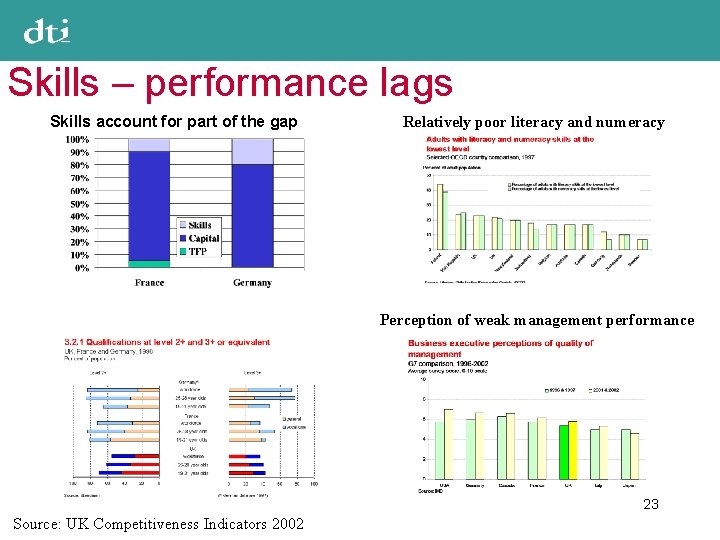
Skills – performance lags Skills account for part of the gap Relatively poor literacy and numeracy Perception of weak management performance ‘Gap’ at intermediate level 23 Source: UK Competitiveness Indicators 2002
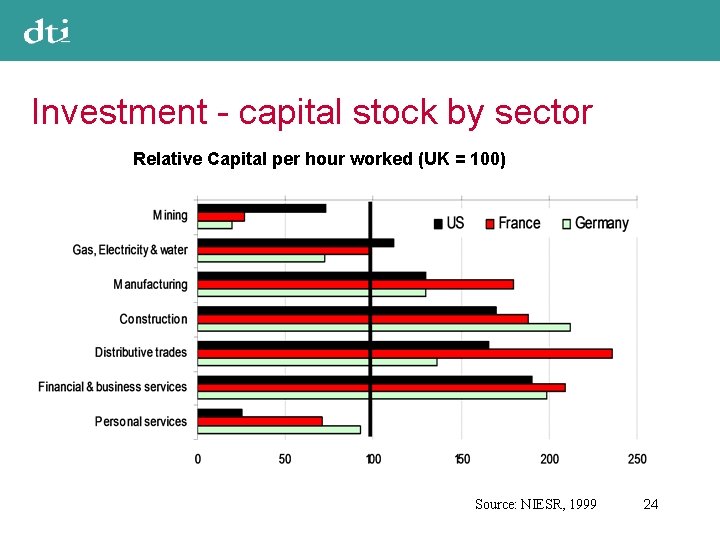
Investment - capital stock by sector Relative Capital per hour worked (UK = 100) Source: NIESR, 1999 24
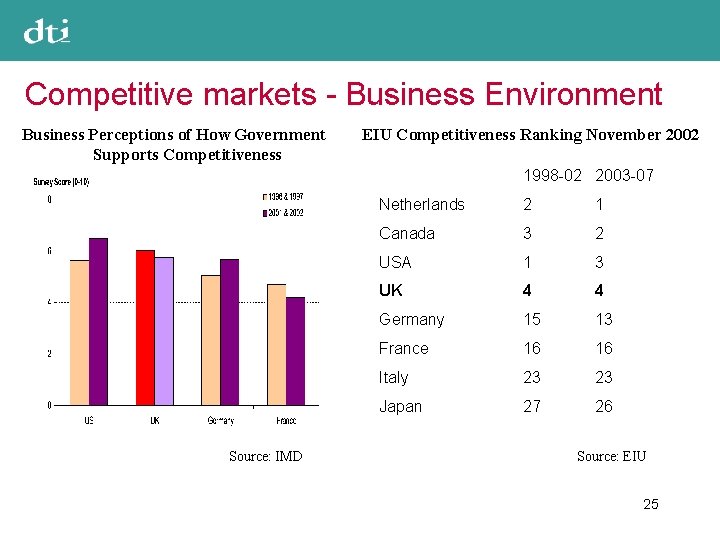
Competitive markets - Business Environment Business Perceptions of How Government Supports Competitiveness EIU Competitiveness Ranking November 2002 1998 -02 2003 -07 Source: IMD Netherlands 2 1 Canada 3 2 USA 1 3 UK 4 4 Germany 15 13 France 16 16 Italy 23 23 Japan 27 26 Source: EIU 25
Accounting for the Gap by Factor Source: Porter and Ketels (2003) 26
EU productivity lags US…. 27
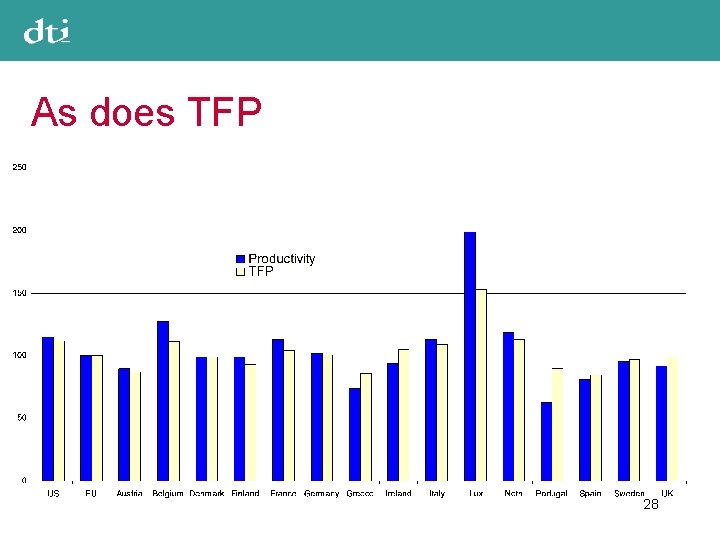
As does TFP 28
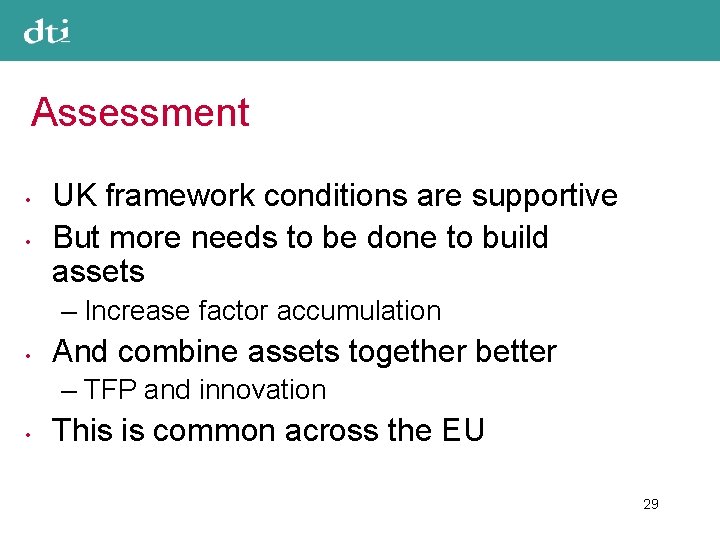
Assessment • • UK framework conditions are supportive But more needs to be done to build assets – Increase factor accumulation • And combine assets together better – TFP and innovation • This is common across the EU 29
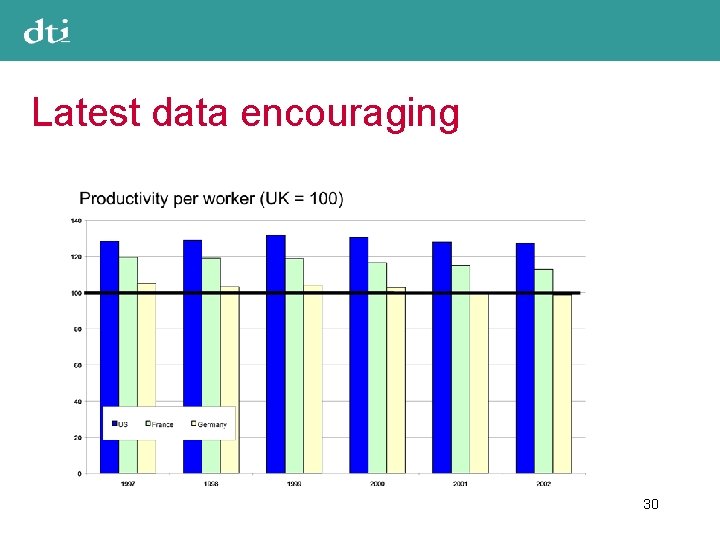
Latest data encouraging 30
Role of government – recap • • • Indicators provide a useful way of benchmarking UK performance on the ‘drivers’ against other countries. But they do not necessarily indicate where policy interventions will be most effective. Preference for market-based solutions: – Identify market or institutional failures – Ensure that interventions help to correct for that failure • Government has a key role in setting the macroeconomic, institutional and regulatory framework in which business operates. – And improving public sector productivity. 31
The role of Government in fostering competitiveness and growth Ken Warwick Deputy Chief Economic Adviser UK Department of Trade and Industry 32