
The Role of Georgia in the AMERICAN REVOLUTION
- Slides: 24
The Role of Georgia in the AMERICAN REVOLUTION
Split Loyalties • The American colonists were split by their beliefs on independence. • These differences tore the colonies apart, and families were divided about their beliefs about American independence. • Throughout the colonies, the American Revolutionary years were violent and bloody.
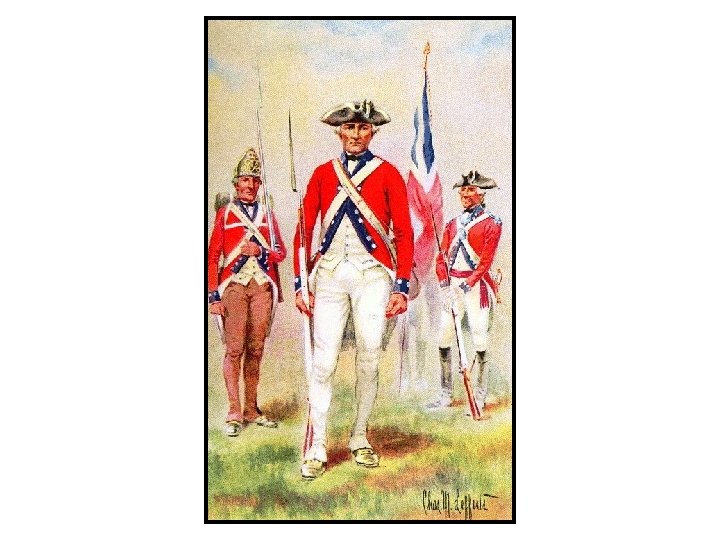
Loyalists • Many older colonists had been born in England were still loyal to the mother country; these people were called Loyalists. • Despite being in the colonies, loyalists still felt like British subjects of the king. • Also, many people were against independence because they wanted to protect their economic interests.
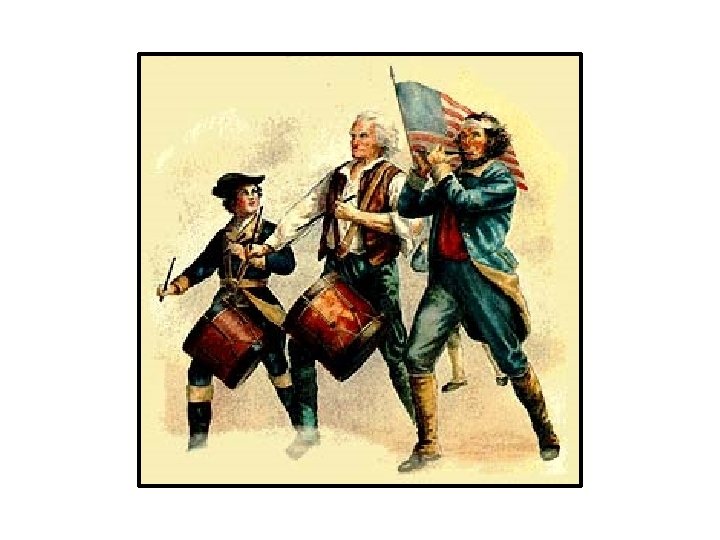
Patriots • Settlers who supported independence were called Patriots. • Patriots viewed the Revolutionary War as a necessary fight in order to break free of British tyranny. • They wanted to make their own rules and laws.
Georgia • Georgian’s desire for freedom was not as strong as in the other colonies. • The colony was only forty years old and had prospered under the king’s rule. • Georgians also relied on British protection from American Indians. • However, there still many Georgians who were unhappy with England’s laws and taxes and desired independence.
War Begins • In 1778, British troops began moving inland from the Georgia coast. • The first battle took place in Savannah when the British forces snuck through surrounding swamps and attacked the Patriot garrison. • Savannah fell to the British on December 29, 1778, and Augusta came under British control a month later.
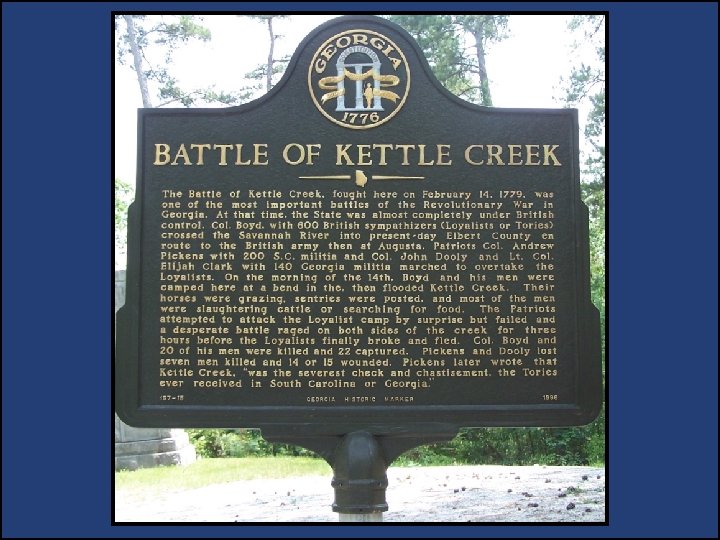
Reinforcements • In February 1779, the British commander in Augusta called for more soldiers in order to capture the rest of the colony. • Colonel James Boyd responded and led nearly 700 British soldiers towards Augusta. • The group stopped to camp at Kettle Creek (in Washington, Georgia today).
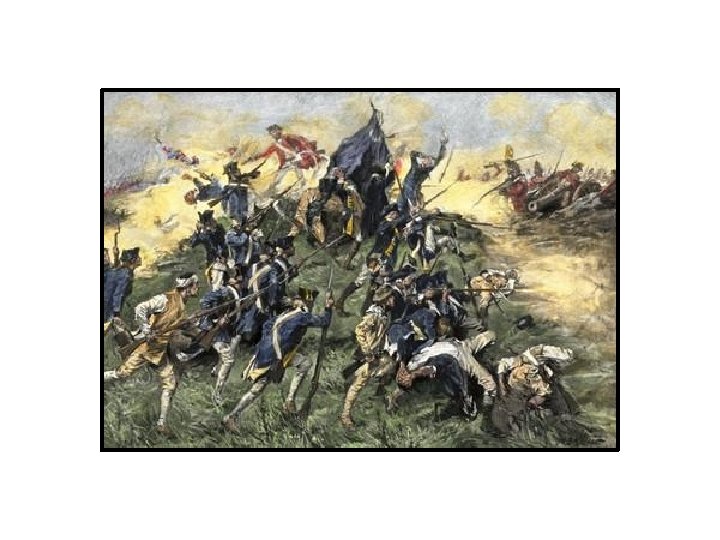
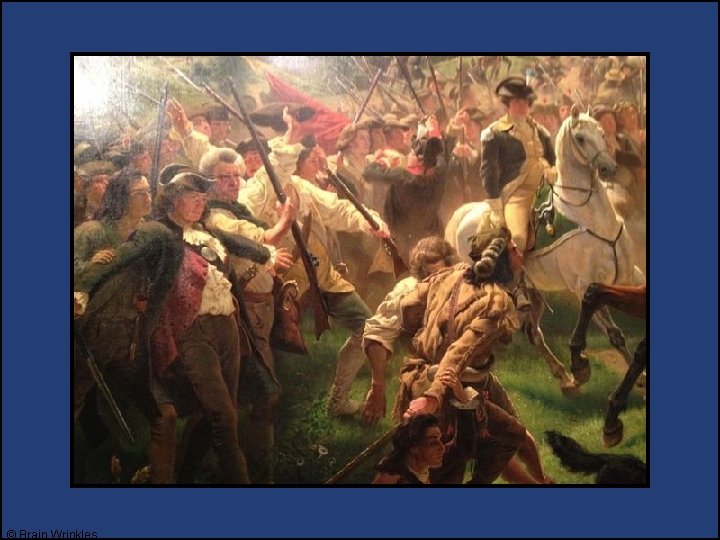
Kettle Creek • A Patriot militia led by Elijah Clarke and John Dooly surprise attacked the soldiers. • Clarke and Dooly led their troops across Kettle Creek and surrounded the camp, while a third group attacked head on. • Only 250 British soldiers escaped.
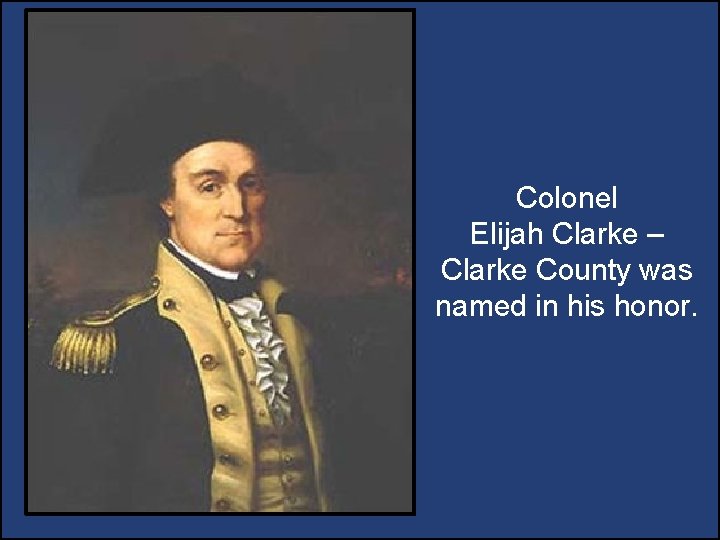
Colonel Elijah Clarke – Clarke County was named in his honor.
© Brain Wrinkles
Kettle Creek • The surprise attack caused the British to withdraw from Augusta temporarily. • The Battle of Kettle Creek broke the British stronghold in Georgia. • It led to a Patriot victory and boosted the morale of Georgia’s Patriots.
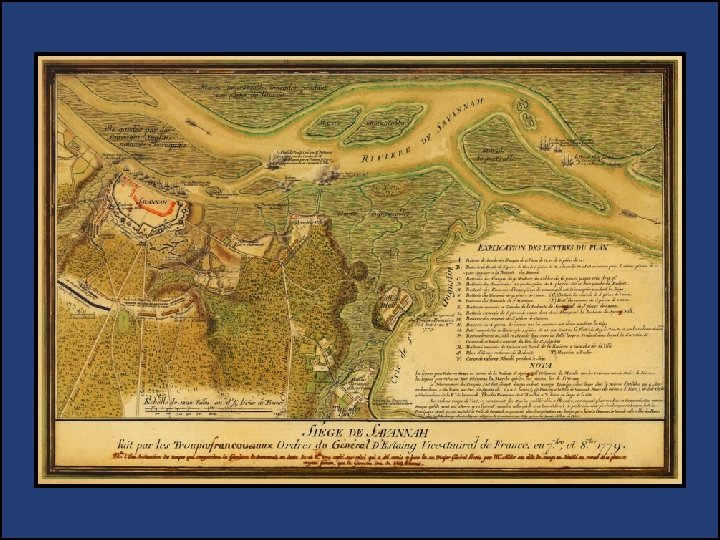
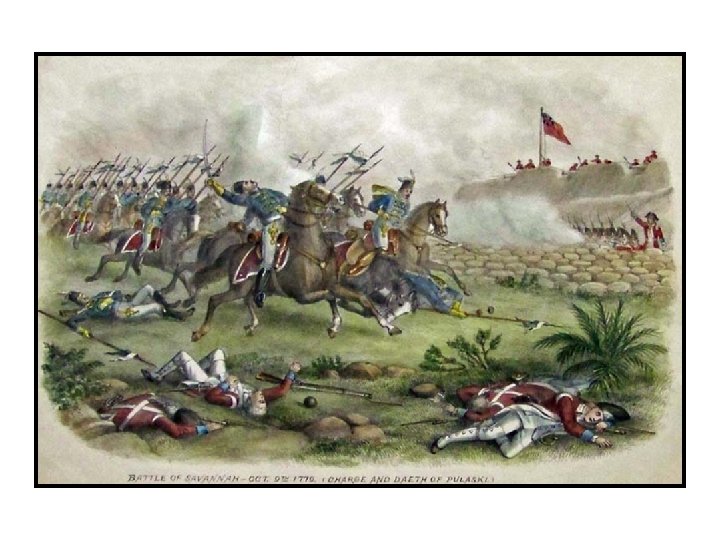
Siege of Savannah • On October 9 1779, the second bloodiest battle of the American Revolution occurred in Savannah. • A joint force of French and patriot troops attacked Savannah and attempted to regain control of the city from the British.
Siege of Savannah • The battle itself, known as the Siege of Savannah, lasted only 90 minutes, but thousands of French and American soldiers were killed. • This attack was a dismal failure and Savannah remained under British control until 1782.
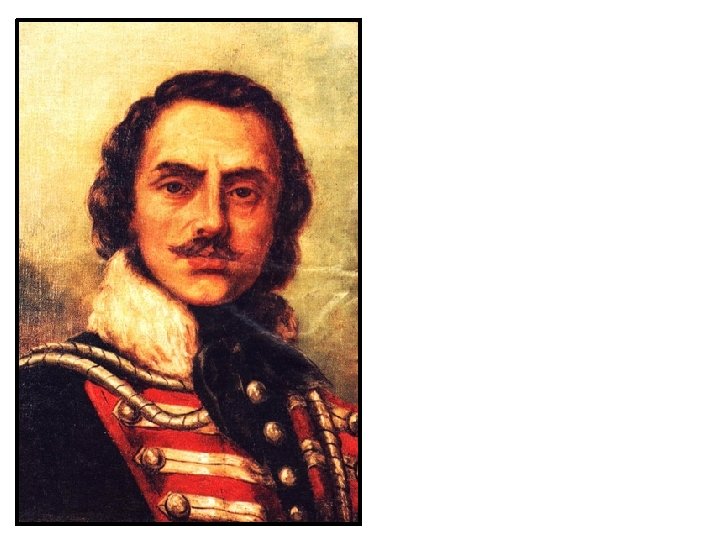
Count Casimir Pulaski, a famous Polish soldier who had come to America to fight for freedom, died in a cavalry charge during the battle. Pulaski County was named for him.
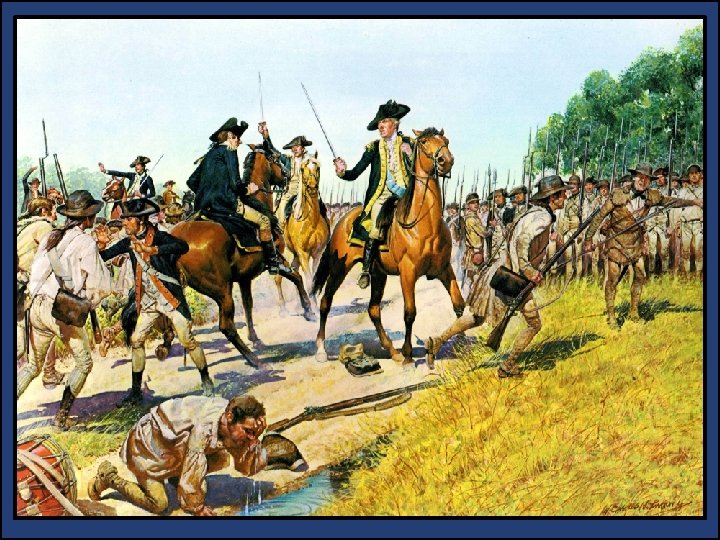
Victories • After the defeat in Savannah, Georgia saw many more battles between Patriots and Loyalists. • Fortunately, the American Revolution finally began to swing in favor of the Patriots. • In 1781, the Patriots recaptured Augusta. • The following year, the British withdrew
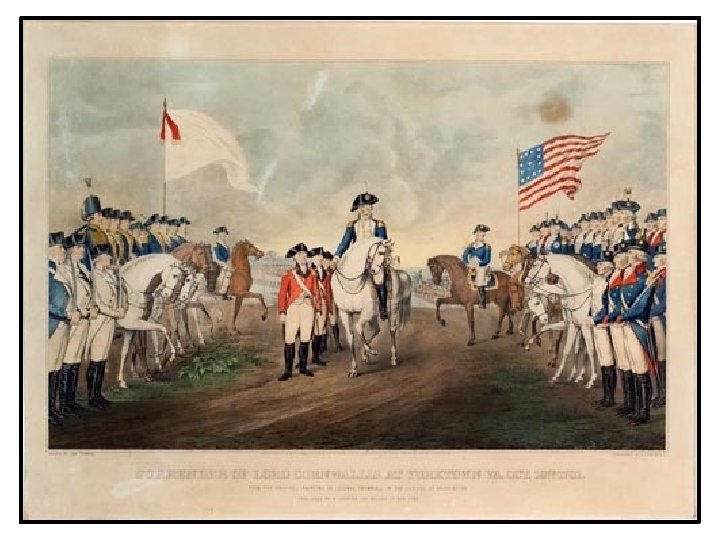
Independence • The Treaty of Paris 1783 granted America independence from England. • The United States of America was officially created.