
The role of generativity in successful aging for

- Slides: 29
The role of generativity in successful aging for Alaska Native Elders
Introduction • Generativity, the 7 th stage of development in later life that refers to a time when personal resources are given to others and used to improve the quality of society. • Generativity is teaching and leading the “Seventh Generation”
Changing roles of Elders • The lifespan of AN Elders today continues to increase with improvements in health care technology and services. • Longer lifespan may have a direct impact on the recognition and respect of Elders in rural communities (Baltes, Reese, & Lipsitt, 1980). • How elders are viewed in society today is vastly different from the past.
Elders – “Keepers of the meaning” • George Vaillant (1977) referred to generative individuals as the “keepers of the meaning. ” – They seek to pass on the most valued traditions of a culture, to teach the most valued skills and outlooks, to impart wisdom, to foster the realization of human potential in future generations (de St. Aubin, Mc. Adams, & Kim, 2004).
Generative Mismatch • The large U. S. baby boom cohorts are at the point in the life course marked by the saliency of generativity. • “Generative mismatch” (p. 610) occurs when older generations’ experiences and abilities to offer guidance fail to match the demands of the youth for new knowledge. • The gap of knowledge between Elders and youth is growing rapidly with the advent of technology.
Generativity • Generativity is a personal resource shared with others and is not used to eliminate the elders’ own stress and life events (Keyes & Ryff, 1998), but instead is used to improve the quality of society. • The concept of Generativity also contributes to the elders’ quality of life and how they rate their health and well-being (Lewis, 2011).
Generativity • Expressed in various forms – Being productive at work – Raising children – Involvement in community activities and organizations
Grand-generativity • The various roles Elders play – Aging parent – Grandparent – Old friend – Advisor/mentor • A mechanism for perpetuating wisdom, knowledge, and cultural values beyond their lives (also referred to as cultural generativity)
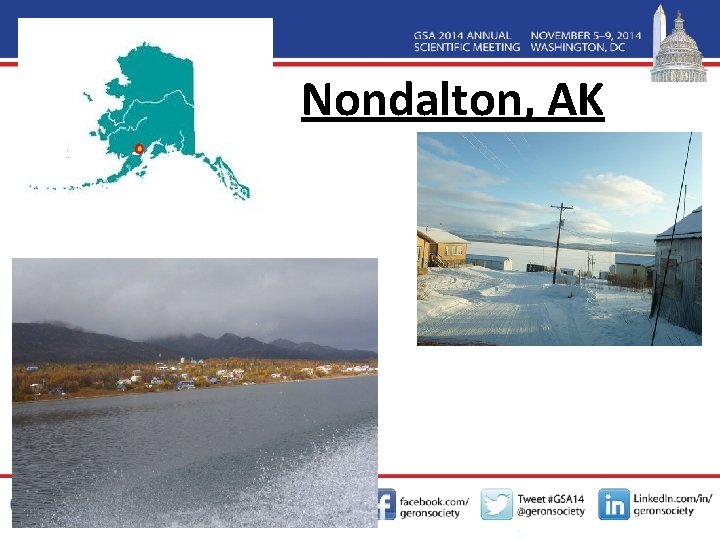
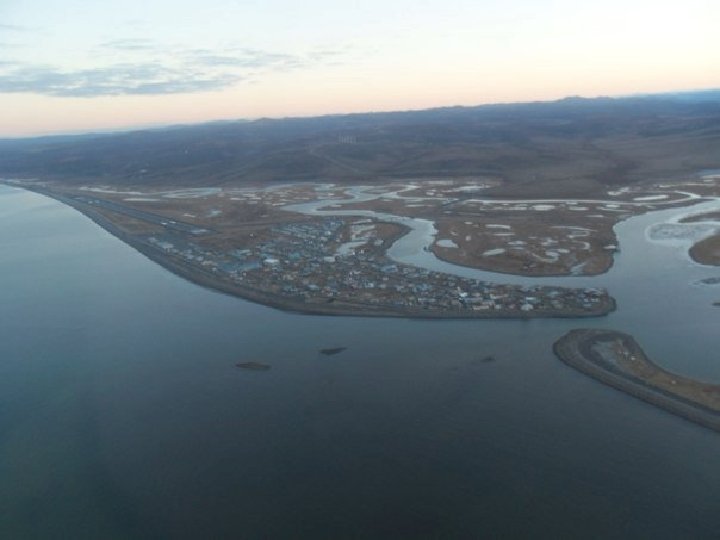
Nondalton, AK
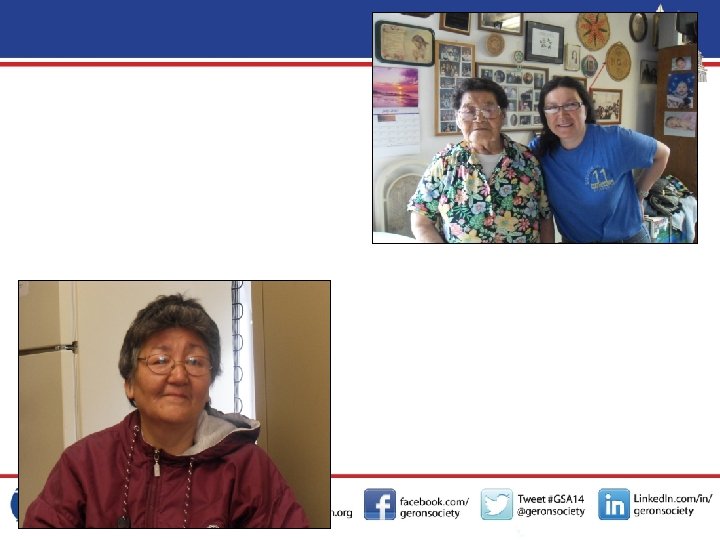
Study Demographics • 6 Aleut Elders (Naknek, Perryville) • 19 Yup’ik Eskimo Elders (Dillingham, Manokotak, Togiak) • 1 Athabascan woman (Nondalton) • Men: 11 total (Aleut, Yup’ik) • Women: 15 total (Aleut, Athabascan, Yup’ik) • Age range: 61 -93 years old • Average age: 73 years old
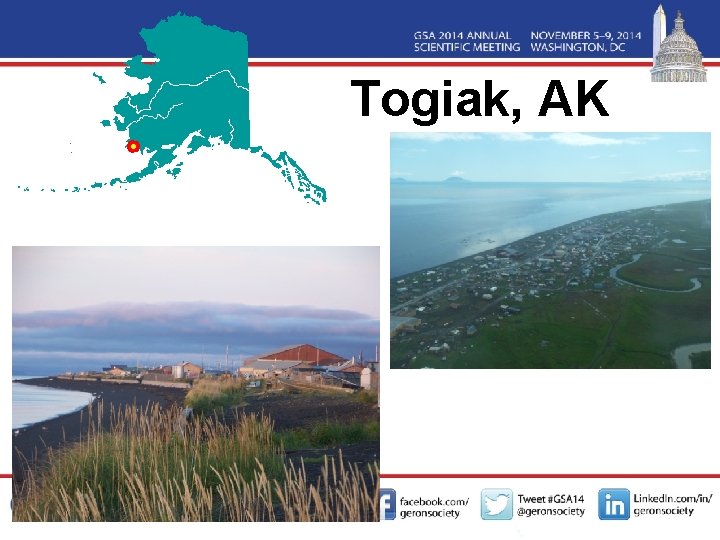
Togiak, AK
Generativity & Successful aging • Opportunity to share knowledge of living a traditional lifestyle was an important aspect of aging successfully. • One Elder shared: “Ones that like to give advice to others and help direct the right way by talking. ” • Another Elder shared: “As they age they like to share about awareness and acknowledge; what obstacles they are facing. ”
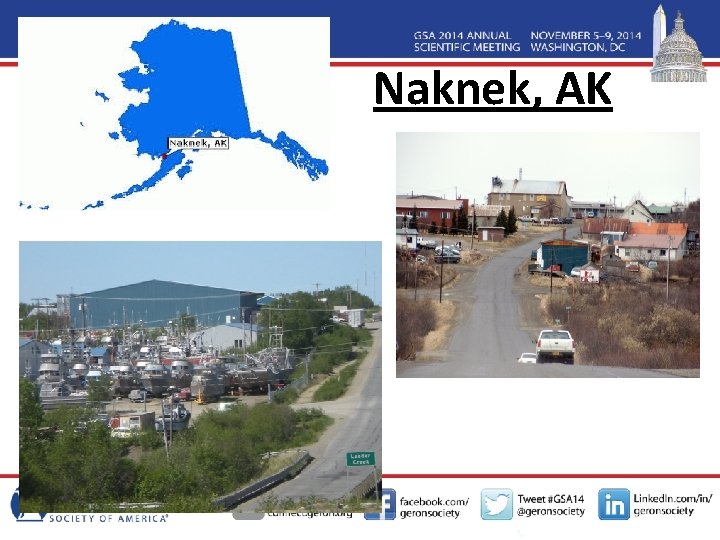
Naknek, AK
Generativity & Successful aging • Elders taught how to integrate traditional medicine and knowledge of Western medicine. • Elders discussed their desire to share their knowledge of medicines through classes, or gatherings in the community
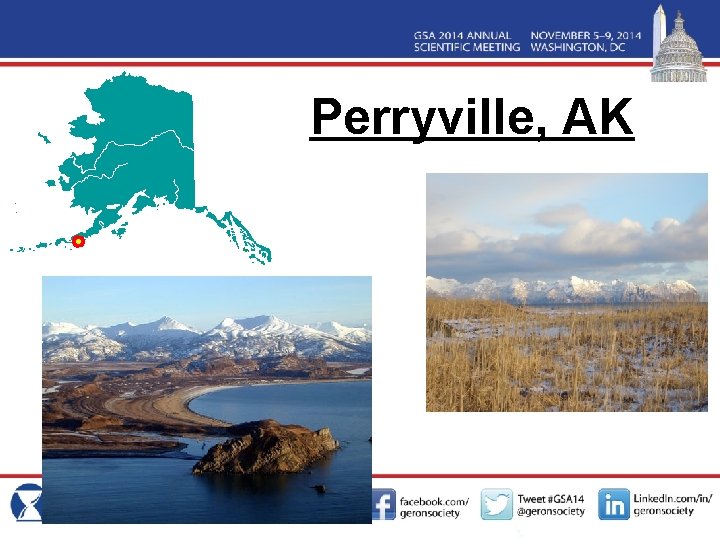
Perryville, AK
Generativity & successful aging • Family, community, and culture are important parts of how Elders define successful aging. – They provide Elders with a sense of purpose – A role in their family and community – Opportunities to contribute to the health and well-being of their family and community
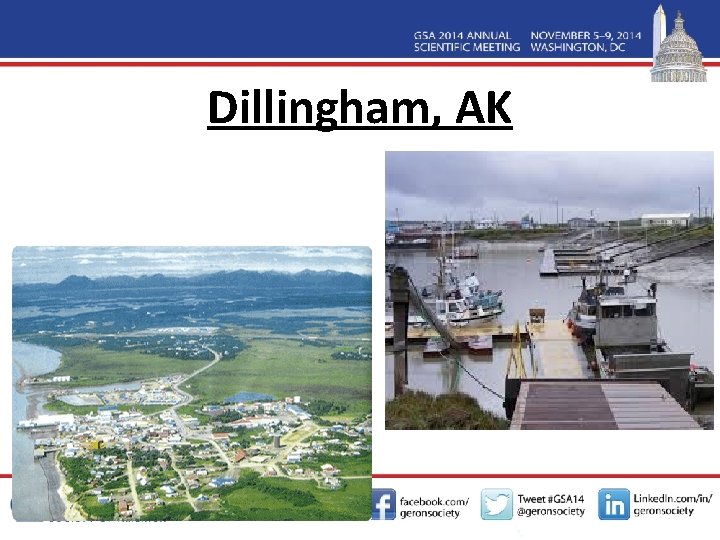
Dillingham, AK
Cultural Generativity • Concerned with passing on traditions, values, and ways of knowing – As opposed to passing down practical skills through other forms of generativity • Influenced by those who have come before us and those who will come after us
Words of the Elders One Elder shared how they share their knowledge with the youth: “Elders can have a class to show them how to build a harpoon, or the right way to put together a sled. Have more activities where elders can get out and about and show their skills. ”
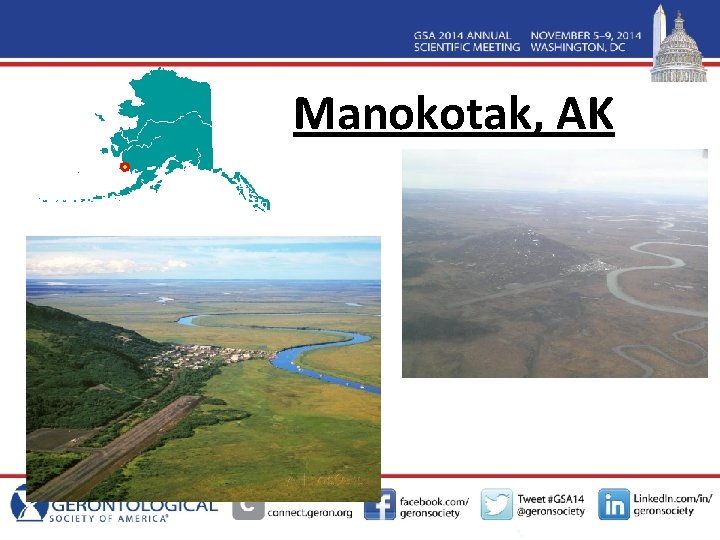
Manokotak, AK
Generativity & Culture • Erikson (1980) believes stages of human development can be applied to any culture. – Cultures ask their children to learn certain skills to develop identity, boundaries, career, care for next generation • All cultures attempt to achieve these goals for their children – Teaching others ensures the survival of culture, language, and community.
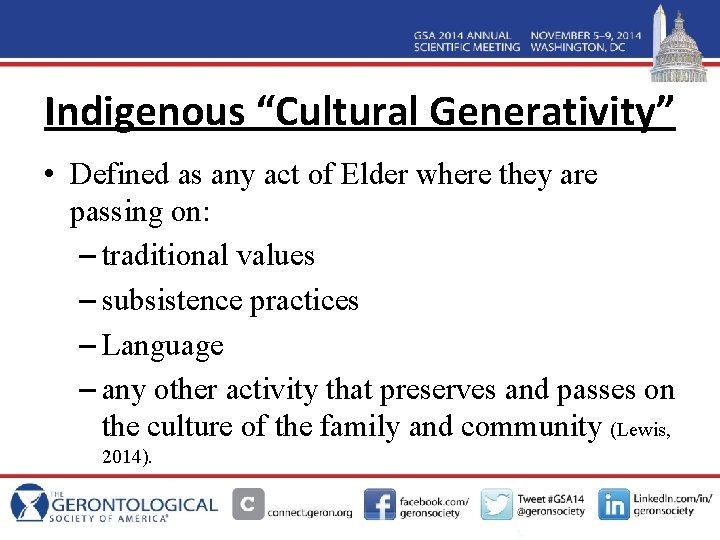
Indigenous “Cultural Generativity” • Defined as any act of Elder where they are passing on: – traditional values – subsistence practices – Language – any other activity that preserves and passes on the culture of the family and community (Lewis, 2014).
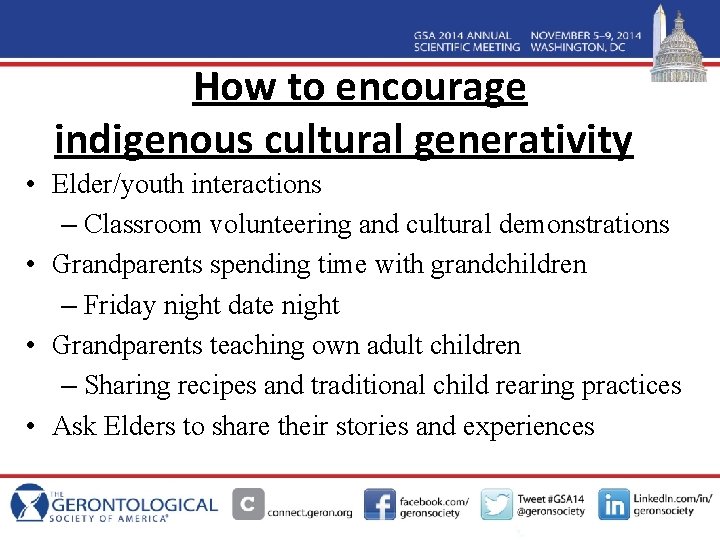
How to encourage indigenous cultural generativity • Elder/youth interactions – Classroom volunteering and cultural demonstrations • Grandparents spending time with grandchildren – Friday night date night • Grandparents teaching own adult children – Sharing recipes and traditional child rearing practices • Ask Elders to share their stories and experiences
Thank you for your time!