
The Role of ESA Support Staff Providing Comprehensive



- Slides: 28
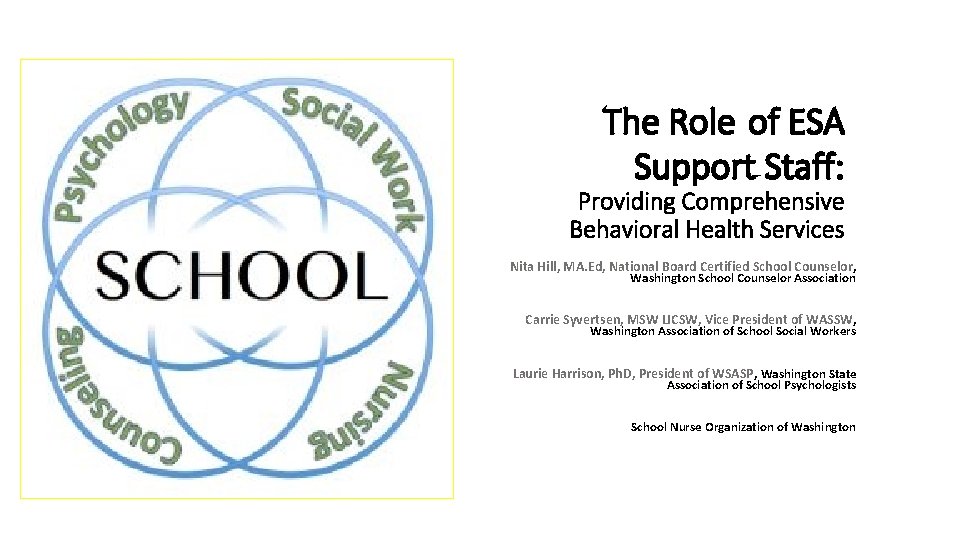
The Role of ESA Support Staff: Providing Comprehensive Behavioral Health Services Nita Hill, MA. Ed, National Board Certified School Counselor , Washington School Counselor Association Carrie Syvertsen, MSW LICSW, Vice President of WASSW, Washington Association of School Social Workers Laurie Harrison, Ph. D, President of WSASP, Washington State Association of School Psychologists School Nurse Organization of Washington
2016 AWSP/WASA Conference Goals for Today Ø Concrete definitions and distinguishing characteristics of a school nurse, psychologist, counselor and social worker Ø Explain the best-practice social and emotional health and wellness services that can be provided by each profession through an Integrated Students Support Systems (ISSS) model, in the context of a Multi-Tiered System of Support (MTSS) Ø Current data on how these four professions are being utilized in Washington. Ø Model examples that highlight the importance of a strong partnership and collaboration between all 4 professions to maximize benefits for all students. Ø Explore the funding implications of the Mc. Cleary decision for all 4 professions o What would “fully-funded” really look like? Next steps…?
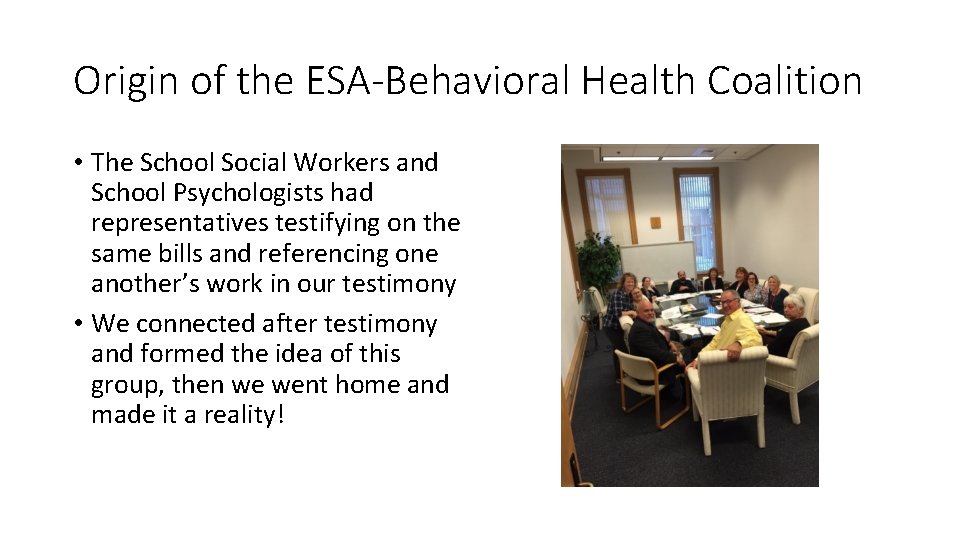
Origin of the ESA-Behavioral Health Coalition • The School Social Workers and School Psychologists had representatives testifying on the same bills and referencing one another’s work in our testimony • We connected after testimony and formed the idea of this group, then we went home and made it a reality!
Mental Health Vs Mental Illness
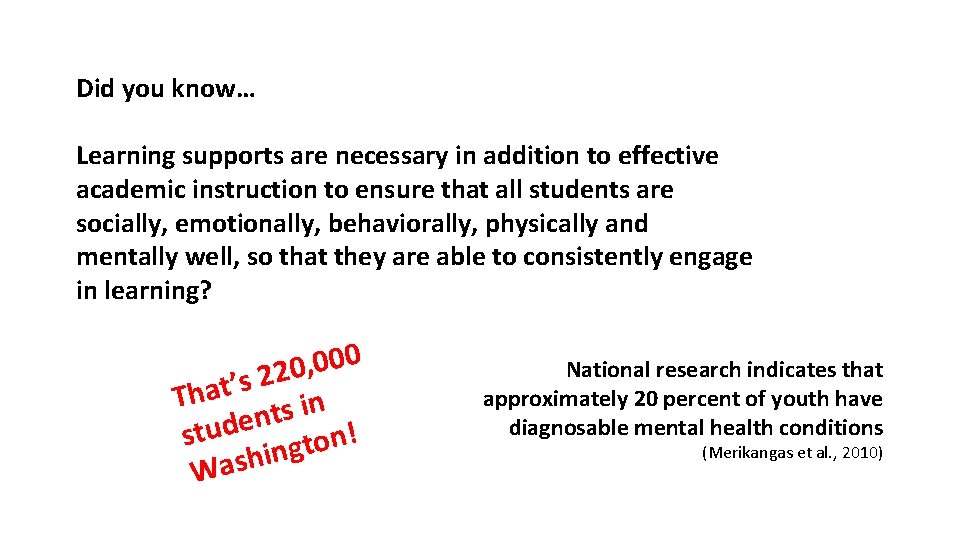
2016 AWSP/WASA Conference Did you know… Learning supports are necessary in addition to effective academic instruction to ensure that all students are socially, emotionally, behaviorally, physically and mentally well, so that they are able to consistently engage in learning? 0 0 0 , 0 2 2 s ’ That ts in n e d u ! st n o t g n i h s Wa National research indicates that approximately 20 percent of youth have diagnosable mental health conditions (Merikangas et al. , 2010)
2016 AWSP/WASA Conference Integrated Students Support Systems Supports the academic, social, emotional, behavioral, and physical growth of all students
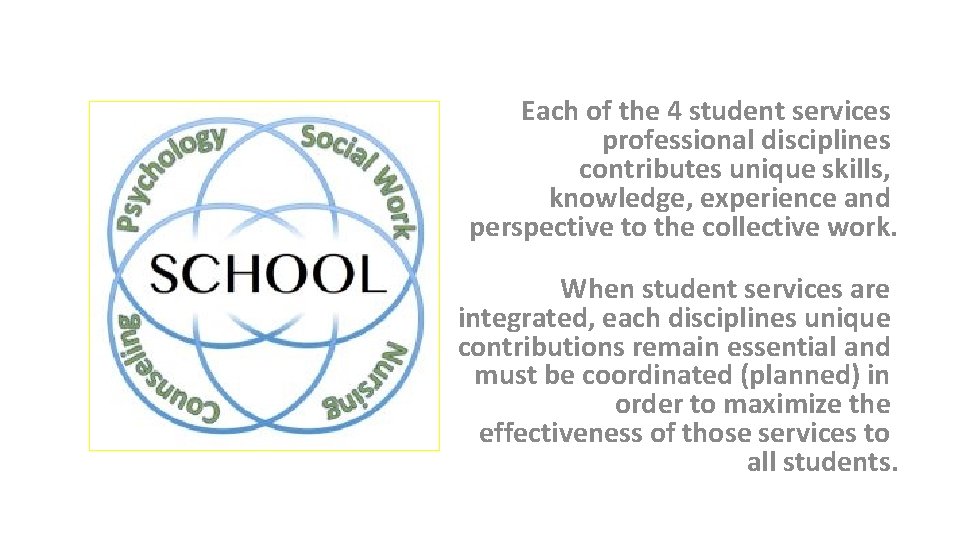
2016 AWSP/WASA Conference Each of the 4 student services professional disciplines contributes unique skills, knowledge, experience and perspective to the collective work. When student services are integrated, each disciplines unique contributions remain essential and must be coordinated (planned) in order to maximize the effectiveness of those services to all students.
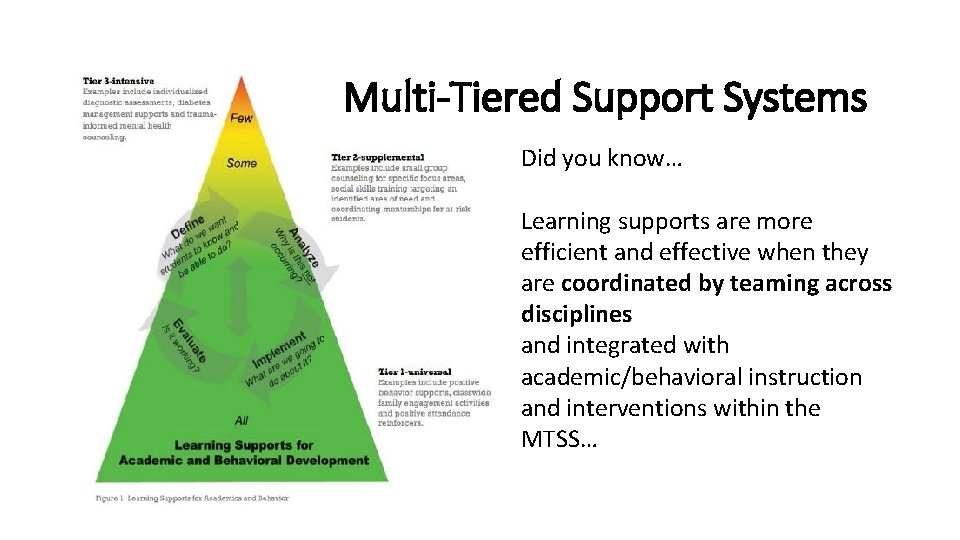
2016 AWSP/WASA Conference Multi-Tiered Support Systems Did you know… Learning supports are more efficient and effective when they are coordinated by teaming across disciplines and integrated with academic/behavioral instruction and interventions within the MTSS…
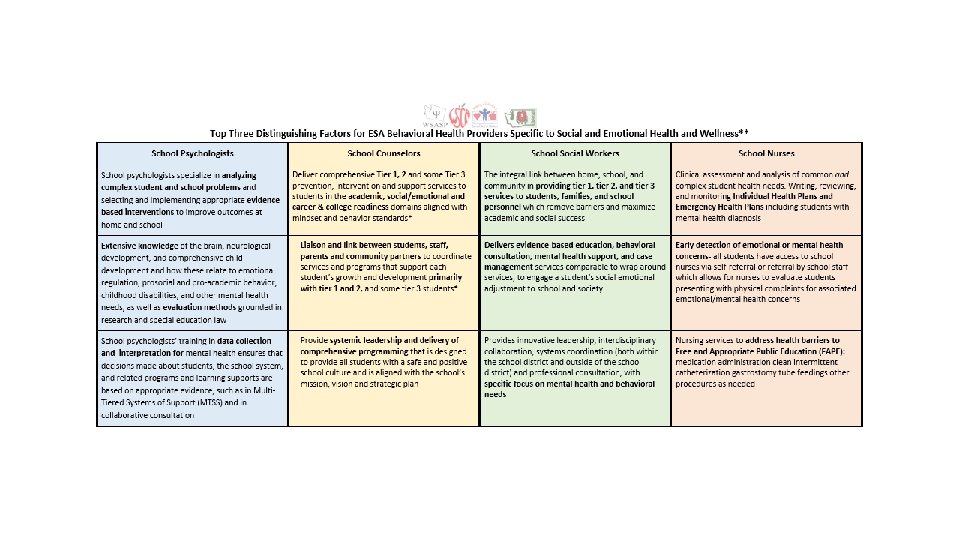
Top 3 Distinguishing Factors
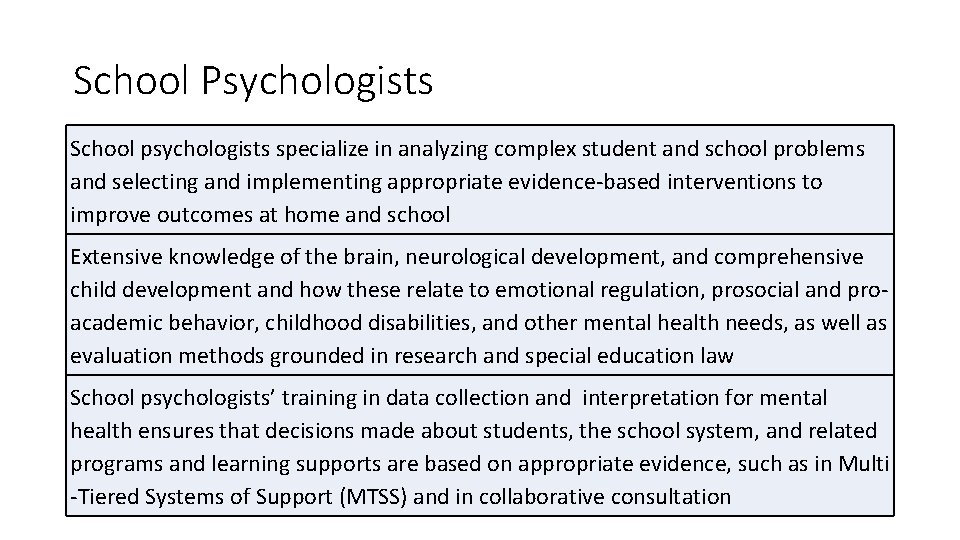
School Psychologists School psychologists specialize in analyzing complex student and school problems and selecting and implementing appropriate evidence-based interventions to improve outcomes at home and school Extensive knowledge of the brain, neurological development, and comprehensive child development and how these relate to emotional regulation, prosocial and proacademic behavior, childhood disabilities, and other mental health needs, as well as evaluation methods grounded in research and special education law School psychologists’ training in data collection and interpretation for mental health ensures that decisions made about students, the school system, and related programs and learning supports are based on appropriate evidence, such as in Multi -Tiered Systems of Support (MTSS) and in collaborative consultation
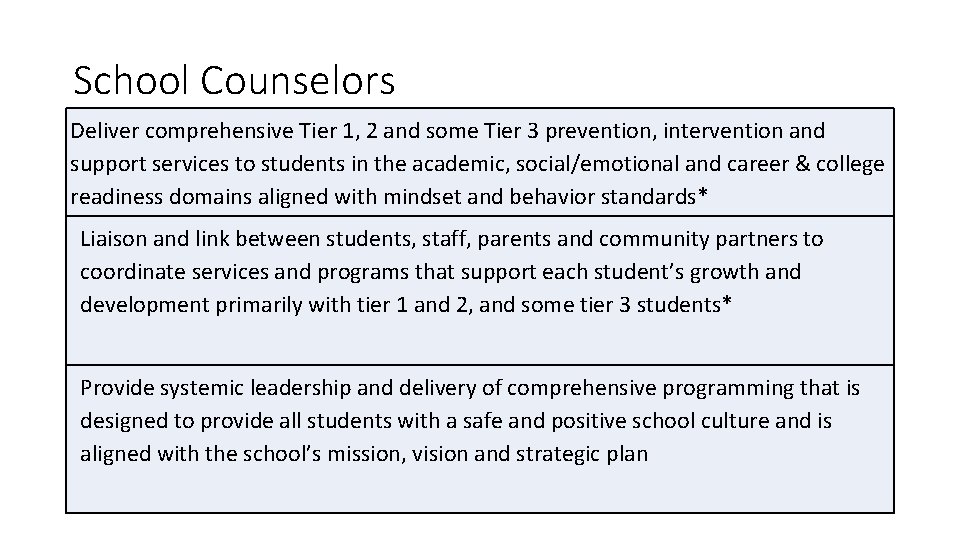
School Counselors Deliver comprehensive Tier 1, 2 and some Tier 3 prevention, intervention and support services to students in the academic, social/emotional and career & college readiness domains aligned with mindset and behavior standards* Liaison and link between students, staff, parents and community partners to coordinate services and programs that support each student’s growth and development primarily with tier 1 and 2, and some tier 3 students* Provide systemic leadership and delivery of comprehensive programming that is designed to provide all students with a safe and positive school culture and is aligned with the school’s mission, vision and strategic plan
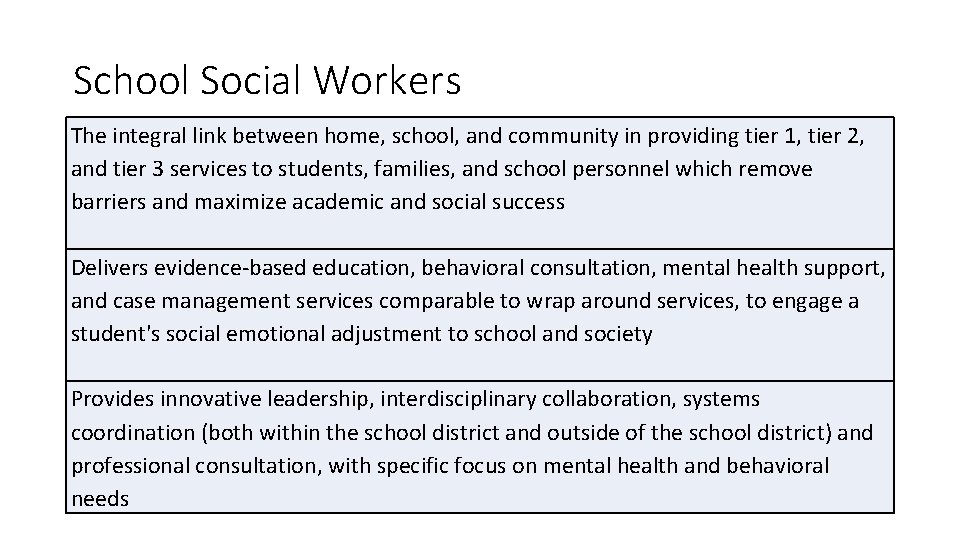
School Social Workers The integral link between home, school, and community in providing tier 1, tier 2, and tier 3 services to students, families, and school personnel which remove barriers and maximize academic and social success Delivers evidence-based education, behavioral consultation, mental health support, and case management services comparable to wrap around services, to engage a student's social emotional adjustment to school and society Provides innovative leadership, interdisciplinary collaboration, systems coordination (both within the school district and outside of the school district) and professional consultation, with specific focus on mental health and behavioral needs
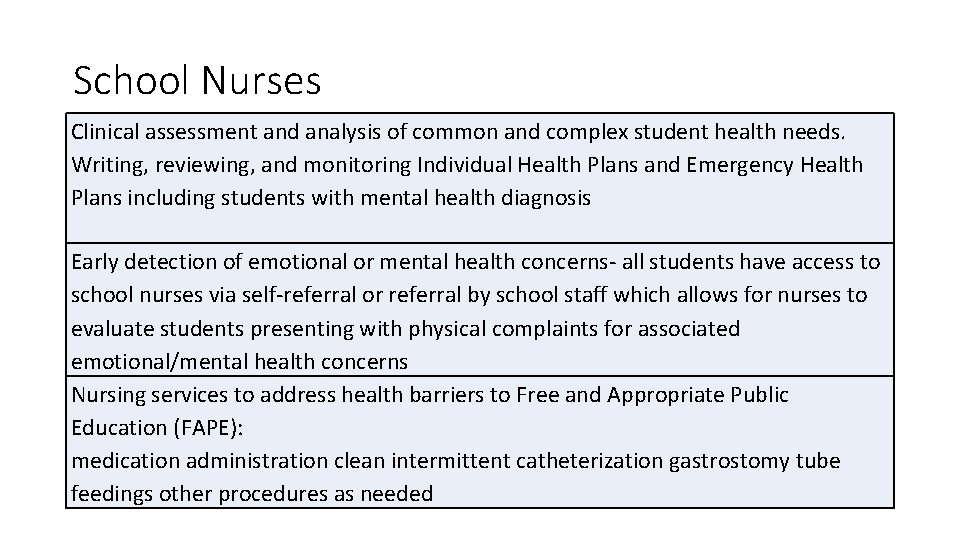
School Nurses Clinical assessment and analysis of common and complex student health needs. Writing, reviewing, and monitoring Individual Health Plans and Emergency Health Plans including students with mental health diagnosis Early detection of emotional or mental health concerns- all students have access to school nurses via self-referral or referral by school staff which allows for nurses to evaluate students presenting with physical complaints for associated emotional/mental health concerns Nursing services to address health barriers to Free and Appropriate Public Education (FAPE): medication administration clean intermittent catheterization gastrostomy tube feedings other procedures as needed
Tiered Roles Review Tiered Roles Document Vignette Activity
Vignette • Get into a small group and discuss how each of our roles would be involved with this student situation.
Current Role
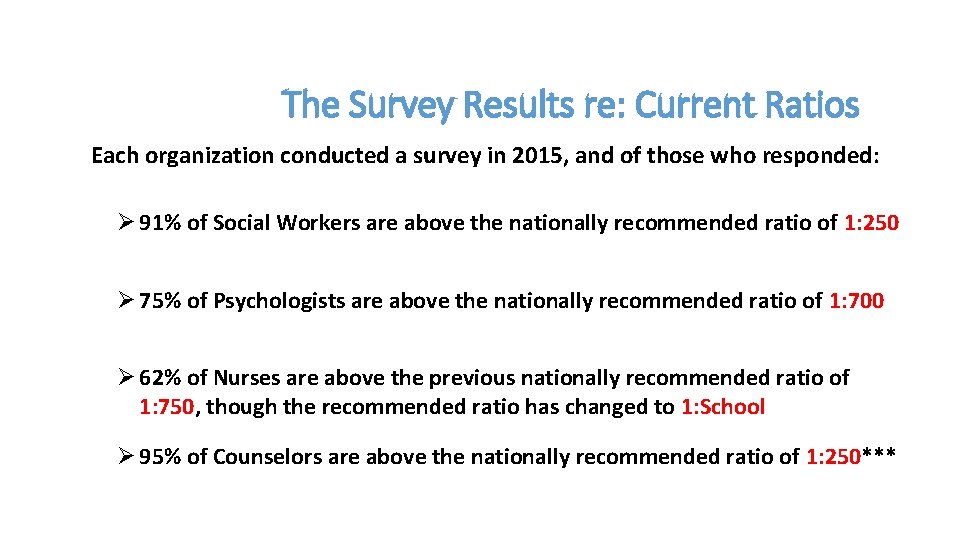
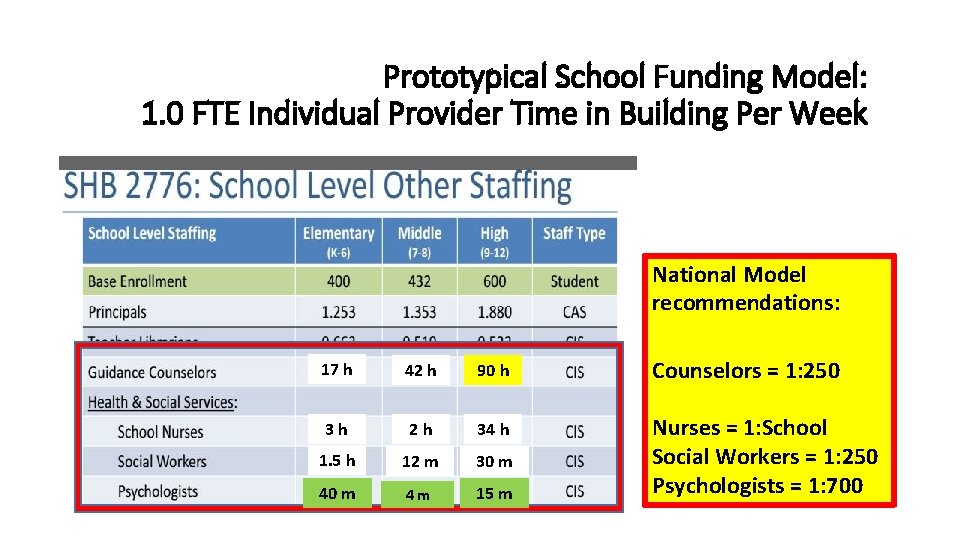
2016 AWSP/WASA Conference The Survey Results re: Current Ratios Each organization conducted a survey in 2015, and of those who responded: Ø 91% of Social Workers are above the nationally recommended ratio of 1: 250 Ø 75% of Psychologists are above the nationally recommended ratio of 1: 700 Ø 62% of Nurses are above the previous nationally recommended ratio of 1: 750, though the recommended ratio has changed to 1: School Ø 95% of Counselors are above the nationally recommended ratio of 1: 250***
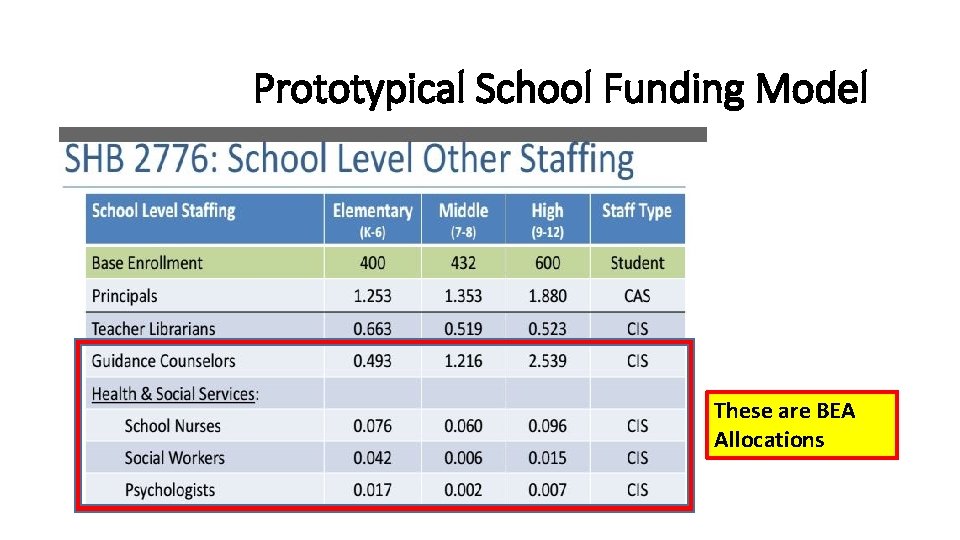
2016 AWSP/WASA Conference Prototypical School Funding Model These are BEA Allocations
2016 AWSP/WASA Conference Prototypical School Funding Model: 1. 0 FTE Individual Provider Time in Building Per Week National Model recommendations: 17 h 42 h 90 h Counselors = 1: 250 3 h 2 h 34 h 1. 5 h 12 m 30 m 4 m 15 m Nurses = 1: School Social Workers = 1: 250 Psychologists = 1: 700
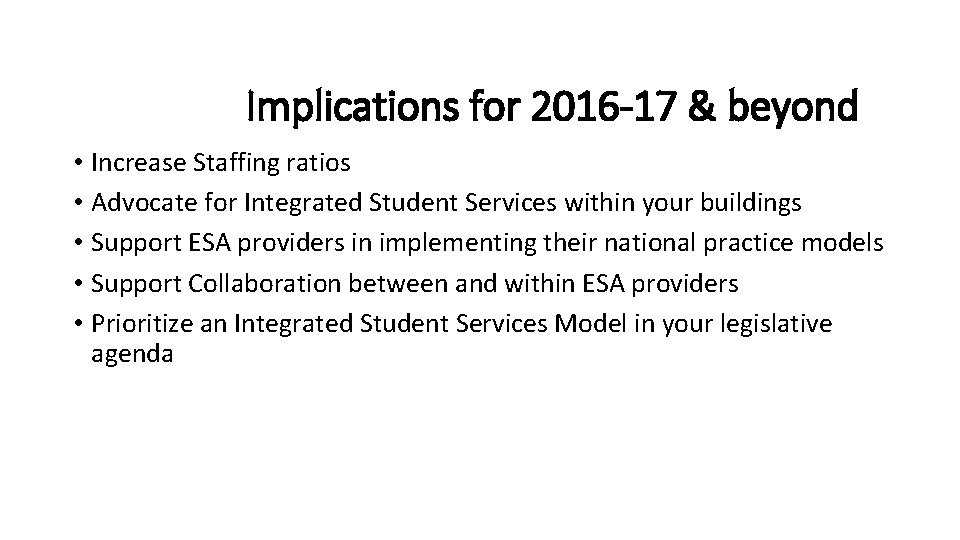
2016 AWSP/WASA Conference Implications for 2016 -17 & beyond • Increase Staffing ratios • Advocate for Integrated Student Services within your buildings • Support ESA providers in implementing their national practice models • Support Collaboration between and within ESA providers • Prioritize an Integrated Student Services Model in your legislative agenda
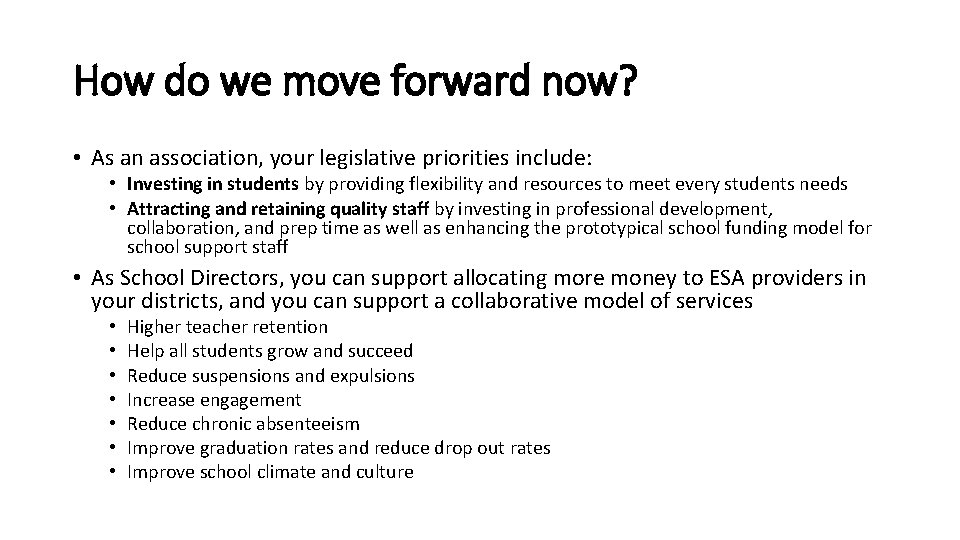
How do we move forward now? • As an association, your legislative priorities include: • Investing in students by providing flexibility and resources to meet every students needs • Attracting and retaining quality staff by investing in professional development, collaboration, and prep time as well as enhancing the prototypical school funding model for school support staff • As School Directors, you can support allocating more money to ESA providers in your districts, and you can support a collaborative model of services • • Higher teacher retention Help all students grow and succeed Reduce suspensions and expulsions Increase engagement Reduce chronic absenteeism Improve graduation rates and reduce drop out rates Improve school climate and culture
Don’t forget to complete the evaluation
Evidence for Integrated Student Supports • Integrated Student Supports: A Summary of the Evidence Base for Policymakers • http: //www. childtrends. org/wp-content/uploads/2014/02/201405 ISSWhite. Paper 1. pdf • The Experts Have Spoken: Integrated Student Supports Improve Educational Outcomes • http: //www. huffingtonpost. com/dan-cardinali/the-experts-have-spokeni_b_4842549. html • Integrated Student Supports and Equity • http: //smhp. psych. ucla. edu/pdfdocs/integpolicy. pdf
ISSS at OSPI • http: //www. k 12. wa. us/Workgroups/ISS. aspx
Real World Examples of Integrated Student Services • Florida Dept. of Education • http: //www. sss. usf. edu/integrated/fissm/Tools/Integrated. SS_Final_1. pdf • An example from one Florida district • http: //www. polk-fl. net/PARENTS/studentservices/default. htm • Alexandria City Public Schools, Virginia • https: //www. youtube. com/watch? v=c 8 So 5 ic 9 v 6 o
References • School Nurse Organization of Washington website: www. schoolnurseorganizationofwashington. org • American Academy of Pediatrics (AAP) • Role of the School Nurse in Providing School Health Services, June 2016 • http: //pediatrics. aappublications. org/content/121/5/1052 • National Association of School Nurses (NASN) • School Nurse Workload: Staffing for Safe Care • http: //www. nasn. org/Policy. Advocacy/Position. Papersand. Reports/NASNPosition. Statements. Full. View/tabid/462/Article. Id/803/School-Nurse. Workload-Staffing-for-Safe-Care-Adopted-January-2015 • Scope and Standards of Practice: https: //portal. nasn. org/members_online/members/viewitem. asp? item=S 001&catalog=MAN&pn=1&af=NAS N • Framework for 21 st Century School Nursing Model: https: //www. nasn. org/Framework • SNOW Presenter Contact Information: Heather Graham, MSN, RN Central Valley School District DHGRAHAM 4@comcast. net
References • School Social Worker National Practice Model: http: //www. sswaa. org/? page=459 • WASSW website: http: //www. wassw. org/ • School Psychologist National Practice Model: https: //www. nasponline. org/Documents/Standards%20 and%20 Certificatio n/Standards/2_Practice. Model. pdf • WSASP website: www. wsasp. org • WSCA website: http: //www. wa-schoolcounselor. org/ • ASCA website: http: //schoolcounselor. org/ • School Counselor National Practice Model: http: //schoolcounselor. org/school-counselors-members/asca-nationalmodel