
The Role of EMS in Emergency Cardiac Stroke

- Slides: 54
The Role of EMS in Emergency Cardiac & Stroke Care Pierce County May 2011
Objectives Introduce Washington’s new Emergency Cardiac and Stroke System Review cardiac & stroke protocol guidelines Review cardiac & stroke triage tools Administer stroke F. A. S. T. assessment Apply triage tools Discuss cardiac & stroke quality improvement opportunities
Emergency Cardiac & Stroke System Why do we need a system? What are the components? How will it work in Washington?
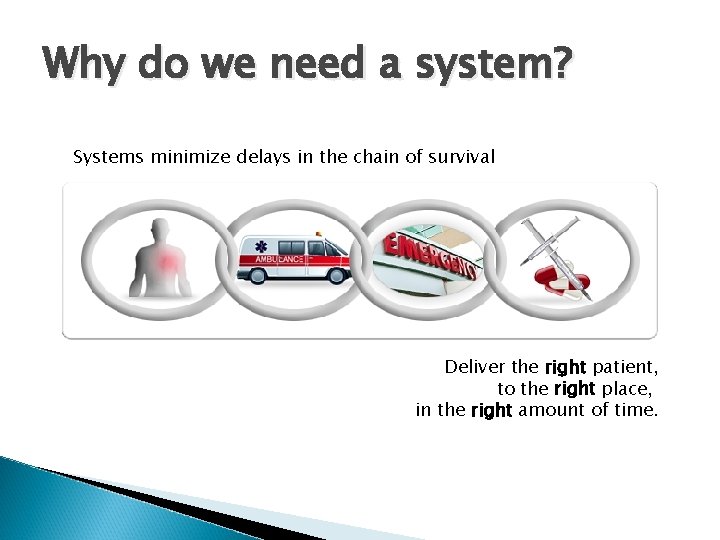
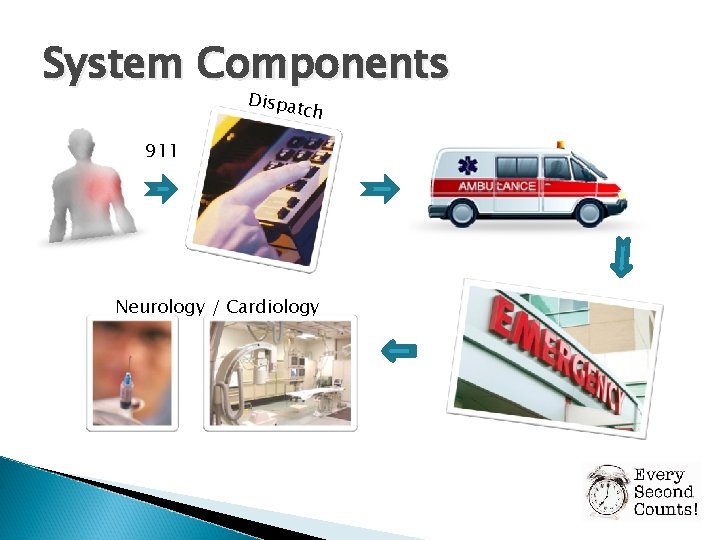
Why do we need a system? Systems minimize delays in the chain of survival Deliver the right patient, to the right place, in the right amount of time.
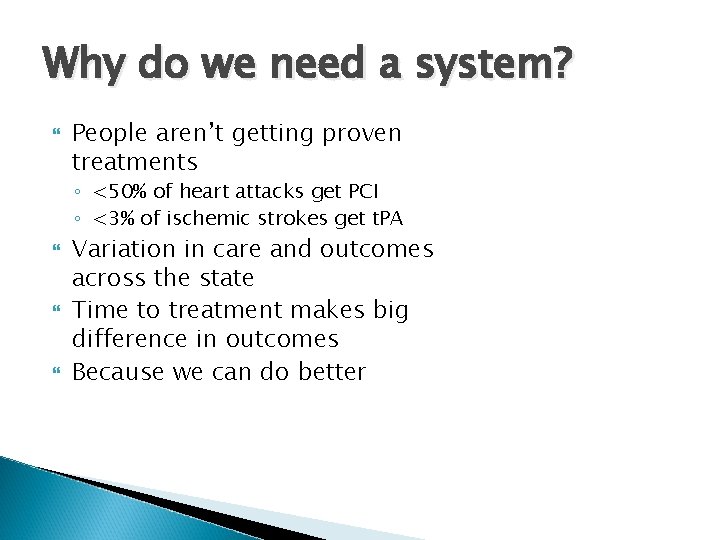
Why do we need a system? People aren’t getting proven treatments ◦ <50% of heart attacks get PCI ◦ <3% of ischemic strokes get t. PA Variation in care and outcomes across the state Time to treatment makes big difference in outcomes Because we can do better
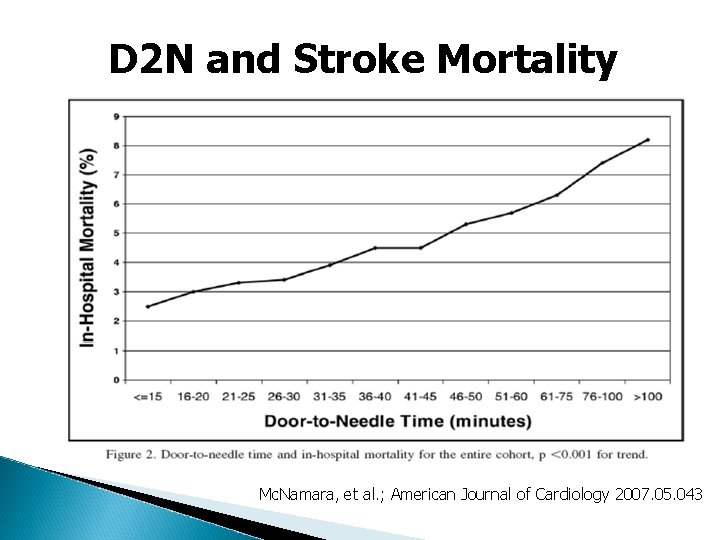
D 2 N and Stroke Mortality Mc. Namara, et al. ; American Journal of Cardiology 2007. 05. 043
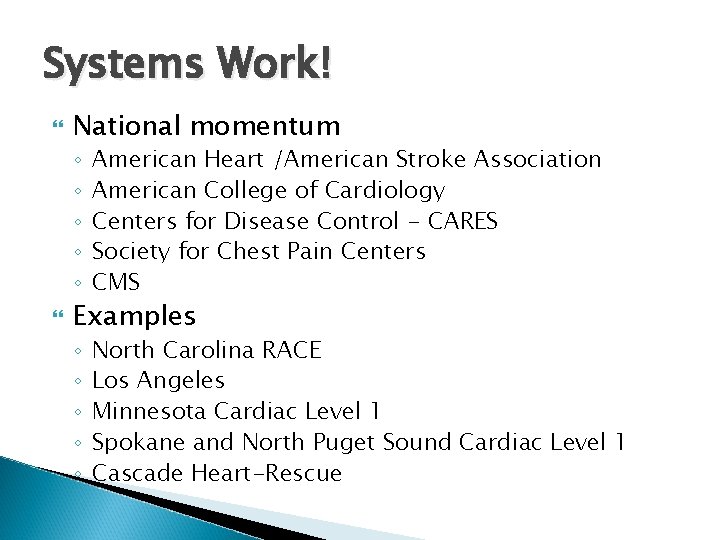
Systems Work! National momentum ◦ ◦ ◦ American Heart /American Stroke Association American College of Cardiology Centers for Disease Control - CARES Society for Chest Pain Centers CMS Examples ◦ ◦ ◦ North Carolina RACE Los Angeles Minnesota Cardiac Level 1 Spokane and North Puget Sound Cardiac Level 1 Cascade Heart-Rescue
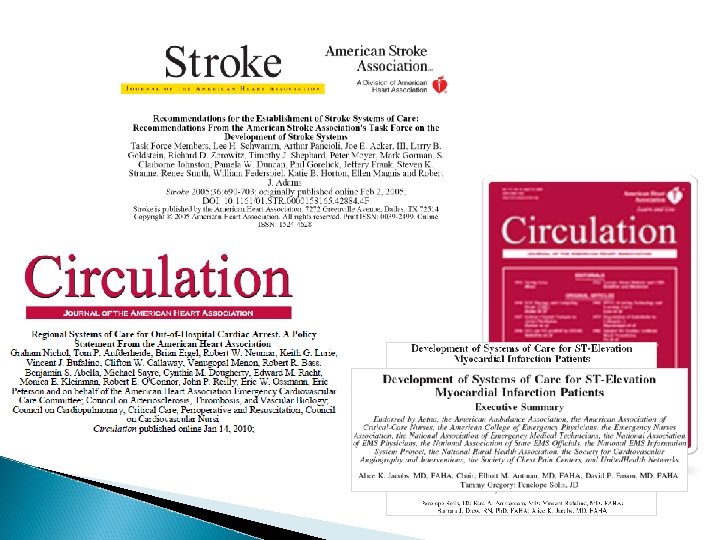
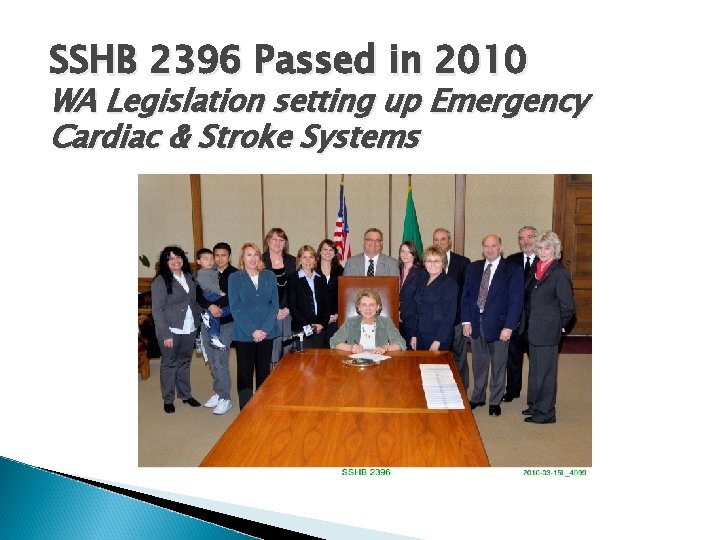
SSHB 2396 Passed in 2010 WA Legislation setting up Emergency Cardiac & Stroke Systems
System Components Dispa tch 911 Neurology / Cardiology
Washington’s Approach Emergency Cardiac & Stroke Technical Advisory Committee made recommendations on: Dispatch guidelines Standardized EMS protocol guidelines Standardized EMS triage tools Voluntary hospital categorization Quality improvement & data collection Public education Goal: Get right patient to right hospital in time for treatment
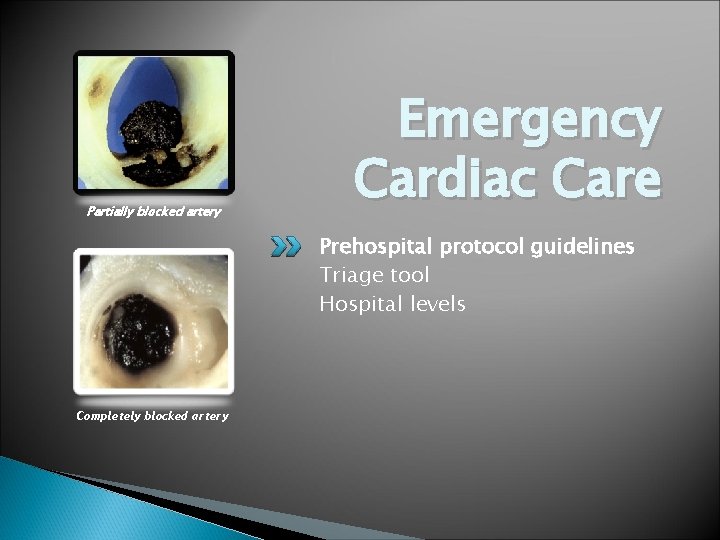
Partially blocked artery Emergency Cardiac Care Prehospital protocol guidelines Triage tool Hospital levels Completely blocked artery
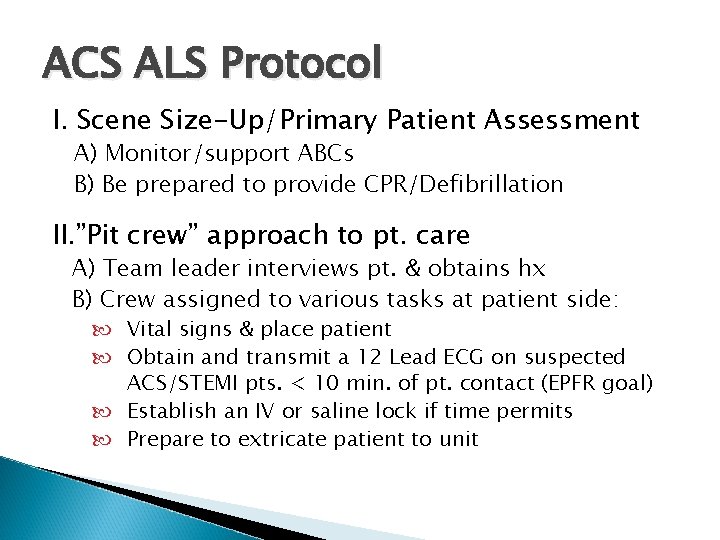
ACS ALS Protocol I. Scene Size-Up/Primary Patient Assessment A) Monitor/support ABCs B) Be prepared to provide CPR/Defibrillation II. ”Pit crew” approach to pt. care A) Team leader interviews pt. & obtains hx B) Crew assigned to various tasks at patient side: Vital signs & place patient Obtain and transmit a 12 Lead ECG on suspected ACS/STEMI pts. < 10 min. of pt. contact (EPFR goal) Establish an IV or saline lock if time permits Prepare to extricate patient to unit
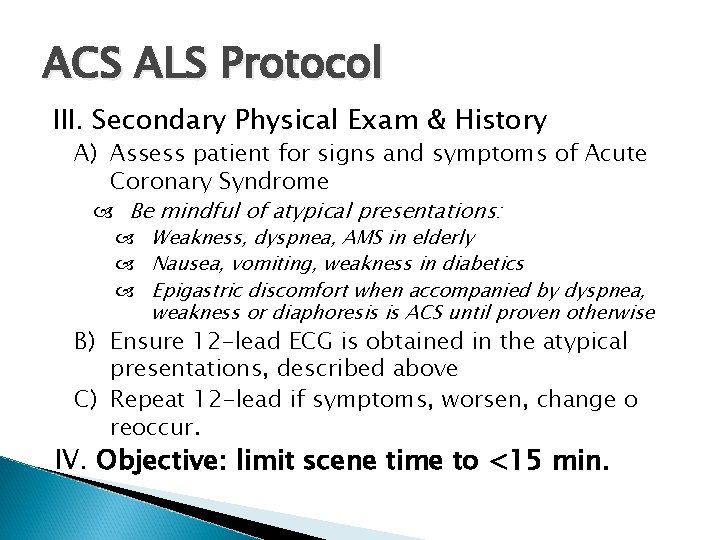
ACS ALS Protocol III. Secondary Physical Exam & History A) Assess patient for signs and symptoms of Acute Coronary Syndrome Be mindful of atypical presentations: Weakness, dyspnea, AMS in elderly Nausea, vomiting, weakness in diabetics Epigastric discomfort when accompanied by dyspnea, weakness or diaphoresis is ACS until proven otherwise B) Ensure 12 -lead ECG is obtained in the atypical presentations, described above C) Repeat 12 -lead if symptoms, worsen, change o reoccur. IV. Objective: limit scene time to <15 min.
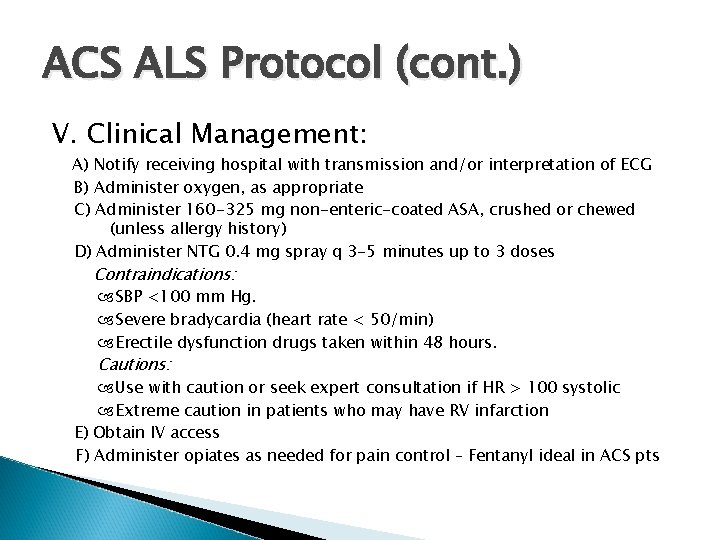
ACS ALS Protocol (cont. ) V. Clinical Management: A) Notify receiving hospital with transmission and/or interpretation of ECG B) Administer oxygen, as appropriate C) Administer 160 -325 mg non-enteric-coated ASA, crushed or chewed (unless allergy history) D) Administer NTG 0. 4 mg spray q 3 -5 minutes up to 3 doses Contraindications: SBP <100 mm Hg. Severe bradycardia (heart rate < 50/min) Erectile dysfunction drugs taken within 48 hours. Cautions: Use with caution or seek expert consultation if HR > 100 systolic Extreme caution in patients who may have RV infarction E) Obtain IV access F) Administer opiates as needed for pain control – Fentanyl ideal in ACS pts
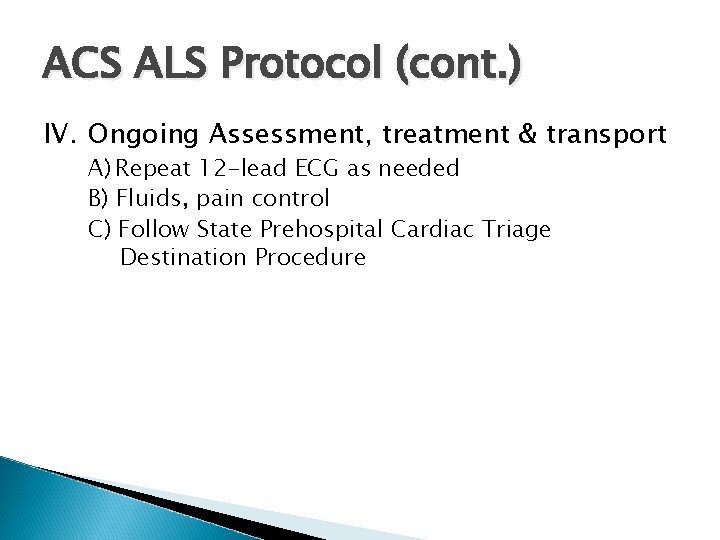
ACS ALS Protocol (cont. ) IV. Ongoing Assessment, treatment & transport A) Repeat 12 -lead ECG as needed B) Fluids, pain control C) Follow State Prehospital Cardiac Triage Destination Procedure
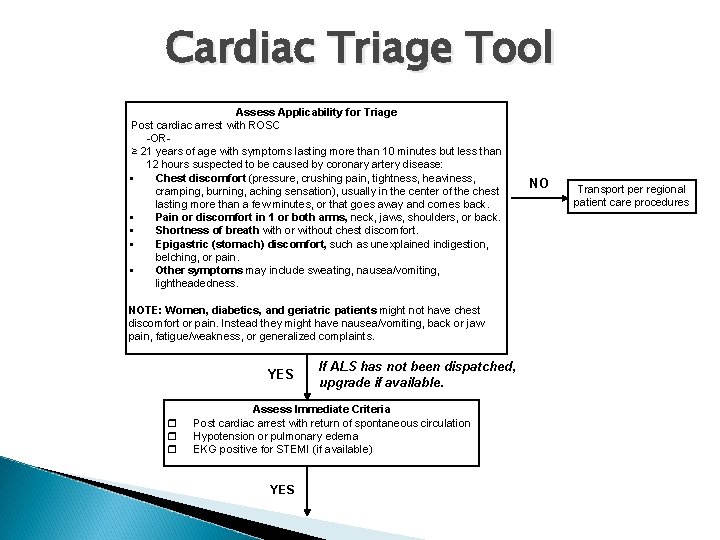
Cardiac Triage Tool Assess Applicability for Triage Post cardiac arrest with ROSC -OR ≥ 21 years of age with symptoms lasting more than 10 minutes but less than 12 hours suspected to be caused by coronary artery disease: Chest discomfort (pressure, crushing pain, tightness, heaviness, cramping, burning, aching sensation), usually in the center of the chest lasting more than a few minutes, or that goes away and comes back. Pain or discomfort in 1 or both arms, neck, jaws, shoulders, or back. Shortness of breath with or without chest discomfort. Epigastric (stomach) discomfort, such as unexplained indigestion, belching, or pain. Other symptoms may include sweating, nausea/vomiting, lightheadedness. NOTE: Women, diabetics, and geriatric patients might not have chest discomfort or pain. Instead they might have nausea/vomiting, back or jaw pain, fatigue/weakness, or generalized complaints. YES If ALS has not been dispatched, upgrade if available. Assess Immediate Criteria Post cardiac arrest with return of spontaneous circulation Hypotension or pulmonary edema EKG positive for STEMI (if available) YES NO Transport per regional patient care procedures
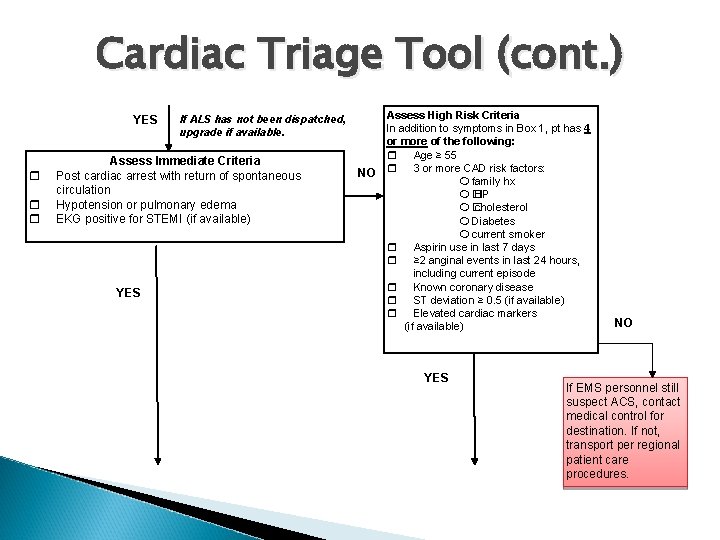
Cardiac Triage Tool (cont. ) YES If ALS has not been dispatched, upgrade if available. Assess Immediate Criteria Post cardiac arrest with return of spontaneous circulation Hypotension or pulmonary edema EKG positive for STEMI (if available) YES Assess High Risk Criteria In addition to symptoms in Box 1, pt has 4 or more of the following: Age ≥ 55 NO 3 or more CAD risk factors: family hx � BP � cholesterol Diabetes current smoker Aspirin use in last 7 days ≥ 2 anginal events in last 24 hours, including current episode Known coronary disease ST deviation ≥ 0. 5 (if available) Elevated cardiac markers (if available) YES NO If EMS personnel still suspect ACS, contact medical control for destination. If not, transport per regional patient care procedures.
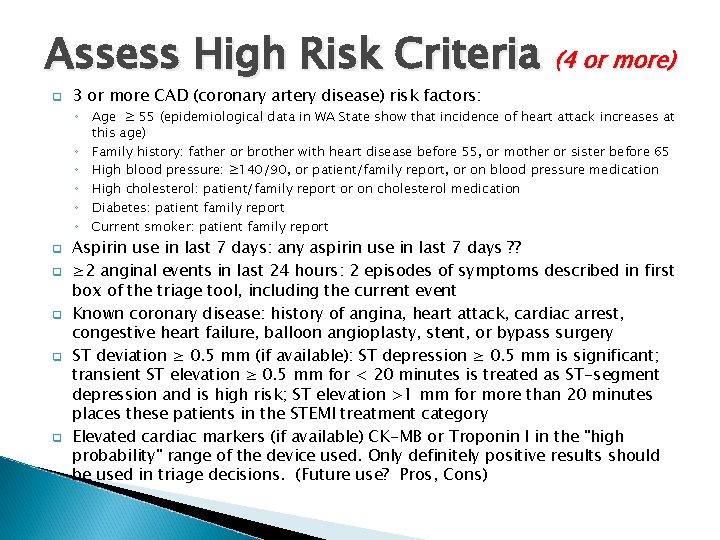
Assess High Risk Criteria (4 or more) q 3 or more CAD (coronary artery disease) risk factors: ◦ Age ≥ 55 (epidemiological data in WA State show that incidence of heart attack increases at this age) ◦ Family history: father or brother with heart disease before 55, or mother or sister before 65 ◦ High blood pressure: ≥ 140/90, or patient/family report, or on blood pressure medication ◦ High cholesterol: patient/family report or on cholesterol medication ◦ Diabetes: patient family report ◦ Current smoker: patient family report q q q Aspirin use in last 7 days: any aspirin use in last 7 days ? ? ≥ 2 anginal events in last 24 hours: 2 episodes of symptoms described in first box of the triage tool, including the current event Known coronary disease: history of angina, heart attack, cardiac arrest, congestive heart failure, balloon angioplasty, stent, or bypass surgery ST deviation ≥ 0. 5 mm (if available): ST depression ≥ 0. 5 mm is significant; transient ST elevation ≥ 0. 5 mm for < 20 minutes is treated as ST-segment depression and is high risk; ST elevation >1 mm for more than 20 minutes places these patients in the STEMI treatment category Elevated cardiac markers (if available) CK-MB or Troponin I in the "high probability" range of the device used. Only definitely positive results should be used in triage decisions. (Future use? Pros, Cons)
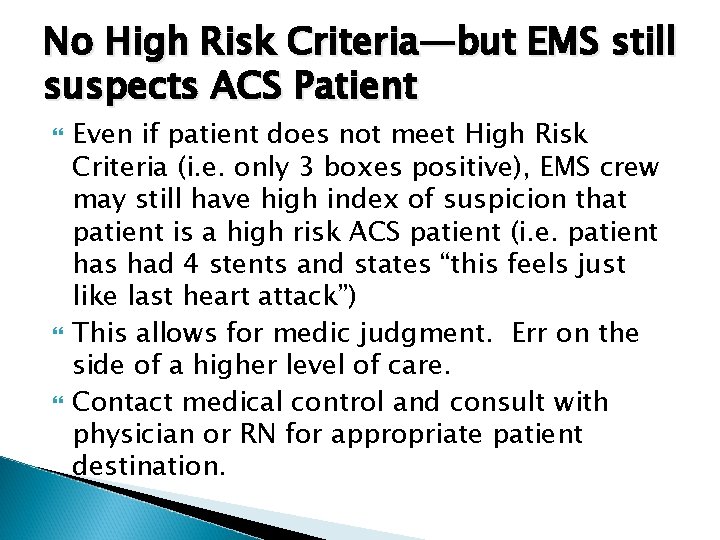
No High Risk Criteria—but EMS still suspects ACS Patient Even if patient does not meet High Risk Criteria (i. e. only 3 boxes positive), EMS crew may still have high index of suspicion that patient is a high risk ACS patient (i. e. patient has had 4 stents and states “this feels just like last heart attack”) This allows for medic judgment. Err on the side of a higher level of care. Contact medical control and consult with physician or RN for appropriate patient destination.
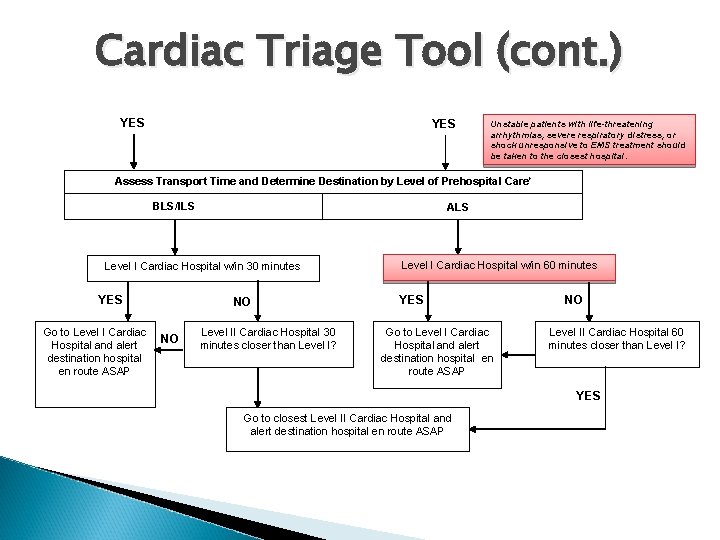
Cardiac Triage Tool (cont. ) YES Unstable patients with life-threatening arrhythmias, severe respiratory distress, or shock unresponsive to EMS treatment should be taken to the closest hospital. Assess Transport Time and Determine Destination by Level of Prehospital Care* BLS/ILS ALS Level I Cardiac Hospital w/in 30 minutes YES Go to Level I Cardiac NO Hospital and alert destination hospital en route ASAP NO Level II Cardiac Hospital 30 minutes closer than Level I? Level I Cardiac Hospital w/in 60 minutes YES Go to Level I Cardiac Hospital and alert destination hospital en route ASAP NO Level II Cardiac Hospital 60 minutes closer than Level I? YES Go to closest Level II Cardiac Hospital and alert destination hospital en route ASAP
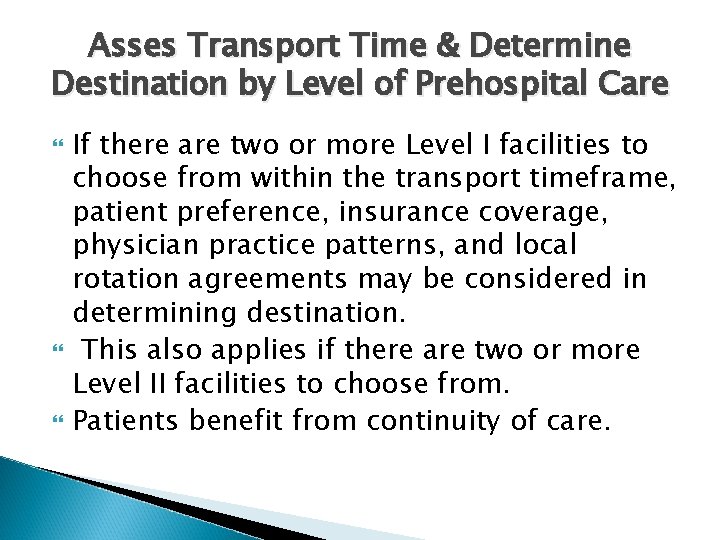
Asses Transport Time & Determine Destination by Level of Prehospital Care If there are two or more Level I facilities to choose from within the transport timeframe, patient preference, insurance coverage, physician practice patterns, and local rotation agreements may be considered in determining destination. This also applies if there are two or more Level II facilities to choose from. Patients benefit from continuity of care.
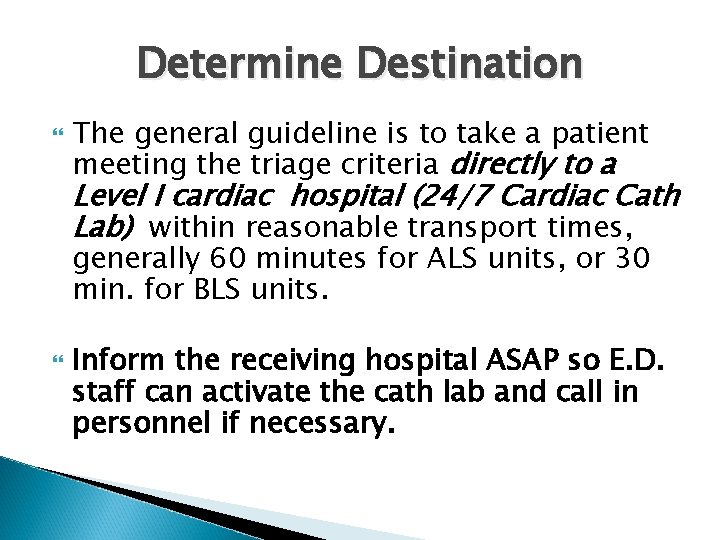
Determine Destination The general guideline is to take a patient meeting the triage criteria directly to a Level I cardiac hospital (24/7 Cardiac Cath Lab) within reasonable transport times, generally 60 minutes for ALS units, or 30 min. for BLS units. Inform the receiving hospital ASAP so E. D. staff can activate the cath lab and call in personnel if necessary.
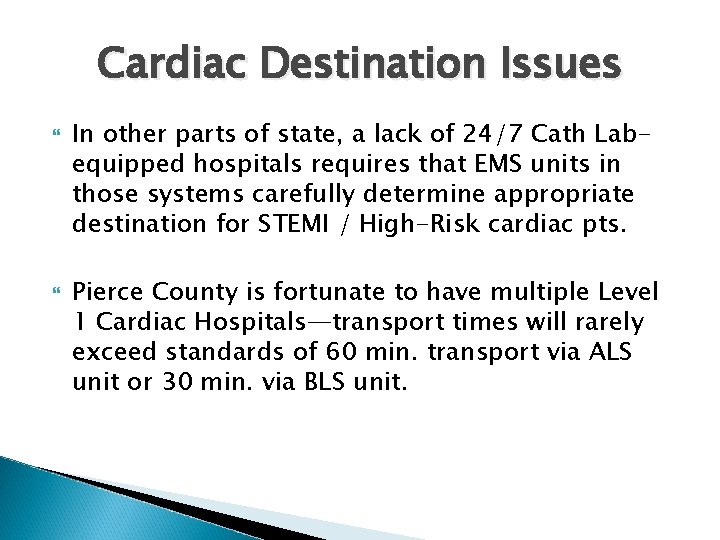
Cardiac Destination Issues In other parts of state, a lack of 24/7 Cath Labequipped hospitals requires that EMS units in those systems carefully determine appropriate destination for STEMI / High-Risk cardiac pts. Pierce County is fortunate to have multiple Level 1 Cardiac Hospitals—transport times will rarely exceed standards of 60 min. transport via ALS unit or 30 min. via BLS unit.
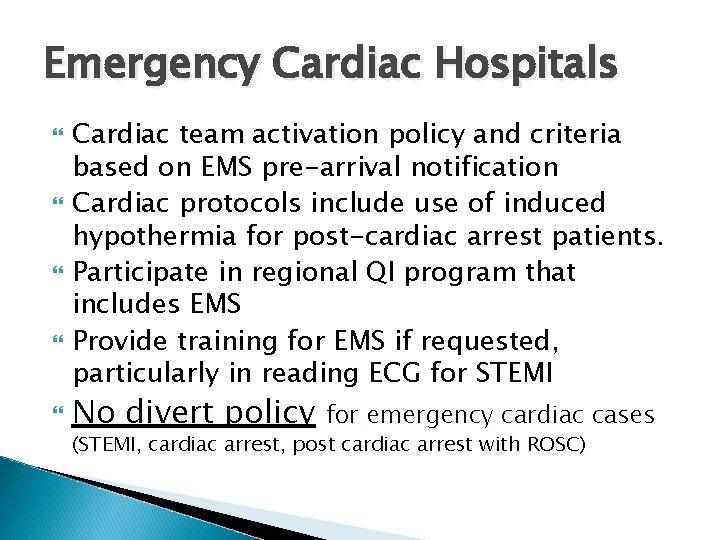
Emergency Cardiac Hospitals Cardiac team activation policy and criteria based on EMS pre-arrival notification Cardiac protocols include use of induced hypothermia for post-cardiac arrest patients. Participate in regional QI program that includes EMS Provide training for EMS if requested, particularly in reading ECG for STEMI No divert policy for emergency cardiac cases (STEMI, cardiac arrest, post cardiac arrest with ROSC)
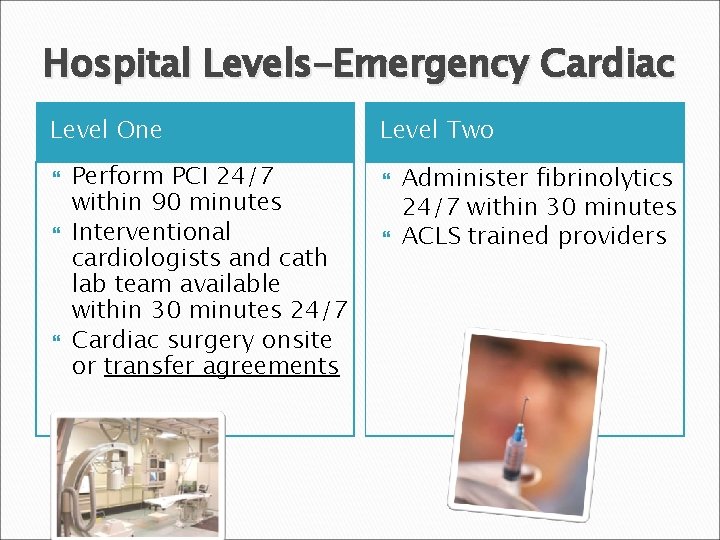
Hospital Levels-Emergency Cardiac Level One Perform PCI 24/7 within 90 minutes Interventional cardiologists and cath lab team available within 30 minutes 24/7 Cardiac surgery onsite or transfer agreements Level Two Administer fibrinolytics 24/7 within 30 minutes ACLS trained providers
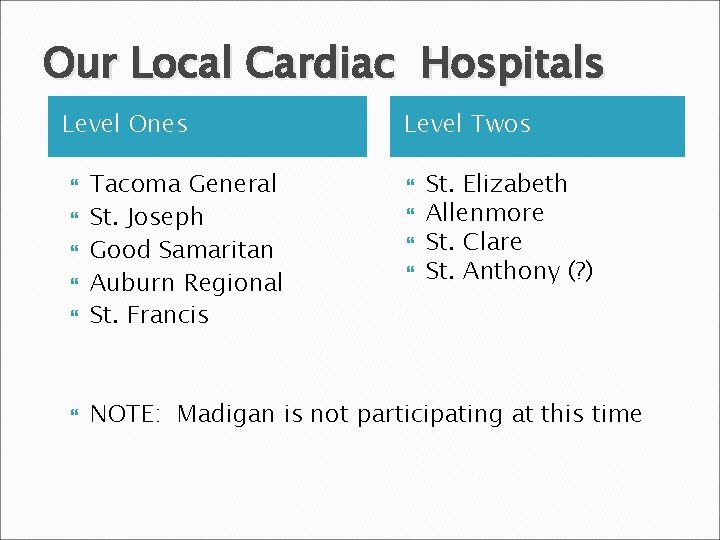
Our Local Cardiac Hospitals Level Ones Level Twos Tacoma General St. Joseph Good Samaritan Auburn Regional St. Francis NOTE: Madigan is not participating at this time St. Elizabeth Allenmore St. Clare St. Anthony (? )
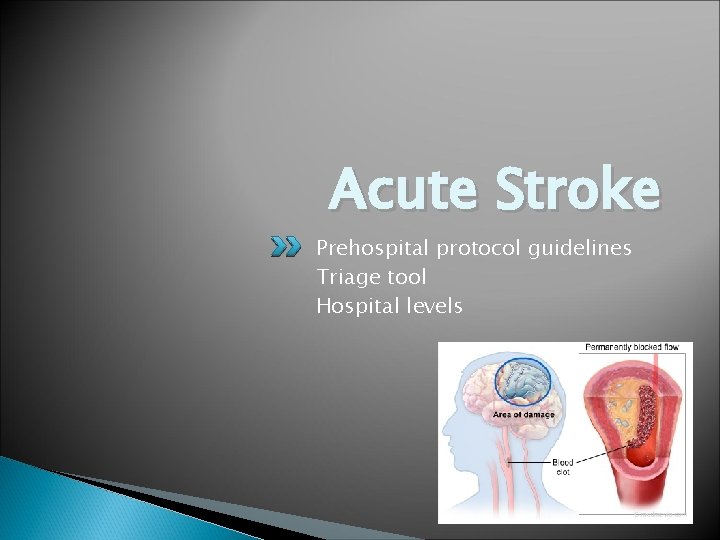
Acute Stroke Prehospital protocol guidelines Triage tool Hospital levels
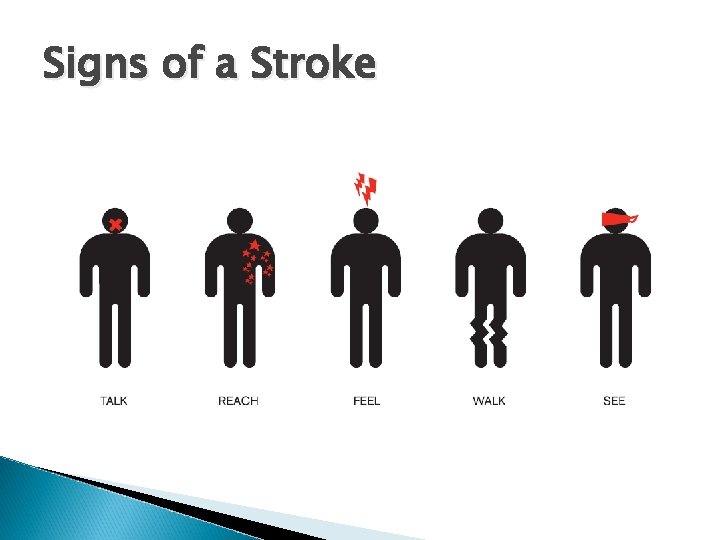
Signs of a Stroke
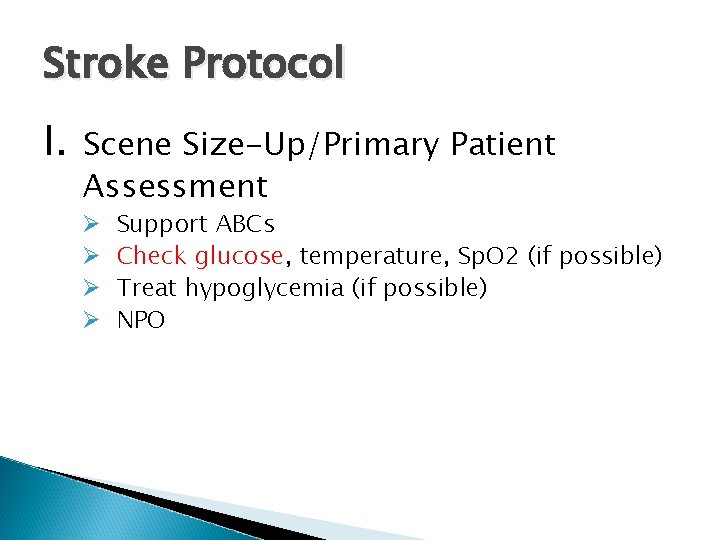
Stroke Protocol I. Scene Size-Up/Primary Patient Assessment Ø Ø Support ABCs Check glucose, temperature, Sp. O 2 (if possible) Treat hypoglycemia (if possible) NPO
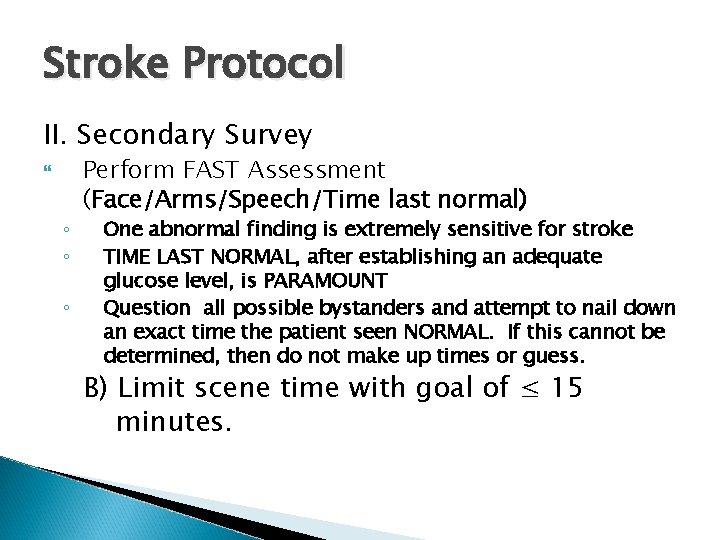
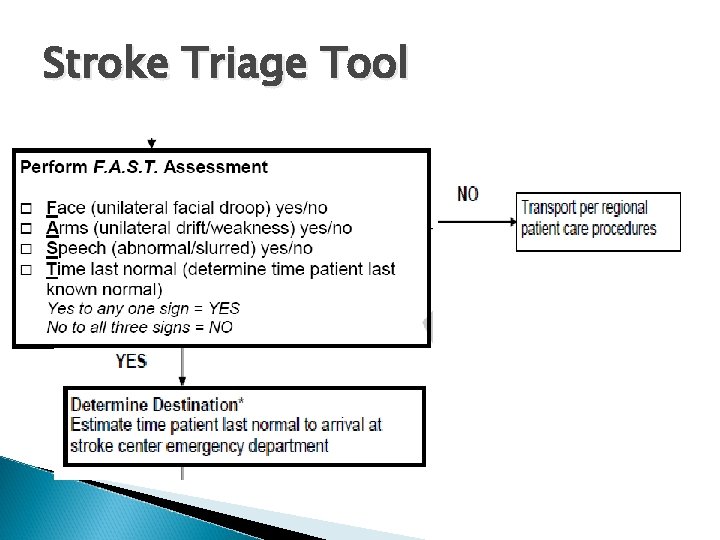
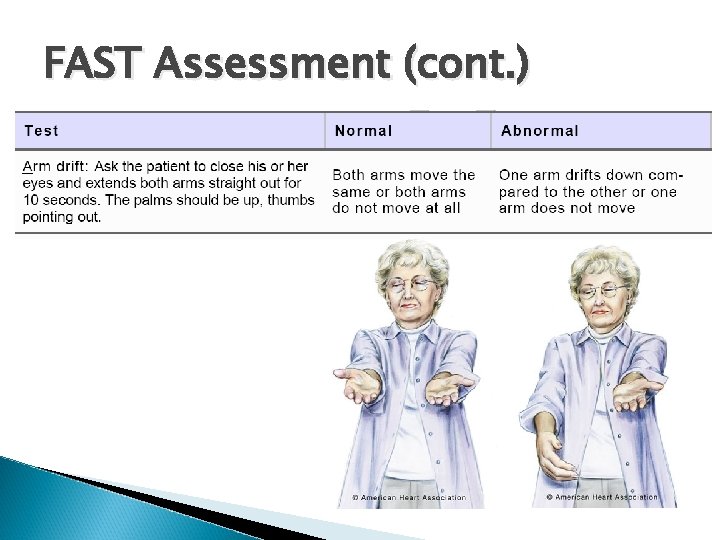
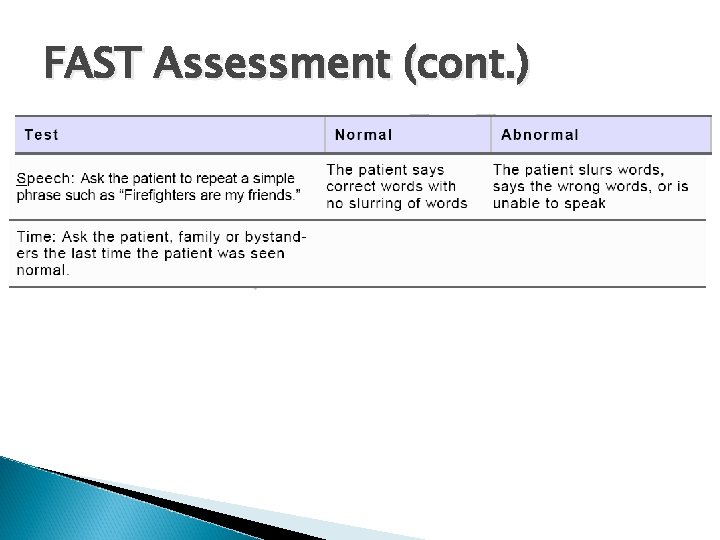
Stroke Protocol II. Secondary Survey ◦ ◦ ◦ Perform FAST Assessment (Face/Arms/Speech/Time last normal) One abnormal finding is extremely sensitive for stroke TIME LAST NORMAL, after establishing an adequate glucose level, is PARAMOUNT Question all possible bystanders and attempt to nail down an exact time the patient seen NORMAL. If this cannot be determined, then do not make up times or guess. B) Limit scene time with goal of ≤ 15 minutes.
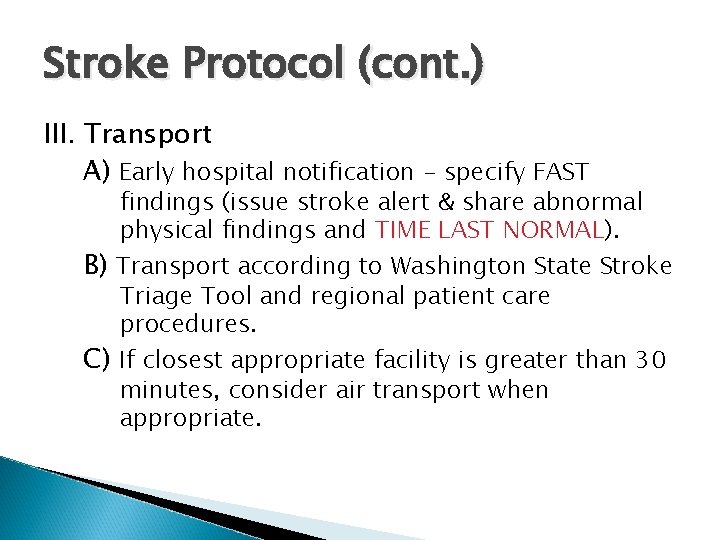
Stroke Protocol (cont. ) III. Transport A) Early hospital notification - specify FAST findings (issue stroke alert & share abnormal physical findings and TIME LAST NORMAL). NORMAL B) Transport according to Washington State Stroke Triage Tool and regional patient care procedures. C) If closest appropriate facility is greater than 30 minutes, consider air transport when appropriate.
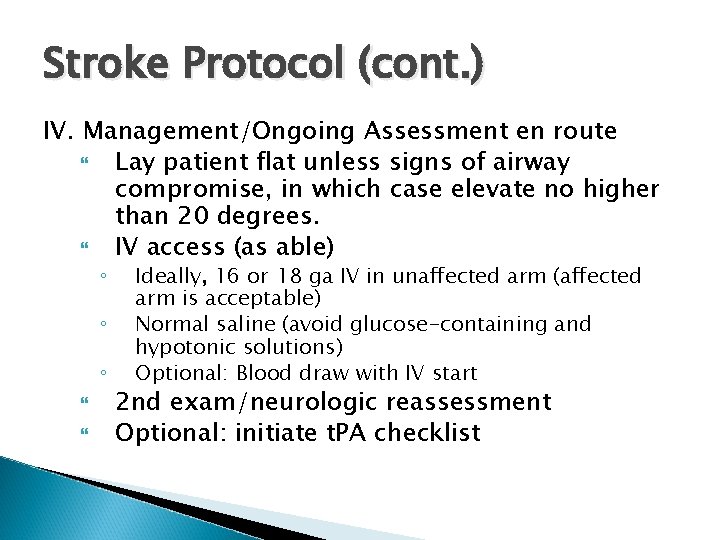
Stroke Protocol (cont. ) IV. Management/Ongoing Assessment en route Lay patient flat unless signs of airway compromise, in which case elevate no higher than 20 degrees. IV access (as able) ◦ ◦ ◦ Ideally, 16 or 18 ga IV in unaffected arm (affected arm is acceptable) Normal saline (avoid glucose-containing and hypotonic solutions) Optional: Blood draw with IV start 2 nd exam/neurologic reassessment Optional: initiate t. PA checklist
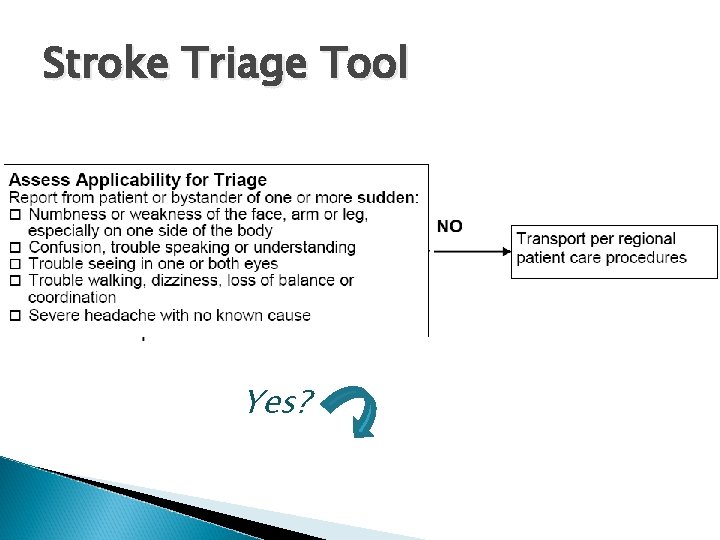
Stroke Triage Tool Yes?
Stroke Triage Tool
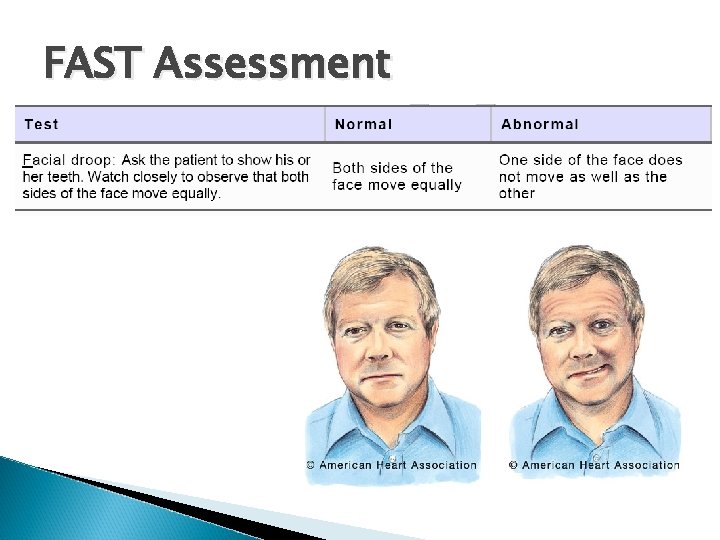
FAST Assessment
FAST Assessment (cont. )
FAST Assessment (cont. )
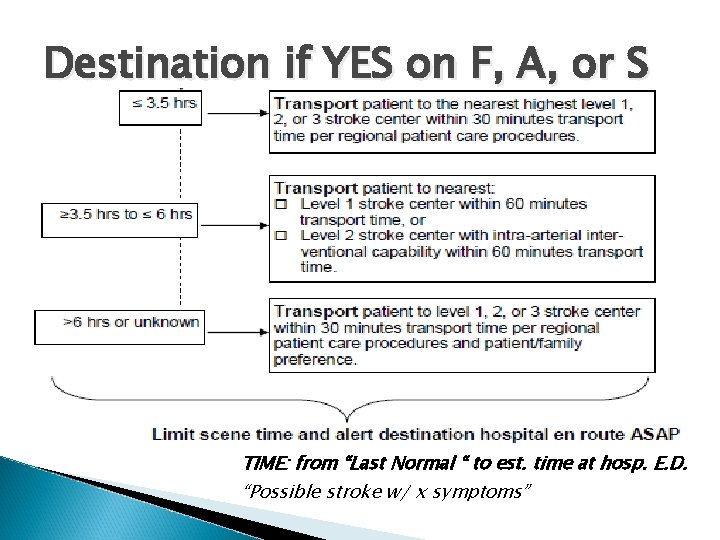
Destination if YES on F, A, or S TIME: from “Last Normal “ to est. time at hosp. E. D. “Possible stroke w/ x symptoms”
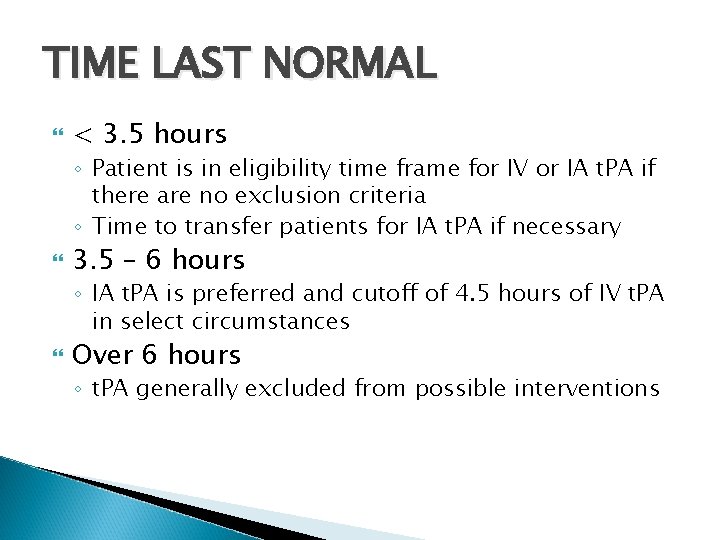
TIME LAST NORMAL < 3. 5 hours ◦ Patient is in eligibility time frame for IV or IA t. PA if there are no exclusion criteria ◦ Time to transfer patients for IA t. PA if necessary 3. 5 – 6 hours ◦ IA t. PA is preferred and cutoff of 4. 5 hours of IV t. PA in select circumstances Over 6 hours ◦ t. PA generally excluded from possible interventions
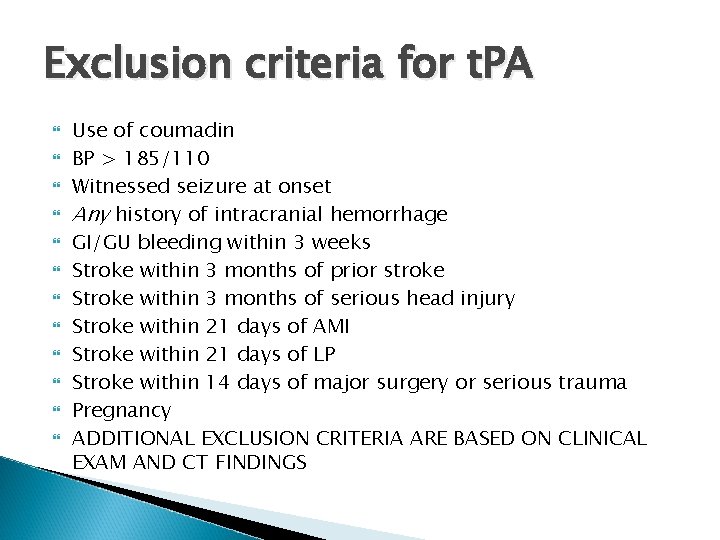
Exclusion criteria for t. PA Use of coumadin BP > 185/110 Witnessed seizure at onset Any history of intracranial hemorrhage GI/GU bleeding within 3 weeks Stroke within 3 months of prior stroke Stroke within 3 months of serious head injury Stroke within 21 days of AMI Stroke within 21 days of LP Stroke within 14 days of major surgery or serious trauma Pregnancy ADDITIONAL EXCLUSION CRITERIA ARE BASED ON CLINICAL EXAM AND CT FINDINGS
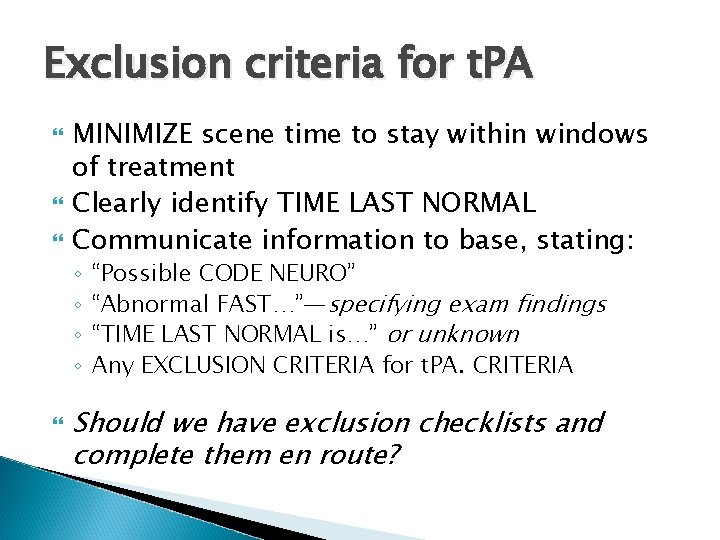
Exclusion criteria for t. PA MINIMIZE scene time to stay within windows of treatment Clearly identify TIME LAST NORMAL Communicate information to base, stating: ◦ ◦ “Possible CODE NEURO” “Abnormal FAST…”—specifying exam findings “TIME LAST NORMAL is…” or unknown Any EXCLUSION CRITERIA for t. PA. CRITERIA Should we have exclusion checklists and complete them en route?
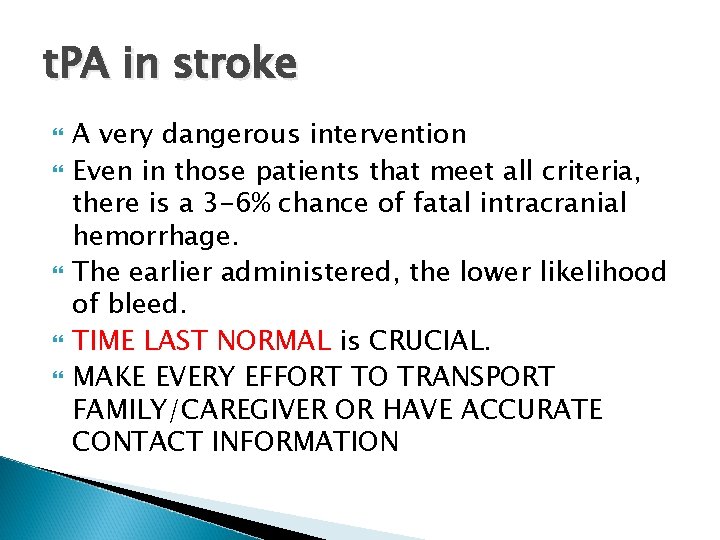
t. PA in stroke A very dangerous intervention Even in those patients that meet all criteria, there is a 3 -6% chance of fatal intracranial hemorrhage. The earlier administered, the lower likelihood of bleed. TIME LAST NORMAL is CRUCIAL. MAKE EVERY EFFORT TO TRANSPORT FAMILY/CAREGIVER OR HAVE ACCURATE CONTACT INFORMATION
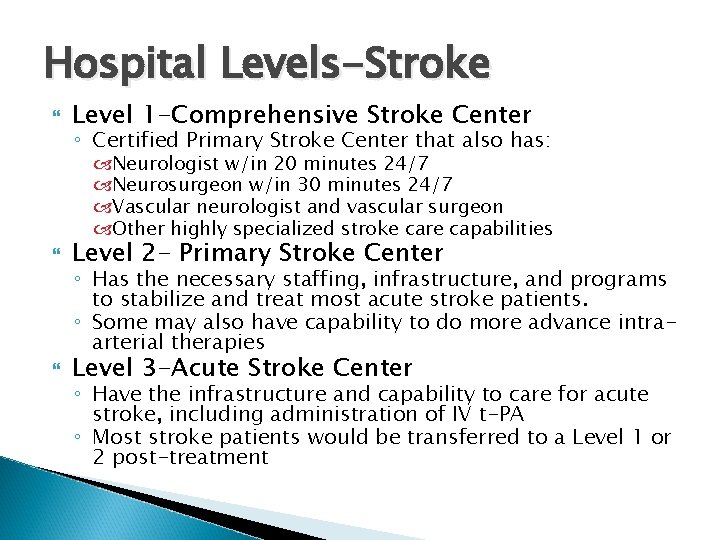
Hospital Levels-Stroke Level 1 -Comprehensive Stroke Center ◦ Certified Primary Stroke Center that also has: Neurologist w/in 20 minutes 24/7 Neurosurgeon w/in 30 minutes 24/7 Vascular neurologist and vascular surgeon Other highly specialized stroke care capabilities Level 2 - Primary Stroke Center Level 3 -Acute Stroke Center ◦ Has the necessary staffing, infrastructure, and programs to stabilize and treat most acute stroke patients. ◦ Some may also have capability to do more advance intraarterial therapies ◦ Have the infrastructure and capability to care for acute stroke, including administration of IV t-PA ◦ Most stroke patients would be transferred to a Level 1 or 2 post-treatment
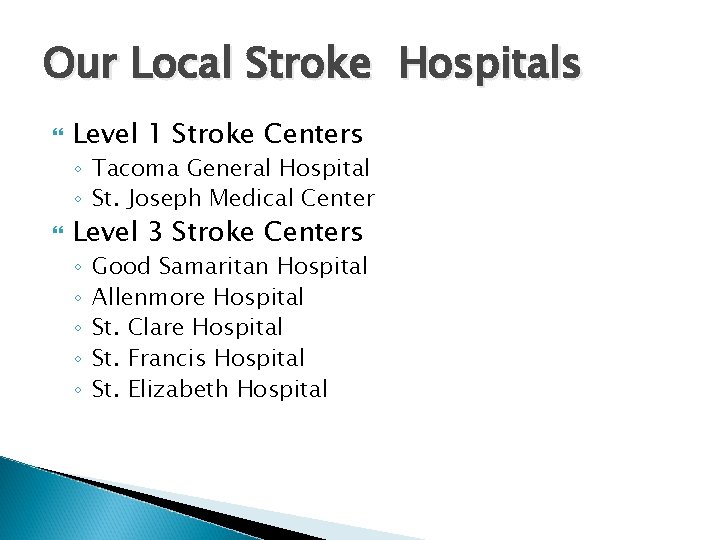
Our Local Stroke Hospitals Level 1 Stroke Centers ◦ Tacoma General Hospital ◦ St. Joseph Medical Center Level 3 Stroke Centers ◦ ◦ ◦ Good Samaritan Hospital Allenmore Hospital St. Clare Hospital St. Francis Hospital St. Elizabeth Hospital
Working Systems Data collection Quality improvement Resources & tools
Data and Quality Improvement ECS TAC Report: Develop a comprehensive data system to demonstrate the effectiveness of the ECS system and improve performance. Include dispatch, EMS and hospitals, and use existing data systems (WEMSIS!) to avoid duplicate data entry and analysis. EMS/T Strategic Plan: Goal 19, Objective 5: Local Quality Improvement By June 2012 regional cardiac and stroke systems evaluate system performance through a quality improvement process.
Key System Measures Time from onset to 911 call Time from first medical contact (EMS or first ED) to treatment (e. g. , balloon or t-PA) ◦ For STEMI—moving from D 2 B to EDB < 90 min. On-scene time – MINIMIZE! Time from onset to treatment (e. g. , balloon or t-PA)
Key System Measures % of cardiac/stroke patients that arrive by EMS % of patients EMS notified hospital pre-arrival Cardiac arrest measures (future) ◦ East Pierce already participating in state WA CARES (Cardiac Arrest Registry for Enhanced Survival) program
Some of the Data Elements Time of symptom onset PSAP call receipt Time of dispatch Time of EMS arrival at patient’s side Time left scene Time arrived at hospital FAST, ECG or other clinical findings (Resuscitation efforts and outcomes) Medications administered
Essential from EMS for QI Crucial that EMS Patient reports are left at hospital for system evaluation and QI. Accurate, complete documentation on ESO reports essential for EMS system review. GSH staff committed to obtaining patient outcomes for all STEMI and possible CVA patients.
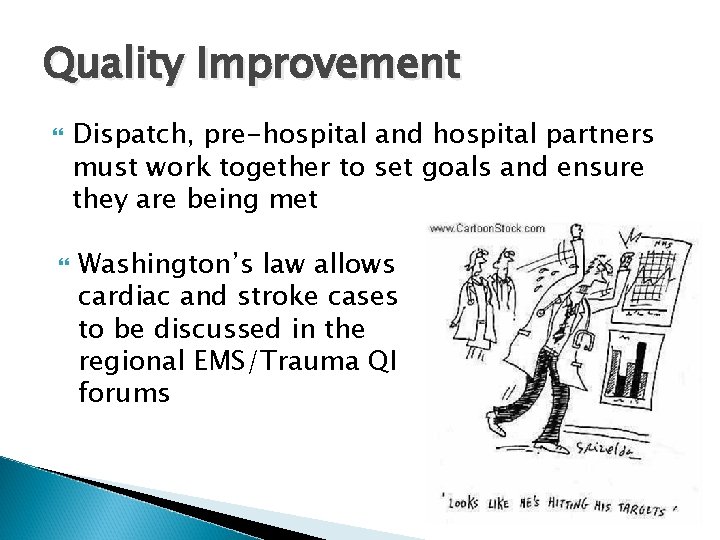
Quality Improvement Dispatch, pre-hospital and hospital partners must work together to set goals and ensure they are being met Washington’s law allows cardiac and stroke cases to be discussed in the regional EMS/Trauma QI forums
Resources & Tools Emergency Cardiac and Stroke System http: //www. doh. wa. gov/hsqa/hdsp/default. htm Emergency Cardiac & Stroke Care in Washington Report http: //www. doh. wa. gov/cfh/heart_stroke/For_Healthcare/Carstrokeresp. htm Development of Systems of Care for STEMI Patients: The EMS and ED Perspective http: //circ. ahajournals. org/cgi/reprint/116/2/e 43 Implementation Strategies for EMS Within Stroke Systems of Care http: //stroke. ahajournals. org/cgi/reprint/38/11/3097? maxtoshow=&HI TS=10&hits=10&RESULTFORMAT=&fulltext=Implementation+strategies &searchid=1&FIRSTINDEX=0&resourcetype=HWCIT&eaf AHA E-learning: Learn Rapid STEMI ID, Prehospital Stroke http: //www. onlineaha. org/index. cfm? fuseaction=main. course. Catalog Stroke Rapid Response™ Prehospital Education Training http: //www. stroke. org/site/Page. Server? pagename=SRR_testimonials Washington Stroke Forum http: //strokeforum. doh. wa. gov/