
The Role Of Cooling In Treating Neonatal Encephalopathy

- Slides: 22
The Role Of Cooling In Treating Neonatal Encephalopathy Malcolm Battin Neonatologist ACH, Chair NE Working Group, PMMRC
Adopting Medical Innovation “ That it will ever come into general use, notwithstanding its value, is extremely doubtful; because its beneficial application requires much time and gives a good bit of trouble both to the patient and the practitioner; because its hue and character are foreign and opposed to all our habits and associations” London Times 1834
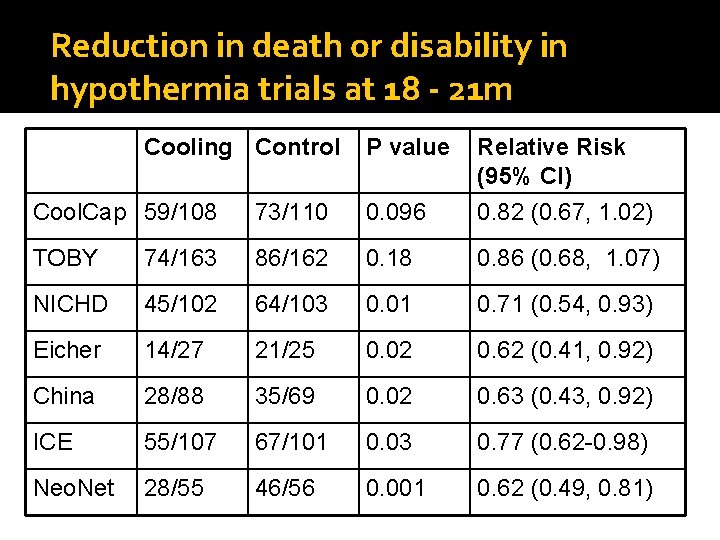
Reduction in death or disability in hypothermia trials at 18 - 21 m Cooling Control P value Cool. Cap 59/108 73/110 0. 096 Relative Risk (95% CI) 0. 82 (0. 67, 1. 02) TOBY 74/163 86/162 0. 18 0. 86 (0. 68, 1. 07) NICHD 45/102 64/103 0. 01 0. 71 (0. 54, 0. 93) Eicher 14/27 21/25 0. 02 0. 62 (0. 41, 0. 92) China 28/88 35/69 0. 02 0. 63 (0. 43, 0. 92) ICE 55/107 67/101 0. 03 0. 77 (0. 62 -0. 98) Neo. Net 28/55 46/56 0. 001 0. 62 (0. 49, 0. 81)
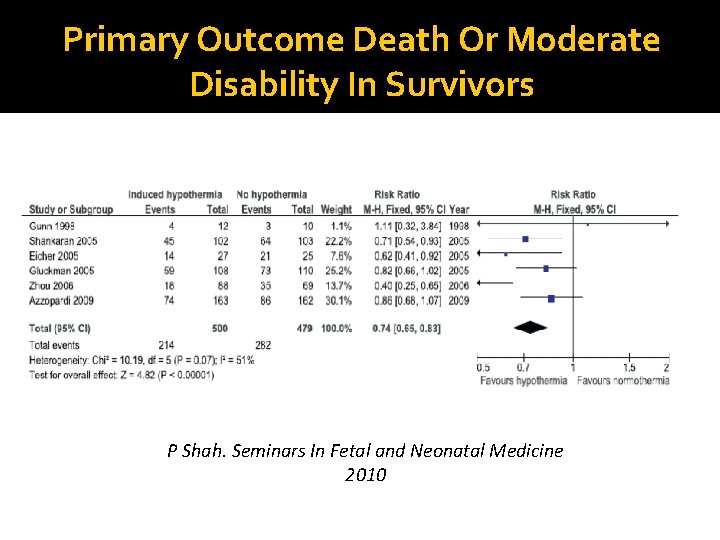
Primary Outcome Death Or Moderate Disability In Survivors P Shah. Seminars In Fetal and Neonatal Medicine 2010
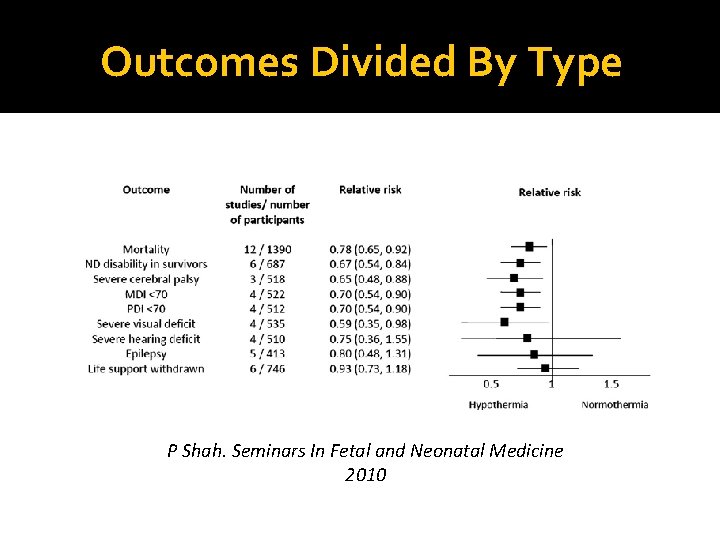
Outcomes Divided By Type P Shah. Seminars In Fetal and Neonatal Medicine 2010
Later childhood outcomes after Hypothermia for NE
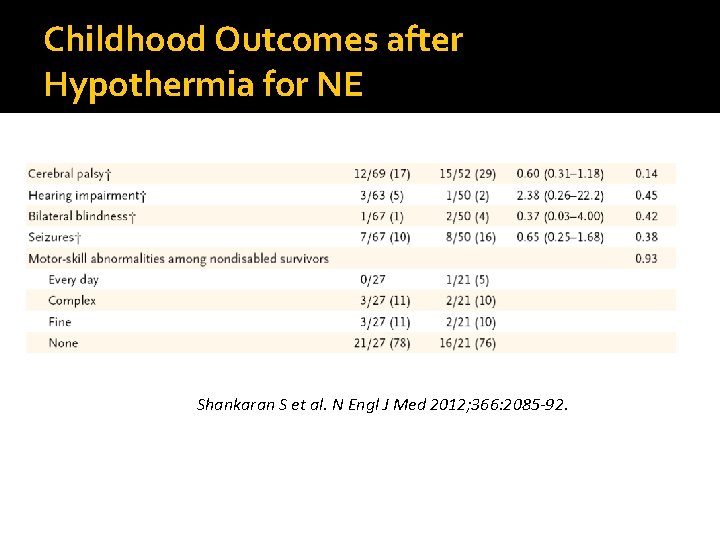
Childhood Outcomes after Hypothermia for NE Shankaran S et al. N Engl J Med 2012; 366: 2085 -92.
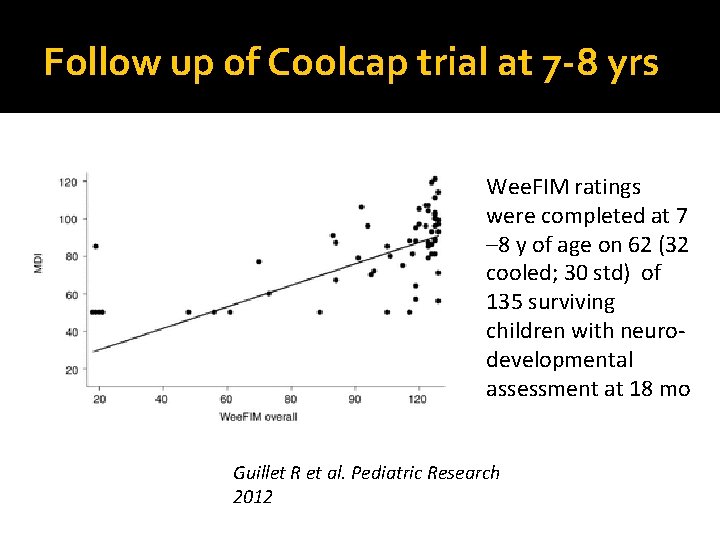
Follow up of Coolcap trial at 7 -8 yrs Wee. FIM ratings were completed at 7 – 8 y of age on 62 (32 cooled; 30 std) of 135 surviving children with neurodevelopmental assessment at 18 mo Guillet R et al. Pediatric Research 2012
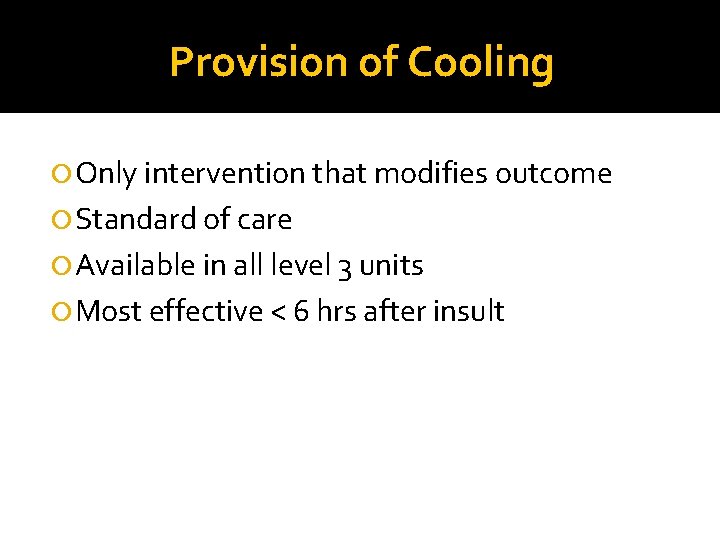
Provision of Cooling Only intervention that modifies outcome Standard of care Available in all level 3 units Most effective < 6 hrs after insult
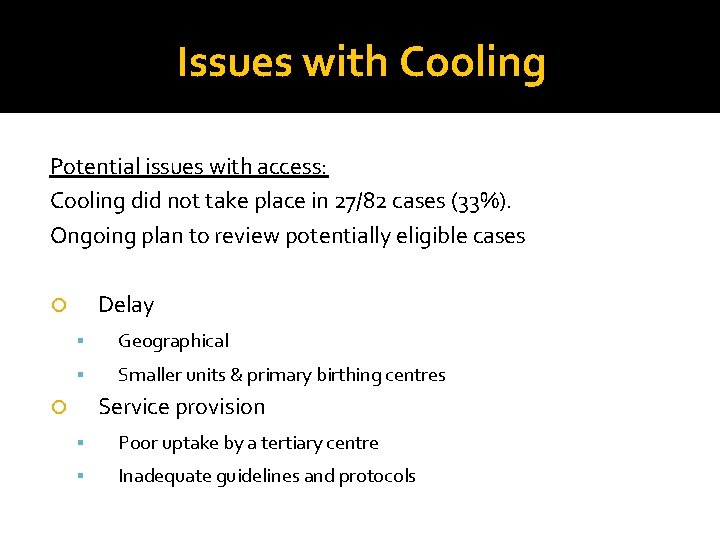
Issues with Cooling Potential issues with access: Cooling did not take place in 27/82 cases (33%). Ongoing plan to review potentially eligible cases Delay Geographical Smaller units & primary birthing centres Service provision Poor uptake by a tertiary centre Inadequate guidelines and protocols
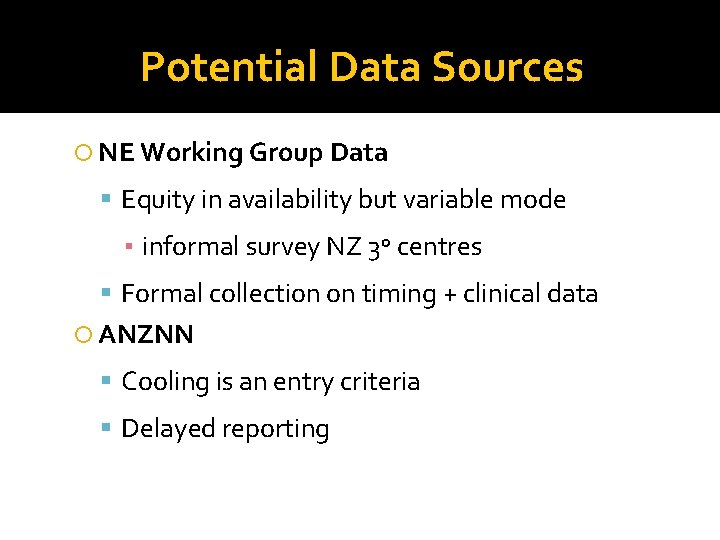
Potential Data Sources NE Working Group Data Equity in availability but variable mode ▪ informal survey NZ 3 o centres Formal collection on timing + clinical data ANZNN Cooling is an entry criteria Delayed reporting
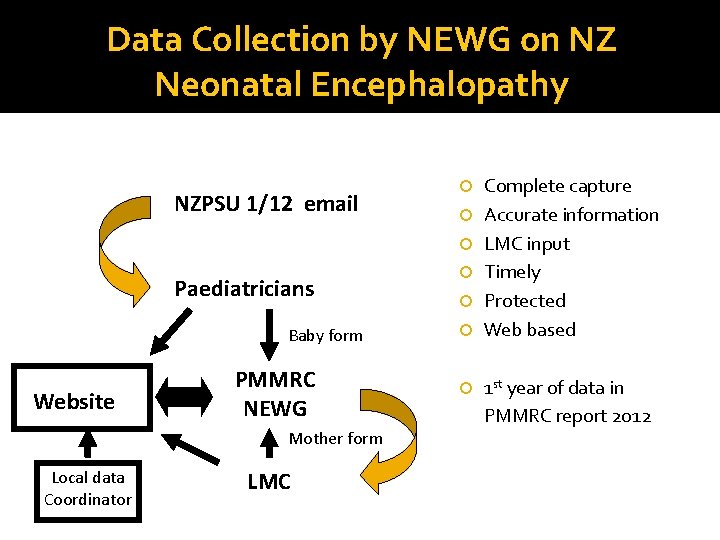
Data Collection by NEWG on NZ Neonatal Encephalopathy NZPSU 1/12 email Paediatricians Baby form Website PMMRC NEWG Mother form Local data Coordinator LMC Complete capture Accurate information LMC input Timely Protected Web based 1 st year of data in PMMRC report 2012
Issues with Cooling Potential issues with access Potential issues with transport
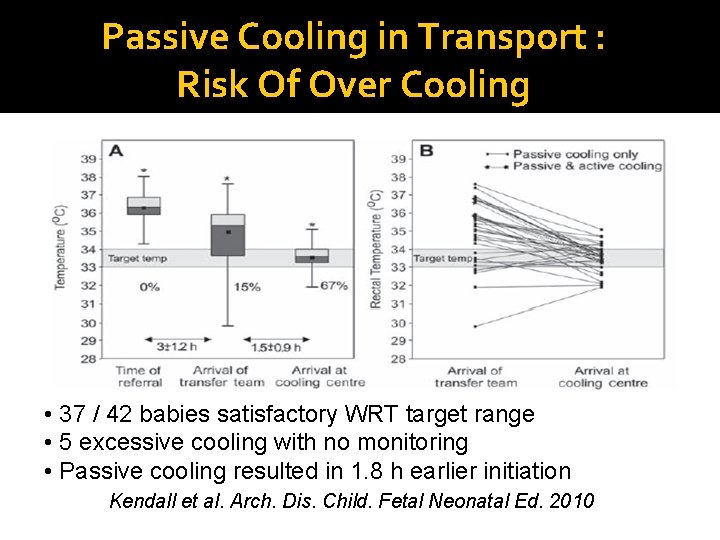
Passive Cooling in Transport : Risk Of Over Cooling • 37 / 42 babies satisfactory WRT target range • 5 excessive cooling with no monitoring • Passive cooling resulted in 1. 8 h earlier initiation Kendall et al. Arch. Dis. Child. Fetal Neonatal Ed. 2010
Issues With Cooling Potential issues with access Potential issues with transport Problems with temperature control in NICU
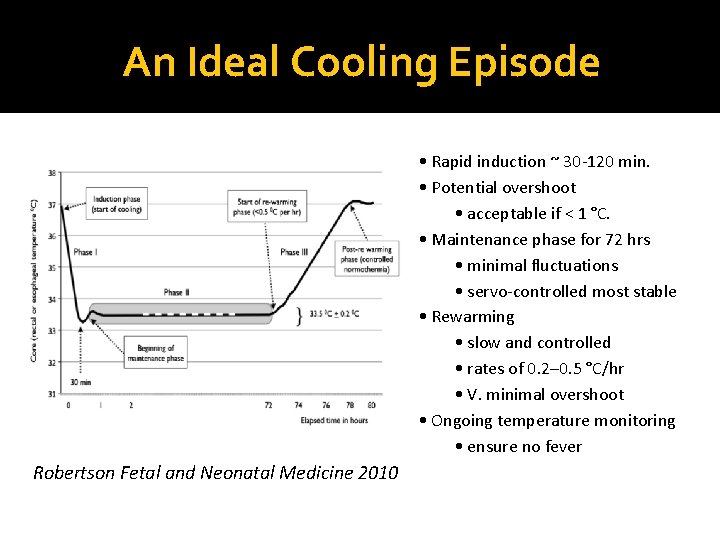
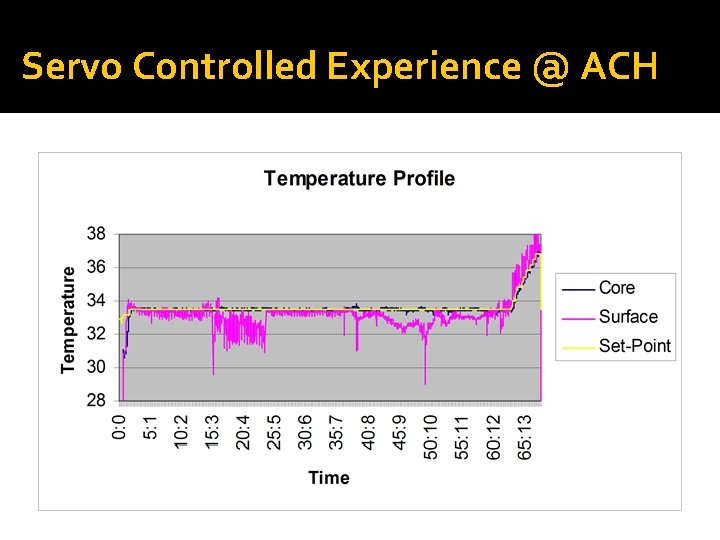
An Ideal Cooling Episode • Rapid induction ~ 30 -120 min. • Potential overshoot • acceptable if < 1 °C. • Maintenance phase for 72 hrs • minimal fluctuations • servo-controlled most stable • Rewarming • slow and controlled • rates of 0. 2– 0. 5 °C/hr • V. minimal overshoot • Ongoing temperature monitoring • ensure no fever Robertson Fetal and Neonatal Medicine 2010
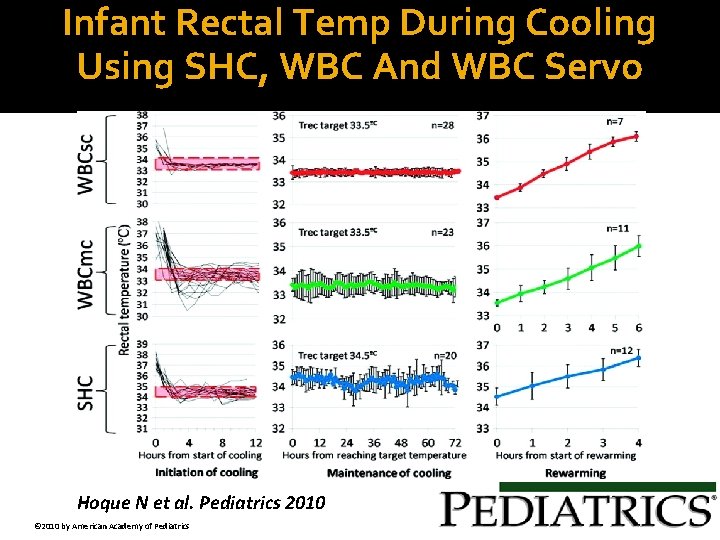
Infant Rectal Temp During Cooling Using SHC, WBC And WBC Servo Hoque N et al. Pediatrics 2010 © 2010 by American Academy of Pediatrics
Servo Controlled Experience @ ACH
Issues With Cooling Potential issues with access Potential issues with transport Problems with temperature control in NICU Potential cooling complications
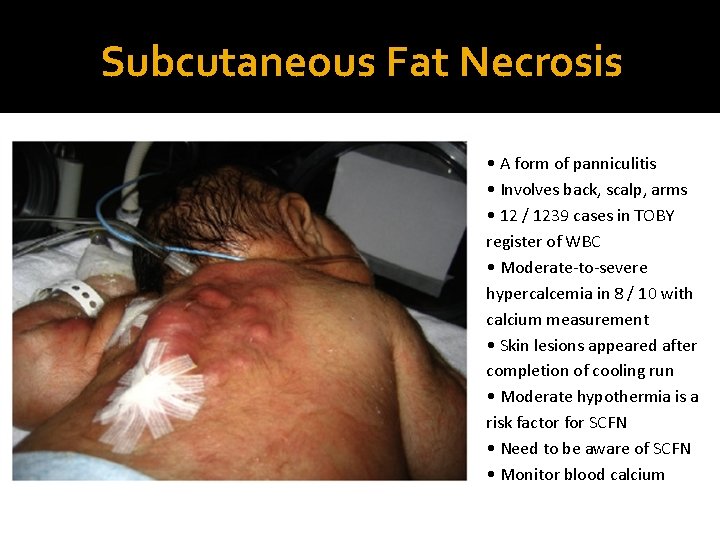
Subcutaneous Fat Necrosis • A form of panniculitis • Involves back, scalp, arms • 12 / 1239 cases in TOBY register of WBC • Moderate-to-severe hypercalcemia in 8 / 10 with calcium measurement • Skin lesions appeared after completion of cooling run • Moderate hypothermia is a risk factor for SCFN • Need to be aware of SCFN • Monitor blood calcium
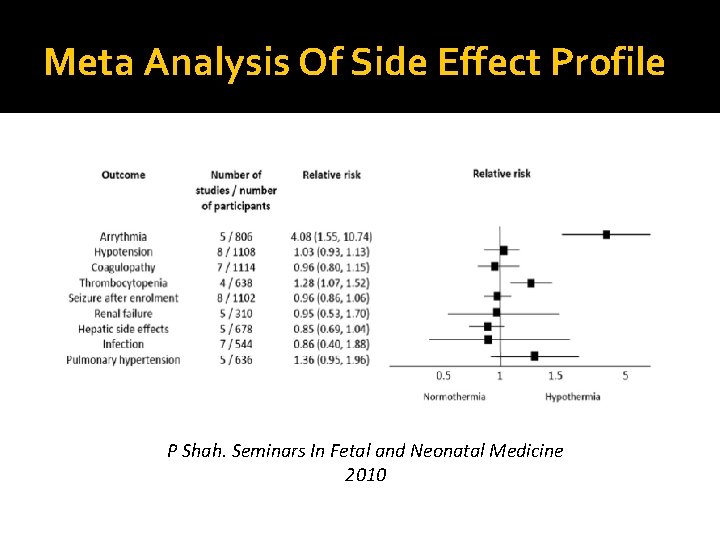
Meta Analysis Of Side Effect Profile P Shah. Seminars In Fetal and Neonatal Medicine 2010
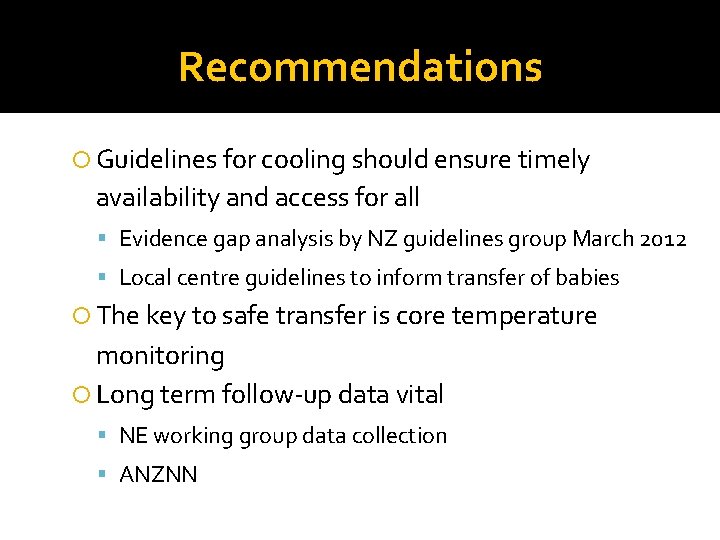
Recommendations Guidelines for cooling should ensure timely availability and access for all Evidence gap analysis by NZ guidelines group March 2012 Local centre guidelines to inform transfer of babies The key to safe transfer is core temperature monitoring Long term follow-up data vital NE working group data collection ANZNN