
The Role of Context in Spatial Region Identification

- Slides: 24
The Role of Context in Spatial Region Identification Matthew Klenk (Kate Lockwood, John Kelleher, and Nick Hawes)
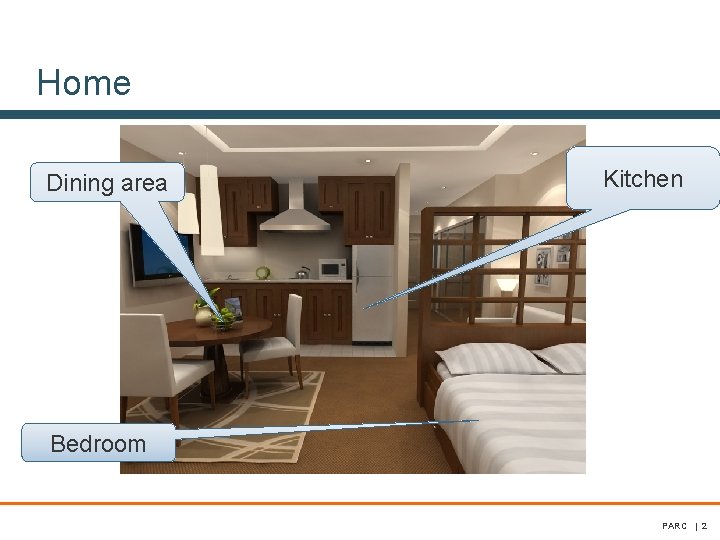
Home Dining area Kitchen Bedroom PARC | 2
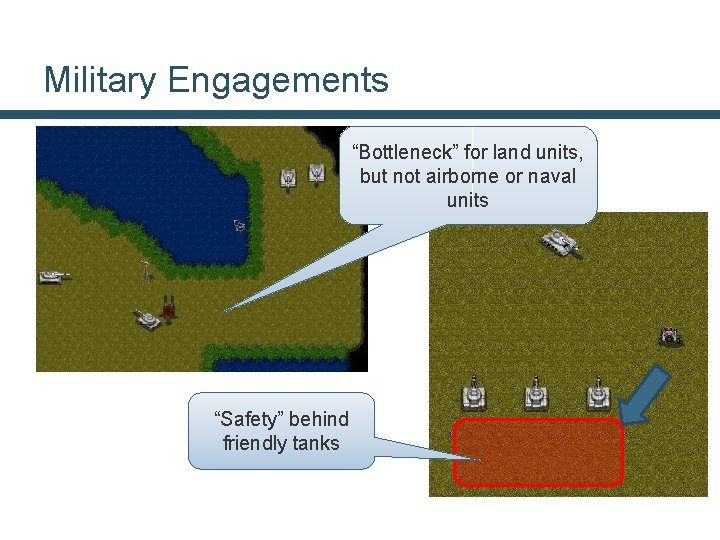
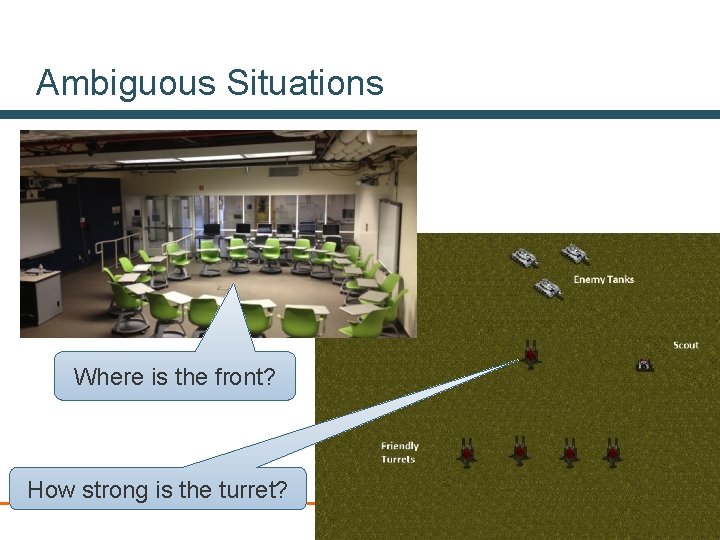
Military Engagements “Bottleneck” for land units, but not airborne or naval units “Safety” behind friendly tanks
City Neighborhoods • Real Estate • Crime • Commercial S. F. neighborhoods change names to map out new identity – SF Chronicle Front Page 3/22 PARC | 4
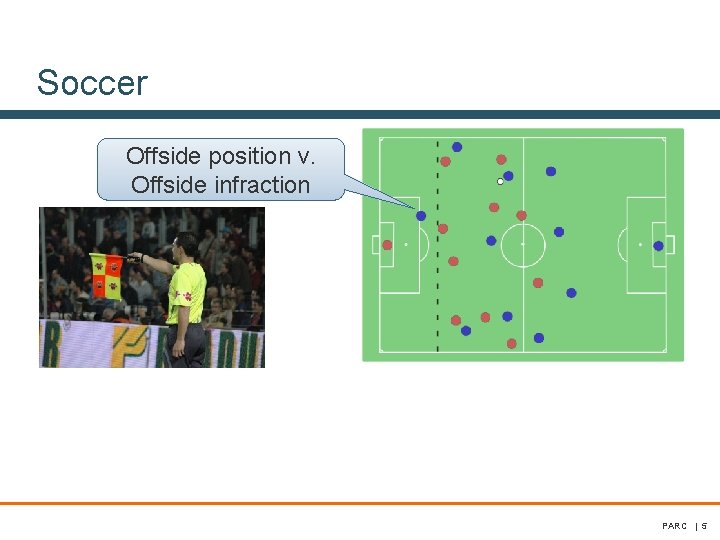
Soccer Offside position v. Offside infraction PARC | 5
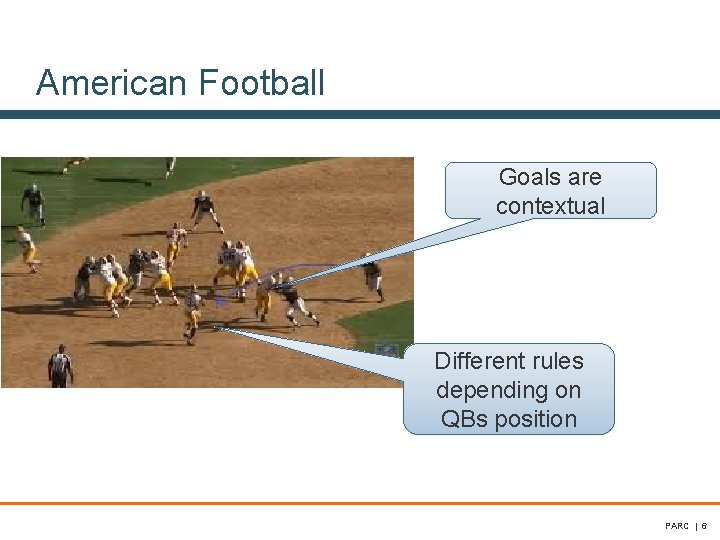
American Football Goals are contextual Different rules depending on QBs position PARC | 6
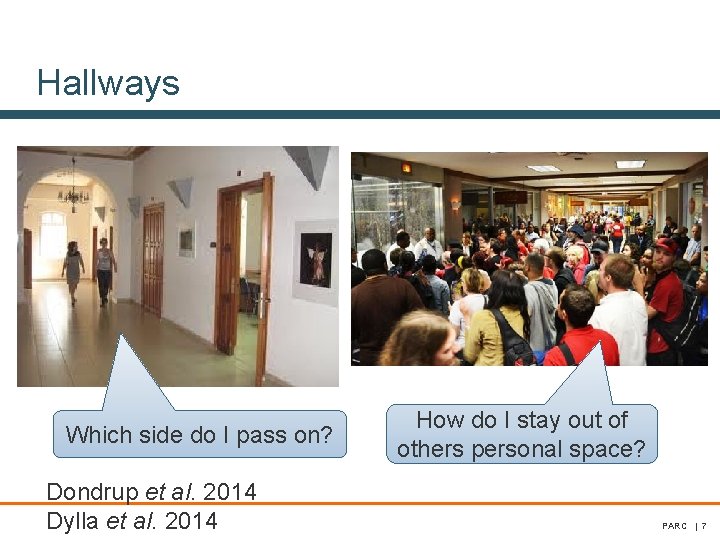
Hallways Which side do I pass on? Dondrup et al. 2014 Dylla et al. 2014 How do I stay out of others personal space? PARC | 7
Why is this important to robots? • Mobile deployments • Natural interaction • Open environments PARC | 8
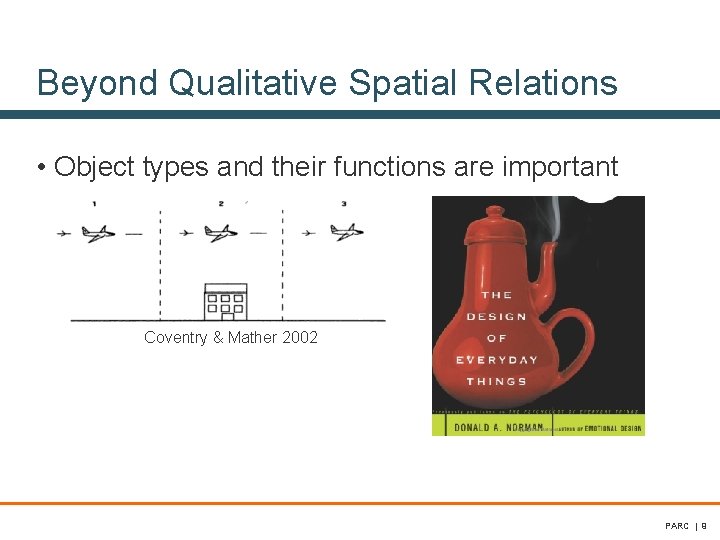
Beyond Qualitative Spatial Relations • Object types and their functions are important Coventry & Mather 2002 PARC | 9
Cognitive Systems Perspective • General approach – Integrate geometric, semantic, and functional knowledge • Learning – Transfer to new environments • Multiple tasks – Useful for action selection, activity recognition, and communication PARC | 10
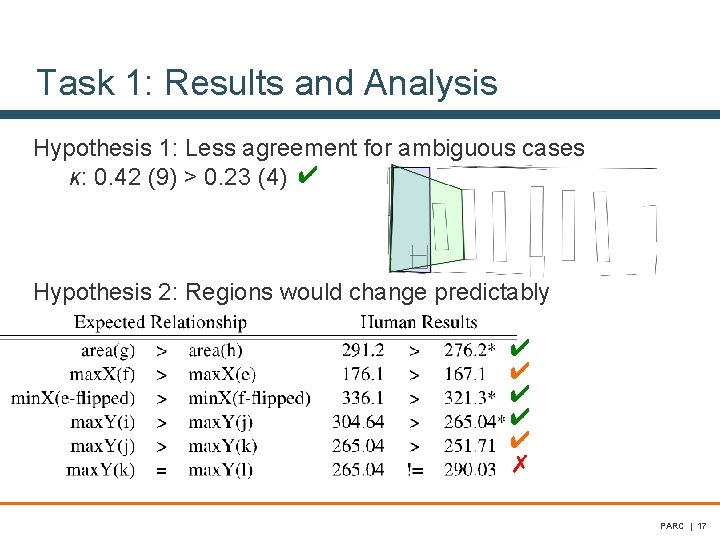
Human trials 1. Given a particular context, do people agree on the location and extent of spatial regions? 2. Does the location and extent of such regions predictably change in line with the variations in context (e. g. , object locations and types)? PARC | 11
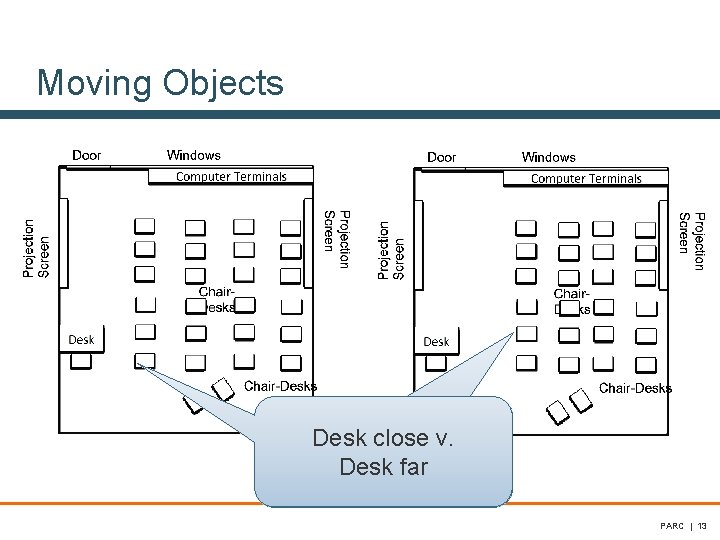
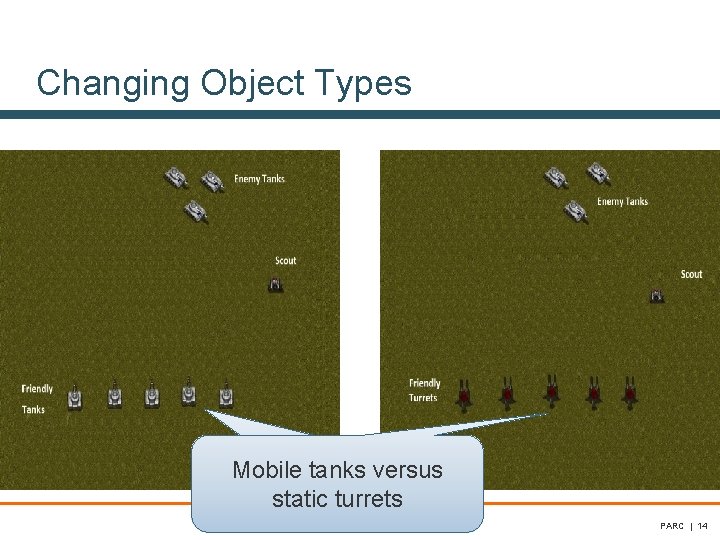
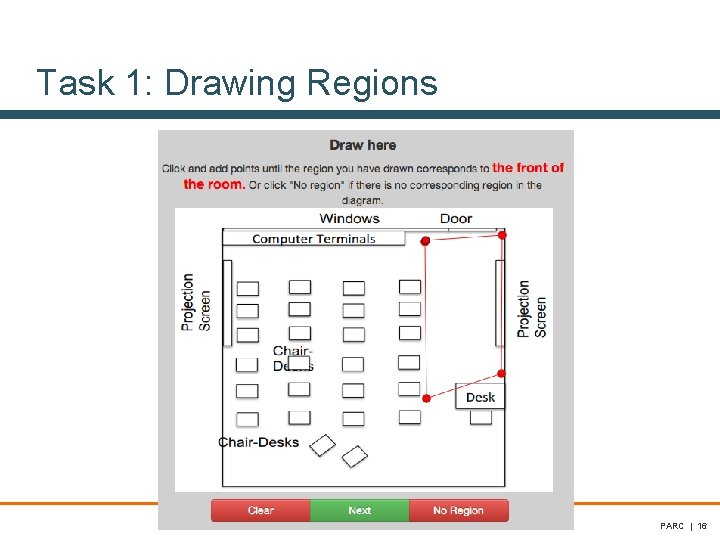
Research Design • 3 Spatial Regions – “Front” of a classroom – “Bottleneck” and “safety” in a real time strategy game • 43 participants from 2 universities • 2 Tasks – Region drawing – Point rating • 13 Stimuli PARC | 12
Moving Objects Desk close v. Desk far PARC | 13
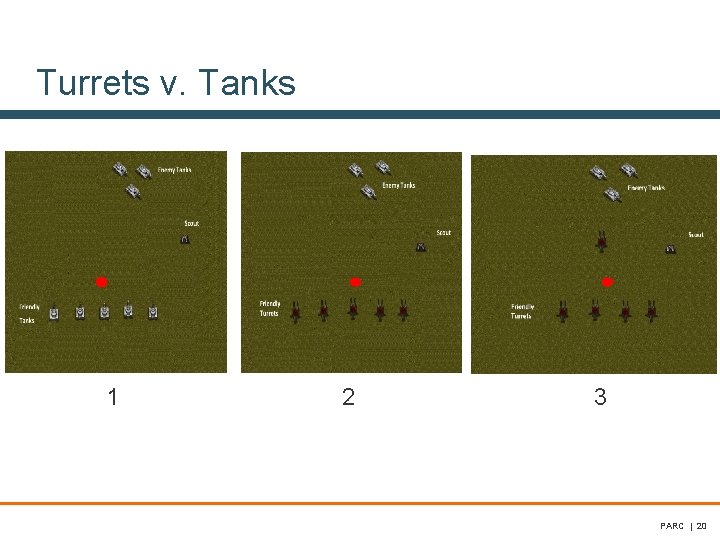
Changing Object Types Mobile tanks versus static turrets PARC | 14
Ambiguous Situations Where is the front? How strong is the turret? PARC | 15
Task 1: Drawing Regions PARC | 16
Task 1: Results and Analysis Hypothesis 1: Less agreement for ambiguous cases κ: 0. 42 (9) > 0. 23 (4) ✔ Hypothesis 2: Regions would change predictably ✔ ✔ ✔ ✗ PARC | 17
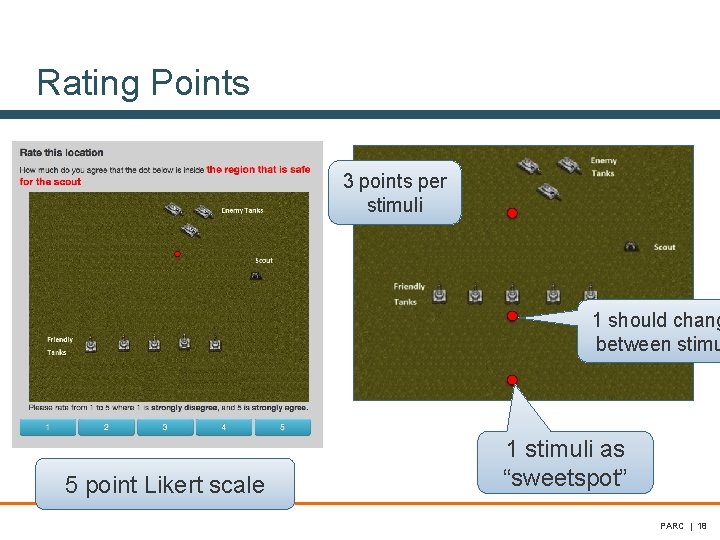
Rating Points 3 points per stimuli 1 should chang between stimu 5 point Likert scale 1 stimuli as “sweetspot” PARC | 18
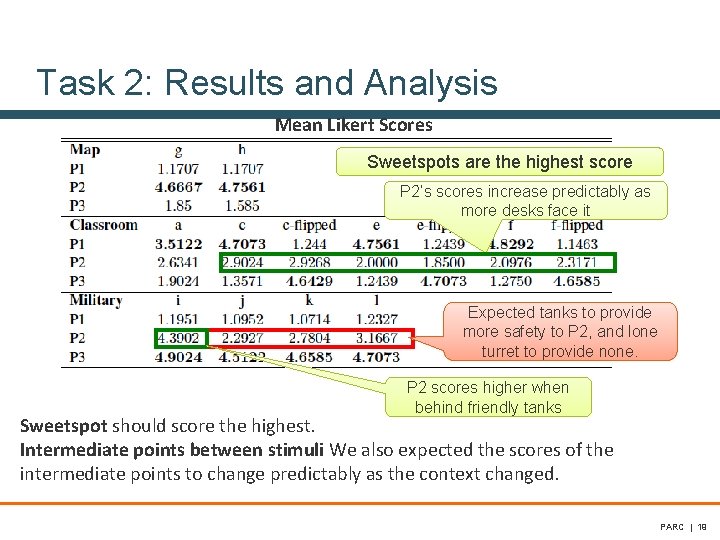
Task 2: Results and Analysis Mean Likert Scores Sweetspots are the highest score P 2’s scores increase predictably as more desks face it Expected tanks to provide more safety to P 2, and lone turret to provide none. P 2 scores higher when behind friendly tanks Sweetspot should score the highest. Intermediate points between stimuli We also expected the scores of the intermediate points to change predictably as the context changed. PARC | 19
Turrets v. Tanks 1 2 3 PARC | 20
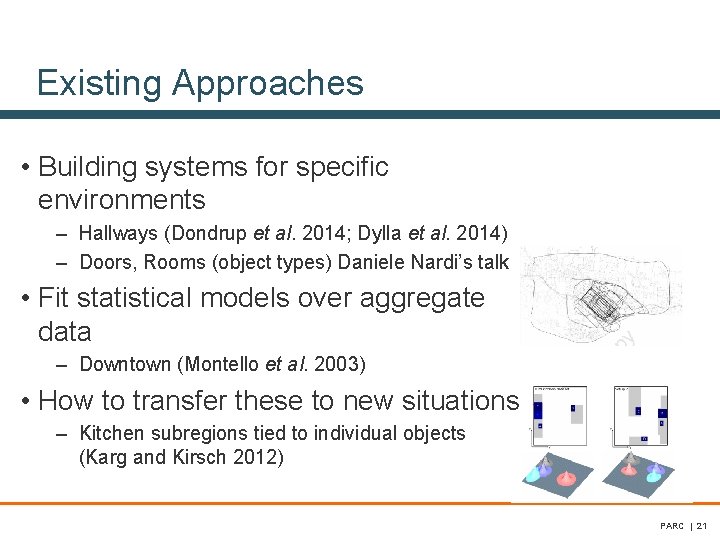
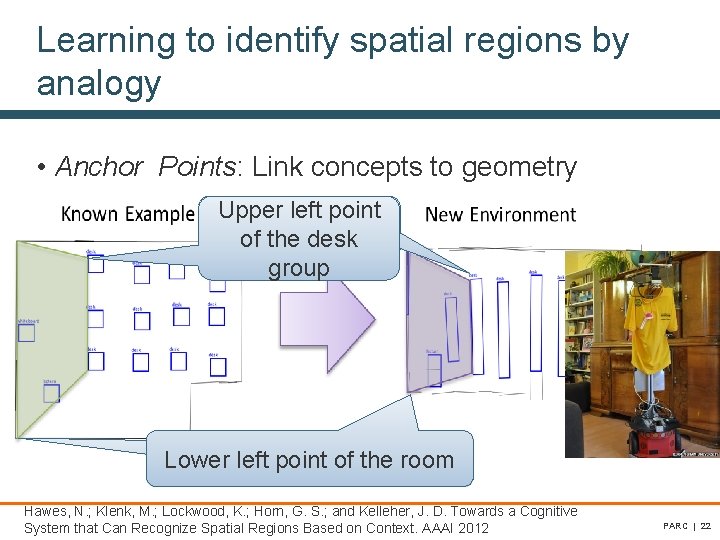
Existing Approaches • Building systems for specific environments – Hallways (Dondrup et al. 2014; Dylla et al. 2014) – Doors, Rooms (object types) Daniele Nardi’s talk • Fit statistical models over aggregate data – Downtown (Montello et al. 2003) • How to transfer these to new situations – Kitchen subregions tied to individual objects (Karg and Kirsch 2012) PARC | 21
Learning to identify spatial regions by analogy • Anchor Points: Link concepts to geometry Upper left point of the desk group Lower left point of the room Hawes, N. ; Klenk, M. ; Lockwood, K. ; Horn, G. S. ; and Kelleher, J. D. Towards a Cognitive System that Can Recognize Spatial Regions Based on Context. AAAI 2012 PARC | 22
Discussion • Geometry alone is not enough – Lots of applications of QSRs work by implicitly assuming the objects in the environment • The function of a space correlates to objects in the space and their configuration • Cognitive systems – Integrate different types knowledge – Learn and transfer this knowledge to new situations – Employ this knowledge in multiple tasks PARC | 23
Thank You • Nick Hawes • Kate Lockwood • John Kelleher PARC | 24