
The Role of ColorColor Wheel Tab 4 COLOR
The Role of Color-Color Wheel Tab 4
COLOR
Color Activity 1 You will now see a series of different colors, one color at a time. Once you see a color immediately write down how that color makes you feel. Do not think about it, you should write down your initial reaction. NUMBER A SHEET OF PAPER FROM 1 -10 & Let’s go…










Research Shows… There are some common feelings associated with each color. These general feelings may be important when designing interior spaces.
YELLOW Most cheerful and sunny of the spectrum Bright yellow is eye-fatiguing-makes babies cry and grown-ups lost their temper Small amounts represent playfulness, light, creativity, and warmth Like the sun-you want it to feel good but don’t want it “in your eyes”. Most visible by the eye-number one attention getter Choice of shade is important
RED Attention grabber Very dominating-use as accent not background Stimulates appetite Can elevate blood pressure and respiratory rate Can stimulate people to make quick decisions

BLUE One of the most popular colors Natural appetite suppressant Relaxes our nervous system Tranquil blue causes the body to produce calming chemicals. Dark blue can feel cold and depressing Blue surroundings increase productivity
GREEN Associated with nature Easiest color on the eye Calming with neutral effect on the human nervous system “Green rooms” used to relax people before appearing on t. v. Used in hospitals to relax patients
ORANGE Associated with warmth, contentment, wholesomeness Looks strong and generous Has a broad appeal Can make an expensive product seem more affordable
BLACK Very controversial color Demons, witches, and the devil; sturdiness reliability Authority and power; despair and mourning Black clothes Can be formal and powerful Give a slimmer appearance
WHITE Stands for purity and innocence Represents cleanliness Reflects light Creates a cool and refreshing feeling
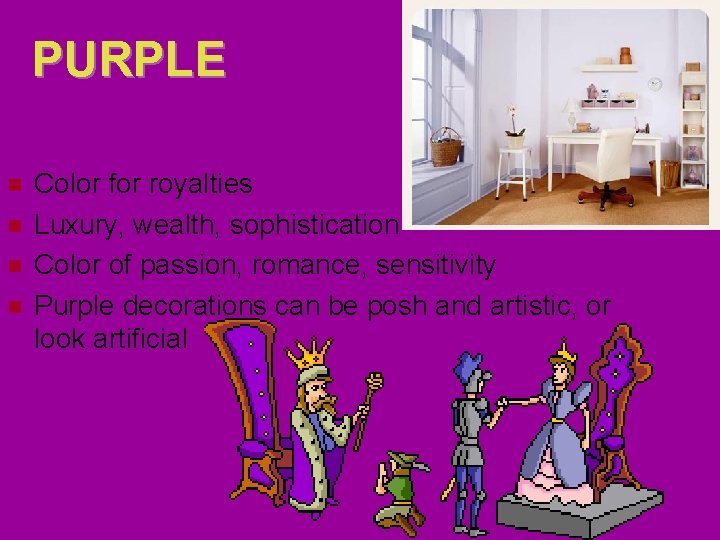
PURPLE Color for royalties Luxury, wealth, sophistication Color of passion, romance, sensitivity Purple decorations can be posh and artistic, or look artificial
BROWN Color of earth and wood Creates a neutral, comfortable, and open atmosphere Communicates credibility, strength, and maturity More likely to be on a man’s favorite color list
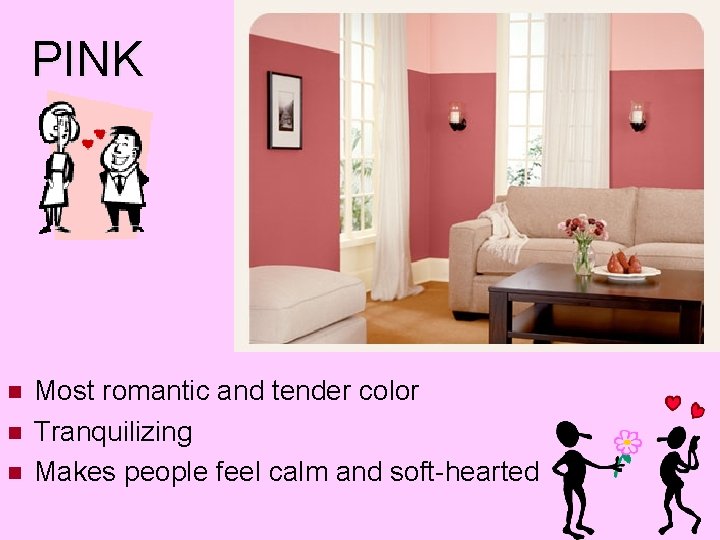
PINK Most romantic and tender color Tranquilizing Makes people feel calm and soft-hearted
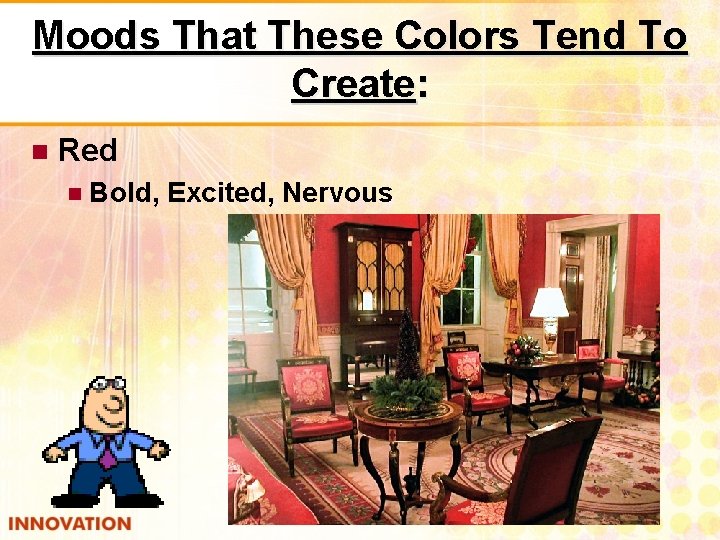
Moods That These Colors Tend To Create: Red Bold, Excited, Nervous
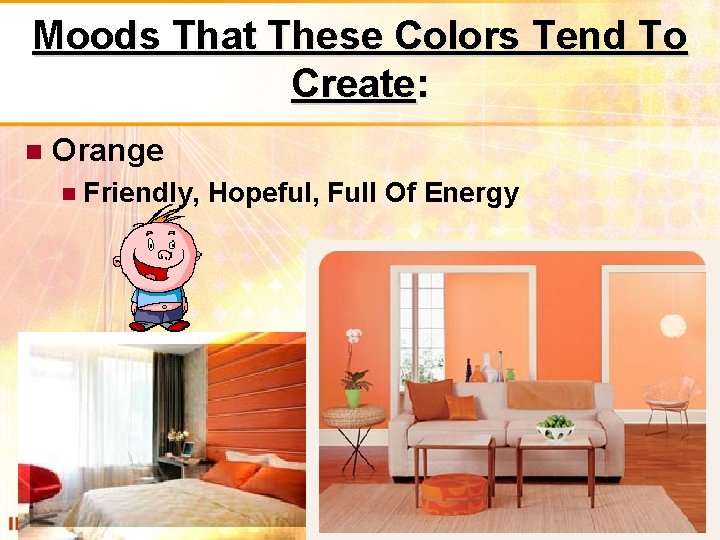
Moods That These Colors Tend To Create: Orange Friendly, Hopeful, Full Of Energy
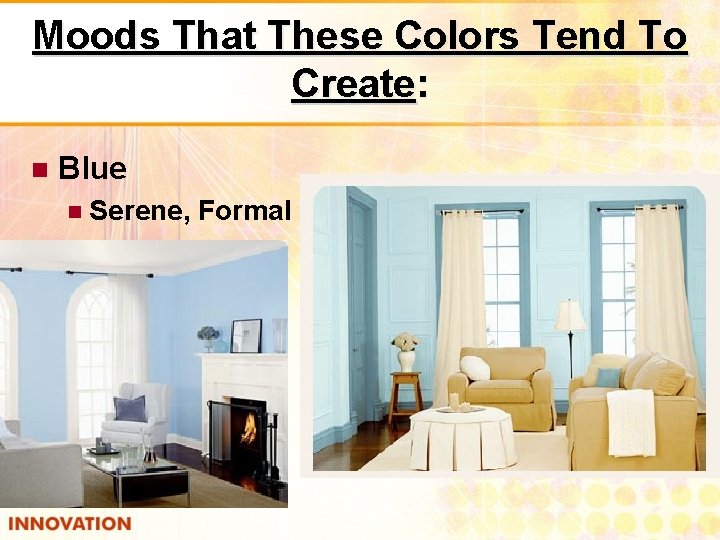
Moods That These Colors Tend To Create: Blue Serene, Formal

Moods That These Colors Tend To Create: Yellow Cheerful, Optimistic, Happy
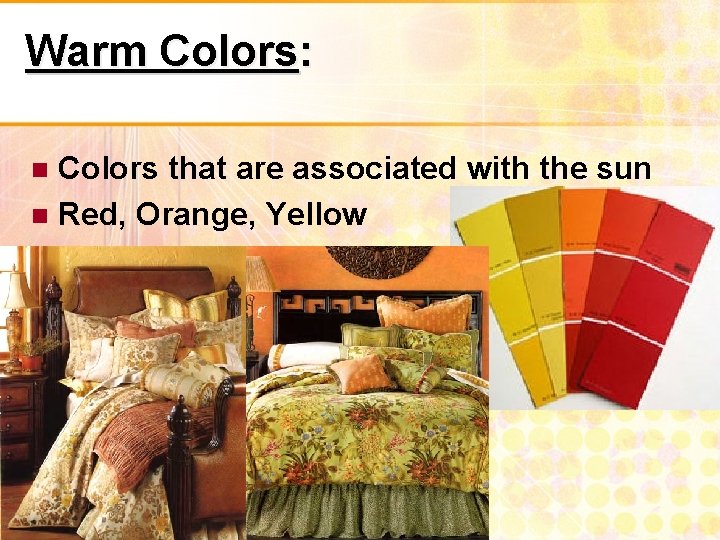
Warm Colors: Colors that are associated with the sun Red, Orange, Yellow
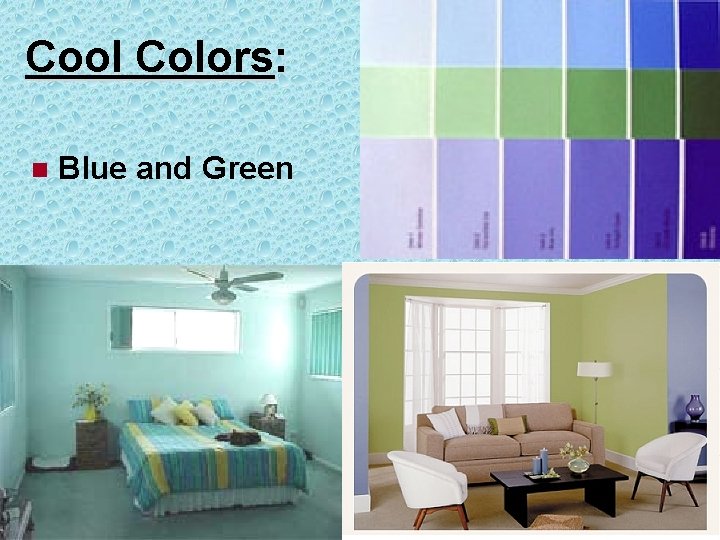
Cool Colors: Blue and Green
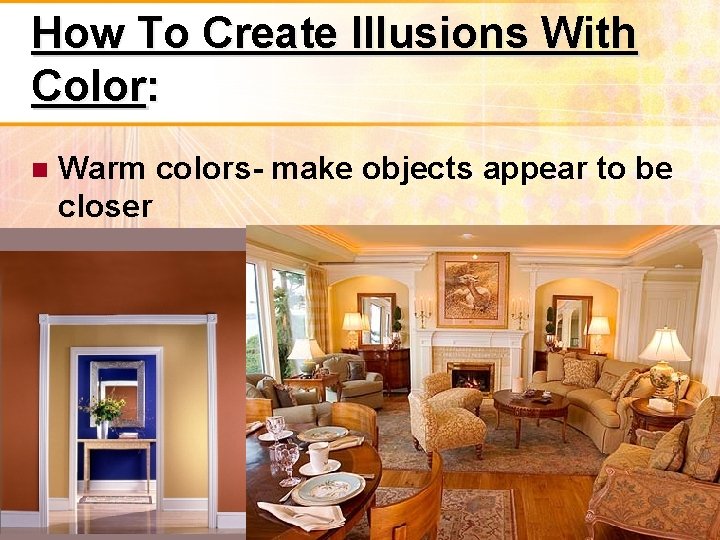
How To Create Illusions With Color: Warm colors- make objects appear to be closer
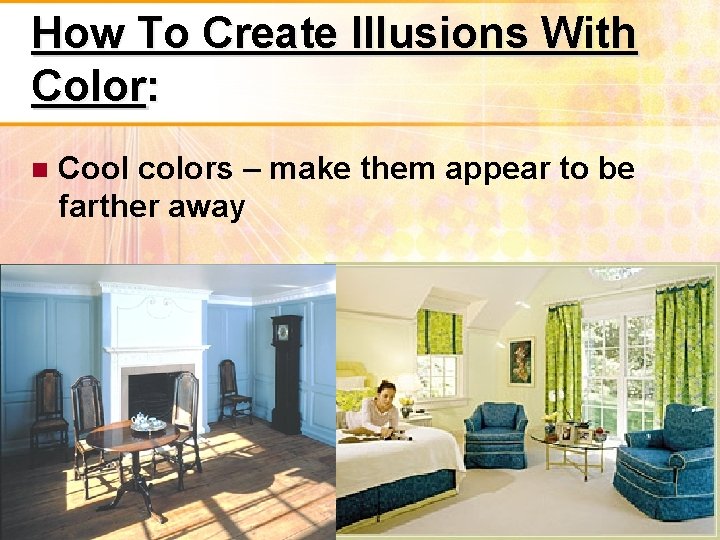
How To Create Illusions With Color: Cool colors – make them appear to be farther away
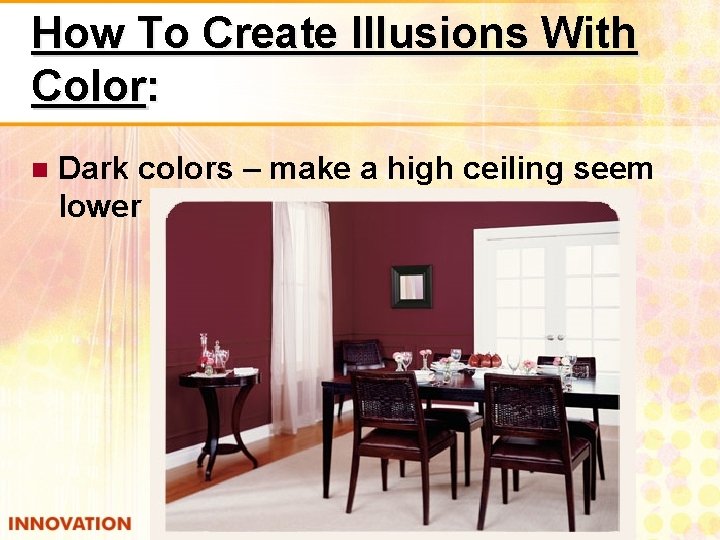
How To Create Illusions With Color: Dark colors – make a high ceiling seem lower
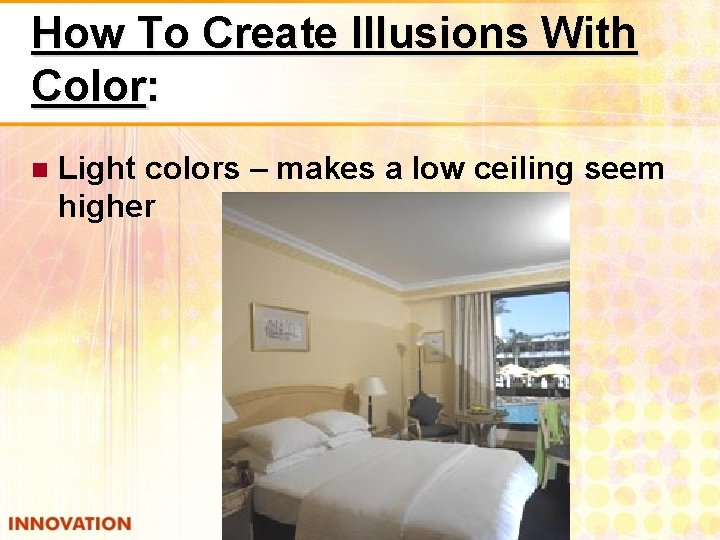
How To Create Illusions With Color: Light colors – makes a low ceiling seem higher
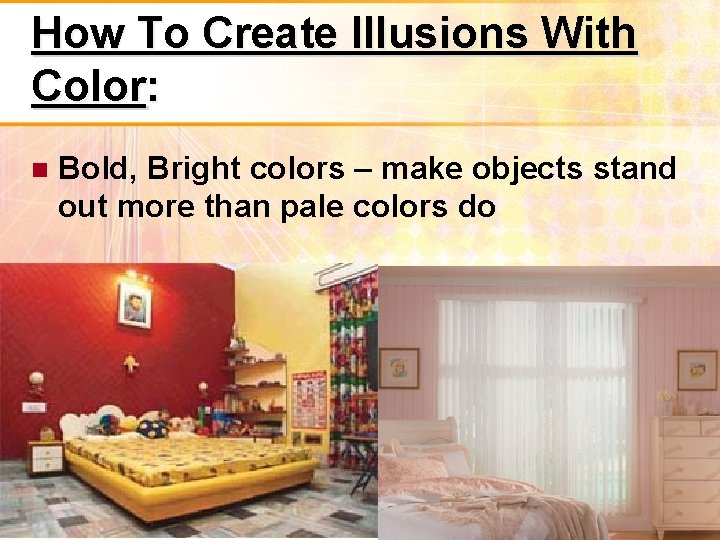
How To Create Illusions With Color: Bold, Bright colors – make objects stand out more than pale colors do
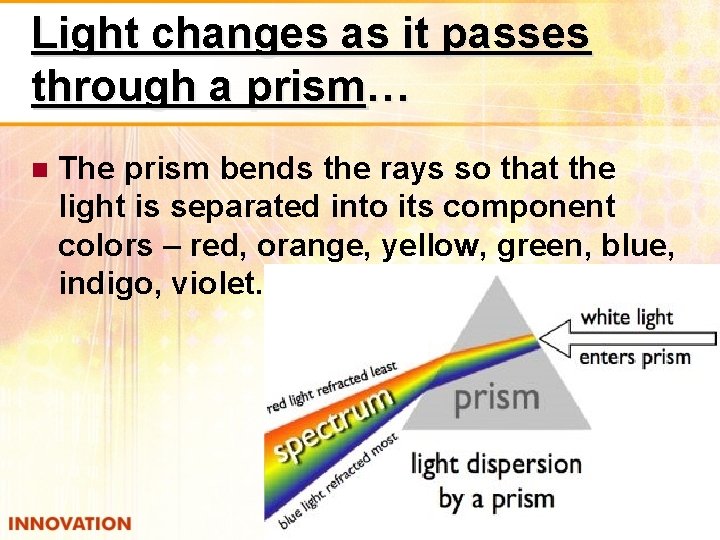
Light changes as it passes through a prism… The prism bends the rays so that the light is separated into its component colors – red, orange, yellow, green, blue, indigo, violet.
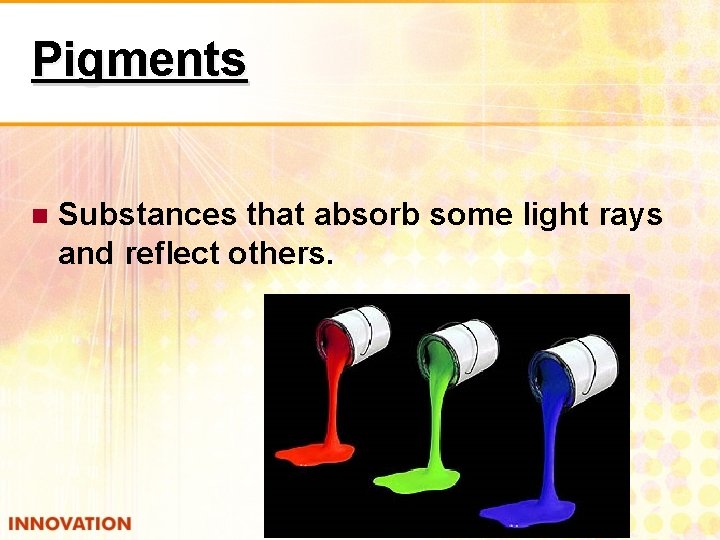
Pigments Substances that absorb some light rays and reflect others.

How Colors are Formed: Light rays either reflect off of or are absorbed by pigments in objects. Rays that are reflected create the colors that are seen. If no light is reflected, the color black is formed. If all light is reflected, the color white is formed.
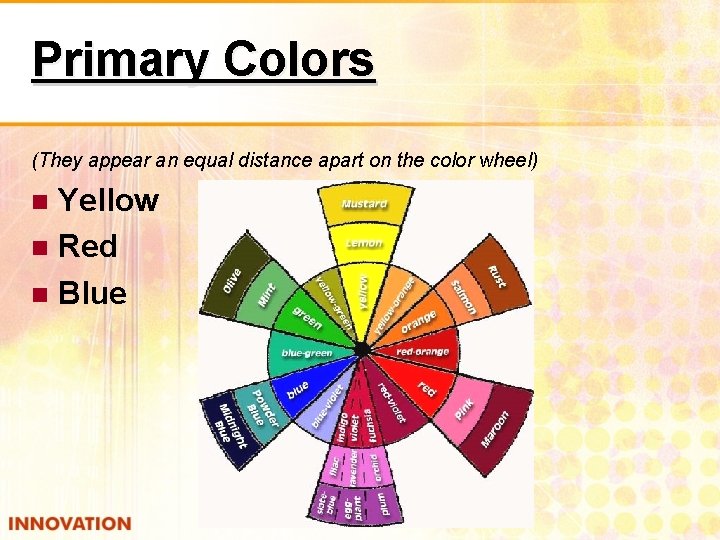
Primary Colors (They appear an equal distance apart on the color wheel) Yellow Red Blue
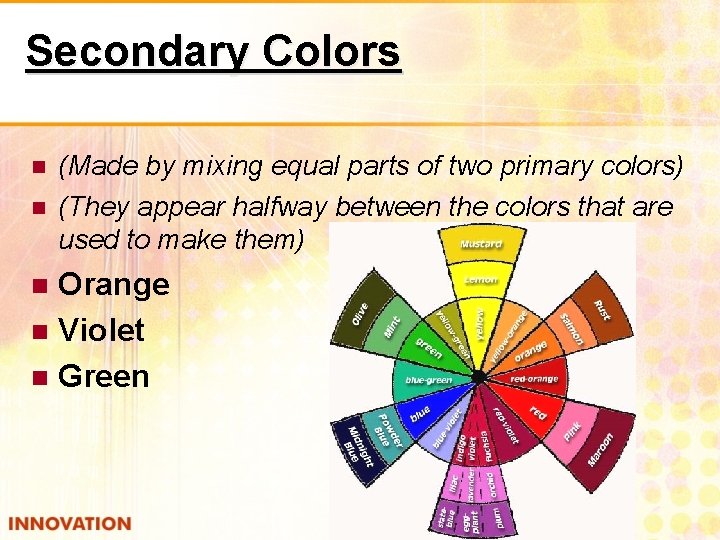
Secondary Colors (Made by mixing equal parts of two primary colors) (They appear halfway between the colors that are used to make them) Orange Violet Green
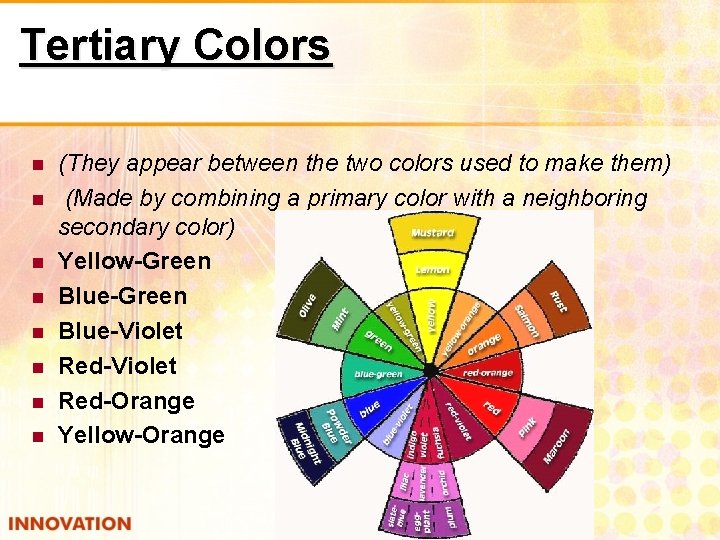
Tertiary Colors (They appear between the two colors used to make them) (Made by combining a primary color with a neighboring secondary color) Yellow-Green Blue-Violet Red-Orange Yellow-Orange
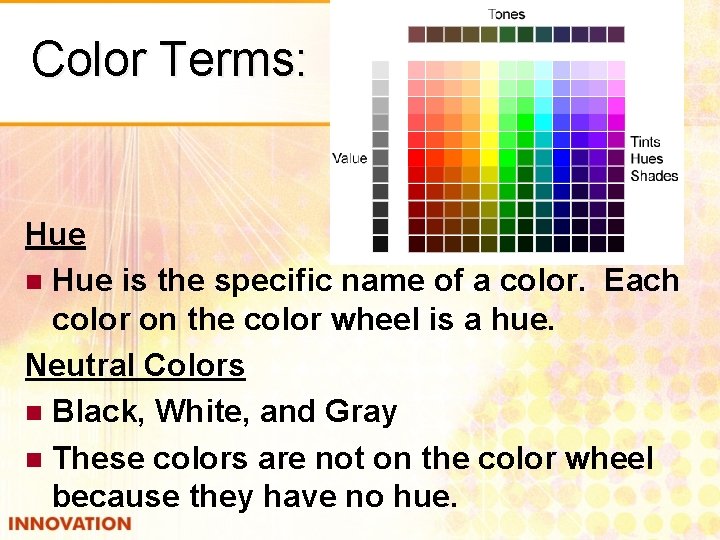
Color Terms: Hue is the specific name of a color. Each color on the color wheel is a hue. Neutral Colors Black, White, and Gray These colors are not on the color wheel because they have no hue.
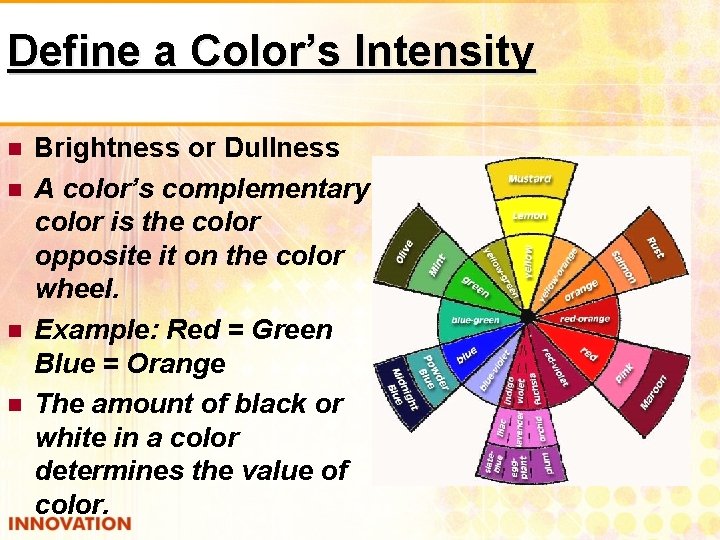
Define a Color’s Intensity Brightness or Dullness A color’s complementary color is the color opposite it on the color wheel. Example: Red = Green Blue = Orange The amount of black or white in a color determines the value of color.
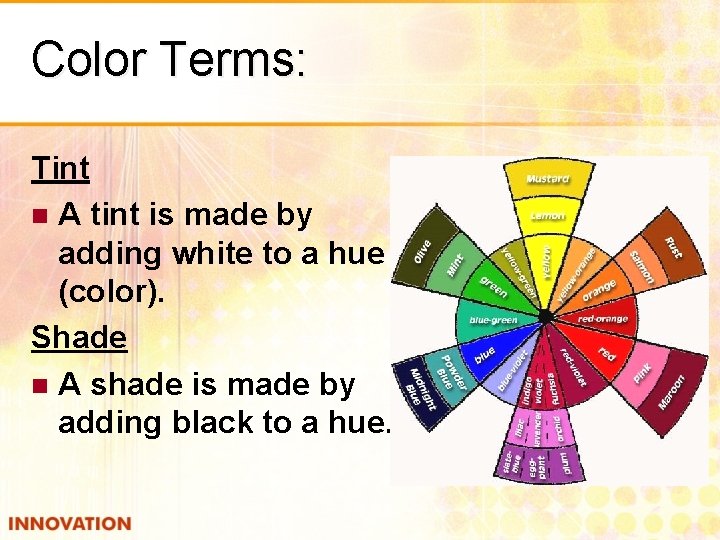
Color Terms: Tint A tint is made by adding white to a hue (color). Shade A shade is made by adding black to a hue.
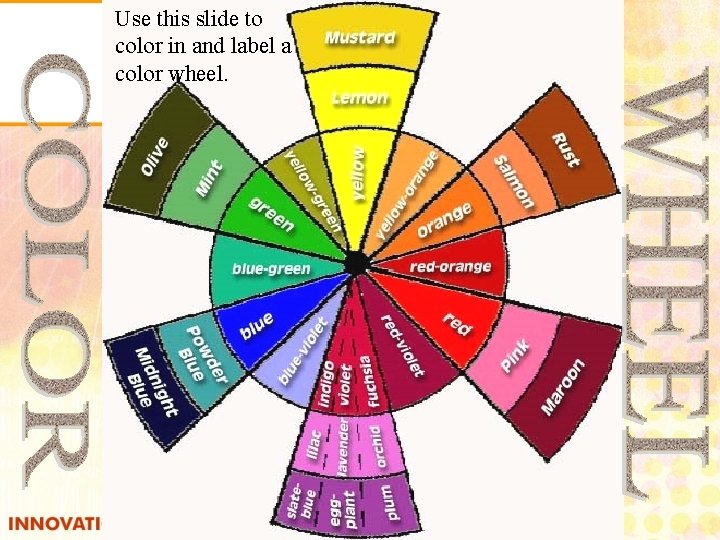
Use this slide to color in and label a color wheel.
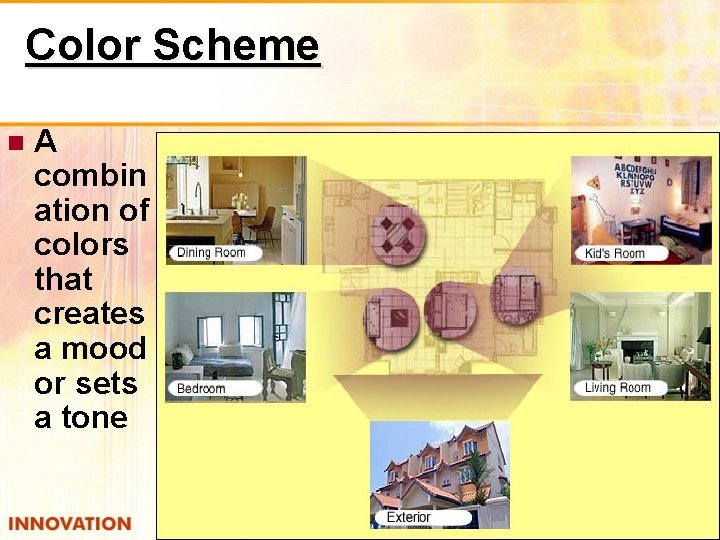
Color Scheme A combin ation of colors that creates a mood or sets a tone
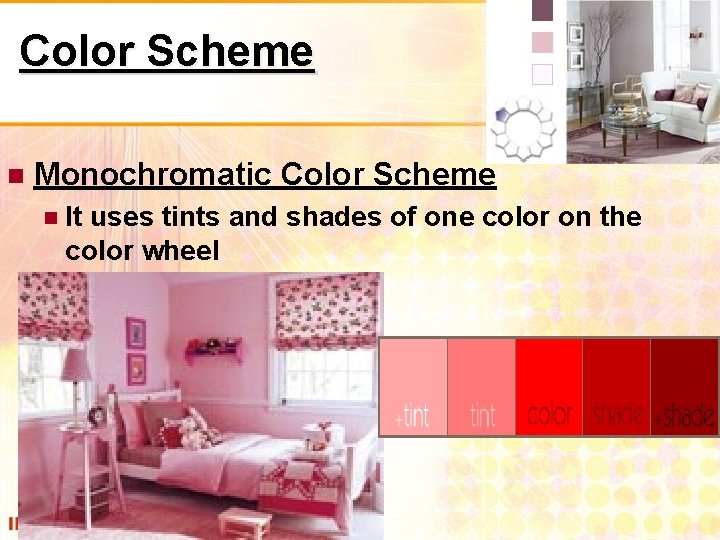
Color Scheme Monochromatic Color Scheme It uses tints and shades of one color on the color wheel
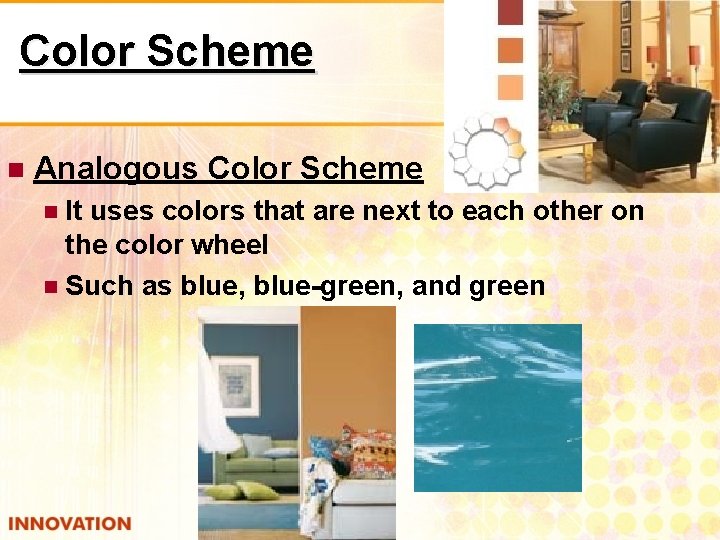
Color Scheme Analogous Color Scheme It uses colors that are next to each other on the color wheel Such as blue, blue-green, and green
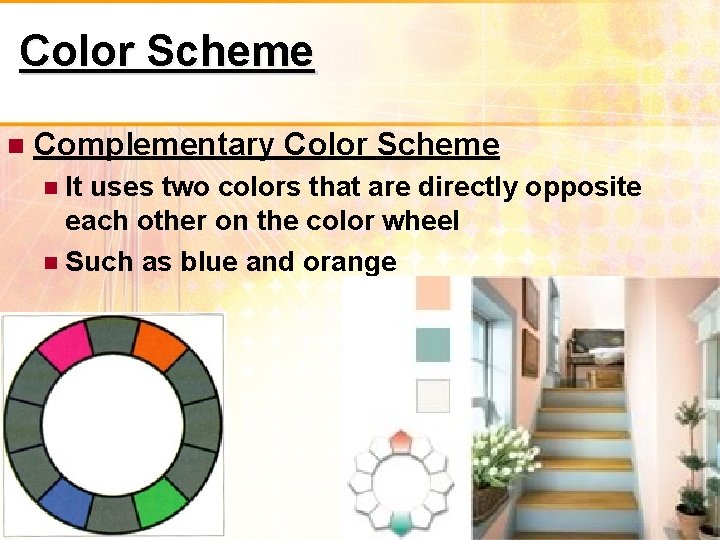
Color Scheme Complementary Color Scheme It uses two colors that are directly opposite each other on the color wheel Such as blue and orange
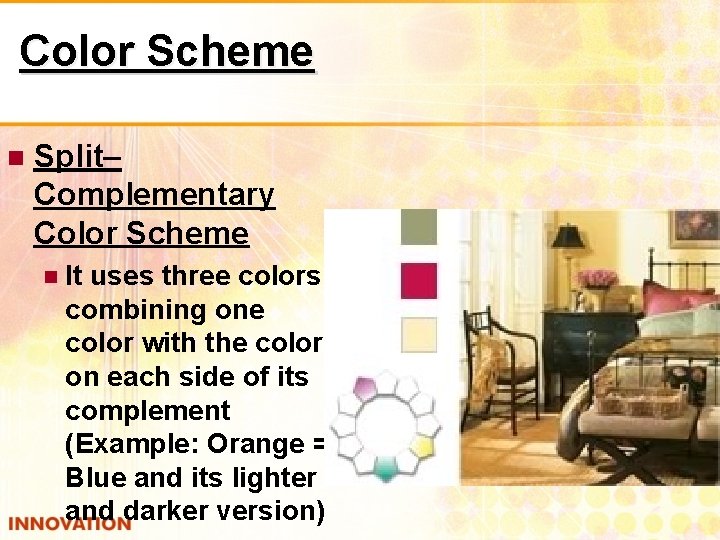
Color Scheme Split– Complementary Color Scheme It uses three colors, combining one color with the color on each side of its complement (Example: Orange = Blue and its lighter and darker version)
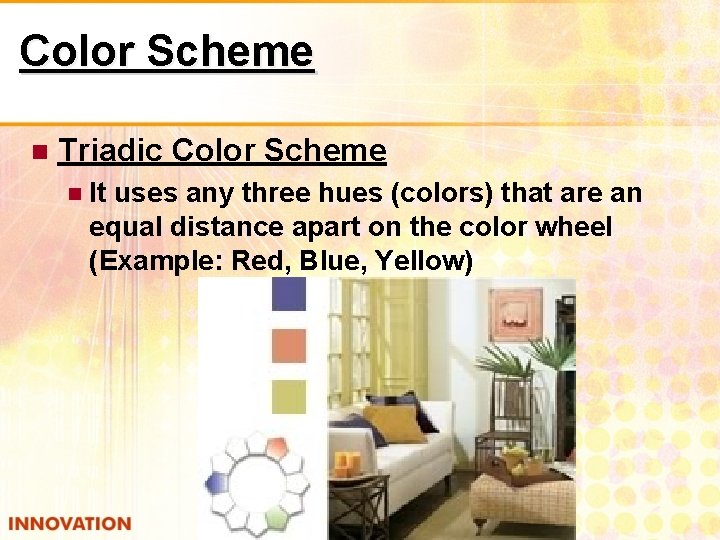
Color Scheme Triadic Color Scheme It uses any three hues (colors) that are an equal distance apart on the color wheel (Example: Red, Blue, Yellow)
Color Scheme Neutral Color Scheme White, Black, Gray, Beige, and Brown
Factors to Consider When Choosing a Color Scheme: The style of the room The desired mood Existing colors Adjacent rooms (rooms next to one another) Lighting
How to Determine the Dominant Color In a Color Scheme: This may be a favorite color The color of a rug or a piece of furniture Or a color that sets the mood you want to create
- Slides: 54