
The Role of Atmosphere in Climate Change Greenhouse
- Slides: 9
The Role of Atmosphere in Climate Change Greenhouse Gases and Global Warming
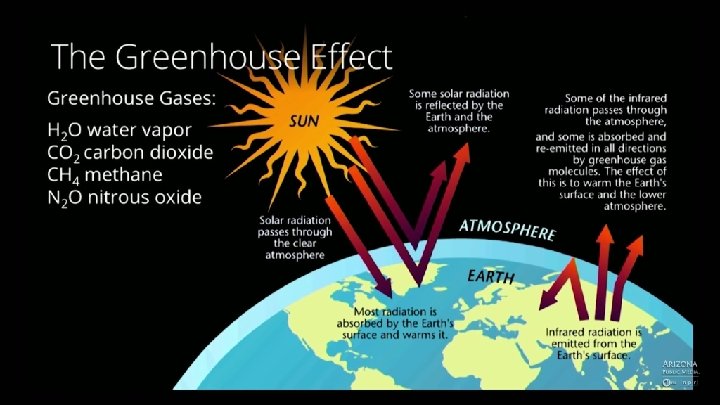
Atmospheric Composition & Greenhouse Effect Earth’s atmosphere is an insulating blanket of various gases that screen much of the energy from the Sun Earth’s surface can reflect some solar radiation, but warms as it absorbs some solar radiation-this causes the lower atmosphere (closest to the surface) to warm up Greenhouse Effect The reflected radiation can also be trapped by greenhouse gases--water vapor (H 2 O), carbon dioxide (CO 2), methane (CH 4) and nitrous oxide (N 2 O) in the atmosphere, which prevents heat from escaping The composition of these gases naturally fluctuates based on seasonal and climate cycles, changing how Earth absorbs solar radiation (global warming/cooling)
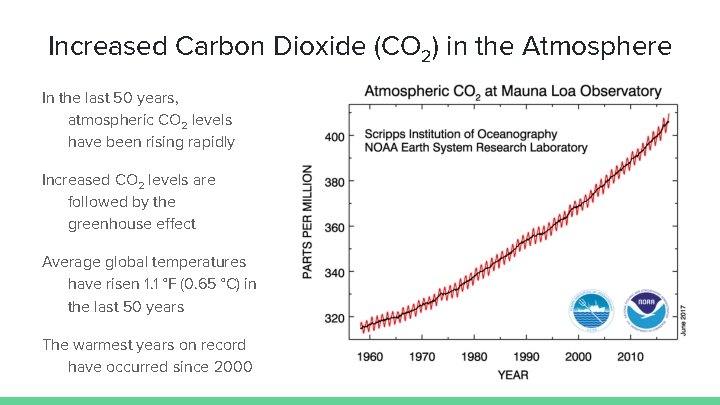
Increased Carbon Dioxide (CO 2) in the Atmosphere In the last 50 years, atmospheric CO 2 levels have been rising rapidly Increased CO 2 levels are followed by the greenhouse effect Average global temperatures have risen 1. 1 °F (0. 65 °C) in the last 50 years The warmest years on record have occurred since 2000
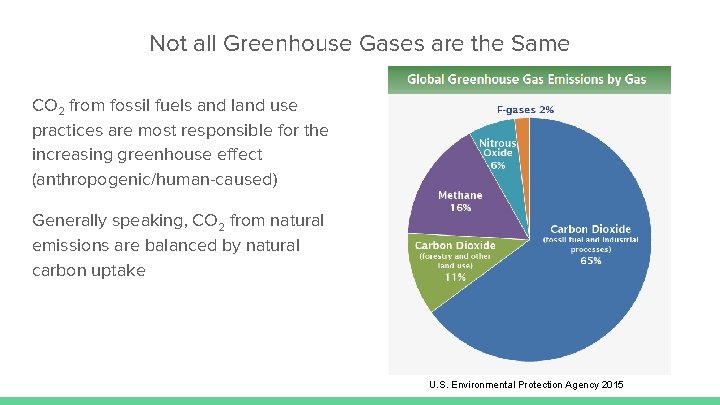
Not all Greenhouse Gases are the Same CO 2 from fossil fuels and land use practices are most responsible for the increasing greenhouse effect (anthropogenic/human-caused) Generally speaking, CO 2 from natural emissions are balanced by natural carbon uptake U. S. Environmental Protection Agency 2015
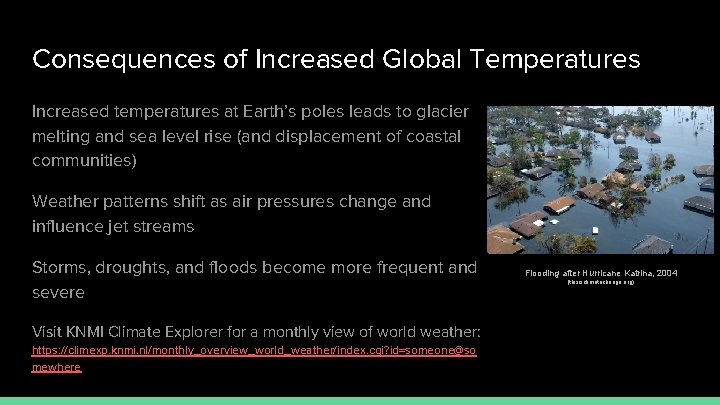
Consequences of Increased Global Temperatures Increased temperatures at Earth’s poles leads to glacier melting and sea level rise (and displacement of coastal communities) Weather patterns shift as air pressures change and influence jet streams Storms, droughts, and floods become more frequent and severe Visit KNMI Climate Explorer for a monthly view of world weather: https: //climexp. knmi. nl/monthly_overview_world_weather/index. cgi? id=someone@so mewhere Flooding after Hurricane Katrina, 2004 (thisisclimatechange. org)
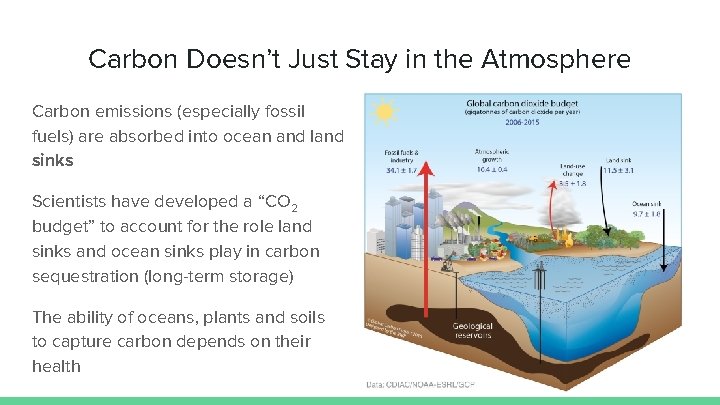
Carbon Doesn’t Just Stay in the Atmosphere Carbon emissions (especially fossil fuels) are absorbed into ocean and land sinks Scientists have developed a “CO 2 budget” to account for the role land sinks and ocean sinks play in carbon sequestration (long-term storage) The ability of oceans, plants and soils to capture carbon depends on their health
Watch and Discuss Video - Global Warming: The Physics of the Greenhouse Effect (2: 15) https: //az. pbslearningmedia. org/resource/phy 03. sci. phys. matter. greenhouse 2/global-warming-the-physics-of-the-greenhouse-effect/#. WUWo. AGjyv. IU 1. What is the greenhouse effect? 2. What are four naturally occurring greenhouse gases? 3. What would Earth be like without the greenhouse effect? 4. What are some manmade sources of greenhouse gases other than power plants and automobiles? 5. What natural phenomena produce greenhouse gases?
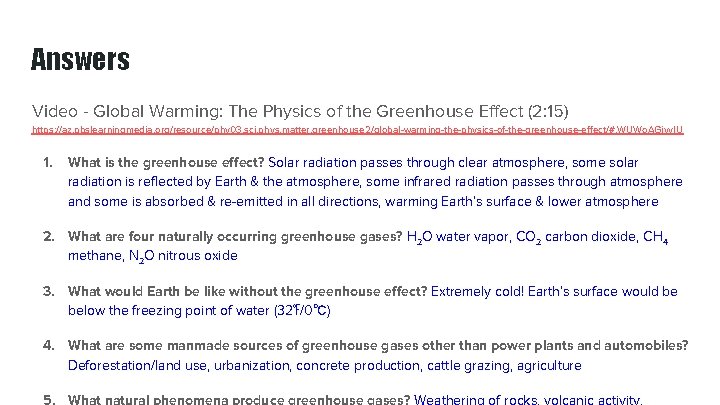
Answers Video - Global Warming: The Physics of the Greenhouse Effect (2: 15) https: //az. pbslearningmedia. org/resource/phy 03. sci. phys. matter. greenhouse 2/global-warming-the-physics-of-the-greenhouse-effect/#. WUWo. AGjyv. IU 1. What is the greenhouse effect? Solar radiation passes through clear atmosphere, some solar radiation is reflected by Earth & the atmosphere, some infrared radiation passes through atmosphere and some is absorbed & re-emitted in all directions, warming Earth’s surface & lower atmosphere 2. What are four naturally occurring greenhouse gases? H 2 O water vapor, CO 2 carbon dioxide, CH 4 methane, N 2 O nitrous oxide 3. What would Earth be like without the greenhouse effect? Extremely cold! Earth’s surface would be below the freezing point of water (32℉/0℃) 4. What are some manmade sources of greenhouse gases other than power plants and automobiles? Deforestation/land use, urbanization, concrete production, cattle grazing, agriculture