
The role of Atlantic heat transport in future
- Slides: 17
The role of Atlantic heat transport in future Arctic winter sea ice loss MARIUS ÅRTHUN, LARS H. SMEDSRUD & TOR ELDEVIK GEOPHYSICAL INSTITUTE, UNIVERSITY OF BERGEN, NORWAY BJERKNES CENTRE FOR CLIMATE RESEARCH ACDC 25. 03. 2019
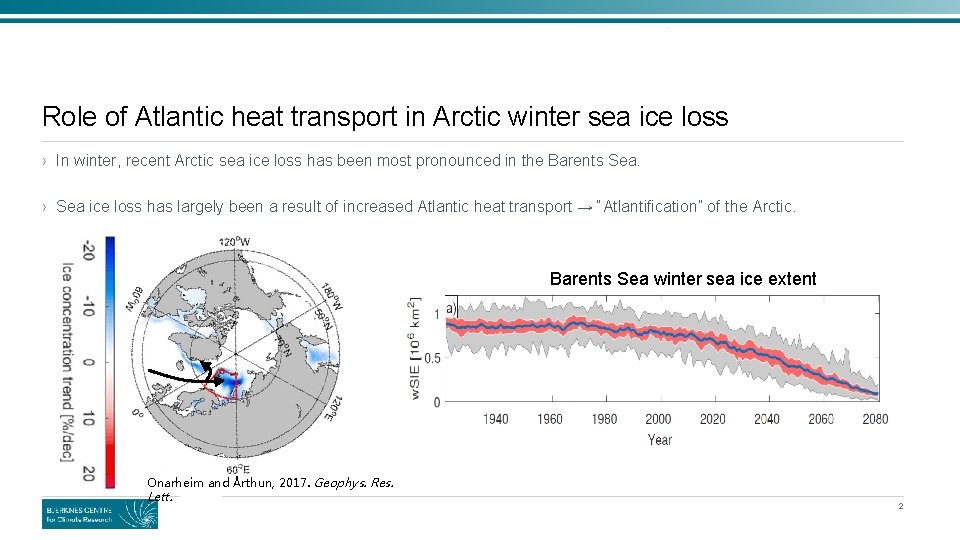
Role of Atlantic heat transport in Arctic winter sea ice loss › In winter, recent Arctic sea ice loss has been most pronounced in the Barents Sea. › Sea ice loss has largely been a result of increased Atlantic heat transport → “Atlantification” of the Arctic. Barents Sea winter sea ice extent Onarheim and Årthun, 2017. Geophys. Res. Lett. 2
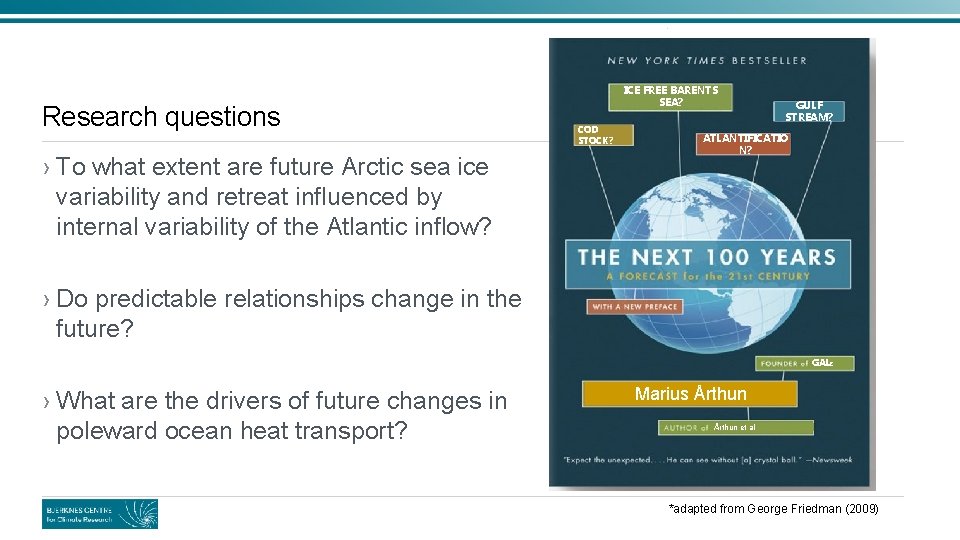
Research questions › To what extent are future Arctic sea ice variability and retreat influenced by internal variability of the Atlantic inflow? ICE FREE BARENTS SEA? COD STOCK? GULF STREAM? ATLANTIFICATIO N? › Do predictable relationships change in the future? GALε › What are the drivers of future changes in poleward ocean heat transport? Marius Årthun et al *adapted from George Friedman (2009)
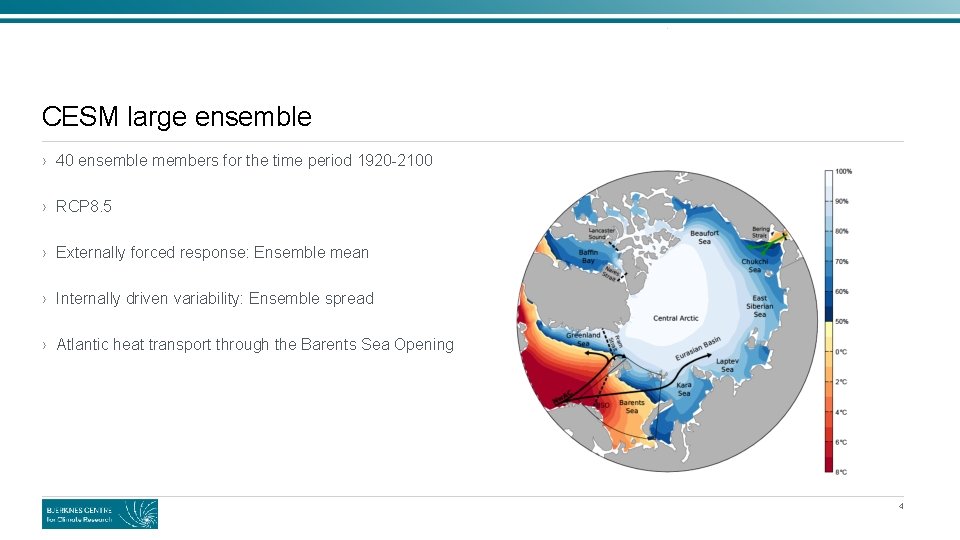
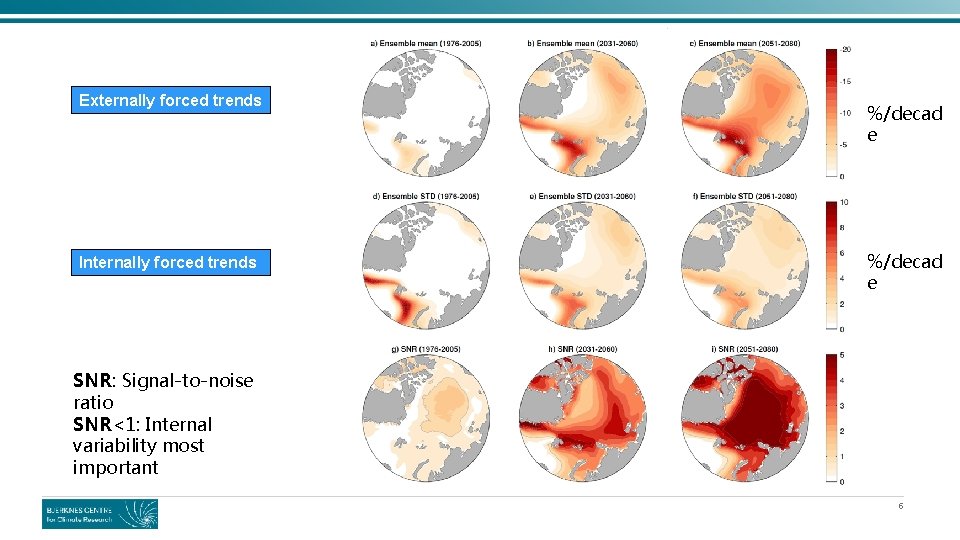
CESM large ensemble › 40 ensemble members for the time period 1920 -2100 › RCP 8. 5 › Externally forced response: Ensemble mean › Internally driven variability: Ensemble spread › Atlantic heat transport through the Barents Sea Opening 4
Externally forced trends Internally forced trends %/decad e SNR: Signal-to-noise ratio SNR<1: Internal variability most important 5
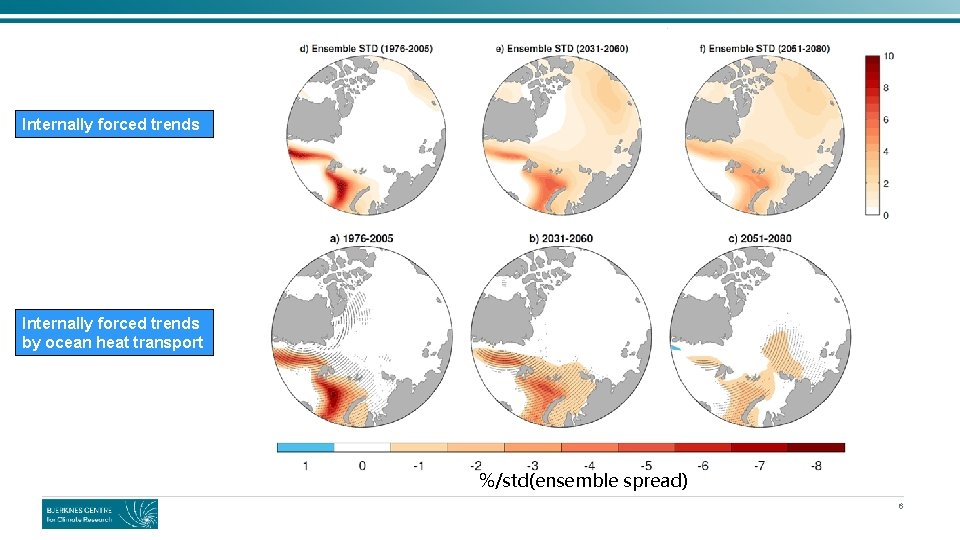
Internally forced trends by ocean heat transport %/std(ensemble spread) 6
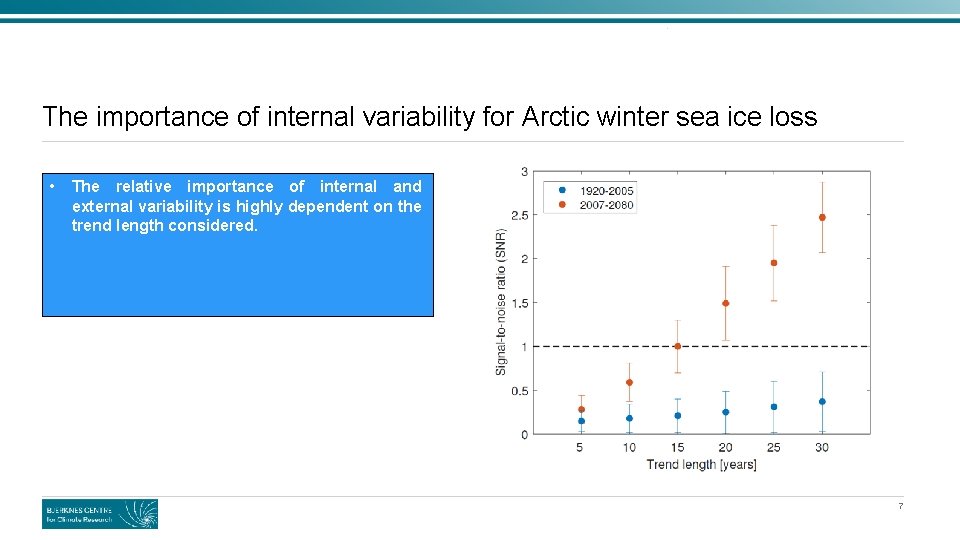
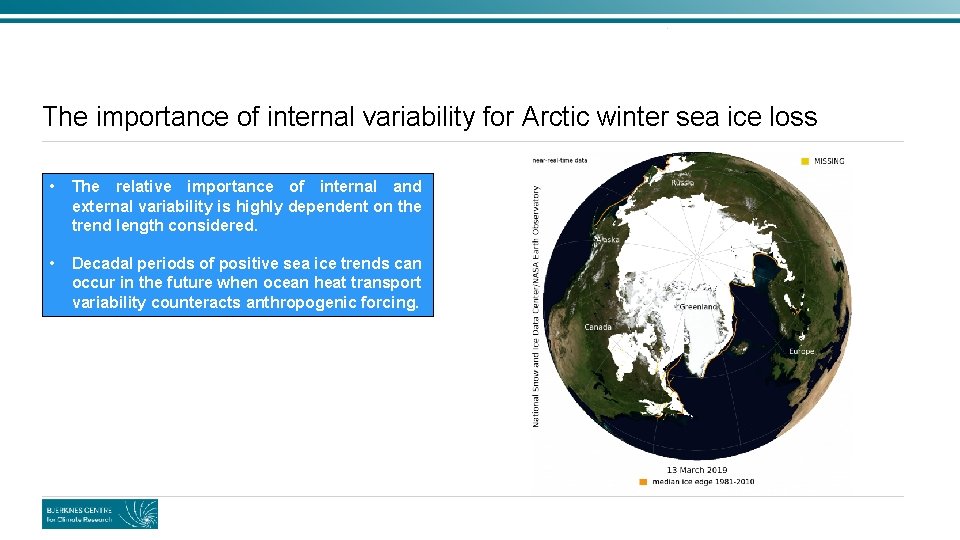
The importance of internal variability for Arctic winter sea ice loss • The relative importance of internal and external variability is highly dependent on the trend length considered. 7
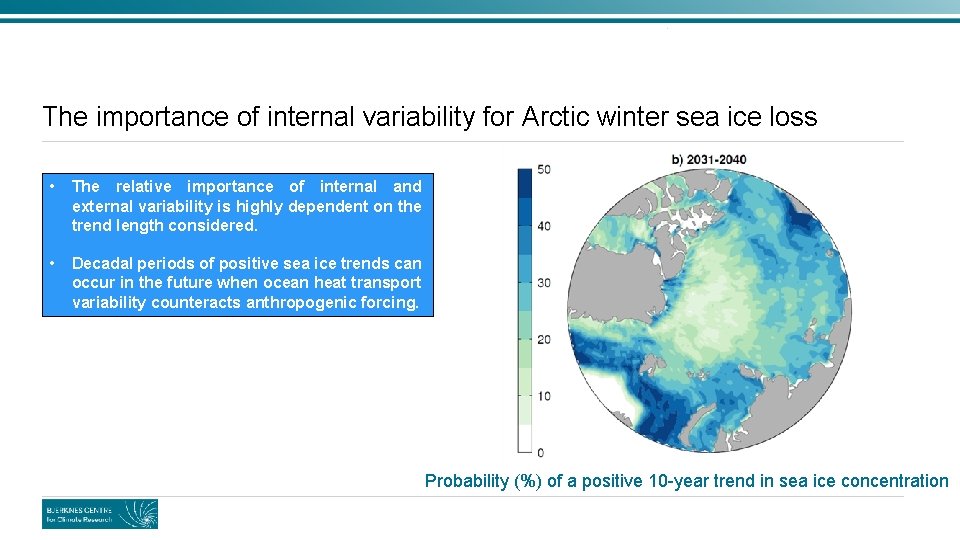
The importance of internal variability for Arctic winter sea ice loss • The relative importance of internal and external variability is highly dependent on the trend length considered. • Decadal periods of positive sea ice trends can occur in the future when ocean heat transport variability counteracts anthropogenic forcing. Probability (%) of a positive 10 -year trend in sea ice concentration
The importance of internal variability for Arctic winter sea ice loss • The relative importance of internal and external variability is highly dependent on the trend length considered. • Decadal periods of positive sea ice trends can occur in the future when ocean heat transport variability counteracts anthropogenic forcing.
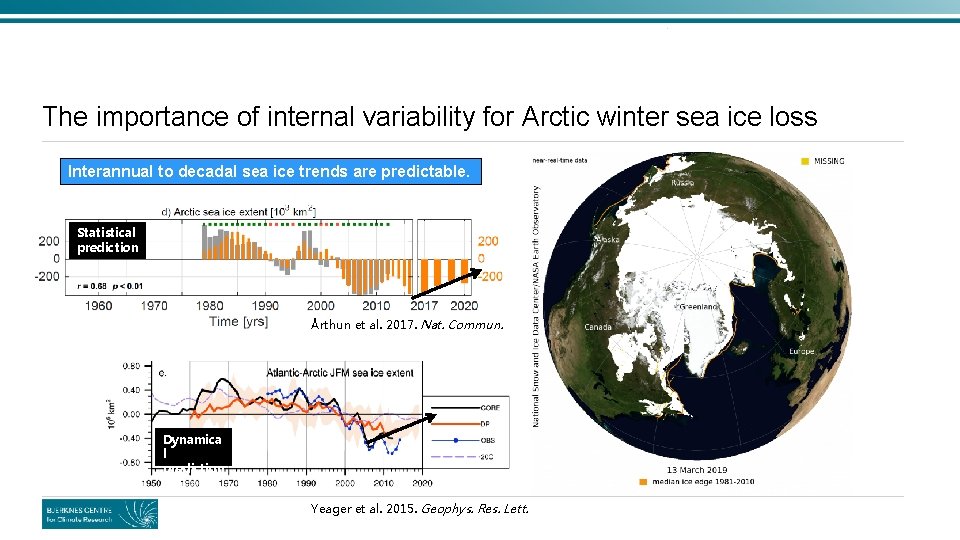
The importance of internal variability for Arctic winter sea ice loss Interannual to decadal sea ice trends are predictable. Statistical prediction Årthun et al. 2017. Nat. Commun. Dynamica l prediction Yeager et al. 2015. Geophys. Res. Lett.
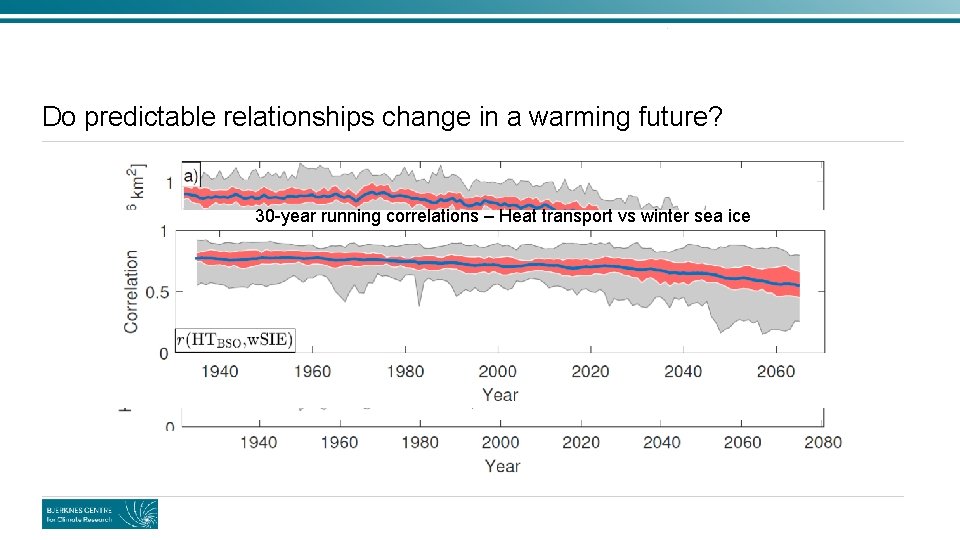
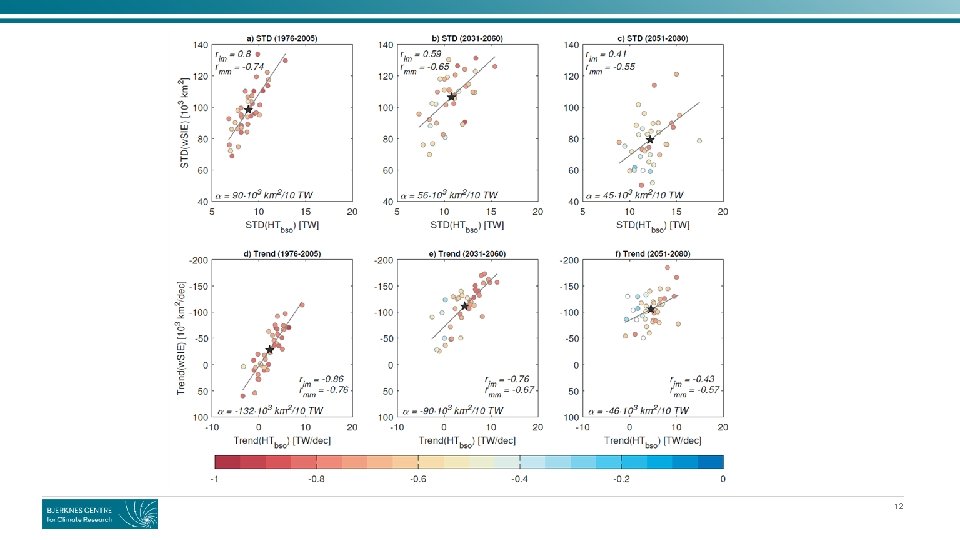
Do predictable relationships change in a warming future? 30 -year running correlations – Heat transport vs winter sea ice
12
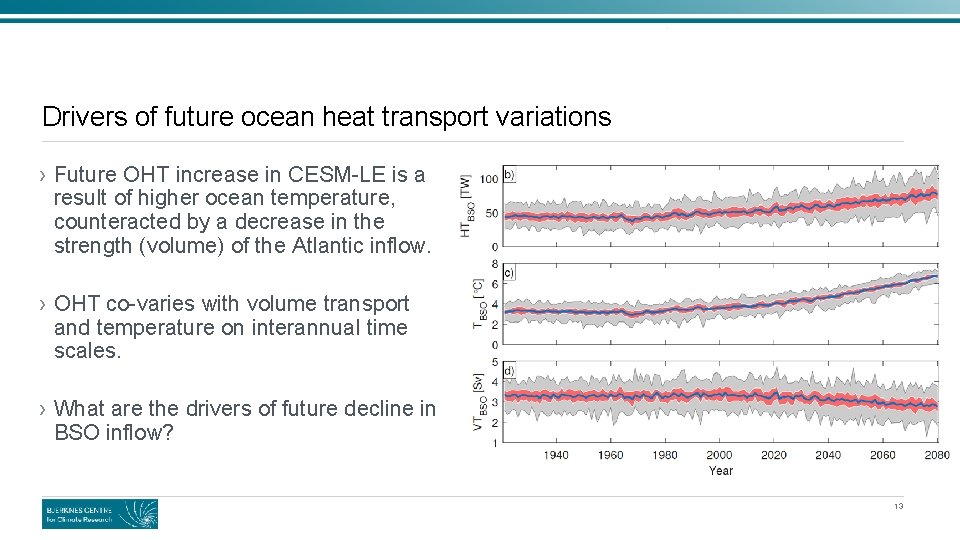
Drivers of future ocean heat transport variations › Future OHT increase in CESM-LE is a result of higher ocean temperature, counteracted by a decrease in the strength (volume) of the Atlantic inflow. › OHT co-varies with volume transport and temperature on interannual time scales. › What are the drivers of future decline in BSO inflow? 13
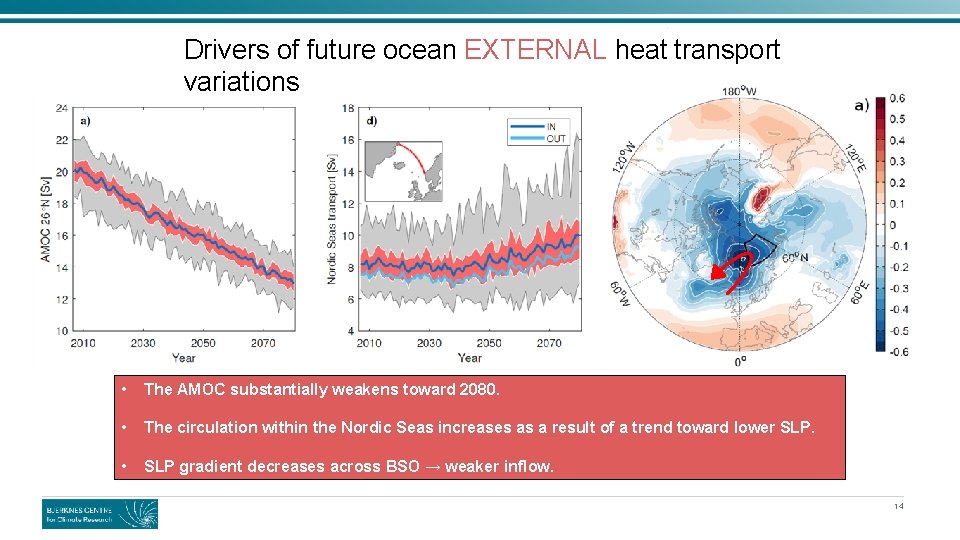
Drivers of future ocean EXTERNAL heat transport variations • The AMOC substantially weakens toward 2080. • The circulation within the Nordic Seas increases as a result of a trend toward lower SLP. • SLP gradient decreases across BSO → weaker inflow. 14
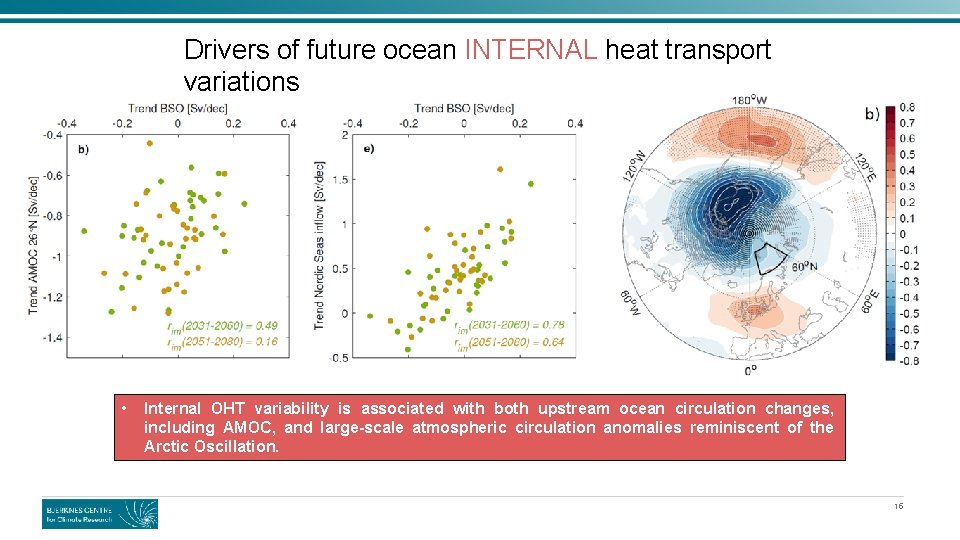
Drivers of future ocean INTERNAL heat transport variations • Internal OHT variability is associated with both upstream ocean circulation changes, including AMOC, and large-scale atmospheric circulation anomalies reminiscent of the Arctic Oscillation. 15
CONCLUSIONS › Ocean heat transport into the Barents Sea has been, and will continue to be, a major source of internal Arctic winter sea ice variability and predictability. › Future long-term increase in Atlantic heat transport is carried by warmer water as the current itself is found to weaken. › Internal heat transport variations associated with upstream ocean circulation and large-scale atmospheric circulation anomalies.
Årthun et al. 2019: The role of Atlantic heat transport in future Arctic winter sea ice loss. Journal of Climate. Årthun et al. 2017: Skillfull prediction of northern climate provided by the ocean. Nature Communications. Onarheim & Årthun 2017: Toward an ice-free Barents Sea. Geophysical Research Letters. THANK YOU! 17