
The Role of Affective Computing in Computer Games




![References [1] [2] [3] [4] [5] [6] [7] Panrong Yin, Linye Zhao, Lexing Huang](https://slidetodoc.com/presentation_image/63b2721eaaa42b44d1fbd7f468fb2af7/image-31.jpg "References [1] [2] [3] [4] [5] [6] [7] Panrong Yin, Linye Zhao, Lexing Huang")
- Slides: 31
The Role of Affective Computing in Computer Games Dr. Saeid Pourroostaei Ardakani Faculty of Psychology and Educational Science Allameh Tabataba’i University Autumn 2016
Outline • • • Introduction to Affective Computing Affective signals Affective functions Affection recognition Affective games Our research
Affective Computing • Affective Computing is a field of study based on how to create systems and devices that are able to recognize, interpret and simulate human emotions. • This was developed by Rosalind Picard (1995) from MIT as a tool to improve the interface man-machine by including affective connotations. All this to improve the computer’s performance and user’s productivity as well.
Interdisciplinary of Affective Computing • Computer Science: This is the science that involves the study of human emotions and reactions. • Electrical Engineering: It is a field of engineering, which allows us to develop digital models which deals with the collection of data from human, making use of sensors and smart devices. • Psychology: This is the science that involves the study of human emotions and reactions. • Biology: This science studies human organs and how we can detect emotions from them (e. g. Heart Rate)
Affective Signal (1/2) • An affective signal is the response to the different situations we experiment in our environment and they play an important role in the decision-making process and solving problems as well. • This is of relatively short duration, and will fall below a level of perceptibility unless it is re-activated [Picard, 1997]. • An affective signal has two components [Damasio, 1994]: – Mental component (cognitive) – Physical component (body)
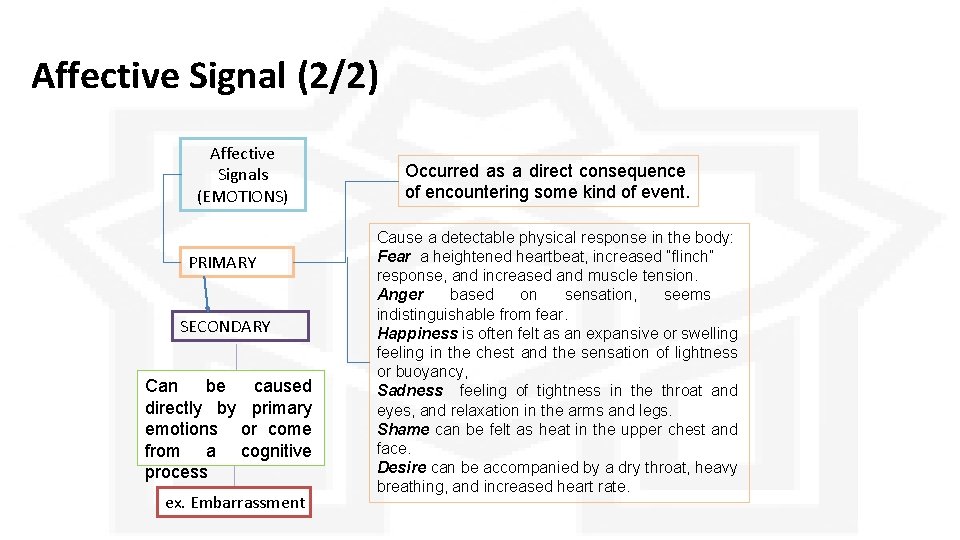
Affective Signal (2/2) Affective Signals (EMOTIONS) PRIMARY SECONDARY Can be caused directly by primary emotions or come from a cognitive process ex. Embarrassment Occurred as a direct consequence of encountering some kind of event. Cause a detectable physical response in the body: Fear a heightened heartbeat, increased “flinch” response, and increased and muscle tension. Anger based on sensation, seems indistinguishable from fear. Happiness is often felt as an expansive or swelling feeling in the chest and the sensation of lightness or buoyancy, Sadness feeling of tightness in the throat and eyes, and relaxation in the arms and legs. Shame can be felt as heat in the upper chest and face. Desire can be accompanied by a dry throat, heavy breathing, and increased heart rate.
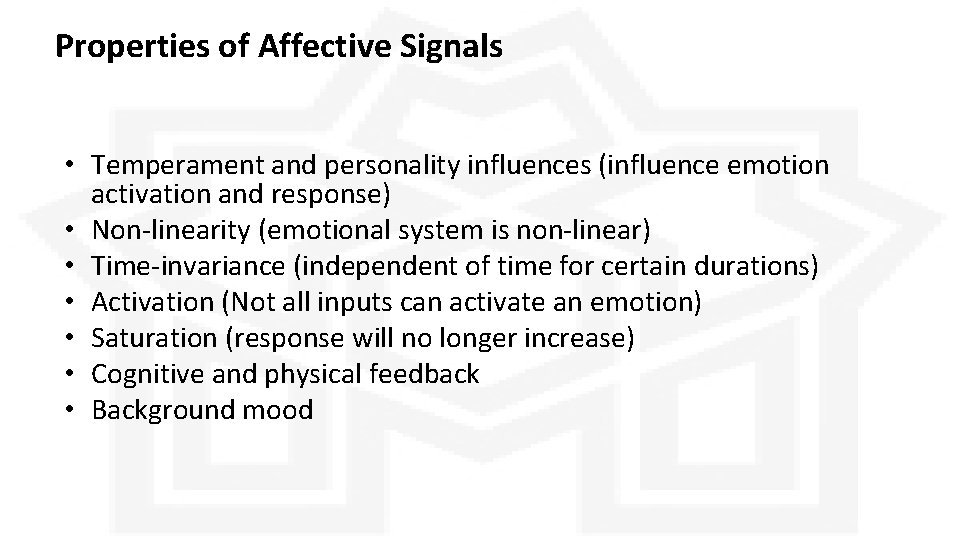
Properties of Affective Signals • Temperament and personality influences (influence emotion activation and response) • Non-linearity (emotional system is non-linear) • Time-invariance (independent of time for certain durations) • Activation (Not all inputs can activate an emotion) • Saturation (response will no longer increase) • Cognitive and physical feedback • Background mood
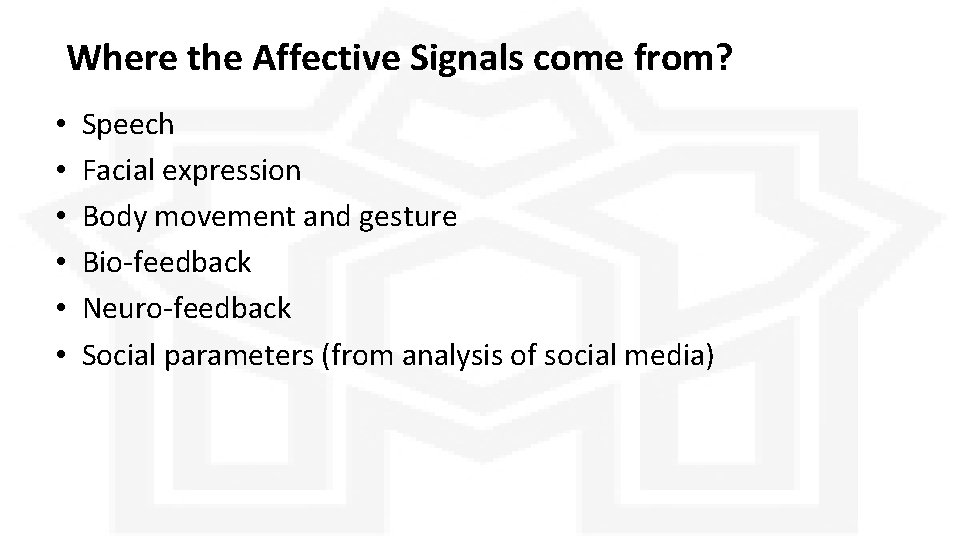
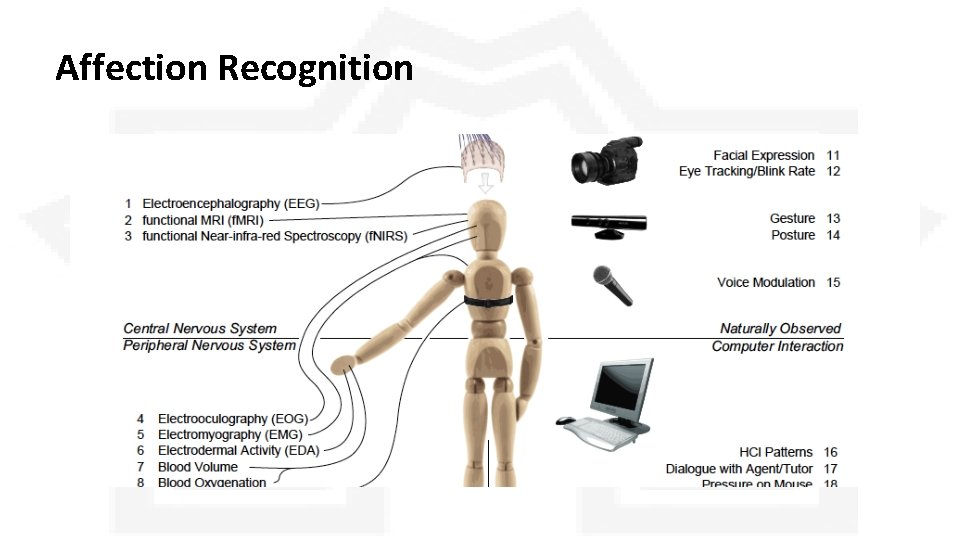
Where the Affective Signals come from? • • • Speech Facial expression Body movement and gesture Bio-feedback Neuro-feedback Social parameters (from analysis of social media)
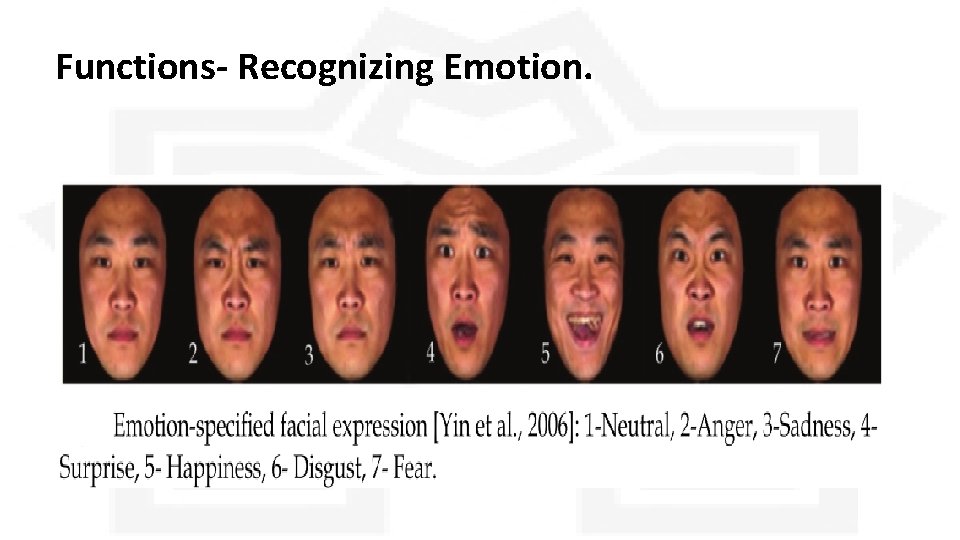
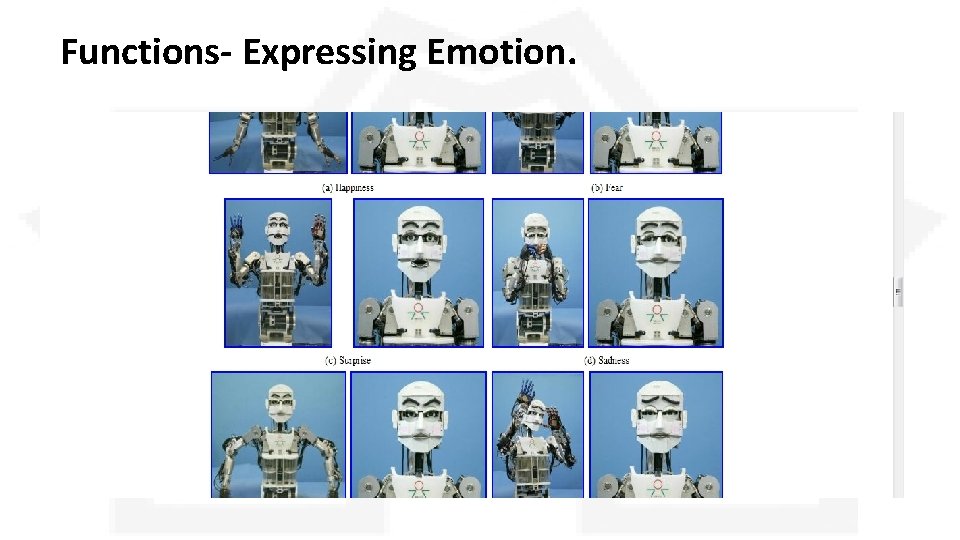
Affective Functions • For a Computer to be Affective should have at least one of the following functions: ØRecognizing Emotion. ØExpressing Emotion. ØHaving Emotion.
Functions- Recognizing Emotion.
Functions- Expressing Emotion.
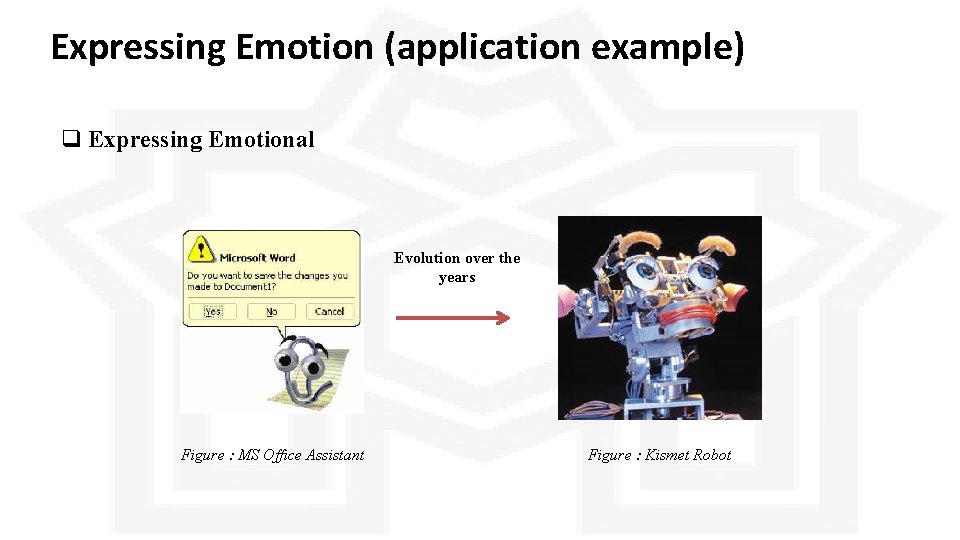
Expressing Emotion (application example) q Expressing Emotional Evolution over the years Figure : MS Office Assistant Figure : Kismet Robot
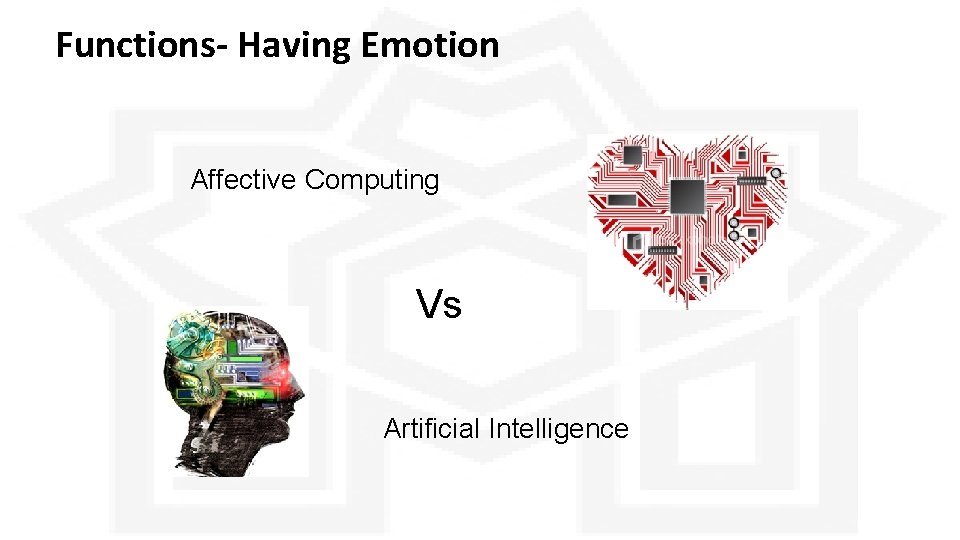
Functions- Having Emotion Affective Computing Vs Artificial Intelligence
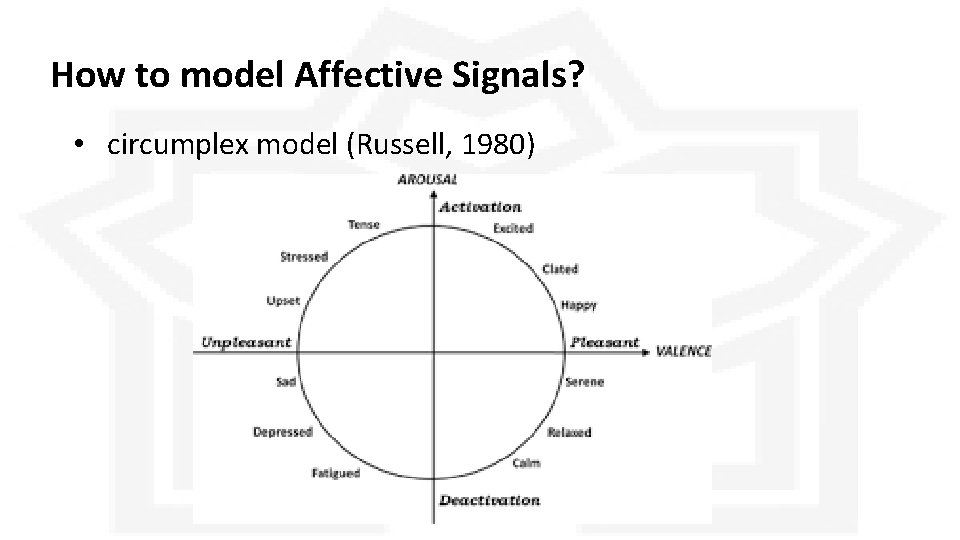
How to model Affective Signals? • circumplex model (Russell, 1980)
Affection Recognition
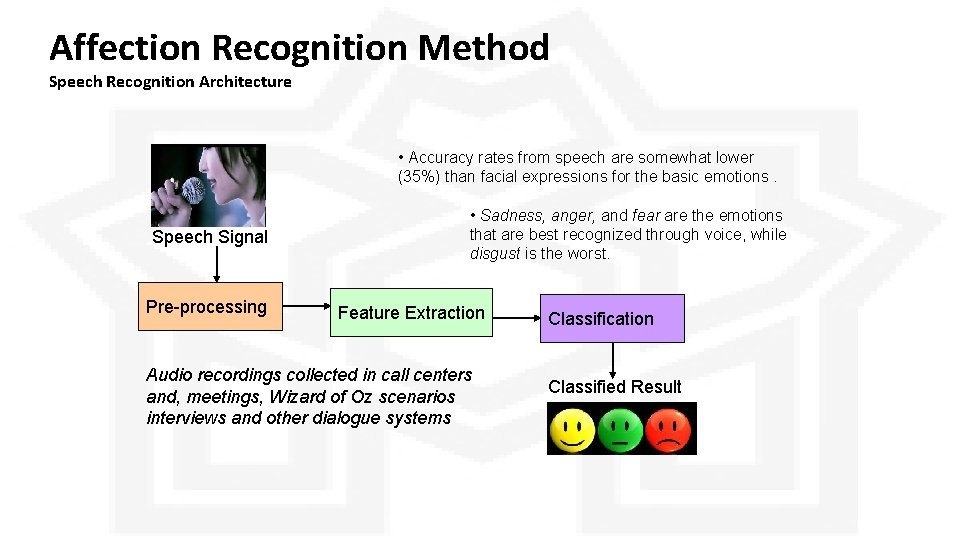
Affection Recognition Method Speech Recognition Architecture • Accuracy rates from speech are somewhat lower (35%) than facial expressions for the basic emotions. Speech Signal Pre-processing • Sadness, anger, and fear are the emotions that are best recognized through voice, while disgust is the worst. Feature Extraction Audio recordings collected in call centers and, meetings, Wizard of Oz scenarios interviews and other dialogue systems Classification Classified Result 16
Affection Recognition Method Facial Expression 17
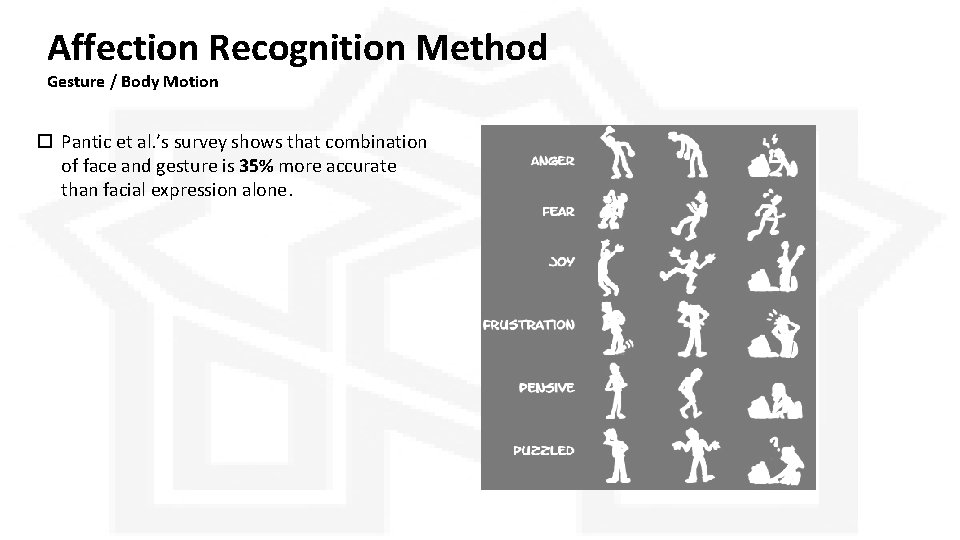
Affection Recognition Method Gesture / Body Motion Pantic et al. ’s survey shows that combination of face and gesture is 35% more accurate than facial expression alone. 18
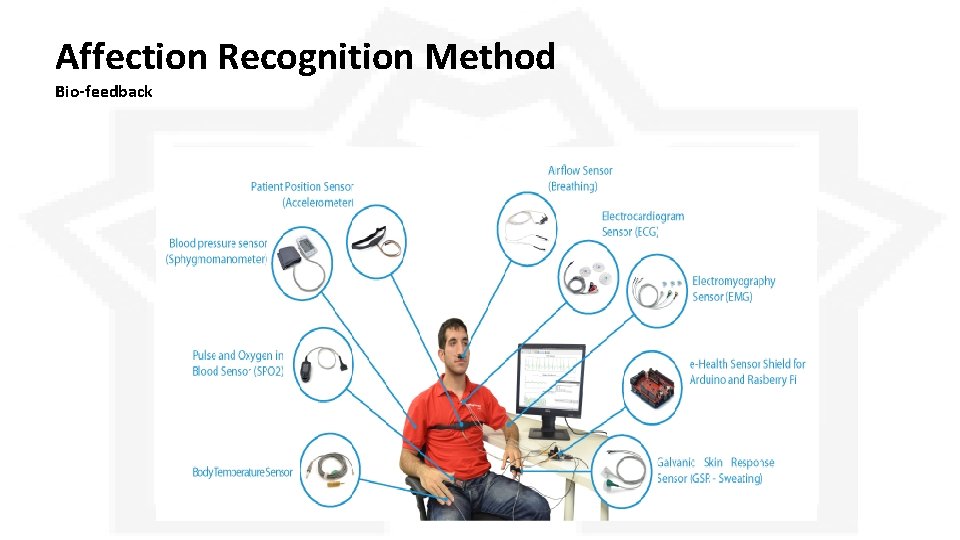
Affection Recognition Method Bio-feedback
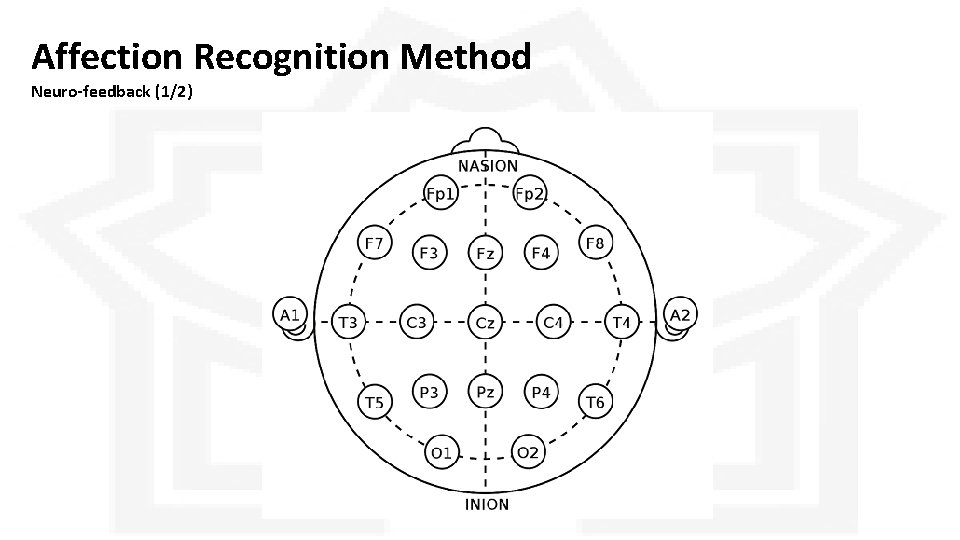
Affection Recognition Method Neuro-feedback (1/2)
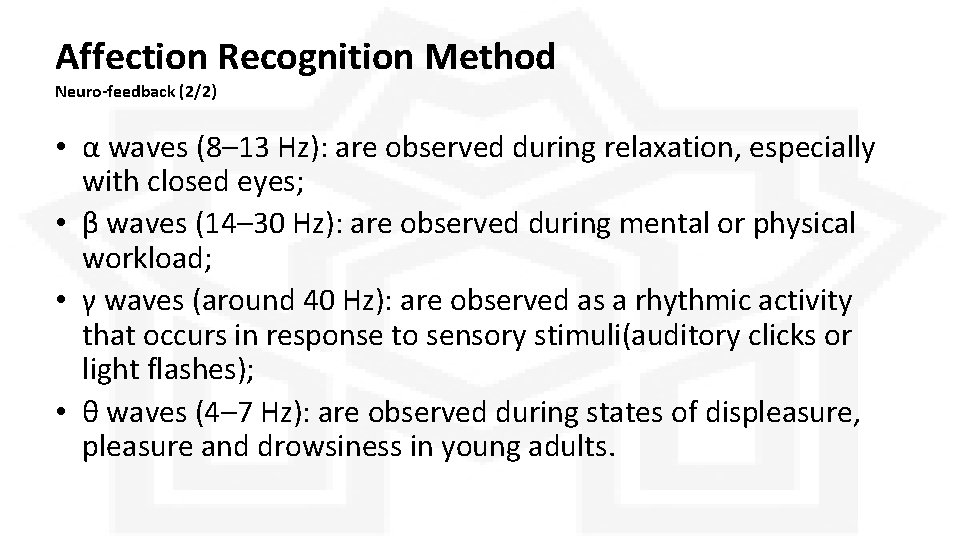
Affection Recognition Method Neuro-feedback (2/2) • α waves (8– 13 Hz): are observed during relaxation, especially with closed eyes; • β waves (14– 30 Hz): are observed during mental or physical workload; • γ waves (around 40 Hz): are observed as a rhythmic activity that occurs in response to sensory stimuli(auditory clicks or light flashes); • θ waves (4– 7 Hz): are observed during states of displeasure, pleasure and drowsiness in young adults.
Difficulties in Automatic Emotion Classification We don’t know what to measure. Emotions experienced by the subject may not correspond well to the stimuli. Different subjects may react with different emotions to the same stimulus. The presentation of emotion will differ between subjects and also at different time moments for the same Subject. • Emotion is not clear-cut and measurable, therefore there cannot be “ground truth” data. • There is no agreed protocol for stimulating and measuring emotion. • There is no agreed protocol for testing emotion classification systems. • •
Affective Games
What do it does? • The ability to generate game content dynamically with respect to the affective state of the player. • The ability to communicate the affective state of the game player to third parties. • The adoption of new game mechanics based on the affective state of the player.
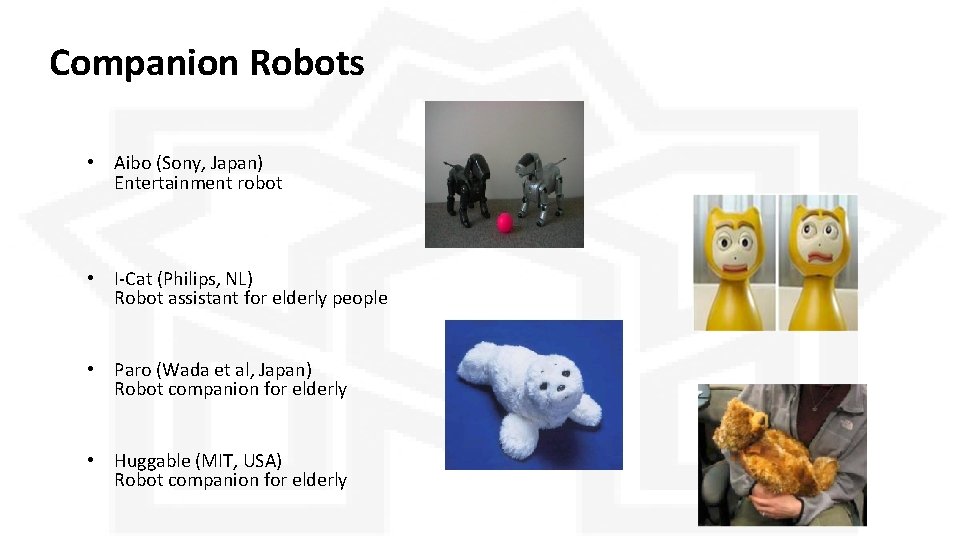
Companion Robots • Aibo (Sony, Japan) Entertainment robot • I-Cat (Philips, NL) Robot assistant for elderly people • Paro (Wada et al, Japan) Robot companion for elderly • Huggable (MIT, USA) Robot companion for elderly
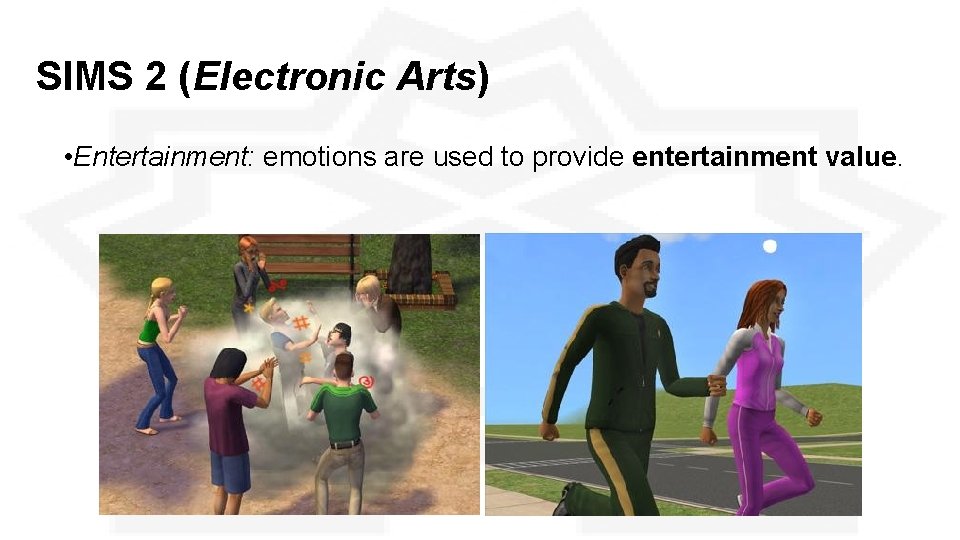
SIMS 2 (Electronic Arts) • Entertainment: emotions are used to provide entertainment value.
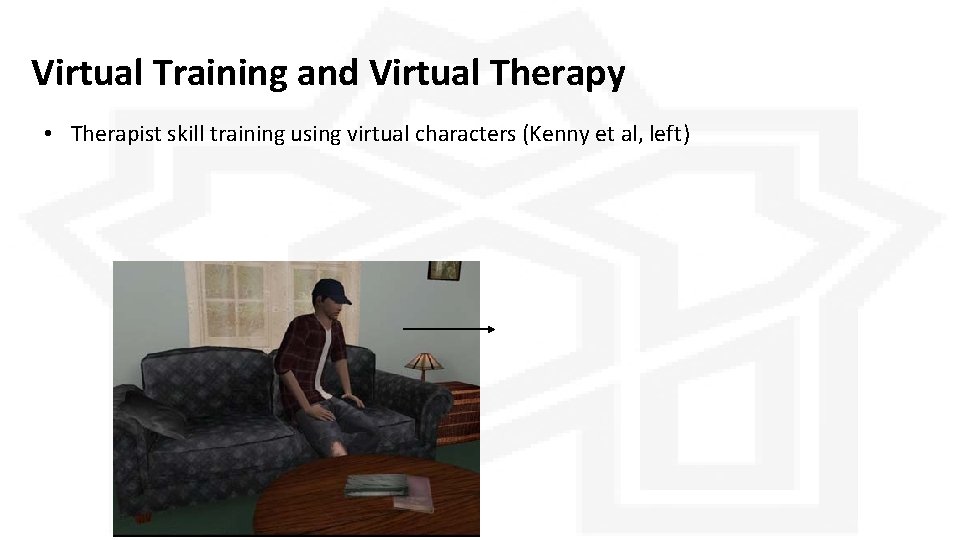
Virtual Training and Virtual Therapy • Therapist skill training using virtual characters (Kenny et al, left)
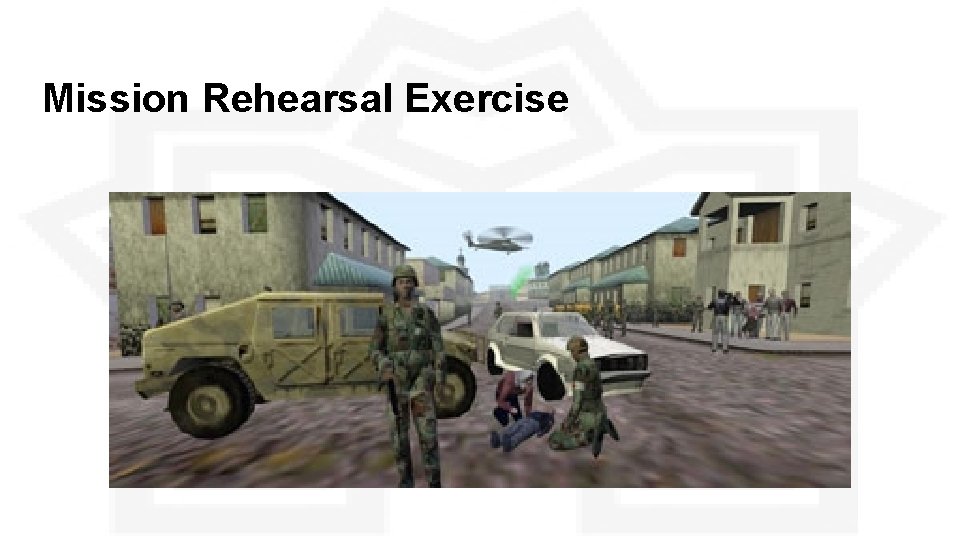
Mission Rehearsal Exercise
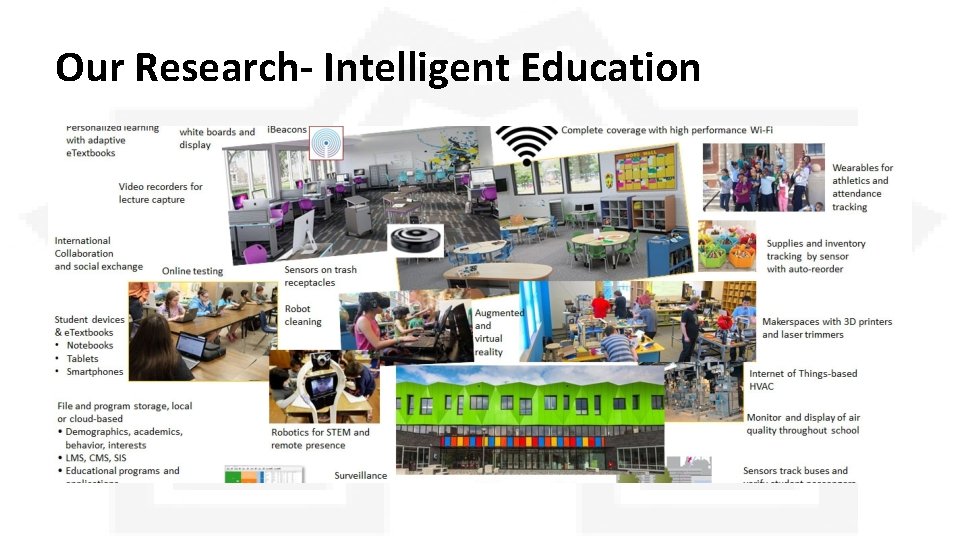
Our Research- Intelligent Education
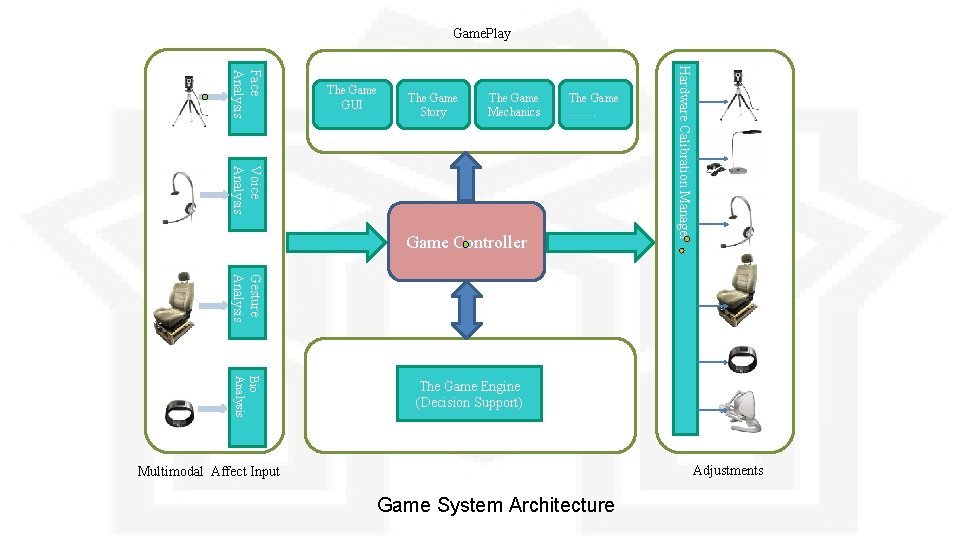
Game. Play The Game Story The Game Mechanics The Game ……. Voice Analysis Game Controller Hardware Calibration Manager Face Analysis The Game GUI Gesture Analysis Bio Analysis The Game Engine (Decision Support) Adjustments Multimodal Affect Input Game System Architecture
References [1] [2] [3] [4] [5] [6] [7] Panrong Yin, Linye Zhao, Lexing Huang and Jianhua Tao, “Expressive Face Animation Synthesis based on Dynamic Mapping Method” Published at National Laborotary of Pattern Recognition , Springer-Verlag Berlin Heidelberg 2011. Site : http: //www. affect. media. mit. edu DAVID BENYON 2010, Designing Interactive Systems- A Comprehensive guide to HCI and interaction design , Addison Wesley-Second Edition Site : http: //www. agent-dysl. eu DR. KOSTAS KARPOUZIS, “Technology Potential : Affective Computing”, Image, video and multimedia systems lab, National Technical University of Athens. Site : https: //github. com/lfac-pt/Spatiotemporal-Emotional-Mapper-for-Social-Systems ZHIHONG ZENG, Member, IEEE Computer Society, MAJA PANTIC, Senior Member, IEEE, GLENN I. ROISMAN & THOMAS S. HUANG, Fellow, IEEE, “A Survey of Affect Recognition Methods: Audio, Visual, and Spontaneous Expressions”.