
The ROI Potential of Bringing Wireless Into Existing
The ROI Potential of Bringing Wireless Into Existing IT Environments Thomas P. Matthews President and CEO Inciscent, Inc.
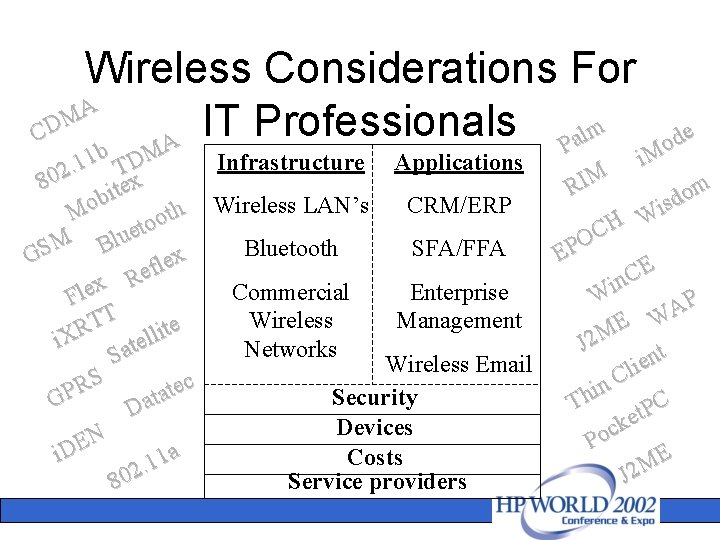
Wireless Considerations For A M IT Professionals m CD l a A P b DM 1 Infrastructure Applications 1. T 2 x 80 e t i b o CRM/ERP h Wireless LAN’s M t o o t e M Blu S Bluetooth SFA/FFA G x e l f e R x e Commercial Enterprise l F T Wireless Management T e t R i l i. X el t Networks a S Wireless Email c RS e t P a Security t G Da Devices N a i. DE Costs 1 1. 2 Service providers 80 de o i. M m RIM o d s i H W C O EP E C n Wi P A W E J 2 M t n e li C in h C T P t e k c Po E M J 2
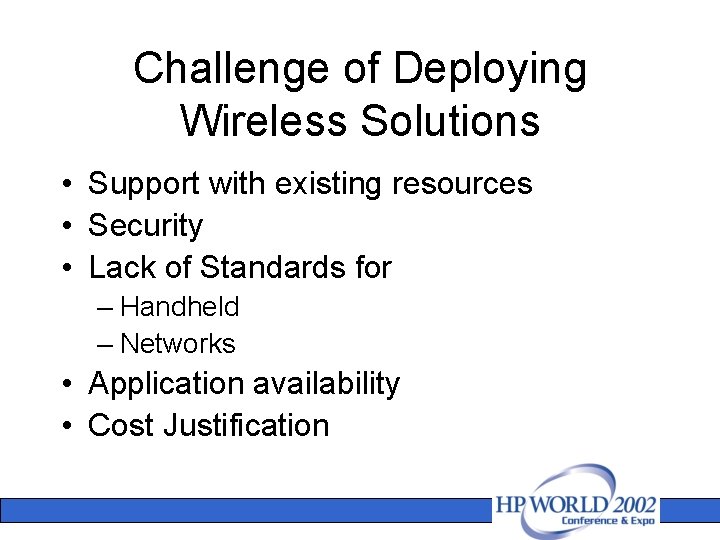
Challenge of Deploying Wireless Solutions • Support with existing resources • Security • Lack of Standards for – Handheld – Networks • Application availability • Cost Justification
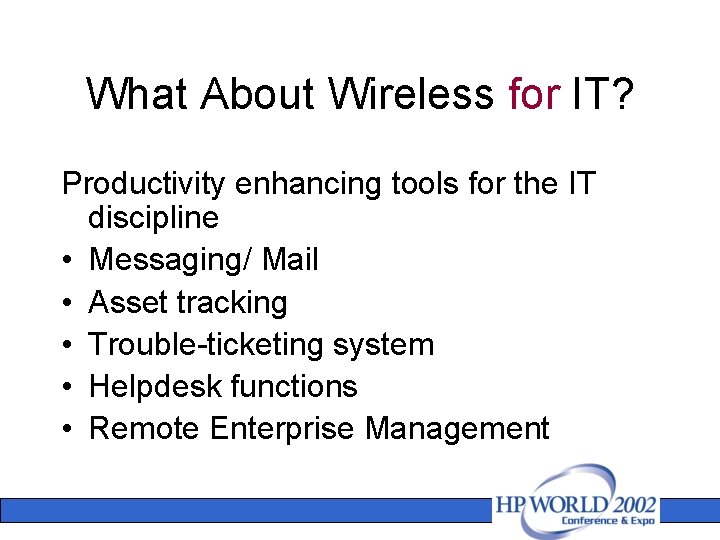
What About Wireless for IT? Productivity enhancing tools for the IT discipline • Messaging/ Mail • Asset tracking • Trouble-ticketing system • Helpdesk functions • Remote Enterprise Management
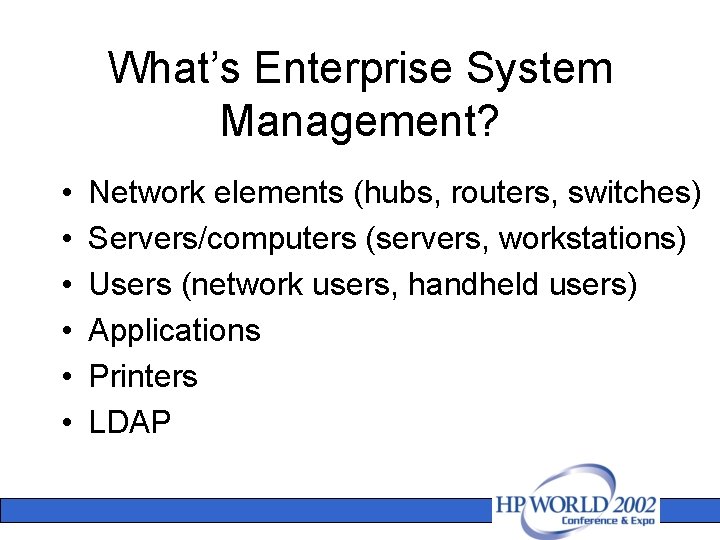
What’s Enterprise System Management? • • • Network elements (hubs, routers, switches) Servers/computers (servers, workstations) Users (network users, handheld users) Applications Printers LDAP
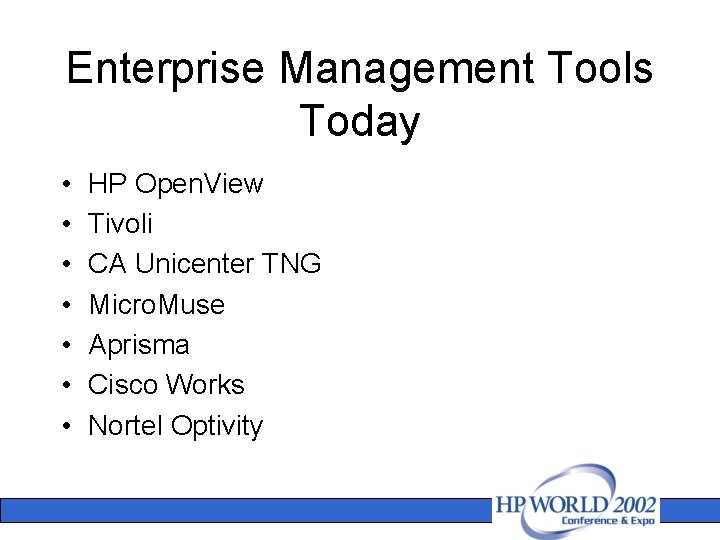
Enterprise Management Tools Today • • HP Open. View Tivoli CA Unicenter TNG Micro. Muse Aprisma Cisco Works Nortel Optivity
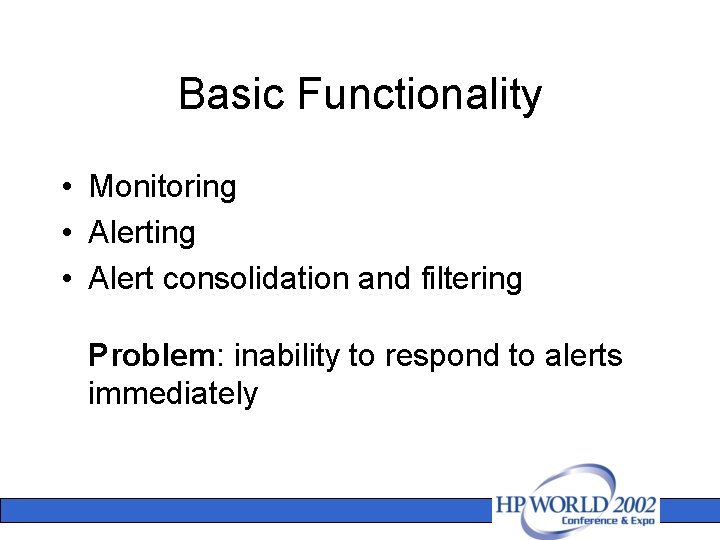
Basic Functionality • Monitoring • Alert consolidation and filtering Problem: inability to respond to alerts immediately
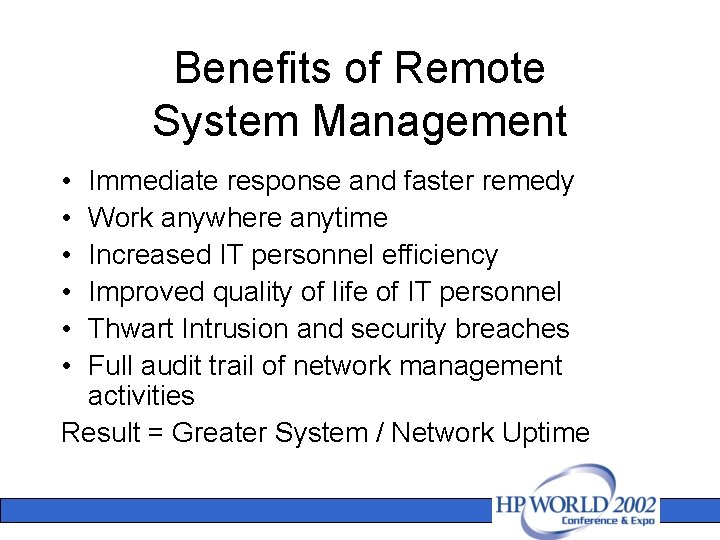
Benefits of Remote System Management • • • Immediate response and faster remedy Work anywhere anytime Increased IT personnel efficiency Improved quality of life of IT personnel Thwart Intrusion and security breaches Full audit trail of network management activities Result = Greater System / Network Uptime
Remote System Management as an Intrusion Detection Tool • • • Reboot routers Disable router ports Configure router Settings through Telnet Erase and reset router configuration Disable web access through routers Run saved Macros to quickly re configure routers that are being hacked • Manage router access lists
Remote System Management as an Intrusion Detection Tool Servers • Shut down hacked computers/servers • Change IP Address of a Server Disable services • Stop applications/services – Disable IIS and Other Web Servers – Shut Down e-Mail Services on malicious code detection through WMM or Telnet • View Event Logs • Disable users
Implications of System Downtime – Internal Impact – Inability to access business-critical data • Sales person cannot access a customer record • Technician can’t access parts availability in the inventory system – Cost of Recovery • Replacing systems • Restoring service • Man-hours to get systems back up and running
Implications of System Downtime – External Impact – Loss of revenue • Customer cannot access and use an ecommerce Web-site • Reseller cannot access an order-entry system • Potential penalties for not meeting Service Level Agreements – Loss of reputation • View of service/company as less than reliable
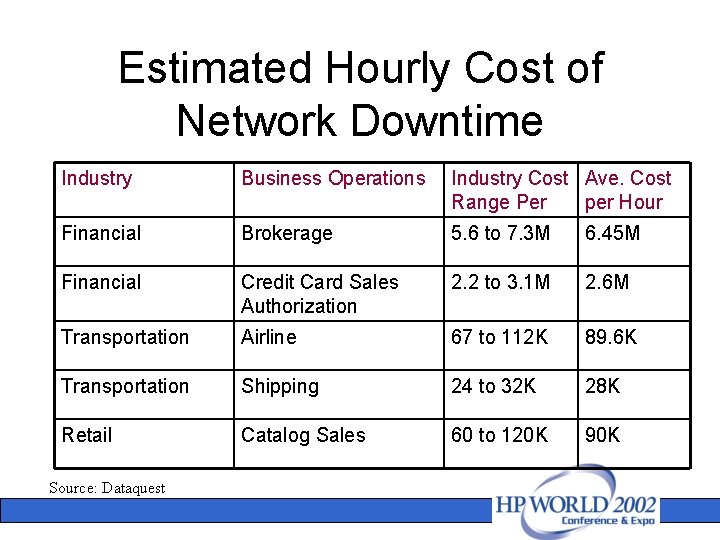
Estimated Hourly Cost of Network Downtime Industry Business Operations Industry Cost Ave. Cost Range Per per Hour Financial Brokerage 5. 6 to 7. 3 M 6. 45 M Financial Credit Card Sales Authorization 2. 2 to 3. 1 M 2. 6 M Transportation Airline 67 to 112 K 89. 6 K Transportation Shipping 24 to 32 K 28 K Retail Catalog Sales 60 to 120 K 90 K Source: Dataquest
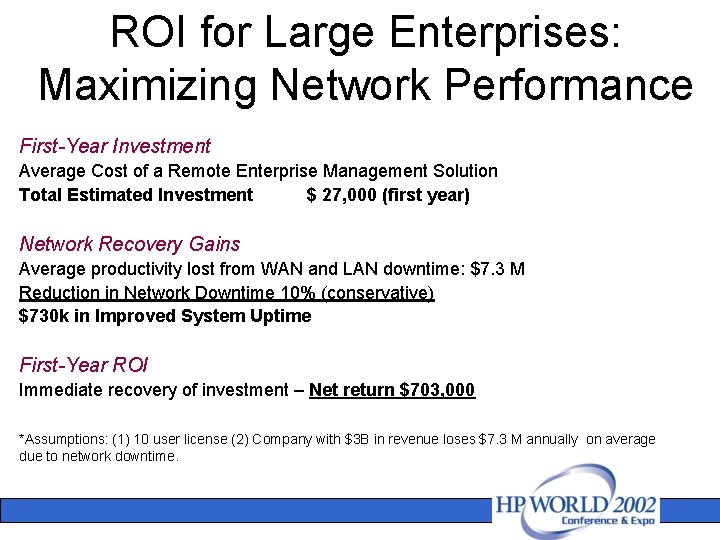
ROI for Large Enterprises: Maximizing Network Performance First-Year Investment Average Cost of a Remote Enterprise Management Solution Total Estimated Investment $ 27, 000 (first year) Network Recovery Gains Average productivity lost from WAN and LAN downtime: $7. 3 M Reduction in Network Downtime 10% (conservative) $730 k in Improved System Uptime First-Year ROI Immediate recovery of investment – Net return $703, 000 *Assumptions: (1) 10 user license (2) Company with $3 B in revenue loses $7. 3 M annually on average due to network downtime.
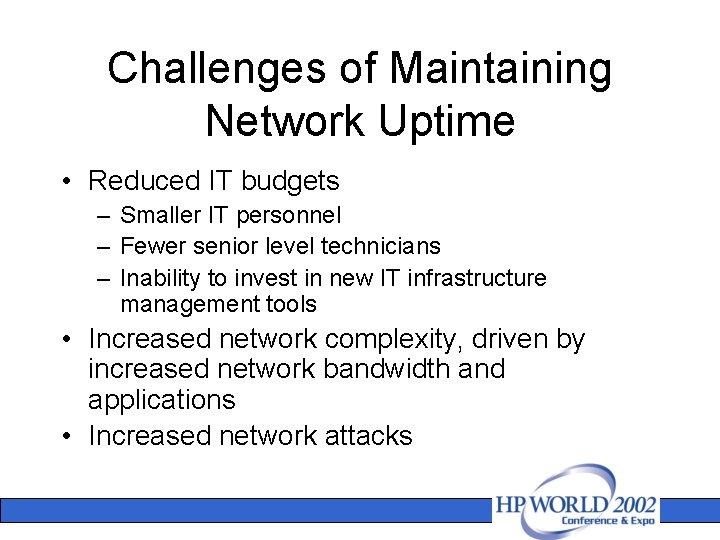
Challenges of Maintaining Network Uptime • Reduced IT budgets – Smaller IT personnel – Fewer senior level technicians – Inability to invest in new IT infrastructure management tools • Increased network complexity, driven by increased network bandwidth and applications • Increased network attacks
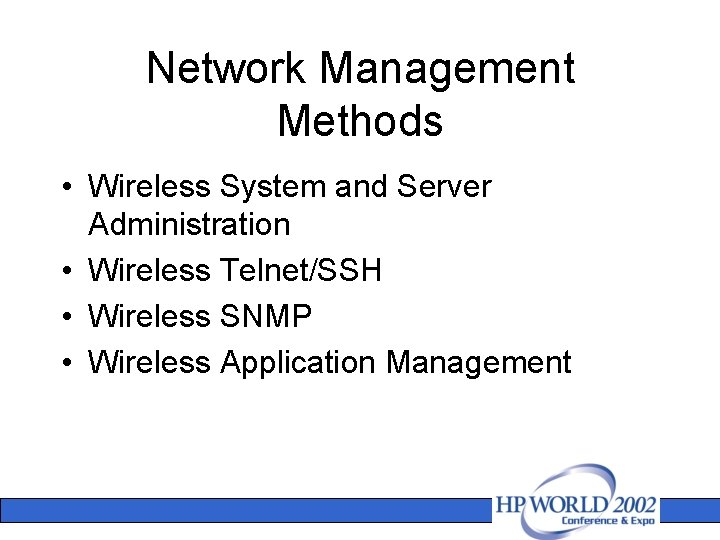
Network Management Methods • Wireless System and Server Administration • Wireless Telnet/SSH • Wireless SNMP • Wireless Application Management
Examples of Remote Enterprise Systems Management • Managing a single point of failure – a router, a switch or a server • Routine management issues (users, passwords, services) • Managing systems attack • Managing a network during natural disasters – Manage UPS’s – bring all systems to a graceful shutdown
The Myths of Wireless 1. 2. 3. 4. 5. Novel unproven technology Difficult to implement and maintain “Nice to have” not “need to have” Not secure Applications are not robust
Novel Technology/ Difficult to Implement • Solutions that integrate into your own wired and wireless infrastructure • Support for multiple devices/networks • Low bandwidth yet valuable applications that run on today’s wireless networks
Security • • Inherent Device Security Wireless Network Security VPN Clients for Handheld Devices Custom security solutions (e. g. RSA’s Secur. ID)
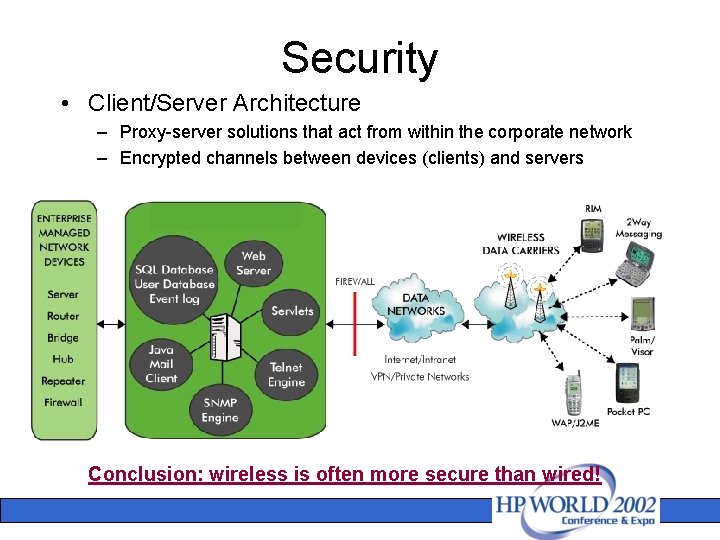
Security • Client/Server Architecture – Proxy-server solutions that act from within the corporate network – Encrypted channels between devices (clients) and servers Conclusion: wireless is often more secure than wired!
Real Business Value • Reduces network downtime, contributing directly to the bottom line • Gets more value out of your existing NMS system • Increased IT personnel efficiency without increased staffing
Conclusion The wireless data train has left the station • IT departments must get on board with useful solutions that provide real value • You will be challenged with requests to manage wireless solution from all disciplines. Gain the personal experience required to assist in the buying process by implementing your own solutions NOW
- Slides: 23