
The Rock Cycle Rock Cycle A rock is
- Slides: 12
The Rock Cycle
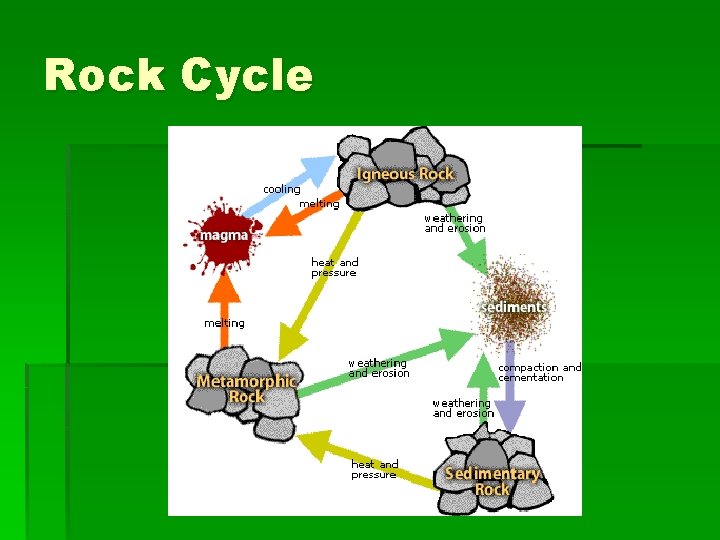
Rock Cycle: § A rock is a mixture of minerals, mineraloids, glass or organic matter. § The rocky cycle shows how one rock changes into another. § Rocks are changed by the following: § Weathering § Compaction § Melting Erosion Cementation Cooling
Rock Cycle
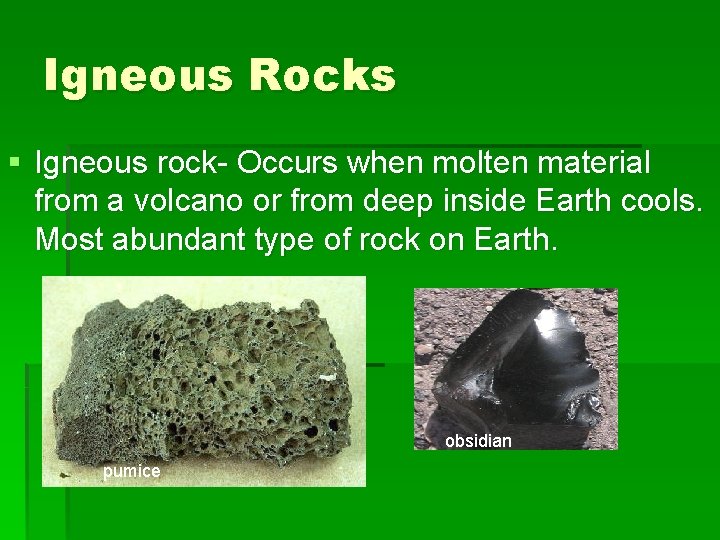
Igneous Rocks § Igneous rock- Occurs when molten material from a volcano or from deep inside Earth cools. Most abundant type of rock on Earth. obsidian pumice
Igneous Rocks cont. § Great pressure and heat melt the rock to form magma § Also radioactive elements in rock generate thermal energy § Heats rocks § Less dense than surrounding rocks, forced upward and released from volcanoes as lava. § Lava and magma contain Silica § The more silica the more viscous (thick) it is.
Metamorphic Rocks § Metamorphic Rock- Rocks that have changed due to temperature and pressure increases or that undergo changes in composition § Metamorphic Rock § Formed from igneous, sedimentary or other metamorphic rock § Changes in appearance, texture, crystal, structure, and or mineral content
Metamorphic Rocks cont. § Heat and pressure not enough to melt the rock like igneous § Pressure and heat flatten rocks, exchanges atoms with other minerals § Amount of pressure can determine what rock will form § One rock can change into several different rocks § i. e. shale will change to slate but as more pressure is applied could change into phyllite, schist, and gneiss
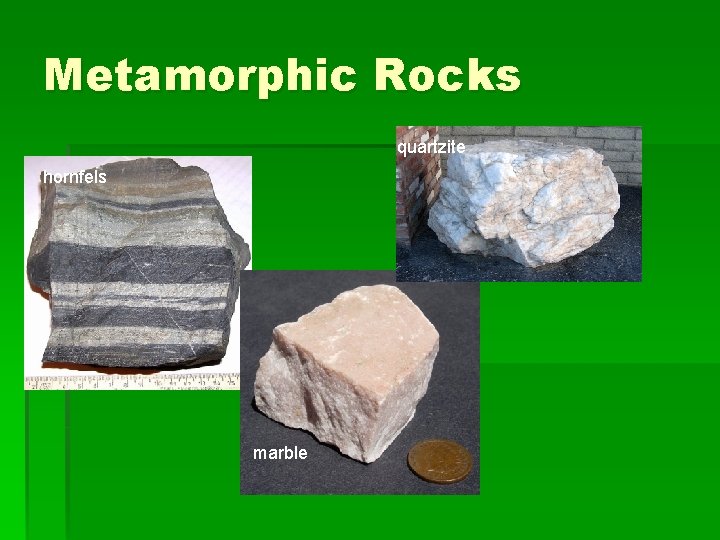
Metamorphic Rocks quartzite hornfels marble
Sedimentary Rock § Sedimentary Rock- Formed when sediments become pressed or cemented together or when sediments precipitate out of solution § Sedimentary Rock § 75% of Earth’s Surface § Formed from sediments § Sediments- loose materials such as rock fragments, mineral grains, and bits of plant and animal remains that have undergone weathering and erosion § Minerals dissolved in water are also sediments § Come from already existing rocks that are weathered and eroded
Sedimentary Rocks Cont. § Movement of weathered material is called erosion. § Often form layers § Oldest layers are at the bottom § Except when disturbed by some force within the Earth § Compaction § Large sediments cannot be compacted alone by pressure § Cementation occurs when these large sediments are glued together by minerals deposited b/w the sediments by water
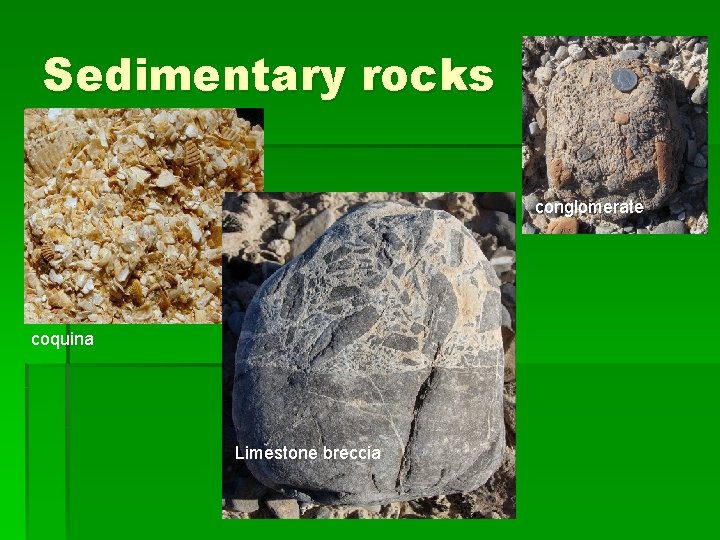
Sedimentary rocks conglomerate coquina Limestone breccia
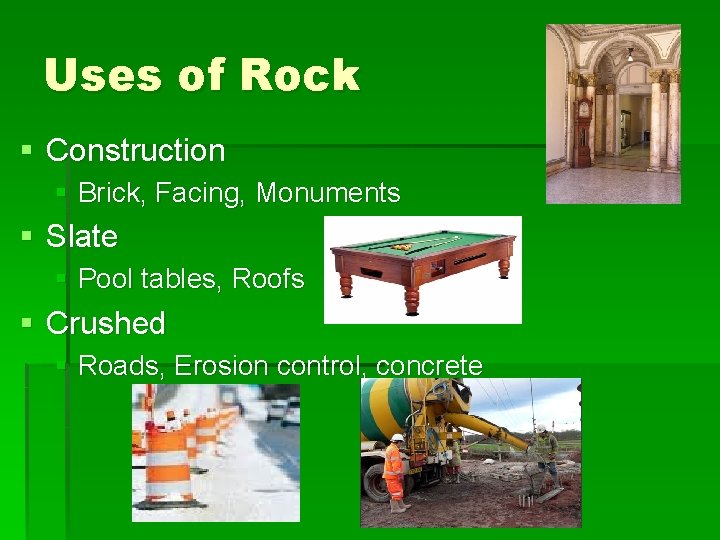
Uses of Rock § Construction § Brick, Facing, Monuments § Slate § Pool tables, Roofs § Crushed § Roads, Erosion control, concrete