
The Rock Cycle Modified from Brianna Shields January
The Rock Cycle Modified from Brianna Shields January 25, 2005
DO NOW • 1. Which mineral characteristic is tested by rubbing the mineral on a porcelain tile or plate? • 2. Which mineral characteristic is tested by scratching the mineral across other minerals or across items such as a nail, penny or glass? • 3. How do you determine a mineral’s
GOAL • To know the three rock types, their formation, and the paths they might travel through during the rock cycle

Rock Cycle • Igneous Rocks • 1. Formed when magma or lava hardens
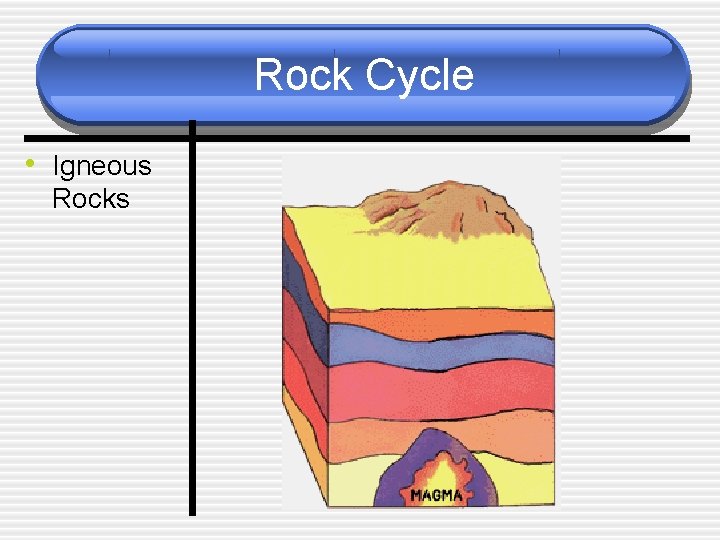
Rock Cycle • Igneous Rocks
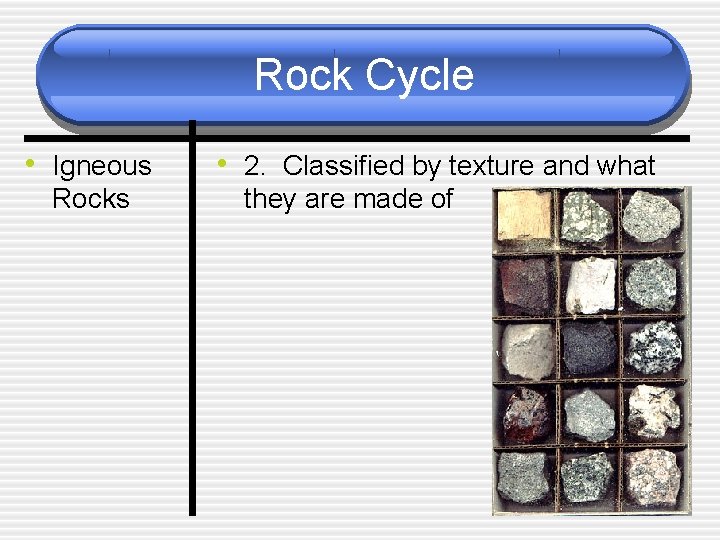
Rock Cycle • Igneous Rocks • 2. Classified by texture and what they are made of
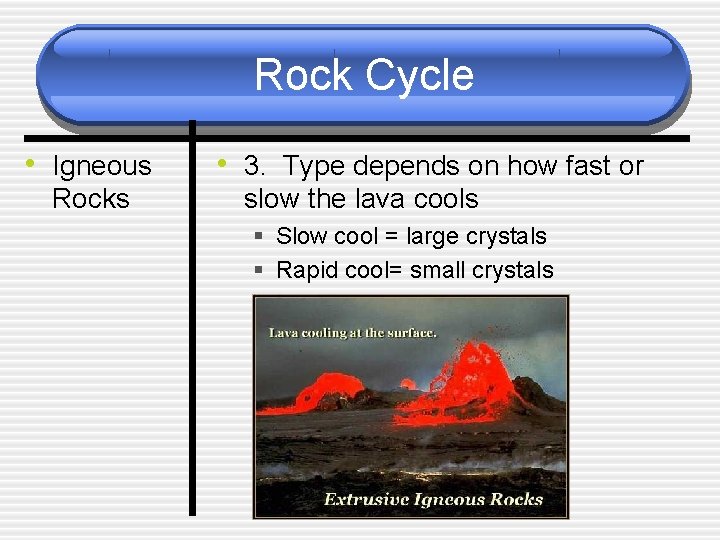
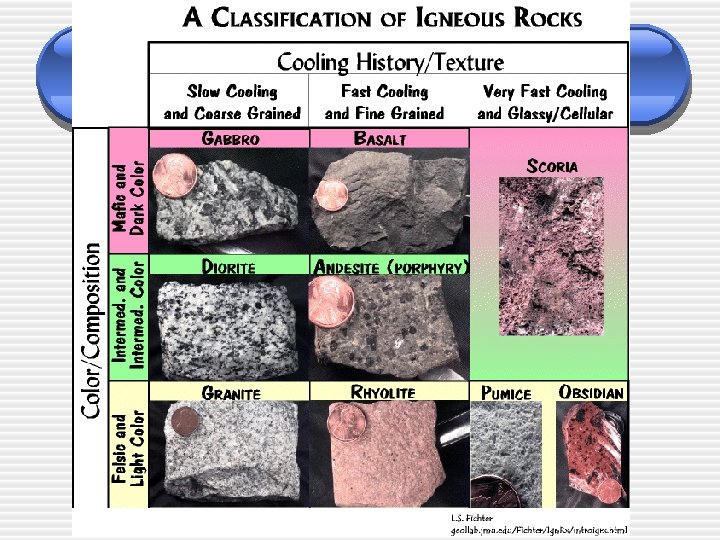
Rock Cycle • Igneous Rocks • 3. Type depends on how fast or slow the lava cools § Slow cool = large crystals § Rapid cool= small crystals
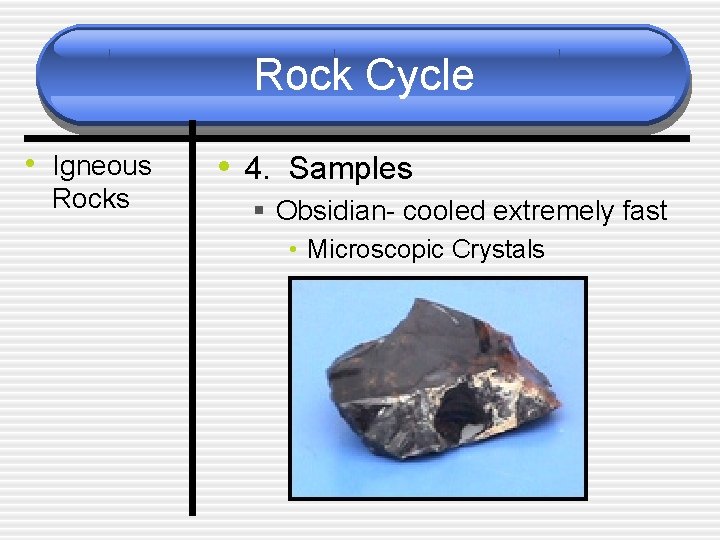
Rock Cycle • Igneous Rocks • 4. Samples § Obsidian- cooled extremely fast • Microscopic Crystals
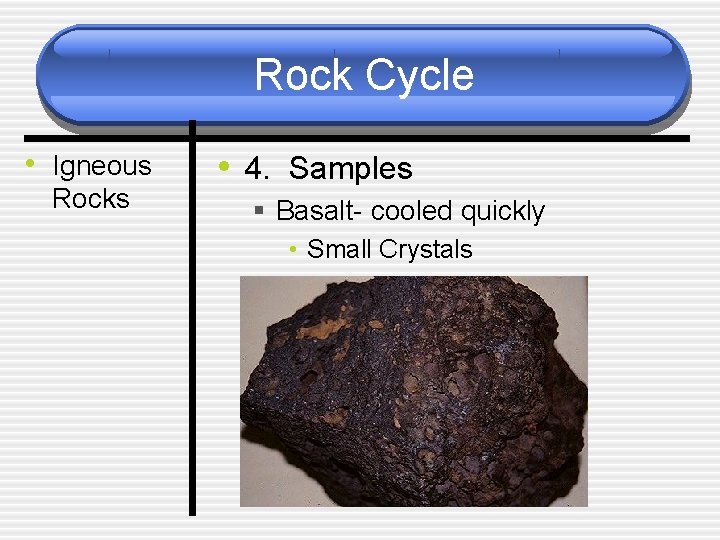
Rock Cycle • Igneous Rocks • 4. Samples § Basalt- cooled quickly • Small Crystals
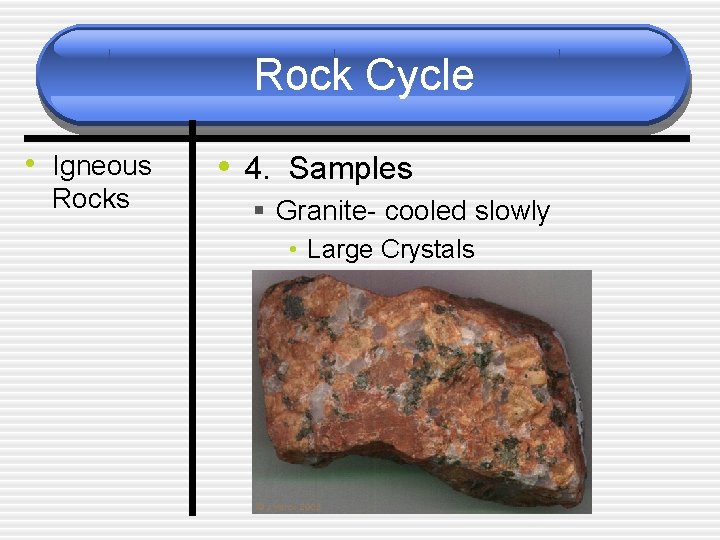
Rock Cycle • Igneous Rocks • 4. Samples § Granite- cooled slowly • Large Crystals
Igneous Rocks • See if you can pick samples of obsidian, granite and basalt out of your rock kit § Do not use the key to help you! § Use your memory of the powerpoint pictures!
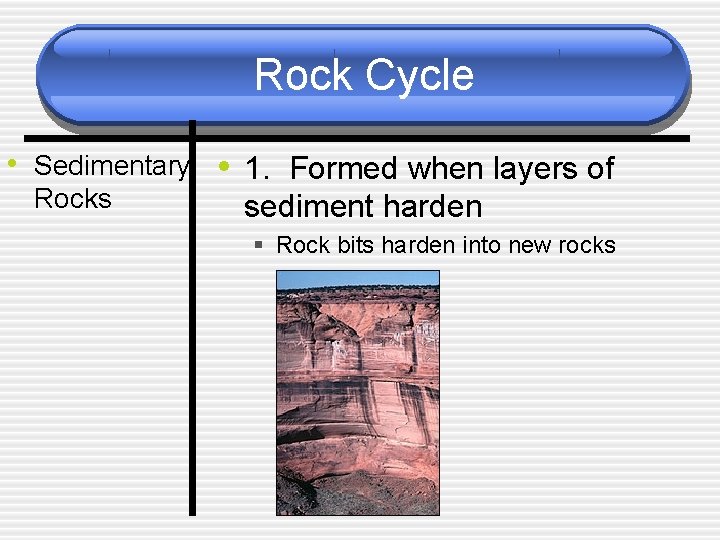
Rock Cycle • Sedimentary • 1. Formed when layers of Rocks sediment harden § Rock bits harden into new rocks
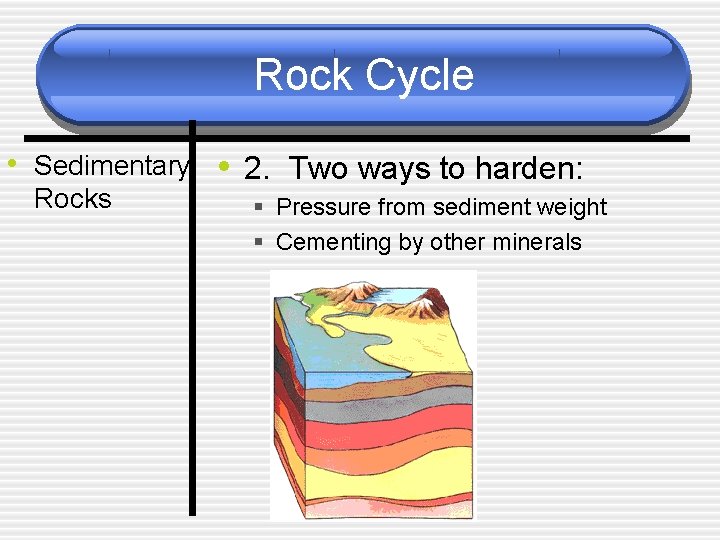
Rock Cycle • Sedimentary • 2. Two ways to harden: Rocks § Pressure from sediment weight § Cementing by other minerals
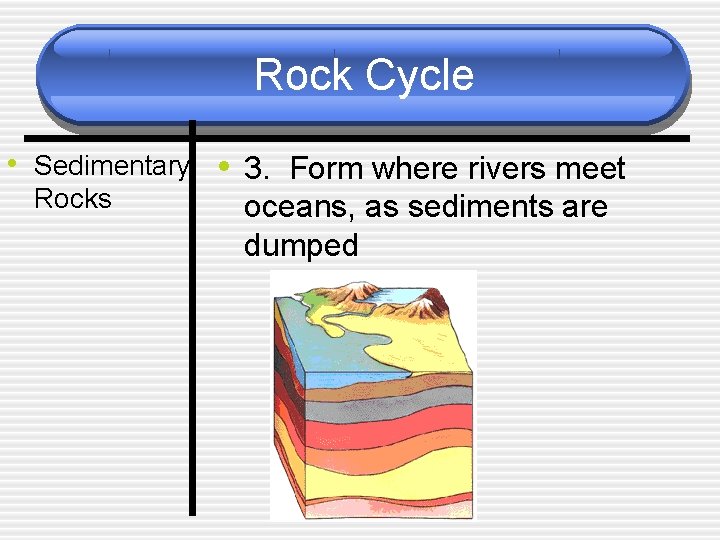
Rock Cycle • Sedimentary • 3. Form where rivers meet Rocks oceans, as sediments are dumped
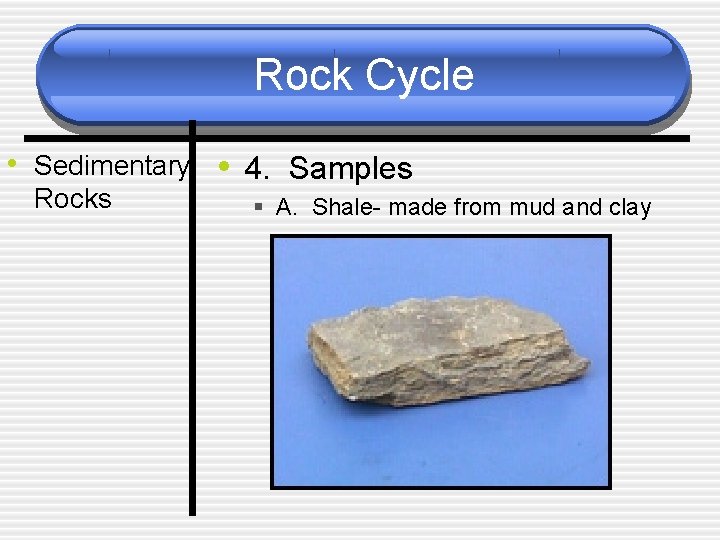
Rock Cycle • Sedimentary • 4. Samples Rocks § A. Shale- made from mud and clay
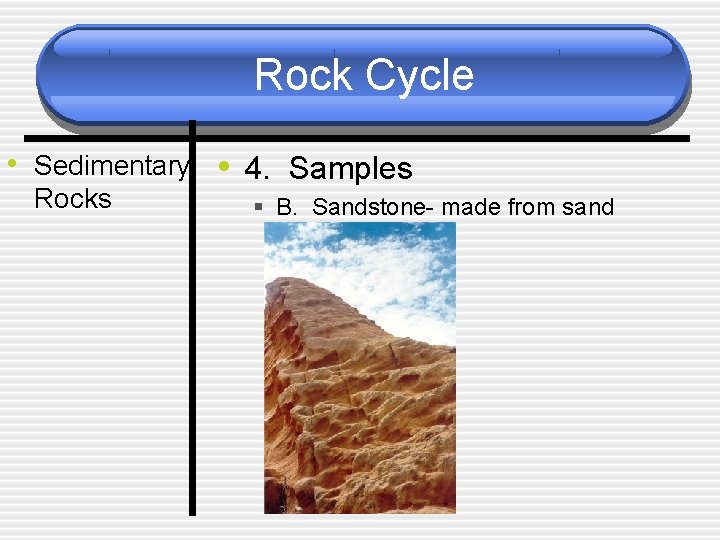
Rock Cycle • Sedimentary • 4. Samples Rocks § B. Sandstone- made from sand
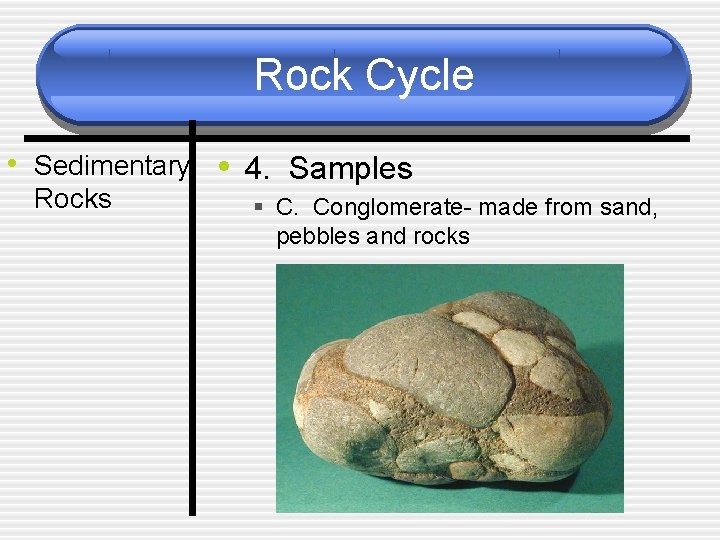
Rock Cycle • Sedimentary • 4. Samples Rocks § C. Conglomerate- made from sand, pebbles and rocks
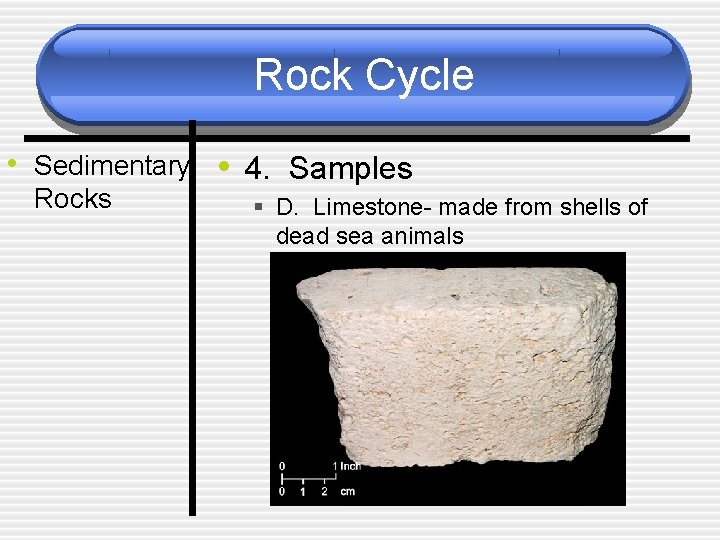
Rock Cycle • Sedimentary • 4. Samples Rocks § D. Limestone- made from shells of dead sea animals
Sedimentary Rocks • See if you can pick samples of shale, sandstone, conglomerate, limestone out of your mineral kit § Do not use the key to help you! § Use your memory of the powerpoint pictures!
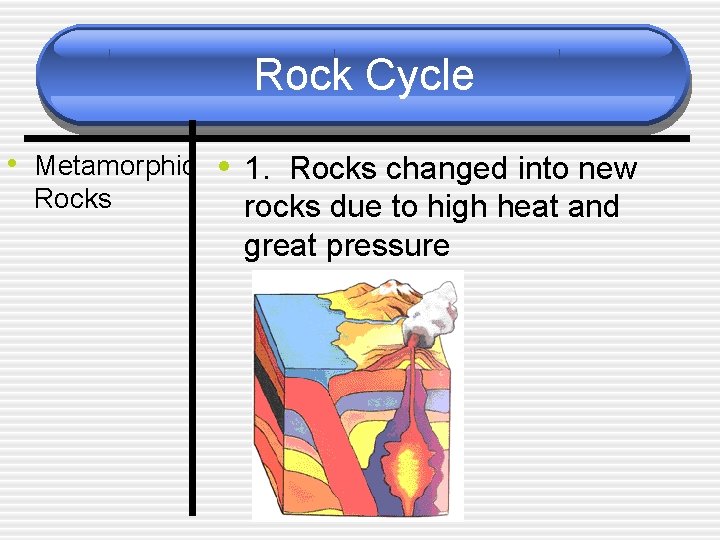
Rock Cycle • Metamorphic • 1. Rocks changed into new Rocks rocks due to high heat and great pressure
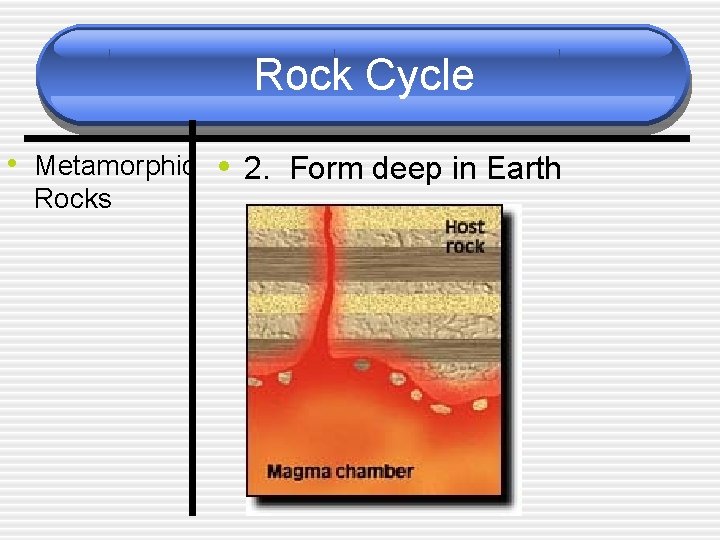
Rock Cycle • Metamorphic • 2. Form deep in Earth Rocks
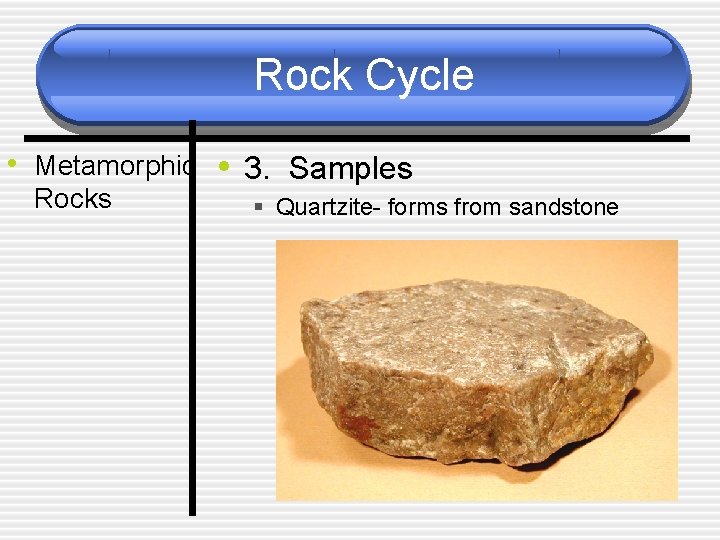
Rock Cycle • Metamorphic • 3. Samples Rocks § Quartzite- forms from sandstone
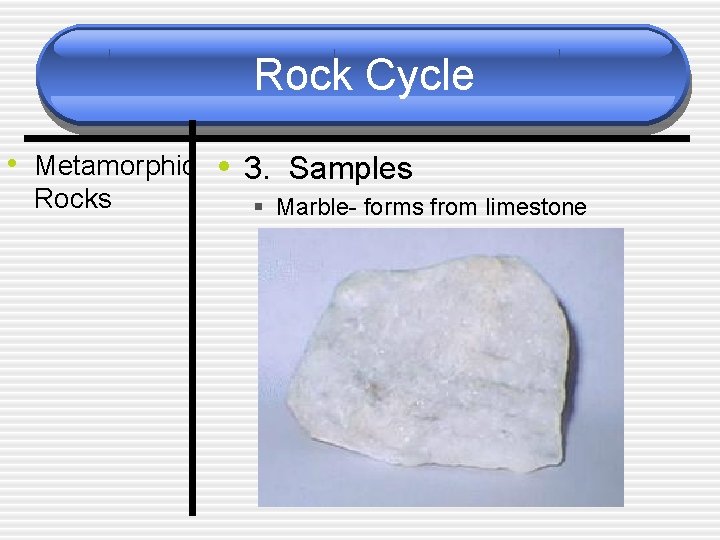
Rock Cycle • Metamorphic • 3. Samples Rocks § Marble- forms from limestone
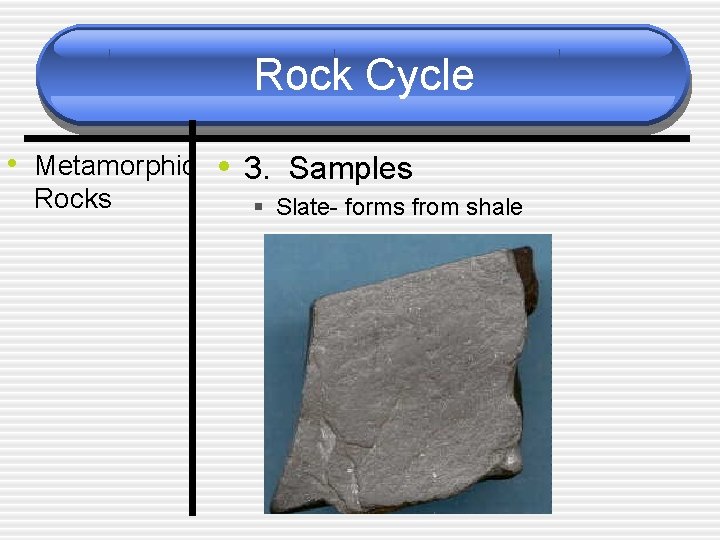
Rock Cycle • Metamorphic • 3. Samples Rocks § Slate- forms from shale
Metamorphic Rocks • See if you can pick samples of quartzite, marble and slate out of your mineral kit § Do not use the key to help you! § Use your memory of the powerpoint pictures!
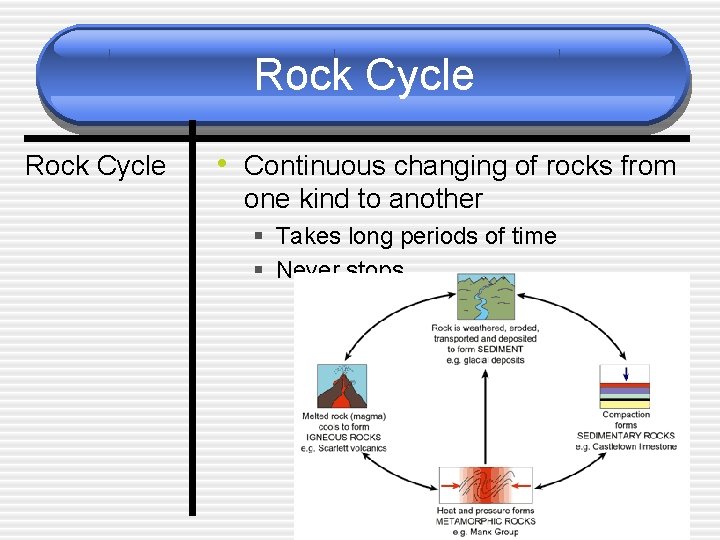
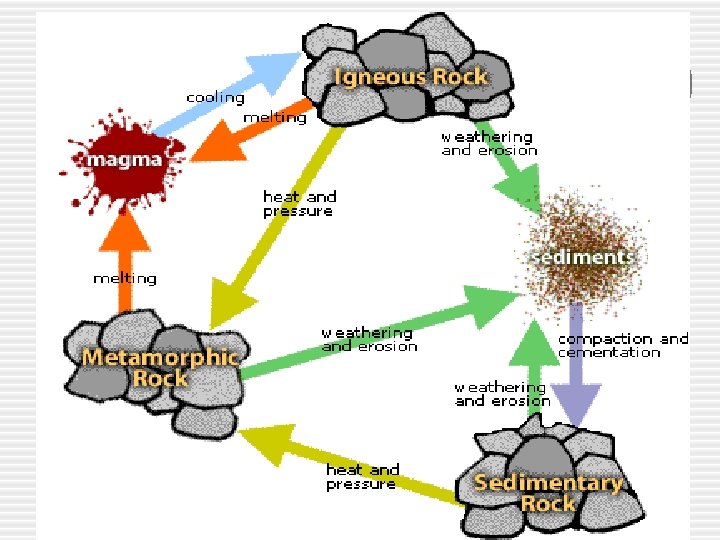
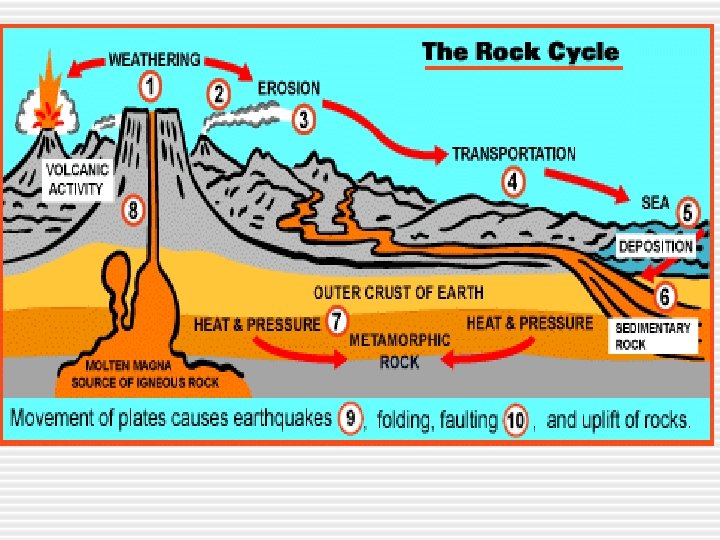
Rock Cycle • Continuous changing of rocks from one kind to another § Takes long periods of time § Never stops
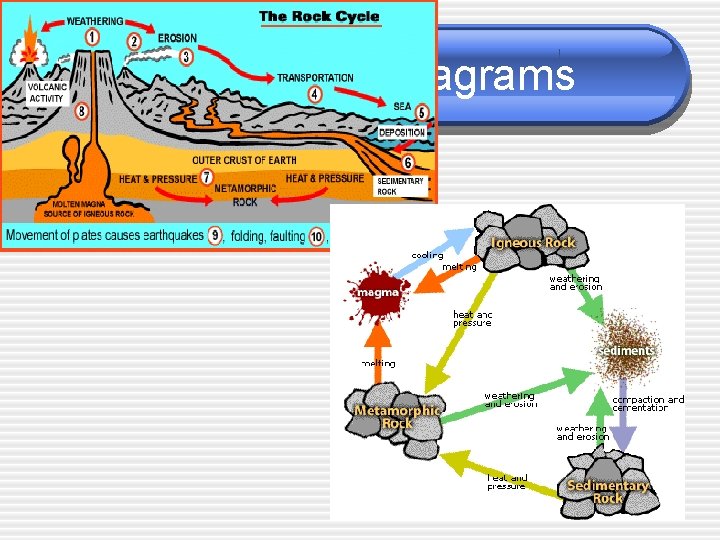
Rock Cycle Diagrams
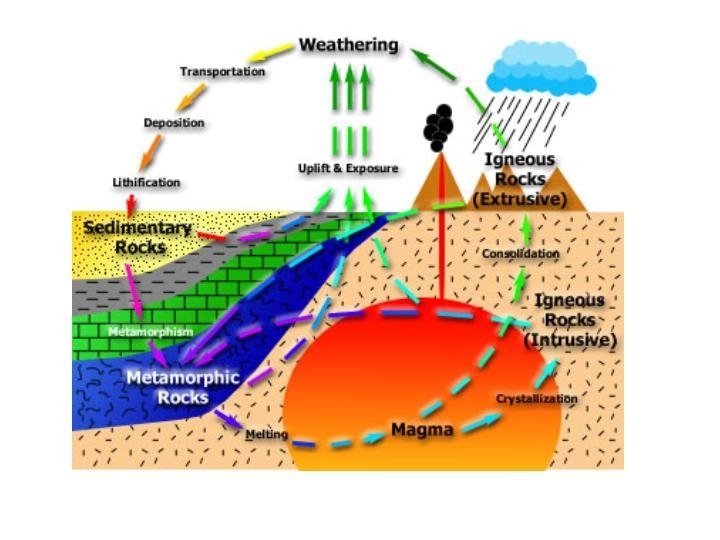
Rock Cycle Diagrams
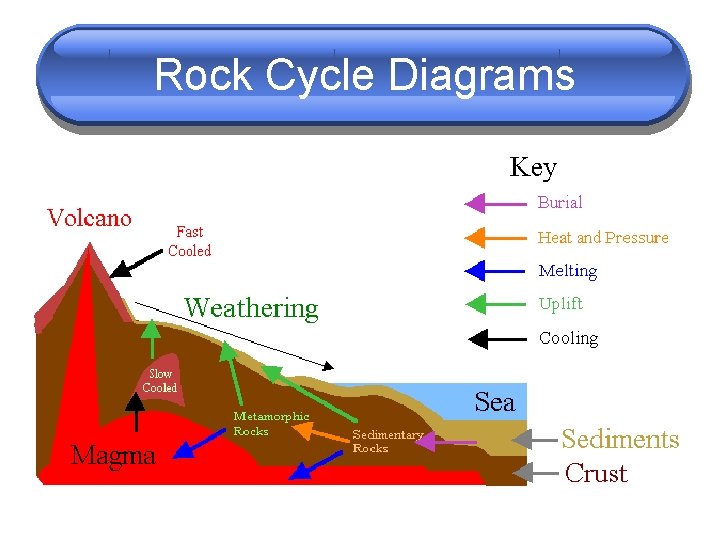
Rock Cycle Diagrams
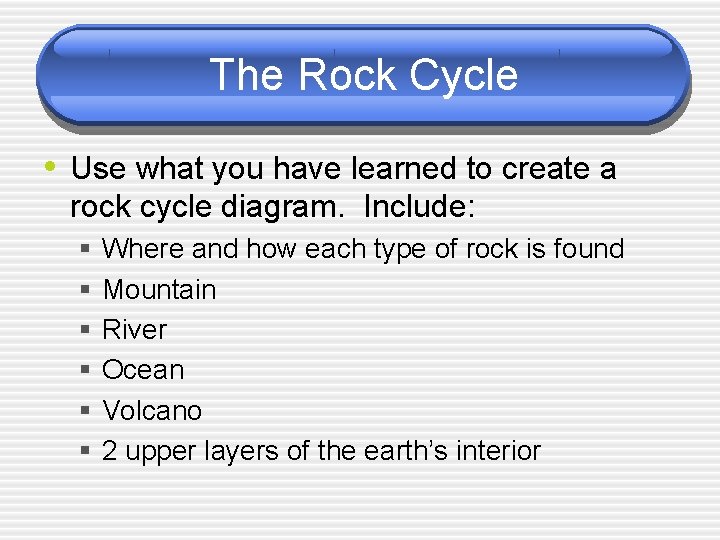
The Rock Cycle • Use what you have learned to create a rock cycle diagram. Include: § § § Where and how each type of rock is found Mountain River Ocean Volcano 2 upper layers of the earth’s interior
Identifying Rocks • Pull rocks numbers 3, 4 out of the rock kit. • Observe each rock • Determine whether the rock is most likely • igneous, sedimentary or metamorphic Support your answer with evidence

Interactive Websites • Interactive Rock Cycle Animation
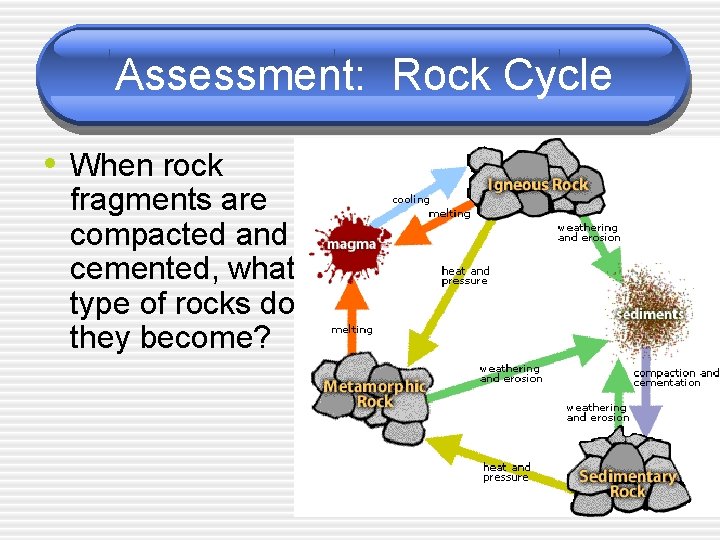
Assessment: Rock Cycle • When rock fragments are compacted and cemented, what type of rocks do they become?
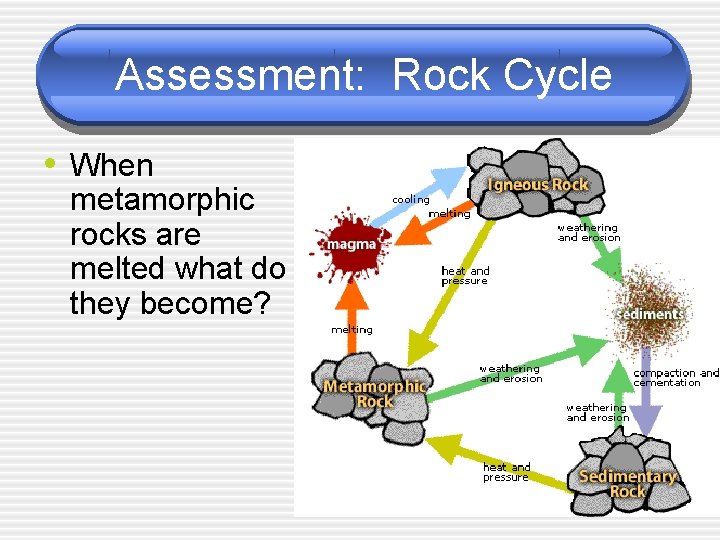
Assessment: Rock Cycle • When metamorphic rocks are melted what do they become?
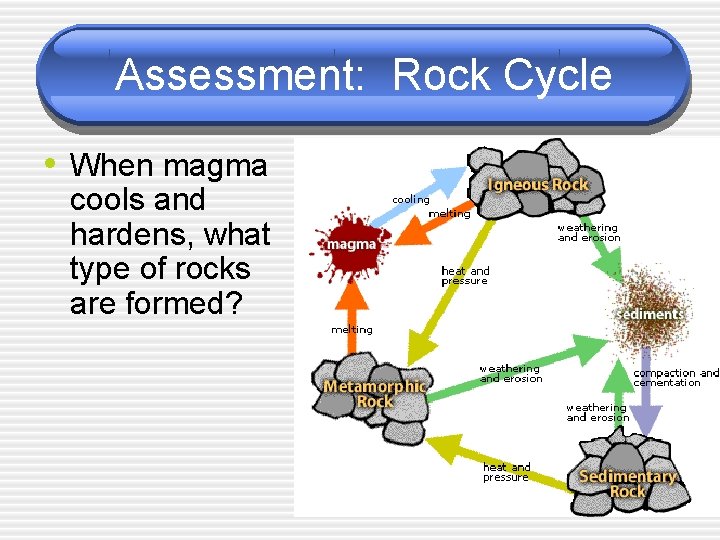
Assessment: Rock Cycle • When magma cools and hardens, what type of rocks are formed?
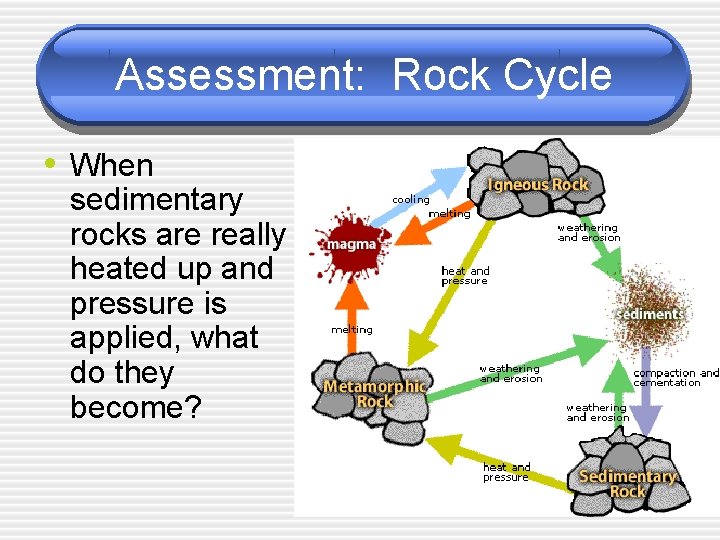
Assessment: Rock Cycle • When sedimentary rocks are really heated up and pressure is applied, what do they become?
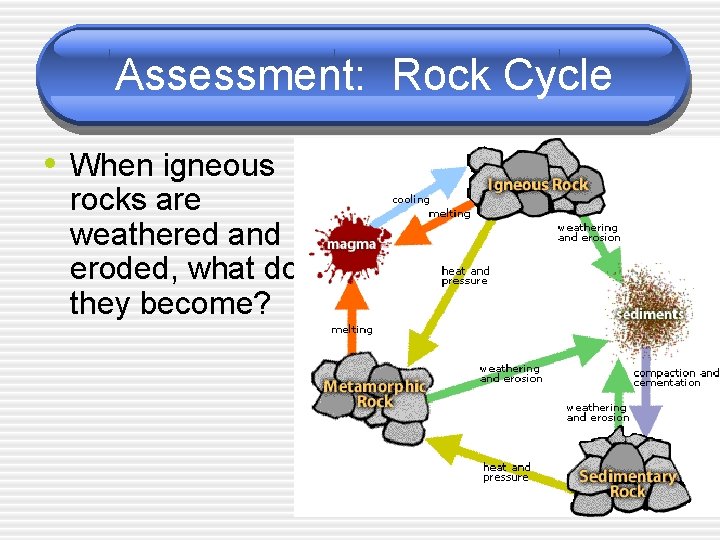
Assessment: Rock Cycle • When igneous rocks are weathered and eroded, what do they become?
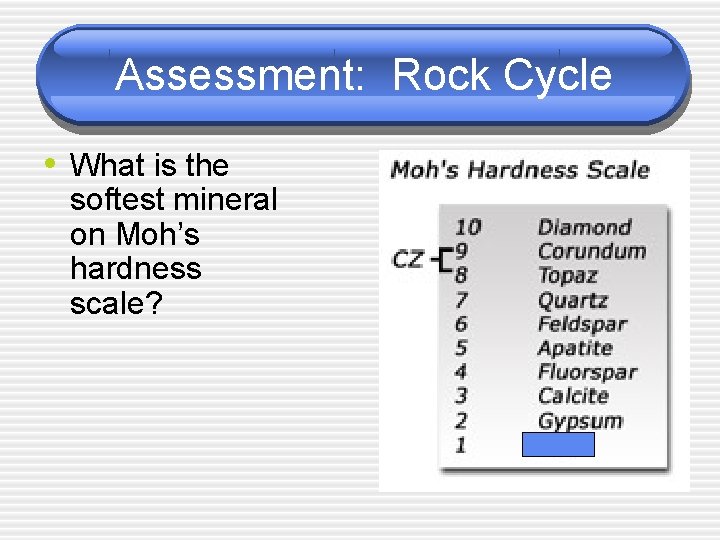
Assessment: Rock Cycle • What is the softest mineral on Moh’s hardness scale?
Assessment: Rock Cycle • The breaking of a mineral along smooth, definite surfaces is called?
Assessment: Rock Cycle • The way in which a mineral reflect light from its surface is its?
Assessment: Rock Cycle • What are atleast 5 mineral properties/tests used to identify minerals?
Assessment: Rock Cycle • Relate the cooling rate of magma to the crystal size in igneous rocks
Assessment: Rock Cycle • The gemstone opal is a sedimentary rock that consists of microscopic balls of silica cemented together by water. Explain how an opalized clam shell may have formed.
Assessment: Rock Cycle • Obsidian and diorite are both igneous rocks. Obsidian looks like black glass. At a distance, diorite is dark gray; up close, it becomes clear that it is made of black, gray and white grains. How do you account for the differences in these two rocks?
Assessment: Rock Cycle • Suppose you have found a large mass of igneous rock between layers of sedimentary rock. Between the bottom of the igneous rock and the sedimentary rock you observe a thin layer of quartzite. The igneous rock itself is fine grained and very dark. What can you infer about the igneous formation’s history?
- Slides: 48