
THE ROARING TWENTIES overview The 1920 s a

- Slides: 15
THE ROARING TWENTIES
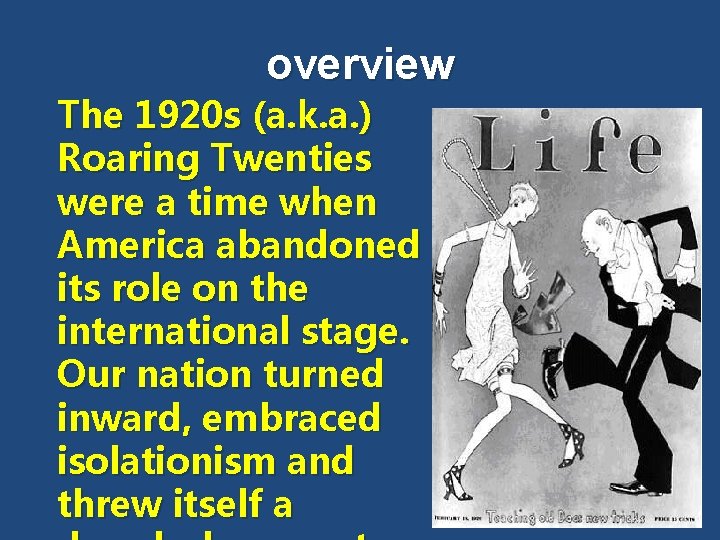
overview The 1920 s (a. k. a. ) Roaring Twenties were a time when America abandoned its role on the international stage. Our nation turned inward, embraced isolationism and threw itself a
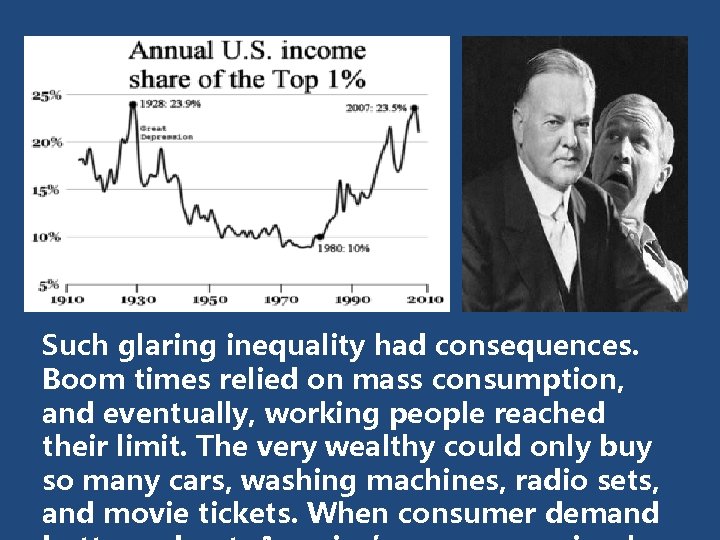
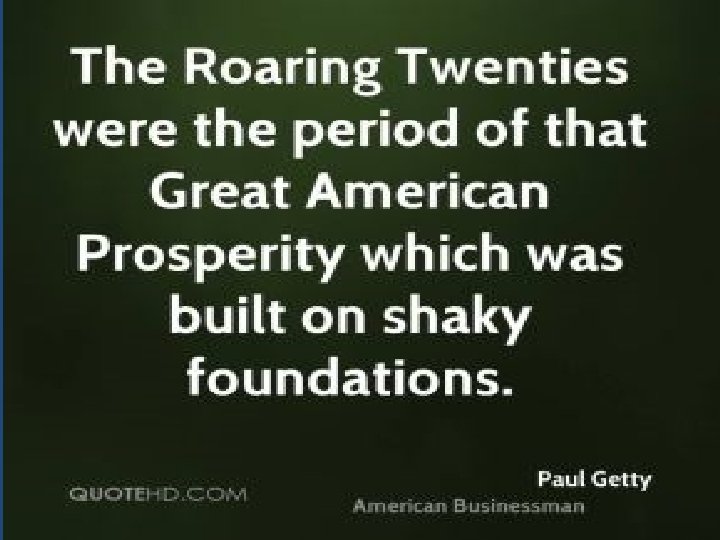
The twenties were a gilded age. Even amid the great prosperity and excess of the decade, America’s economy was fundamentally weak. Over 40 percent of Americans got by on less than $1, 500 each year, which economists cited as the minimum family subsistence level. The income of the top 0. 1 percent of families equaled the income of the bottom 42 percent. Most did not experience the prosperity of the Roaring Twenties.
Such glaring inequality had consequences. Boom times relied on mass consumption, and eventually, working people reached their limit. The very wealthy could only buy so many cars, washing machines, radio sets, and movie tickets. When consumer demand
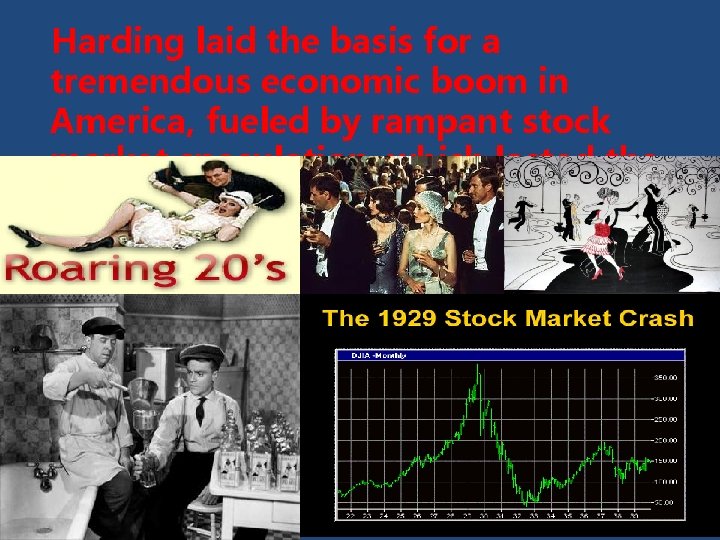
THE ROARING TWENTIES was a time when there was tremendous economic growth and remarkable cultural progress. It was a period of great excitement and accomplishment in our nation's history on many levels: in politics, business, literature and music. From 1921 to 1929, the Dow Jones Industrial Average (a measure of stock market performance) rose from 60 to an astounding 400, an increase of more than six-fold.
The period started with the election of Warren Harding as president. He was a conservative who supported Prohibition and opposed the League of Nations. Harding opposed immigration, and with his support the tightest restrictions on immigration in the nation's history
The Washington Naval Conference (1921 -22) was an international treaty that limited arms in navies worldwide, delayed war in Pacific, and temporarily protected China against imperialistic Japan. America reduced its
Harding laid the basis for a tremendous economic boom in America, fueled by rampant stock market speculation, which lasted the entire decade of the 1920 s.
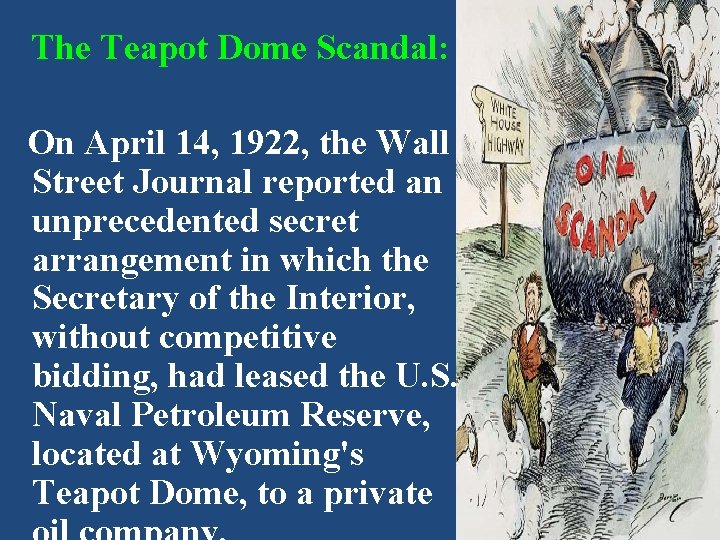
The Teapot Dome Scandal: On April 14, 1922, the Wall Street Journal reported an unprecedented secret arrangement in which the Secretary of the Interior, without competitive bidding, had leased the U. S. Naval Petroleum Reserve, located at Wyoming's Teapot Dome, to a private
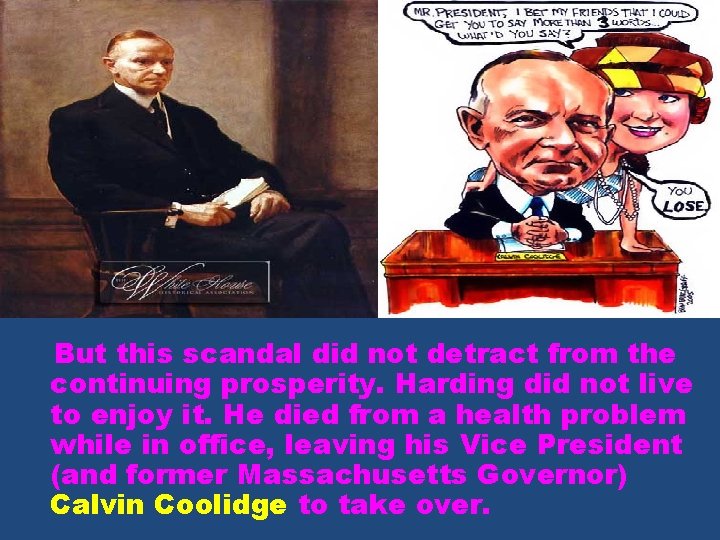
But this scandal did not detract from the continuing prosperity. Harding did not live to enjoy it. He died from a health problem while in office, leaving his Vice President (and former Massachusetts Governor) Calvin Coolidge to take over.
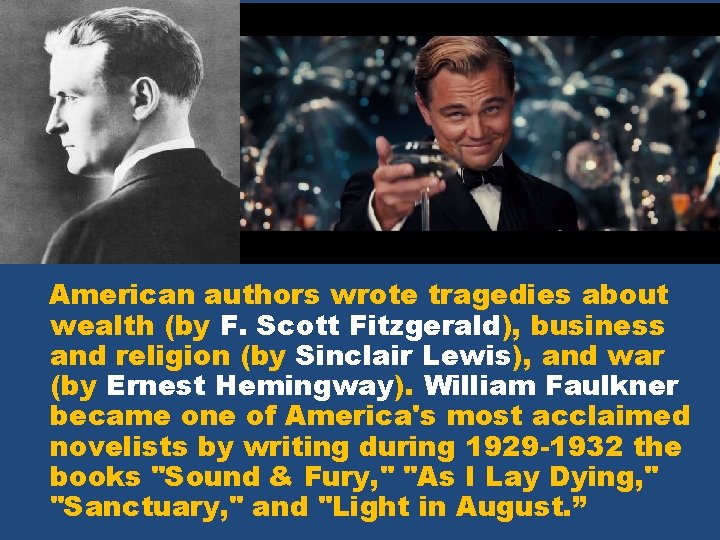
American authors wrote tragedies about wealth (by F. Scott Fitzgerald), business and religion (by Sinclair Lewis), and war (by Ernest Hemingway). William Faulkner became one of America's most acclaimed novelists by writing during 1929 -1932 the books "Sound & Fury, " "As I Lay Dying, " "Sanctuary, " and "Light in August. ”
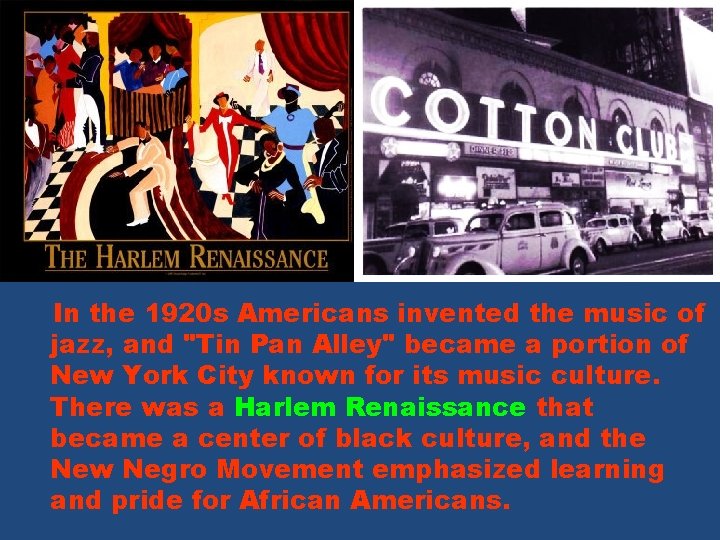
In the 1920 s Americans invented the music of jazz, and "Tin Pan Alley" became a portion of New York City known for its music culture. There was a Harlem Renaissance that became a center of black culture, and the New Negro Movement emphasized learning and pride for African Americans.
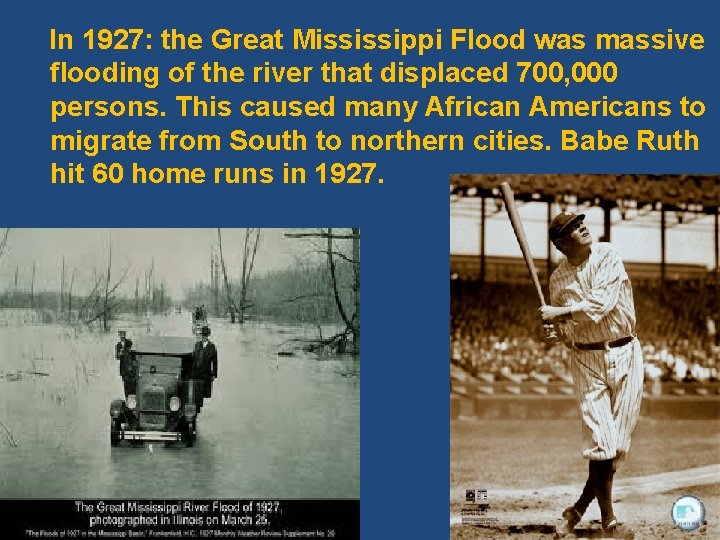
In 1927: the Great Mississippi Flood was massive flooding of the river that displaced 700, 000 persons. This caused many African Americans to migrate from South to northern cities. Babe Ruth hit 60 home runs in 1927.
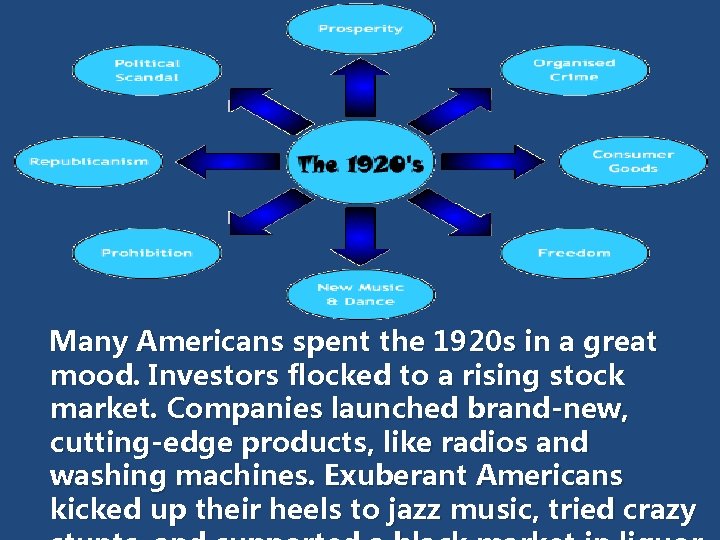
Many Americans spent the 1920 s in a great mood. Investors flocked to a rising stock market. Companies launched brand-new, cutting-edge products, like radios and washing machines. Exuberant Americans kicked up their heels to jazz music, tried crazy