
The Roaring 20s The Economy of the 1920s
- Slides: 8
The Roaring 20’s The Economy of the 1920’s
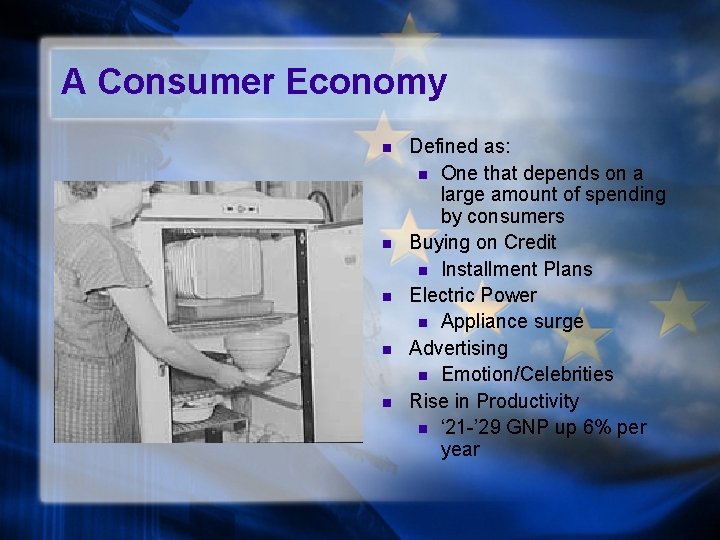
A Consumer Economy n n n Defined as: n One that depends on a large amount of spending by consumers Buying on Credit n Installment Plans Electric Power n Appliance surge Advertising n Emotion/Celebrities Rise in Productivity n ‘ 21 -’ 29 GNP up 6% per year
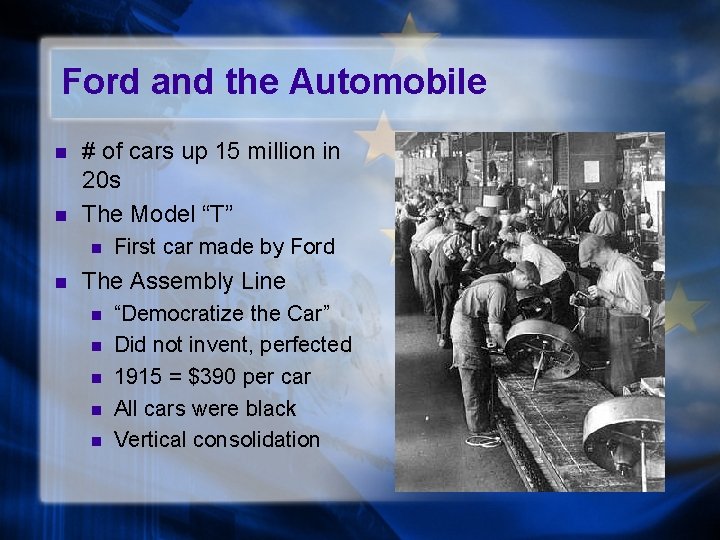
Ford and the Automobile n n # of cars up 15 million in 20 s The Model “T” n n First car made by Ford The Assembly Line n n n “Democratize the Car” Did not invent, perfected 1915 = $390 per car All cars were black Vertical consolidation
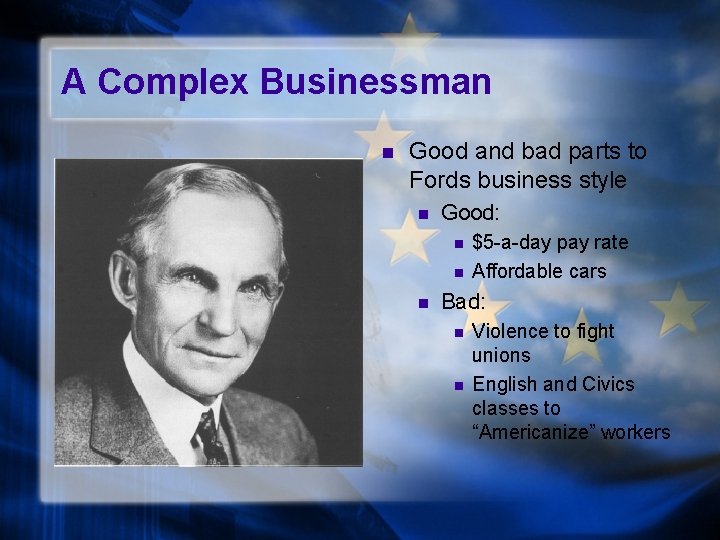
A Complex Businessman n Good and bad parts to Fords business style n Good: n n n $5 -a-day pay rate Affordable cars Bad: n n Violence to fight unions English and Civics classes to “Americanize” workers
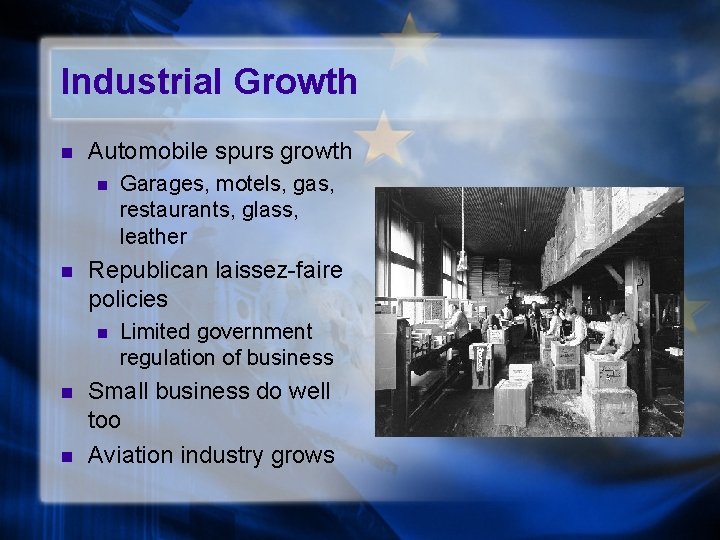
Industrial Growth n Automobile spurs growth n n Republican laissez-faire policies n n n Garages, motels, gas, restaurants, glass, leather Limited government regulation of business Small business do well too Aviation industry grows
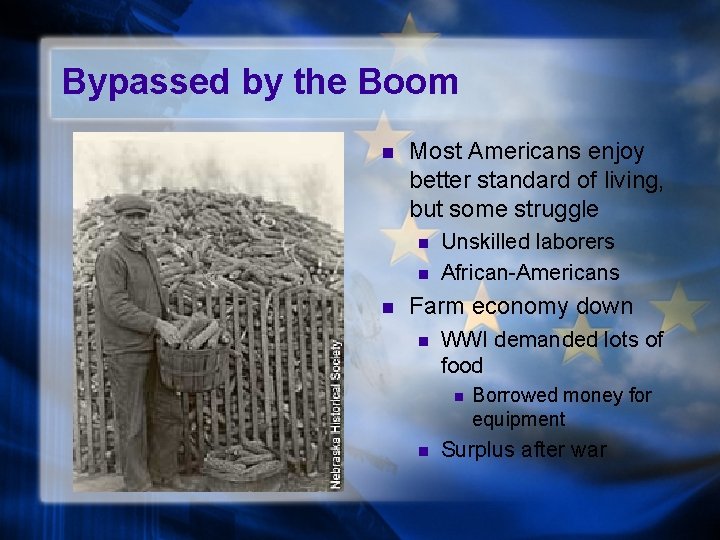
Bypassed by the Boom n Most Americans enjoy better standard of living, but some struggle n n n Unskilled laborers African-Americans Farm economy down n WWI demanded lots of food n n Borrowed money for equipment Surplus after war
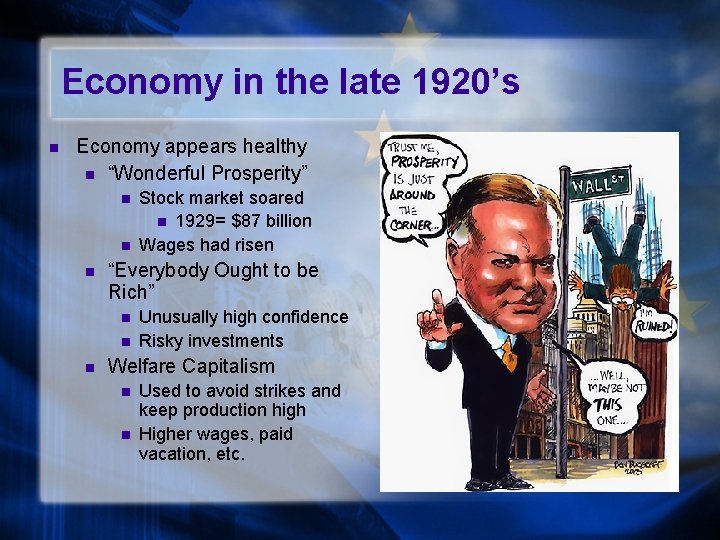
Economy in the late 1920’s n Economy appears healthy n “Wonderful Prosperity” n n n “Everybody Ought to be Rich” n n n Stock market soared n 1929= $87 billion Wages had risen Unusually high confidence Risky investments Welfare Capitalism n n Used to avoid strikes and keep production high Higher wages, paid vacation, etc.
Economic Danger Signs n Uneven Prosperity n n Personal Debt n n Credit spending believing investments would pay for them Playing the Stock Market n n The rich got richer: 200 companies control 49% Speculation: high risk investing Buying on Margin: Buy stock w/ borrowed money Too Many Goods, too Little Demand Trouble for Farmers and Workers n Farmers couldn’t pay debts: 6, 000 banks close