
THE ROAD TO THE CONSTITUTION The Virginia Plan




- Slides: 22
THE ROAD TO THE CONSTITUTION The Virginia Plan and The New Jersey Plan
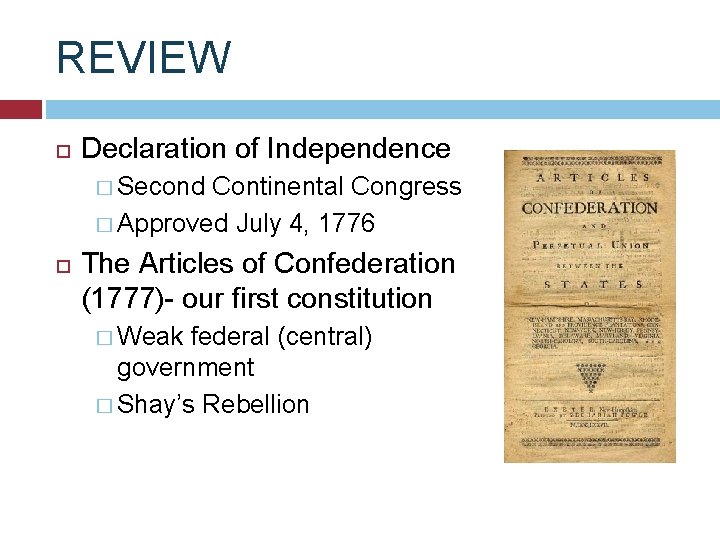
REVIEW Declaration of Independence � Second Continental Congress � Approved July 4, 1776 The Articles of Confederation (1777)- our first constitution � Weak federal (central) government � Shay’s Rebellion
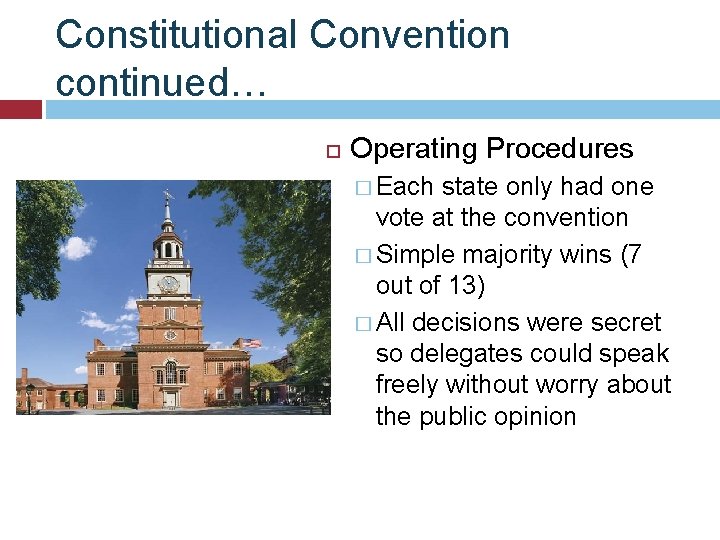
Problems with the Articles… All States sent delegates to Philadelphia to fix the Articles… Except RI because they did not want a stronger central government This meeting was named the Constitutional Convention (Started May 25, 1787) at Independence Hall- Philadelphia, PA
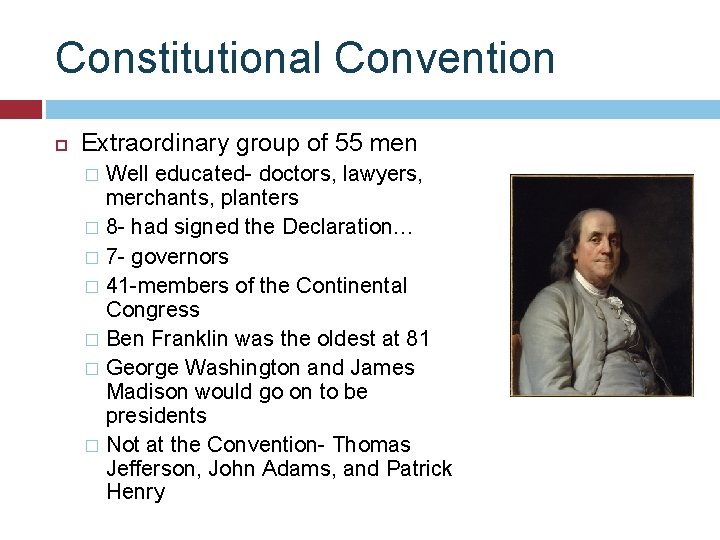
Constitutional Convention Extraordinary group of 55 men Well educated- doctors, lawyers, merchants, planters � 8 - had signed the Declaration… � 7 - governors � 41 -members of the Continental Congress � Ben Franklin was the oldest at 81 � George Washington and James Madison would go on to be presidents � Not at the Convention- Thomas Jefferson, John Adams, and Patrick Henry �
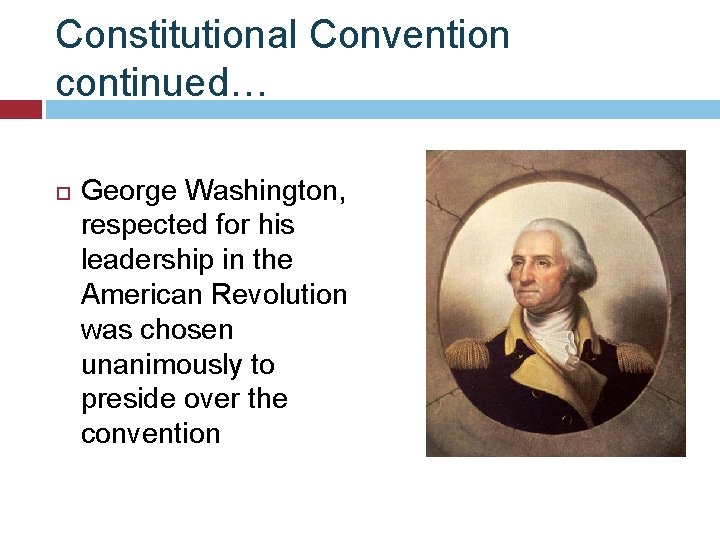
Constitutional Convention continued… George Washington, respected for his leadership in the American Revolution was chosen unanimously to preside over the convention
Constitutional Convention continued… Operating Procedures � Each state only had one vote at the convention � Simple majority wins (7 out of 13) � All decisions were secret so delegates could speak freely without worry about the public opinion
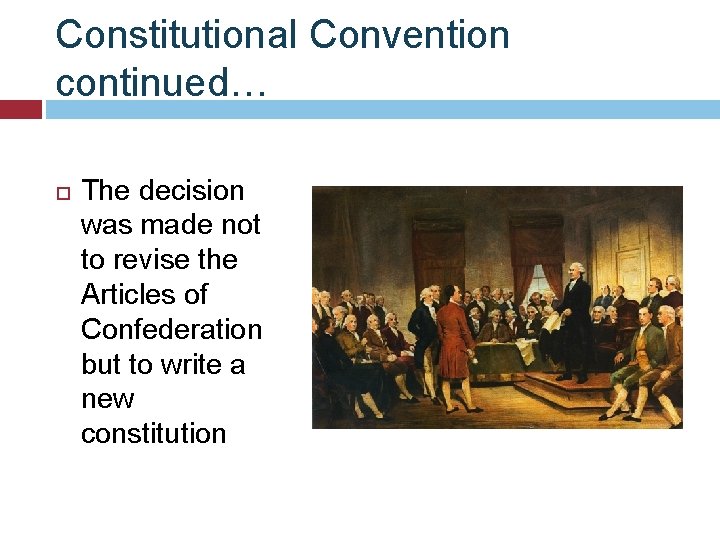
Constitutional Convention continued… The decision was made not to revise the Articles of Confederation but to write a new constitution
The Virginia Plan Written by James Madison 3 branches of government Bicameral Legislation (2 houses) Representation by population of states Separation of powers Favored larger states
The New Jersey Plan William Patterson presented NJ Plan 3 branches of government Unicameral legislation (1 house) Equal representation- one vote for each state no matter the size Favored the smaller state
THE BIG QUESTION How would representation in congress be decided? By population or by equal representation?
The Great Compromise was the plan of Roger Sherman from Connecticut Bicameral Legislature (2 Houses in Congress) � The House of Representatives- determined by the population (favored larger states) � The Senate- equal representation (favored smaller states)
Another BIG QUESTION Would slaves be counted as a part of the population of a state?
The Three-Fifths Compromise Southern States said- Slaves should be a part of the population (this gives southern states more representatives in congress) Northern States said- Slaves cannot vote or participate in government, they should not be a part of the population (giving the southern states fewer representatives)
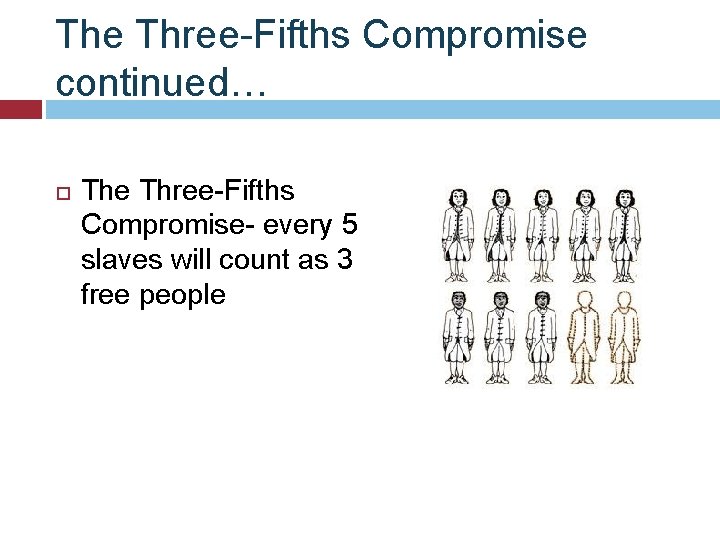
The Three-Fifths Compromise continued… The Three-Fifths Compromise- every 5 slaves will count as 3 free people
AGAIN Another BIG QUESTION How to elect the President? Will the people vote directly or will the legislature choose?
Electoral College Representatives chosen by each state then choose the President Each state is given different numbers of electors in the Electoral College based on population
One Last BIG QUESTION Would the government regulate foreign trade and trade between states?
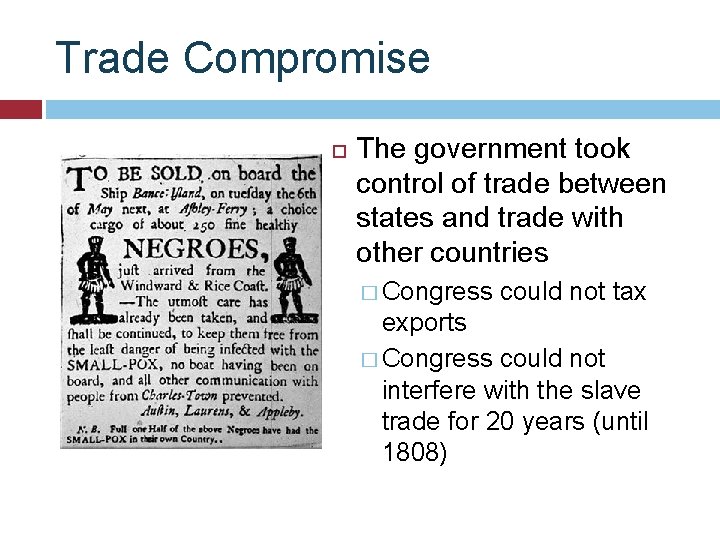
Trade Compromise The government took control of trade between states and trade with other countries � Congress could not tax exports � Congress could not interfere with the slave trade for 20 years (until 1808)
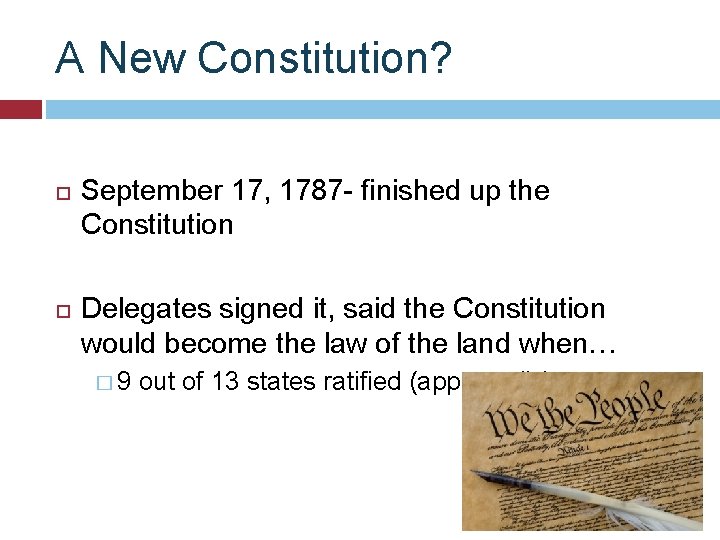
A New Constitution? September 17, 1787 - finished up the Constitution Delegates signed it, said the Constitution would become the law of the land when… � 9 out of 13 states ratified (approved) it
Reaction to the new Constitution Federalist- supported the new Constitution; favored a strong central government Antifederalist- opposed the new Constitution; favored more power with the states; did not want individual rights limited � Wanted to add a Bill of Rights- for individual freedoms *Federalist Published Federalist Papers to promote their ideas
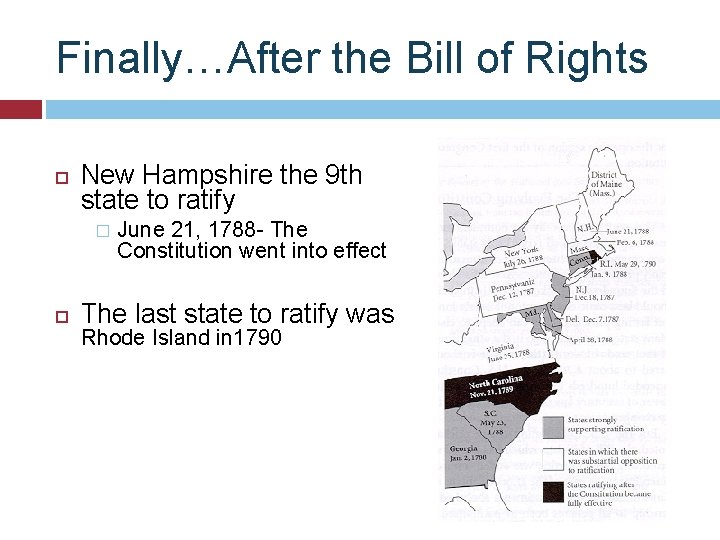
Finally…After the Bill of Rights New Hampshire the 9 th state to ratify � June 21, 1788 - The Constitution went into effect The last state to ratify was Rhode Island in 1790