
The Road to the American Civil War 1850s
![The “Know-Nothings” [The American Party] þNativists. þAnti. Catholics. þAntiimmigrants.](https://slidetodoc.com/presentation_image_h2/fe84359413b9f6139fc58db0f0d1c7fb/image-12.jpg "The “Know-Nothings” [The American Party] þNativists. þAnti. Catholics. þAntiimmigrants.")


- Slides: 30
The Road to the American Civil War 1850’s
424 -429
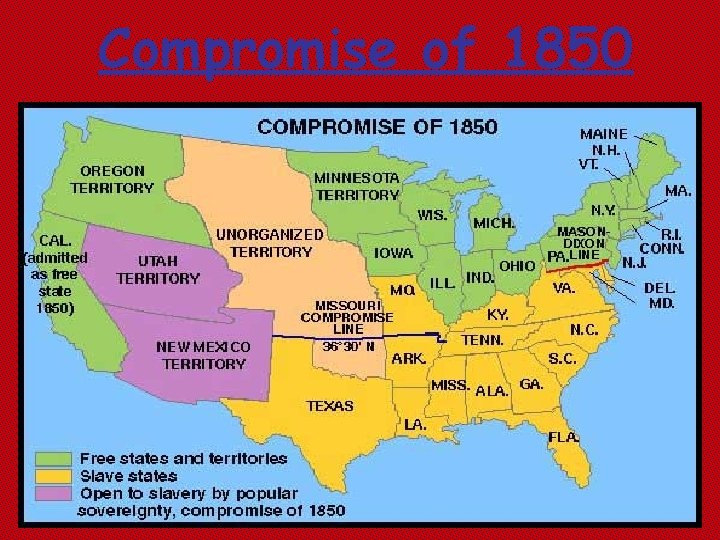
Compromise of 1850
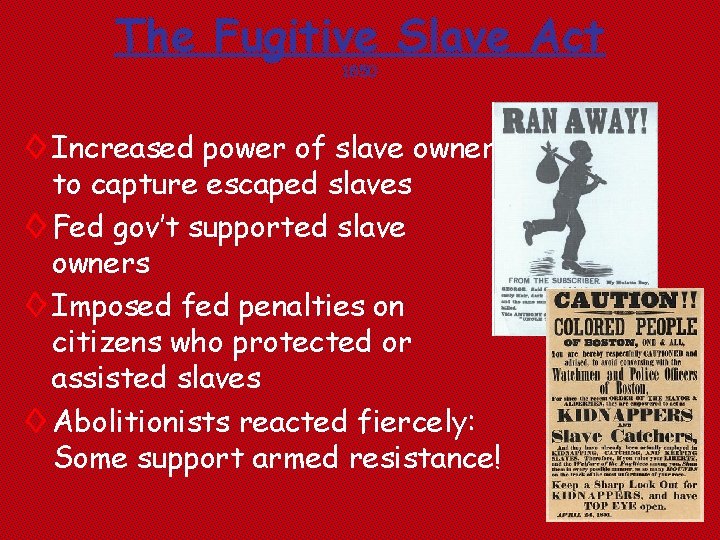
The Fugitive Slave Act 1850 ◊ Increased power of slave owners to capture escaped slaves ◊ Fed gov’t supported slave owners ◊ Imposed fed penalties on citizens who protected or assisted slaves ◊ Abolitionists reacted fiercely: Some support armed resistance!
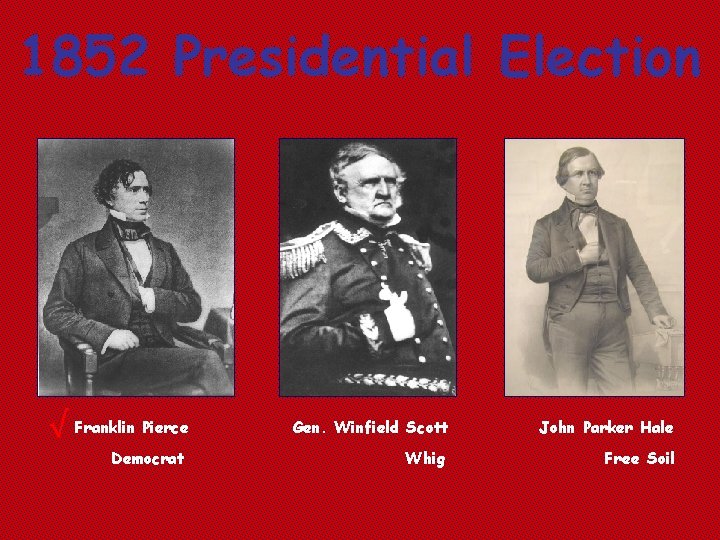
1852 Presidential Election √ Franklin Pierce Gen. Winfield Scott John Parker Hale Democrat Whig Free Soil
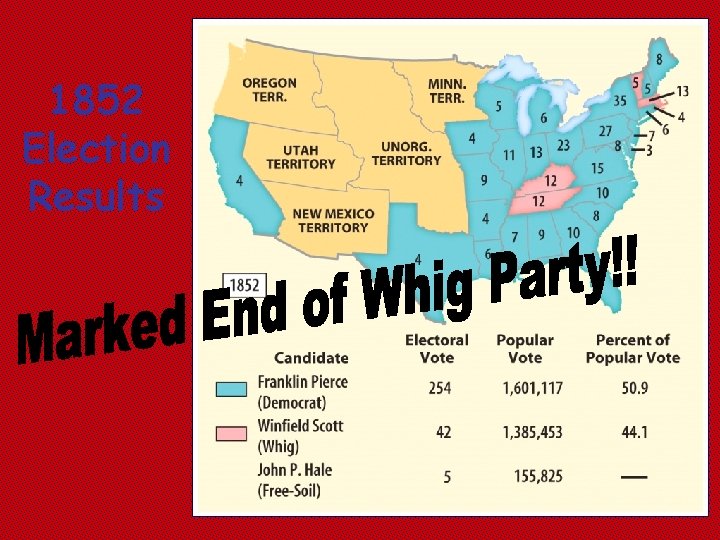
1852 Election Results
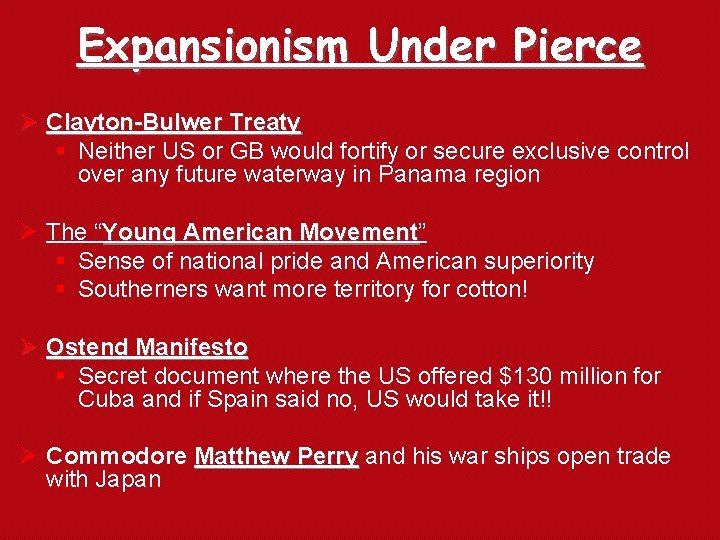
Expansionism Under Pierce Ø Clayton-Bulwer Treaty § Neither US or GB would fortify or secure exclusive control over any future waterway in Panama region Ø The “Young American Movement” Movement § Sense of national pride and American superiority § Southerners want more territory for cotton! Ø Ostend Manifesto § Secret document where the US offered $130 million for Cuba and if Spain said no, US would take it!! Ø Commodore Matthew Perry and his war ships open trade with Japan
429 -434
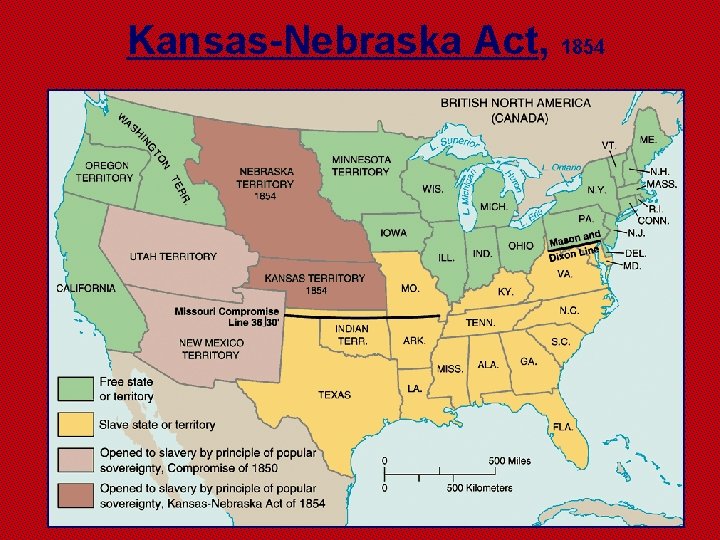
Kansas-Nebraska Act, 1854
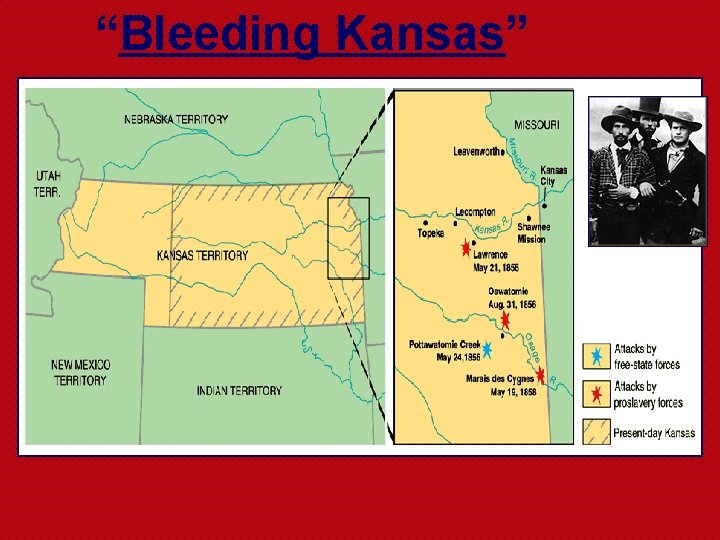
“Bleeding Kansas”
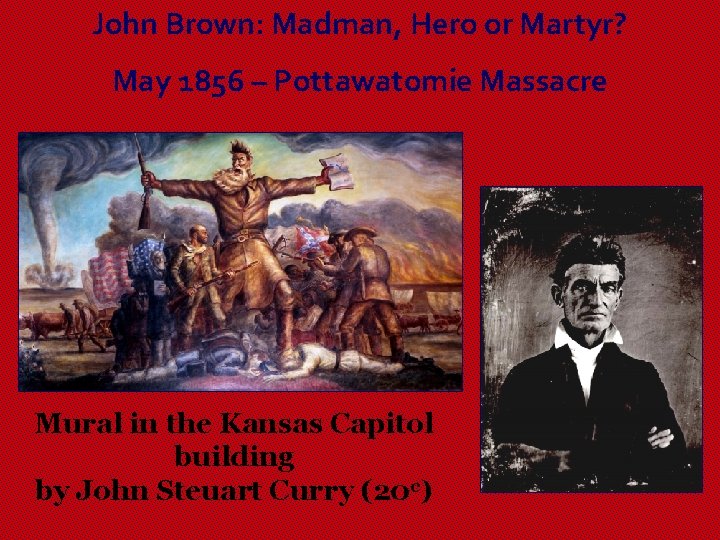
John Brown: Madman, Hero or Martyr? May 1856 – Pottawatomie Massacre Mural in the Kansas Capitol building by John Steuart Curry (20 c)
The “Know-Nothings” [The American Party] þNativists. þAnti. Catholics. þAntiimmigrants.
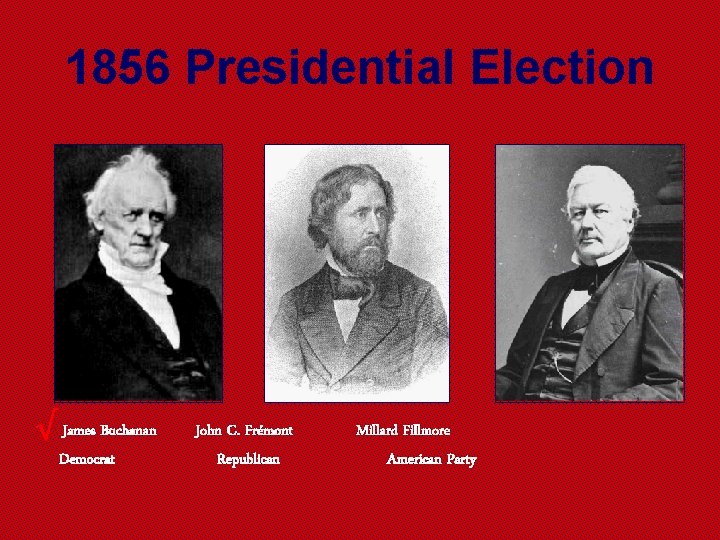
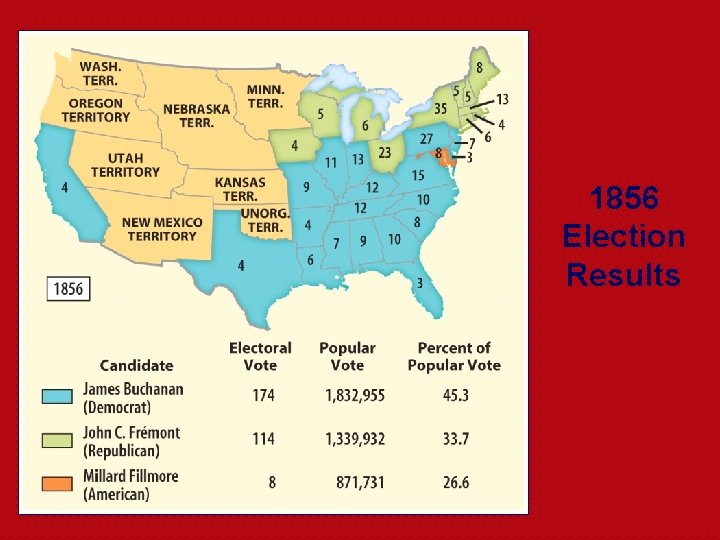
1856 Presidential Election √ James Buchanan Democrat John C. Frémont Republican Millard Fillmore American Party
1856 Election Results
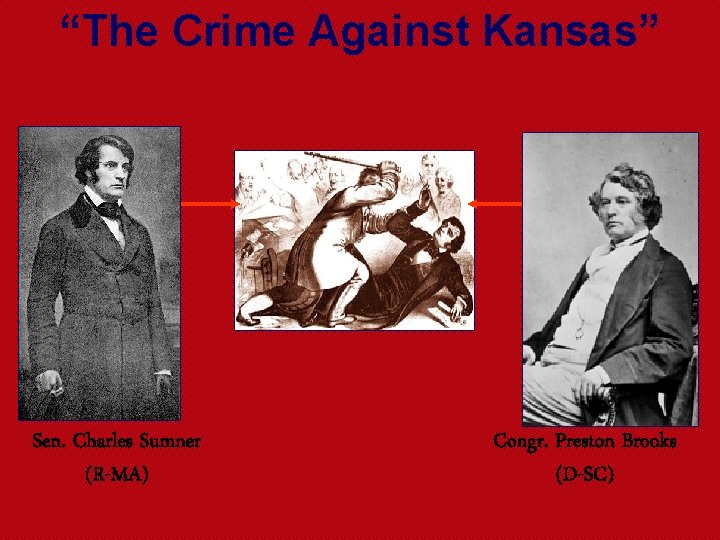
“The Crime Against Kansas” Sen. Charles Sumner (R-MA) Congr. Preston Brooks (D-SC)
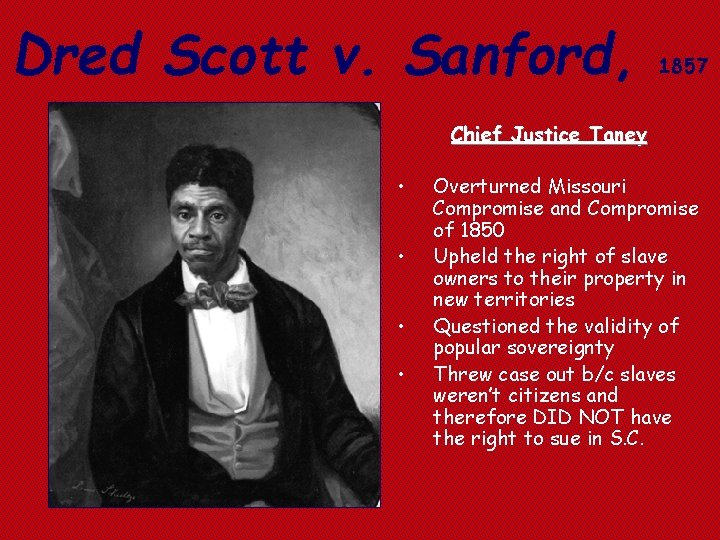
Dred Scott v. Sanford, 1857 Chief Justice Taney • • Overturned Missouri Compromise and Compromise of 1850 Upheld the right of slave owners to their property in new territories Questioned the validity of popular sovereignty Threw case out b/c slaves weren’t citizens and therefore DID NOT have the right to sue in S. C.
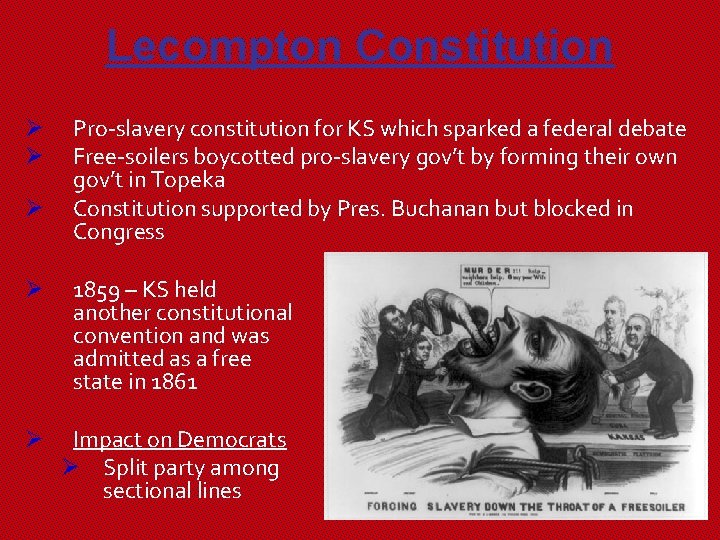
Lecompton Constitution Ø Ø Ø Pro-slavery constitution for KS which sparked a federal debate Free-soilers boycotted pro-slavery gov’t by forming their own gov’t in Topeka Constitution supported by Pres. Buchanan but blocked in Congress Ø 1859 – KS held another constitutional convention and was admitted as a free state in 1861 Ø Impact on Democrats Ø Split party among sectional lines
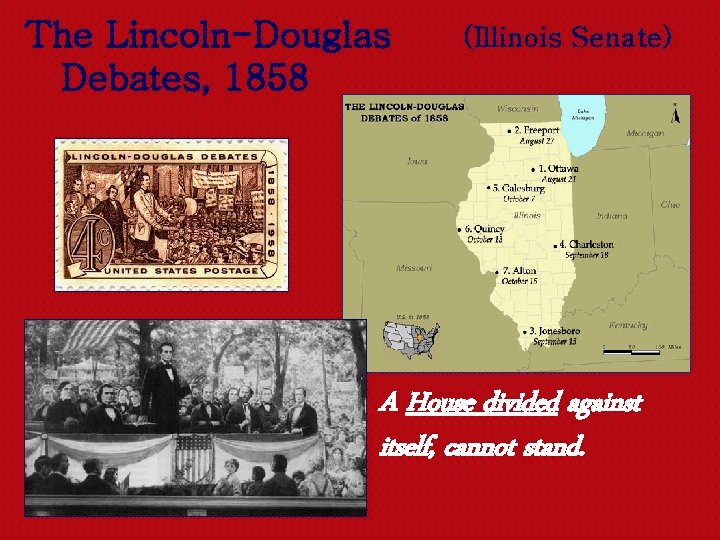
The Lincoln-Douglas Debates, 1858 (Illinois Senate) A House divided against itself, cannot stand.
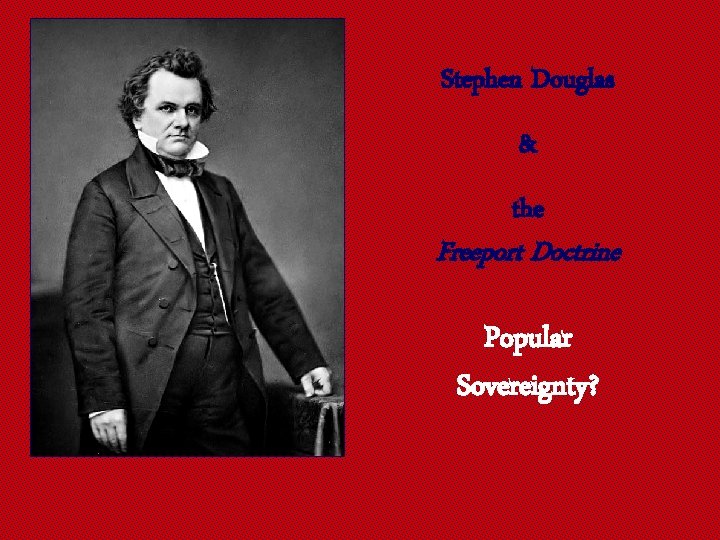
Stephen Douglas & the Freeport Doctrine Popular Sovereignty?
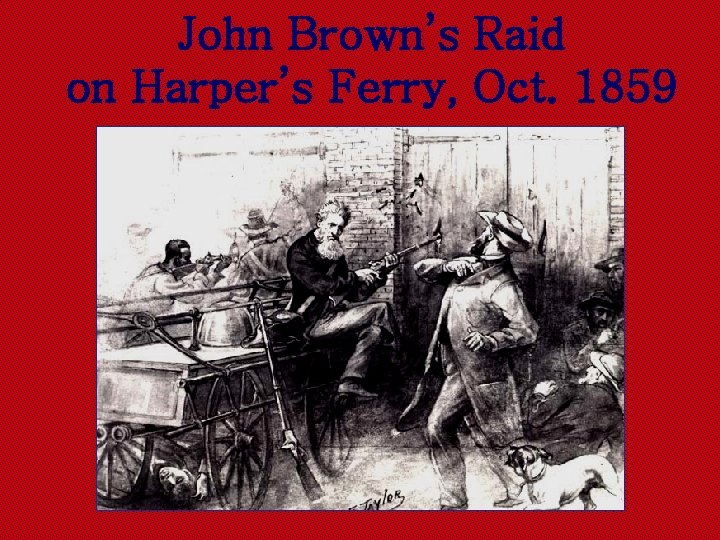
John Brown’s Raid on Harper’s Ferry, Oct. 1859
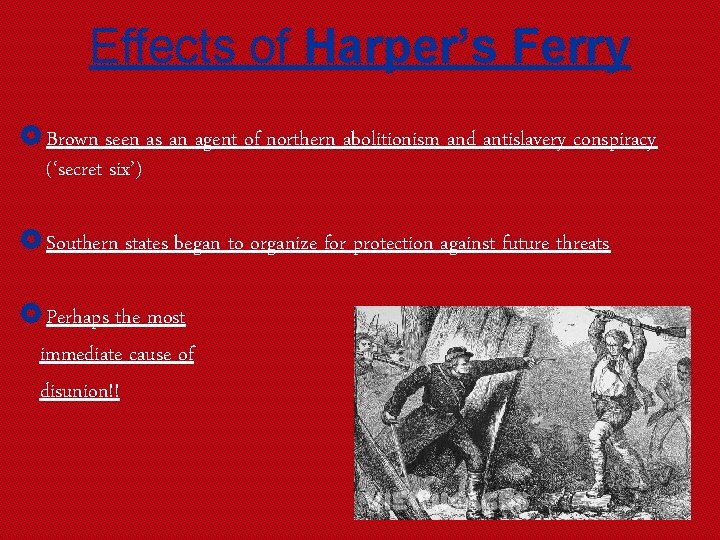
Effects of Harper’s Ferry £ Brown seen as an agent of northern abolitionism and antislavery conspiracy (‘secret six’) £ Southern states began to organize for protection against future threats £ Perhaps the most immediate cause of disunion!!
438 -443
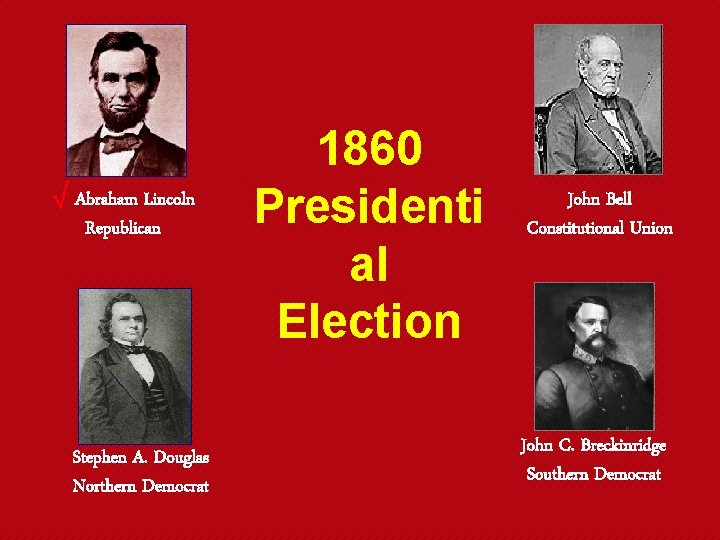
√ Abraham Lincoln Republican Stephen A. Douglas Northern Democrat 1860 Presidenti al Election John Bell Constitutional Union John C. Breckinridge Southern Democrat
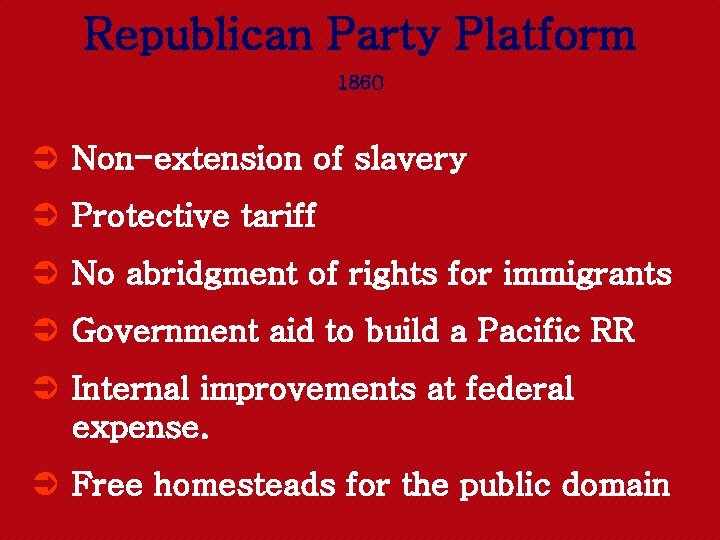
Republican Party Platform 1860 Ü Non-extension of slavery Ü Protective tariff Ü No abridgment of rights for immigrants Ü Government aid to build a Pacific RR Ü Internal improvements at federal expense. Ü Free homesteads for the public domain
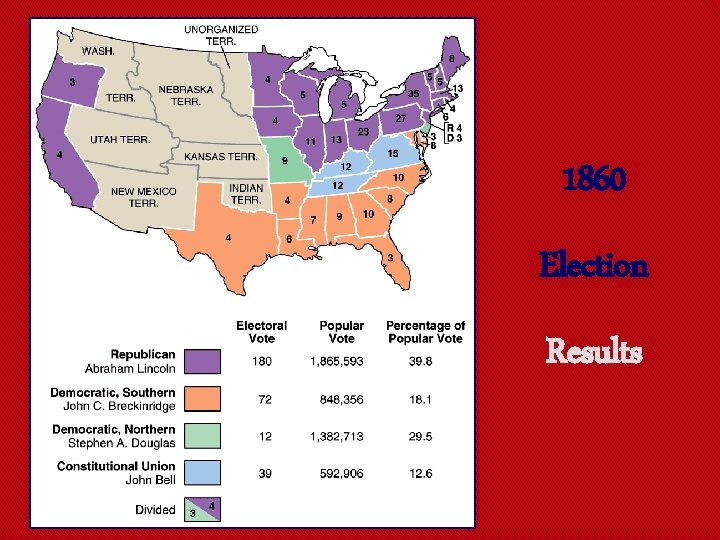
1860 Election Results
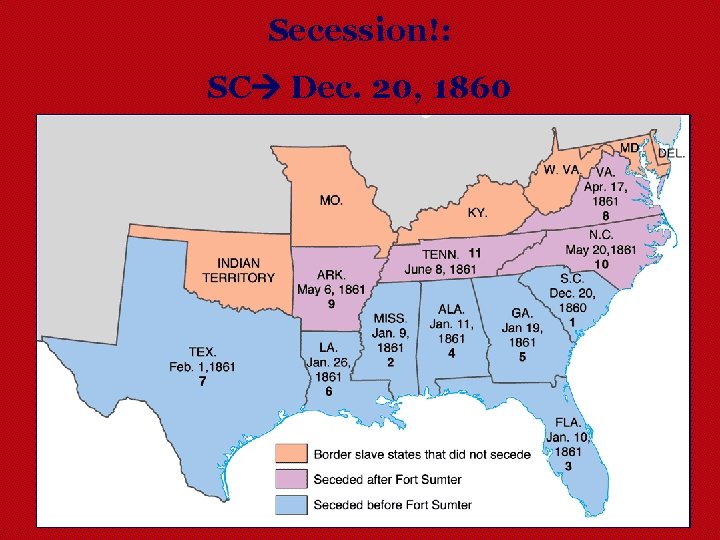
Secession!: SC Dec. 20, 1860
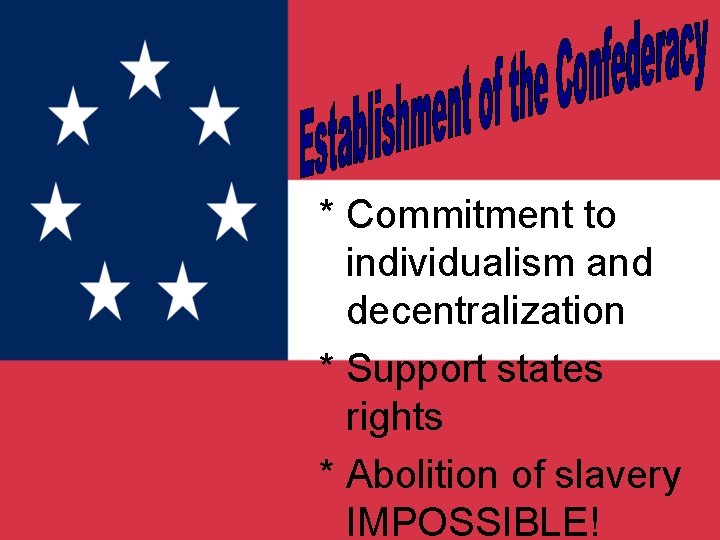
* Commitment to individualism and decentralization * Support states rights * Abolition of slavery IMPOSSIBLE!
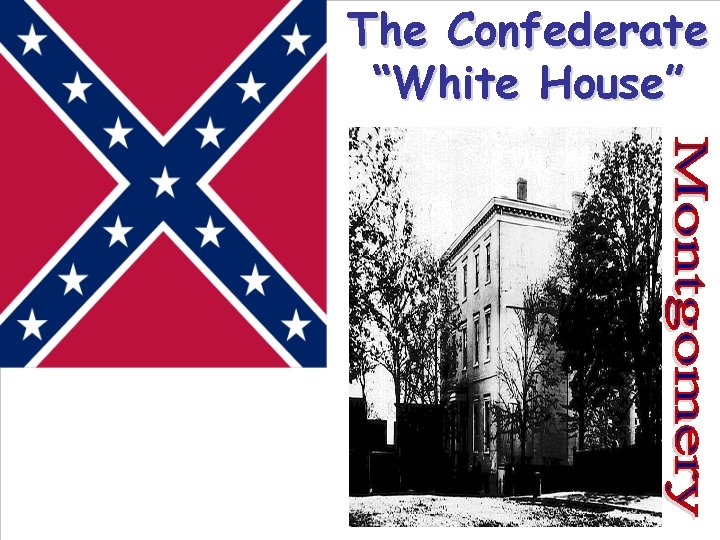
The Confederate “White House”
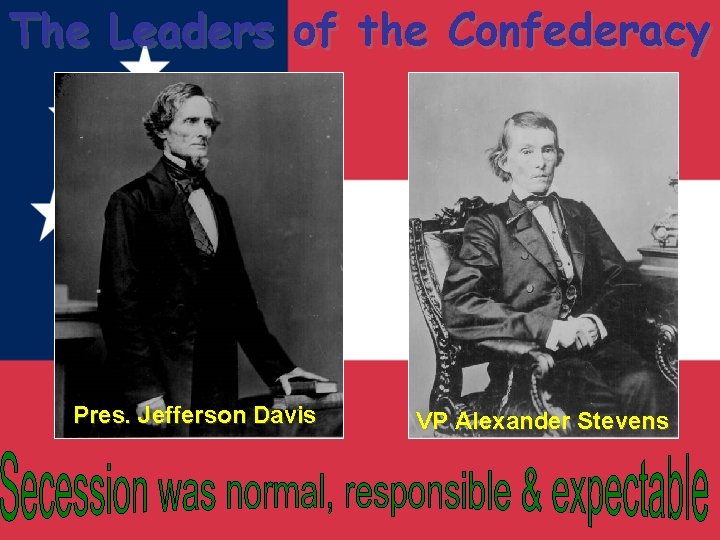
The Leaders of the Confederacy Pres. Jefferson Davis VP Alexander Stevens