
The Road to Independence How Did We Get
- Slides: 9
The Road to Independence How Did We Get Here?
1 st Continental Congress n n September 5, 1774 Philadelphia 56 Delegates; every colony except Georgia Wide range of viewpoints George Washington (VA) n Samuel Adams (MA) n
Measures Adopted n n n Renewed boycott of England Have people arm themselves (Militias) Delegates made direct appeal to King n n Outlined grievances Ended October 26 th n Vowed to meet again in Spring (if need be)
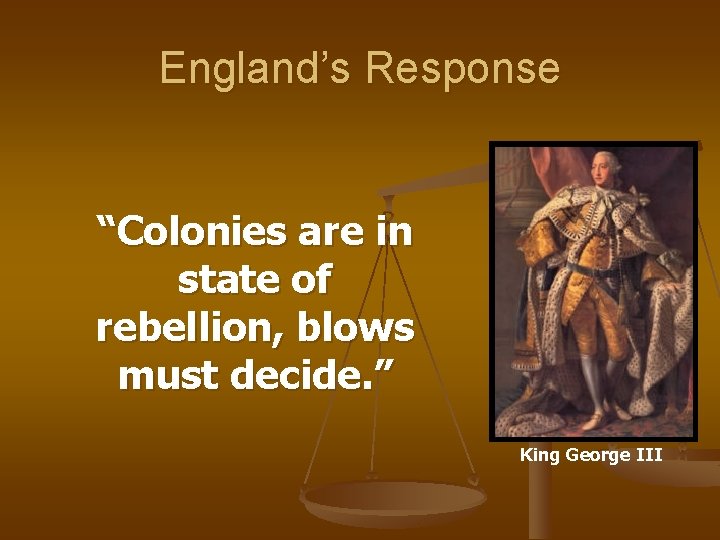
England’s Response “Colonies are in state of rebellion, blows must decide. ” King George III
Lexington/Concord n n n April 19, 1775 700 British troops marched toward Concord to seize supplies England’s “secret plan” was learned Paul Revere made his famous ride Troops went to Lexington; faced 70 armed militia Shots fired: 8 Americans dead; 10 wounded
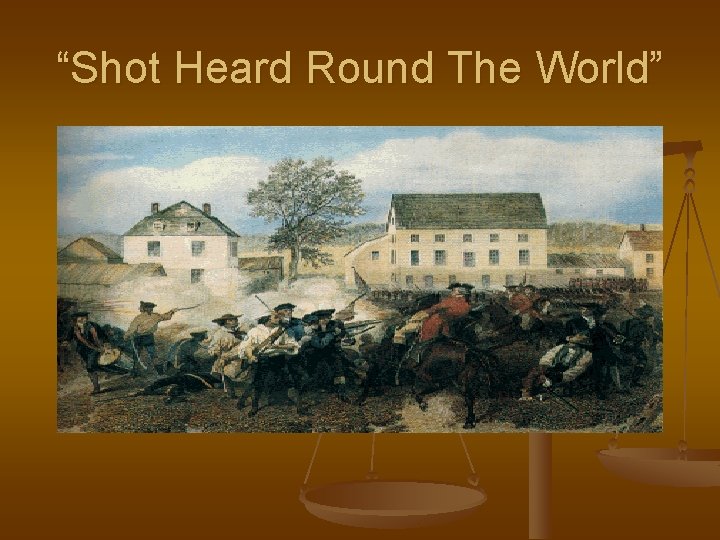
“Shot Heard Round The World”
British Marched on to Concord n n Burned militia supplies When returning to Boston: n n Ambushed by some 4, 000 Patriots Results: 70 British Soldiers Killed n 170 Wounded n
2 nd Continental Congress n n May 1775 Notable additions to this congress n n n Ben Franklin (PA) John Hancock (MA) Thomas Jefferson (VA) Very divided on issues and ideas Some leaned toward Independence Some toward compromise with Britain: n “Increase colonial self-rule”
Olive Branch Petition n n Delegates decided to write this “symbol of peace” Stated colonists continued loyalty to monarch and desire for peace Sent to King George and waited for response November 1775: King refused to read it n People realized it was time for war n