
The Road to Continuous Assurance Jason A Gross
- Slides: 29
The Road to Continuous Assurance Jason A. Gross, CPA, CIA, CFE, CISA, ACDA Vice President, Controls Management Siemens Financial Services, Inc.
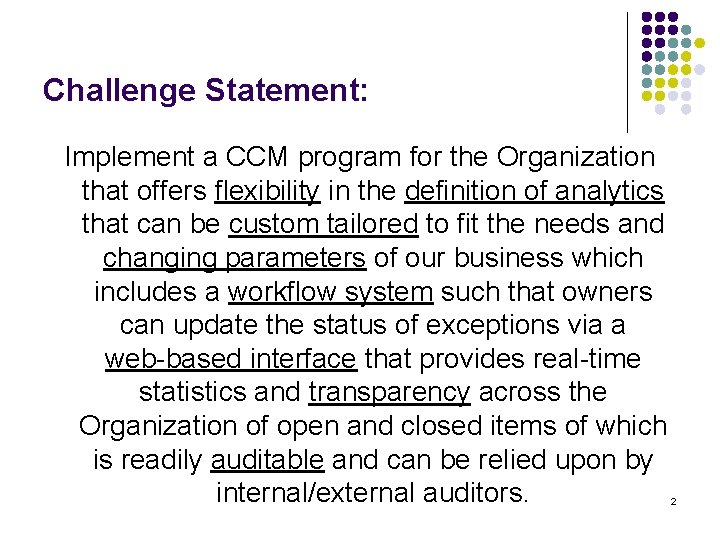
Challenge Statement: Implement a CCM program for the Organization that offers flexibility in the definition of analytics that can be custom tailored to fit the needs and changing parameters of our business which includes a workflow system such that owners can update the status of exceptions via a web-based interface that provides real-time statistics and transparency across the Organization of open and closed items of which is readily auditable and can be relied upon by internal/external auditors. 2
CCM Solution Incorporated the Following: l l l ACL Desktop ACL Audit. Exchange ACL AX Exception 3
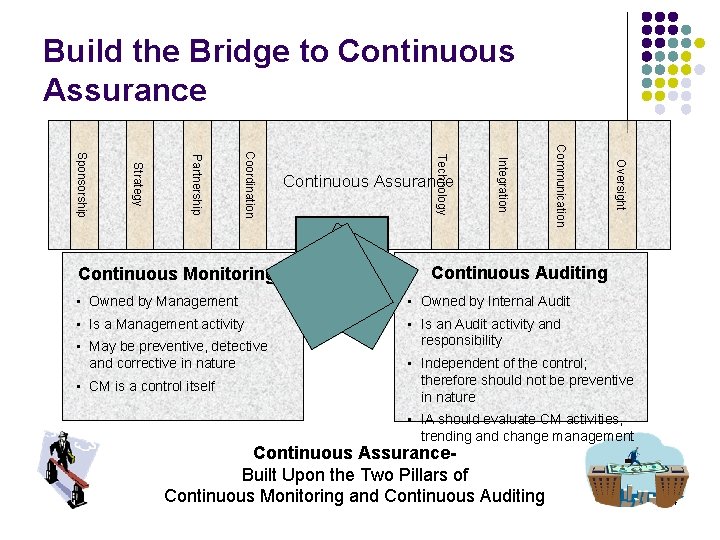
Build the Bridge to Continuous Assurance Continuous Auditing • Owned by Management • Owned by Internal Audit • Is a Management activity • Is an Audit activity and responsibility • May be preventive, detective and corrective in nature • CM is a control itself Oversight Communication Integration Technology Coordination Partnership Strategy Sponsorship Continuous Monitoring Continuous Assurance • Independent of the control; therefore should not be preventive in nature • IA should evaluate CM activities, trending and change management Continuous Assurance. Built Upon the Two Pillars of Continuous Monitoring and Continuous Auditing 4
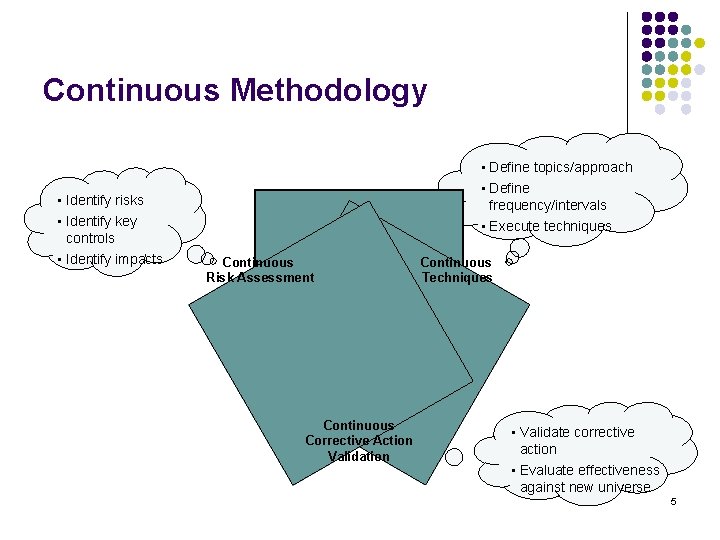
Continuous Methodology • Identify risks • Identify key controls • Identify impacts • Define topics/approach • Define frequency/intervals • Execute techniques Continuous Risk Assessment Continuous Corrective Action Validation Continuous Techniques • Validate corrective action • Evaluate effectiveness against new universe 5
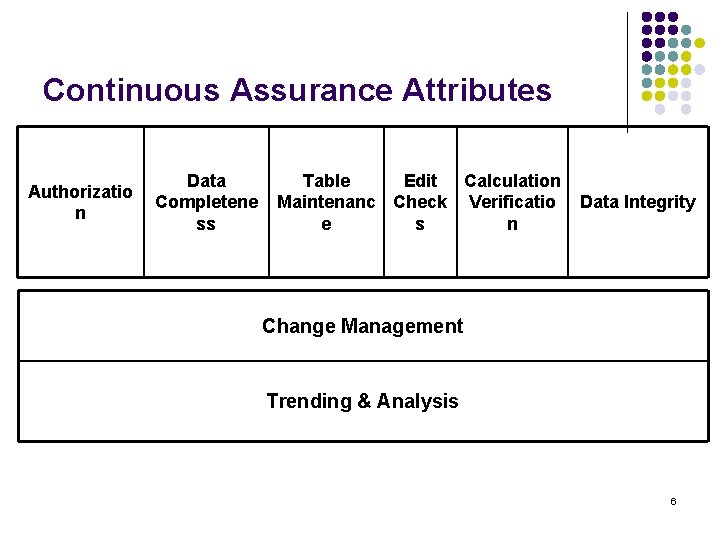
Continuous Assurance Attributes Authorizatio n Data Completene ss Table Edit Calculation Maintenanc Check Verificatio e s n Data Integrity Change Management Trending & Analysis 6
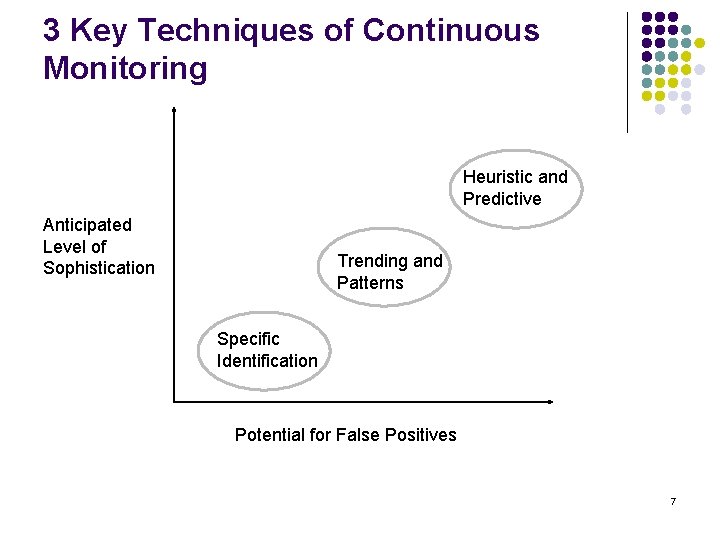
3 Key Techniques of Continuous Monitoring Heuristic and Predictive Anticipated Level of Sophistication Trending and Patterns Specific Identification Potential for False Positives 7
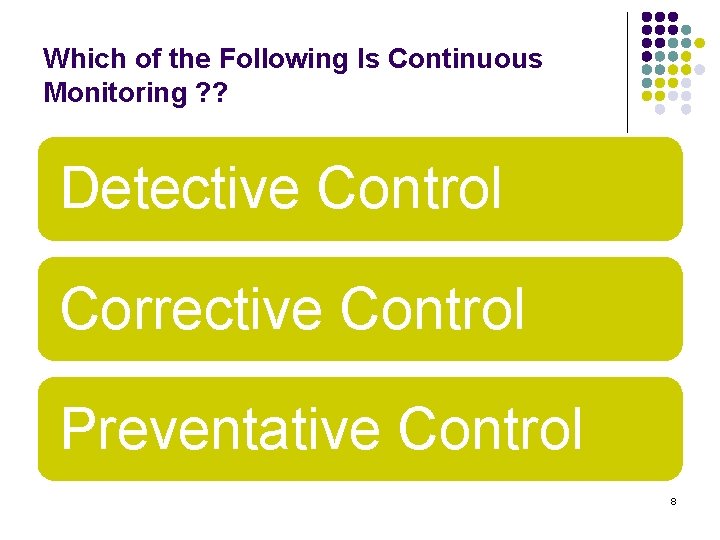
Which of the Following Is Continuous Monitoring ? ? Detective Control Corrective Control Preventative Control 8
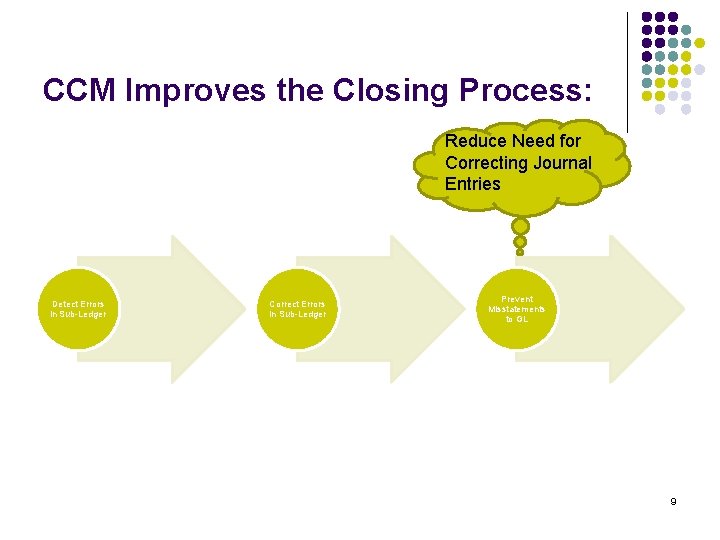
CCM Improves the Closing Process: Reduce Need for Correcting Journal Entries Detect Errors in Sub-Ledger Correct Errors in Sub-Ledger Prevent Misstatements to GL 9
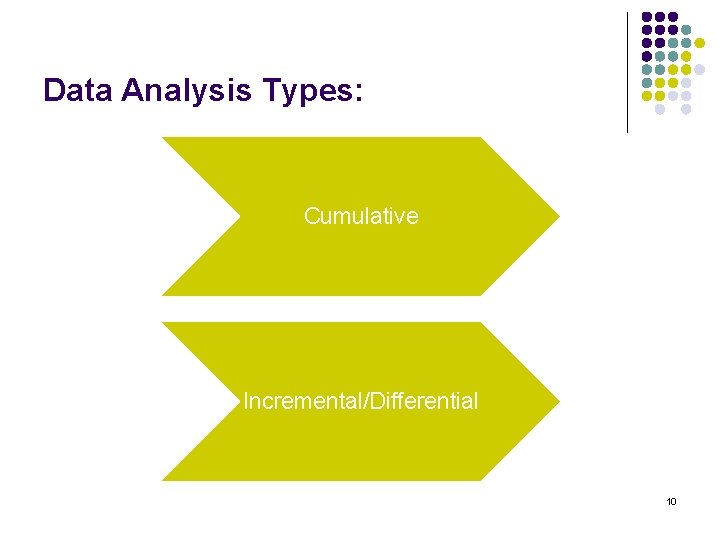
Data Analysis Types: Cumulative Incremental/Differential 10
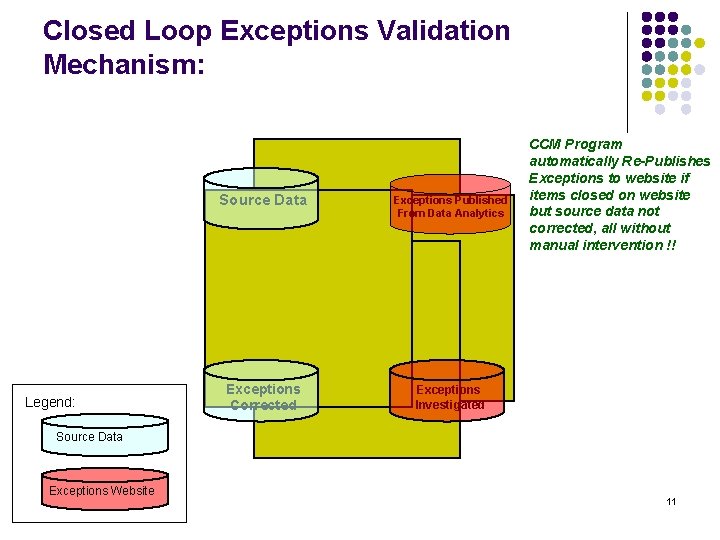
Closed Loop Exceptions Validation Mechanism: Legend: Source Data Exceptions Published From Data Analytics Exceptions Corrected Exceptions Investigated CCM Program automatically Re-Publishes Exceptions to website if items closed on website but source data not corrected, all without manual intervention !! Source Data Exceptions Website 11
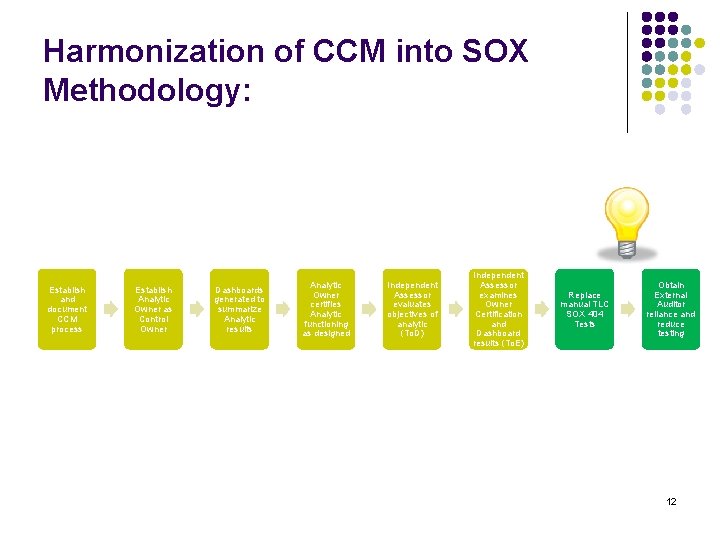
Harmonization of CCM into SOX Methodology: Establish and document CCM process Establish Analytic Owner as Control Owner Dashboards generated to summarize Analytic results Analytic Owner certifies Analytic functioning as designed Independent Assessor evaluates objectives of analytic (To. D) Independent Assessor examines Owner Certification and Dashboard results (To. E) Replace manual TLC SOX 404 Tests Obtain External Auditor reliance and reduce testing 12
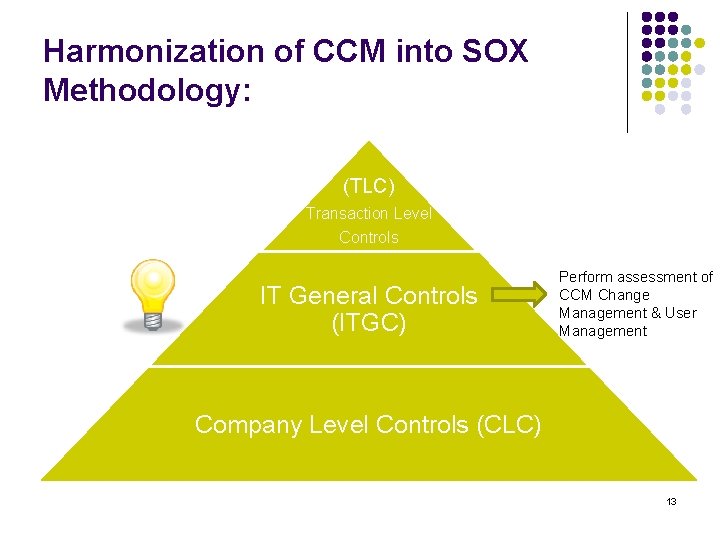
Harmonization of CCM into SOX Methodology: (TLC) Transaction Level Controls IT General Controls (ITGC) Perform assessment of CCM Change Management & User Management Company Level Controls (CLC) 13
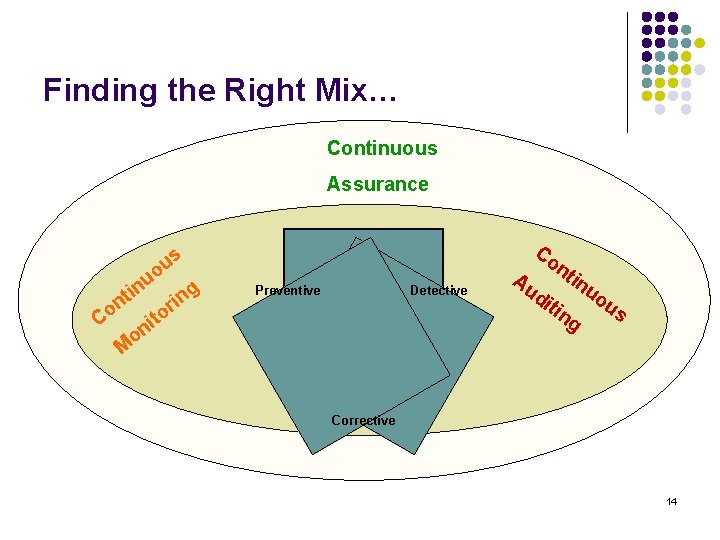
Finding the Right Mix… Continuous Assurance s u o nu i nt Co M g n i or Preventive Detective it n o Au Co di nt in tin uo g us Corrective 14
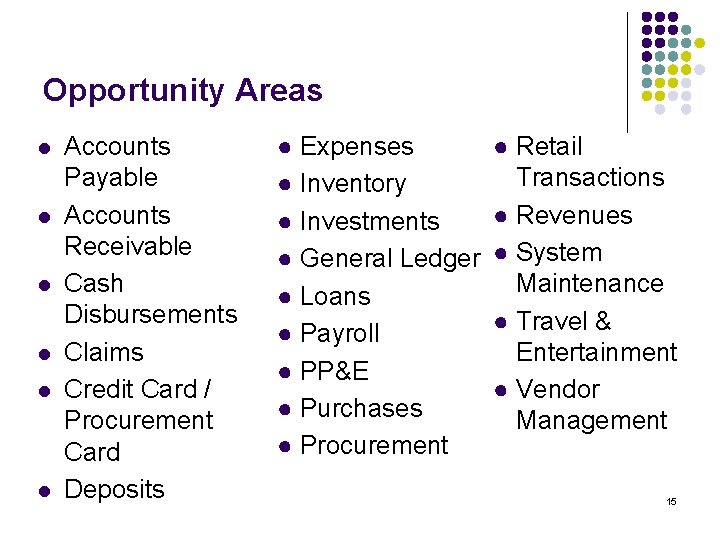
Opportunity Areas l l l Accounts Payable Accounts Receivable Cash Disbursements Claims Credit Card / Procurement Card Deposits ● Expenses ● Inventory ● Investments ● General Ledger ● Loans ● Payroll ● PP&E ● Purchases ● Procurement ● Retail Transactions ● Revenues ● System Maintenance ● Travel & Entertainment ● Vendor Management 15
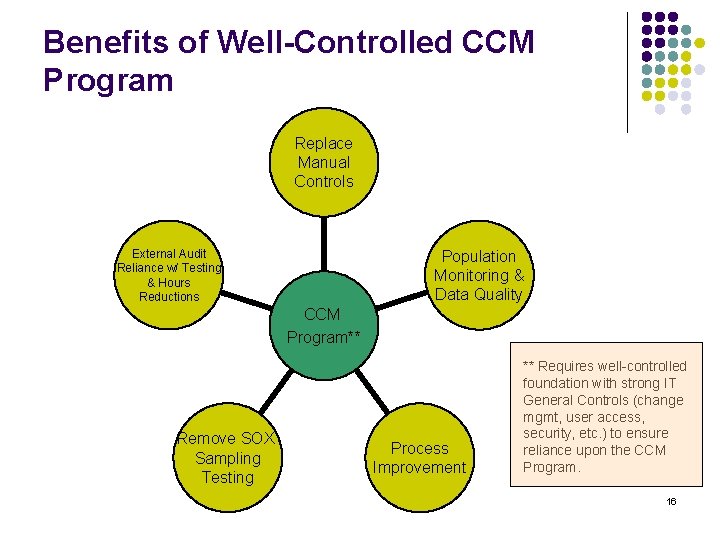
Benefits of Well-Controlled CCM Program Replace Manual Controls External Audit Reliance w/ Testing & Hours Reductions Population Monitoring & Data Quality CCM Program** Remove SOX Sampling Testing Process Improvement ** Requires well-controlled foundation with strong IT General Controls (change mgmt, user access, security, etc. ) to ensure reliance upon the CCM Program. 16
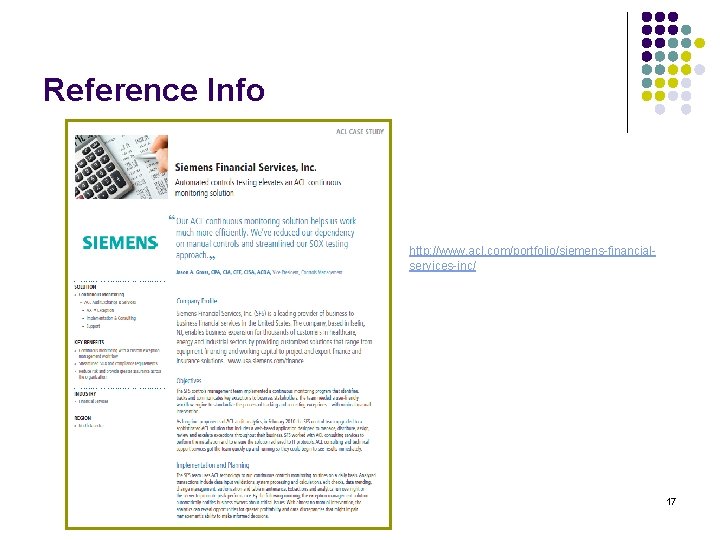
Reference Info http: //www. acl. com/portfolio/siemens-financialservices-inc/ 17
Questions and Discussion… Contact Information: Jason A. Gross, CPA, CIA, CFE, CISA, ACDA Vice President, Controls Management Siemens Financial Services, Inc. Tel# 732 -476 -3480 Email: jason. gross@siemens. com 18
Backup Information 19
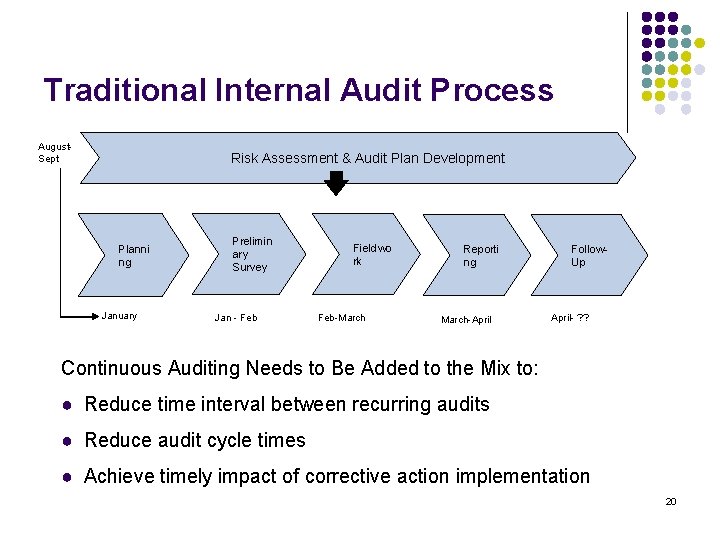
Traditional Internal Audit Process August. Sept Risk Assessment & Audit Plan Development Planni ng January Prelimin ary Survey Jan - Feb Fieldwo rk Feb-March Reporti ng March-April Follow. Up April- ? ? Continuous Auditing Needs to Be Added to the Mix to: ● Reduce time interval between recurring audits ● Reduce audit cycle times ● Achieve timely impact of corrective action implementation 20
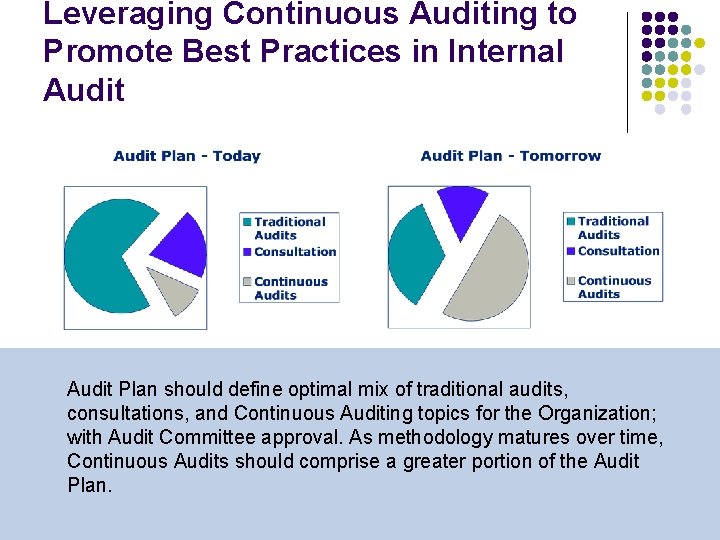
Leveraging Continuous Auditing to Promote Best Practices in Internal Audit Plan should define optimal mix of traditional audits, consultations, and Continuous Auditing topics for the Organization; with Audit Committee approval. As methodology matures over time, Continuous Audits should comprise a greater portion of the Audit Plan. 21
Benefits of Data Analytics l l l l Analysis is more objective, less subjective Examine populations of transactions, not samples Analyze data from disparate systems Unlimited transaction sizes Less risk of data integrity issues Examine transactions, with greater confidence Auditor independence across data analysis workflow: l l l Greater control & independence over testing/analysis Greater assurance Maintain audit logs of testing performed 22
Key Drivers for Successful Implementation l l l Define Continuous Auditing/Monitoring objectives Obtain support & commitment from Audit Committee and Management Continuous Auditing should complement the Audit Plan Identify key audit/monitoring topics Start small; build from success Automate/leverage from well-defined periodic audits 23
Key Drivers for Successful Implementation l l l Migrate from testing of samples to testing of universe Timely evaluation of activity Define responsibility between continuous monitoring and continuous auditing Gain reliance by external auditors and add value Formalize continuous audit approaches and methodology 24
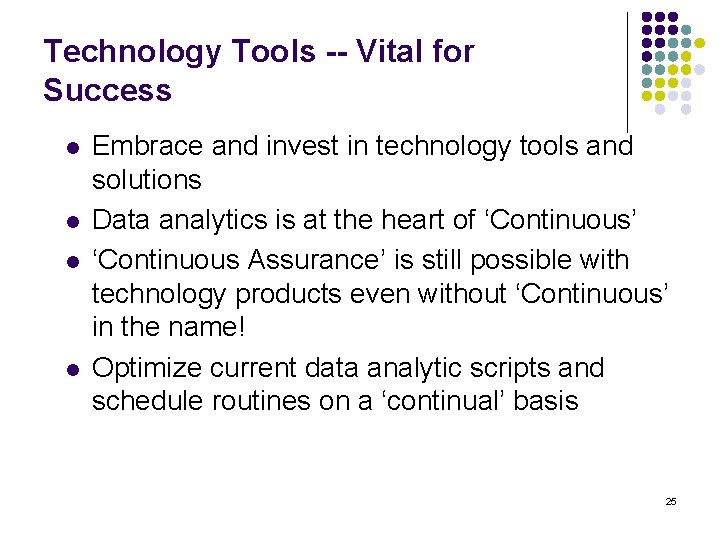
Technology Tools -- Vital for Success l l Embrace and invest in technology tools and solutions Data analytics is at the heart of ‘Continuous’ ‘Continuous Assurance’ is still possible with technology products even without ‘Continuous’ in the name! Optimize current data analytic scripts and schedule routines on a ‘continual’ basis 25
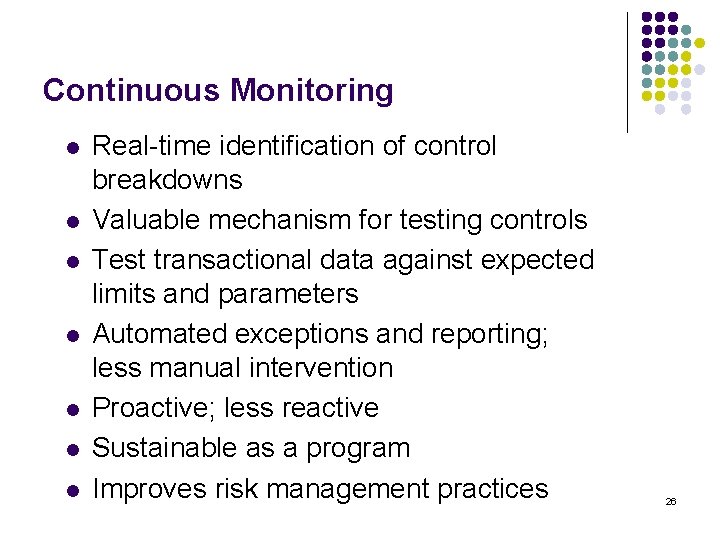
Continuous Monitoring l l l l Real-time identification of control breakdowns Valuable mechanism for testing controls Test transactional data against expected limits and parameters Automated exceptions and reporting; less manual intervention Proactive; less reactive Sustainable as a program Improves risk management practices 26
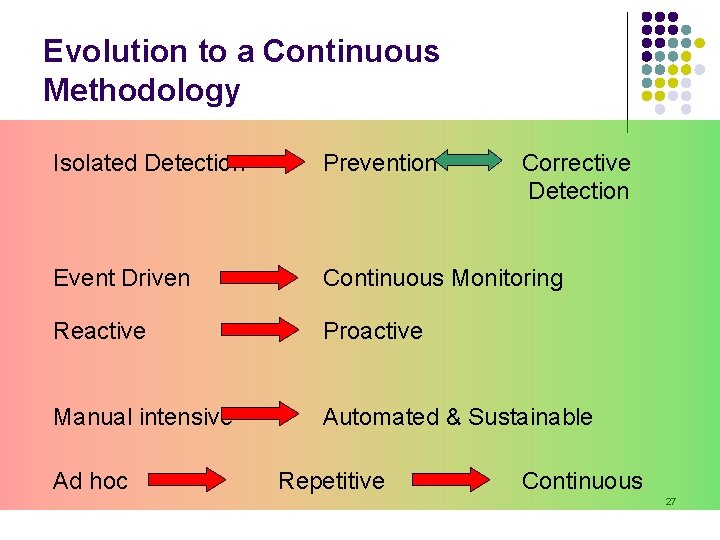
Evolution to a Continuous Methodology Isolated Detection Prevention Event Driven Continuous Monitoring Reactive Proactive Manual intensive Automated & Sustainable Ad hoc Repetitive Corrective Detection Continuous 27
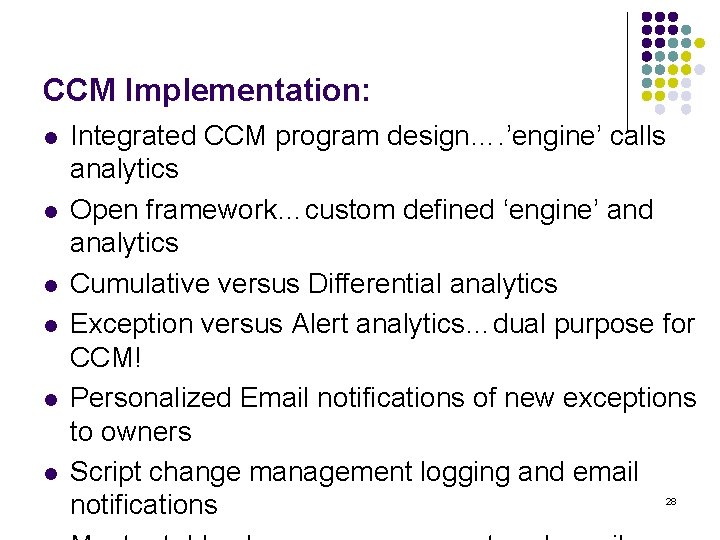
CCM Implementation: l l l Integrated CCM program design…. ’engine’ calls analytics Open framework…custom defined ‘engine’ and analytics Cumulative versus Differential analytics Exception versus Alert analytics…dual purpose for CCM! Personalized Email notifications of new exceptions to owners Script change management logging and email notifications 28
CCM Implementation: l l l Self validation of corrected exceptions & false positives Web-based customized Workflow process to handle exceptions…un-validated items require 4 eye approval Daily and Cumulative Reconciliations (analytic vs. website) Rollforward Summary (open + new items – closed items = outstanding items) Status Update reminders and tracking email notifications 29