
The Rise of the Roman Republic Pages 230
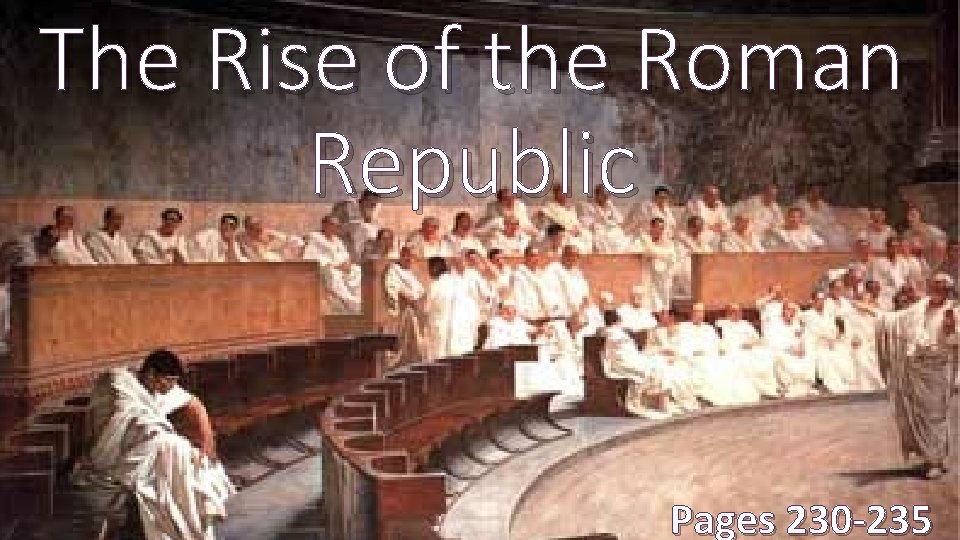
The Rise of the Roman Republic Pages 230 -235

Focus Question
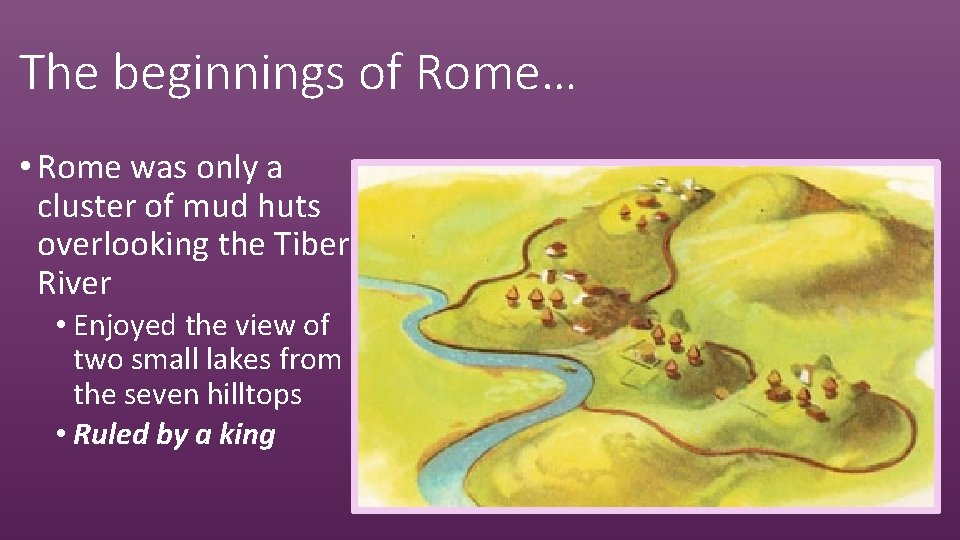
The beginnings of Rome… • Rome was only a cluster of mud huts overlooking the Tiber River • Enjoyed the view of two small lakes from the seven hilltops • Ruled by a king
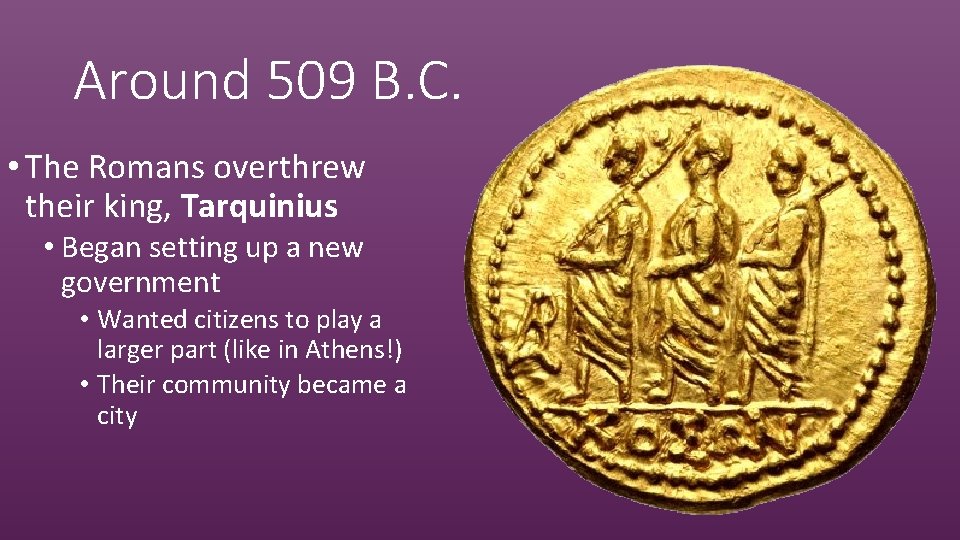
Around 509 B. C. • The Romans overthrew their king, Tarquinius • Began setting up a new government • Wanted citizens to play a larger part (like in Athens!) • Their community became a city
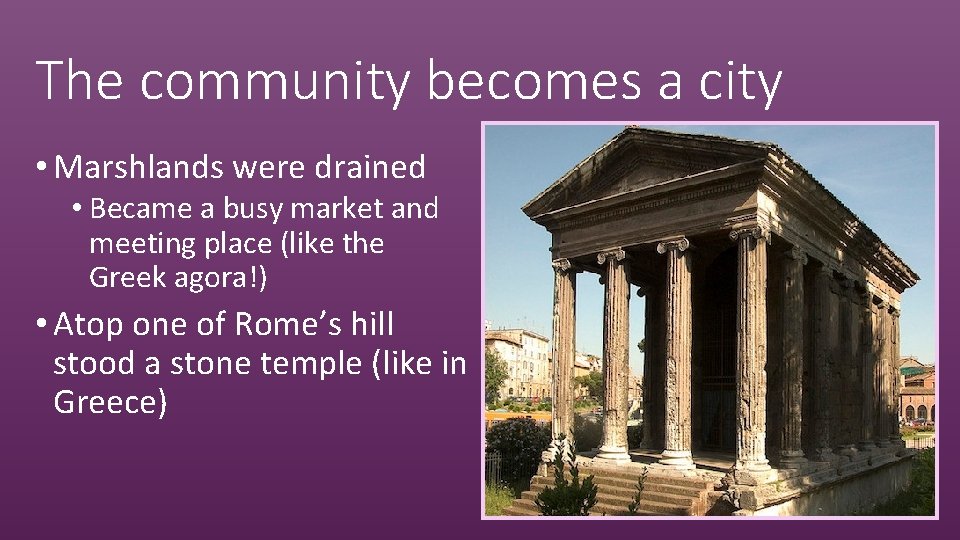
The community becomes a city • Marshlands were drained • Became a busy market and meeting place (like the Greek agora!) • Atop one of Rome’s hill stood a stone temple (like in Greece)
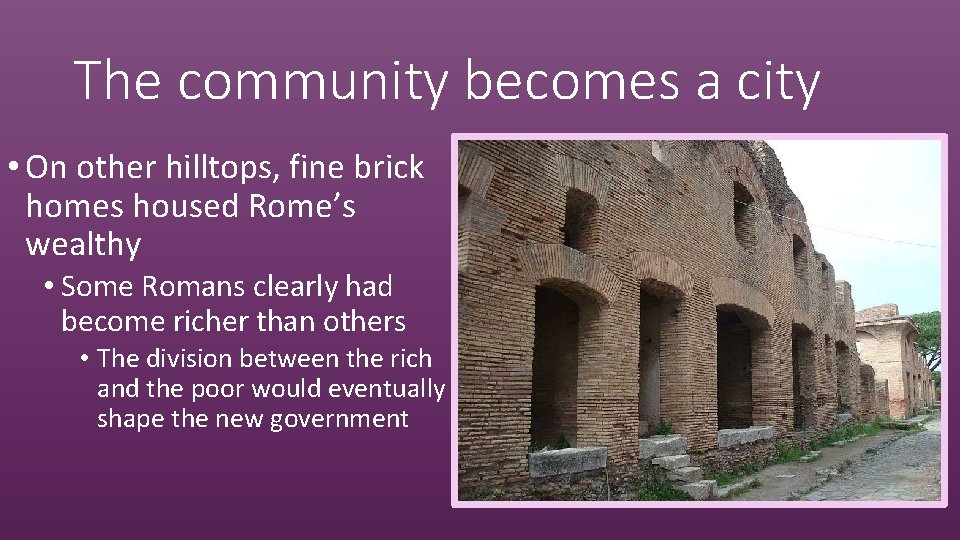
The community becomes a city • On other hilltops, fine brick homes housed Rome’s wealthy • Some Romans clearly had become richer than others • The division between the rich and the poor would eventually shape the new government
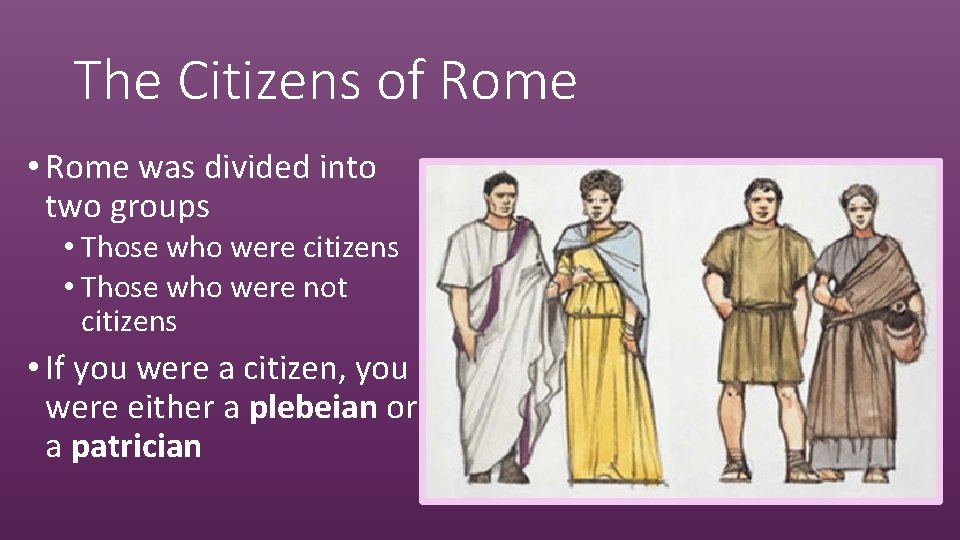
The Citizens of Rome • Rome was divided into two groups • Those who were citizens • Those who were not citizens • If you were a citizen, you were either a plebeian or a patrician
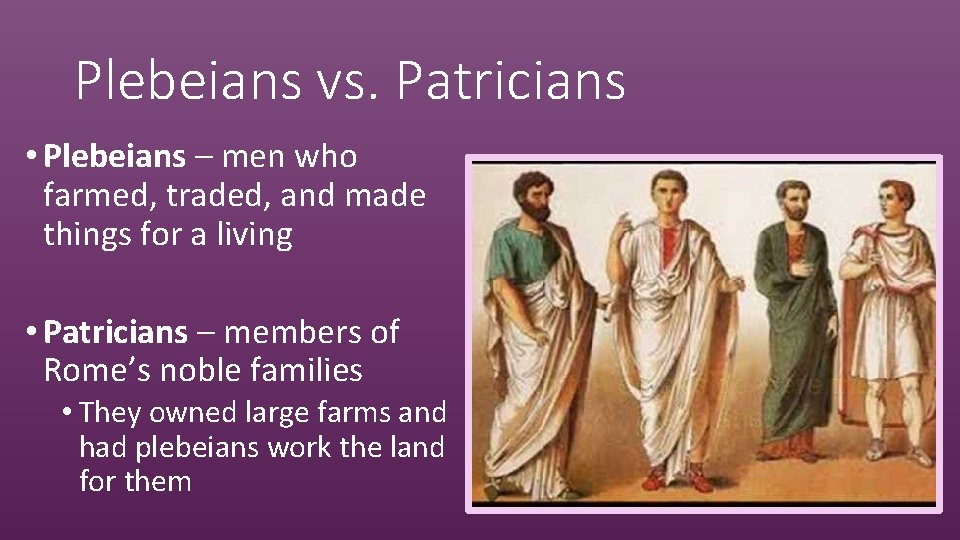
Plebeians vs. Patricians • Plebeians – men who farmed, traded, and made things for a living • Patricians – members of Rome’s noble families • They owned large farms and had plebeians work the land for them
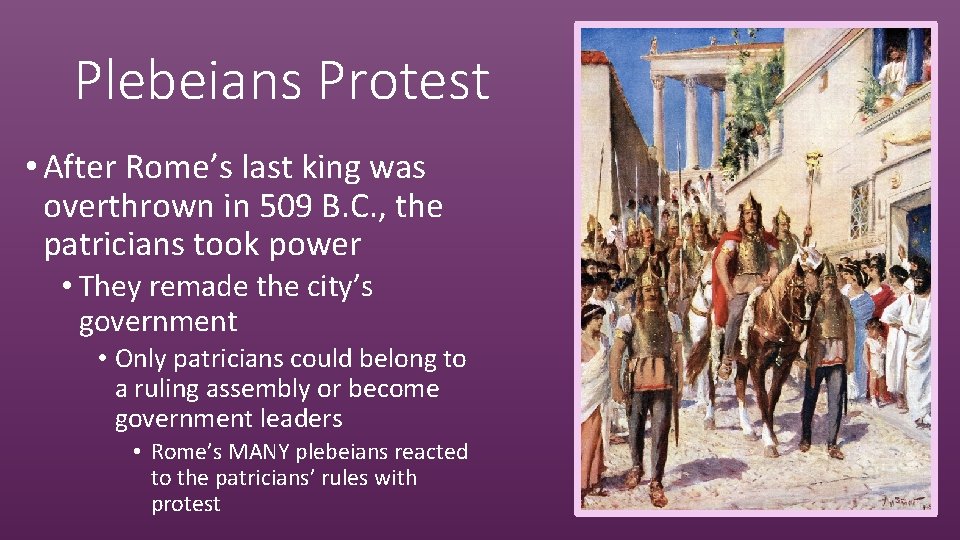
Plebeians Protest • After Rome’s last king was overthrown in 509 B. C. , the patricians took power • They remade the city’s government • Only patricians could belong to a ruling assembly or become government leaders • Rome’s MANY plebeians reacted to the patricians’ rules with protest
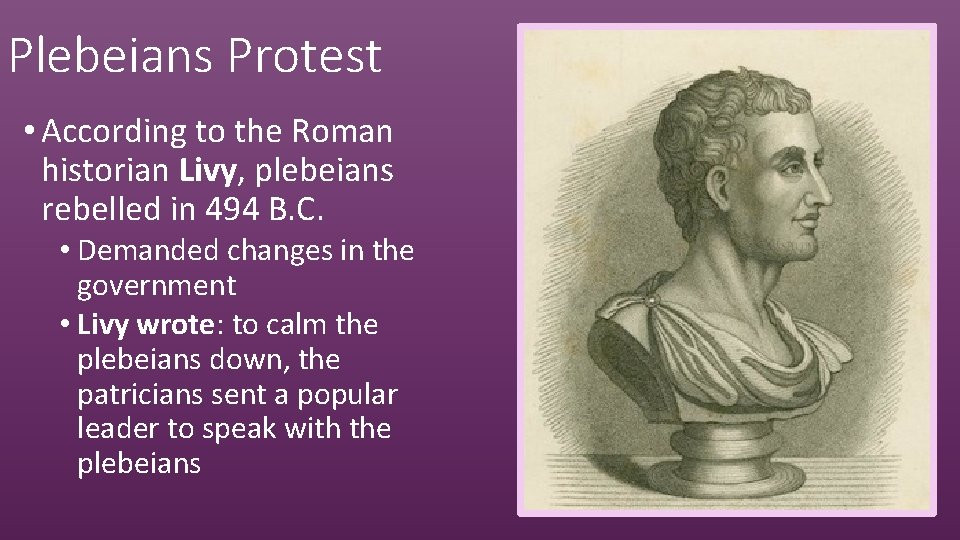
Plebeians Protest • According to the Roman historian Livy, plebeians rebelled in 494 B. C. • Demanded changes in the government • Livy wrote: to calm the plebeians down, the patricians sent a popular leader to speak with the plebeians
Excerpt from Stories of Rome, Livy, 494 B. C. “Once upon a time, the different parts of the human body were not all in agreement… And it seemed very unfair to the other parts of the body that they should worry and sweat away to look after the belly. After all, the belly just sat there… doing nothing, enjoying all the nice things that came along. So they hatched a plot. The hands weren’t going to take food to the mouth; even if they did, the mouth wasn’t going to accept it… They went into a sulk and waited for the belly to cry for help. . But while they waited, one by one all the parts of the body got weaker and weaker. The moral of this story? The belly too had its job to do. It has to be fed, but it also does feeding of its own. ” How do you suppose the plebeians reacted?
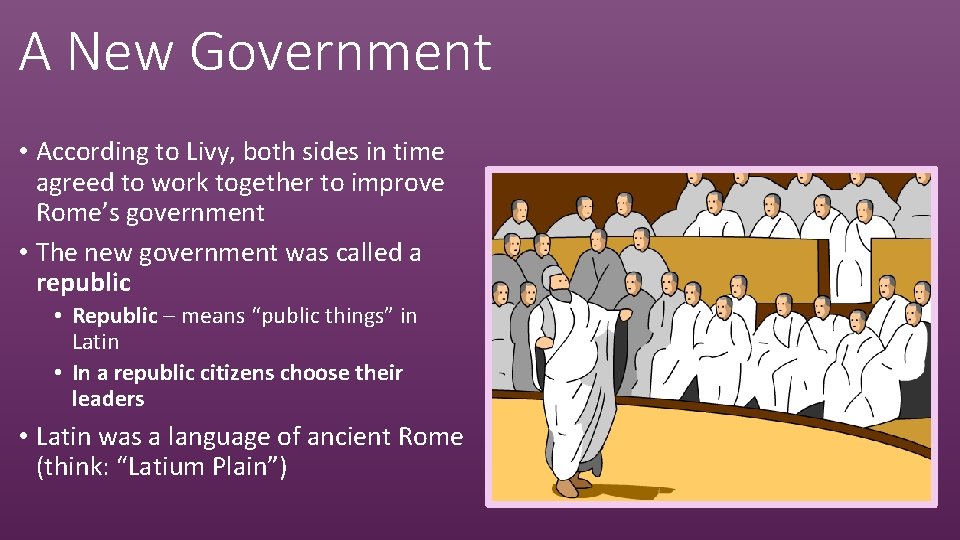
A New Government • According to Livy, both sides in time agreed to work together to improve Rome’s government • The new government was called a republic • Republic – means “public things” in Latin • In a republic citizens choose their leaders • Latin was a language of ancient Rome (think: “Latium Plain”)
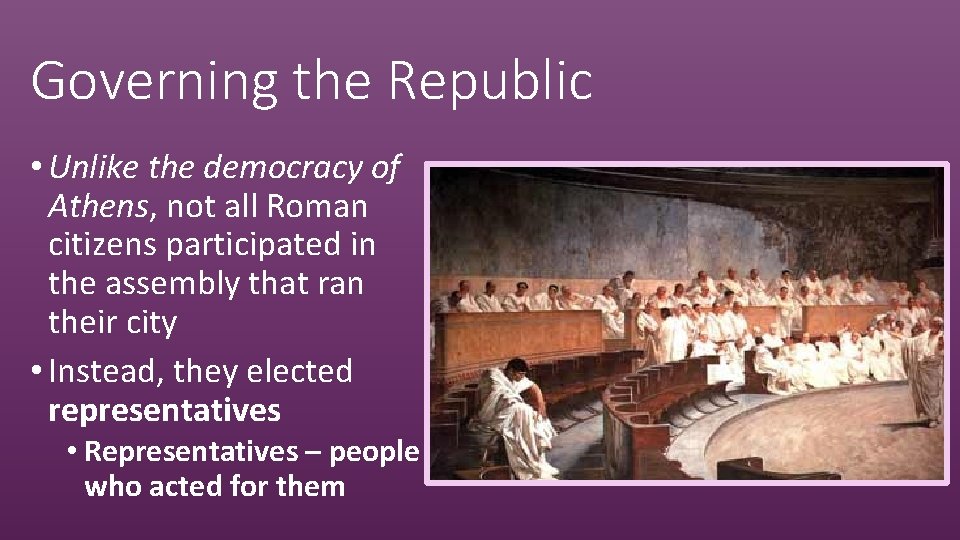
Governing the Republic • Unlike the democracy of Athens, not all Roman citizens participated in the assembly that ran their city • Instead, they elected representatives • Representatives – people who acted for them
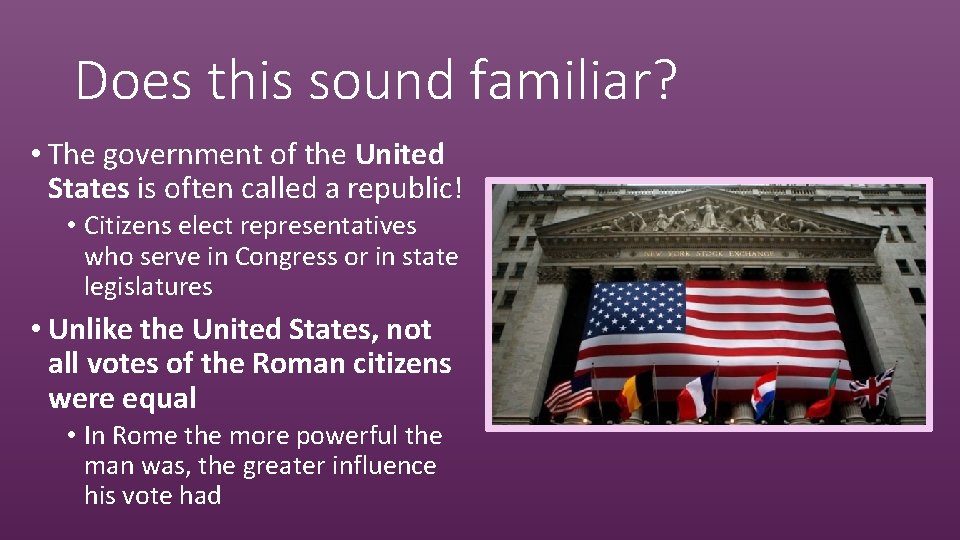
Does this sound familiar? • The government of the United States is often called a republic! • Citizens elect representatives who serve in Congress or in state legislatures • Unlike the United States, not all votes of the Roman citizens were equal • In Rome the more powerful the man was, the greater influence his vote had
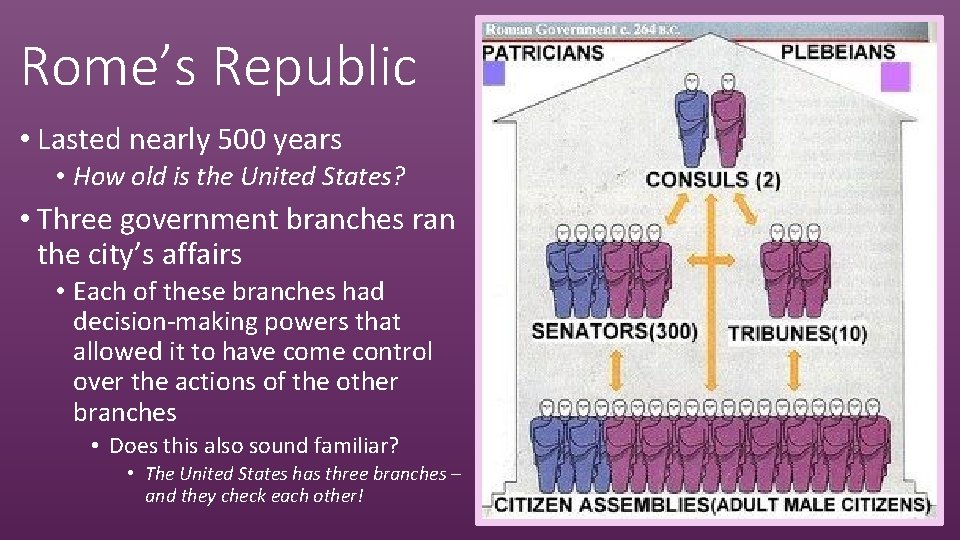
Rome’s Republic • Lasted nearly 500 years • How old is the United States? • Three government branches ran the city’s affairs • Each of these branches had decision-making powers that allowed it to have come control over the actions of the other branches • Does this also sound familiar? • The United States has three branches – and they check each other!
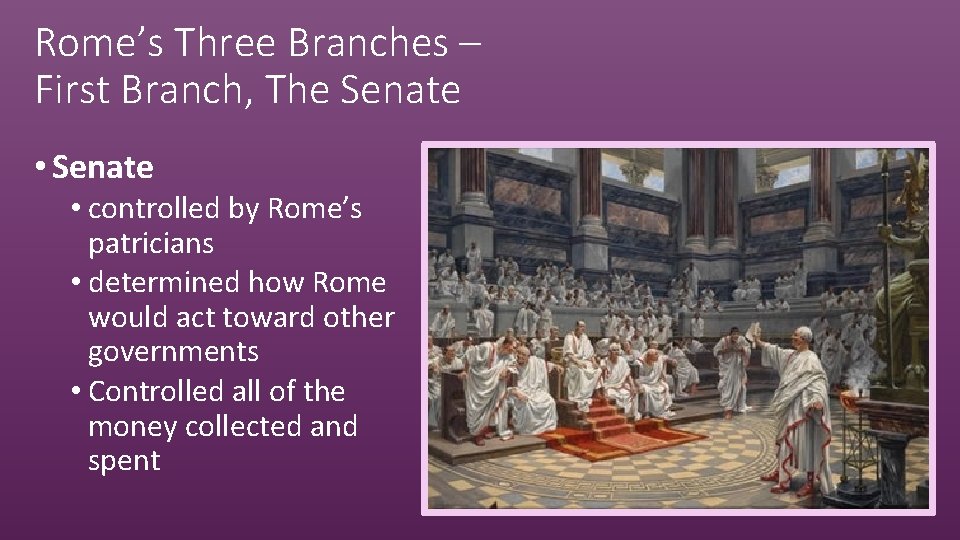
Rome’s Three Branches – First Branch, The Senate • controlled by Rome’s patricians • determined how Rome would act toward other governments • Controlled all of the money collected and spent
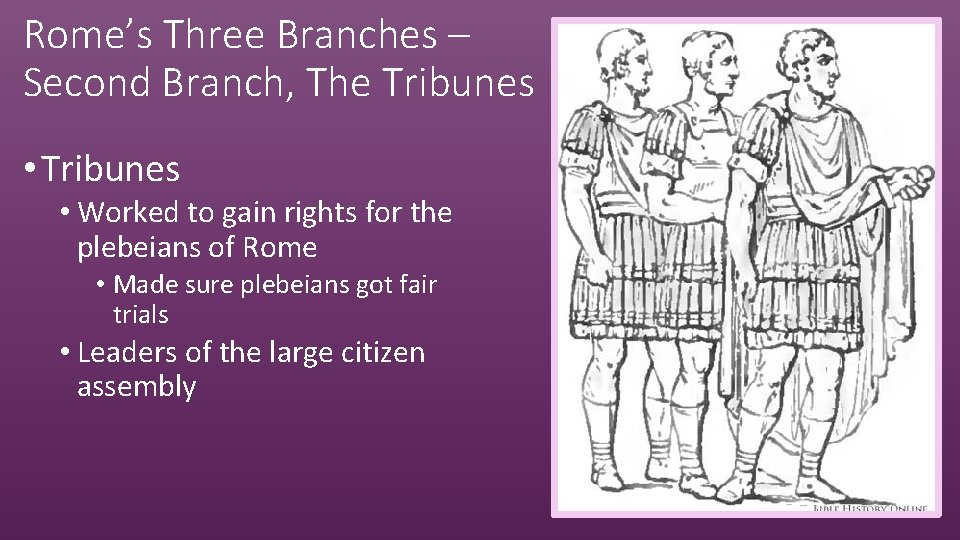
Rome’s Three Branches – Second Branch, The Tribunes • Worked to gain rights for the plebeians of Rome • Made sure plebeians got fair trials • Leaders of the large citizen assembly
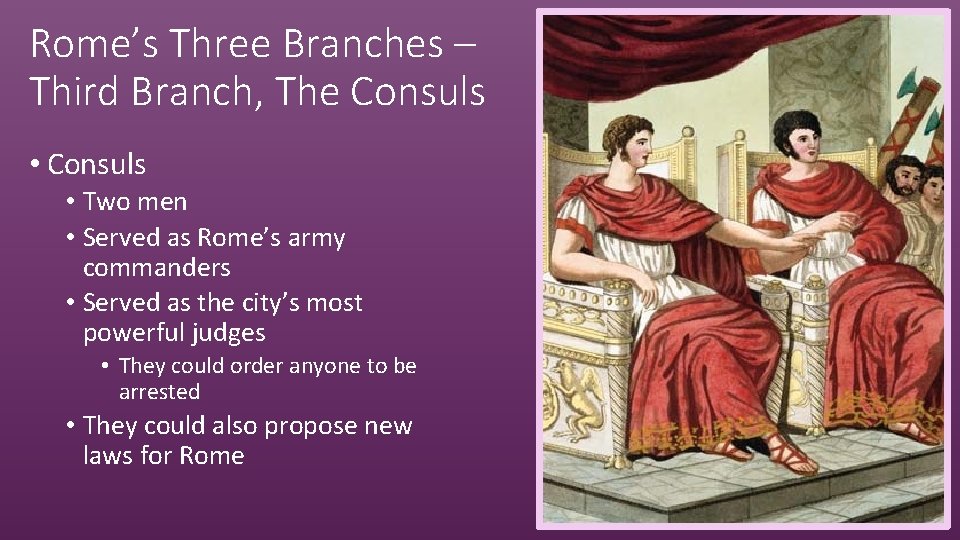
Rome’s Three Branches – Third Branch, The Consuls • Two men • Served as Rome’s army commanders • Served as the city’s most powerful judges • They could order anyone to be arrested • They could also propose new laws for Rome
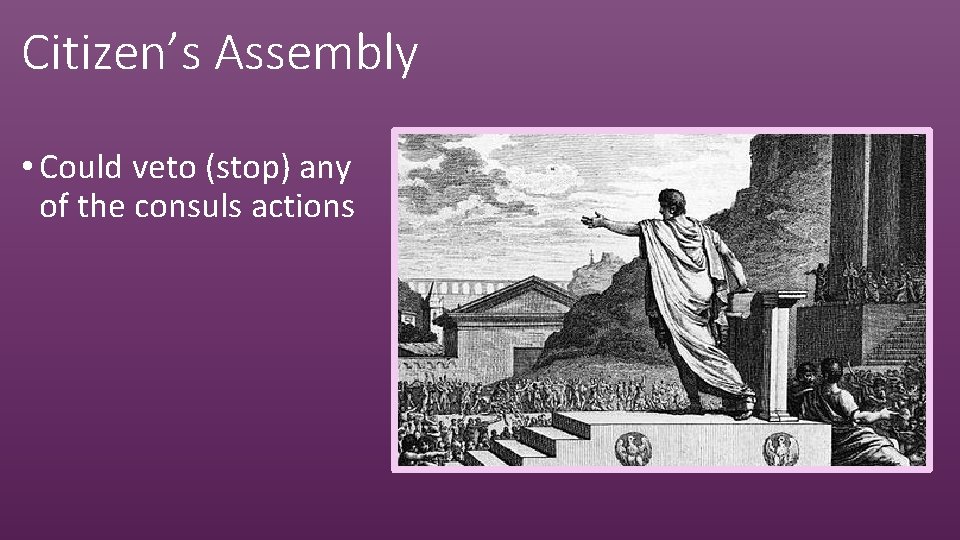
Citizen’s Assembly • Could veto (stop) any of the consuls actions
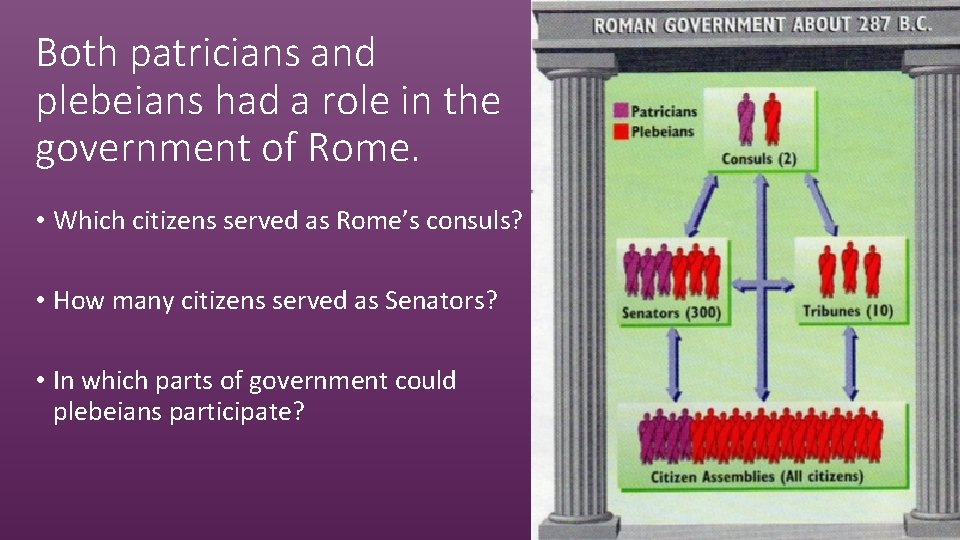
Both patricians and plebeians had a role in the government of Rome. • Which citizens served as Rome’s consuls? • How many citizens served as Senators? • In which parts of government could plebeians participate?
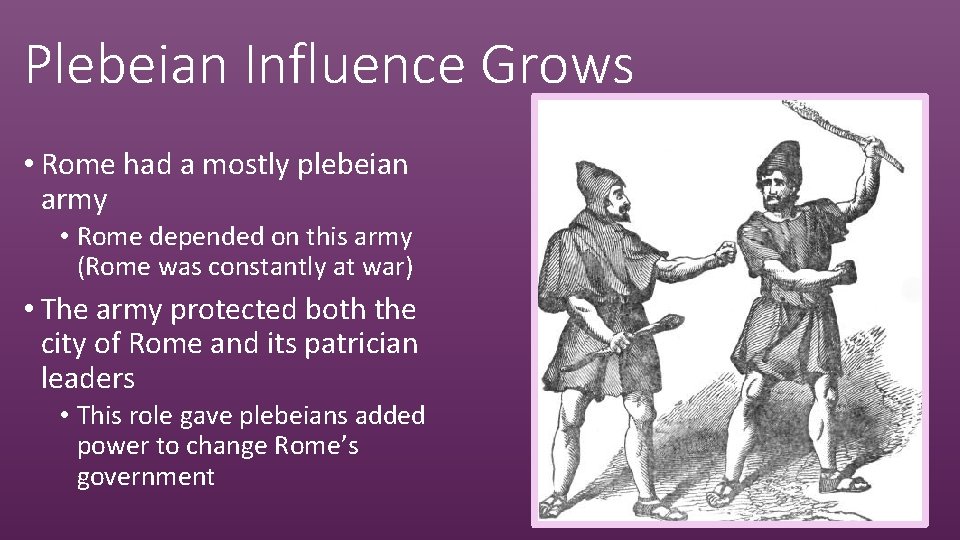
Plebeian Influence Grows • Rome had a mostly plebeian army • Rome depended on this army (Rome was constantly at war) • The army protected both the city of Rome and its patrician leaders • This role gave plebeians added power to change Rome’s government
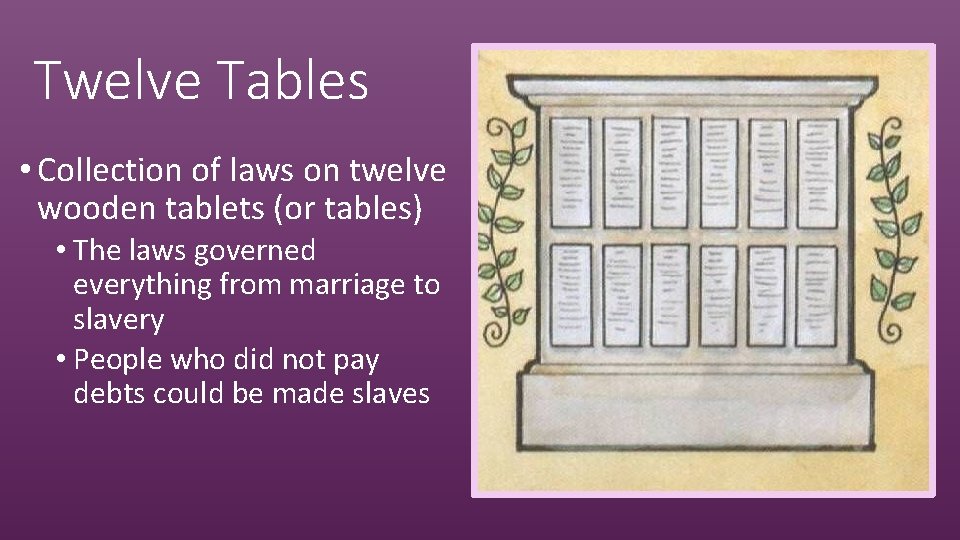
Twelve Tables • Collection of laws on twelve wooden tablets (or tables) • The laws governed everything from marriage to slavery • People who did not pay debts could be made slaves
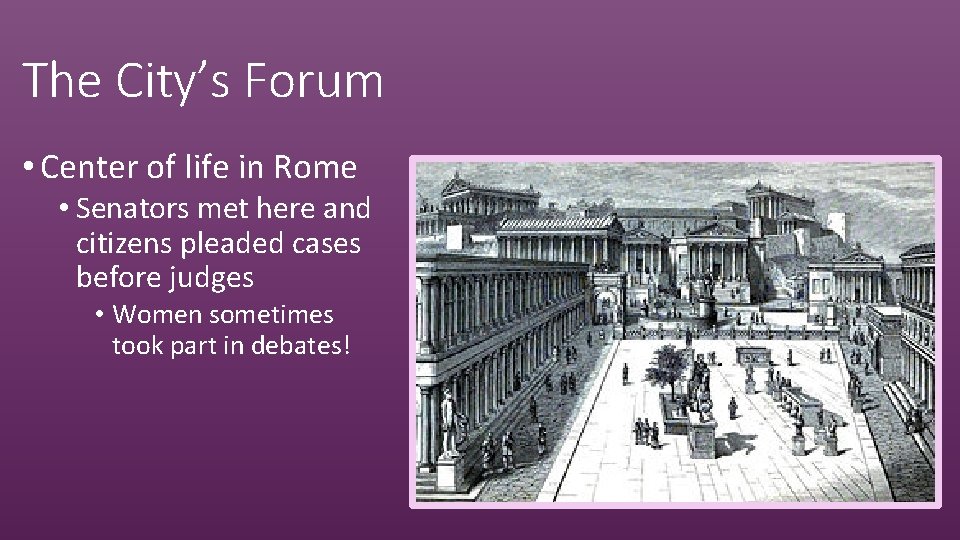
The City’s Forum • Center of life in Rome • Senators met here and citizens pleaded cases before judges • Women sometimes took part in debates!
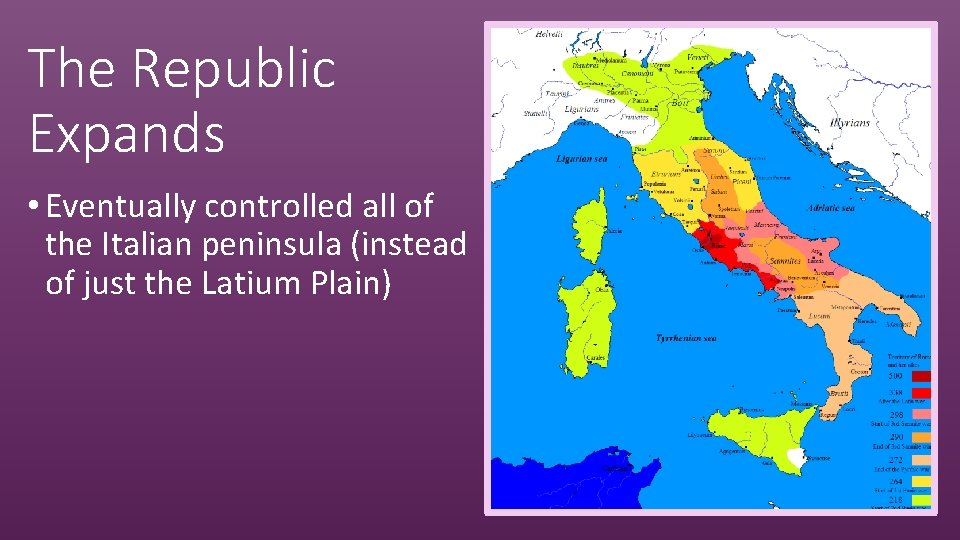
The Republic Expands • Eventually controlled all of the Italian peninsula (instead of just the Latium Plain)
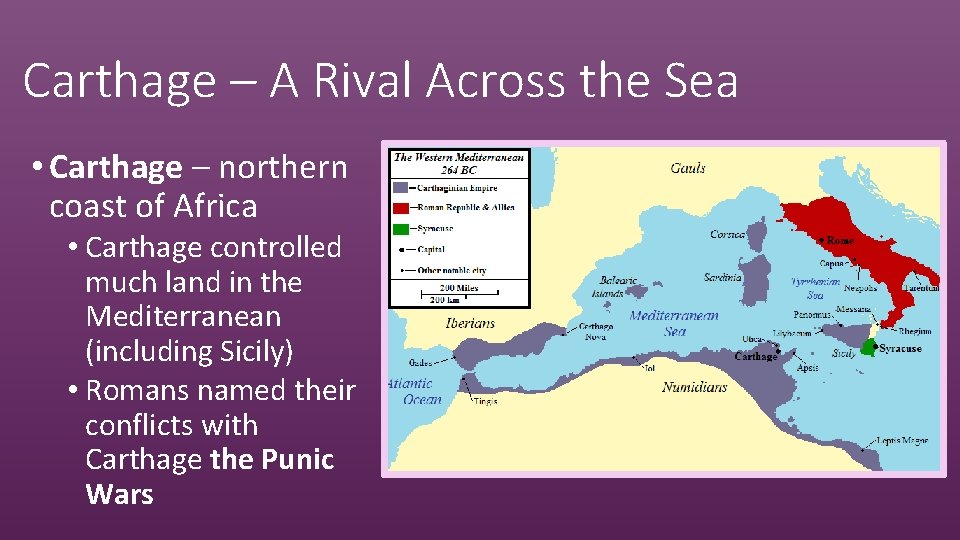
Carthage – A Rival Across the Sea • Carthage – northern coast of Africa • Carthage controlled much land in the Mediterranean (including Sicily) • Romans named their conflicts with Carthage the Punic Wars
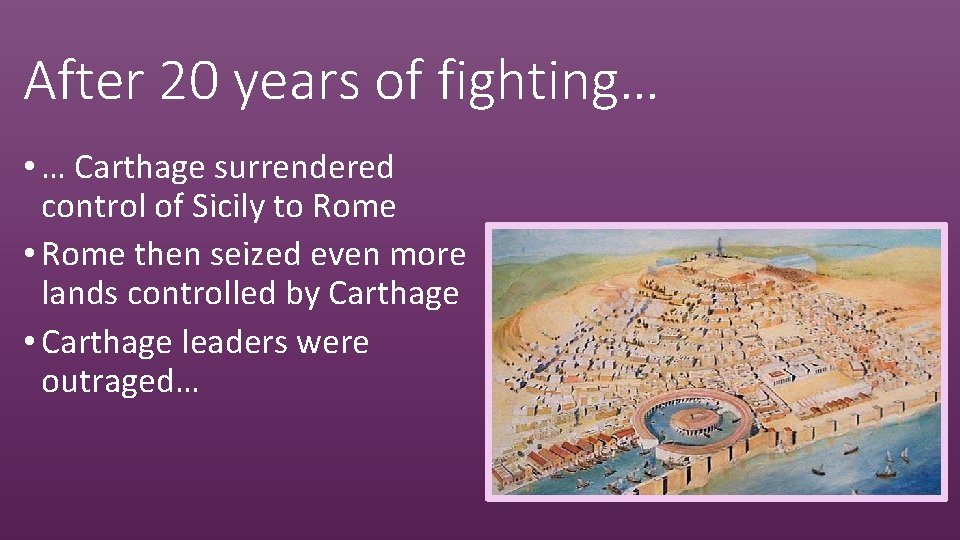
After 20 years of fighting… • … Carthage surrendered control of Sicily to Rome • Rome then seized even more lands controlled by Carthage • Carthage leaders were outraged…
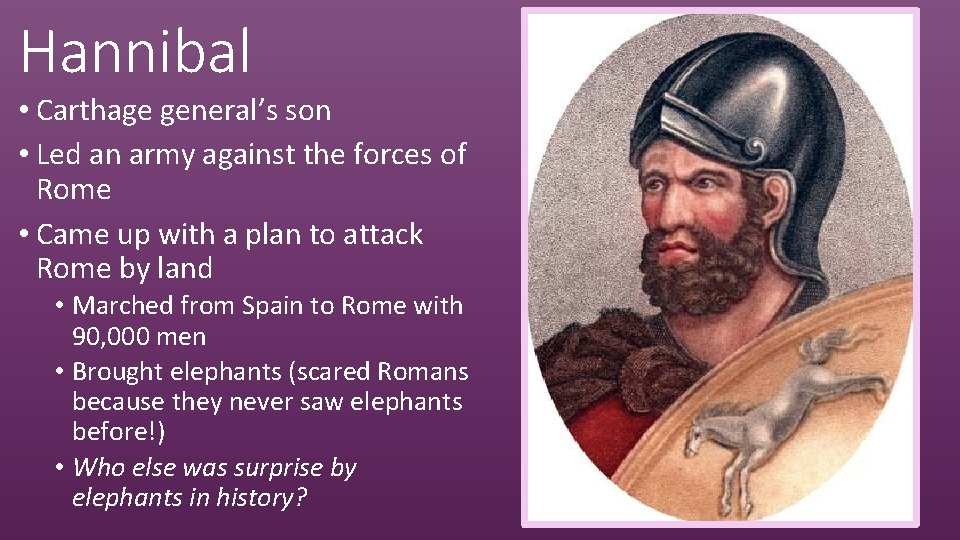
Hannibal • Carthage general’s son • Led an army against the forces of Rome • Came up with a plan to attack Rome by land • Marched from Spain to Rome with 90, 000 men • Brought elephants (scared Romans because they never saw elephants before!) • Who else was surprise by elephants in history?
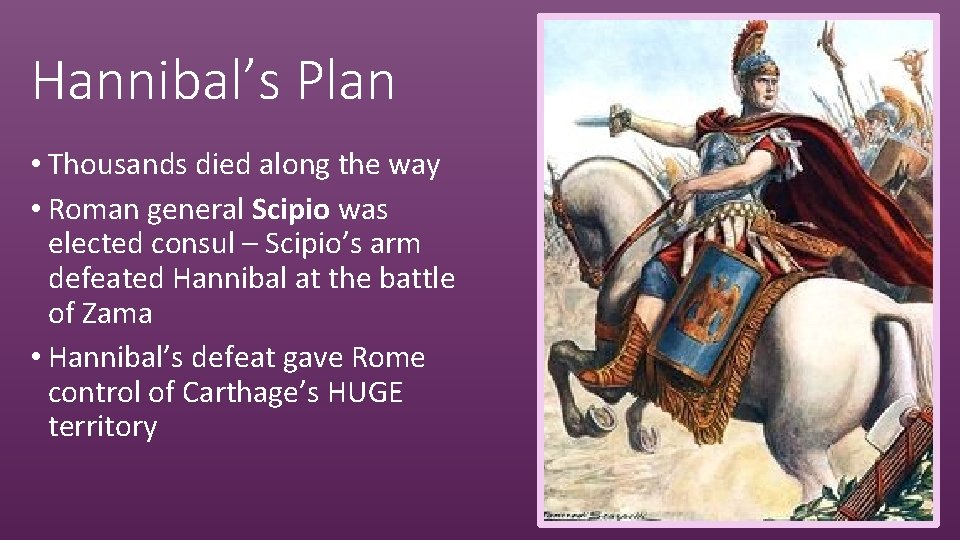
Hannibal’s Plan • Thousands died along the way • Roman general Scipio was elected consul – Scipio’s arm defeated Hannibal at the battle of Zama • Hannibal’s defeat gave Rome control of Carthage’s HUGE territory
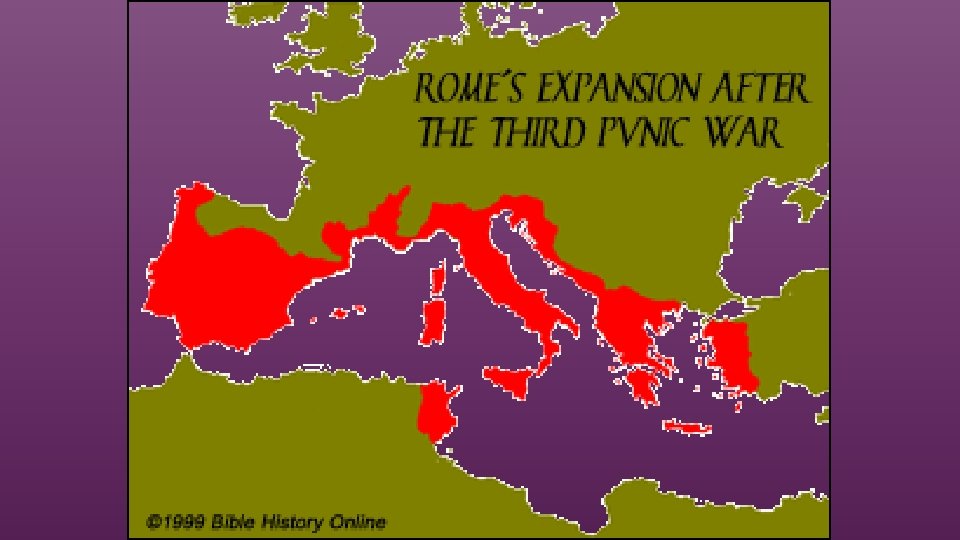
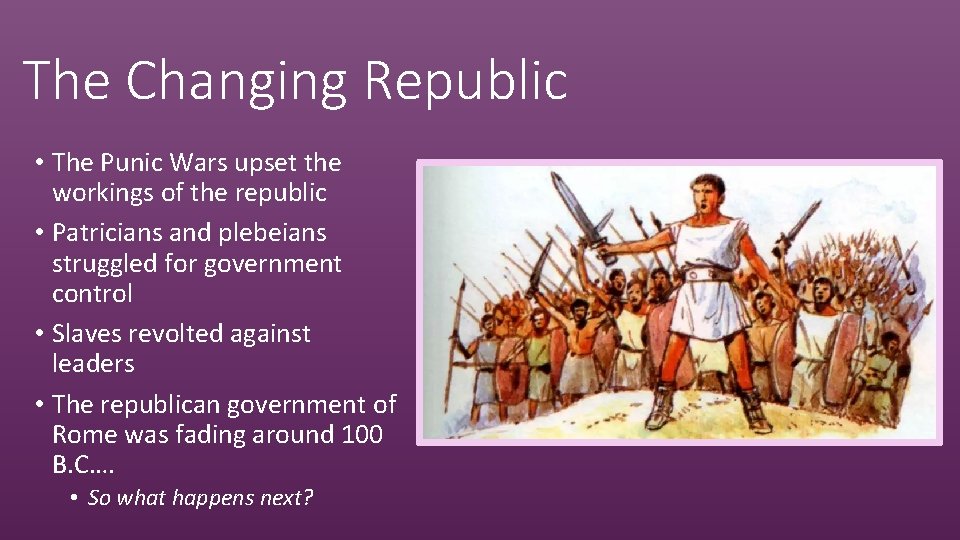
The Changing Republic • The Punic Wars upset the workings of the republic • Patricians and plebeians struggled for government control • Slaves revolted against leaders • The republican government of Rome was fading around 100 B. C…. • So what happens next?
Think About It • Describe the differences between patricians and plebeians. • Why was it important for Rome’s laws to be written down? • How did the struggle between the plebeians and patricians affect Roman government? • Make conclusions about the importance of the Punic Wars to Rome’s history.
- Slides: 31