
The Rise of the Animals Phylum Porifera The
- Slides: 11
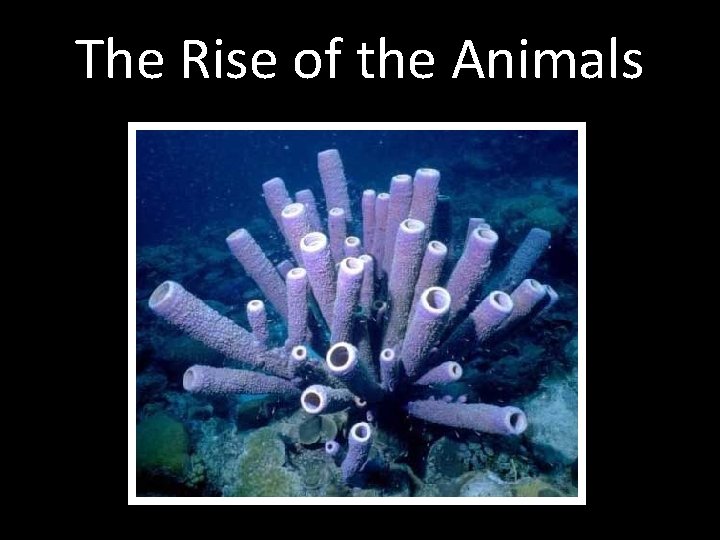
The Rise of the Animals
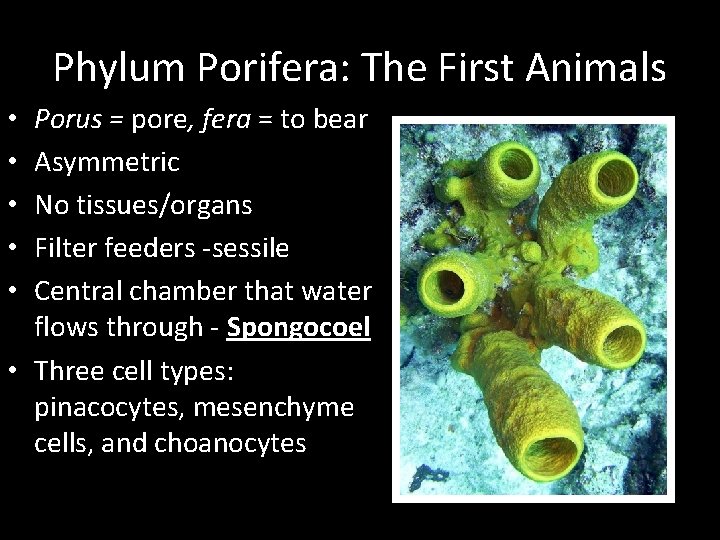
Phylum Porifera: The First Animals Porus = pore, fera = to bear Asymmetric No tissues/organs Filter feeders -sessile Central chamber that water flows through - Spongocoel • Three cell types: pinacocytes, mesenchyme cells, and choanocytes • • •
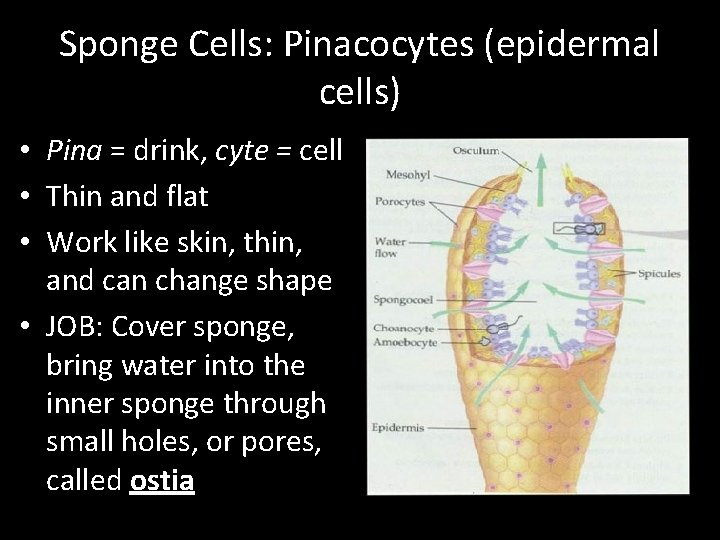
Sponge Cells: Pinacocytes (epidermal cells) • Pina = drink, cyte = cell • Thin and flat • Work like skin, thin, and can change shape • JOB: Cover sponge, bring water into the inner sponge through small holes, or pores, called ostia
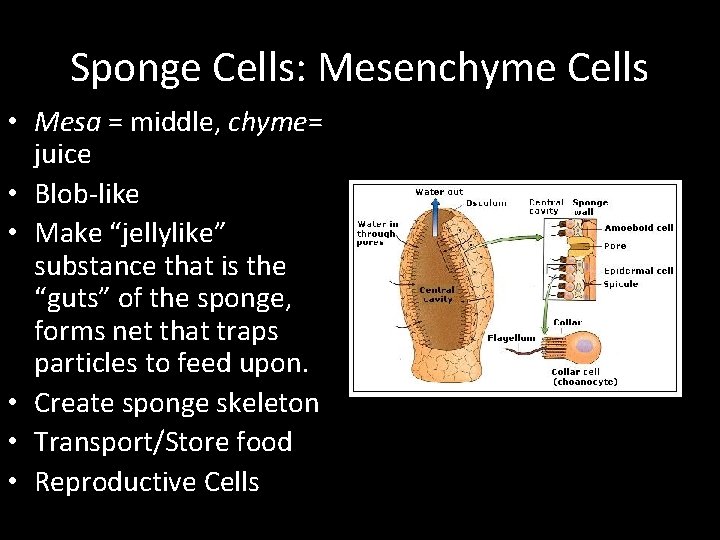
Sponge Cells: Mesenchyme Cells • Mesa = middle, chyme= juice • Blob-like • Make “jellylike” substance that is the “guts” of the sponge, forms net that traps particles to feed upon. • Create sponge skeleton • Transport/Store food • Reproductive Cells
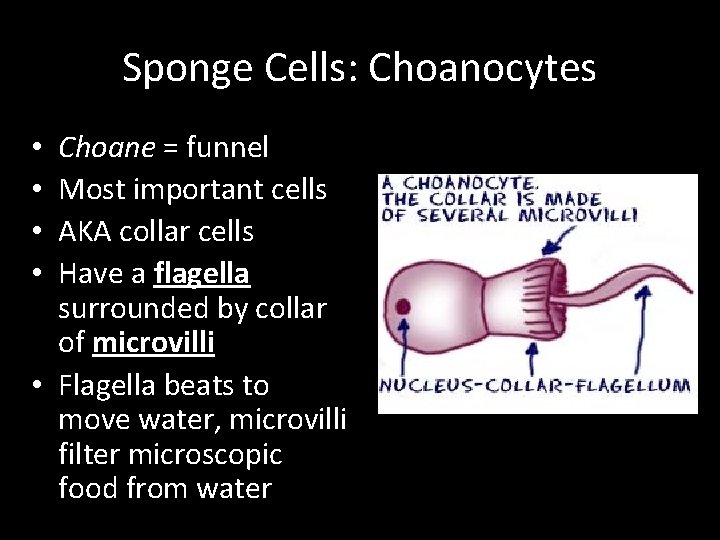
Sponge Cells: Choanocytes Choane = funnel Most important cells AKA collar cells Have a flagella surrounded by collar of microvilli • Flagella beats to move water, microvilli filter microscopic food from water • •
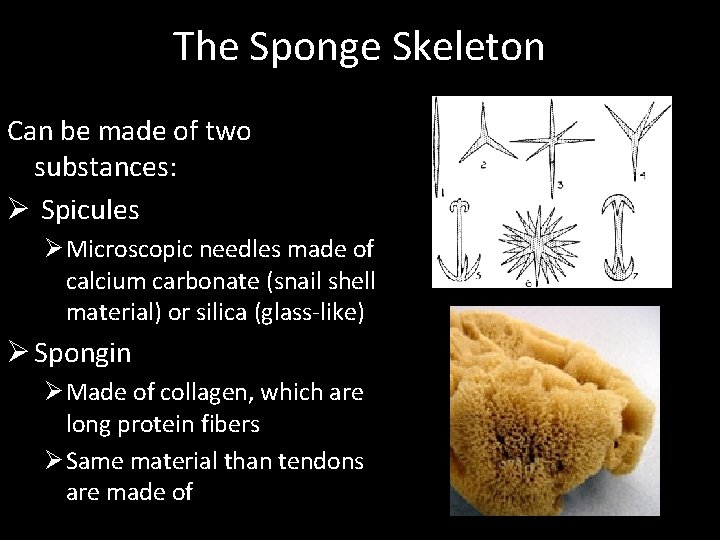
The Sponge Skeleton Can be made of two substances: Ø Spicules Ø Microscopic needles made of calcium carbonate (snail shell material) or silica (glass-like) Ø Spongin Ø Made of collagen, which are long protein fibers Ø Same material than tendons are made of
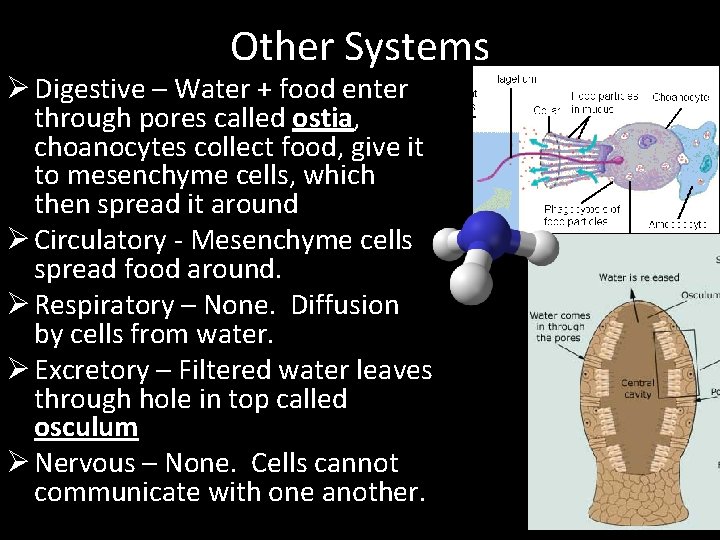
Other Systems Ø Digestive – Water + food enter through pores called ostia, choanocytes collect food, give it to mesenchyme cells, which then spread it around Ø Circulatory - Mesenchyme cells spread food around. Ø Respiratory – None. Diffusion by cells from water. Ø Excretory – Filtered water leaves through hole in top called osculum Ø Nervous – None. Cells cannot communicate with one another.
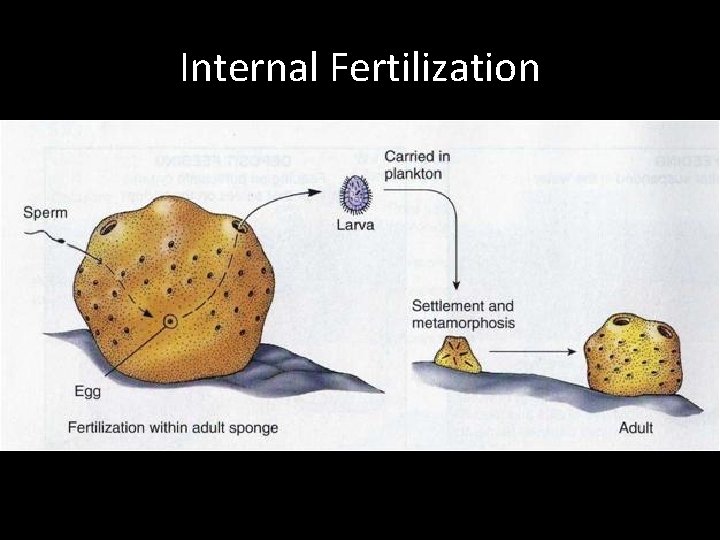
Internal Fertilization
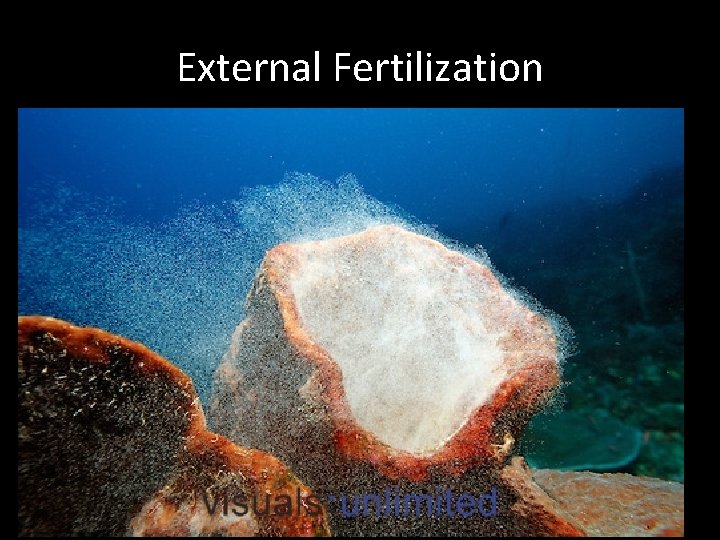
External Fertilization
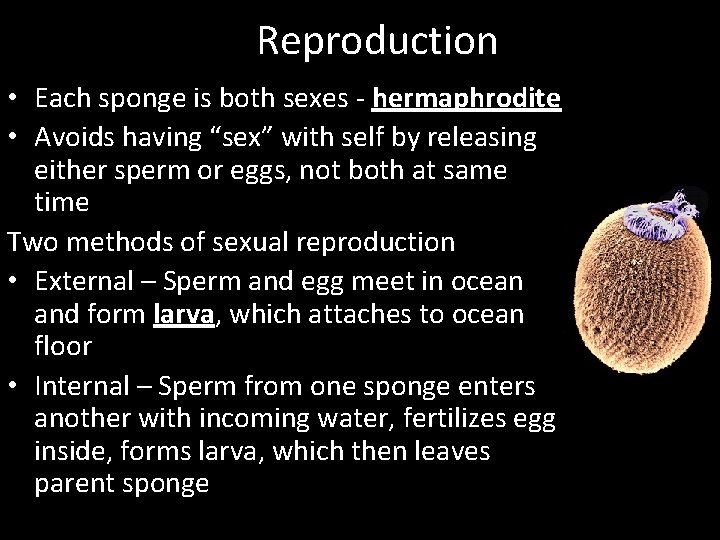
Reproduction • Each sponge is both sexes - hermaphrodite • Avoids having “sex” with self by releasing either sperm or eggs, not both at same time Two methods of sexual reproduction • External – Sperm and egg meet in ocean and form larva, which attaches to ocean floor • Internal – Sperm from one sponge enters another with incoming water, fertilizes egg inside, forms larva, which then leaves parent sponge
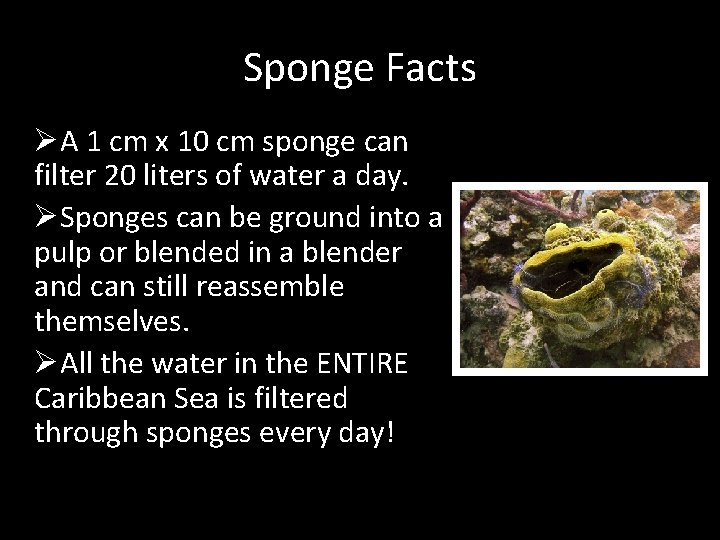
Sponge Facts ØA 1 cm x 10 cm sponge can filter 20 liters of water a day. ØSponges can be ground into a pulp or blended in a blender and can still reassemble themselves. ØAll the water in the ENTIRE Caribbean Sea is filtered through sponges every day!