
The Rise of Organized Labor A response of
The Rise of Organized Labor A response of workers to industrialization
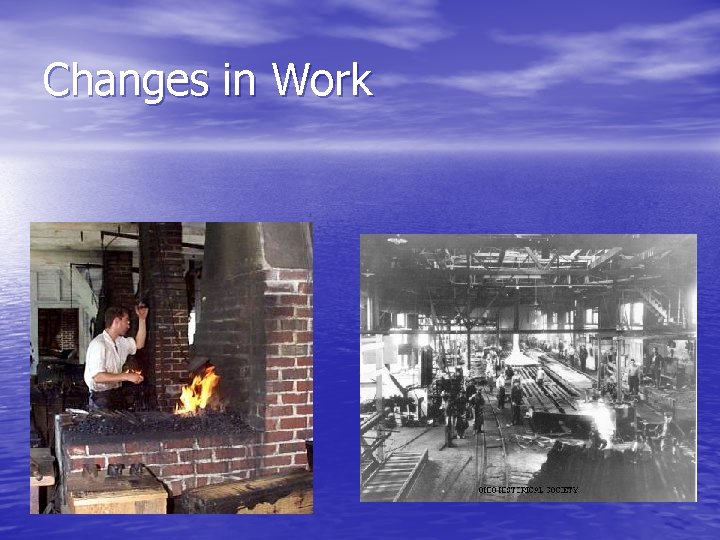
Changes in Work
Changes in Work • More machine-oriented • Less need for skilled labor • Workers more easily replaceable • Work more monotonous • Less personal satisfaction of craftsmanship • Workplace separate from home

Impersonal Relationship with Boss

Poor Working Conditions
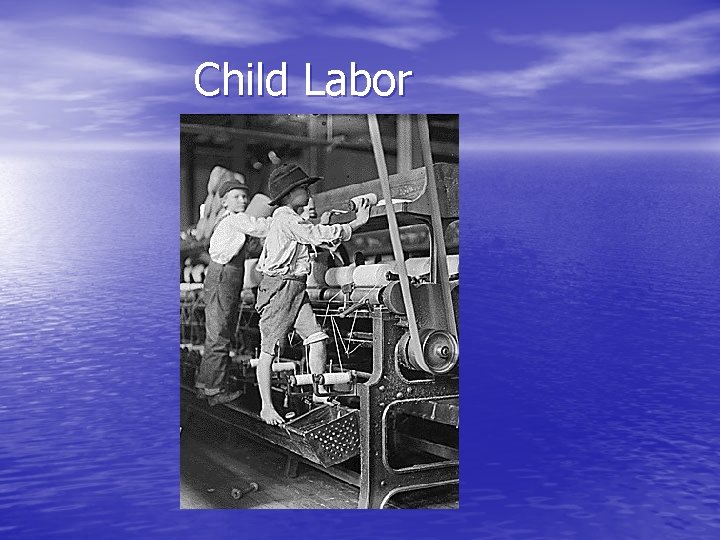
Child Labor
Low Pay
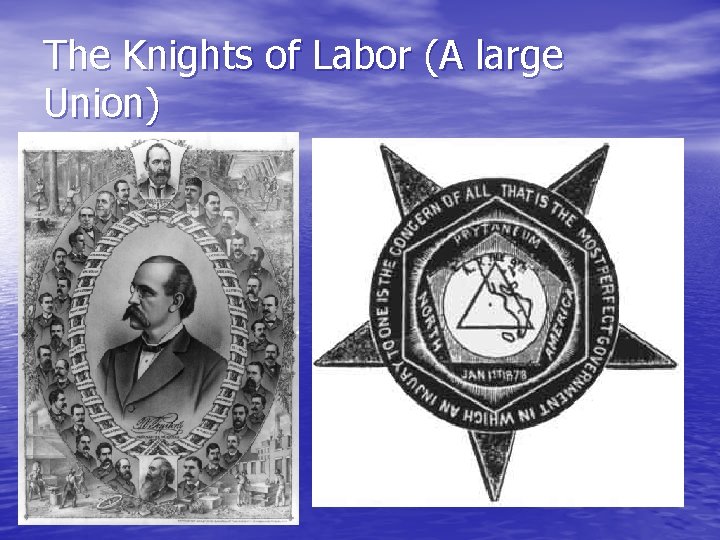
The Knights of Labor (A large Union)
Goals of the Knights of Labor • Eight-hour workday. • Workers’ cooperatives. • Worker-owned factories. • Abolition of child and prison labor. • Increased circulation of greenbacks. • Equal pay for men and women. • Safety codes in the workplace. • Prohibition of contract foreign labor. • Abolition of the National Bank.
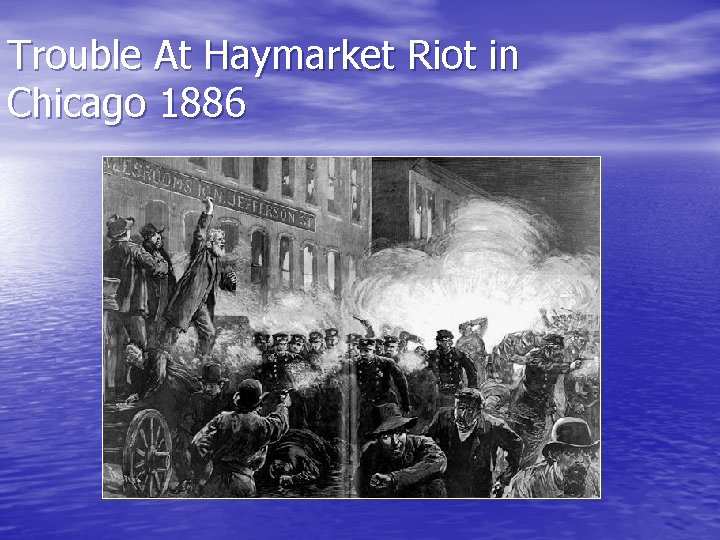
Trouble At Haymarket Riot in Chicago 1886
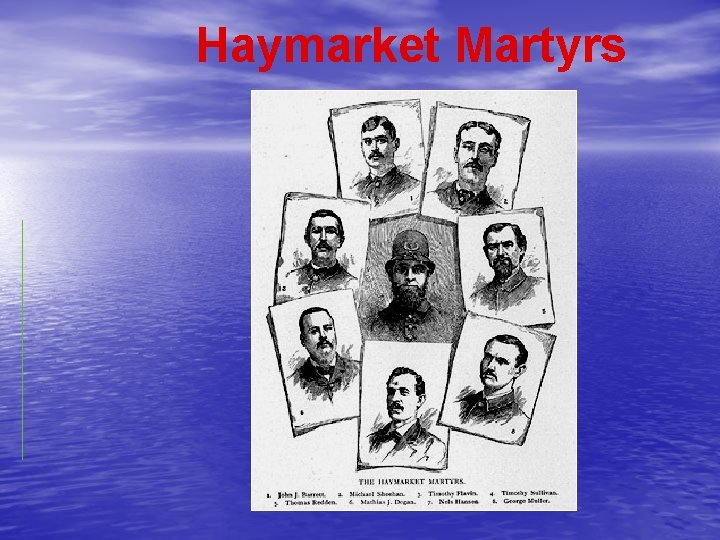
Haymarket Martyrs
Effect of the Haymarket Riot • Many people associate labor unions with anarchists or other radical groups • Anarchist – someone who wants all forms of government eliminated • Socialist – someone who wants the “means of production” (factories and farms) controlled by the government
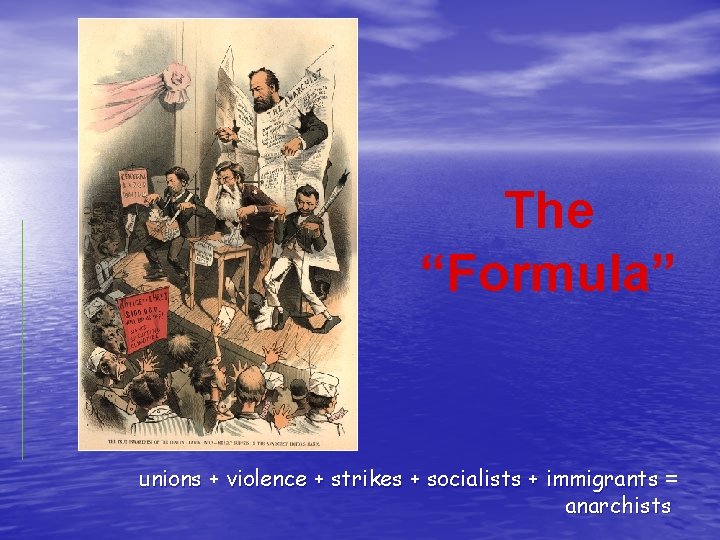
The “Formula” unions + violence + strikes + socialists + immigrants = anarchists
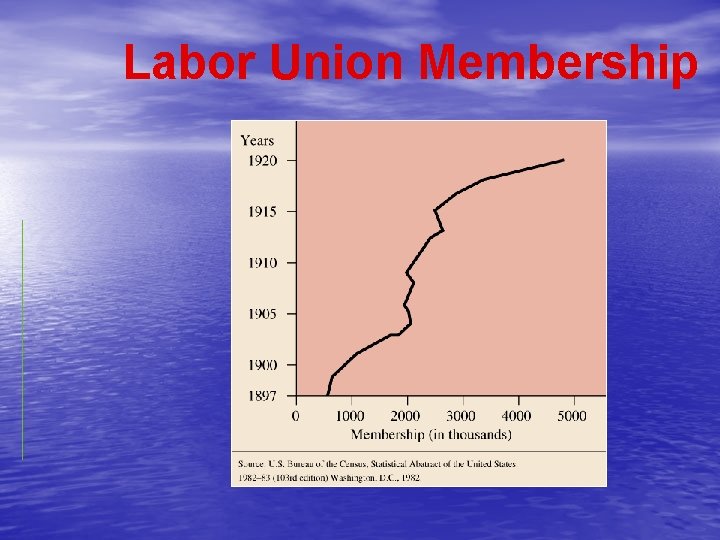
Labor Union Membership
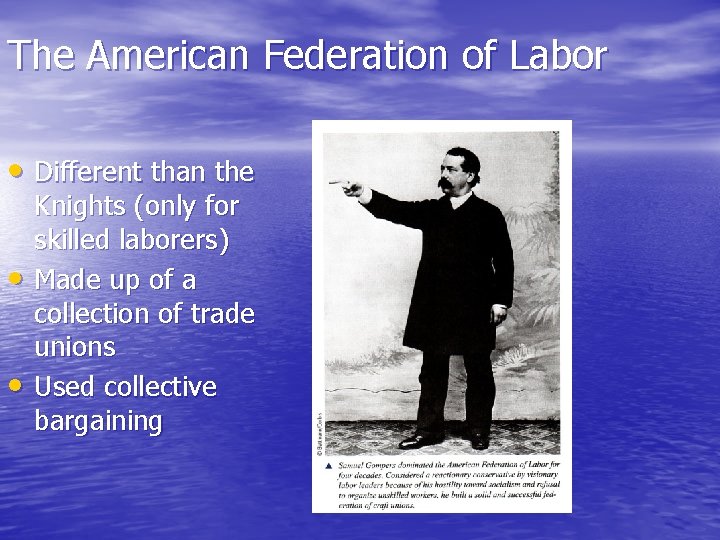
The American Federation of Labor • Different than the • • Knights (only for skilled laborers) Made up of a collection of trade unions Used collective bargaining
Women at Work • Sometimes form their own unions • Mother Jones is a labor organizer • ILGWU organizes garment workers • Triangle Shirtwaist factory fire in New York in 1911 leads to reforms
Government and Labor • Many strikes in the late 19 th century/early 20 th century • Government often influenced by big business • Government often sided with big business in quashing (putting down) the strikes
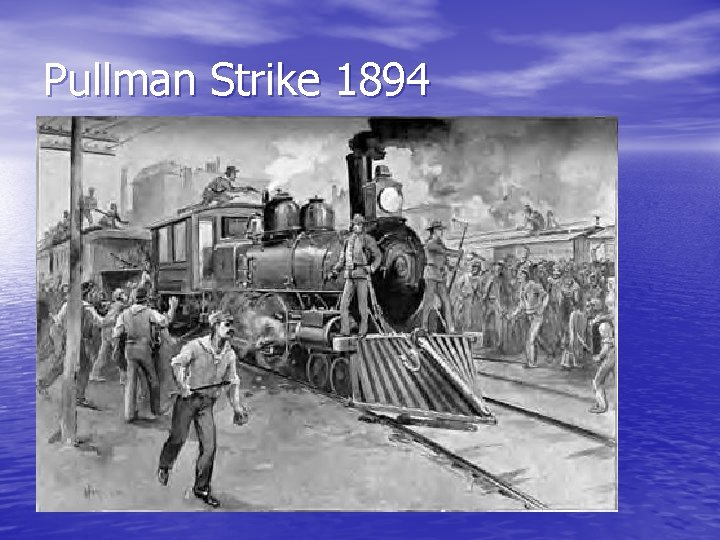
Pullman Strike 1894
- Slides: 18