
THE RISE OF NATIONALISM IN EUROPE Introduction This

- Slides: 47
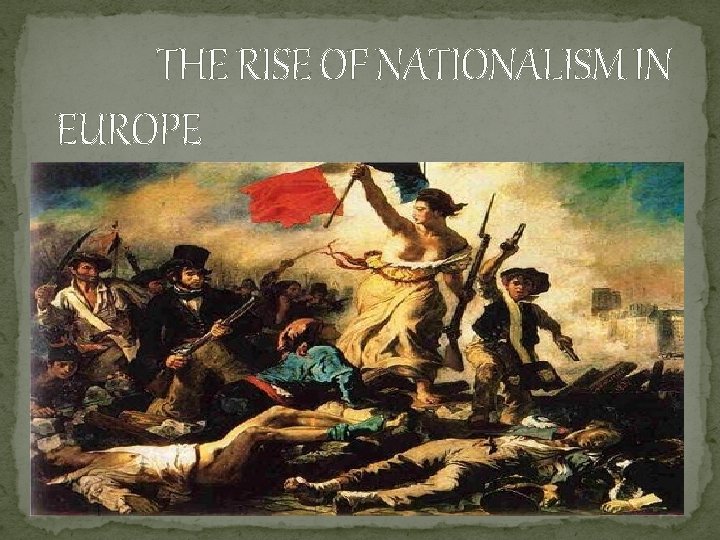
THE RISE OF NATIONALISM IN EUROPE
Introduction �This chapter tries to explain the meaning of nationalism and how nationalism evolved in mankind’s history. Starting with French Revolution the nationalism spread to other parts of Europe and later on paved the way for development of modern democratic nations across the world.
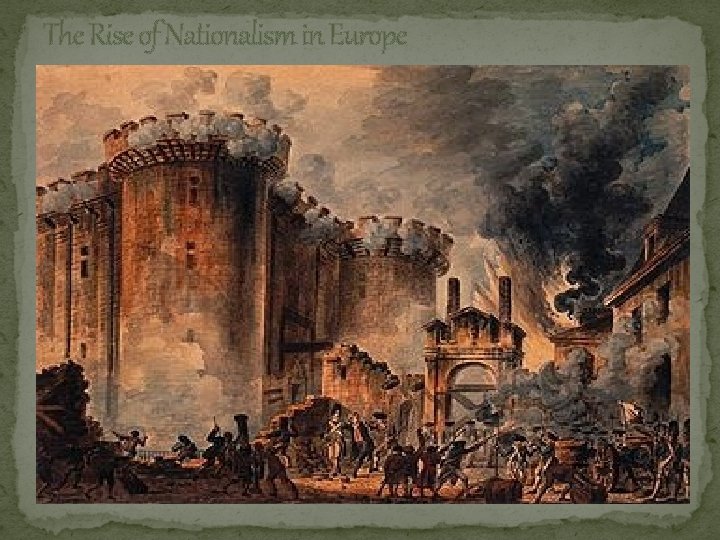
The Rise of Nationalism in Europe
Meaning of Nationalism �Nationalism is the idea of a sense of common identity and a sense of belongingness to a particular geographical area. Apart from this it is also a sense of attachment to a particular culture. It should be kept in mind that culture encompasses a variety of factors, like language, cuisine, costumes, folklores, etc.
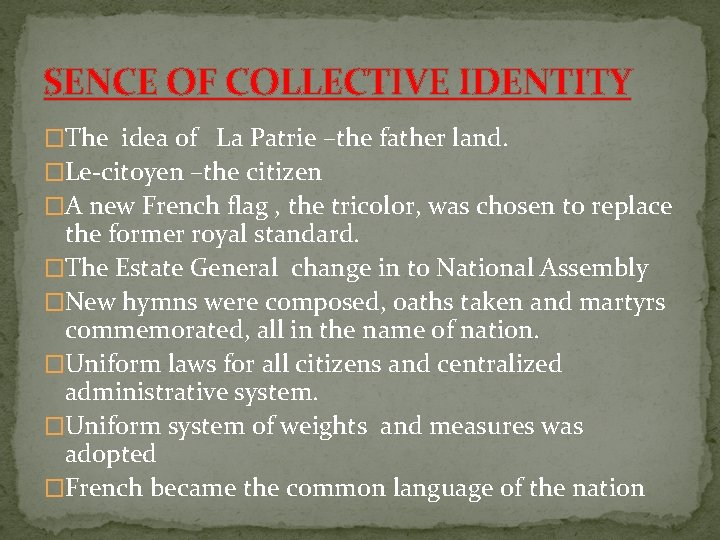
SENCE OF COLLECTIVE IDENTITY �The idea of La Patrie –the father land. �Le-citoyen –the citizen �A new French flag , the tricolor, was chosen to replace the former royal standard. �The Estate General change in to National Assembly �New hymns were composed, oaths taken and martyrs commemorated, all in the name of nation. �Uniform laws for all citizens and centralized administrative system. �Uniform system of weights and measures was adopted �French became the common language of the nation
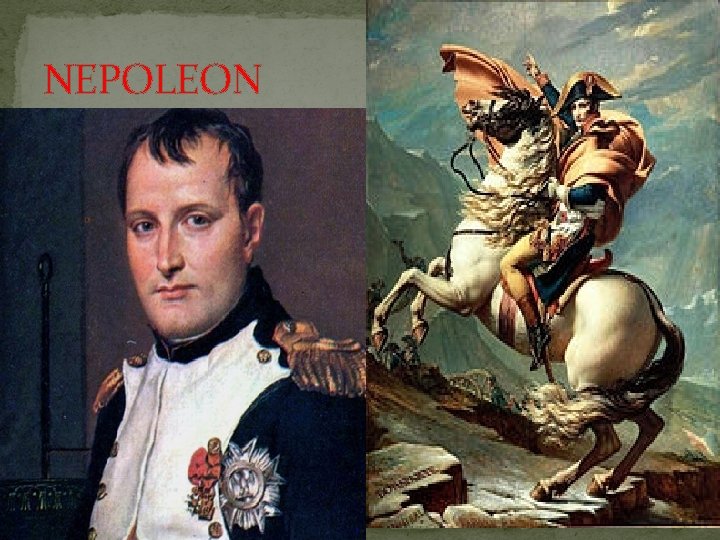
NEPOLEON
THE CIVIL CODE OF 1804(NAPOLEONIC CODE) �Did away with all privileges based on birth. �Established Equality before the law and secured the right to property. �Abolished the feudal system and freed peasants from serfdom and manorial dues �Guild restrictions were removed �Transport and communication systems were improved. �Uniform laws , standardized weights and measures, and a common national currency.
THE MAKING OF NATIONALISM IN EUROPE �The Aristocracy and the New Middle Class. �The Liberal Nationalism ---- Liber –free �Universal Suffrage. �Conservatism after 1815 -- Treaty of Vienna. �The revolutionaries. �The age of Revolution – 1830 -1848. �The Romantic Imagination and National Feelings.
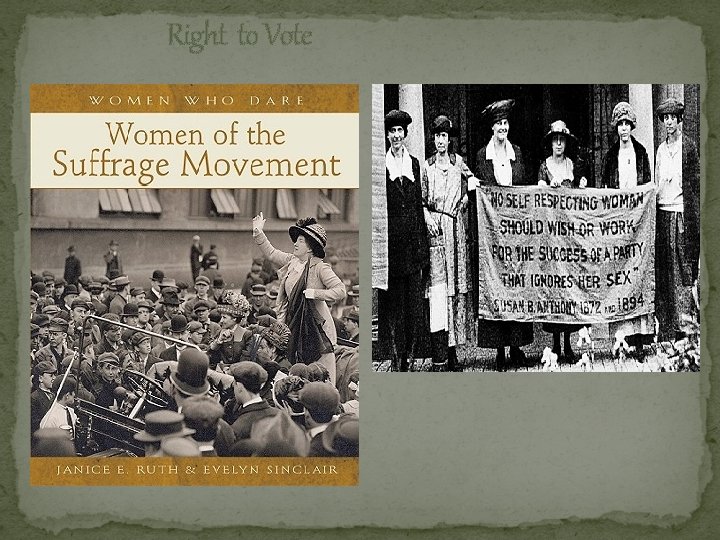
Right to Vote
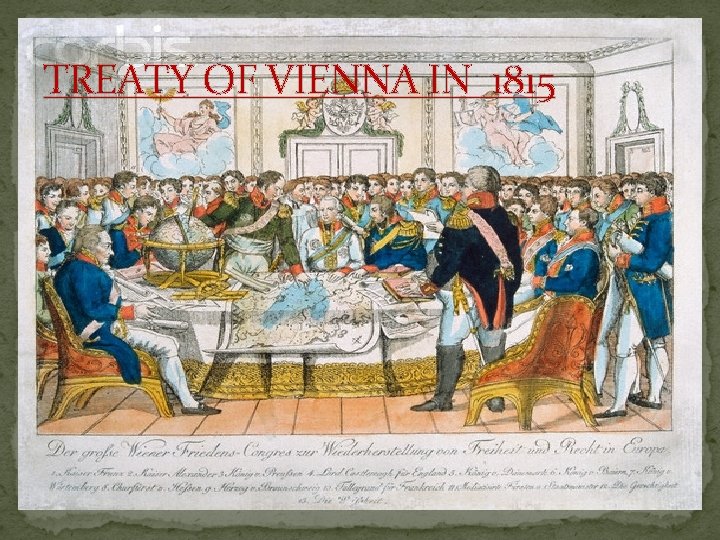
TREATY OF VIENNA IN 1815
The Vienna Congress �In 1815, representatives of the European powers – Britain, Russia, Prussia and Austria – who had collectively defeated Napoleon, met at Vienna to draw up a settlement for Europe. The Congress was hosted by the Austrian Chancellor Duke Metternich. The delegates drew up the Treaty of Vienna of 1815 with the object of undoing most of the changes that had come about in Europe during the Napoleonic wars. The Bourbon dynasty, which had been deposed during the French Revolution, was restored to power, and France lost the territories it had annexed under Napoleon. A series of states were set up on the boundaries of France to prevent French expansion in future. Thus the kingdom of the Netherlands, which included Belgium, was set up in the north and Genoa was added to Piedmont in the south.
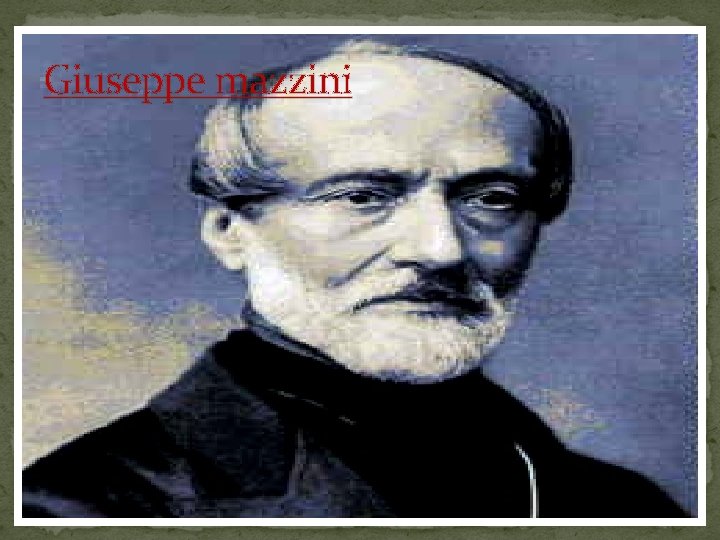
Giuseppe mazzini
GIUSEPPE MAZZINI � Giuseppe Mazzini was born in Genoa in 1807. � He was became a member of the secret society of the carbonari. � As a young man of 24, he was sent into exile in 1831 for attempting a revolution in Liguria. � He subsequently founded two more underground societies -- Young Italy in Marseilles and Young Europe in Borne. � Mazzini believed that God had intended nations to be the natural units of mankind. So Italy could not continue to be a patchwork of small states and kingdoms.
�One such individual was the Italian revolutionary Giuseppe Mazzini. Born in Genoa in 1807, he became a member of the secret society of the Carbonari. As a young man of 24, he was sent into exile in 1831 for attempting a revolution in Liguria. He subsequently founded two more underground societies, first, Young Italy in Marseilles, and then, Young Europe in Berne, whose members were like-minded young men from Poland, France, Italy and
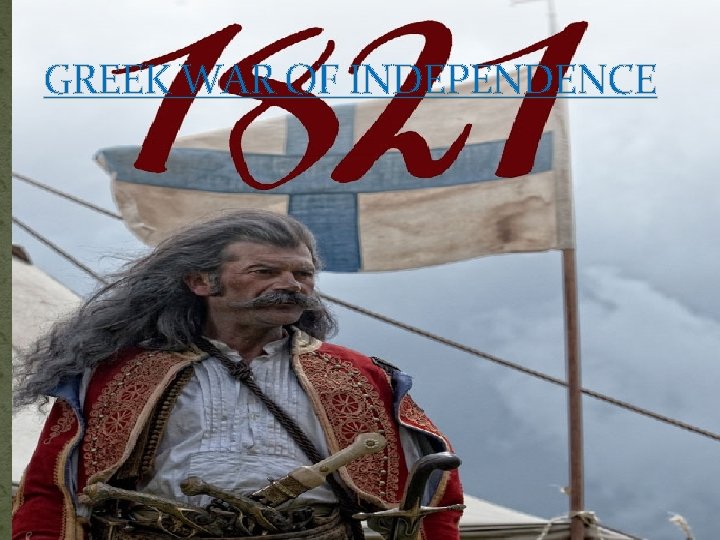
GREEK WAR OF INDEPENDENCE
THE GREEK WAR OF INDEPENDENCE �Greek had been part of the ottoman Empire since the 15 th century. �The growth of revolutionary nationalism. �Nationalist in Greece got support from other Greeks living in exile. �Sympathies for ancient Greek culture. �Mobilized public opinion to support its struggle against a Muslim empire. �The English poet lord Byron organized funds and later went to fight in the war. �The Treaty of Constantinople of 1832.
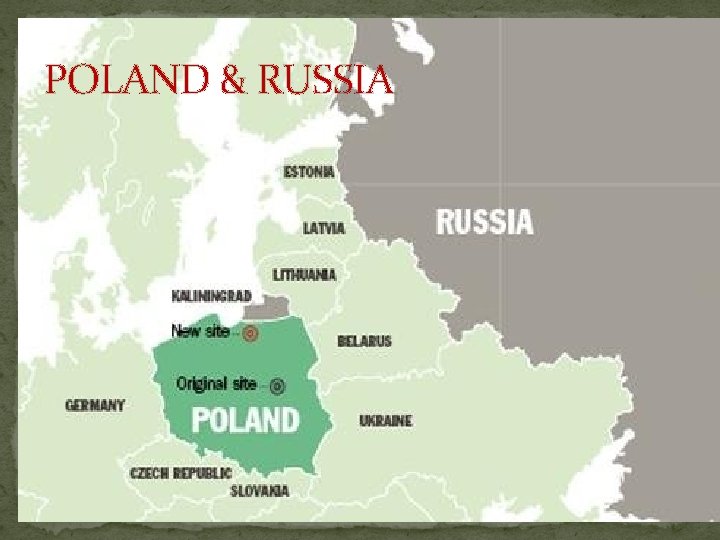
NATIONALISM IN POLAND �After Russian occupation , the polish language was forced out of schools and the Russian language was imposed everywhere. �In 1831 , an armed rebellion against Russian rule took place which was ultimately crushed. �Many members of the clergy in Poland began to use language as a weapon of national resistance. �Polish was used for Church gathering and all religious instruction. As a result, a large number of priests and bishops were put in jail or sent to Siberia.
POLAND & RUSSIA
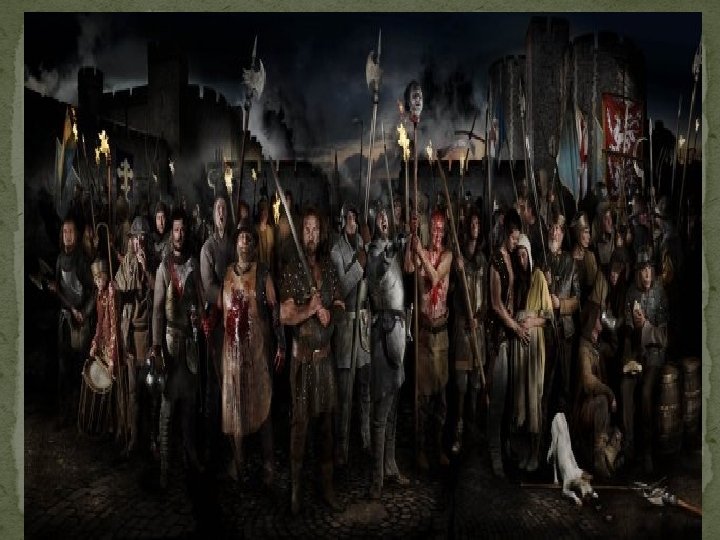
HUNGER, HARDSHIP AND POPULAR REVOLT �The 1830 s were years of great economic hardship in Europe. �Enormous increase in population all over Europe. �More seekers of jobs than employment. �Population from rural areas migrated to the cities. �Imports of cheap machine made goods from England. �Food shortage. �Louis Philippe was forced to flee.
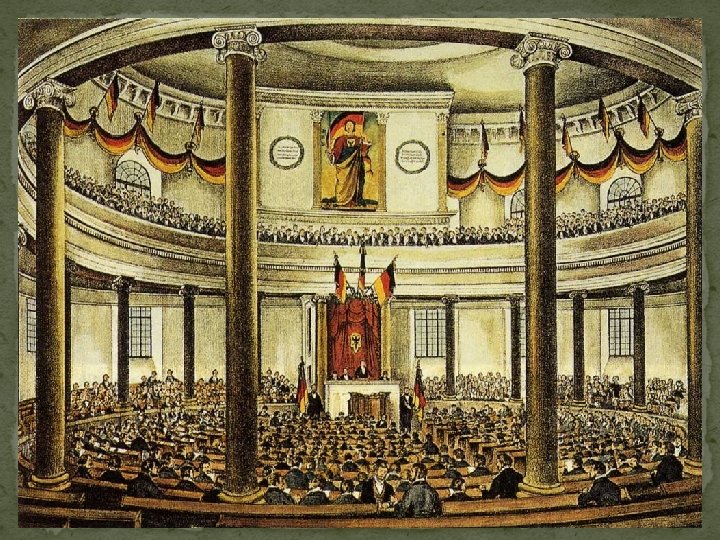
THE REVOLUTION OF LIBERALS � FRANKFURT PARLIAMENT : � In the German regions a large number of political associations whose members were middle-class professionals , businessmen and prosperous artisans came together in the city of Frankfurt and decided to vote for an all- German National Assembly. � On 18 may 1848 , 831 elected representatives drafted a constitution for a German nation to be headed by a monarchy subject to a parliament. � When the deputies offered the crown to Friedrich Wilhelm IV, king of Prussia.
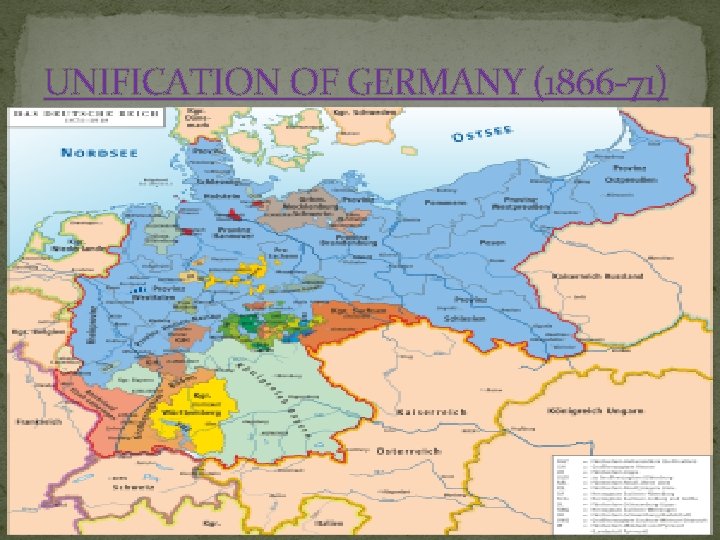
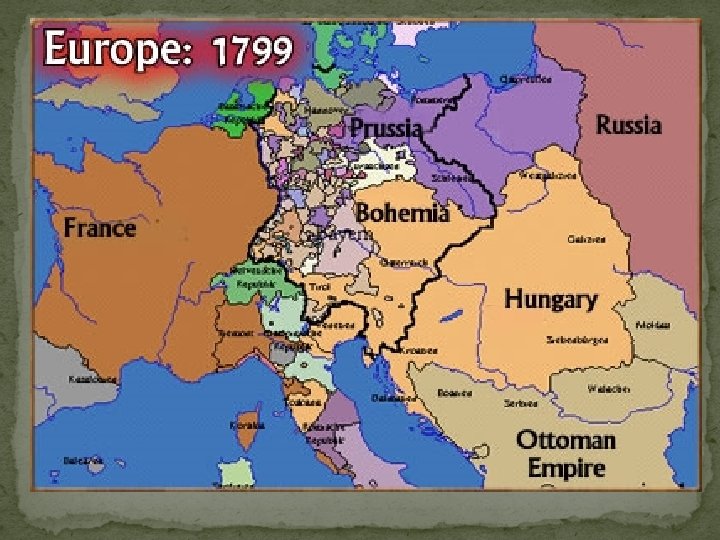
UNIFICATION OF GERMANY �Napoleon’s administrative measures had created out of countless small principalities a confederation of 39 states. �Each of these possessed its own currency, and weights and measures. �Formation of a custom union or Zollverin in 1834. �This union abolished tariff barriers and reduced the number of currencies. �Prussia took on the leadership of the movement for national unification.
UNIFICATION OF GERMANY (1866 -71)
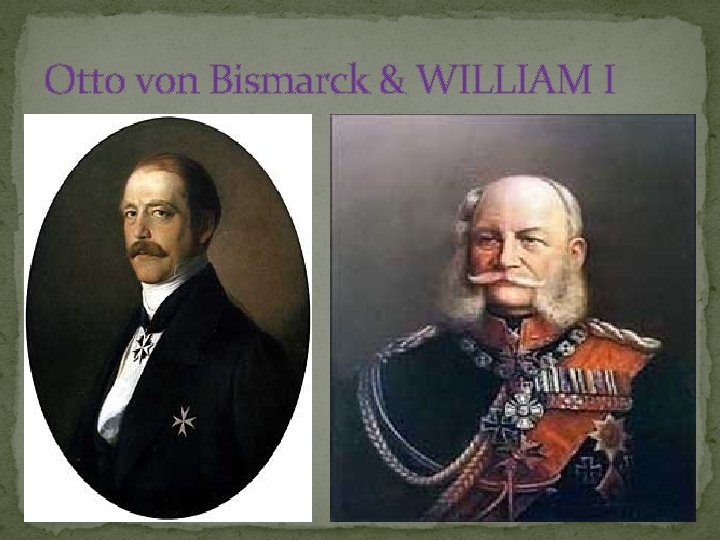
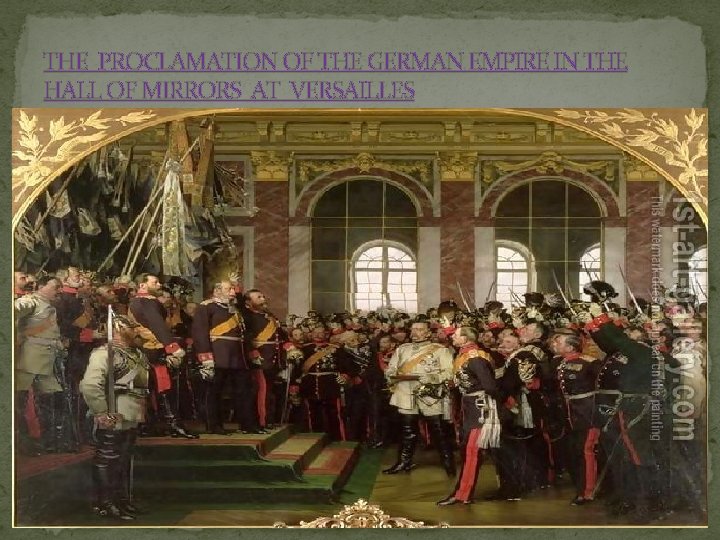
UNIFICATION OF GERMAY �Chief minister , Otto von Bismarck, was the architect of the German unification. �Three wars over seven years –with Austria, Denmark and France –ended in Prussian victory. �Completed the process of German unification in January 1871, the Prussian king , William I. was proclaimed German Emperor in a ceremony held at Versailles.
Otto von Bismarck & WILLIAM I
THE PROCLAMATION OF THE GERMAN EMPIRE IN THE HALL OF MIRRORS AT VERSAILLES
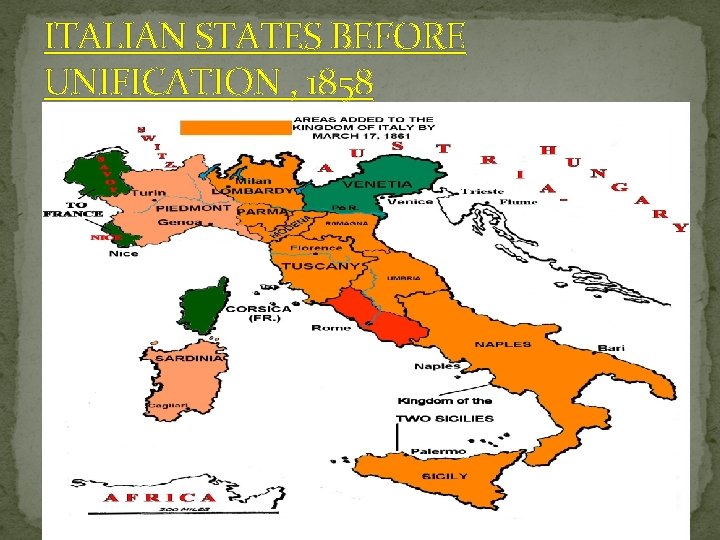
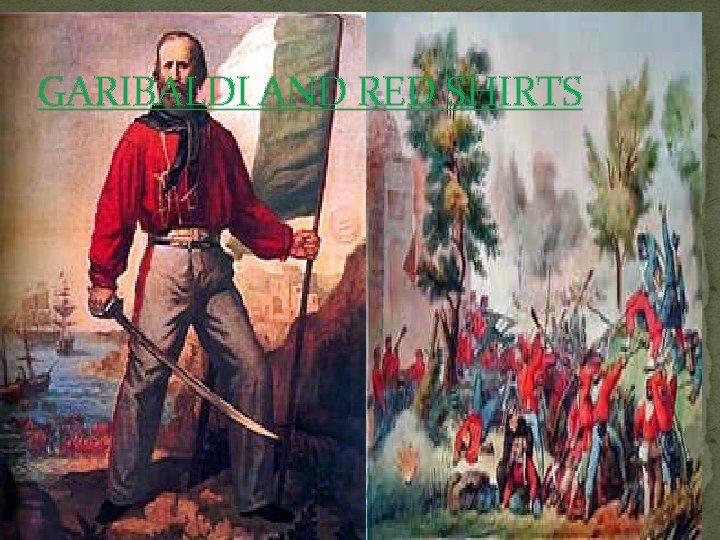
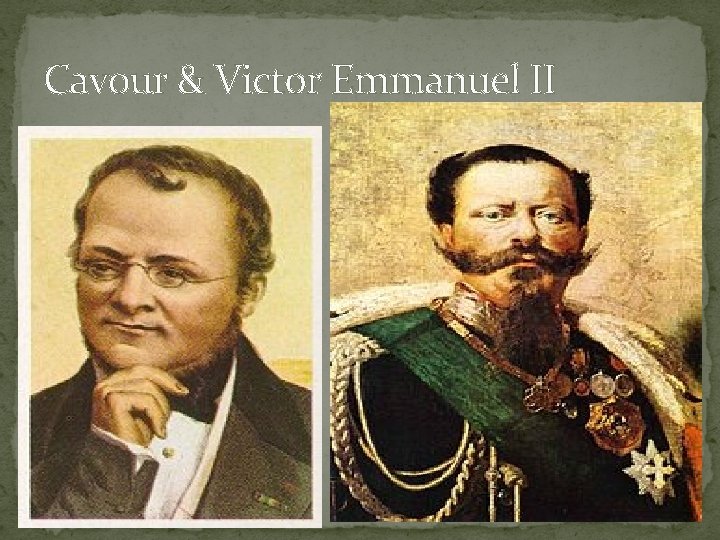
UNIFICATION OF ITALY � During the middle of the 19 th centaury , Italy was divided into seven states, of which only one , Sardinia-piedmont, was ruled by an Italian princely house. � The north was under Austrian Habsburgs, the centre was ruled by pope and the southern regions were under the domination of the Bourbon kings of Spain. � Role of Giuseppe Mazzini. � role of chief minister Cavour of Sardinia-Piedmont, tactful diplomatic alliance with France � Revolutionary movements of Garibaldi. � In 1861 Victor Emmanuel II was proclaimed king of united Italy.
ITALIAN STATES BEFORE UNIFICATION , 1858
GARIBALDI AND RED SHIRTS
Cavour & Victor Emmanuel II
The Strange Case of Britain
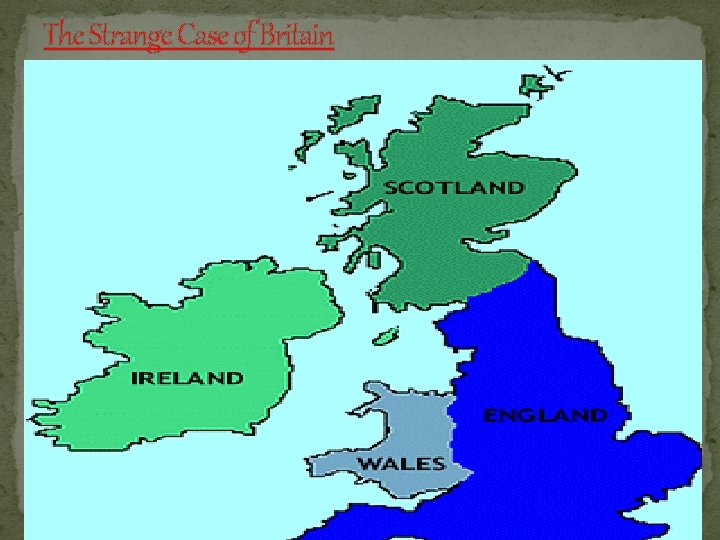
The Strange Case of Britain �In Britain the formation of the nation-state was not the result of a sudden upheaval or revolution. It was the result of a long-drawn-out process. There was no British nation prior to the eighteenth century. The primary identities of the people who inhabited the British Isles were ethnic ones – such as English, Welsh, Scot or Irish. All of these ethnic groups had their own cultural and political traditions. But as the English nation steadily grew in wealth, importance and power, it was able to extend its influence over the other nations of the islands. The English parliament, which had seized power from the monarchy in 1688, was the instrument through which a nation-state, with England at its centre, came to be forged.
�The Act of Union (1707) between England Scotland that resulted in the formation of the ‘United Kingdom of Great Britain’ meant, in effect, that England was able to impose its influence on Scotland. The British parliament was henceforth dominated by its English members. The growth of a British identity meant that Scotland’s distinctive culture and political institutions were systematically suppressed. The Catholic clans that inhabited the Scottish Highlands suffered terrible repression whenever they attempted to assert their independence. The Scottish Highlanders were forbidden to speak their Gaelic language or wear their national dress, and large numbers were forcibly driven out of their homeland.
�Ireland suffered a similar fate. It was a country deeply divided between Catholics and Protestants. The English helped the Protestants of Ireland to establish their dominance over a largely Catholic country. Catholic revolts against British dominance were suppressed. After a failed revolt led by Wolfe Tone and his United Irishmen (1798), Ireland was forcibly incorporated into the United Kingdom in 1801 �A new ‘British nation’ was forged through the propagation of a dominant English culture. The symbols of the new Britain – the British flag (Union Jack), the national anthem (God Save Our Noble King), the English language – were actively promoted and the older nations survived only as subordinate partners in this union.
Visualizing the Nation
Visualizing the Nation �Artists in the eighteenth and nineteenth centuries found a way out by personifying a nation. In other words they represented a country as if it were a person. Nations were then portrayed as female figures. The female form that was chosen to personify the nation did not stand for any particular woman in real life; rather it sought to give the abstract idea of the nation a concrete form. That is, the female figure became an allegory of the nation.
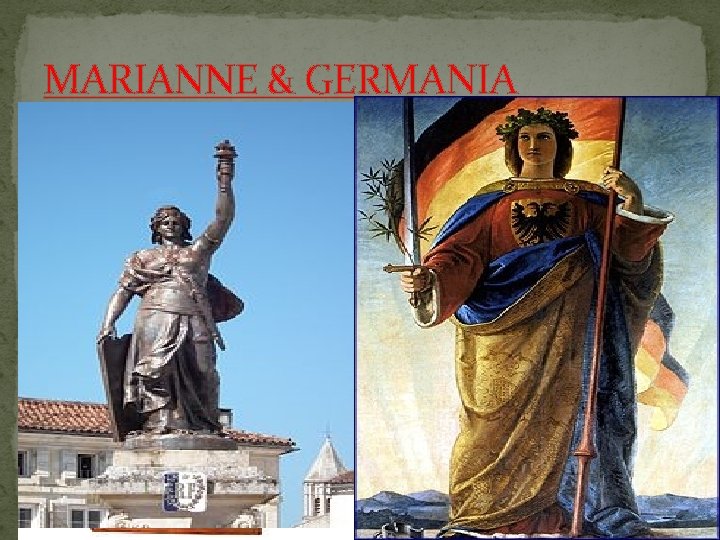
FEMALE ALLEGORIES �In France she was Christened Marianne �Which underline the idea of a people’s nation. �Her characteristics were drawn from those of Liberty and the Republic – the red cap, the tricolor, the cockade. �Statues of marianne were erected in public squares and were marked on coins and stamps. �Germania become the allegory of the German nation. �In visual representation , Germania wears a crown of oak leaves, as the German oak stands for heroism.
MARIANNE & GERMANIA
BALTIC REGIONS
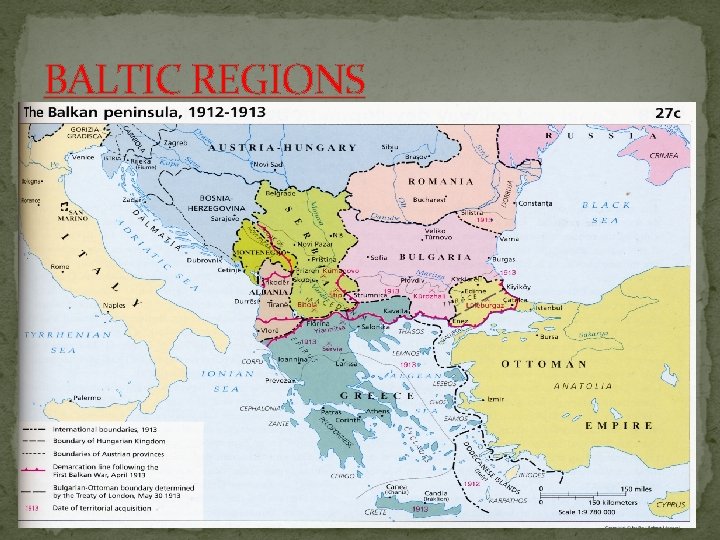
Negative Effects of Nationalism � By the last quarter of the nineteenth century nationalism no longer retained its idealistic liberal-democratic sentiment of the first half of the century, but became a narrow creed with limited ends. During this period nationalist groups became increasingly intolerant of each other and ever ready to go to war. The major European powers, in turn, manipulated the nationalist aspirations of the subject peoples in Europe to further their own imperialist aims. � The most serious source of nationalist tension in Europe after 1871 was the area called the Balkans. The Balkans was a region of geographical and ethnic variation comprising modern-day Romania, Bulgaria, Albania, Greece, Macedonia, Croatia, Bosnia. Herzegovina, Slovenia, Serbia and Montenegro whose inhabitants were broadly known as the Slavs. A large part of the
�The spread of the ideas of romantic nationalism in the Balkans together with the disintegration of the Ottoman Empire made this region very explosive. All through the nineteenth century the Ottoman Empire had sought to strengthen itself through modernization and internal reforms but with very little success. One by one, its European subject nationalities broke away from its control and declared independence. The Balkan peoples based their claims for independence or political rights on nationality and used history to prove that they had once been independent but had subsequently been subjugated by foreign powers. Hence the rebellious nationalities in the Balkans thought of their struggles as attempts to win back their long-lost independence.
�As the different Slavic nationalities struggled to define their identity and independence, the Balkan area became an area of intense conflict. The Balkan states were fiercely jealous of each other and each hoped to gain more territory at the expense of the others. Matters were further complicated because the Balkans also became the scene of big power rivalry. During this period, there was intense rivalry among the European powers over trade and colonies as well as naval and military might. These rivalries were very evident in the way the Balkan problem unfolded. Each power – Russia, Germany, England, Austro-Hungary – was keen on countering the hold of other powers over the Balkans, and extending its own control over the area. This led to a series of wars in the region and finally the First World War.
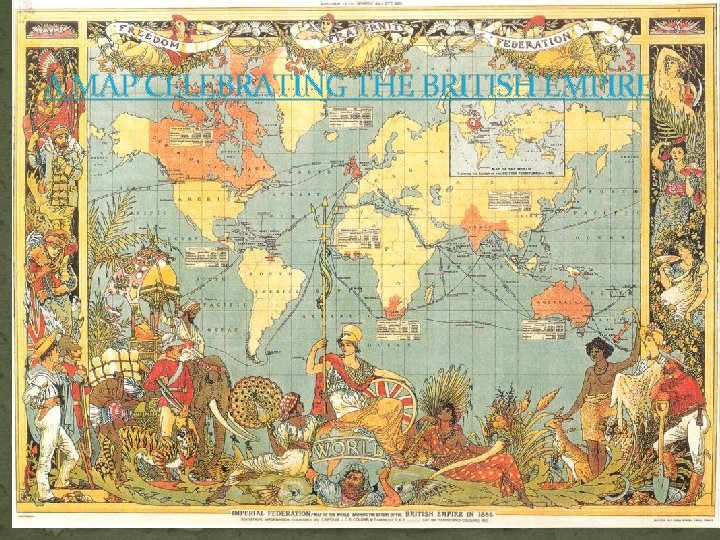
Effect on Rest of the World �Nationalism, aligned with imperialism, led Europe to disaster in 1914. But meanwhile, many countries in the world which had been colonized by the European powers in the nineteenth century began to oppose imperial domination. The anti-imperial movements that developed everywhere were nationalist, in the sense that they all struggled to form independent nation-states, and were inspired by a sense of collective national unity, forged in confrontation with imperialism. European ideas of nationalism were nowhere replicated, for people everywhere developed their own specific variety of nationalism. But the idea that societies should be organized into ‘nation-states’ came to be accepted as
A MAP CELEBRATING THE BRITISH EMPIRE