
The rise of Monarchies What is a monarchy
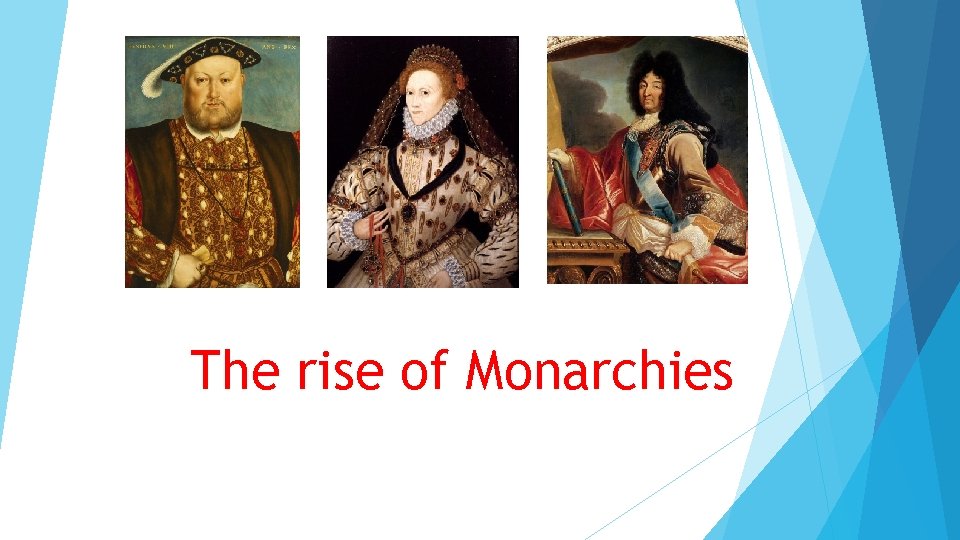
- Slides: 13
The rise of Monarchies
What is a monarchy? Monarchy – a form of government where supreme power is held by one person Leadership is passed down from older family members Two types: Absolute Monarchy and Limited Monarchy Absolute monarchy: Ruler has total control over his subjects lives. Limited monarchy: Ruler’s power is limited by his subjects.
Absolute Monarchies Ruler controlled all aspects of life Makes the laws Decides the punishment Creates the taxes Chooses the religion Why did nobody question the ruler? Kings ruled with “divine right” – The king was chosen by God, and nobody questions God’s wishes
Limited Monarchies Ruler was limited by a body of laws or a elected group of citizens Had First to ask for permission before exercising power Limited Monarchy was in England Magna Carta – Law that said King could not fine or imprison Englishmen unless law of the land said so. Parliament – legislative committee of elected representatives. Approved new laws and taxes created by the King.
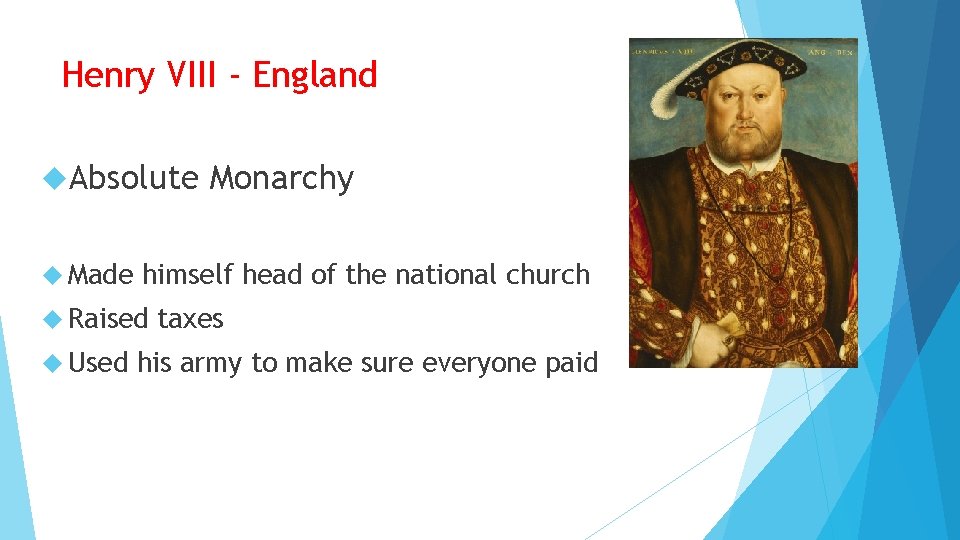
Henry VIII - England Absolute Made himself head of the national church Raised Used Monarchy taxes his army to make sure everyone paid
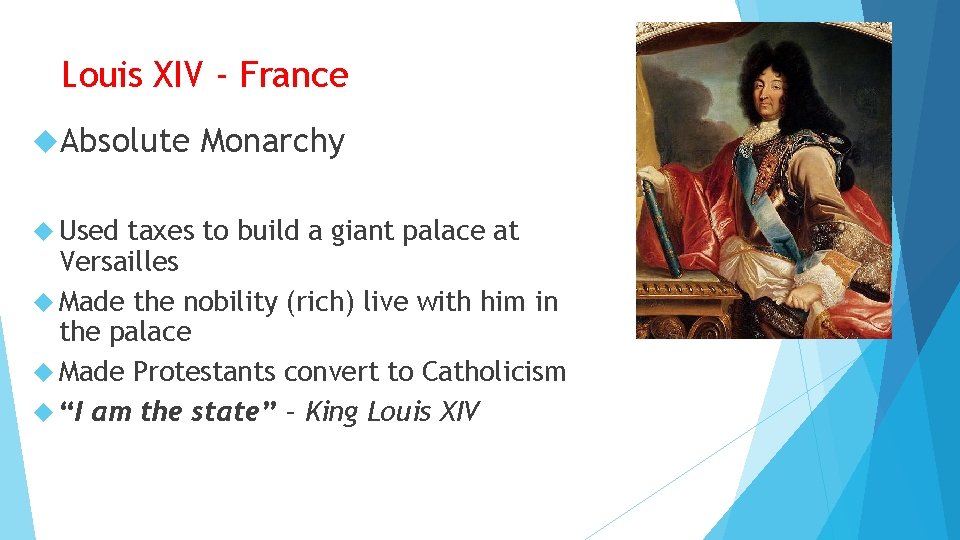
Louis XIV - France Absolute Used Monarchy taxes to build a giant palace at Versailles Made the nobility (rich) live with him in the palace Made Protestants convert to Catholicism “I am the state” – King Louis XIV
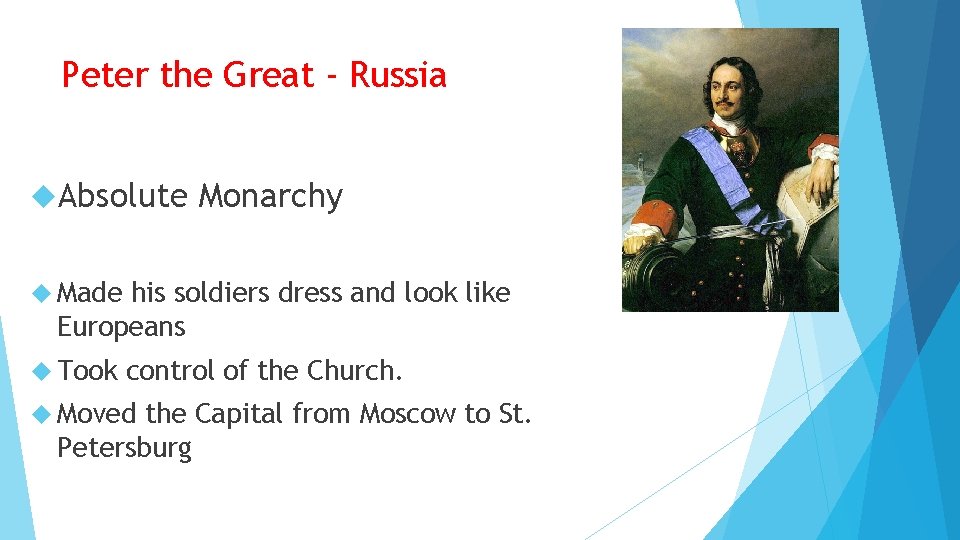
Peter the Great - Russia Absolute Monarchy Made his soldiers dress and look like Europeans Took control of the Church. Moved the Capital from Moscow to St. Petersburg
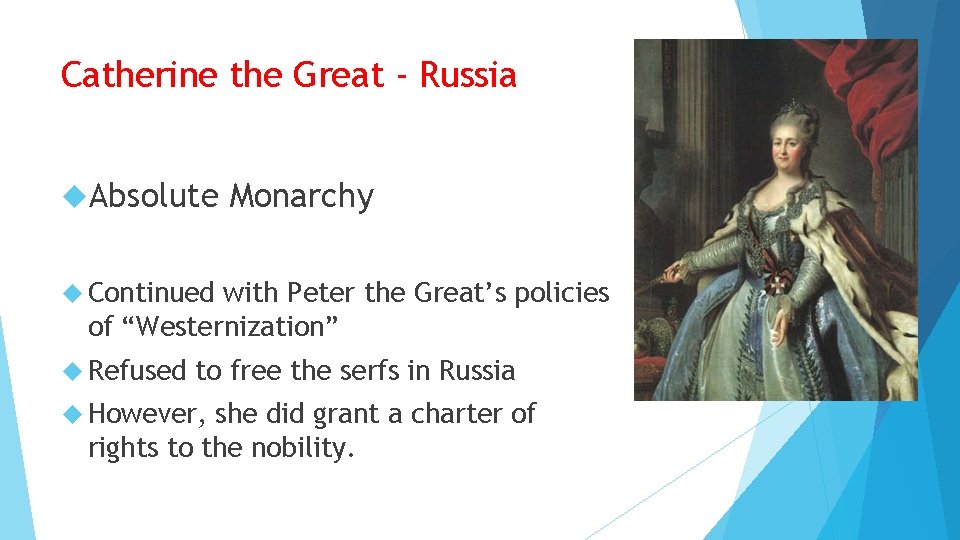
Catherine the Great - Russia Absolute Monarchy Continued with Peter the Great’s policies of “Westernization” Refused to free the serfs in Russia However, she did grant a charter of rights to the nobility.
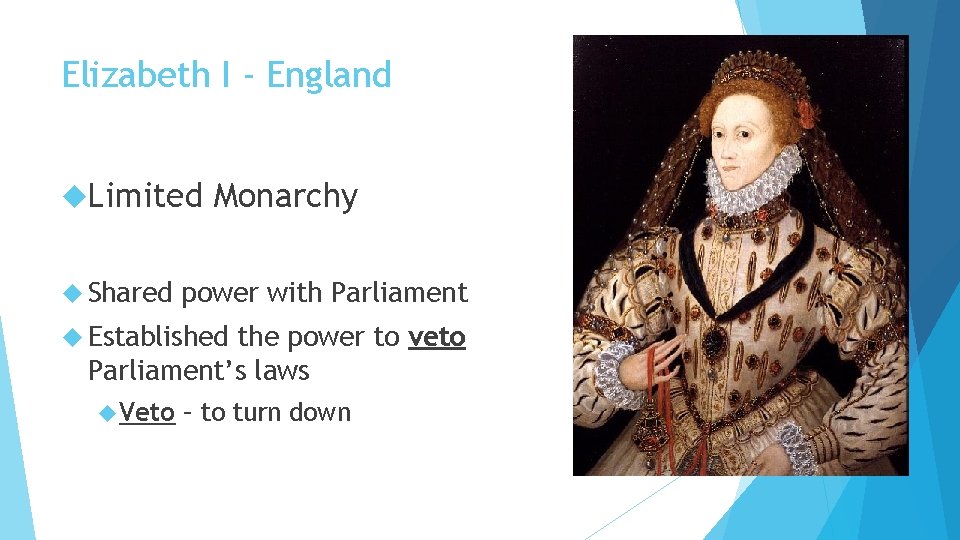
Elizabeth I - England Limited Shared Monarchy power with Parliament Established the power to veto Parliament’s laws Veto – to turn down
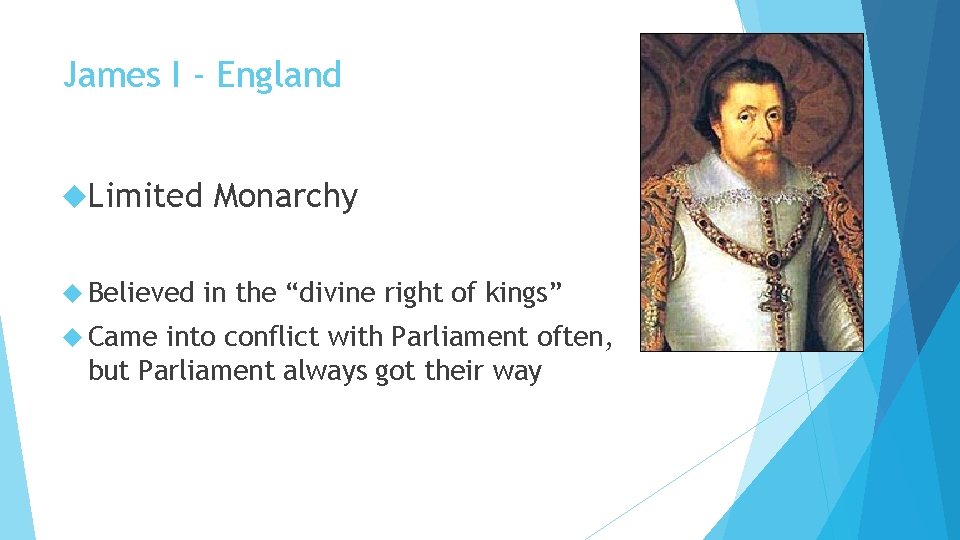
James I - England Limited Believed Came Monarchy in the “divine right of kings” into conflict with Parliament often, but Parliament always got their way
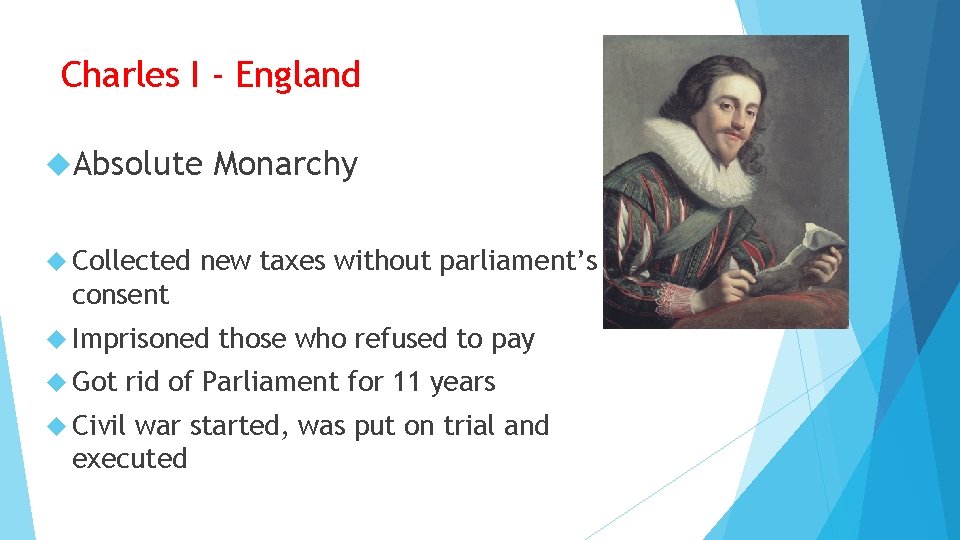
Charles I - England Absolute Collected Monarchy new taxes without parliament’s consent Imprisoned Got those who refused to pay rid of Parliament for 11 years Civil war started, was put on trial and executed
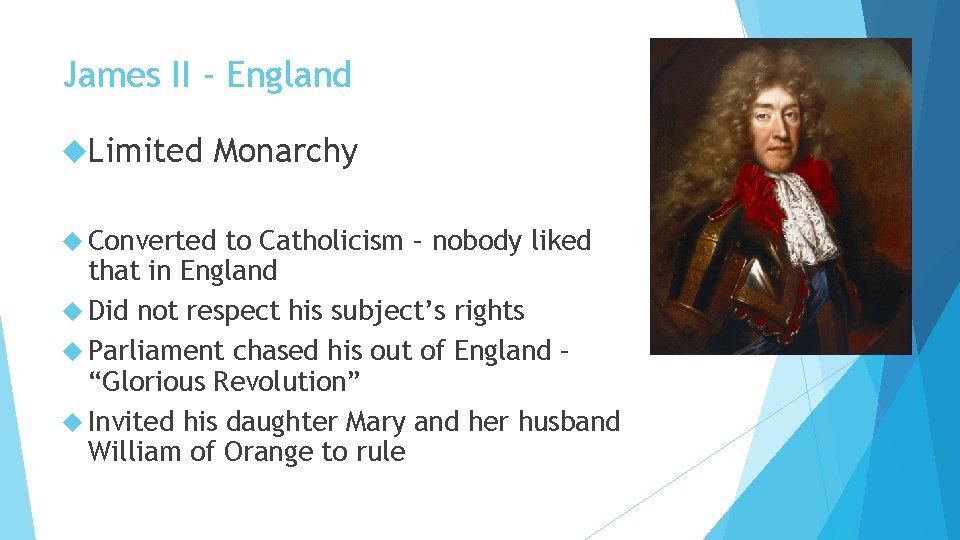
James II - England Limited Monarchy Converted to Catholicism – nobody liked that in England Did not respect his subject’s rights Parliament chased his out of England – “Glorious Revolution” Invited his daughter Mary and her husband William of Orange to rule
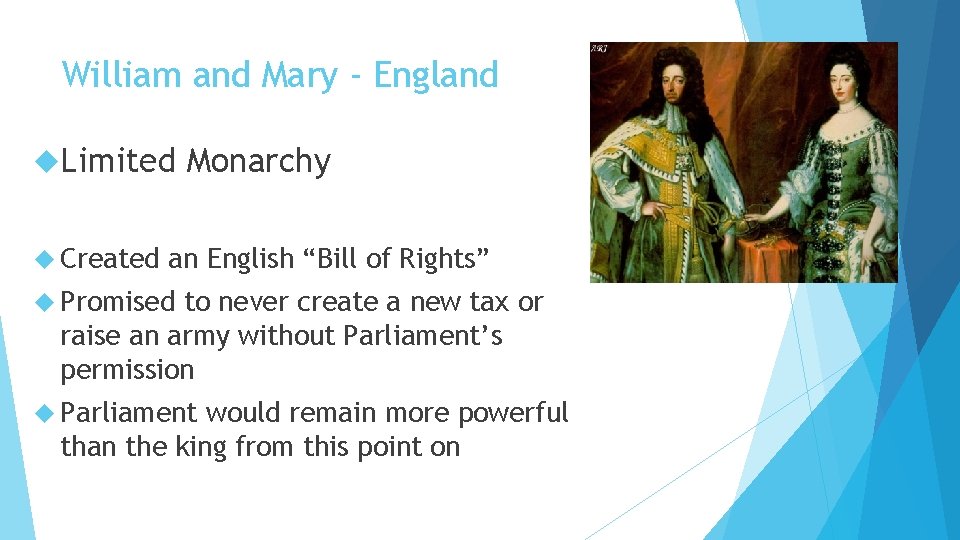
William and Mary - England Limited Created Monarchy an English “Bill of Rights” Promised to never create a new tax or raise an army without Parliament’s permission Parliament would remain more powerful than the king from this point on