
THE RISE OF MODERN JAPAN Tokugawa Shogunate Origin
- Slides: 15
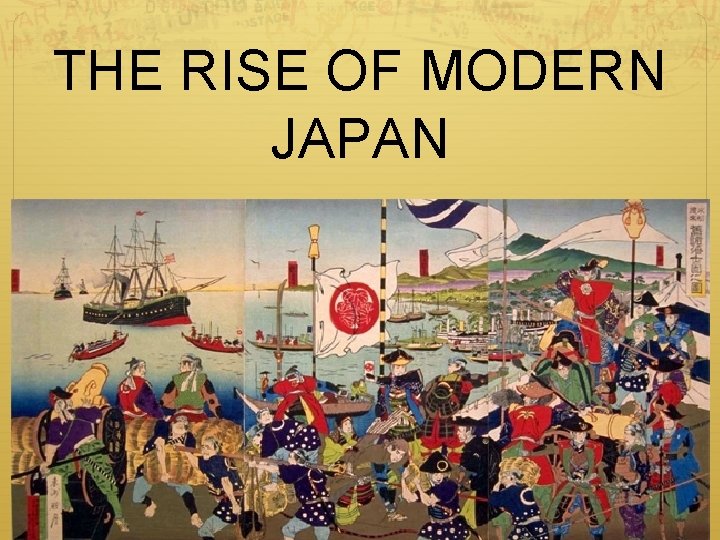
THE RISE OF MODERN JAPAN
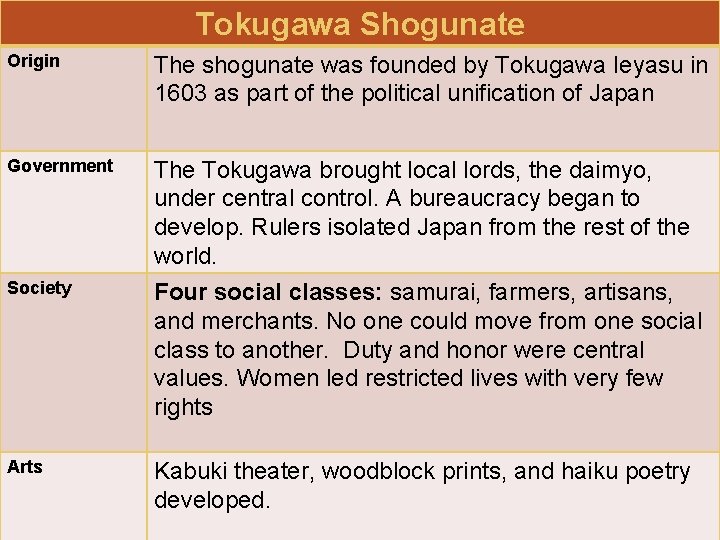
Tokugawa Shogunate Origin The shogunate was founded by Tokugawa Ieyasu in 1603 as part of the political unification of Japan Government The Tokugawa brought local lords, the daimyo, under central control. A bureaucracy began to develop. Rulers isolated Japan from the rest of the world. Four social classes: samurai, farmers, artisans, and merchants. No one could move from one social class to another. Duty and honor were central values. Women led restricted lives with very few rights Society Arts Kabuki theater, woodblock prints, and haiku poetry developed.
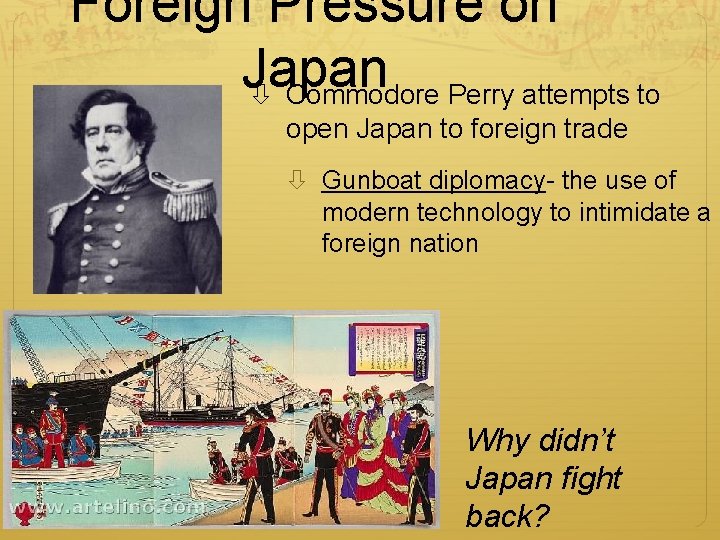
Foreign Pressure on Japan Commodore Perry attempts to open Japan to foreign trade Gunboat diplomacy- the use of modern technology to intimidate a foreign nation Why didn’t Japan fight back?
Meiji Restoration Meiji = “Enlightened Rule”
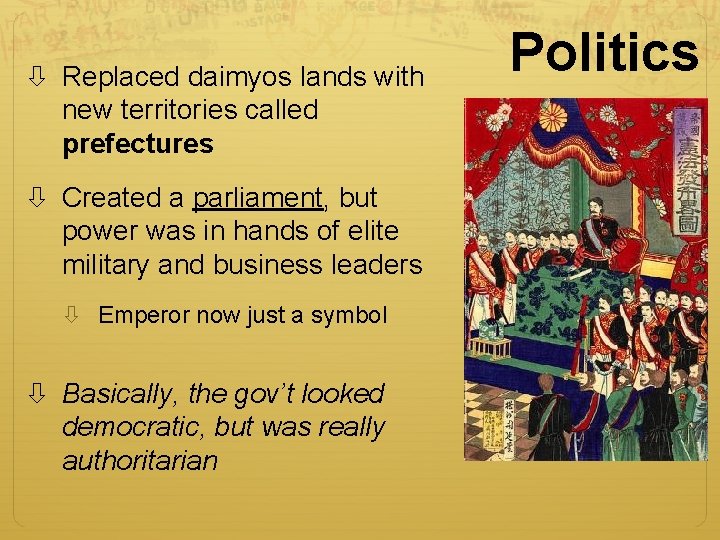
Replaced daimyos lands with new territories called prefectures Created a parliament, but power was in hands of elite military and business leaders Emperor now just a symbol Basically, the gov’t looked democratic, but was really authoritarian Politics
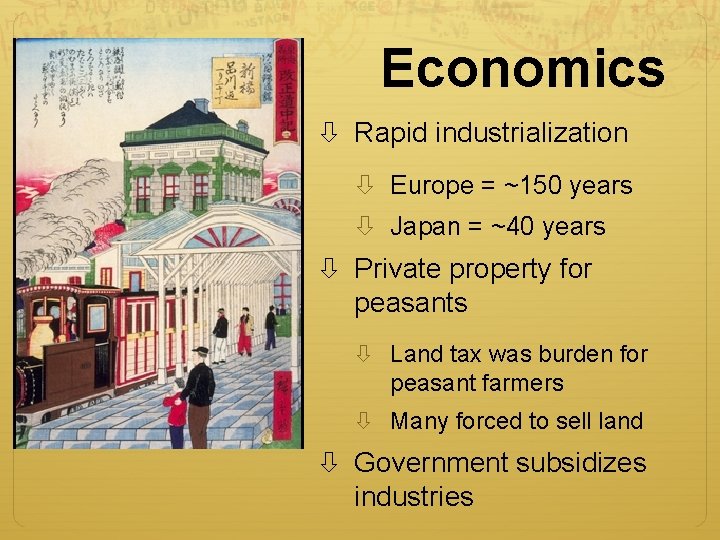
Economics Rapid industrialization Europe = ~150 years Japan = ~40 years Private property for peasants Land tax was burden for peasant farmers Many forced to sell land Government subsidizes industries
Military New army based on German model Conscription (required service) for three years Equipped with modern weapons Navy based on U. S. -British navies Huge boom in production allowed Japanese economy to grow
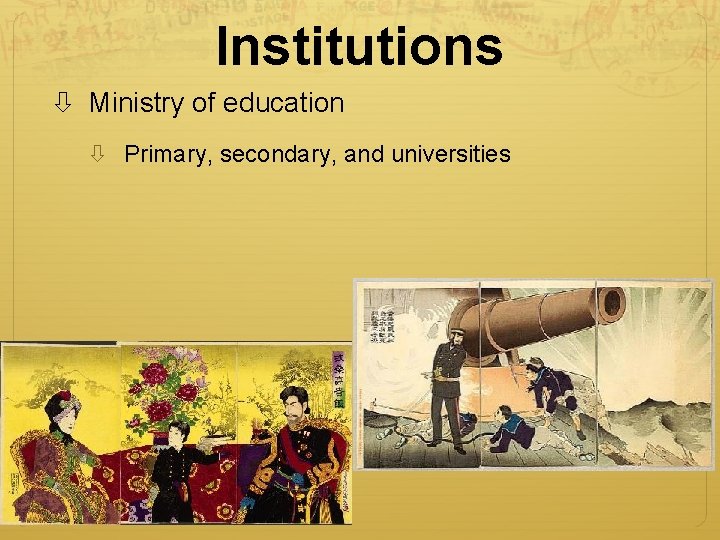
Institutions Ministry of education Primary, secondary, and universities
Social Structure Removed noble privileges Samurai and daimyos lost their status Many samurai suffer poverty Women could seek education Right to vote limited to men Tried to remove old social classes, but many still unofficially remained
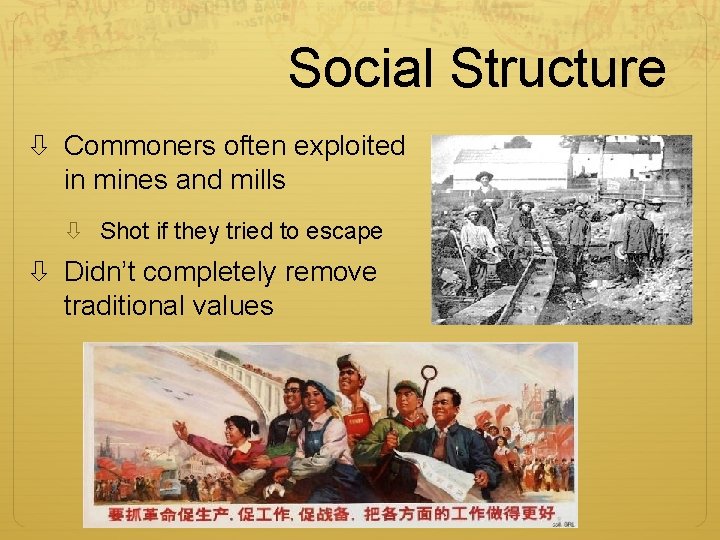
Social Structure Commoners often exploited in mines and mills Shot if they tried to escape Didn’t completely remove traditional values
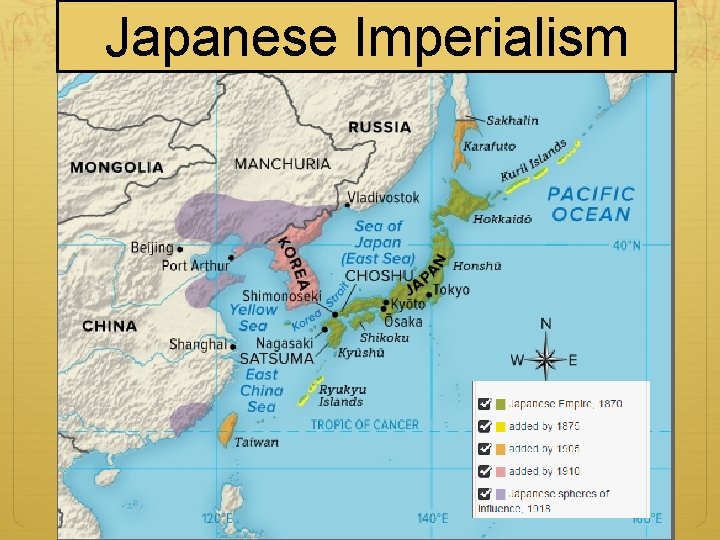
Japanese Imperialism
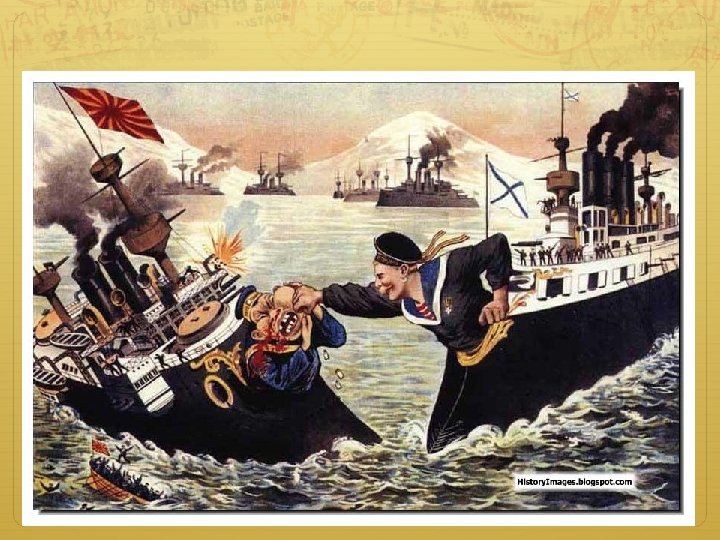
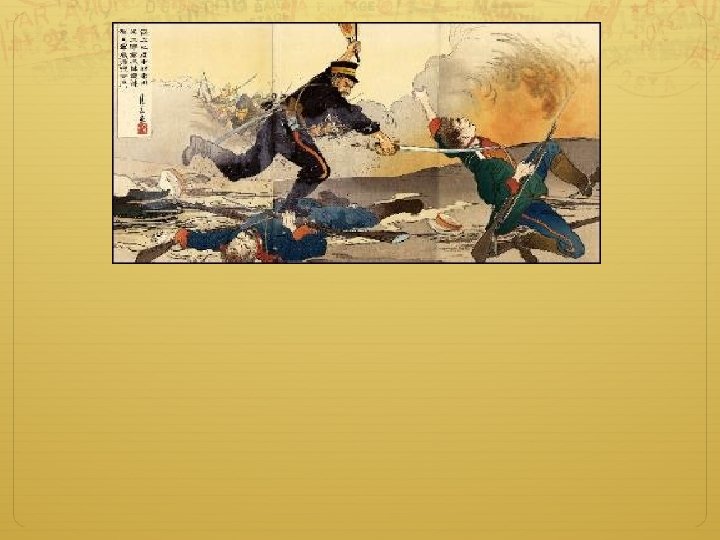
Japanese Imperialism Sino-Japanese War (1894 -95) Competed with China over Korea Russo-Japanese War (1905) Fought to control Manchuria and Korea gains independence after Japanese victory First time European power was beaten by an Asia country Eventually annexed in 1910 after war with Russia Sphere of influence established in Korea annexed in 1910
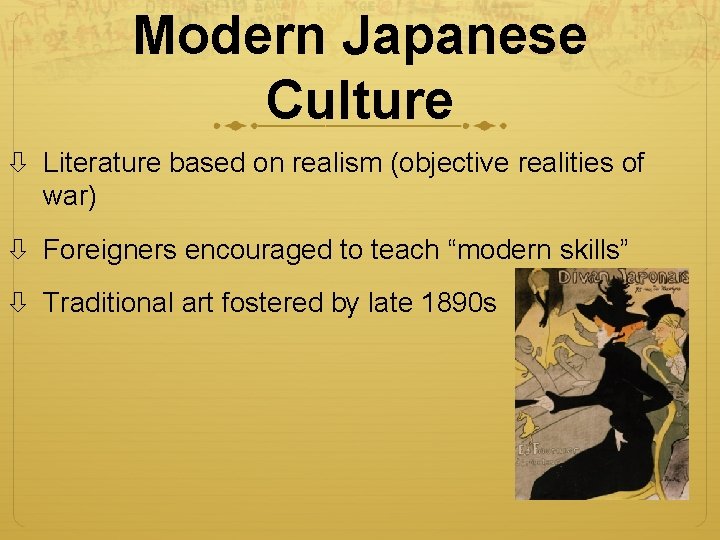
Modern Japanese Culture Literature based on realism (objective realities of war) Foreigners encouraged to teach “modern skills” Traditional art fostered by late 1890 s