
The Rise of Islam 600 1200 World History
- Slides: 19
The Rise of Islam; 600 -1200 World History AP
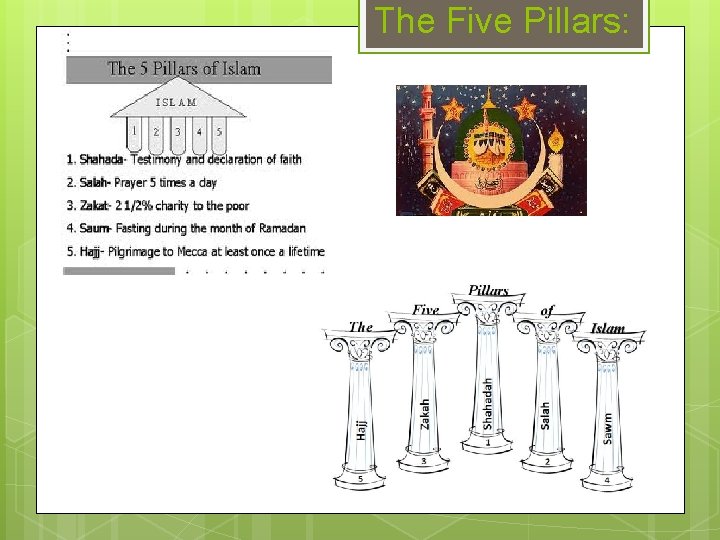
Islam One of three Abrahamic, monotheistic religions Judaism & Christianity worship the same God as Muslims Two Branches: Sunnis: (Sunna=tradition) majority of Muslims Shi’ites: (“Party of Ali”) believe caliph descends from Ali Founder: Muhammad (570 -632) Five Pillars of Islam Belief: “There is no god but Allah, and Muhammad is his prophet” Prayer: Must perform prescribed prayers five times a day Charity: “giving alms” giving part of one’s wealth to the poor Fasting: Refraining from eating or drinking from dawn to sunset during the month of Ramadan Pilgrimage: Must visit Mecca once in life
The Five Pillars:
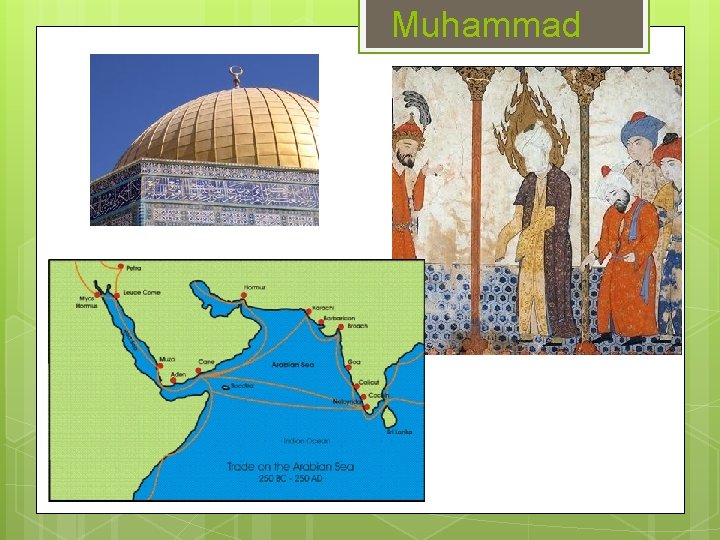
Islamic Beginnings Arabia=isolated, populated by semi-nomadic clans of Semitic speaking polytheistic people Trade routes shift south, Arabs control new routes Christian and Buddhist missionaries visit area 570: Muhammad born in Mecca, center of trade Orphaned by 5, marries rich widow, Khadija Troubled by economic inequalities, meditates Visited by Angel Gabriel who reveals God’s words Muhammad=last Allah’s prophet in long line (Hebrews & Jesus) messages written in the Quran Muhammad’s faith called Islam “submission to the will of Allah”; Muslims=“one who submits”
Muhammad
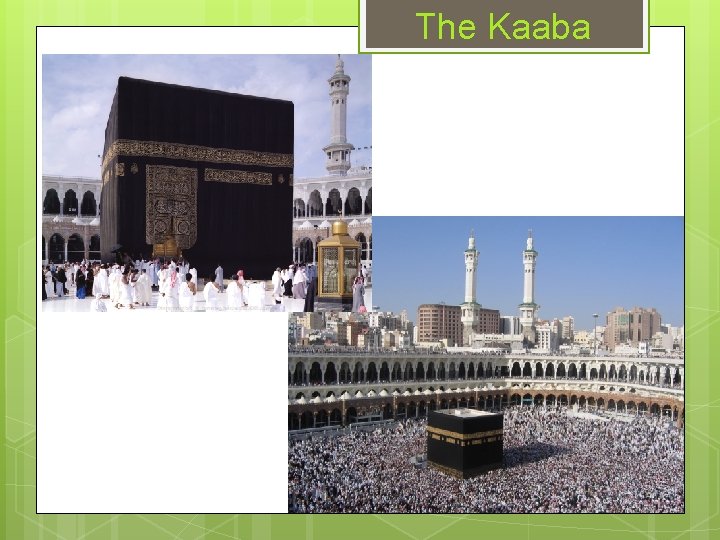
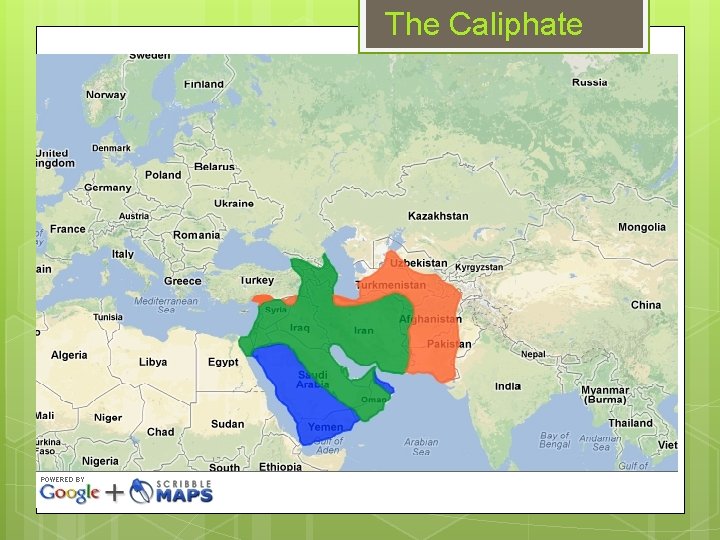
Building the Faith 622 C. E. : The Hijra Muhammad & umma leave Mecca for Yathrib Population of Yathrib converts to Islam, renamed Medina Old clan, family, and tribal distinctions replaced by umma Muhammad defeats Mecca’s army, reenters city Rededicated 632: Kaaba as Islam’s holiest site Muhammad dies, Abu Bakr named kalifa Dar al-Islam vs. Dar al-harb Jihad: struggle in the way of God, personal & external Caliph: successor of Muhammad, new leaders First four caliphs expand empire with Bedouin fighters Take lands from Byzantine Empire, defeat Sasanids Islam establishes political foundation with generation
The Kaaba
The Caliphate
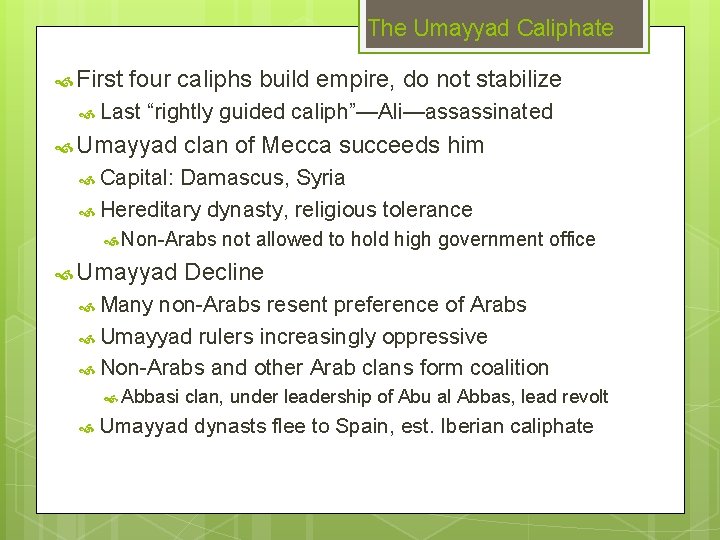
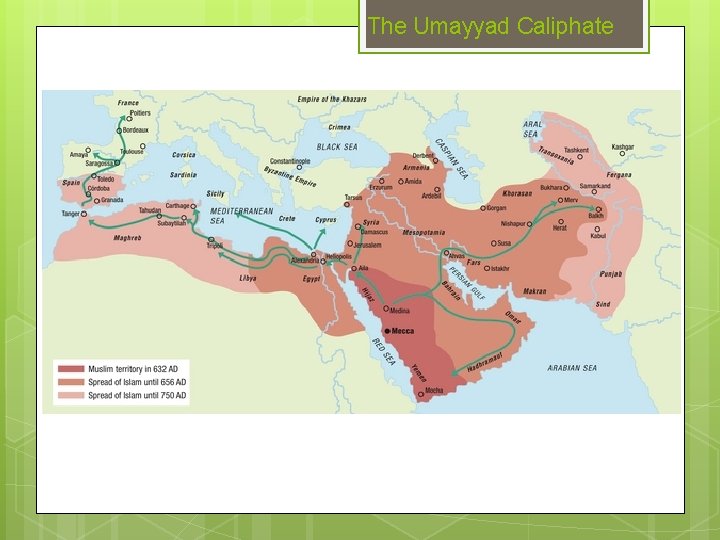
The Umayyad Caliphate First four caliphs build empire, do not stabilize Last “rightly guided caliph”—Ali—assassinated Umayyad clan of Mecca succeeds him Capital: Damascus, Syria Hereditary dynasty, religious tolerance Non-Arabs Umayyad not allowed to hold high government office Decline Many non-Arabs resent preference of Arabs Umayyad rulers increasingly oppressive Non-Arabs and other Arab clans form coalition Abbasi clan, under leadership of Abu al Abbas, lead revolt Umayyad dynasts flee to Spain, est. Iberian caliphate
The Umayyad Caliphate
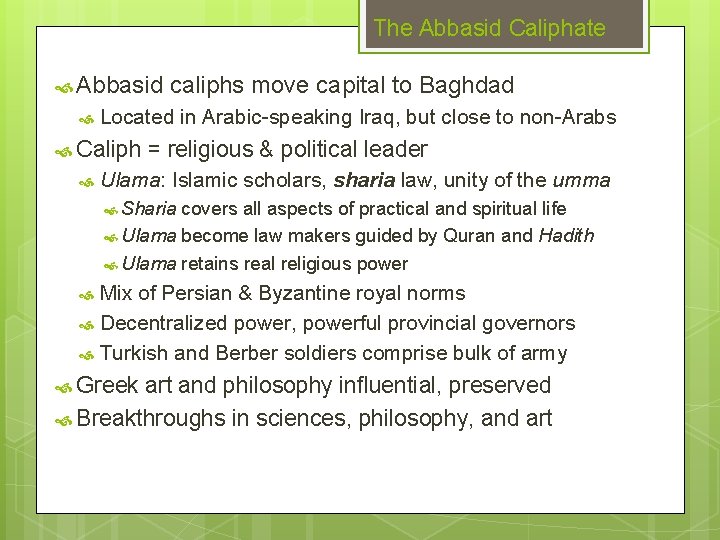
The Abbasid Caliphate Abbasid Located in Arabic-speaking Iraq, but close to non-Arabs Caliph caliphs move capital to Baghdad = religious & political leader Ulama: Islamic scholars, sharia law, unity of the umma Sharia covers all aspects of practical and spiritual life Ulama become law makers guided by Quran and Hadith Ulama retains real religious power Mix of Persian & Byzantine royal norms Decentralized power, powerful provincial governors Turkish and Berber soldiers comprise bulk of army Greek art and philosophy influential, preserved Breakthroughs in sciences, philosophy, and art
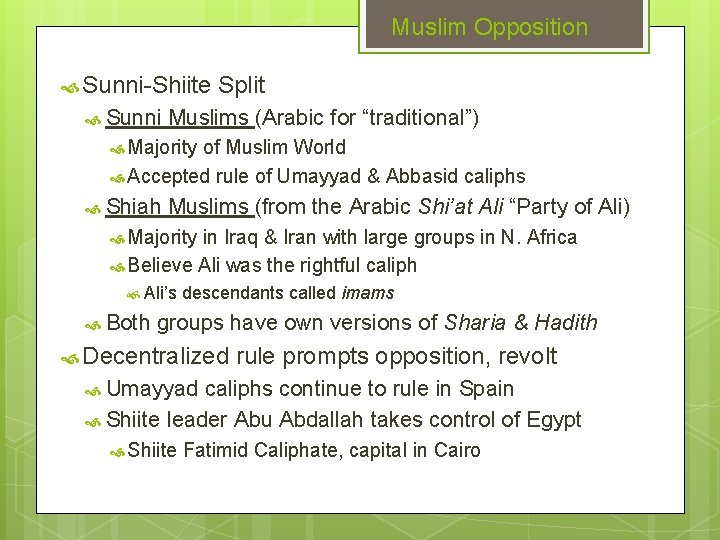
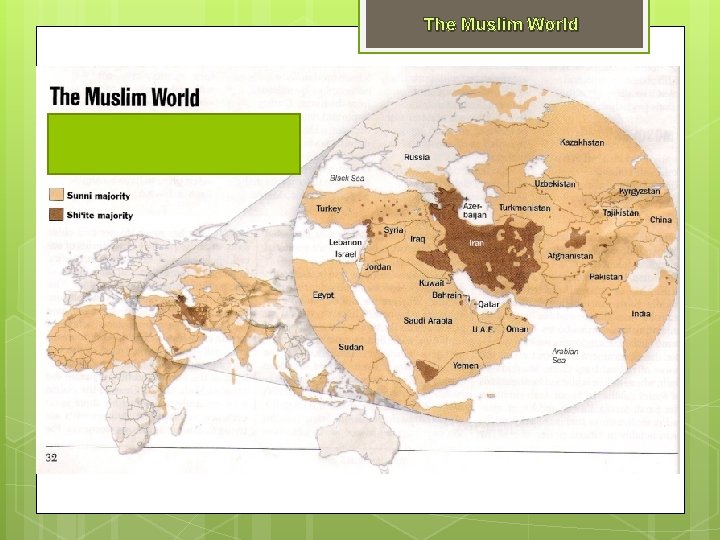
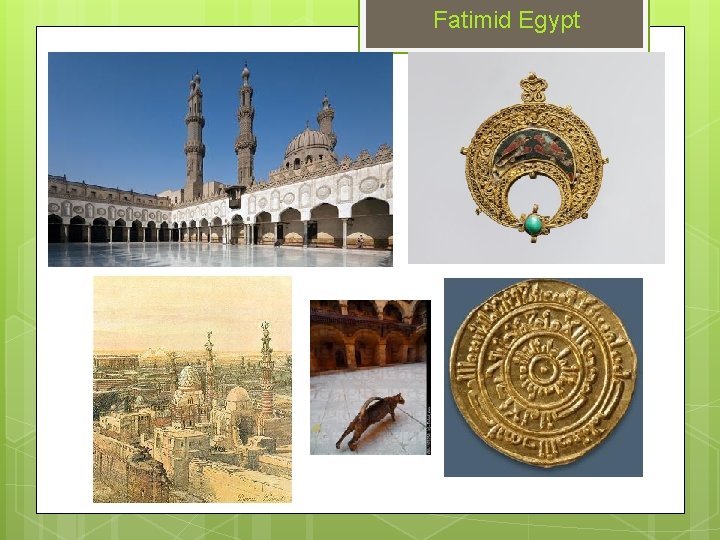
Muslim Opposition Sunni-Shiite Sunni Split Muslims (Arabic for “traditional”) Majority of Muslim World Accepted rule of Umayyad & Abbasid caliphs Shiah Muslims (from the Arabic Shi’at Ali “Party of Ali) Majority in Iraq & Iran with large groups in N. Africa Believe Ali was the rightful caliph Ali’s Both descendants called imams groups have own versions of Sharia & Hadith Decentralized rule prompts opposition, revolt Umayyad caliphs continue to rule in Spain Shiite leader Abu Abdallah takes control of Egypt Shiite Fatimid Caliphate, capital in Cairo
The Muslim World
Fatimid Egypt
Women & Islam Arabs Men late to adopt patriarchy still married into women’s family, moved close Women work, own property, multiple husbands Increased relations with patriarchal Southwest Asians begins to decrease status of women Muhammad’s relations with women changes First wife Khadija was older, independent, equal Muhammad marries more wives after Khadija’s death Insist wives be veiled, favorite wife Aisha married at nine Women limited to one husband Quran reinforces patriarchy Women given certain rights and protections Dowries, Women evidence for moral crimes, infanticide cannot divorce, take multiple husbands
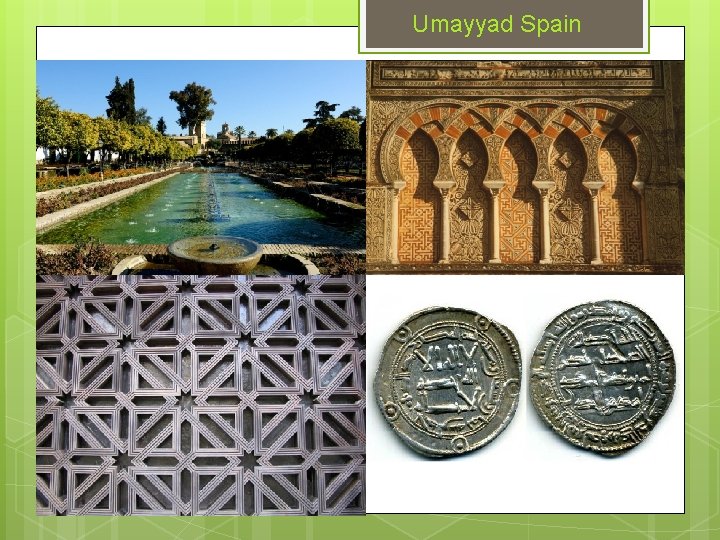
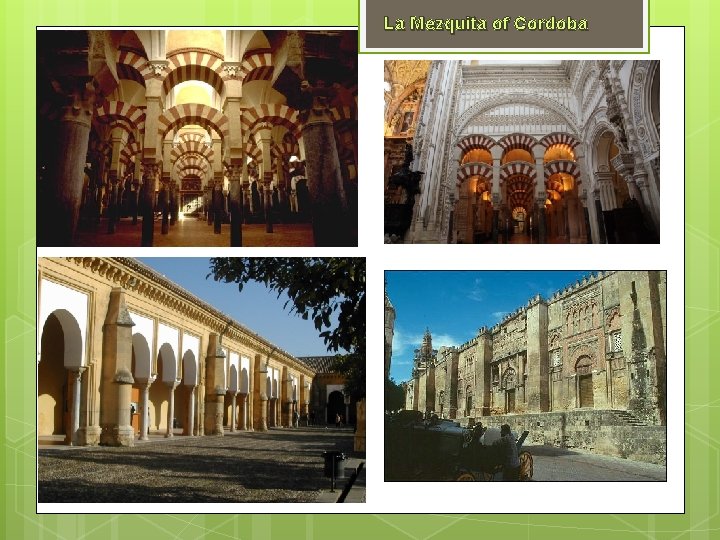
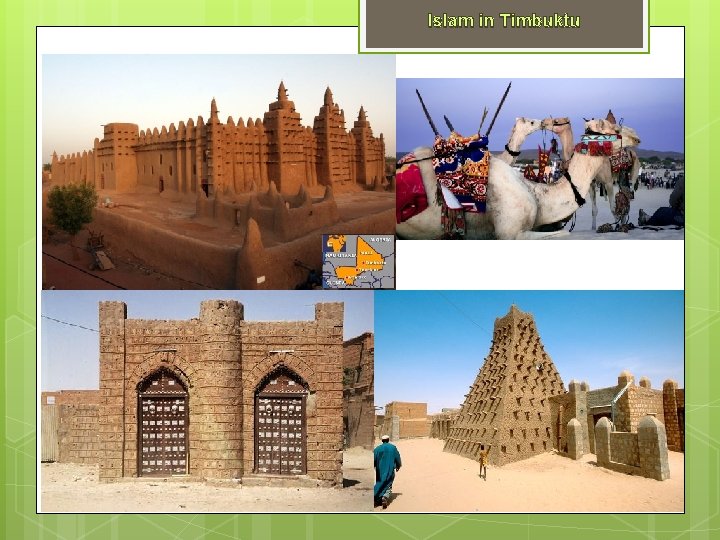
Greater Islamic World Rival Islamic states try to outdo each other in artistic, intellectual, and scientific achievement Umayyad Spain Capital Great Good Central City: Cordoba, Spain Mosque of Cordoba built in arabesque style relations between Muslims, Jews, and Christians Asia Arabic numerals, Algebra, Ibn Sina and medicine Greek philosophy translated into Arabic Sub-Saharan Africa Trade & Islam expanded to West Africa Swahili Coast Gold, salt, and slaves
Umayyad Spain
La Mezquita of Cordoba
Islam in Timbuktu