
The Rise of Industrialization What is Industrialism Economic





- Slides: 11
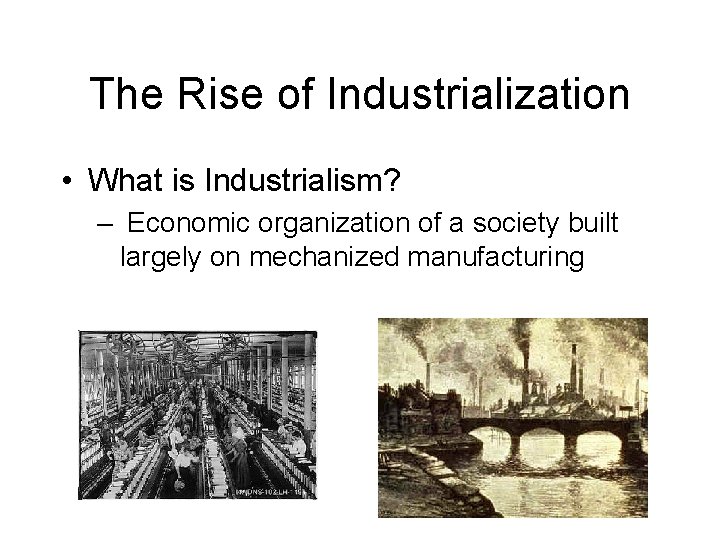
The Rise of Industrialization • What is Industrialism? – Economic organization of a society built largely on mechanized manufacturing
4 Key Factors These 4 factors helped to create the conditions in the United States necessary for massive economic growth at the turn of the century. 1. Natural Resources 2. Labor Supply = Large workforce 3. Capitalism =Free Enterprise 4. New Inventions
1. Natural Resources
1. Natural Resources • American expansion and territorial gain opens up the nations vast natural resources • Water, timber, coal, iron, copper and petroleum provide the ingredients for industry • U. S. does not need to import
2. Labor Supply
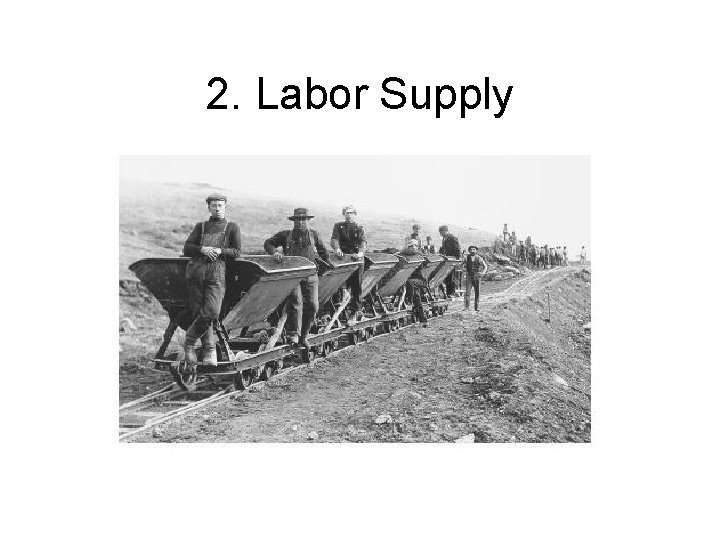
2. Labor Supply • Growing American population provided valuable “Labor” force • From 1860 – 1910 the population of the U. S. tripled • Two causes of growth – Larger Families – Immigration: 1870 -1910, 20 million immigrants
3. Capitalism The economic system in the U. S. that is motivated by profits, allows for consumer freedom, and protects the private rights of business.
3. Capitalism • Economic organization driven by profits • Entrepreneurs: people who risk their capital (wealth) in organizing and running a business • Laissez-Faire: belief that the government should “Let” people “Do” as they choose – As evidence by lower taxes, few laws or regulations and high import tariffs
4. Inventions
4. Inventions • Helped to improve the nation’s productivity • Alexander Graham Bell: telephone 1877 • Thomas Alva Edison: Light bulb 1879 and Electricity • Henry Bessemer: process to make steel stronger and lighter
Exit Slip Question: Explain which of the four factors discussed in class today was the most important towards the growth of American Industrialization in the late 1800 s and early 1900 s? -Resources -Labor -Capitalism -Inventions