
The Rise of Democratic Politics 1824 1832 Era

- Slides: 30
The Rise of Democratic Politics 1824 -1832
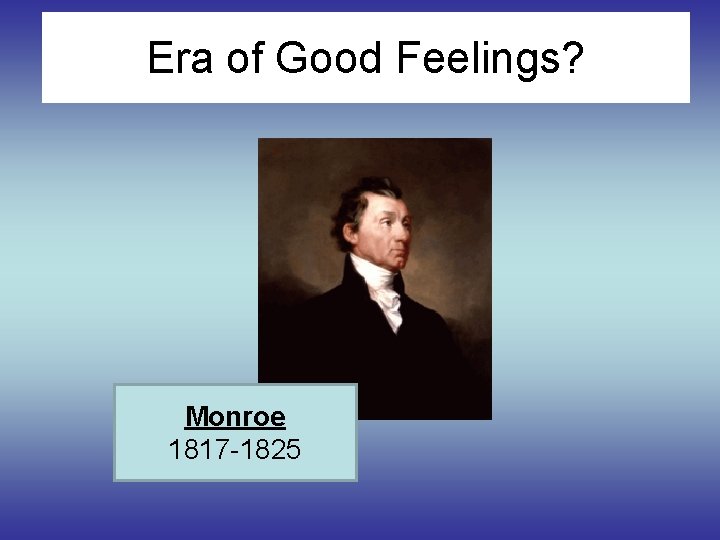
Era of Good Feelings? Monroe 1817 -1825
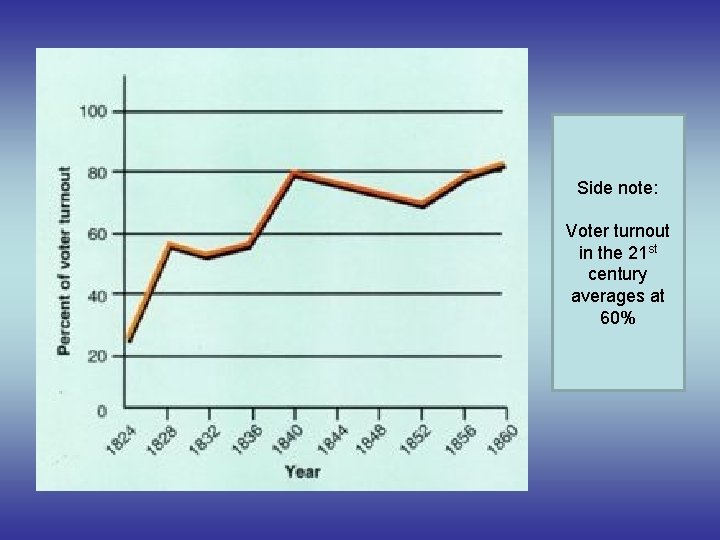
Side note: Voter turnout in the 21 st century averages at 60%
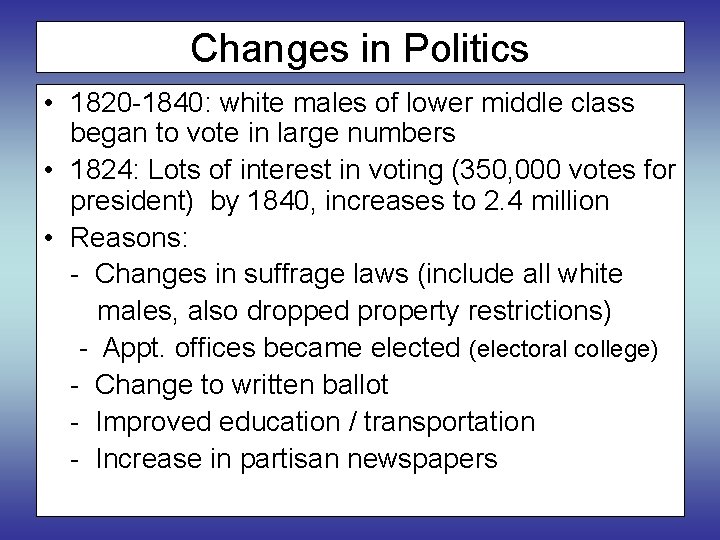
Why an increase in voter turnout?
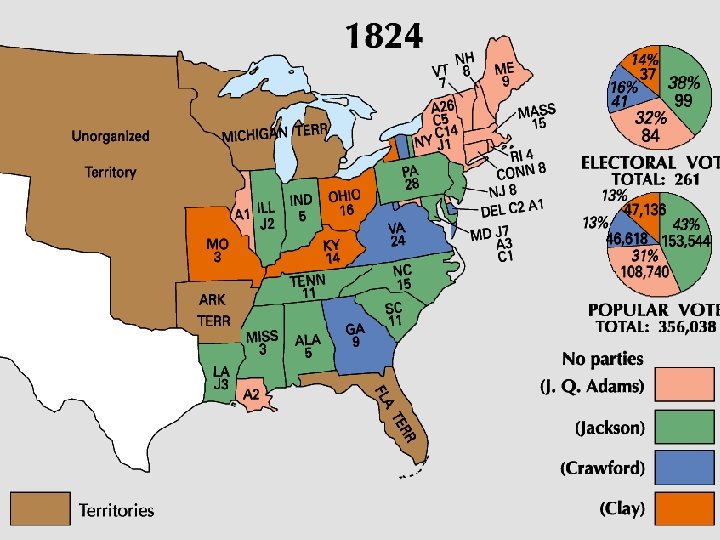
Changes in Politics • 1820 -1840: white males of lower middle class began to vote in large numbers • 1824: Lots of interest in voting (350, 000 votes for president) by 1840, increases to 2. 4 million • Reasons: - Changes in suffrage laws (include all white males, also dropped property restrictions) - Appt. offices became elected (electoral college) - Change to written ballot - Improved education / transportation - Increase in partisan newspapers
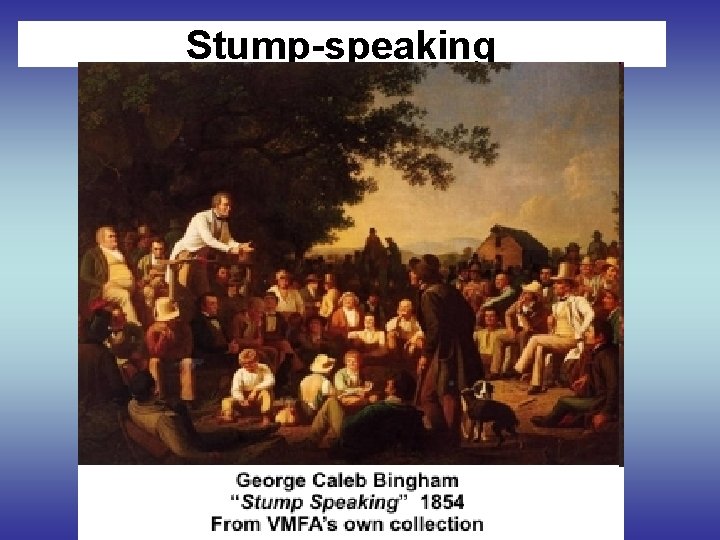
Stump-speaking
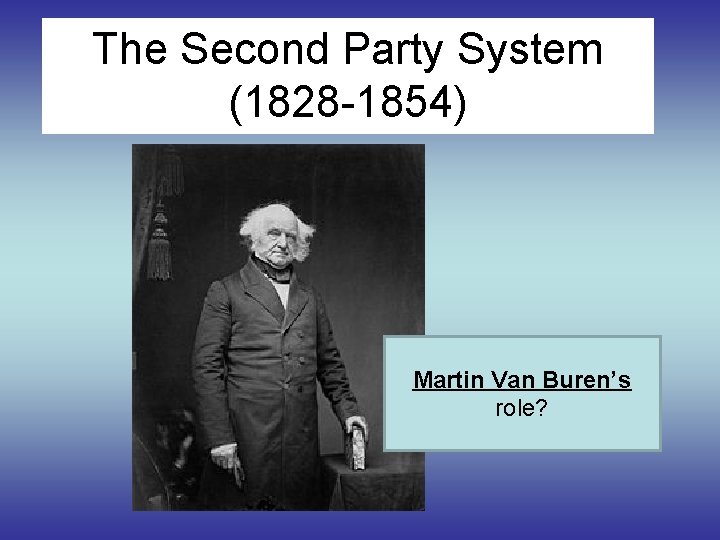
The Second Party System (1828 -1854) Martin Van Buren’s role?
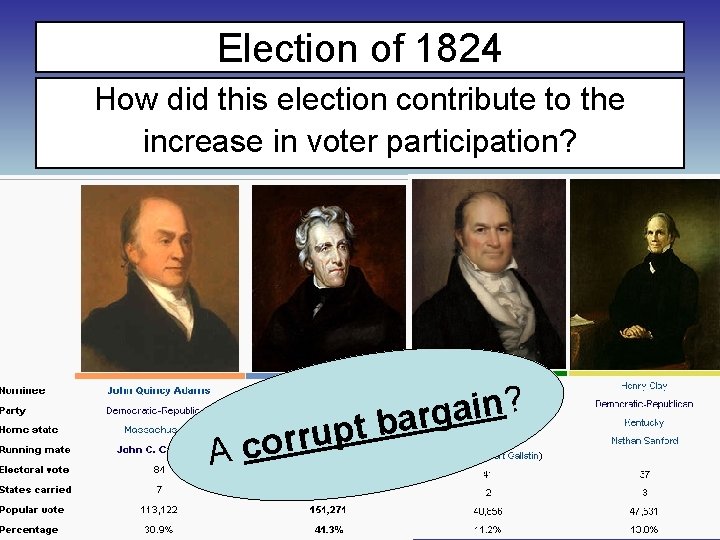
Election of 1824 How did this election contribute to the increase in voter participation? u r r o c A ? n i a g pt bar
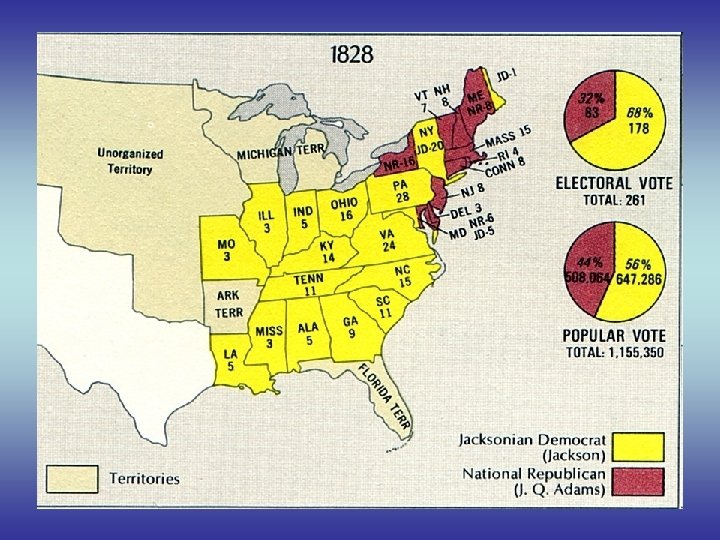
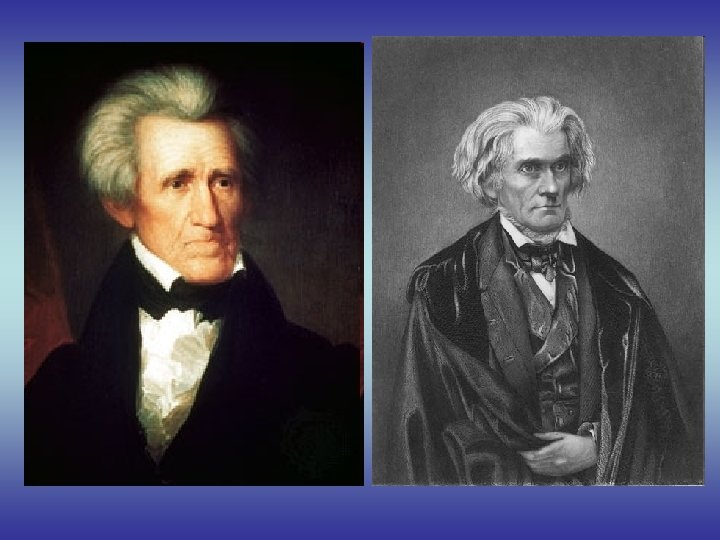
Election 1828 • Jackson started campaigning right after election of 1824 ended… • Joined forces with John C Calhoun (South Carolina Congressman)
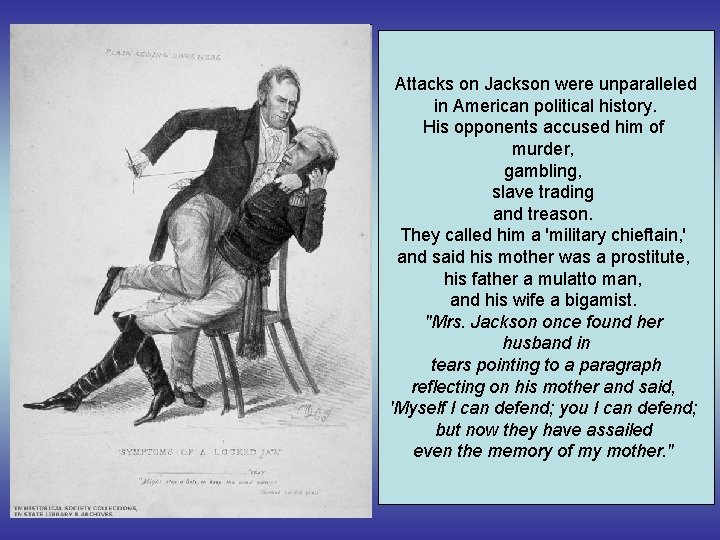
Attacks on Jackson were unparalleled in American political history. His opponents accused him of murder, gambling, slave trading and treason. They called him a 'military chieftain, ' and said his mother was a prostitute, his father a mulatto man, and his wife a bigamist. "Mrs. Jackson once found her husband in tears pointing to a paragraph reflecting on his mother and said, 'Myself I can defend; you I can defend; but now they have assailed even the memory of my mother. "
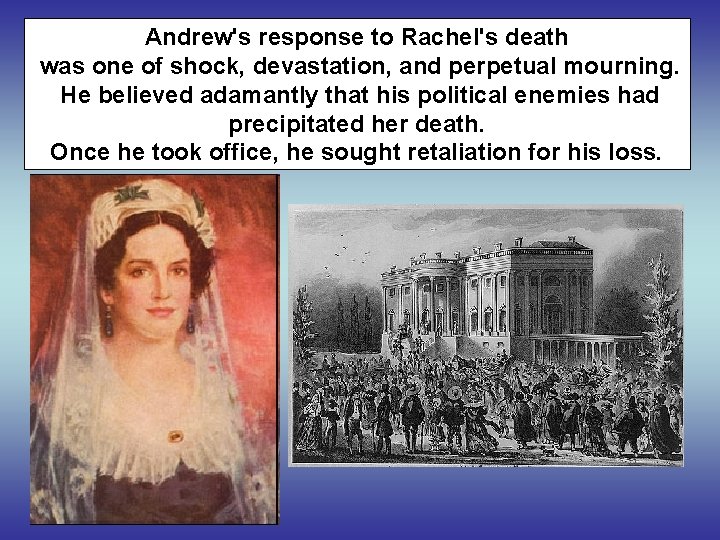
Andrew's response to Rachel's death was one of shock, devastation, and perpetual mourning. He believed adamantly that his political enemies had precipitated her death. Once he took office, he sought retaliation for his loss.
What did Jackson stand for? 1. Laissez Faire 2. Gov. protected business and industrial elements of society at the expense of others, especially its banking and inflationary momentary policies. 3. Jackson believed the government should not favor any segment of society period. 4. Government should strike down any obstacles that granted privilege to certain groups (i. e. banks). 5. Jackson depicted the Nationalists (or the party of privilege), standing for aristocratic privilege and big business at the expense of agrarian ideals.
What did Jackson stand for? 6. Jackson promoted mass democracy 7. The common man had a natural virtue. 8. The aristocratic nationalists were suppressing the common man. 9. Jackson as the champion of the common man. 10. Big Voting and Mass Political Parties
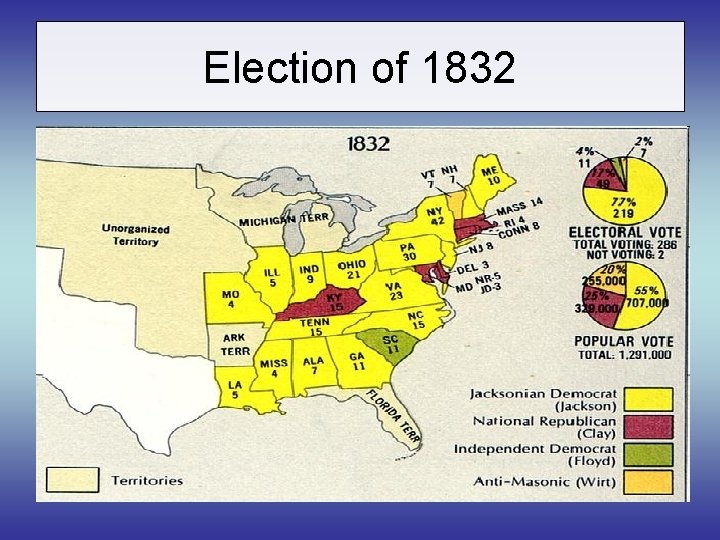
Election of 1832
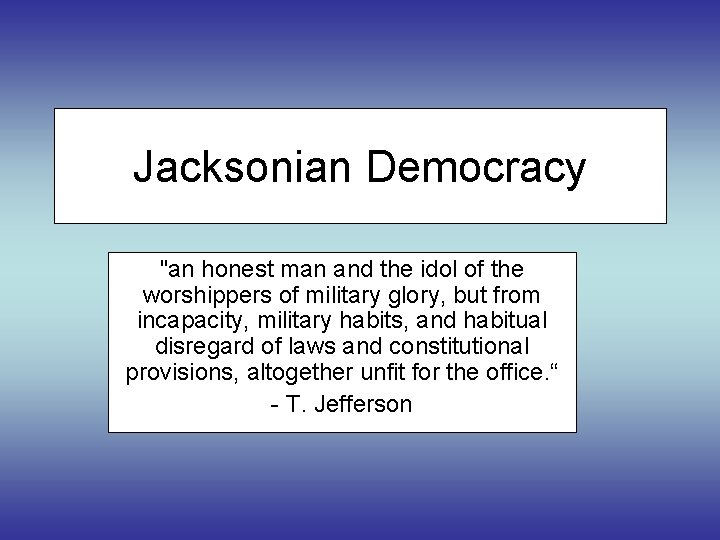
Jacksonian Democracy "an honest man and the idol of the worshippers of military glory, but from incapacity, military habits, and habitual disregard of laws and constitutional provisions, altogether unfit for the office. “ - T. Jefferson
President Jackson 1828 -1836 Key Events
Tariff of Abominations 1828 • Satisfied northern manufacturers • Alienated southern planters • VP John C. Calhoun – Anonymous publisher of “South Carolina Exposition & Protest” – Claimed: Federal laws harmful to the interest of individual states could be declared null & void = Nullification Crisis – Jackson signed “Force Bill”, would not put-up with state rebellion. – “Compromise Tariff” Henry Clay.
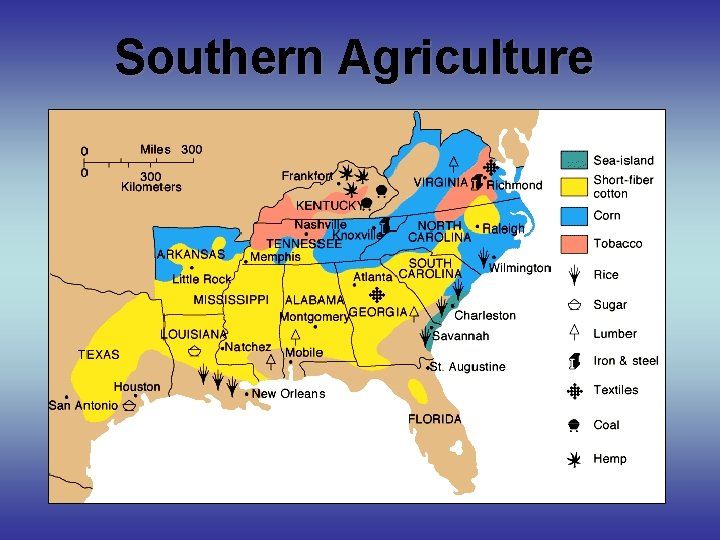
Southern Agriculture
Second Bank of the United States • Henry Clay’s economic plan? – American System: • a tariff to protect and promote American industry • a national bank to foster commerce • and federal subsidies for roads, canals, and other 'internal improvements' to develop profitable markets for agriculture. "
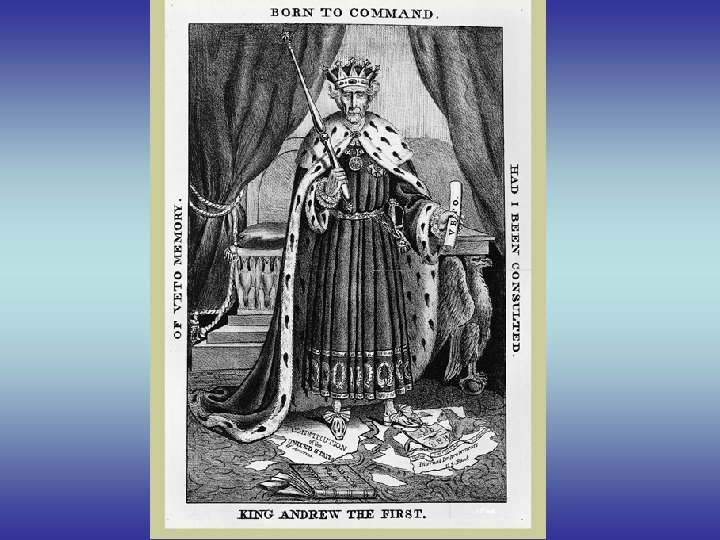
Second Bank of the United States • Constitutionality was being debated • Jackson always intended to destroy it (campaign issue 1932) Felt that it was run by privileged elites and did not promote the interests of the “common man” • H. Clay & D. Webster promoted a bill to recharter bank • Congress passed bill, but Jackson vetoes • Bank collapsed, eventually lead to a Panic of 1837.
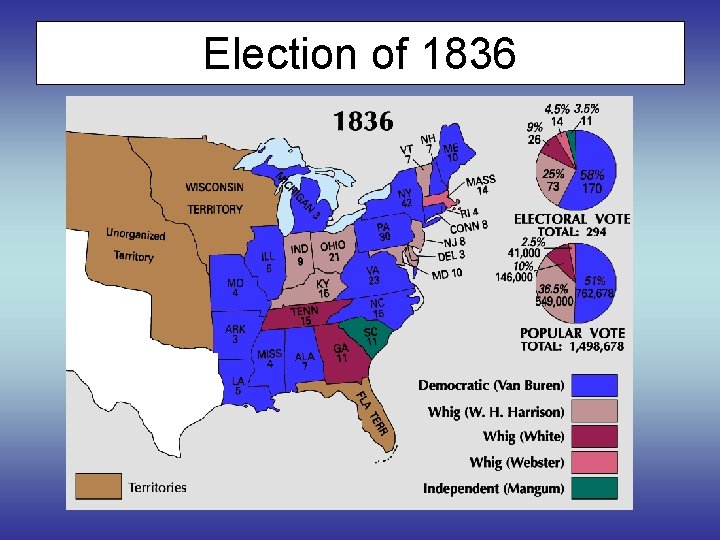
Election of 1836
Panic of 1837 • AJ ordered distribution of surplus funds from BUS (1836) = inflation • AJ recognized problem; Issues Specie Circular (1836) Required hard money payment for public land • Depression worsens • Britain stopped specie investment into US • Depression worsens • Disillusioned American Public blames: Everyone in power US institutions (gov. ) US Business practices
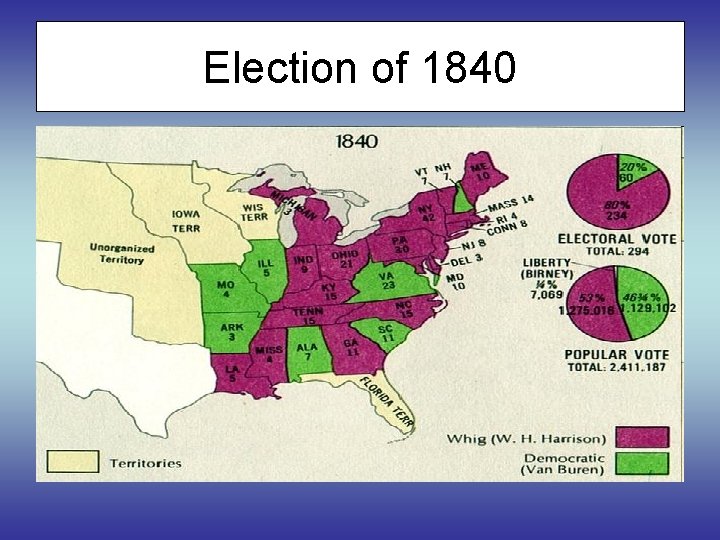
Election of 1840 • Whigs: William Henry Harrison • Dems: Martin Van Buren • Whig Strategy: Run single candidate Nominate men with few enemies Positive campaign Paint Van Buren as aristocrat • Democrat Strategy: Label Harrison as old man & “backwoods” • 80% voter turn out (1828 -1836 about 50%)
Election of 1840