
THE RISE OF DEMOCRATIC IDEAS THE LEGACY OF


- Slides: 33
THE RISE OF DEMOCRATIC IDEAS THE LEGACY OF ANCIENT GREECE AND ROME “Democracy is the only system that persists in asking the powers that be whether they are the powers that ought to be. ” Sydney J. Harris
DECISION MAKING AUTOCRATIC OR DEMOCRATIC? • Teacher decides there will be a test on Friday • Group of Friends decide on which movie to go to by discussing three possible movies and voting on which one they want to see. • Fast food Manager decides to give workers a dollar per hour raise
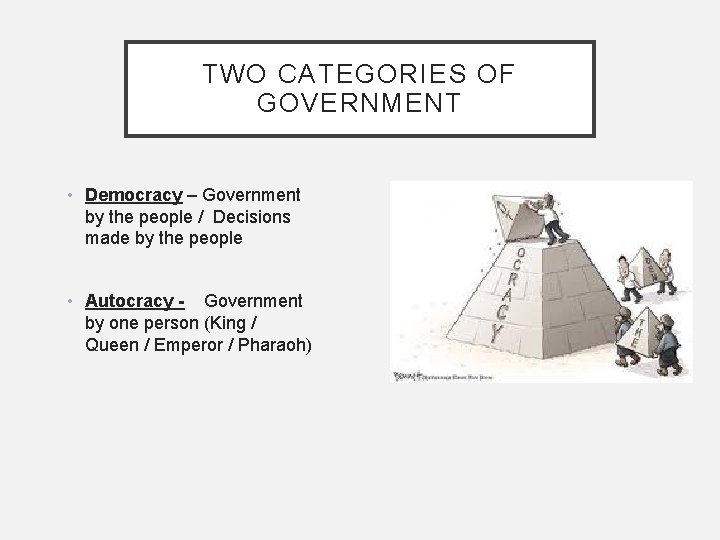
TWO CATEGORIES OF GOVERNMENT • Democracy – Government by the people / Decisions made by the people • Autocracy - Government by one person (King / Queen / Emperor / Pharaoh)
AUTOCRATIC ADVANTAGES • Efficient • Order • Changes can Happen Quickly
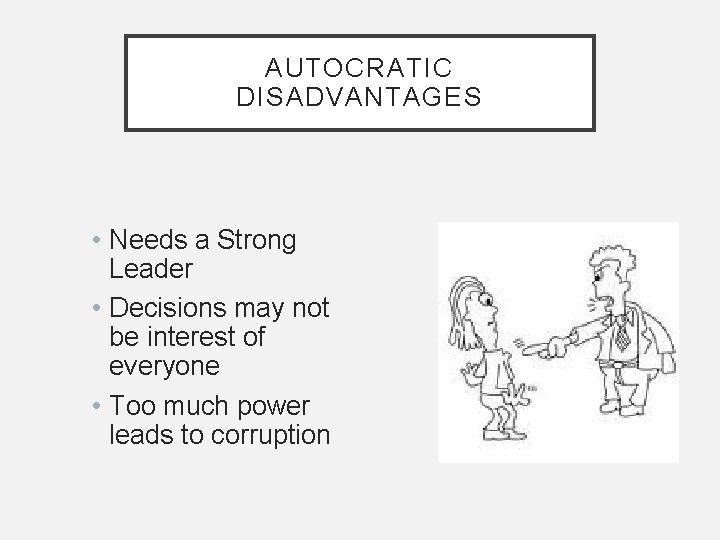
AUTOCRATIC DISADVANTAGES • Needs a Strong Leader • Decisions may not be interest of everyone • Too much power leads to corruption
DEMOCRATIC ADVANTAGES • Everyone has a say • Corruption more difficult • Power is spread
DEMOCRATIC DISADVANTAGES • Messy, takes time • Sometimes hard to make difficult decisions • Need an Educated Citizenry
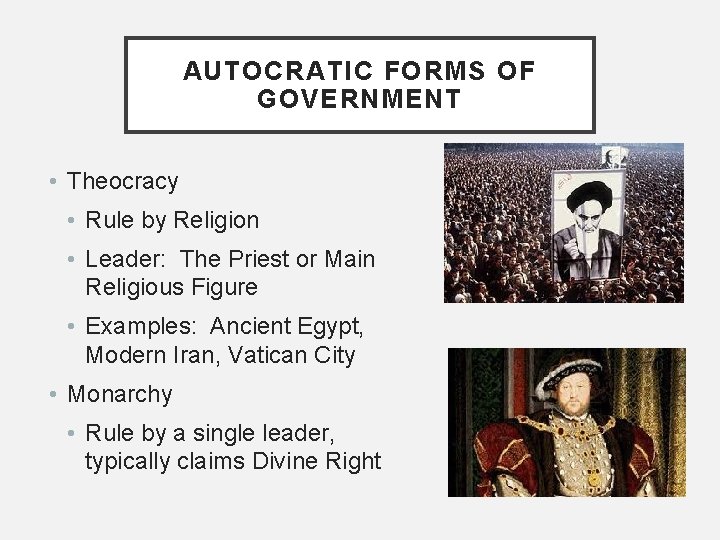
AUTOCRATIC FORMS OF GOVERNMENT • Theocracy • Rule by Religion • Leader: The Priest or Main Religious Figure • Examples: Ancient Egypt, Modern Iran, Vatican City • Monarchy • Rule by a single leader, typically claims Divine Right
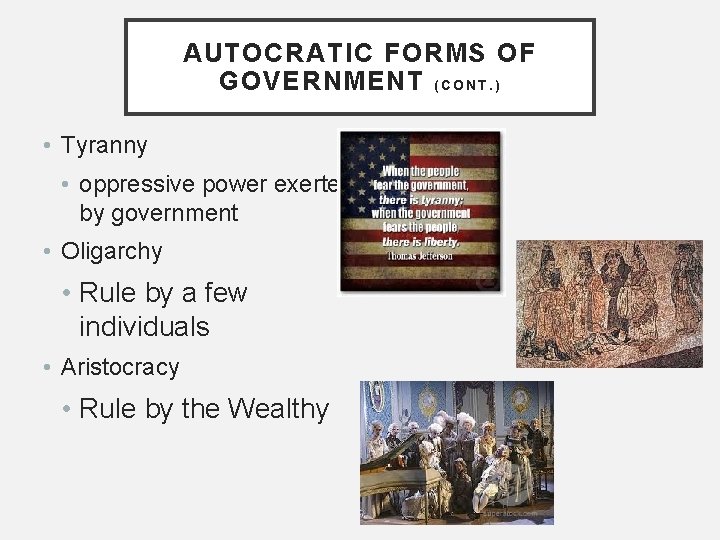
AUTOCRATIC FORMS OF GOVERNMENT ( C O N T. ) • Tyranny • oppressive power exerted by government • Oligarchy • Rule by a few individuals • Aristocracy • Rule by the Wealthy
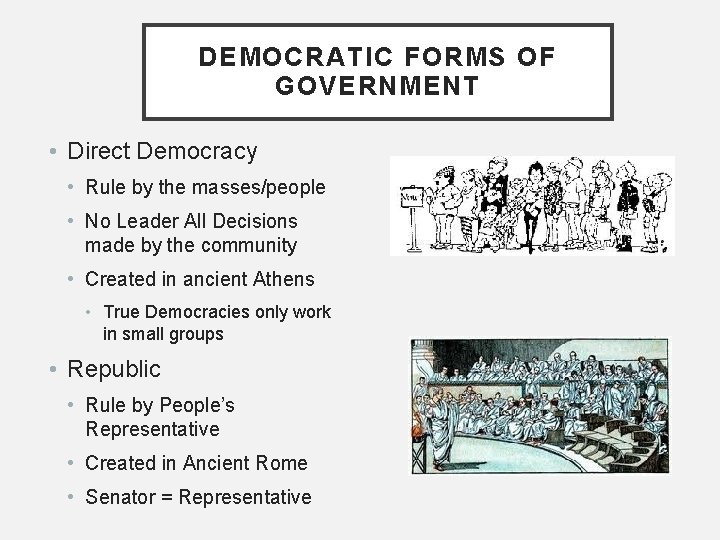
DEMOCRATIC FORMS OF GOVERNMENT • Direct Democracy • Rule by the masses/people • No Leader All Decisions made by the community • Created in ancient Athens • True Democracies only work in small groups • Republic • Rule by People’s Representative • Created in Ancient Rome • Senator = Representative
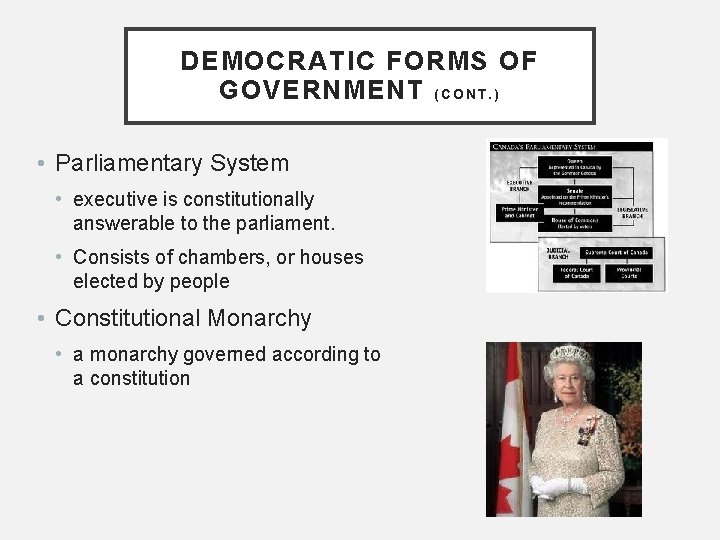
DEMOCRATIC FORMS OF GOVERNMENT ( C O N T. ) • Parliamentary System • executive is constitutionally answerable to the parliament. • Consists of chambers, or houses elected by people • Constitutional Monarchy • a monarchy governed according to a constitution
ANARCHY • Total Lack of Government (State of Nature) • No Rules, No Leaders
MONTY PYTHON & THE HOLY GRAIL
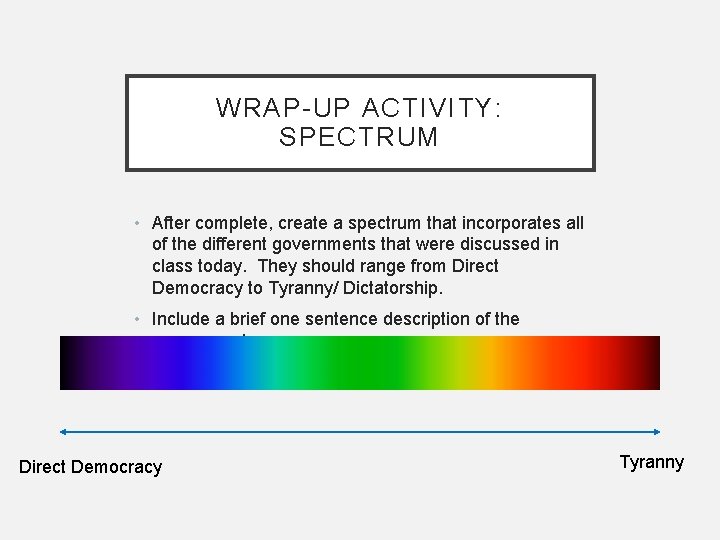
WRAP-UP ACTIVITY: SPECTRUM • After complete, create a spectrum that incorporates all of the different governments that were discussed in class today. They should range from Direct Democracy to Tyranny/ Dictatorship. • Include a brief one sentence description of the government. Direct Democracy Tyranny
ATHENIAN DEMOCRACY
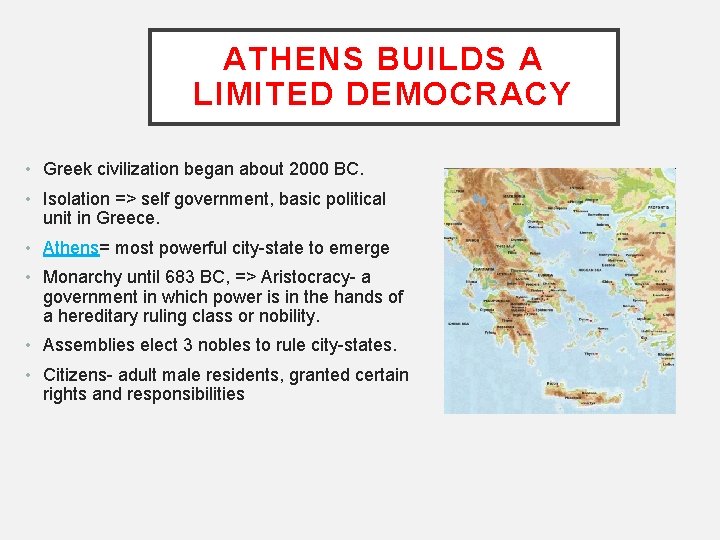
ATHENS BUILDS A LIMITED DEMOCRACY • Greek civilization began about 2000 BC. • Isolation => self government, basic political unit in Greece. • Athens= most powerful city-state to emerge • Monarchy until 683 BC, => Aristocracy- a government in which power is in the hands of a hereditary ruling class or nobility. • Assemblies elect 3 nobles to rule city-states. • Citizens- adult male residents, granted certain rights and responsibilities
THE REFORMS OF SOLON • Farmers in debt sold crops, land then themselves into slavery => political and economic crisis. • Solon outlaws slavery based on debt and cancels the farmers debts, prevents civil war. • Solon establishes 4 classes of citizen based on wealth rather than heredity. • Top 3 classes could hold office, lower class could still vote in the assembly.
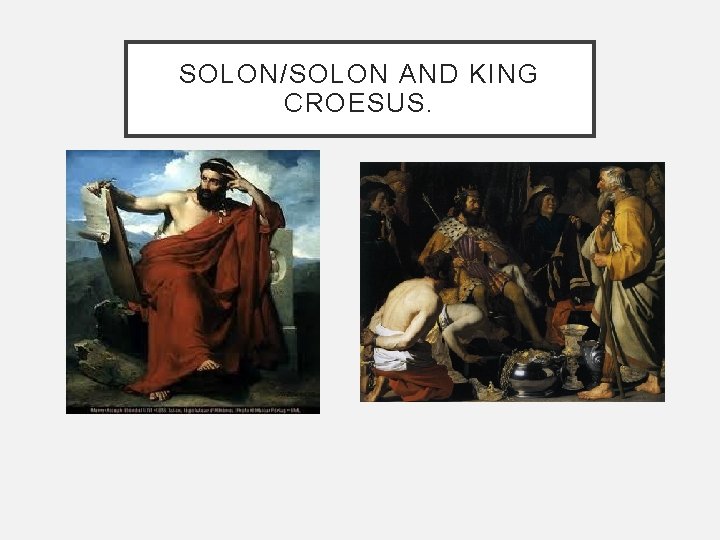
SOLON/SOLON AND KING CROESUS.
THE REFORMS OF SOLON ( C O N T. ) • Athens still a limited democracy ruled by the nobility. • Only 1/10 of population were citizens and eligible to participate. • No citizenship for women, slaves, and foreign residents. • Creates a fairer code of laws and the right of citizens to bring charges against wrongdoers.
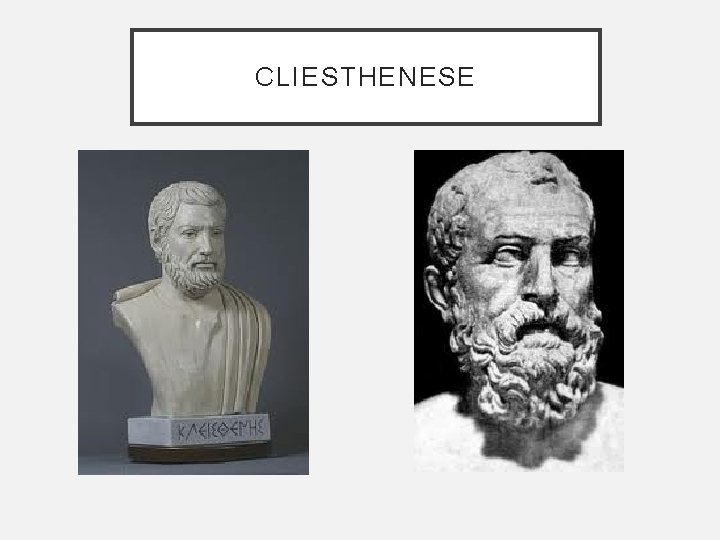
THE REFORMS OF CLEISTHENES • Conflicts continued between landowners and farmers. • New leaders appealed to the poorer masses and gained power by giving land, voting rights and citizenship to them. • Cleisthenes reorganized the assembly making Athens closer to a full democracy. • Council members chosen by lot, or randomly to allow all citizens the opportunity to participate. • Cleisthenes= founder of democracy in Athens
CLIESTHENESE
CHANGES IN GREEK DEMOCRACY • The Greeks defeat the attacking Persian empire => new sense of confidence and freedom. • Athens comes out as the strongest city state and heads the Delian League, an alliance of 140 city states.
PERICLES STRENGTHENS DEMOCRACY • The Golden Age of Greece • Jurors paid => allows for poorer citizens to take part. • direct democracy- a government in which citizens rule directly rather than through representatives. • “Our constitution is called a democracy because power is in the hands not of a minority but of the whole people. ”
Pericles Strengthens Democracy (cont. ) • Golden Age < 50 years. • Athens and Sparta fight = Peloponnesian War (remember reading Ulysses in 7 th grade? ) • Athens is defeated, Delian League disbanded, Greece weakened. • King Philip II of Macedonia invades Greece => end of Greek democracy. • Philip and his son Alexander the Great rule the Greeks by monarchy.
SHEG ACTIVITY: ATHENIAN DEMOCRACY • You and your partner (assigned by Mr. West) will be reading and analyzing primary sources from the time of Athenian Democracy • As you are analyzing your documents with your partner, answer the guiding questions provided in complete sentences. • We will be working with these documents for multiple periods, when excused at the end of class. Place documents on front table and take guiding questions home with you.
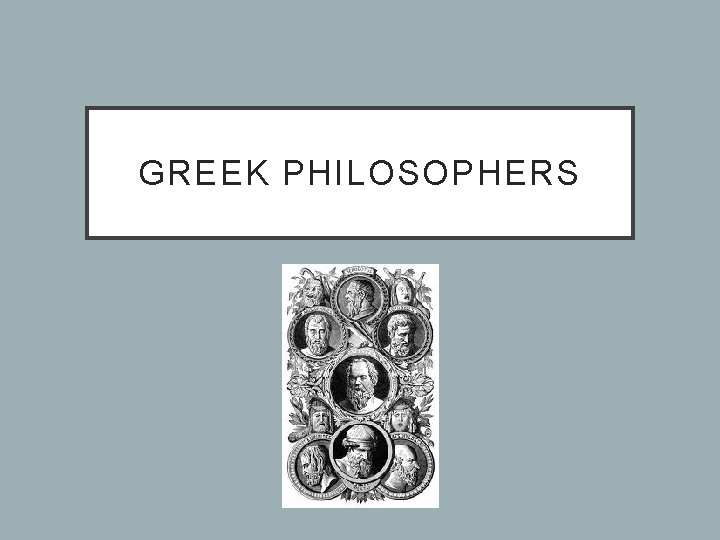
GREEK PHILOSOPHERS
GREEK PHILOSOPHERS SEARCH FOR TRUTH • • • Great thinkers used logic and reason to investigate the nature of the universe, human society, and morality. Philosophers- lovers of wisdom, seekers of truth 2 main assumptions: 1. 2. The universe is put together in an orderly way and is subject to absolute and unchanging laws People can understand these laws through logic and reason.
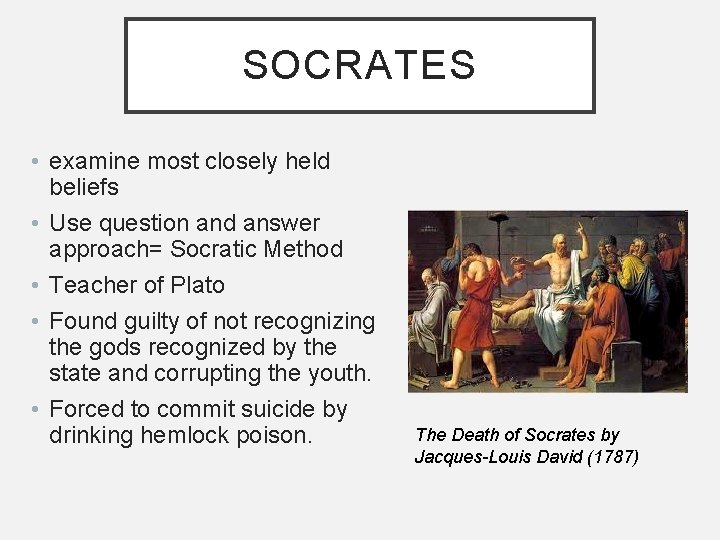
SOCRATES • examine most closely held beliefs • Use question and answer approach= Socratic Method • Teacher of Plato • Found guilty of not recognizing the gods recognized by the state and corrupting the youth. • Forced to commit suicide by drinking hemlock poison. The Death of Socrates by Jacques-Louis David (1787)
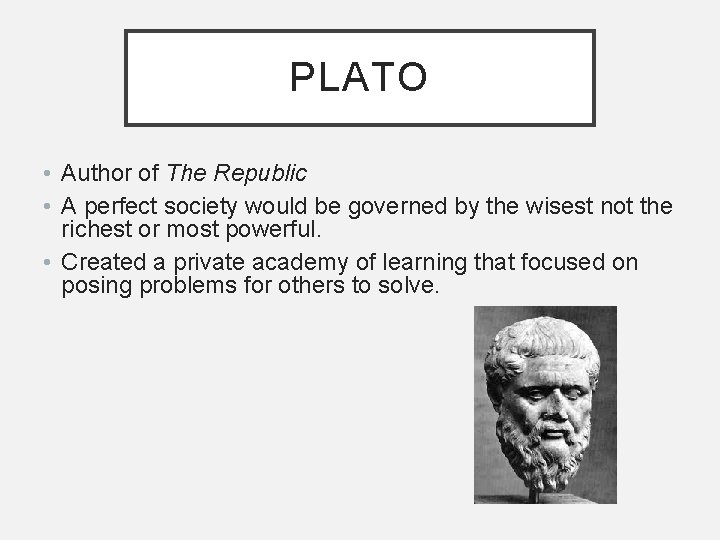
PLATO • Author of The Republic • A perfect society would be governed by the wisest not the richest or most powerful. • Created a private academy of learning that focused on posing problems for others to solve.
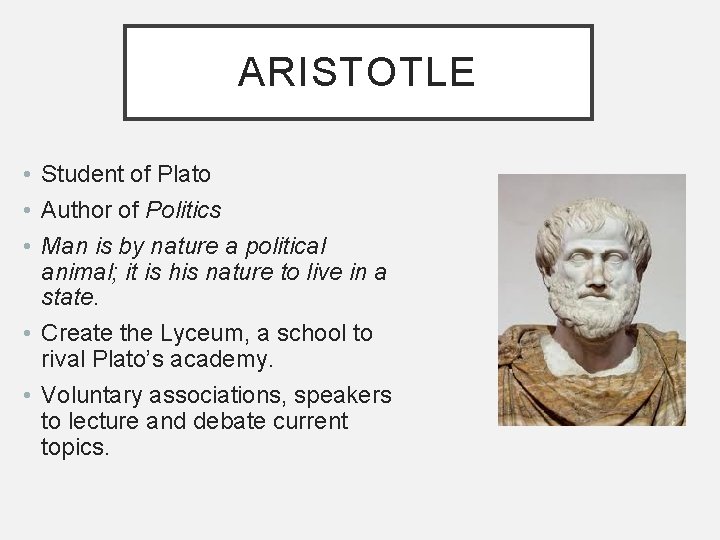
ARISTOTLE • Student of Plato • Author of Politics • Man is by nature a political animal; it is his nature to live in a state. • Create the Lyceum, a school to rival Plato’s academy. • Voluntary associations, speakers to lecture and debate current topics.
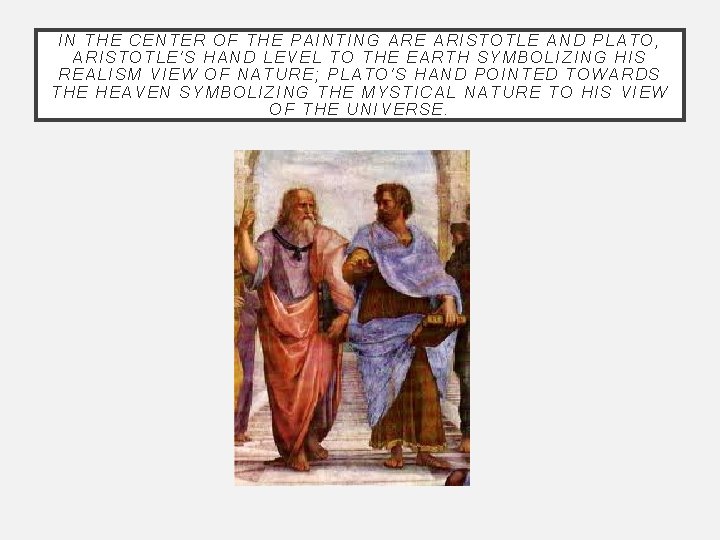
IN THE CENTER OF THE PAINTING ARE ARISTOTLE AND PLATO, ARISTOTLE'S HAND LEVEL TO THE EARTH SYMBOLIZING HIS REALISM VIEW OF NATURE; PLATO'S HAND POINTED TOWARDS THE HEAVEN SYMBOLIZING THE MYSTICAL NATURE TO HIS VIEW OF THE UNIVERSE.
GREEK CONTRIBUTIONS TO DEMOCRACY • Greeks set up standards or politics and philosophy. • Use natural laws, not superstition to explain the world. • Did not want an authoritative leader so democracy was created. • Citizens actively participate • First to use three branches of government • Legislative (law making), Executive (law enforcing), and Judicial ( law disputing)
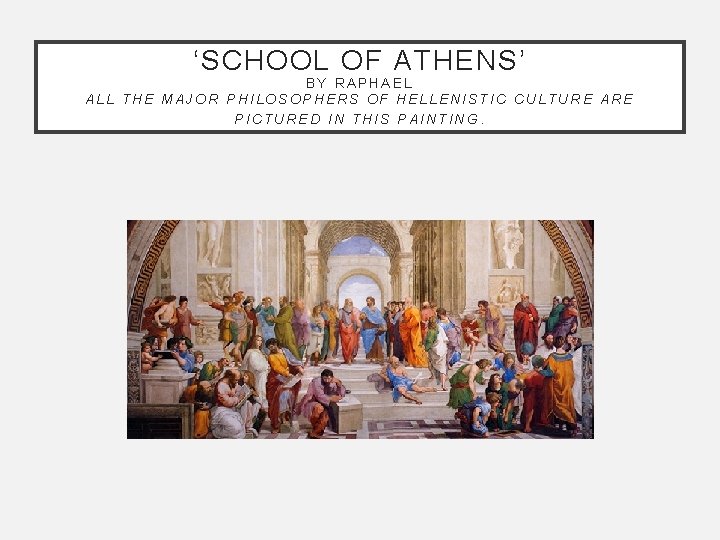
‘SCHOOL OF ATHENS’ BY RAPHAEL ALL THE MAJOR PHILOSOPHERS OF HELLENISTIC CULTURE ARE PICTURED IN THIS PAINTING.