
The Rise of Democracy in Ancient Greece EQ


- Slides: 21
The Rise of Democracy in Ancient Greece EQ: How did democracy develop in Ancient Greece?
MONARCHY
MONARCHY • MONARCHY: power in the hands of one person; usually a king • Etymology: monos = “single” and arkhein = “rule” *Visual: Create a quick sketch of a visual clue for monarchy EQ: How did democracy develop in Ancient Greece?
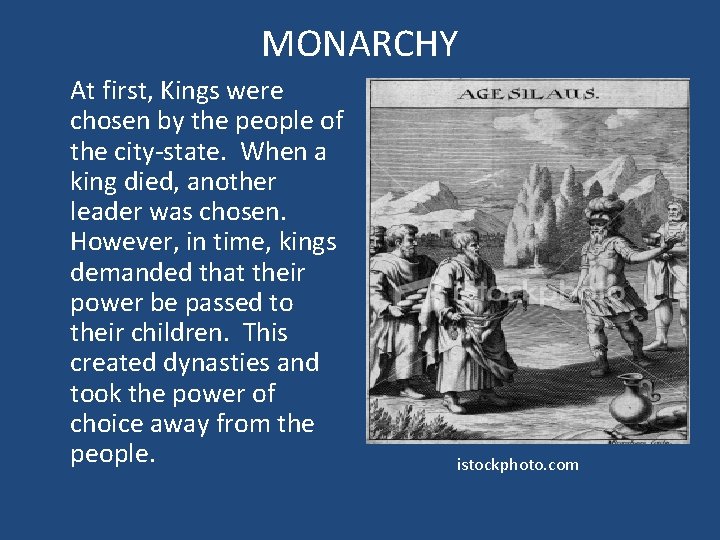
MONARCHY At first, Kings were chosen by the people of the city-state. When a king died, another leader was chosen. However, in time, kings demanded that their power be passed to their children. This created dynasties and took the power of choice away from the people. istockphoto. com
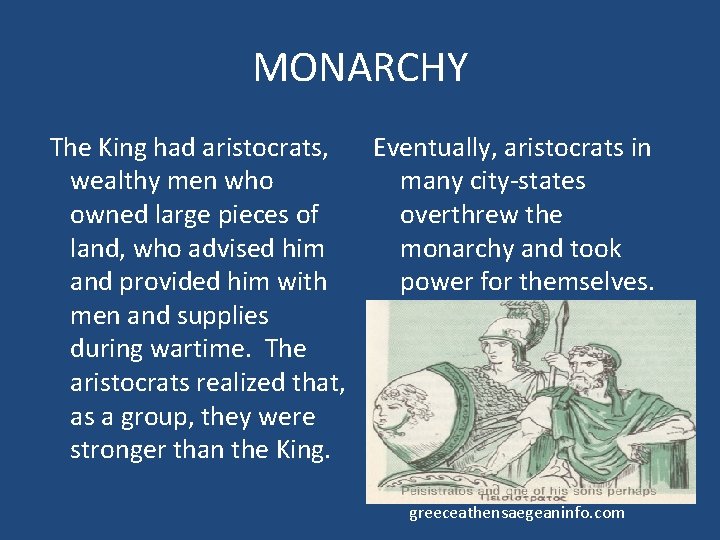
MONARCHY The King had aristocrats, Eventually, aristocrats in wealthy men who many city-states owned large pieces of overthrew the land, who advised him monarchy and took and provided him with power for themselves. men and supplies during wartime. The aristocrats realized that, as a group, they were stronger than the King. greeceathensaegeaninfo. com
MONARCHY • At first, Kings were chosen by the people. • Over time, Kings demanded that their power was passed down to their children. • This created dynasties and took choice away from people. • Aristocrats, wealthy men who owned land advised King, overthrew the monarchy and took the power for themselves.
OLIGARCHY
OLIGARCHY • OLIGARCHY: ruling power is in the hands of a few people • Etymology: oligos = “few” and arkhein = “rule” *Visual: Create a quick sketch of a visual clue for oligarchy. EQ: How did democracy develop in Ancient Greece?
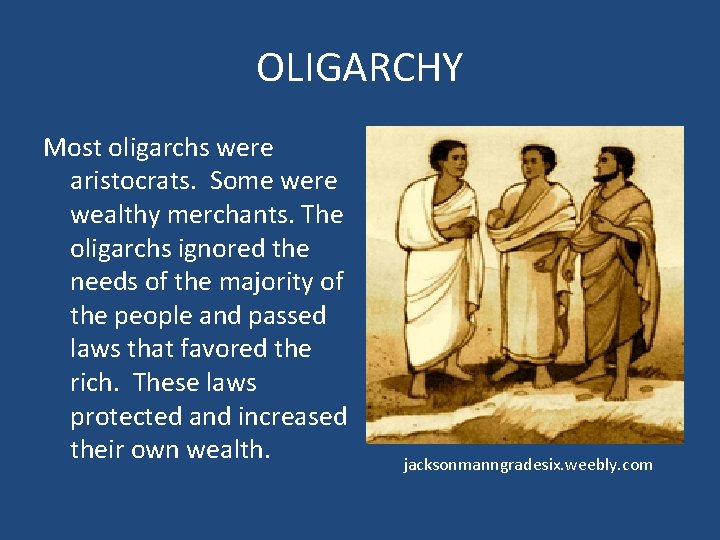
OLIGARCHY Most oligarchs were aristocrats. Some were wealthy merchants. The oligarchs ignored the needs of the majority of the people and passed laws that favored the rich. These laws protected and increased their own wealth. jacksonmanngradesix. weebly. com
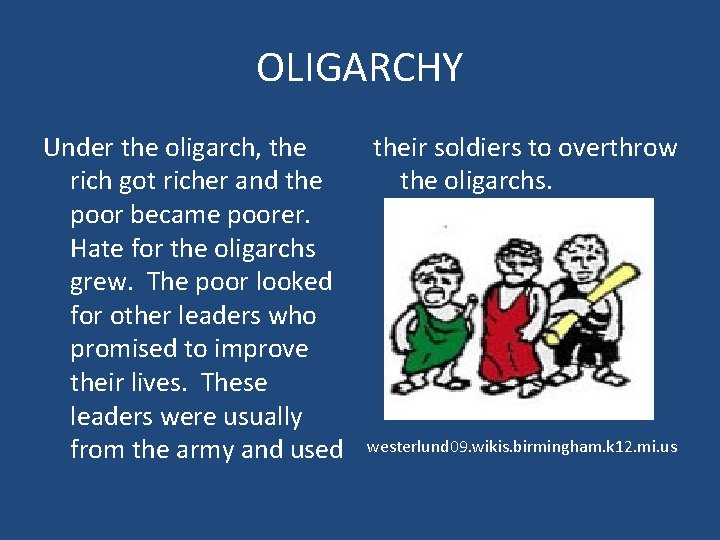
OLIGARCHY Under the oligarch, the rich got richer and the poor became poorer. Hate for the oligarchs grew. The poor looked for other leaders who promised to improve their lives. These leaders were usually from the army and used their soldiers to overthrow the oligarchs. westerlund 09. wikis. birmingham. k 12. mi. us
OLIGARCHY • Oligarchs were aristocrats or rich merchants. • They created laws to protect and increase their wealth. • The rich got richer and the poor got poorer. • Poor people hated the oligarchs. • Turned to other leaders, usually from army, who promised to improve their lives. • Used the soldiers to overthrow the oligarchs.
TYRANNY
TYRANNY • TYRANNY: ruling power is in the hands of one person (who is not the lawful king) - FORCE • Etymology: tyrannos = “to seize control and hold supreme power” *Visual: Create a quick sketch of a visual clue for tyranny. EQ: How did democracy develop in Ancient Greece?
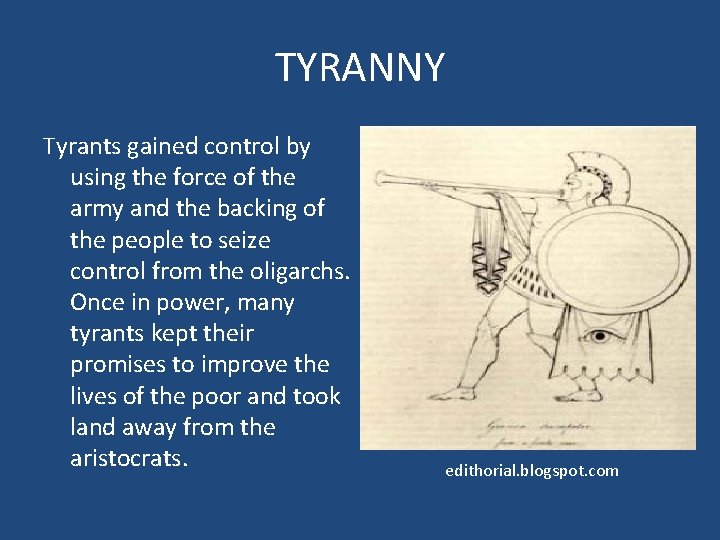
TYRANNY Tyrants gained control by using the force of the army and the backing of the people to seize control from the oligarchs. Once in power, many tyrants kept their promises to improve the lives of the poor and took land away from the aristocrats. edithorial. blogspot. com
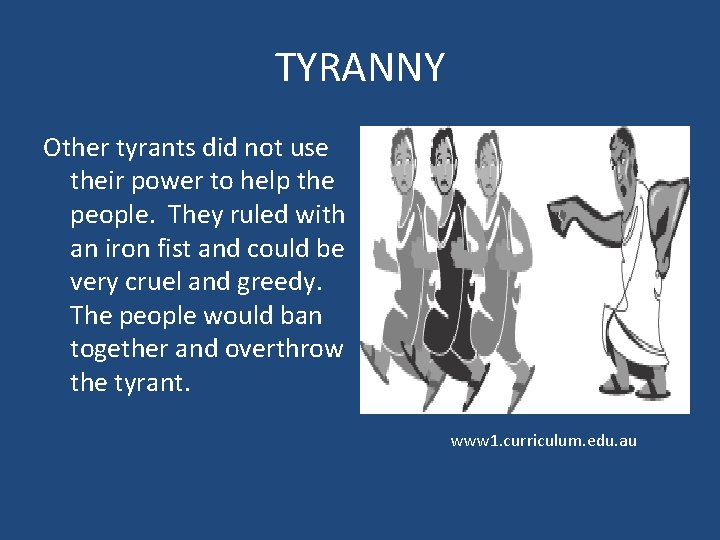
TYRANNY Other tyrants did not use their power to help the people. They ruled with an iron fist and could be very cruel and greedy. The people would ban together and overthrow the tyrant. www 1. curriculum. edu. au
TYRANNY • Also called a dictatorship • Tyrant has all of the power but is not the lawful king. • Tyrants often were good rulers. • However, many became cruel and greedy. They ruled with an iron fist and were only concerned with protecting their power. • The people ban together to overthrow the tyrant when his rule becomes overwhelmingly harsh.
DEMOCRACY
DEMOCRACY • DEMOCRACY: ruling power is in the hands of all of the people • Etymology: demos = “people” and kratos = “power” *Visual: Create a quick sketch of a visual clue for democracy. EQ: How did democracy develop in Ancient Greece?
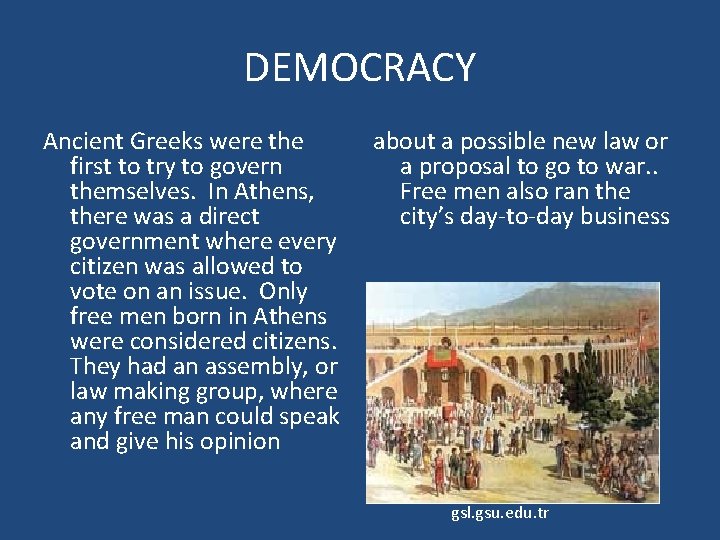
DEMOCRACY Ancient Greeks were the first to try to govern themselves. In Athens, there was a direct government where every citizen was allowed to vote on an issue. Only free men born in Athens were considered citizens. They had an assembly, or law making group, where any free man could speak and give his opinion about a possible new law or a proposal to go to war. . Free men also ran the city’s day-to-day business gsl. gsu. edu. tr
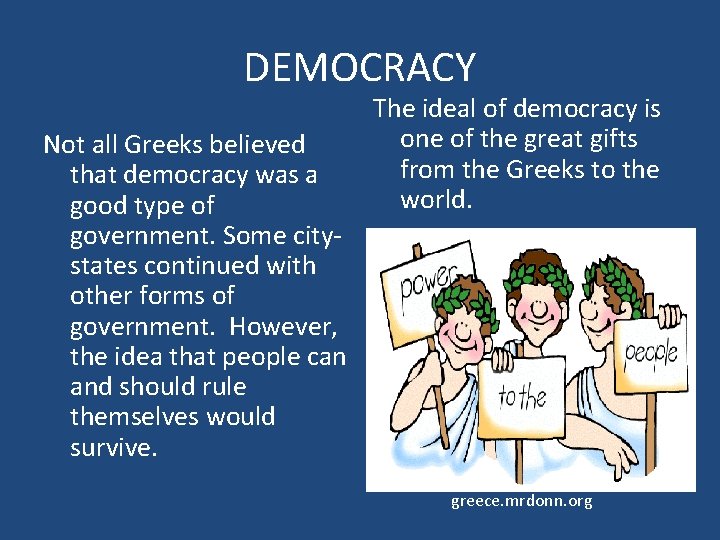
DEMOCRACY Not all Greeks believed that democracy was a good type of government. Some citystates continued with other forms of government. However, the idea that people can and should rule themselves would survive. The ideal of democracy is one of the great gifts from the Greeks to the world. greece. mrdonn. org
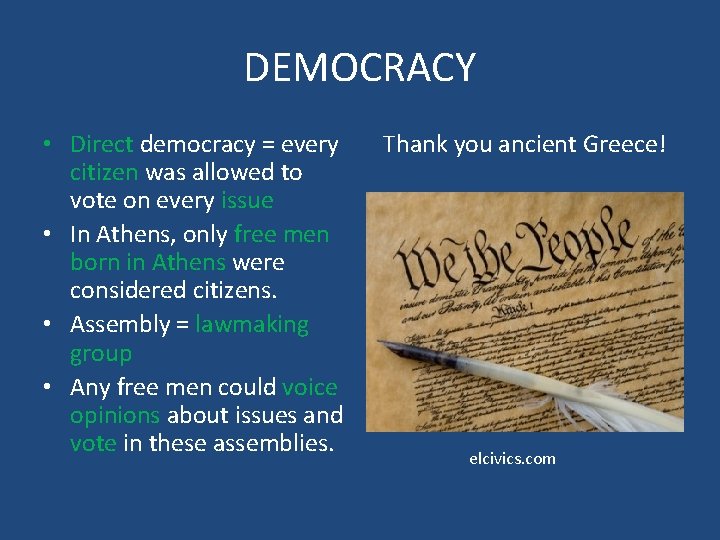
DEMOCRACY • Direct democracy = every citizen was allowed to vote on every issue • In Athens, only free men born in Athens were considered citizens. • Assembly = lawmaking group • Any free men could voice opinions about issues and vote in these assemblies. Thank you ancient Greece! elcivics. com