
The Rise of Civilization Chapter 1 Early Humans
- Slides: 50
The Rise of Civilization Chapter 1
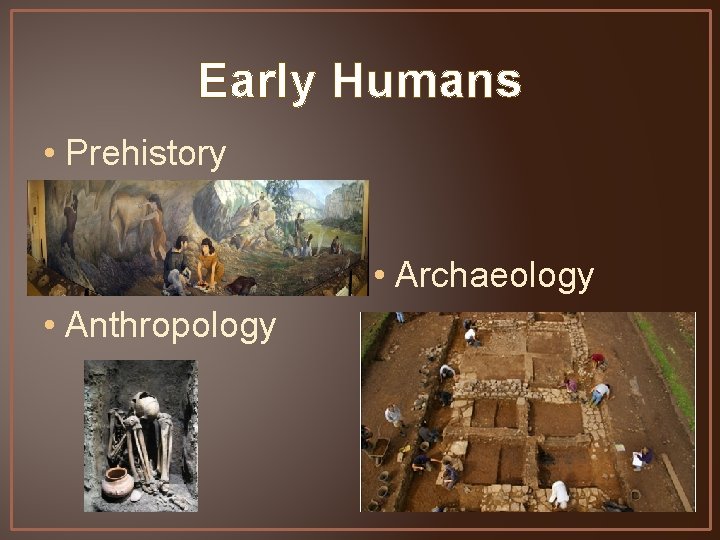
Early Humans • Prehistory • Archaeology • Anthropology
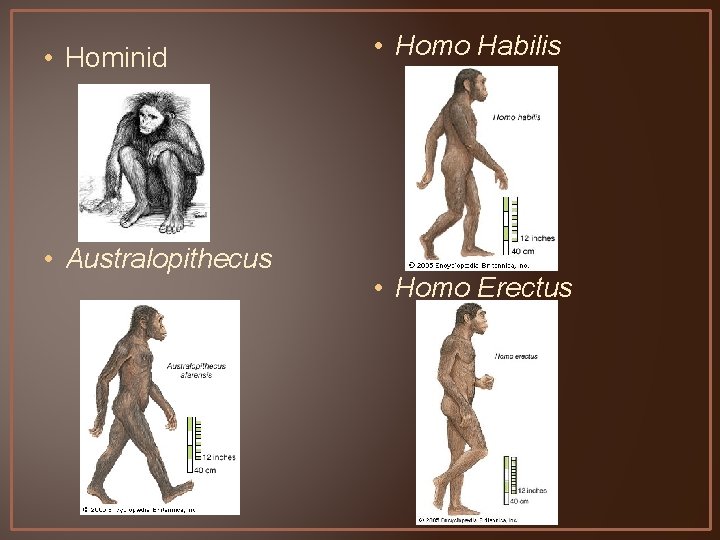
• Hominid • Australopithecus • Homo Habilis • Homo Erectus
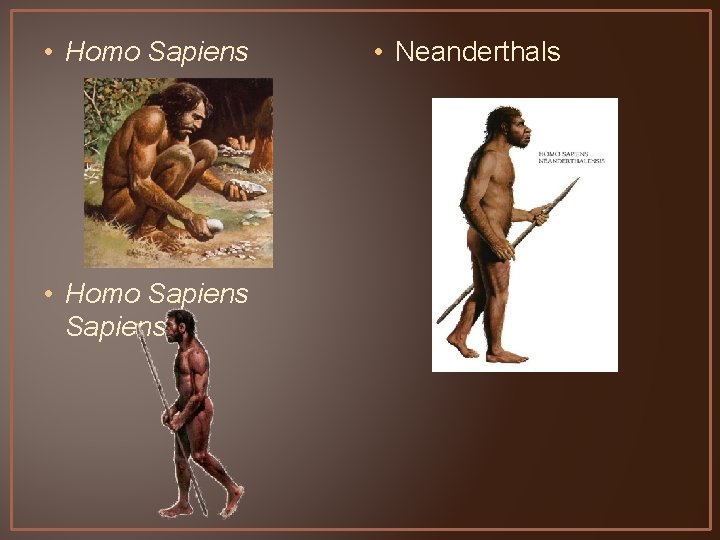
• Homo Sapiens • Neanderthals
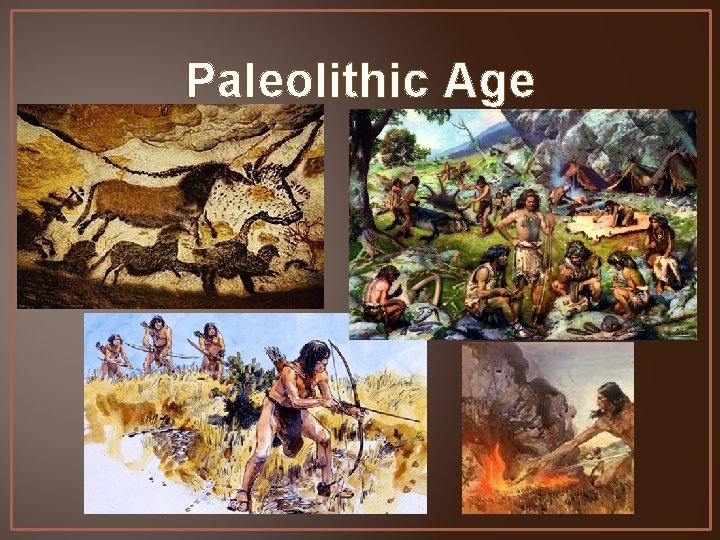
Paleolithic Age
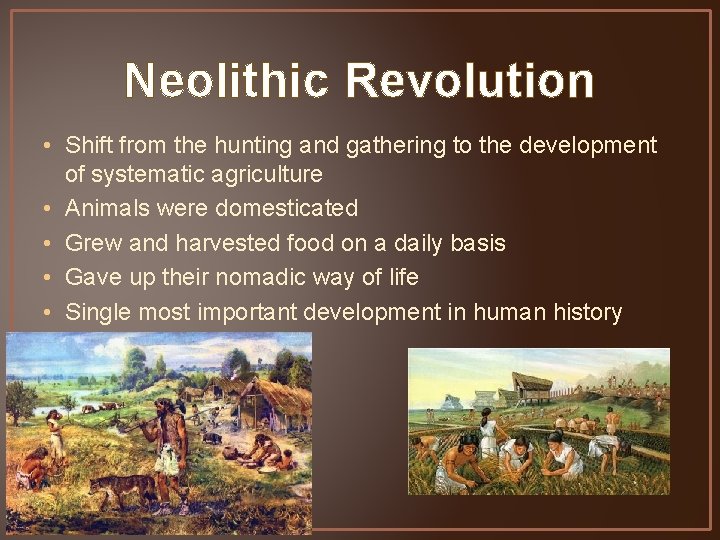
Neolithic Revolution • Shift from the hunting and gathering to the development of systematic agriculture • Animals were domesticated • Grew and harvested food on a daily basis • Gave up their nomadic way of life • Single most important development in human history
Neolithic Revolution • caused many social changes, including the settling of people into villages, the rise of different occupations in society, and the roles of men and women.
Effects • Settling down in villages or towns • Building walls • Storehouses for good • Encouraged trade • Learn crafts • Division of labor • Men • Farming • *Obtaining food • *Protecting settlement • Led to a dominant role • Women • Childcare • Wove cloth • Other task
The use of metal tools marked the end of the Neolithic Age and a *new level of human control over the environment and its resources.
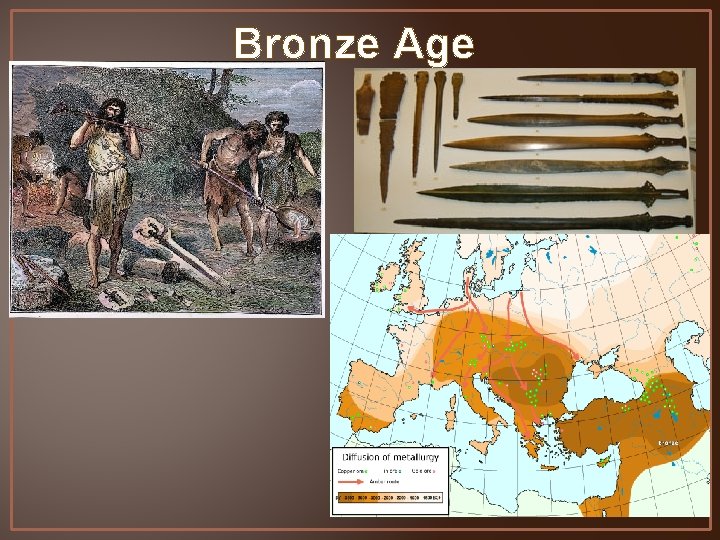
Bronze Age
Civilization • a complex culture in which a large number of humans share elements in common
Civilizations • *6 important characteristics • Cities • Government • Religion • Social structure • Writing • Art Mnemonic – Come Get Robertson She’s Weightlifting Armadillos
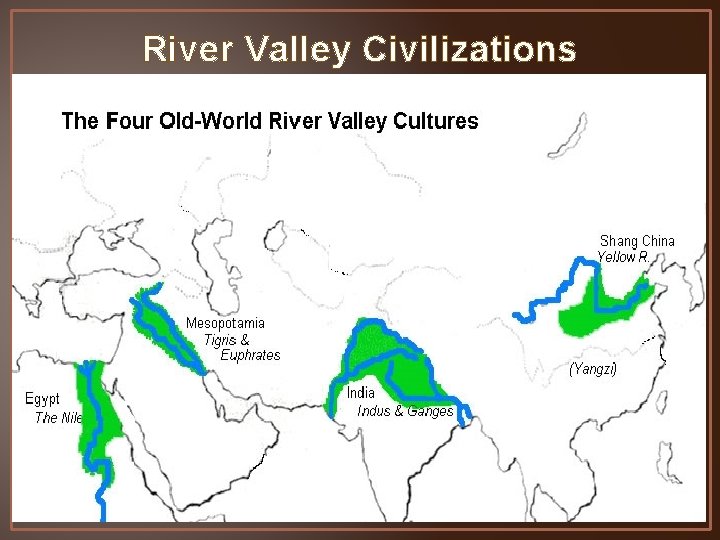
River Valley Civilizations
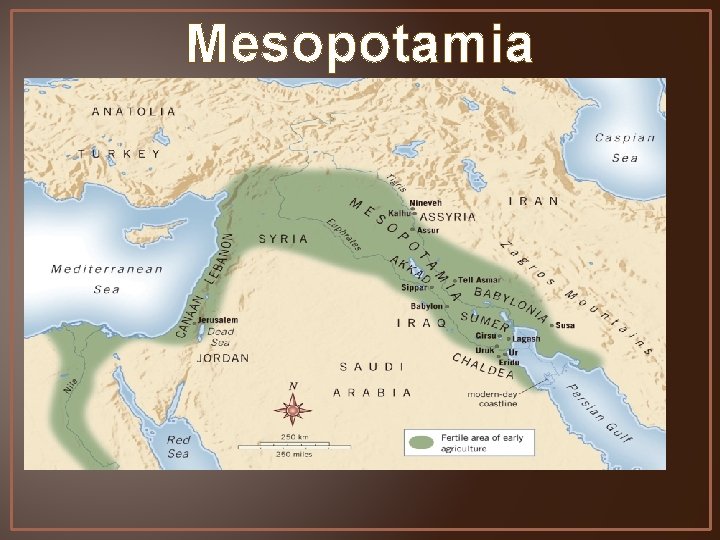
Mesopotamia
Fertile Crescent Between the Tigris and Euphrates River “Between the rivers” people in the Fertile Crescent *adapt to their environment by using *irrigation and drainage
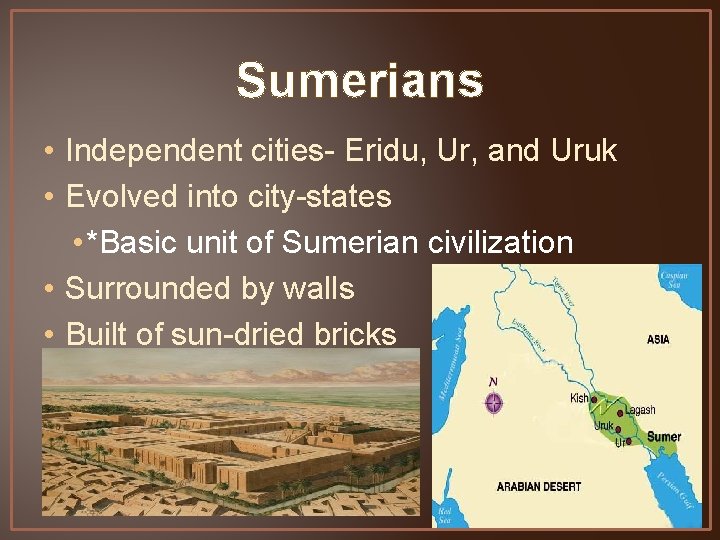
Sumerians • Independent cities- Eridu, Ur, and Uruk • Evolved into city-states • *Basic unit of Sumerian civilization • Surrounded by walls • Built of sun-dried bricks
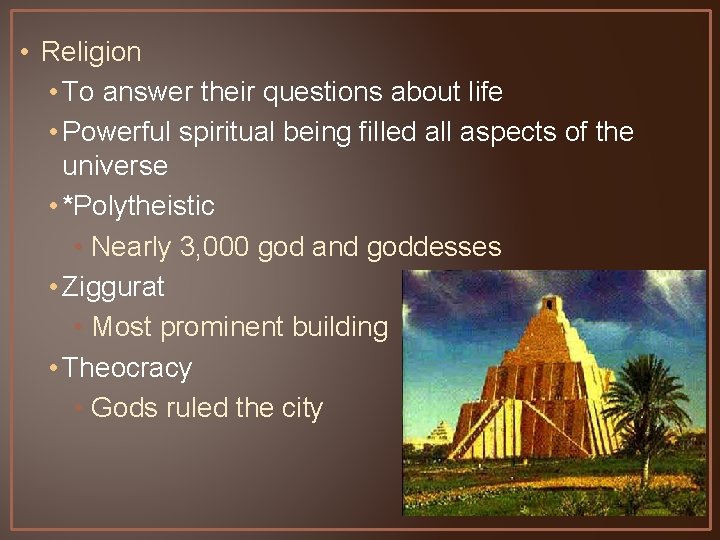
• Religion • To answer their questions about life • Powerful spiritual being filled all aspects of the universe • *Polytheistic • Nearly 3, 000 god and goddesses • Ziggurat • Most prominent building • Theocracy • Gods ruled the city
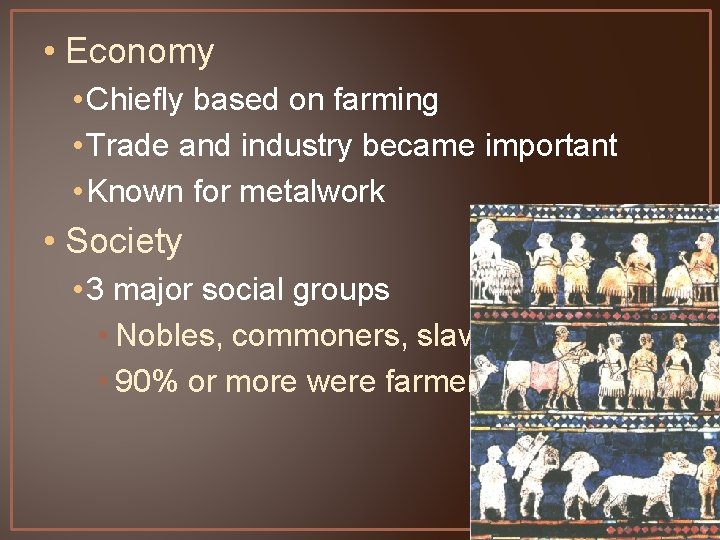
• Economy • Chiefly based on farming • Trade and industry became important • Known for metalwork • Society • 3 major social groups • Nobles, commoners, slaves • 90% or more were farmers
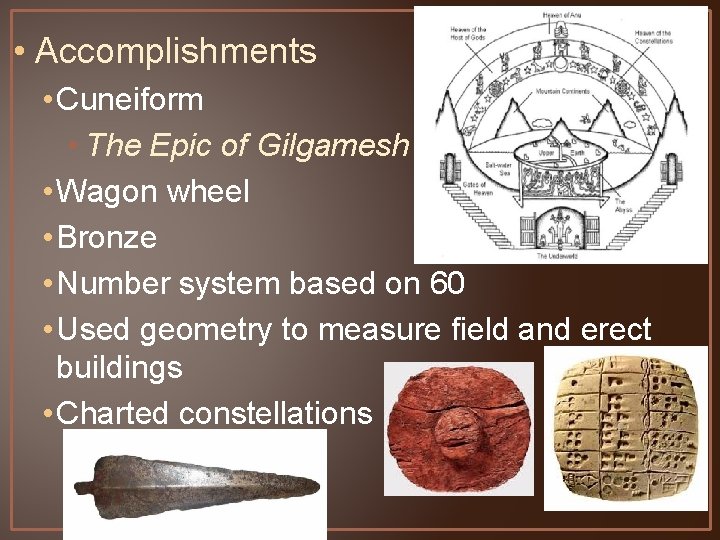
• Accomplishments • Cuneiform • The Epic of Gilgamesh • Wagon wheel • Bronze • Number system based on 60 • Used geometry to measure field and erect buildings • Charted constellations
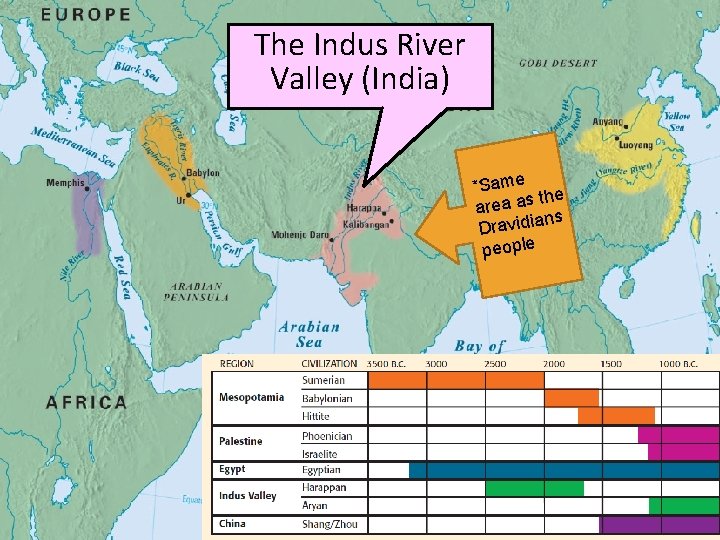
The Indus River Valley (India) *Same the area as ns Dravidia people
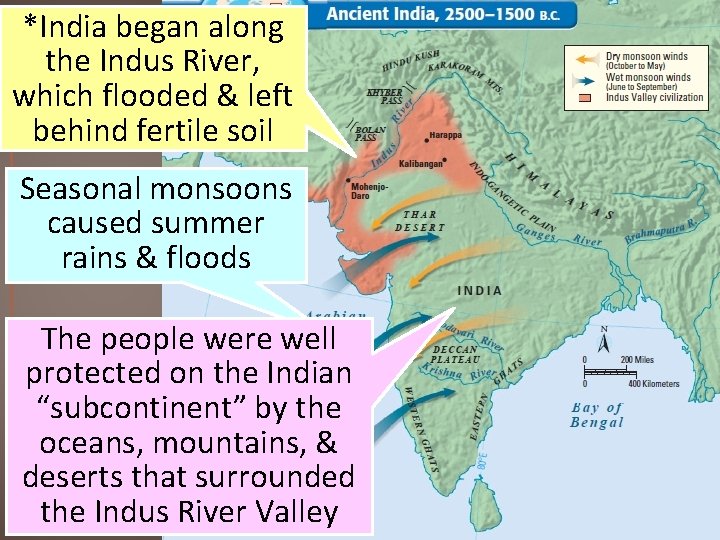
*India began along the Indus River, which flooded & left behind fertile soil Seasonal monsoons caused summer rains & floods The people were well protected on the Indian “subcontinent” by the oceans, mountains, & deserts that surrounded the Indus River Valley
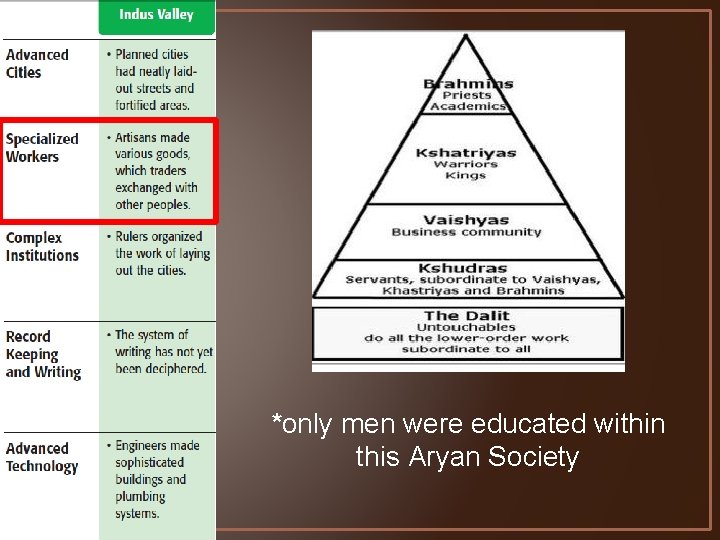
*only men were educated within this Aryan Society
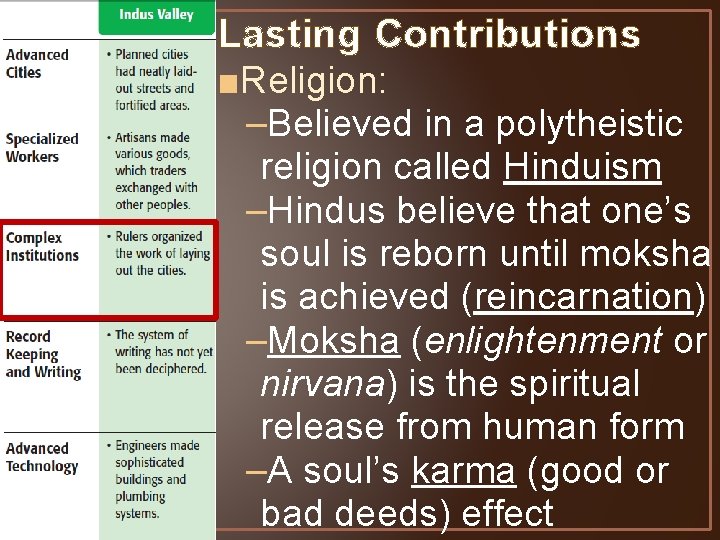
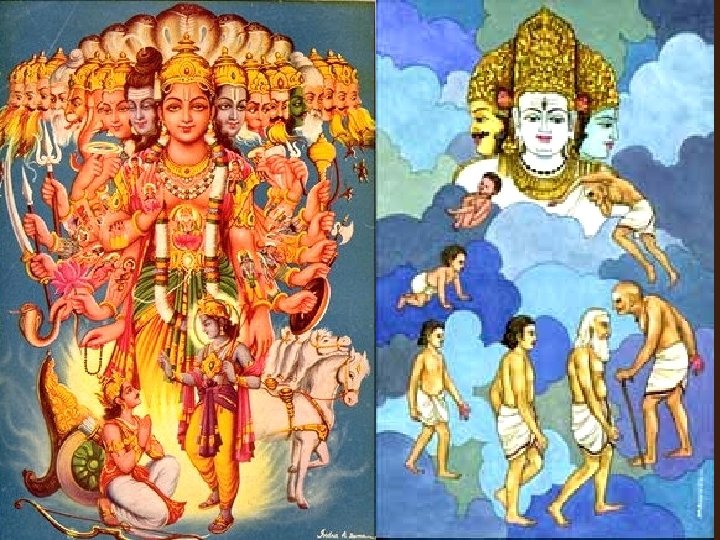
Lasting Contributions ■Religion: –Believed in a polytheistic religion called Hinduism –Hindus believe that one’s soul is reborn until moksha is achieved (reincarnation) –Moksha (enlightenment or nirvana) is the spiritual release from human form –A soul’s karma (good or bad deeds) effect
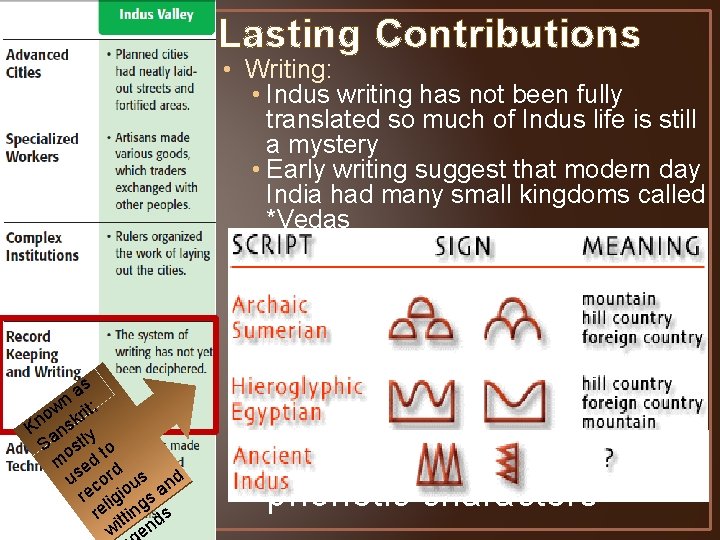
Lasting Contributions • Writing: • Indus writing has not been fully translated so much of Indus life is still a mystery • Early writing suggest that modern day India had many small kingdoms called *Vedas as n t; w o kri n K ns y Sa ostl to m ed d us cor us nd re ligio gs a re ttin ds wi en • Writing contained about 400 symbols that were both pictograms & phonetic characters
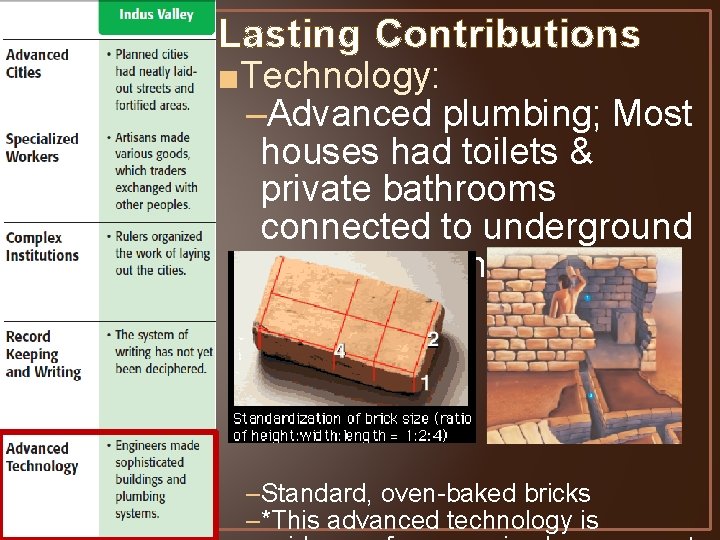
Lasting Contributions ■Technology: –Advanced plumbing; Most houses had toilets & private bathrooms connected to underground sewer systems –Standard, oven-baked bricks –*This advanced technology is
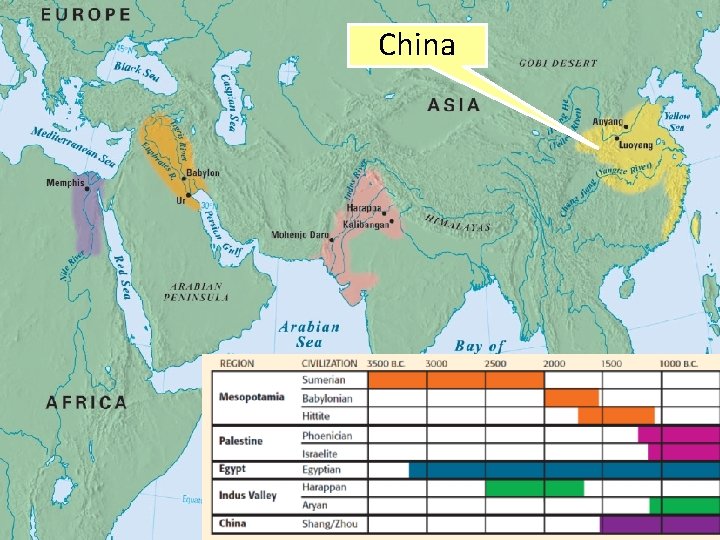
China
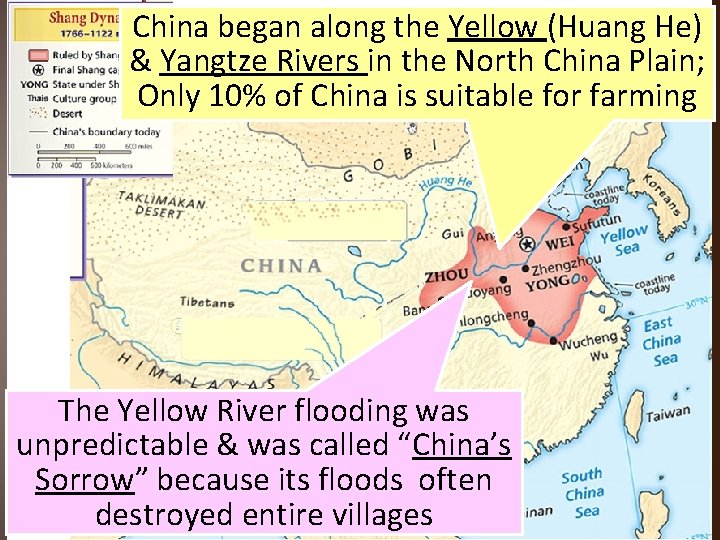
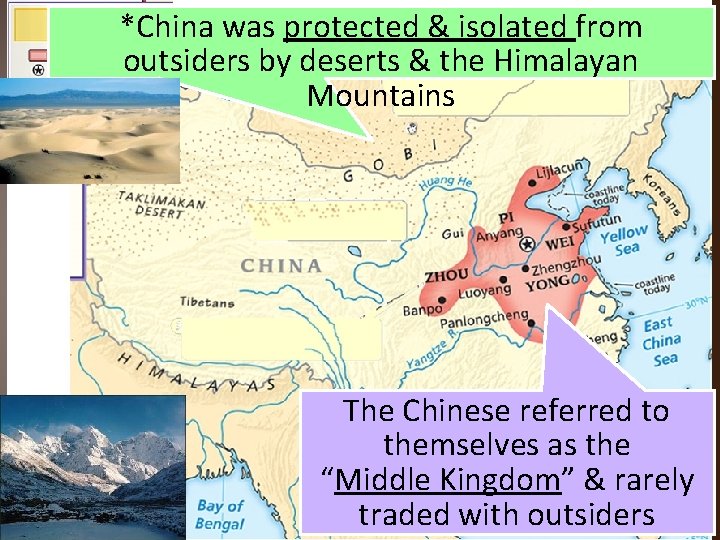
China began along the Yellow (Huang He) & Yangtze Rivers in the North China Plain; Only 10% of China is suitable for farming The Yellow River flooding was unpredictable & was called “China’s Sorrow” because its floods often destroyed entire villages
*China was protected & isolated from outsiders by deserts & the Himalayan Mountains The Chinese referred to themselves as the “Middle Kingdom” & rarely traded with outsiders
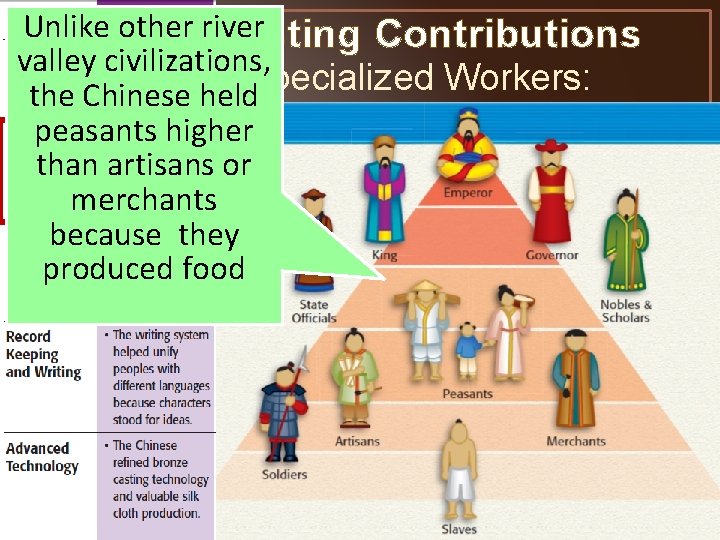
Unlike other river Lasting Contributions valley civilizations, • Specialized Workers: the Chinese held peasants higher • ? than artisans or merchants because they produced food
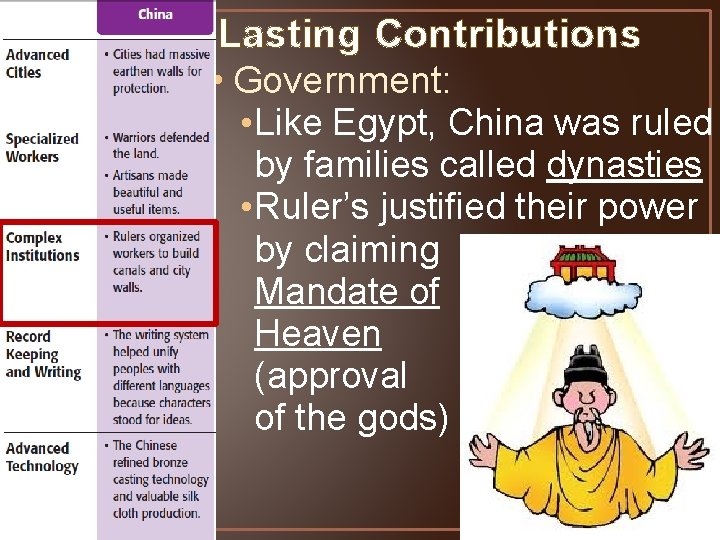
Lasting Contributions • Government: • Like Egypt, China was ruled by families called dynasties • Ruler’s justified their power by claiming Mandate of Heaven (approval of the gods)
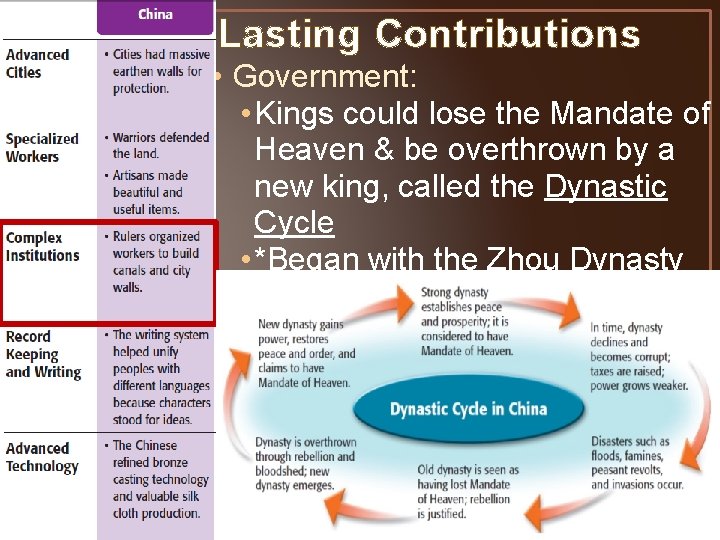
Lasting Contributions • Government: • Kings could lose the Mandate of Heaven & be overthrown by a new king, called the Dynastic Cycle • *Began with the Zhou Dynasty
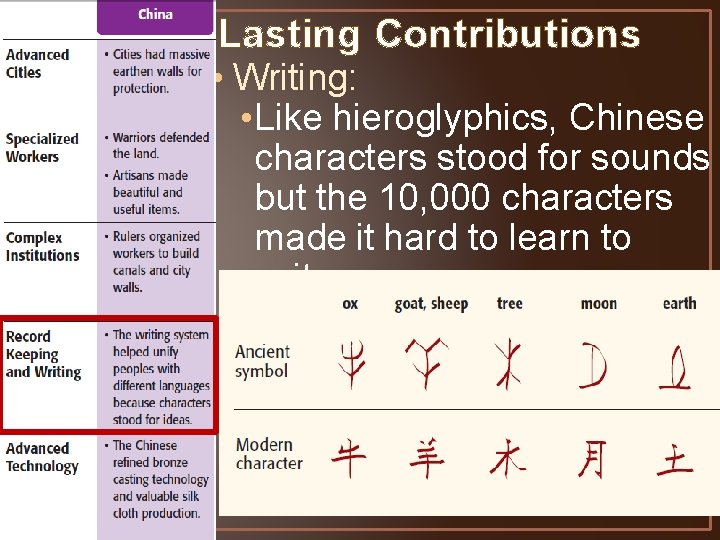
Lasting Contributions • Writing: • Like hieroglyphics, Chinese characters stood for sounds but the 10, 000 characters made it hard to learn to write
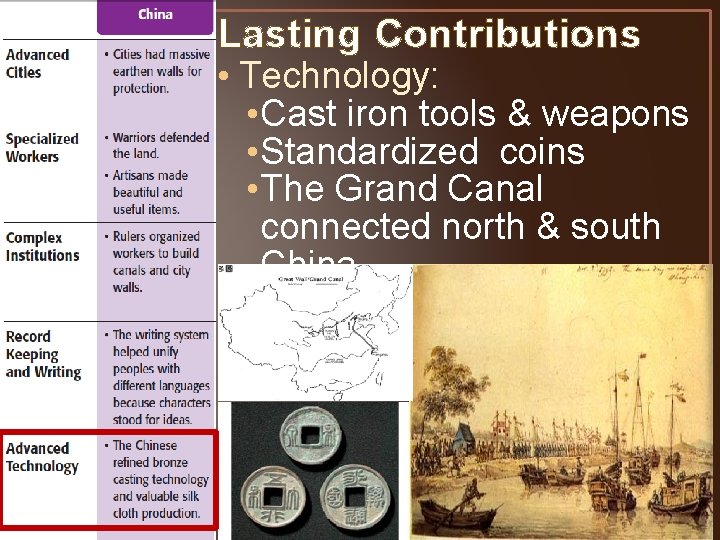
Lasting Contributions • Technology: • Cast iron tools & weapons • Standardized coins • The Grand Canal connected north & south China
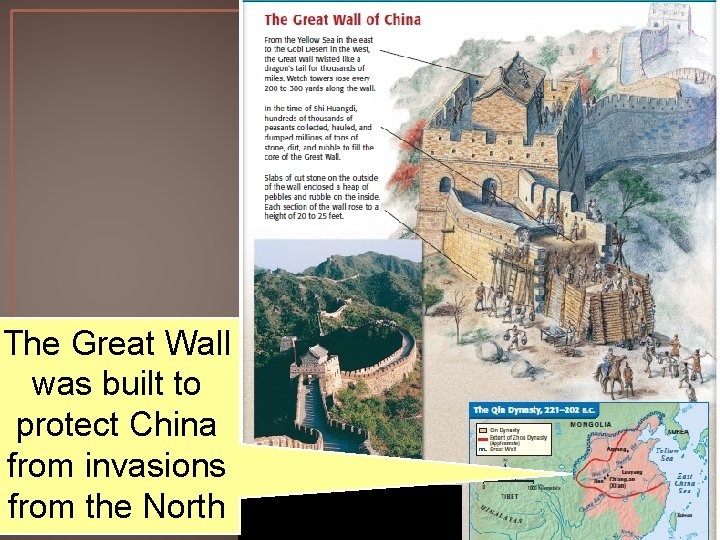
The Great Wall was built to protect China from invasions from the North
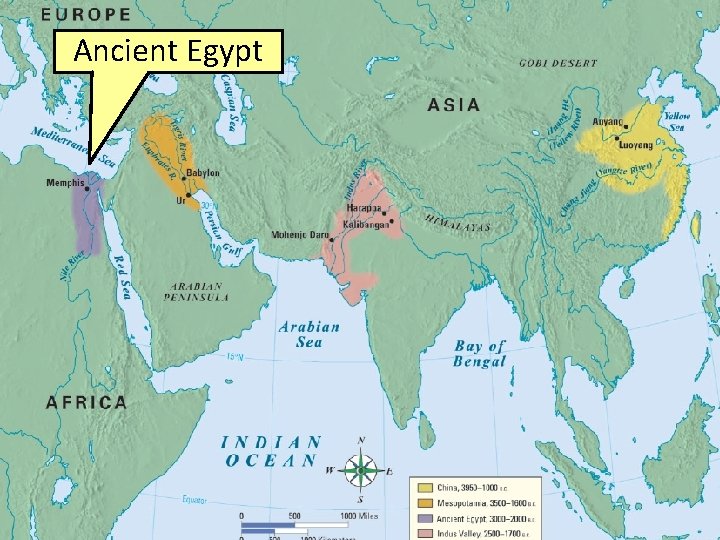
Ancient Egypt
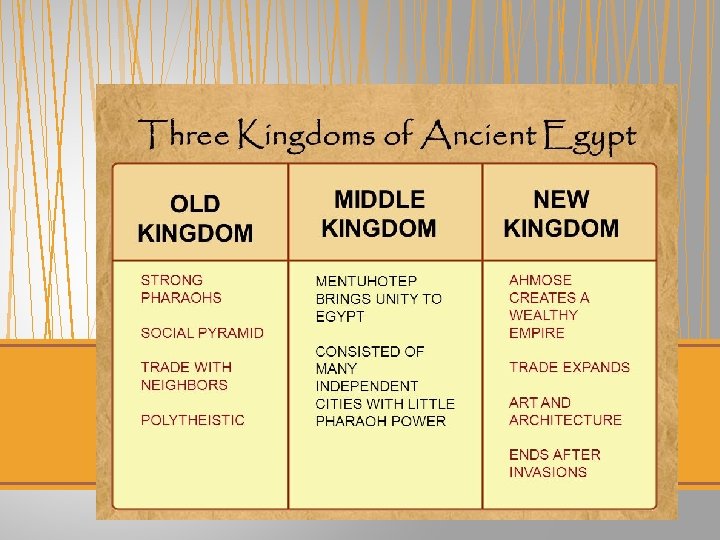
History of Egypt
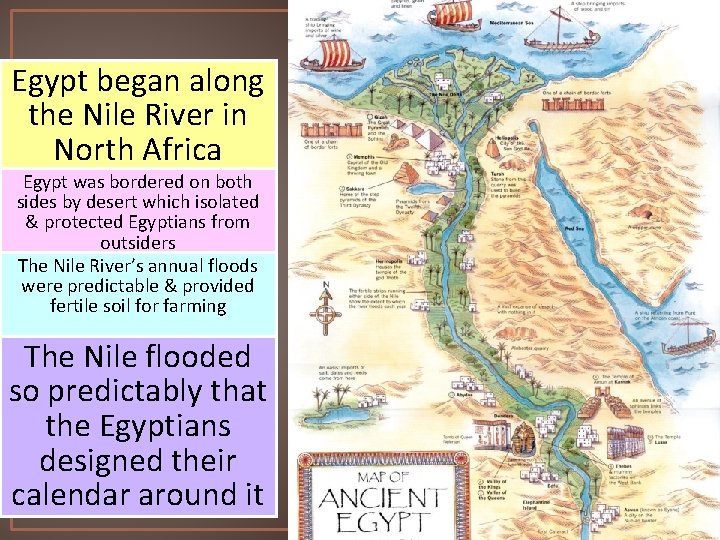
Egypt began along the Nile River in North Africa Egypt was bordered on both sides by desert which isolated & protected Egyptians from outsiders The Nile River’s annual floods were predictable & provided fertile soil for farming The Nile flooded so predictably that the Egyptians designed their calendar around it
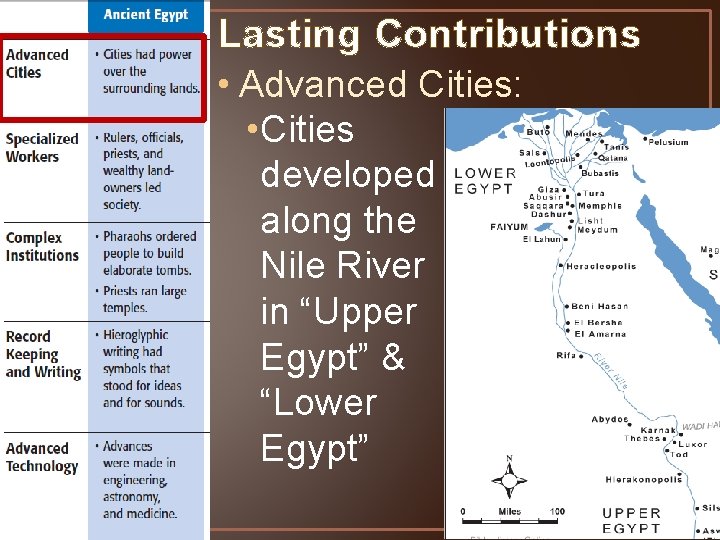
Lasting Contributions • Advanced Cities: • Cities developed along the Nile River in “Upper Egypt” & “Lower Egypt”
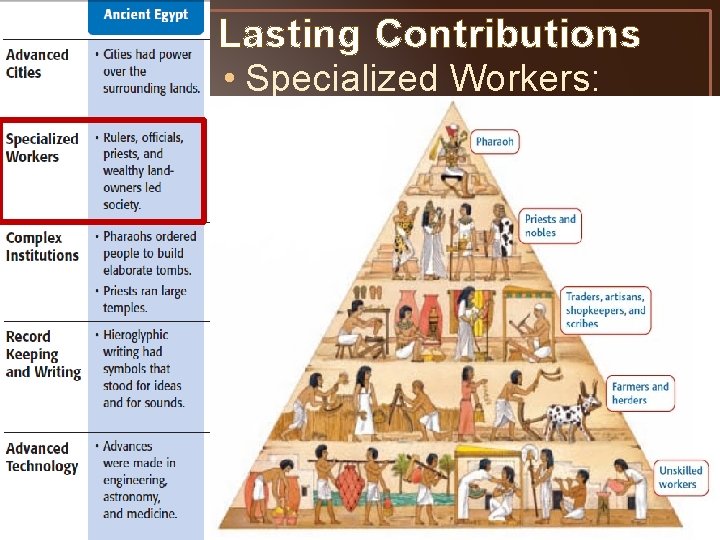
Lasting Contributions • Specialized Workers: • ?
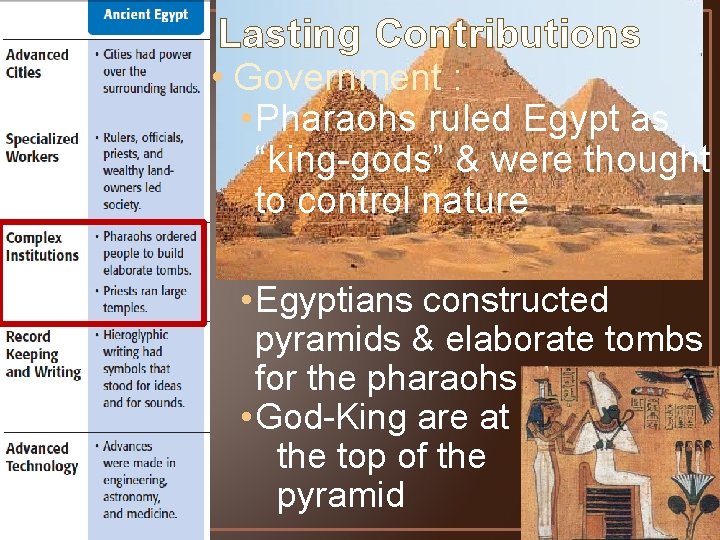
Lasting Contributions • Government : • Pharaohs ruled Egypt as “king-gods” & were thought to control nature • Egyptians constructed pyramids & elaborate tombs for the pharaohs • God-King are at the top of the pyramid
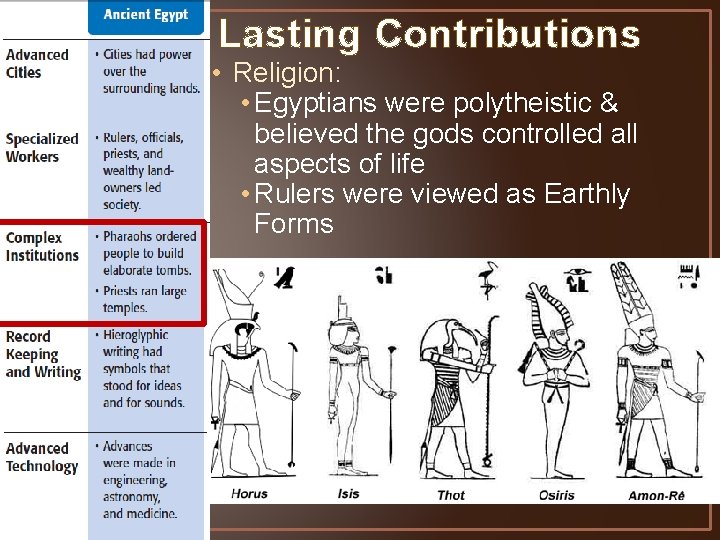
Lasting Contributions • Religion: • Egyptians were polytheistic & believed the gods controlled all aspects of life • Rulers were viewed as Earthly Forms
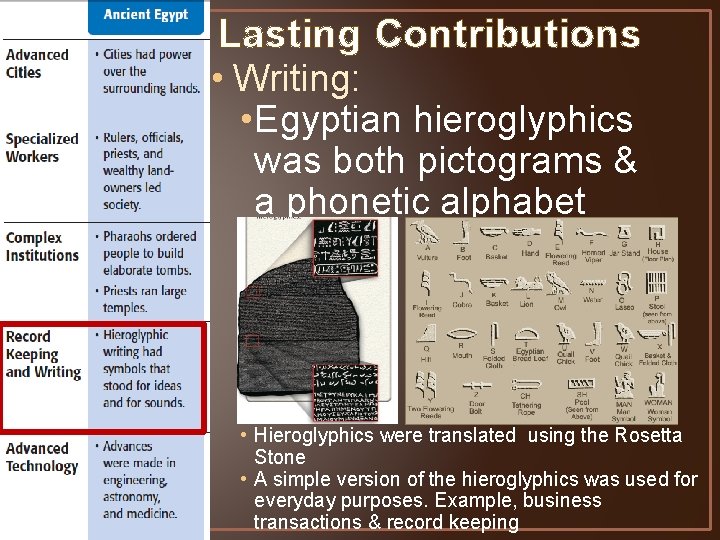
Lasting Contributions • Writing: • Egyptian hieroglyphics was both pictograms & a phonetic alphabet • Hieroglyphics were translated using the Rosetta Stone • A simple version of the hieroglyphics was used for everyday purposes. Example, business transactions & record keeping
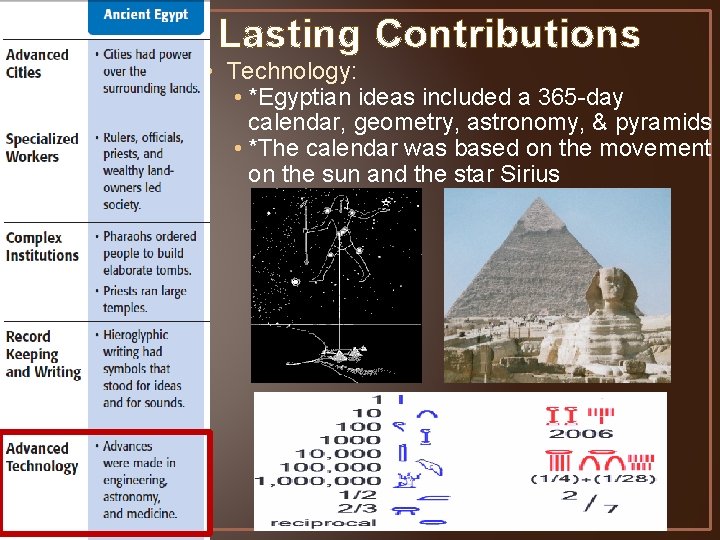
Lasting Contributions • Technology: • *Egyptian ideas included a 365 -day calendar, geometry, astronomy, & pyramids • *The calendar was based on the movement on the sun and the star Sirius
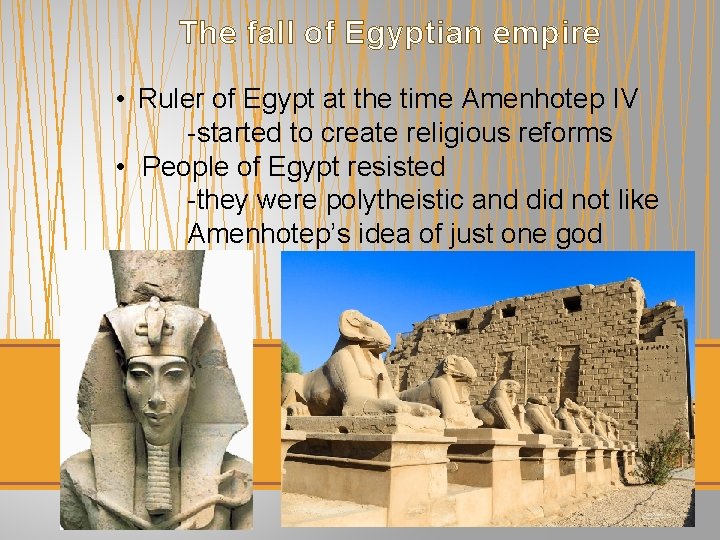
The fall of Egyptian empire • Ruler of Egypt at the time Amenhotep IV -started to create religious reforms • People of Egypt resisted -they were polytheistic and did not like Amenhotep’s idea of just one god
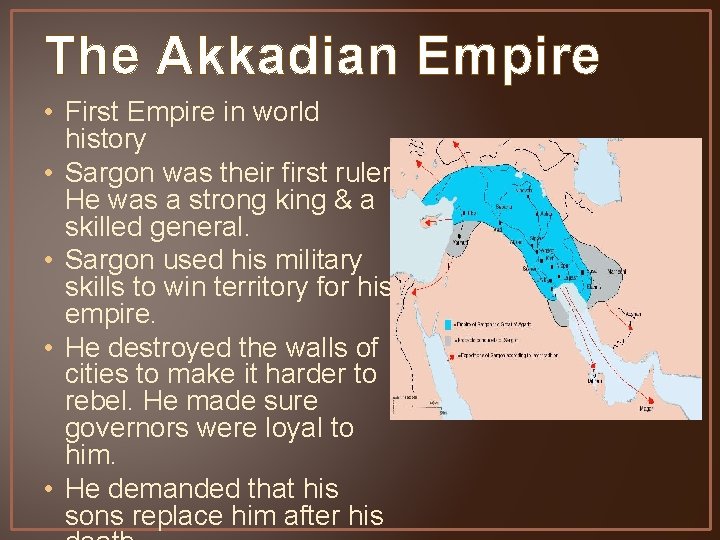
The Akkadian Empire • First Empire in world history • Sargon was their first ruler. He was a strong king & a skilled general. • Sargon used his military skills to win territory for his empire. • He destroyed the walls of cities to make it harder to rebel. He made sure governors were loyal to him. • He demanded that his sons replace him after his
Hammurabi’s code • Hammurabi= “just ruler” • Hammurabi—best known for creating a set of laws for his empire • *These laws addressed almost anything that could go wrong • He posted this code for everyone to read • Code of Hammurabi—stricter than the old Mesopotamia • “An eye for an eye, and a tooth for a tooth. ” This means, a punishment for a crime should MATCH the seriousness of the crime. • Do you agree with this type of mentality?
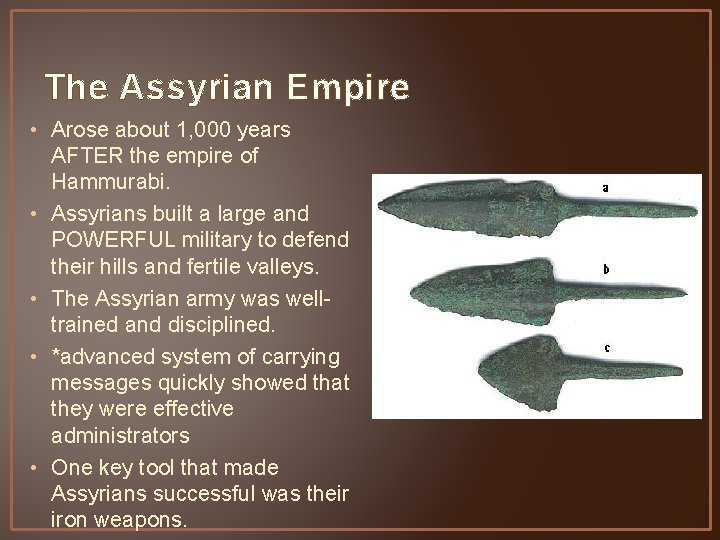
The Assyrian Empire • Arose about 1, 000 years AFTER the empire of Hammurabi. • Assyrians built a large and POWERFUL military to defend their hills and fertile valleys. • The Assyrian army was welltrained and disciplined. • *advanced system of carrying messages quickly showed that they were effective administrators • One key tool that made Assyrians successful was their iron weapons.
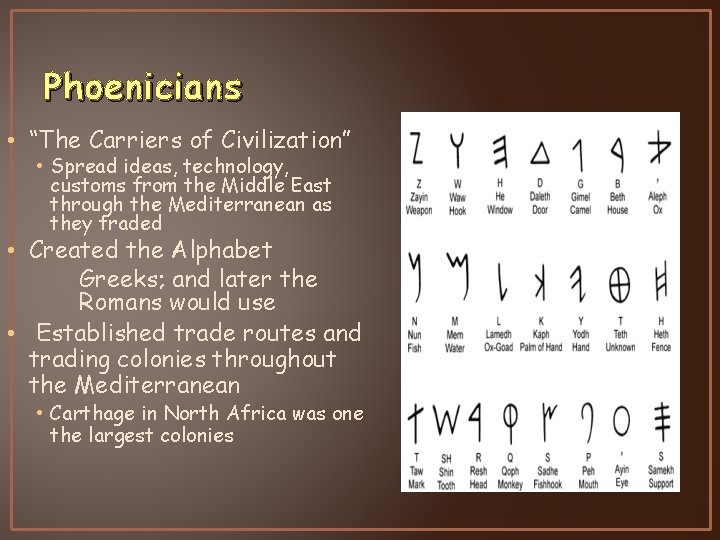
Phoenicians • “The Carriers of Civilization” • Spread ideas, technology, customs from the Middle East through the Mediterranean as they traded • Created the Alphabet Greeks; and later the Romans would use • Established trade routes and trading colonies throughout the Mediterranean • Carthage in North Africa was one the largest colonies
The First Israelites • Israelites were monotheist which meant they only believed in one god. • Israelite faith become the religion known today as Judaism. (Jewish) • Judaism influenced Christianity and Islam • The Israelites wrote the Hebrew Bible. The Christians call this book the Old