
THE RISE OF BIG BUSINESSES AKA MONOPOLIES AKA
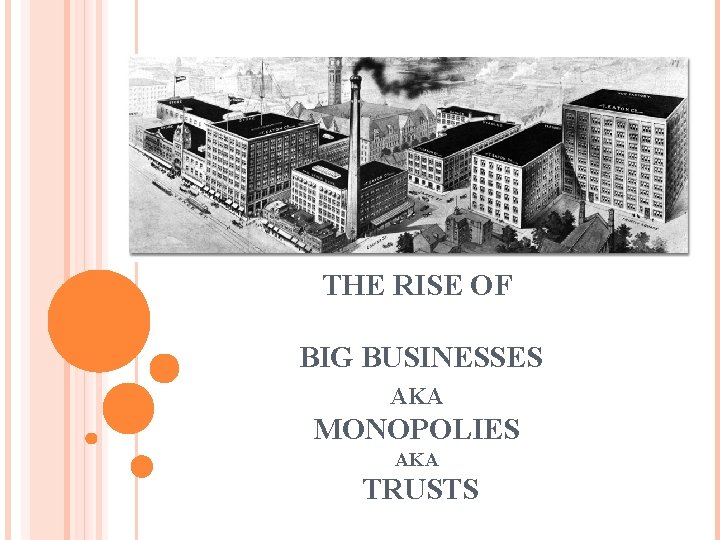
THE RISE OF BIG BUSINESSES AKA MONOPOLIES AKA TRUSTS
DEVELOPMENT OF BIG BUSINESSES Until 1900’s families owned small businesses that were local After 1900 corporations form that are owned by many people instead of one man Corporations increase their profits by: Paying low wages…upsets workers Broadened their advertising base Invested in inventors Many corporations formed monopolies in which they controlled the entire market (no competition) These corporations are allowed to get away with this because the government is practicing laissez-faire (government doesn’t regulate businesses/economy)

TWO WAYS TO CREATE A MONOPOLY/TRUST Horizontal Integration: Consolidating many businesses into one large firm One company buys out all of its competitors…creates monopolies that will later be banned by the federal government This practice was used by Rockefeller in oil company Vertical Integration: Buying up all the businesses that contribute to a final product Example: Steel company owned by Carnegie Owned iron mines Owned RR that transported the iron to factories Owned the coal mines that extracted the coal to power his steel mills and railroads
“Robber Barons” Entrepreneurs who built monopolies that were unfair to consumers and ruthless with their competitors Hard on their Bought out workers competitors Seen as bad for the economy Rockefeller “Captains of Industry” Entrepreneurs that were seen as serving the nation in a positive way Creating jobs Stimulated innovation Were philanthropists Carnegie
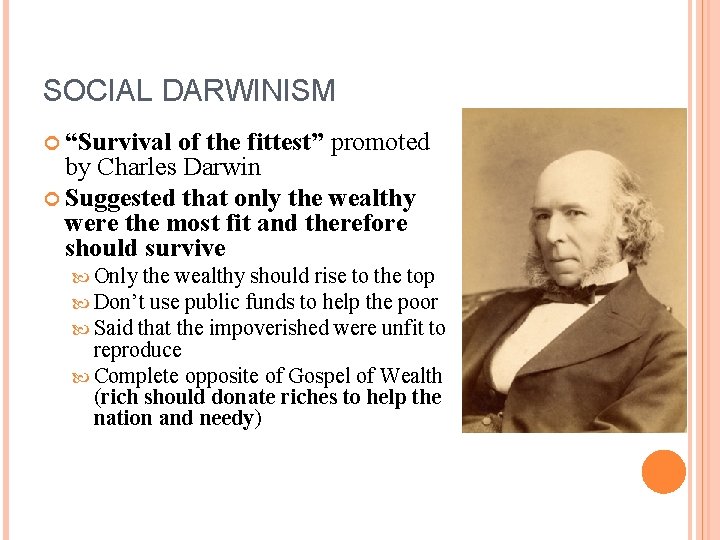
SOCIAL DARWINISM “Survival of the fittest” promoted by Charles Darwin Suggested that only the wealthy were the most fit and therefore should survive Only the wealthy should rise to the top Don’t use public funds to help the poor Said that the impoverished were unfit to reproduce Complete opposite of Gospel of Wealth (rich should donate riches to help the nation and needy)
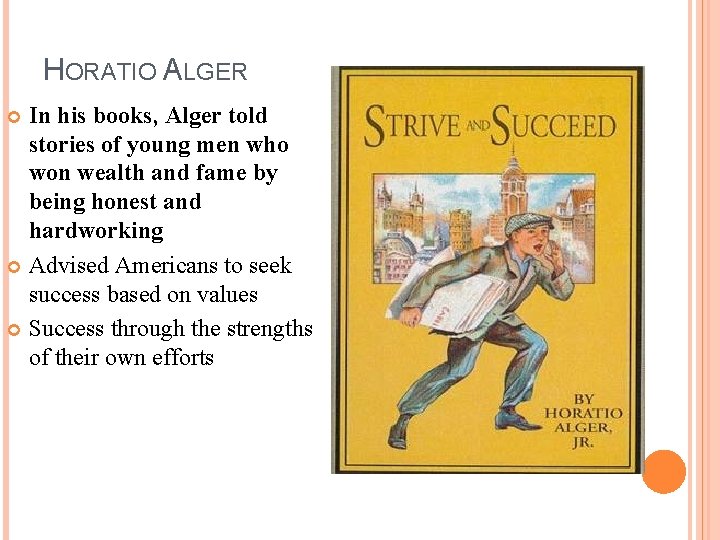
HORATIO ALGER In his books, Alger told stories of young men who won wealth and fame by being honest and hardworking Advised Americans to seek success based on values Success through the strengths of their own efforts
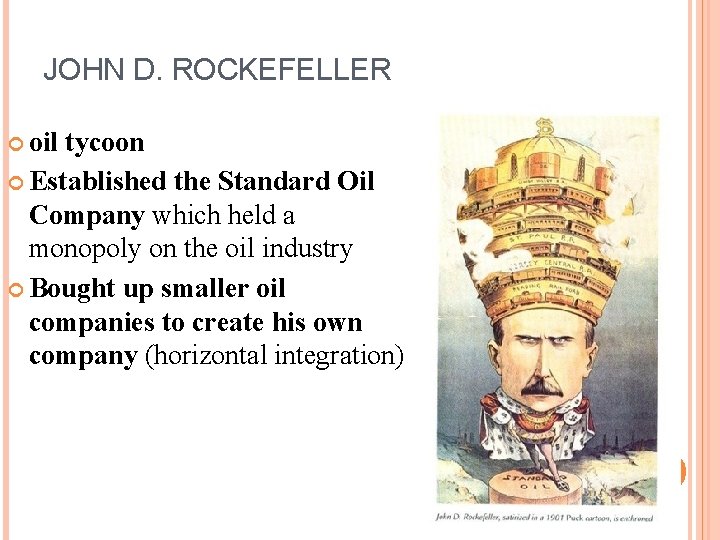
JOHN D. ROCKEFELLER oil tycoon Established the Standard Oil Company which held a monopoly on the oil industry Bought up smaller oil companies to create his own company (horizontal integration)
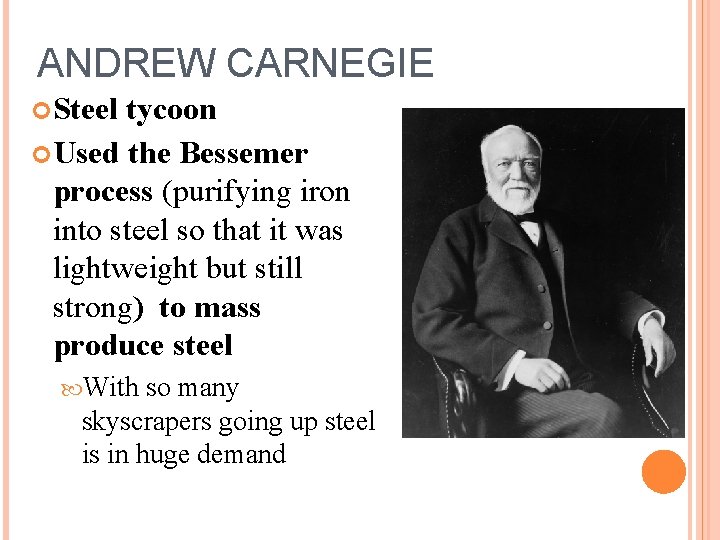
ANDREW CARNEGIE Steel tycoon Used the Bessemer process (purifying iron into steel so that it was lightweight but still strong) to mass produce steel With so many skyscrapers going up steel is in huge demand
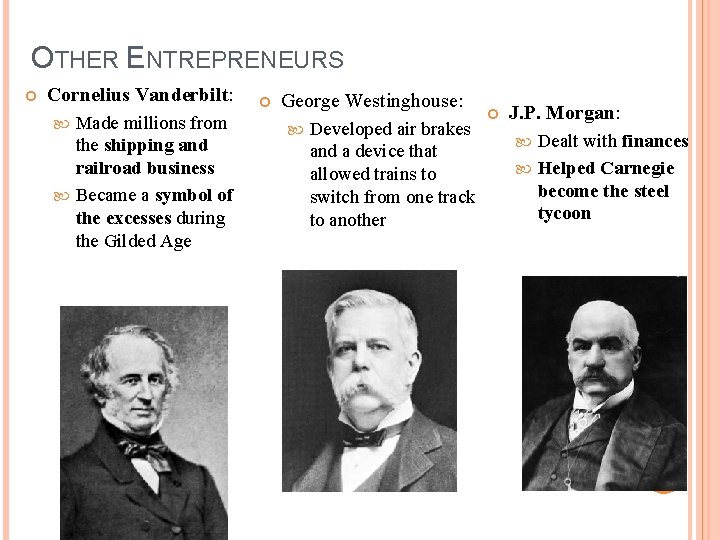
OTHER ENTREPRENEURS Cornelius Vanderbilt: Made millions from the shipping and railroad business Became a symbol of the excesses during the Gilded Age George Westinghouse: Developed air brakes and a device that allowed trains to switch from one track to another J. P. Morgan: Dealt with finances Helped Carnegie become the steel tycoon
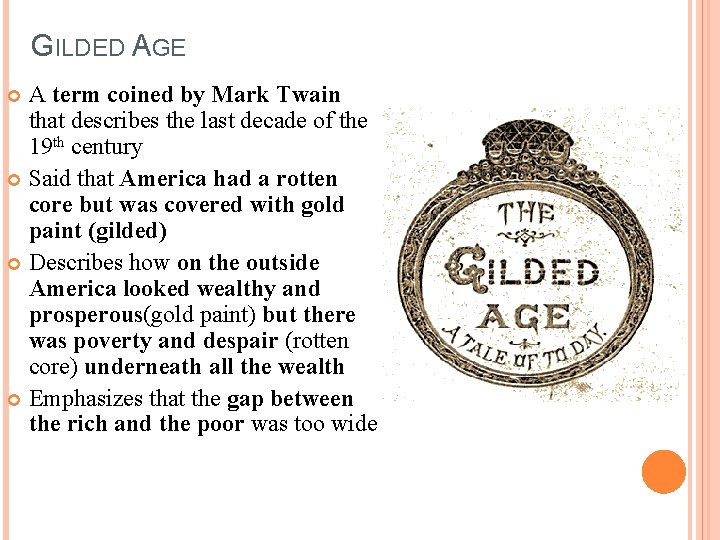
GILDED AGE A term coined by Mark Twain that describes the last decade of the 19 th century Said that America had a rotten core but was covered with gold paint (gilded) Describes how on the outside America looked wealthy and prosperous(gold paint) but there was poverty and despair (rotten core) underneath all the wealth Emphasizes that the gap between the rich and the poor was too wide

GOVERNMENT REGULATION OF BIG BUSINESS Laissez-faire: little government interference in the economy An American tradition But the stronghold that these capitalists had on the economy worried the government Sherman Antitrust Act outlawed monopolies and trusts (companies owned by stockholders)…but not really enforced
- Slides: 11