
The Rise of Big Business The Growth of
The Rise of Big Business The Growth of Big Business Gilded Age 1870 s-1900
The Rise of Big Business Warm Up 1. Imagine you are Bill Gates – What would you do with your money? Write it down on a separate sheet of paper. 2. Read the “Gospel of Wealth” and answer the 3 questions. 3. Compare your response to question 1 and question 2. Would Carnegie approve of your decisions? ? ? Why or why not.
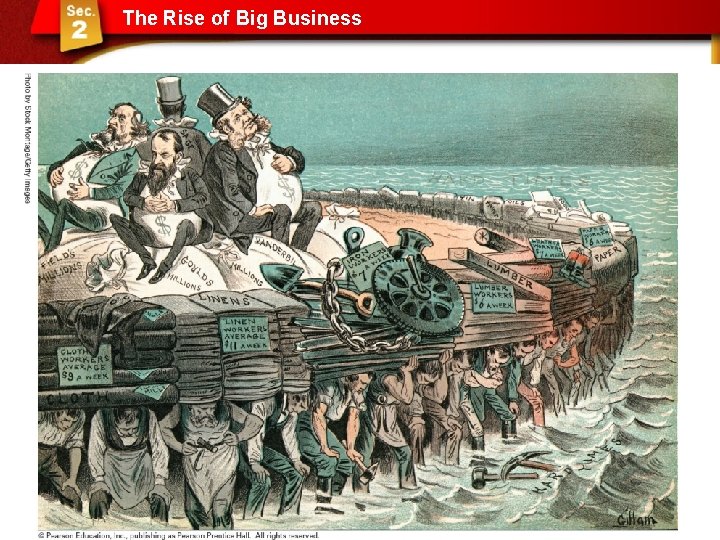
Robber Baron or Captains of Industry Robber Baron 1: an American capitalist of the latter part of the 19 th century who became wealthy through exploitation (as of natural resources, governmental influence, or low wage scales) 2: a business owner or executive who acquires wealth through ethically questionable tactics Captain of Industry : the head of a great industrial enterprise
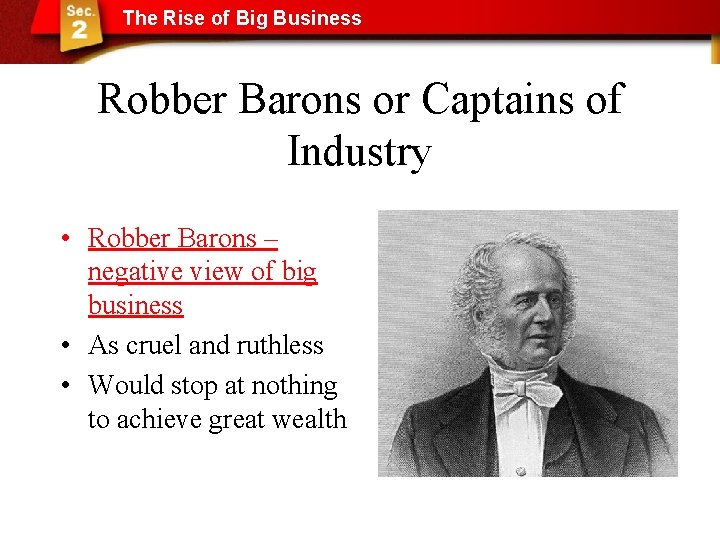
The Rise of Big Business Robber Barons or Captains of Industry • Robber Barons – negative view of big business • As cruel and ruthless • Would stop at nothing to achieve great wealth
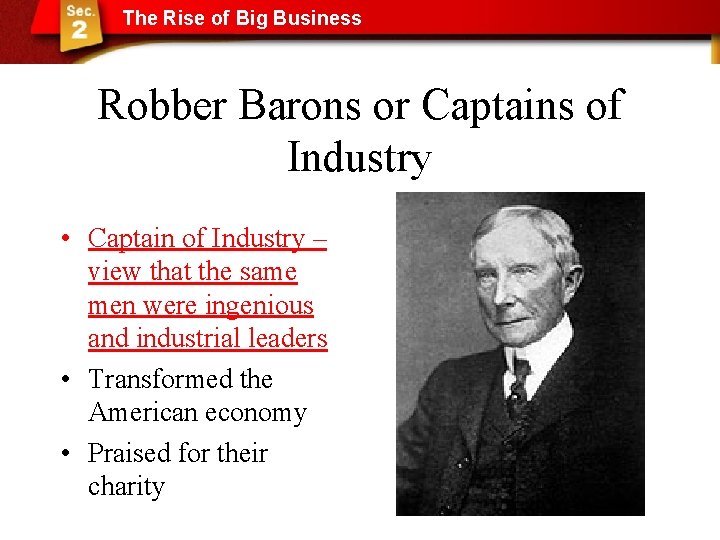
The Rise of Big Business Robber Barons or Captains of Industry • Captain of Industry – view that the same men were ingenious and industrial leaders • Transformed the American economy • Praised for their charity
The Rise of Big Business
Trust v Monopoly • Trust Stockholders of several competing corporations turn in their stock to trustees in exchange for a trust certificate entitling them to a dividend. Trustees ran the companies as if they were one. • Monopoly The natural goal of any business to make as much profit as it can and to eliminate its competition. When a corporation eliminates its competition it becomes what is known as a "monopoly. "
Entrepreneurs • Risk-Takers • Businessmen who took their money and talents to launch new ventures • Capitalism: 1800 businessmen believed in private businesses running industries without government intervention • Competition determines prices and wages • Market Economy: Supply & Demand
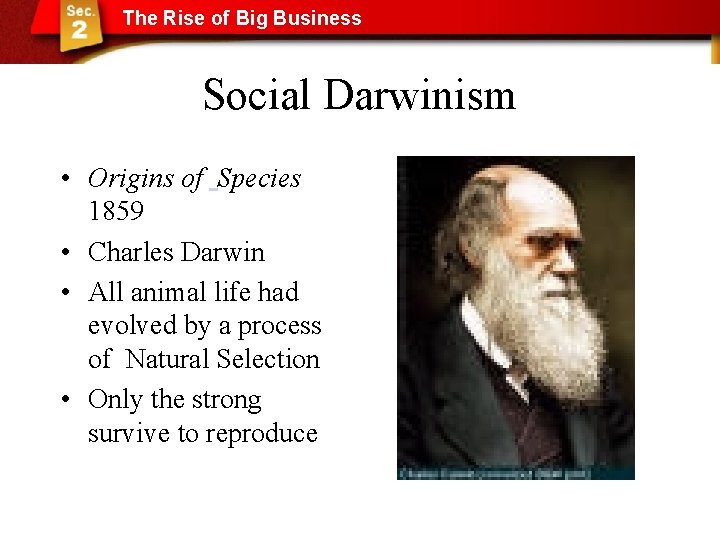
The Rise of Big Business Social Darwinism • Origins of Species 1859 • Charles Darwin • All animal life had evolved by a process of Natural Selection • Only the strong survive to reproduce
The Rise of Big Business Social Darwinism • Free Competition in the economy, like natural selection, would ensure survival of the fittest • Society should do as little as possible to interfere with people’s pursuit of success
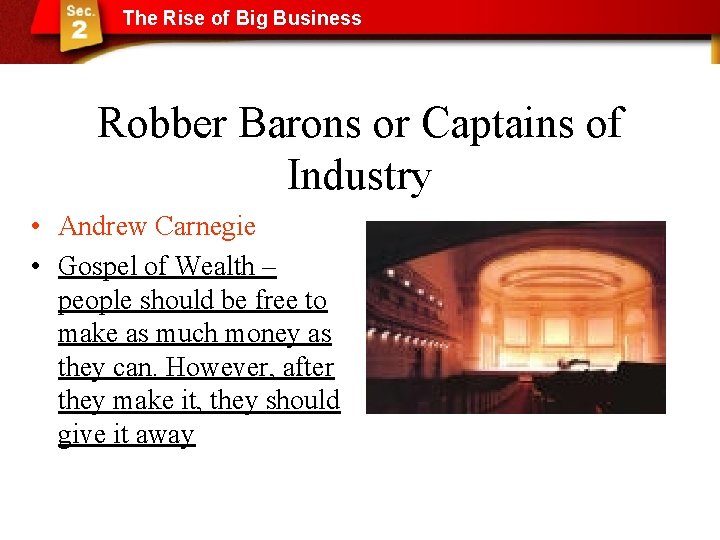
The Rise of Big Business Robber Barons or Captains of Industry • Andrew Carnegie • Gospel of Wealth – people should be free to make as much money as they can. However, after they make it, they should give it away
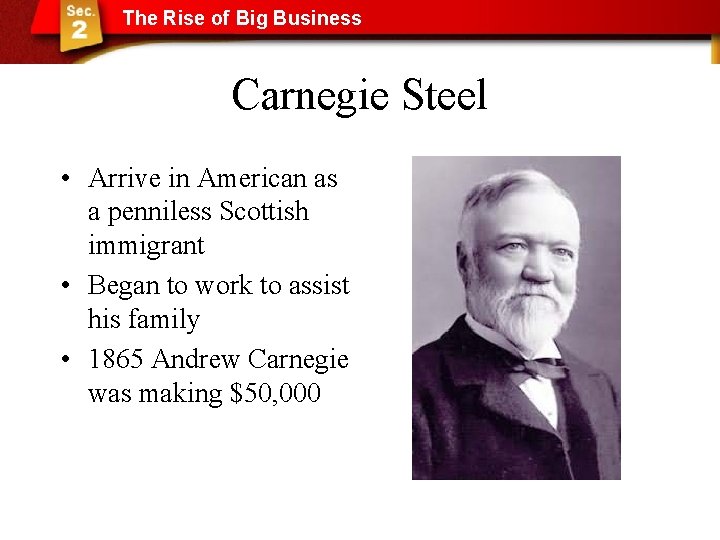
The Rise of Big Business Carnegie Steel • Arrive in American as a penniless Scottish immigrant • Began to work to assist his family • 1865 Andrew Carnegie was making $50, 000
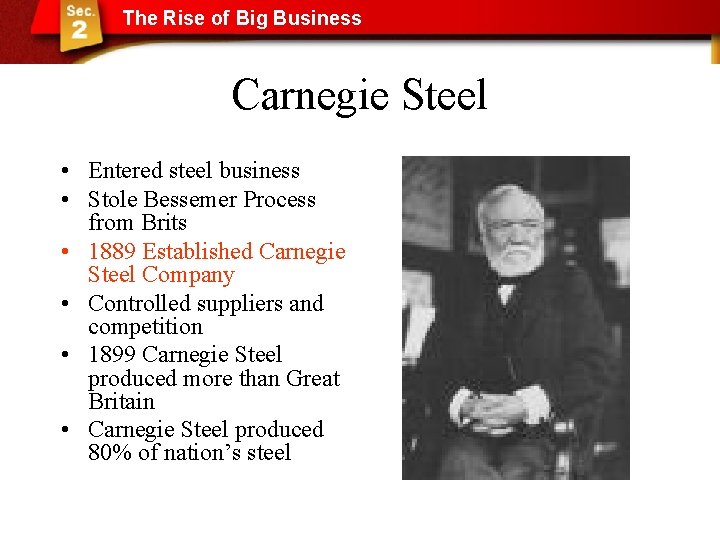
The Rise of Big Business Carnegie Steel • Entered steel business • Stole Bessemer Process from Brits • 1889 Established Carnegie Steel Company • Controlled suppliers and competition • 1899 Carnegie Steel produced more than Great Britain • Carnegie Steel produced 80% of nation’s steel
The Rise of Big Business Robber Barons or Captains of Industry • Carnegie once stated, “I entered this life poor and I wish to leave it the same. ” • Gave away $325 million = 90% of his wealth • Carnegie Hall in NY City • Carnegie Foundation • 3, 000 libraries across the US

The Rise of Big Business Vertical Integration • Controlling all steps to change raw materials into finished products
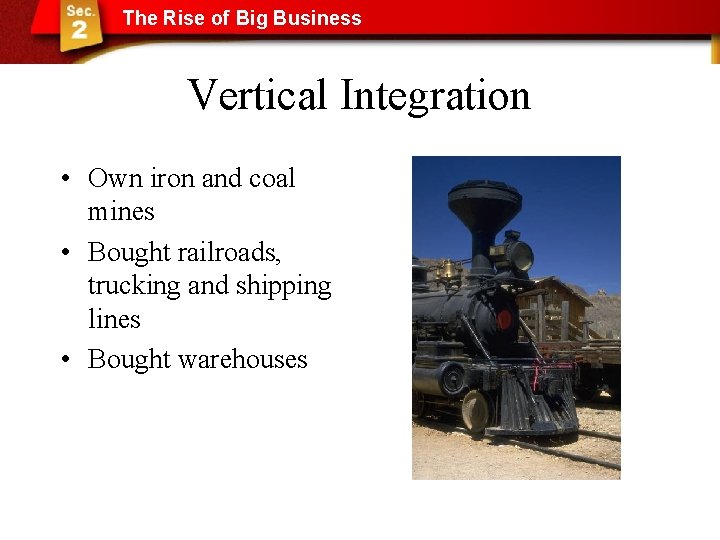
The Rise of Big Business Vertical Integration • Own iron and coal mines • Bought railroads, trucking and shipping lines • Bought warehouses
The Rise of Big Business Growth and Consolidation • Monopoly- complete control over production, quality, wages, and prices
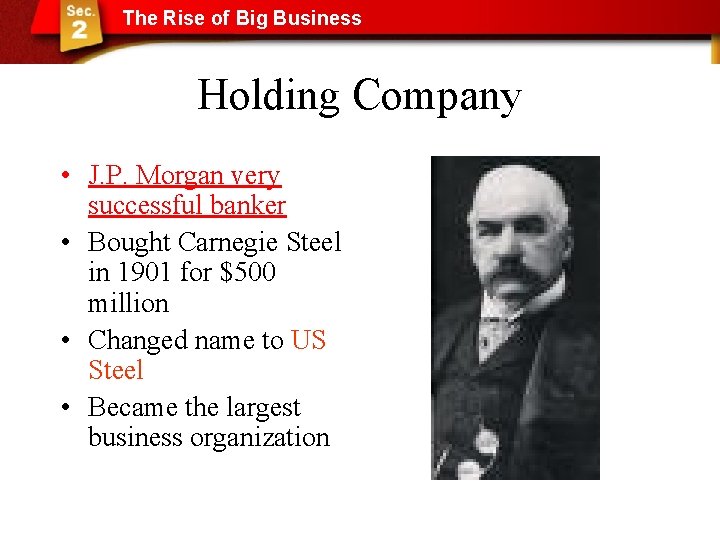
The Rise of Big Business Holding Company • J. P. Morgan very successful banker • Bought Carnegie Steel in 1901 for $500 million • Changed name to US Steel • Became the largest business organization
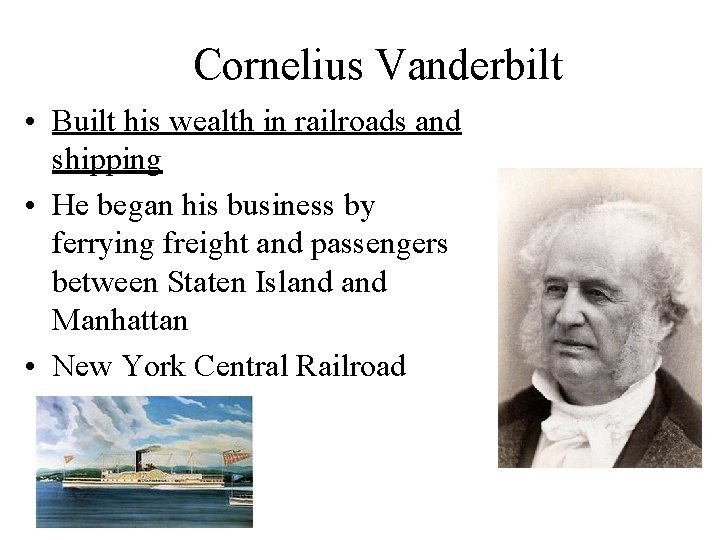
Cornelius Vanderbilt • Built his wealth in railroads and shipping • He began his business by ferrying freight and passengers between Staten Island Manhattan • New York Central Railroad
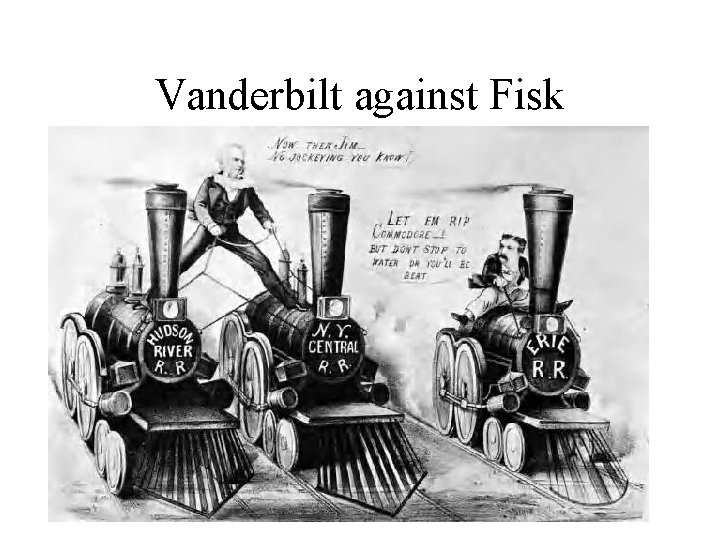
Vanderbilt against Fisk
The Rise of Big Business Standard Oil Trust • Established by John D. Rockefeller • Was able to undersell his competitors by charging less • Purchased oil refineries and created horizontal consolidation
The Rise of Big Business Horizontal Consolidation • Buy out competitors • Companies making similar products merge
The Rise of Big Business Standard Oil Trust • Drove competitors out of business by selling oil lower than cost to make it • After competitor are driven out • prices skyrocketed to recoup loss
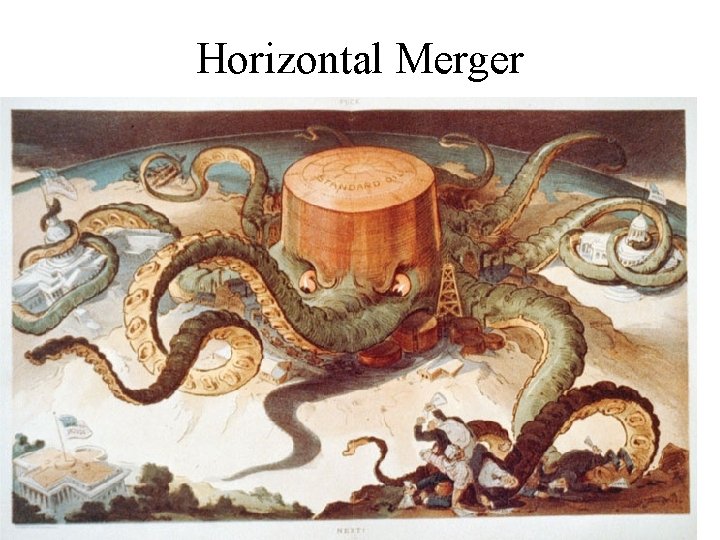
Horizontal Merger
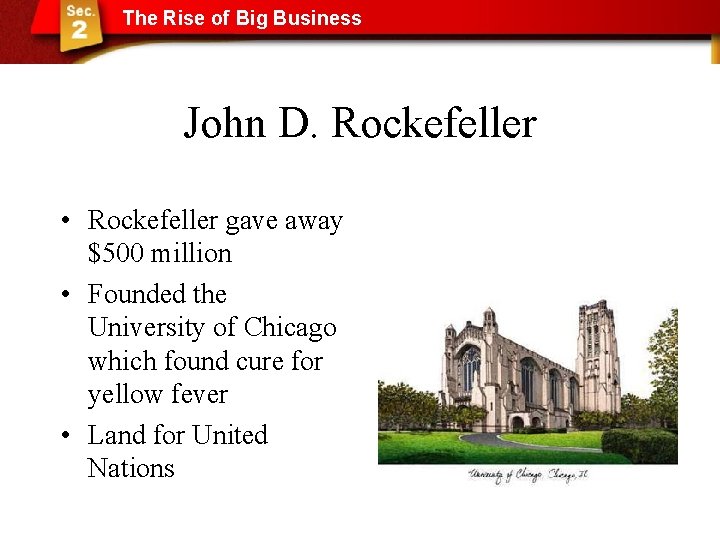
The Rise of Big Business John D. Rockefeller • Rockefeller gave away $500 million • Founded the University of Chicago which found cure for yellow fever • Land for United Nations
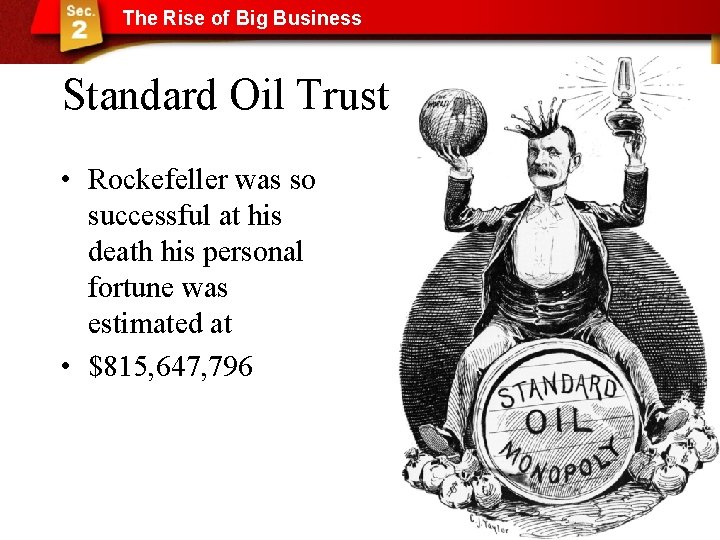
The Rise of Big Business Standard Oil Trust • Rockefeller was so successful at his death his personal fortune was estimated at • $815, 647, 796
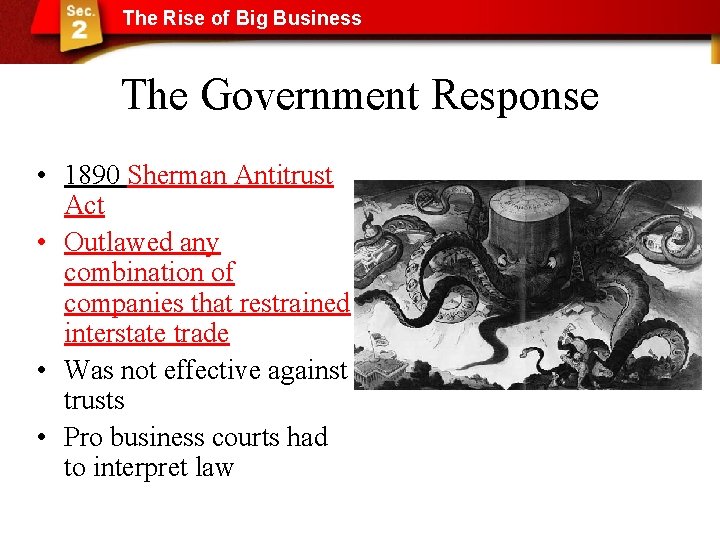
The Rise of Big Business The Government Response • 1890 Sherman Antitrust Act • Outlawed any combination of companies that restrained interstate trade • Was not effective against trusts • Pro business courts had to interpret law

- Slides: 30