
The Rise of Big Business Chapter 3 Lesson

The Rise of Big Business Chapter 3 Lesson 3
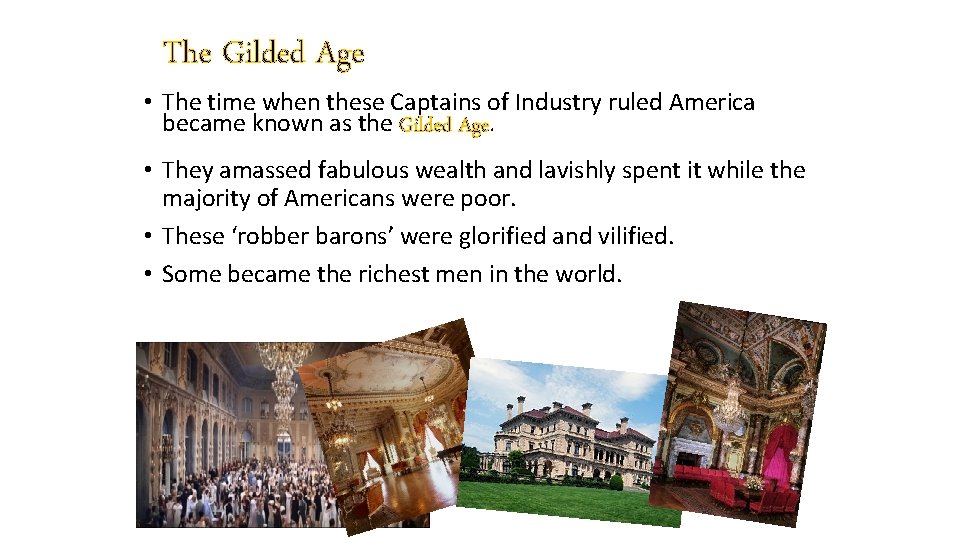
The Gilded Age • The time when these Captains of Industry ruled America became known as the Gilded Age. • They amassed fabulous wealth and lavishly spent it while the majority of Americans were poor. • These ‘robber barons’ were glorified and vilified. • Some became the richest men in the world.

Political Cartoons on Robber Barons • Robber Barons were accused of being just plain greedy unfair business practices, being above the law, abusing labor with low wages and long hours, • having too much, influence on government, • simply not caring about the American public, • •
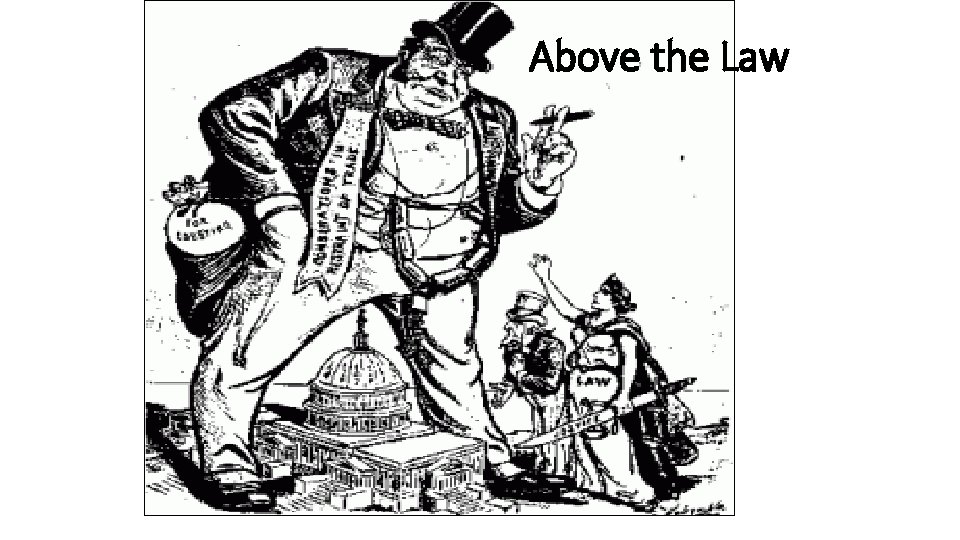
Above the Law
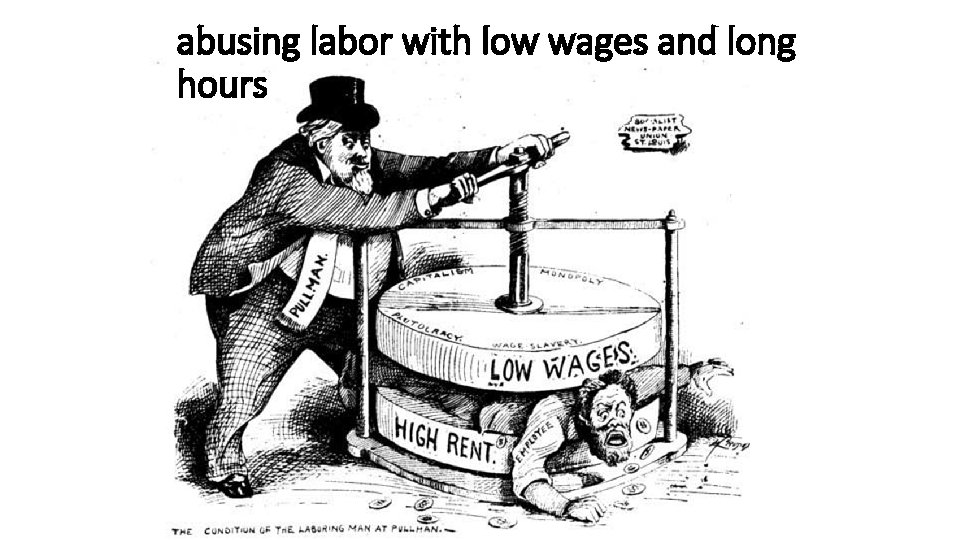
abusing labor with low wages and long hours
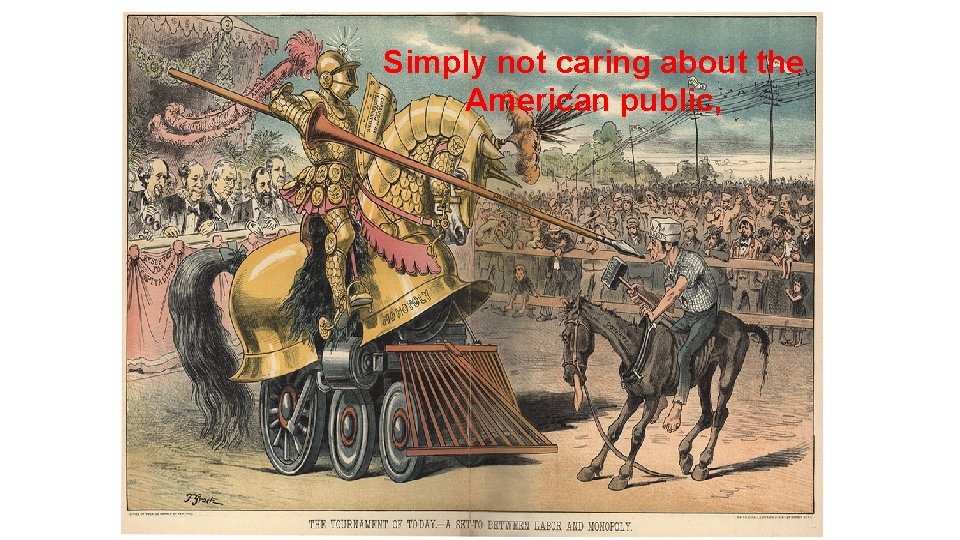
Simply not caring about the American public,
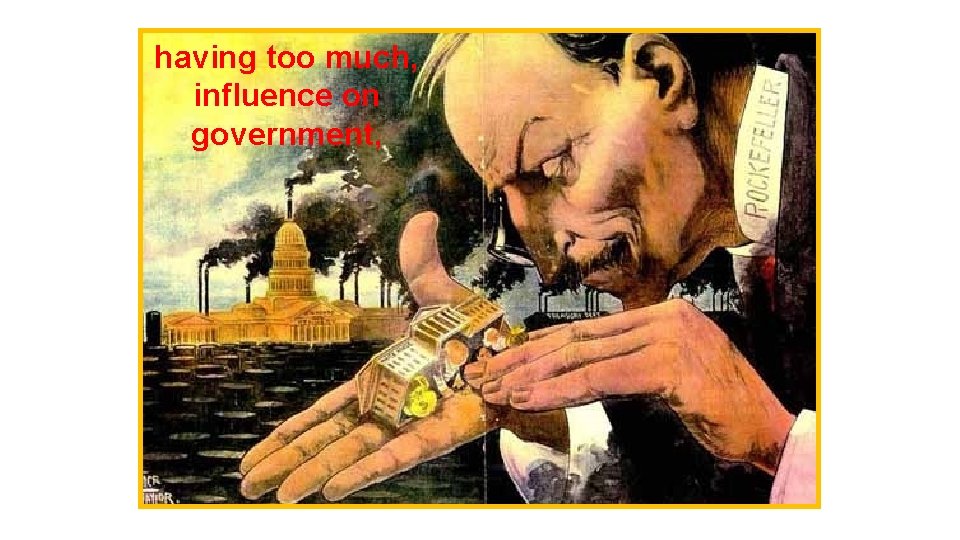
having too much, influence on government,
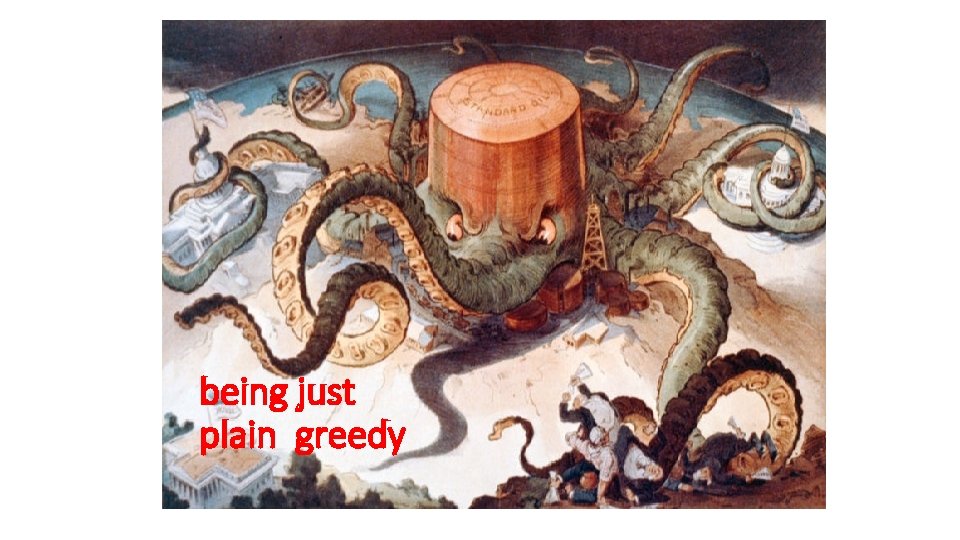
being just plain greedy
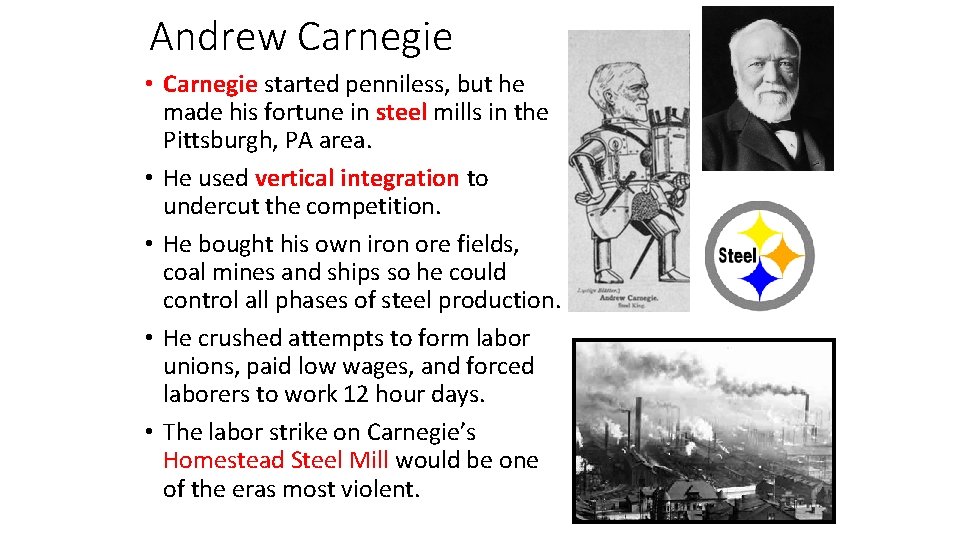
Andrew Carnegie • Carnegie started penniless, but he made his fortune in steel mills in the Pittsburgh, PA area. • He used vertical integration to undercut the competition. • He bought his own iron ore fields, coal mines and ships so he could control all phases of steel production. • He crushed attempts to form labor unions, paid low wages, and forced laborers to work 12 hour days. • The labor strike on Carnegie’s Homestead Steel Mill would be one of the eras most violent.

• http: //www. history. com/shows/men-who-built-america/videos/themen-who-built-america-andrew-carnegie? playlist_slug=men-whobuilt-america-season-1 -curated-list
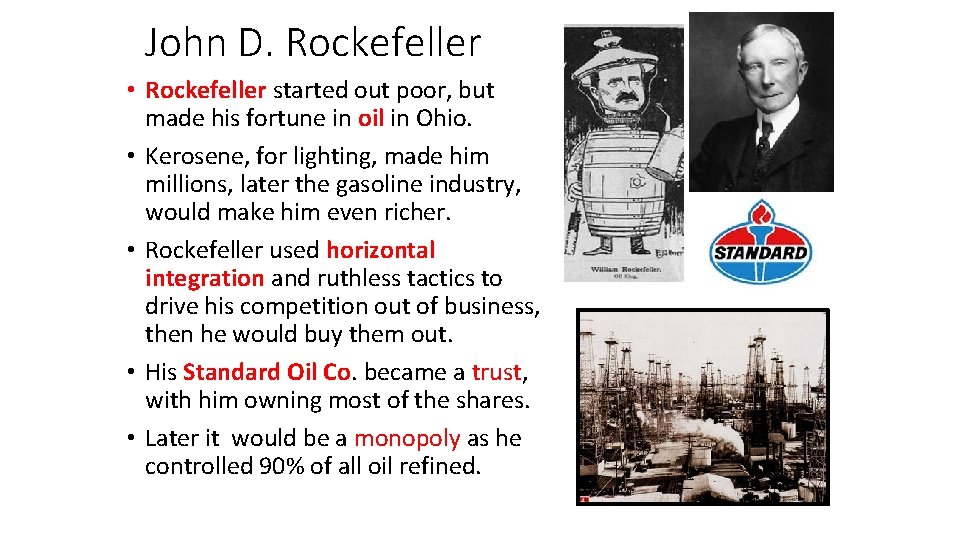
John D. Rockefeller • Rockefeller started out poor, but made his fortune in oil in Ohio. • Kerosene, for lighting, made him millions, later the gasoline industry, would make him even richer. • Rockefeller used horizontal integration and ruthless tactics to drive his competition out of business, then he would buy them out. • His Standard Oil Co. became a trust, with him owning most of the shares. • Later it would be a monopoly as he controlled 90% of all oil refined.
• http: //www. history. com/shows/men-who-builtamerica/videos/rockefellers-standard-oil? playlist_slug=men-whobuilt-america-season-1 -curated-list

Philanthropy • Carnegie and Rockefeller both made millions at the expense of American public. • They paid low wages and demanded long hours of work. • As businessmen they didn’t believe in charity, their belief was; ‘help those who help themselves’ • Later, both would lead the rich in philanthropy, they gave away millions of their dollars to the public. • They built libraries', museums, colleges, and gave college scholarships. Here’s a dime
The Rise of Big Business • Corporation • Organization owned by many people aka stockholders • Selling stock allows corporations to raise money • Used the money from stock sales to • Buy and create new technology • Hire large workforces • Purchase machines • All of these things
• Fixed costs • Things you must pay no matter what • Loans • Mortgage • taxes • Operating costs • Wages • Shipping • Raw materials
Economies of scale • Greater efficiency • Cost of manufacturing is decreased by producing goods quickly and in large quantities
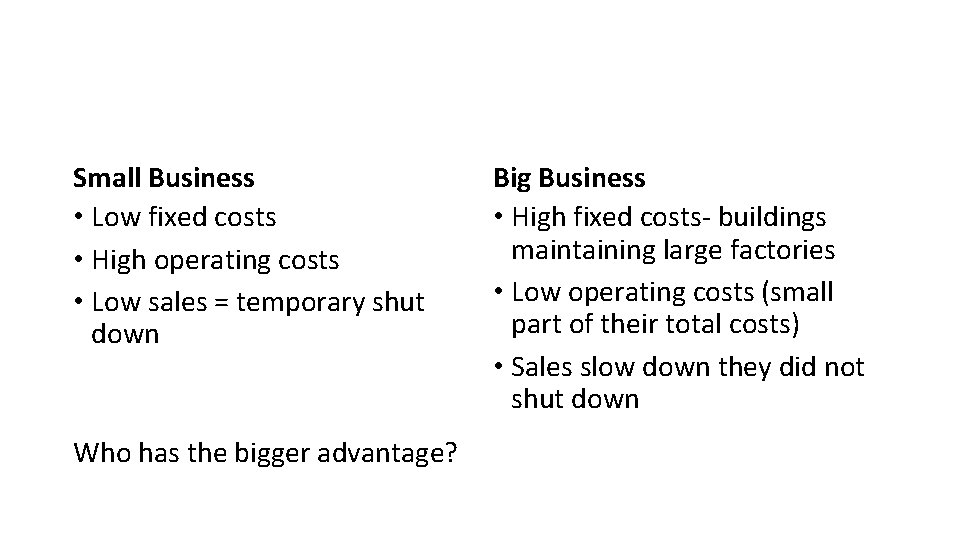
Small Business • Low fixed costs • High operating costs • Low sales = temporary shut down Who has the bigger advantage? Big Business • High fixed costs- buildings maintaining large factories • Low operating costs (small part of their total costs) • Sales slow down they did not shut down

Pros and Cons of Big Business • Large business is more efficient which leads to lower prices. • Hire large numbers of workers. • Produce goods in large quantities. • Have the resources for expensive research and to invent new items. • Unfair competitive advantage. • Often exploited workers. • Often unconcerned about pollution they may cause. • Have an unfair influence on government rules that affect them.
• Many family owned small businesses could not compete with large corporations • Put of business
Back to Carnegie • Began vertical integration • Carnegie decided he didn’t want to pay other companies for coal, lime, and iron. . . All items needed to manufacture steel • He bought coal mines, limestone quarries, iron ore fields • Owned all steps of his industrial process
Rockefeller • Practiced horizontal integration • Combining many firms in the same type of business into one corporation • By 1880 Rockefeller’s Standard Oil controlled 90% of the oil refining industry • This is called: • Monopoly • Total control of an industry by one person or company
• Americans feared monopolies • Large powerful companies that could control prices and manipulate politicians to make sure their competition was eliminated • Enter Trusts • Stop horizontal integration • Many states made it illegal for one company to own stock in another company • Rockefeller and Standard Oil found a way around this law by creating a trust • Allows one person to manage another person’s property, called a trustee • Standard oil stockholders gave their stock to a group of Standard Oil trustees who manage the company in exchange for a portion of the profits
• Trustees did not own the stock, only managing the stocks/company • Therefore not violating any laws • Trustees can then control a group of companies as if they were one large company

Holding Companies
- Slides: 24