
The Rise of Astronomy Early Astronomy 10000 BC
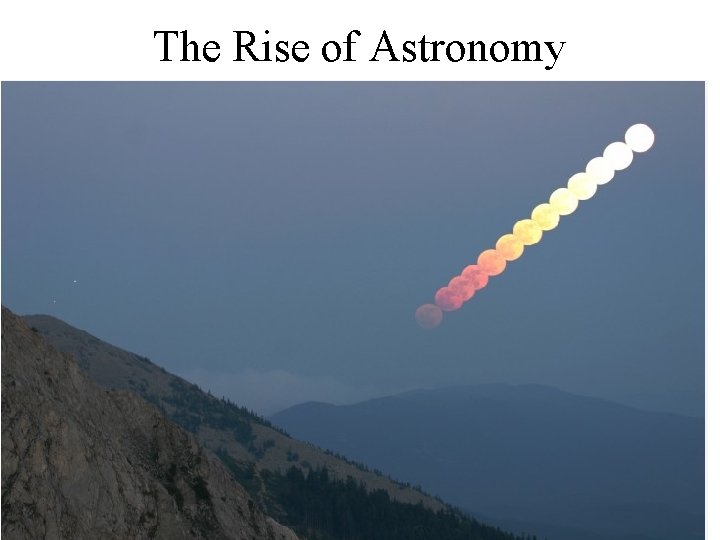
The Rise of Astronomy
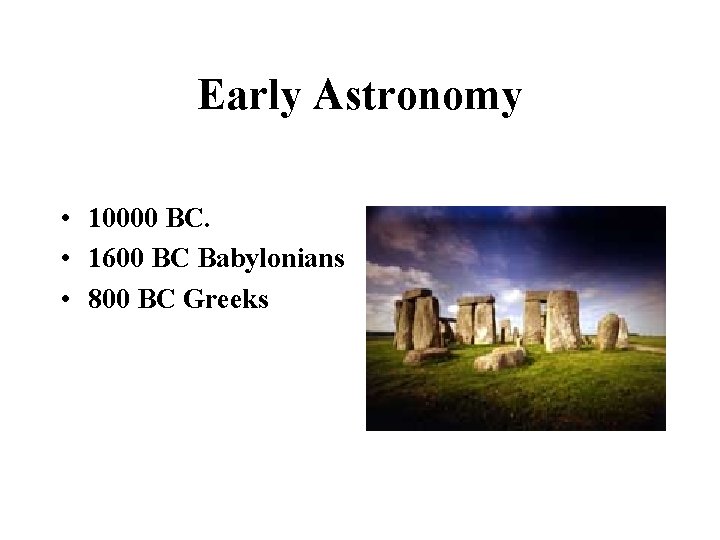
Early Astronomy • 10000 BC. • 1600 BC Babylonians • 800 BC Greeks
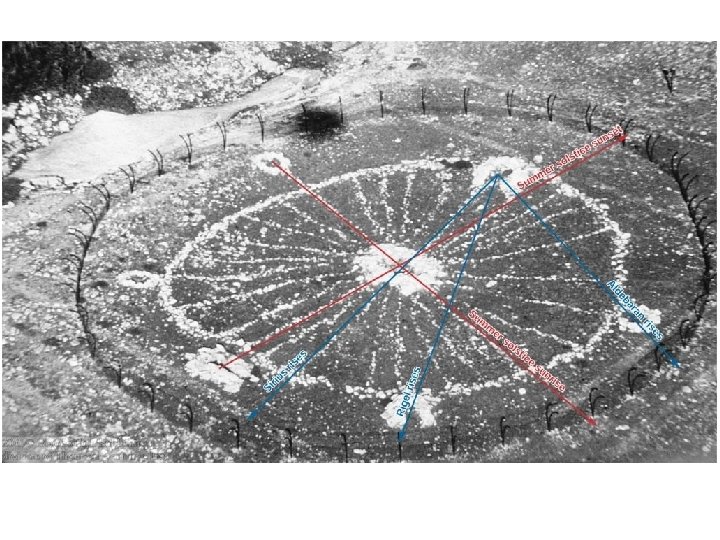
Periods of Western Astronomy • Western astronomy divides into 4 periods – Prehistoric (before 500 B. C. ) • Cyclical motions of Sun, Moon and stars observed • Keeping time and determining directions develops – Classical (500 B. C. to A. D. 1400) • Measurements of the heavens • Geometry and models to explain motions – Renaissance (1400 to 1650) • Accumulation of data led to better models • Technology (the telescope) enters picture – Modern (1650 to present) • Physical laws and mathematical techniques • Technological advances accelerate
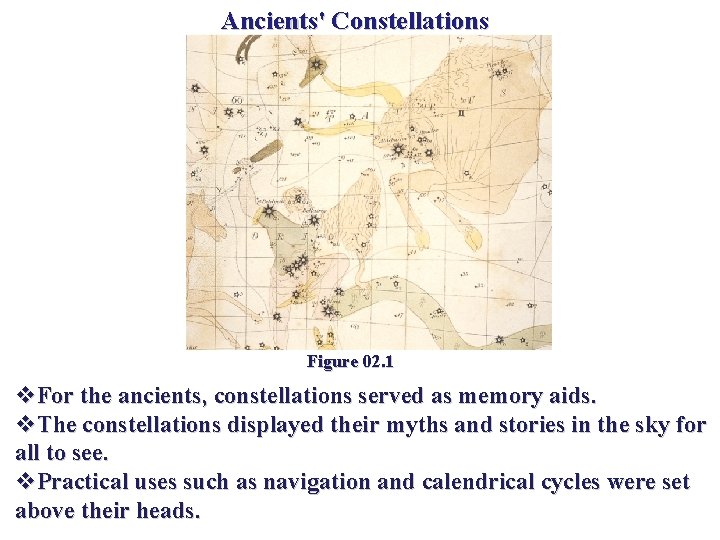
Ancients' Constellations Figure 02. 1 v. For the ancients, constellations served as memory aids. v. The constellations displayed their myths and stories in the sky for all to see. v. Practical uses such as navigation and calendrical cycles were set above their heads.
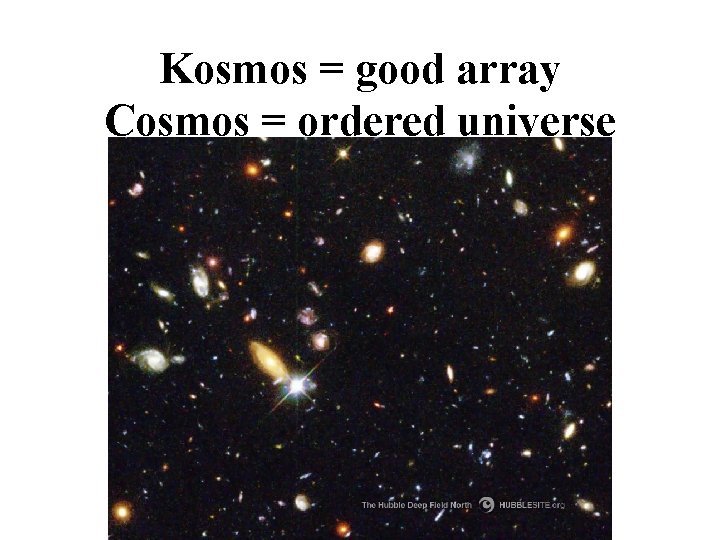
Kosmos = good array Cosmos = ordered universe
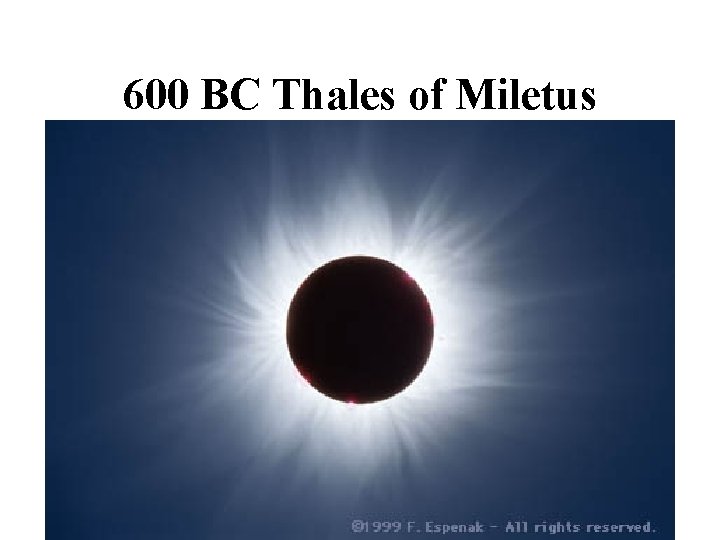
600 BC Thales of Miletus
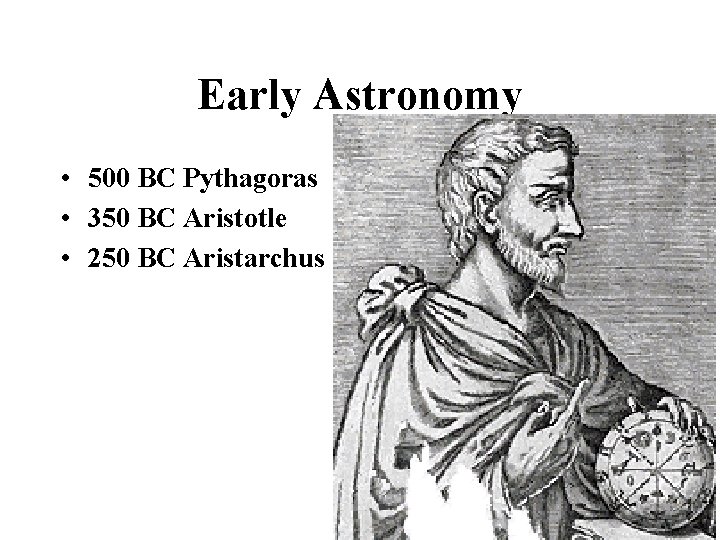
Early Astronomy • 500 BC Pythagoras • 350 BC Aristotle • 250 BC Aristarchus
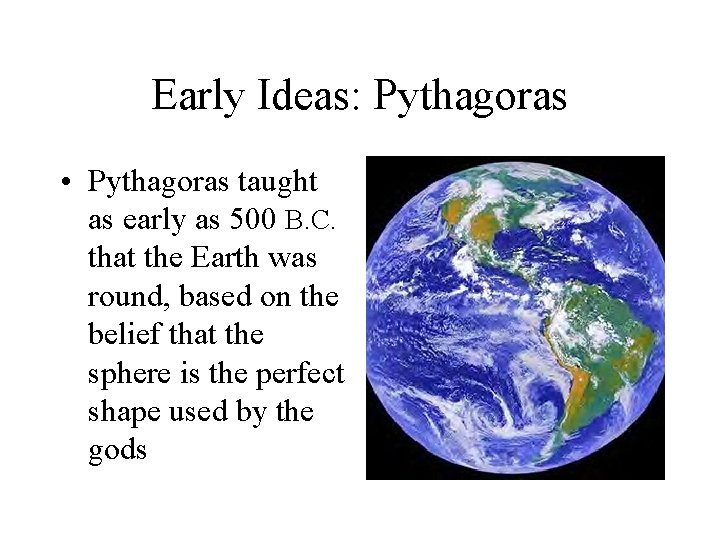
Early Ideas: Pythagoras • Pythagoras taught as early as 500 B. C. that the Earth was round, based on the belief that the sphere is the perfect shape used by the gods
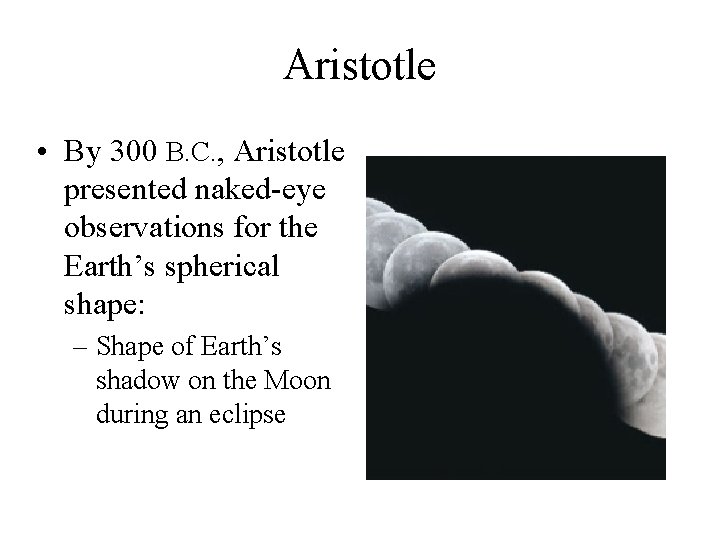
Aristotle • By 300 B. C. , Aristotle presented naked-eye observations for the Earth’s spherical shape: – Shape of Earth’s shadow on the Moon during an eclipse
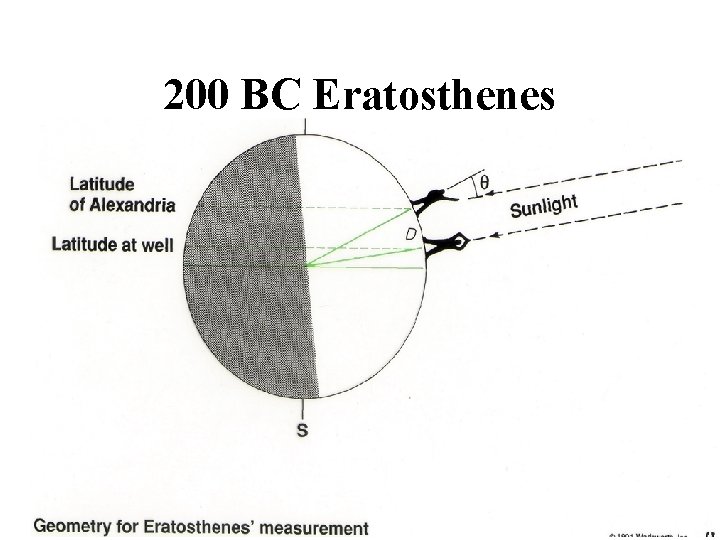
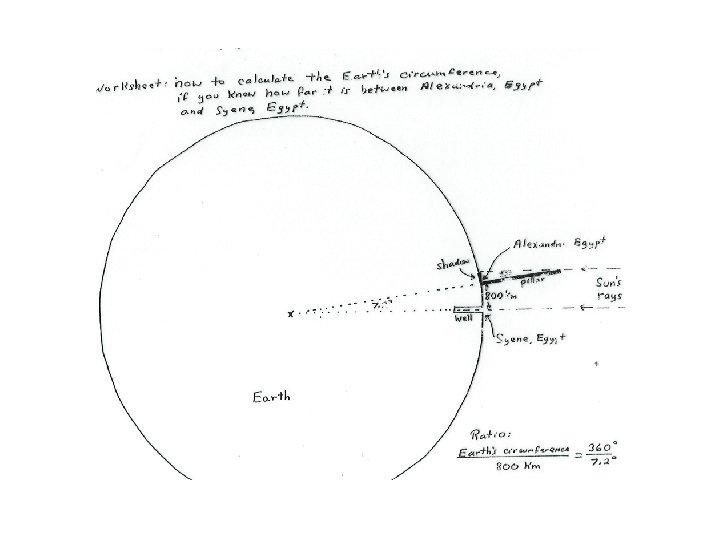
200 BC Eratosthenes
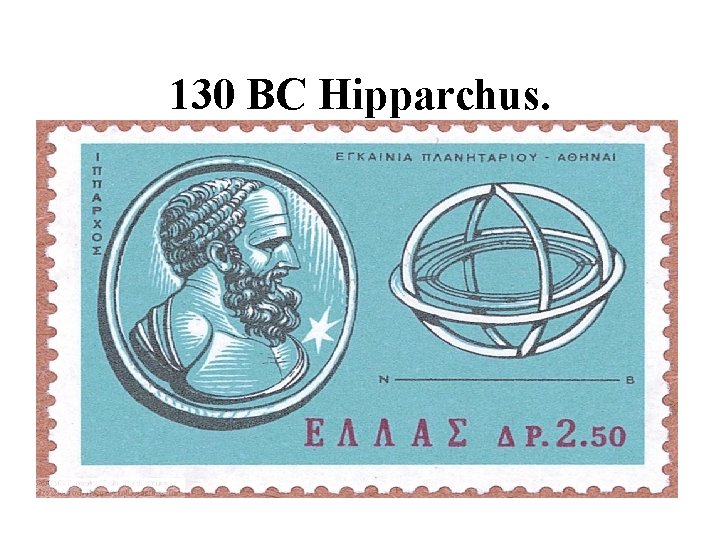
130 BC Hipparchus.
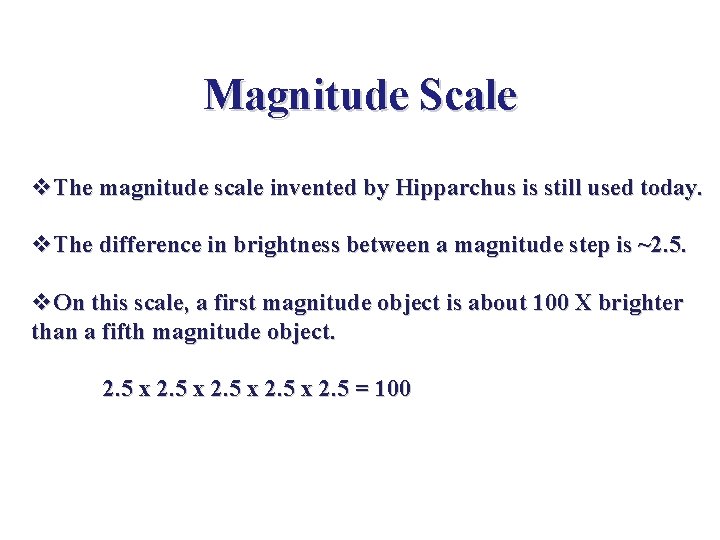
Magnitude Scale v. The magnitude scale invented by Hipparchus is still used today. v. The difference in brightness between a magnitude step is ~2. 5. v. On this scale, a first magnitude object is about 100 X brighter than a fifth magnitude object. 2. 5 x 2. 5 = 100
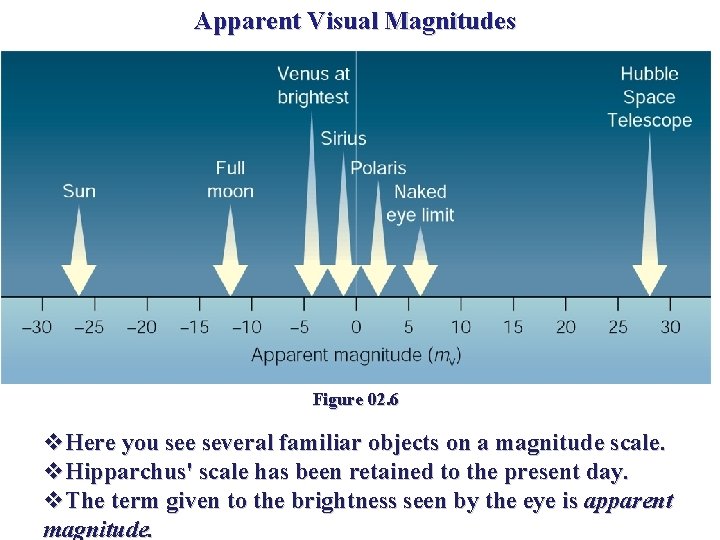
Apparent Visual Magnitudes Figure 02. 6 v. Here you see several familiar objects on a magnitude scale. v. Hipparchus' scale has been retained to the present day. v. The term given to the brightness seen by the eye is apparent magnitude.
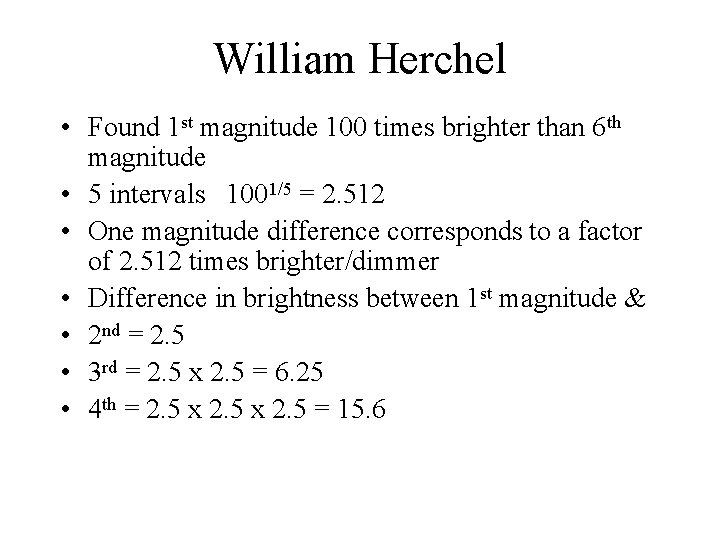
William Herchel • Found 1 st magnitude 100 times brighter than 6 th magnitude • 5 intervals 1001/5 = 2. 512 • One magnitude difference corresponds to a factor of 2. 512 times brighter/dimmer • Difference in brightness between 1 st magnitude & • 2 nd = 2. 5 • 3 rd = 2. 5 x 2. 5 = 6. 25 • 4 th = 2. 5 x 2. 5 = 15. 6
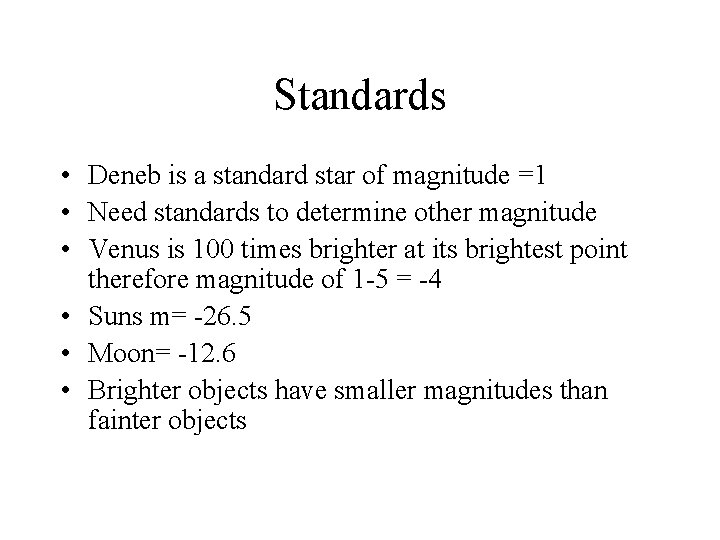
Standards • Deneb is a standard star of magnitude =1 • Need standards to determine other magnitude • Venus is 100 times brighter at its brightest point therefore magnitude of 1 -5 = -4 • Suns m= -26. 5 • Moon= -12. 6 • Brighter objects have smaller magnitudes than fainter objects
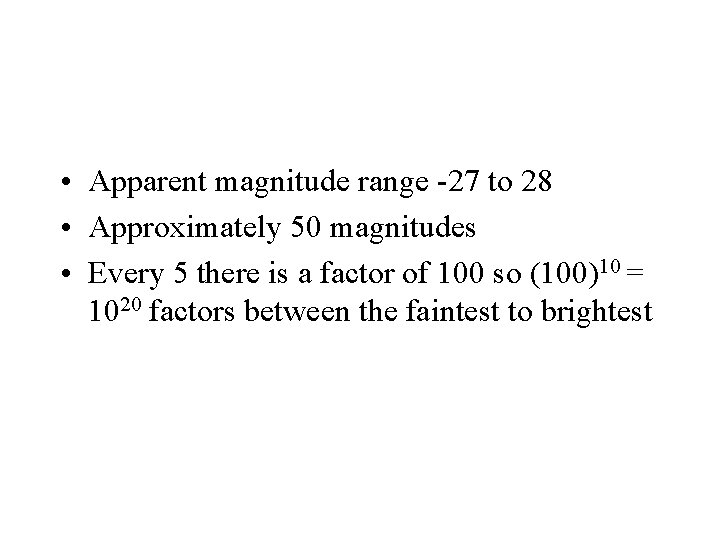
• Apparent magnitude range -27 to 28 • Approximately 50 magnitudes • Every 5 there is a factor of 100 so (100)10 = 1020 factors between the faintest to brightest
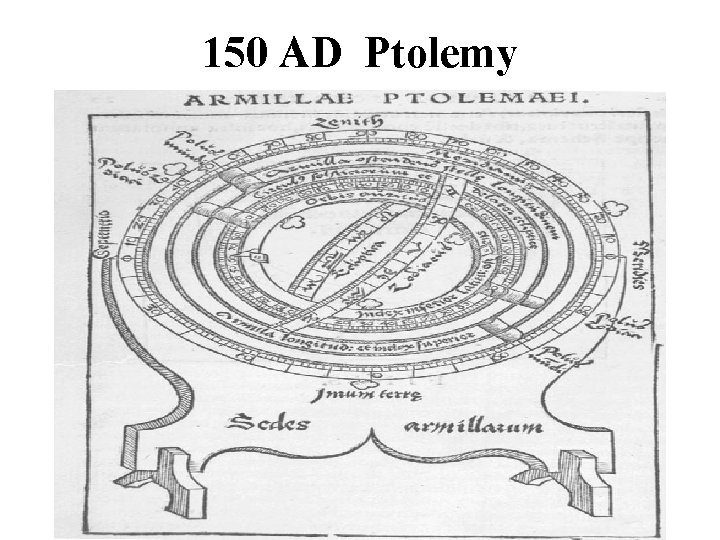
150 AD Ptolemy
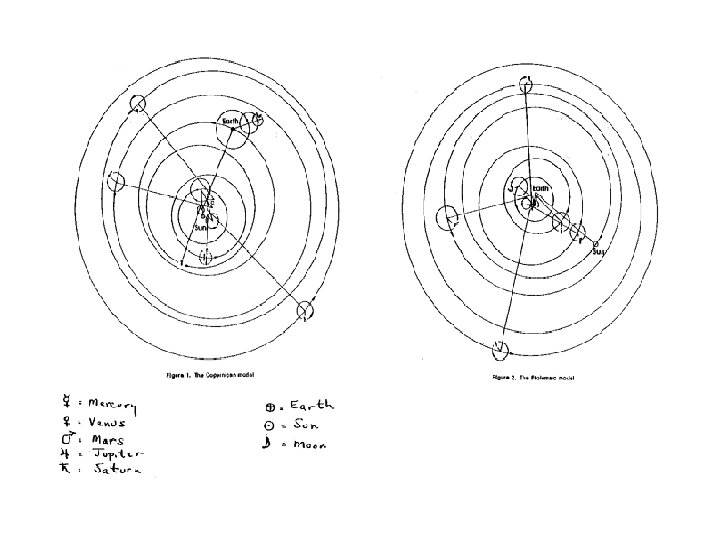
v. Ptolemy was regarded as either a genius or plagiarist. v. He wrote or assembled the Almagest. v. This work examined celestial motion and introduced the term epicycle. - assumed each planet moved in a small circular path with the earth at the center v. It was based on an Earth centered system (Geocentric). v 7 spheres of heaven.
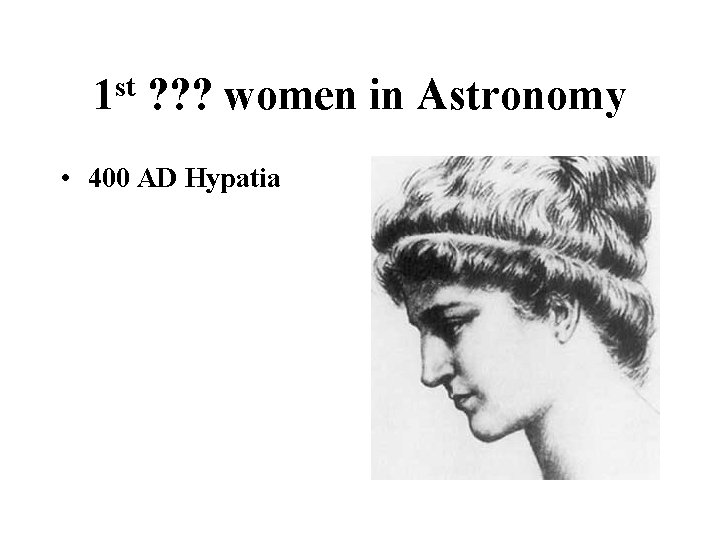
st 1 ? ? ? women in Astronomy • 400 AD Hypatia
- Slides: 23