
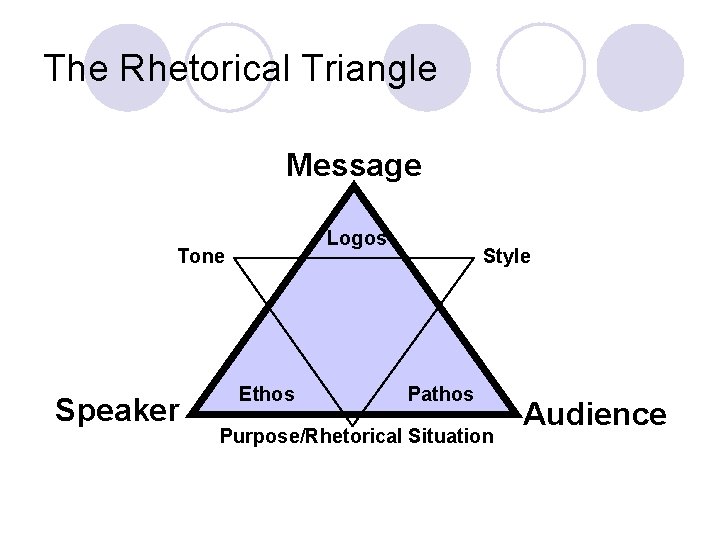
The Rhetorical Triangle Message Logos Tone Speaker Ethos
- Slides: 8
The Rhetorical Triangle Message Logos Tone Speaker Ethos Style Pathos Purpose/Rhetorical Situation Audience
What is the rhetorical triangle? l Shows the relationship between speaker, audience, message l Style, purpose/rhetorical situation, and tone are the vehicles that connect the three main points l Ethos, Logos, and Pathos are rhetorical appeals associated with each point
The Author/Speaker l Gender / ethnic / geographical orientation l Author Bias / hidden agenda l Other important biographical information may affect text
Message l What is the main point being made (the thesis)? l Look at the message as an argument / position being sold to the audience. What is he convincing the audience of?
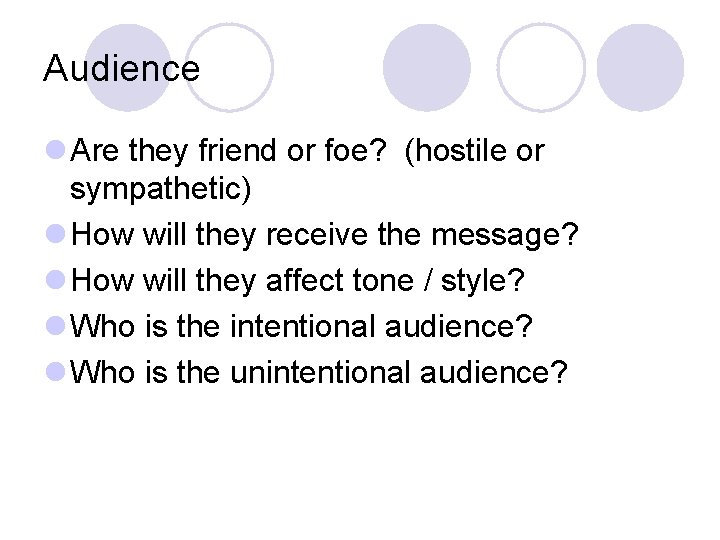
Audience l Are they friend or foe? (hostile or sympathetic) l How will they receive the message? l How will they affect tone / style? l Who is the intentional audience? l Who is the unintentional audience?
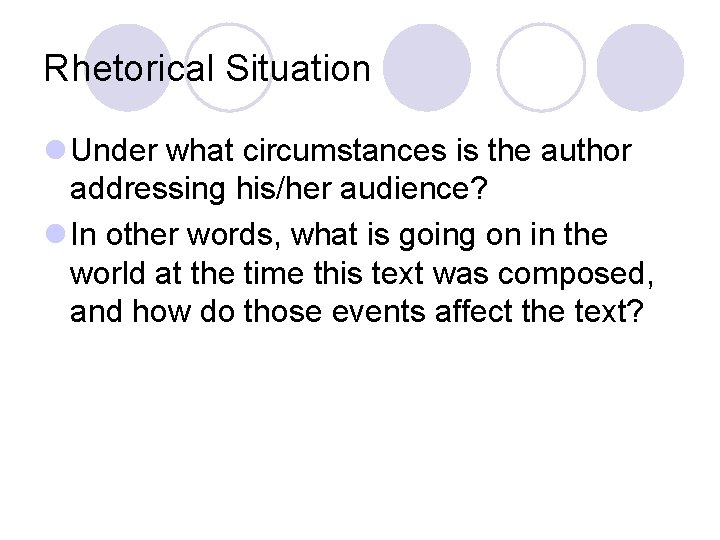
Rhetorical Situation l Under what circumstances is the author addressing his/her audience? l In other words, what is going on in the world at the time this text was composed, and how do those events affect the text?
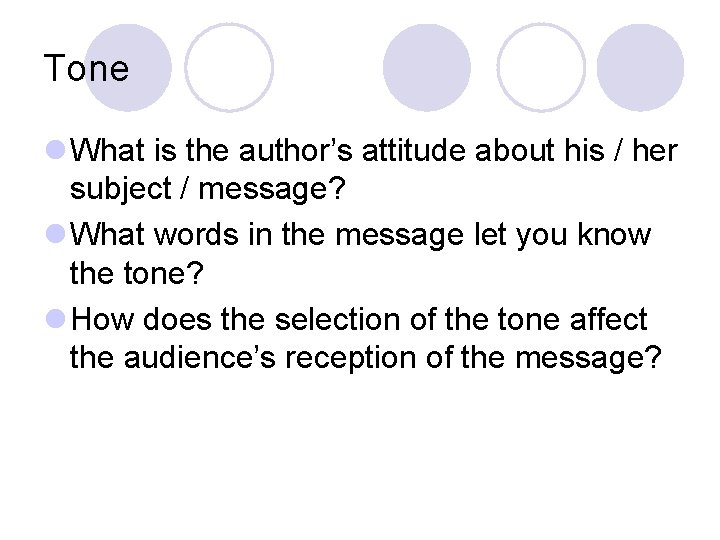
Tone l What is the author’s attitude about his / her subject / message? l What words in the message let you know the tone? l How does the selection of the tone affect the audience’s reception of the message?
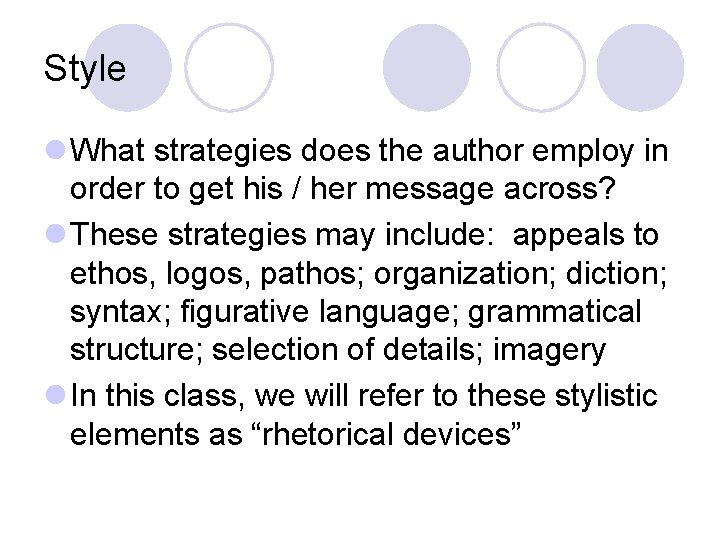
Style l What strategies does the author employ in order to get his / her message across? l These strategies may include: appeals to ethos, logos, pathos; organization; diction; syntax; figurative language; grammatical structure; selection of details; imagery l In this class, we will refer to these stylistic elements as “rhetorical devices”