
The Rhetorical Situation It sa ll a bo
“The Rhetorical Situation” It’ sa ll a bo ut rel ati ons hip s. . .
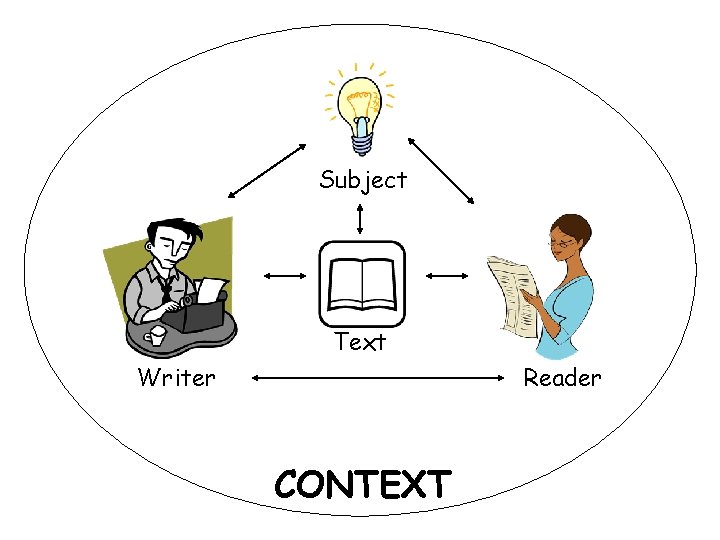
Subject Text Writer Reader CONTEXT
Writer Relationship to the subject: EXPERTISE Relationship to the audience: TRUSTWORTHINESS The writer might already have a relationship with the audience, but can also create a relationship in the text.
The writer creates a persona in the text: • Diction (word choice) • Syntax (word order) • Sentence structure • Sentence length • Grammar • Spelling Whether it’s intentional or accidental, you create a • Content persona with the words • and more you put on the page.
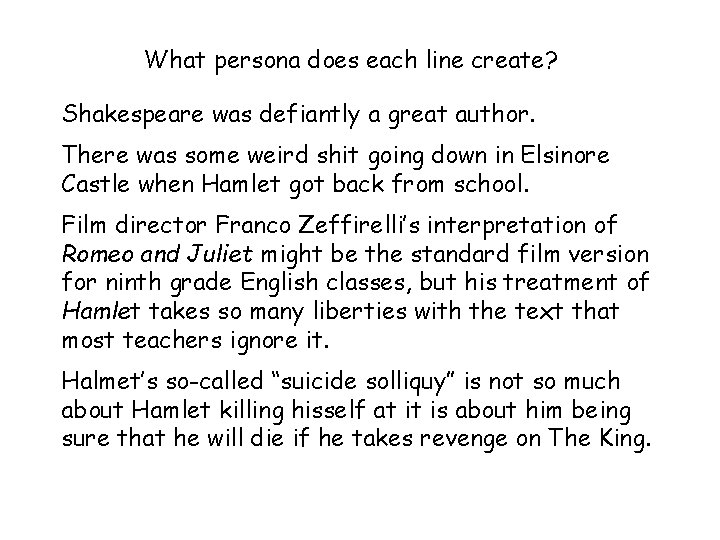
What persona does each line create? Shakespeare was defiantly a great author. There was some weird shit going down in Elsinore Castle when Hamlet got back from school. Film director Franco Zeffirelli’s interpretation of Romeo and Juliet might be the standard film version for ninth grade English classes, but his treatment of Hamlet takes so many liberties with the text that most teachers ignore it. Halmet’s so-called “suicide solliquy” is not so much about Hamlet killing hisself at it is about him being sure that he will die if he takes revenge on The King.
Reader How can you tell what the writer assumes about the reader? What does the writer assume that the reader knows (or doesn’t know) about the topic? How smart does the writer assume the reader is? What’s the apparent relationship between the writer and the reader? (How formal is it? Is one party in a position of power over the other? ) What sources does the writer consider “authoritative” (or at least adequate) for the reader?
Subject What’s the MAIN POINT? POINT What’s vital, vital and what’s extra? extra How are the claims and evidence connected? (You must be able to comprehend a text to be able to write intelligently about it. If you aren’t confident that you understand the text, talk about it with someone. Get help from Student Services or the Writing Center. )
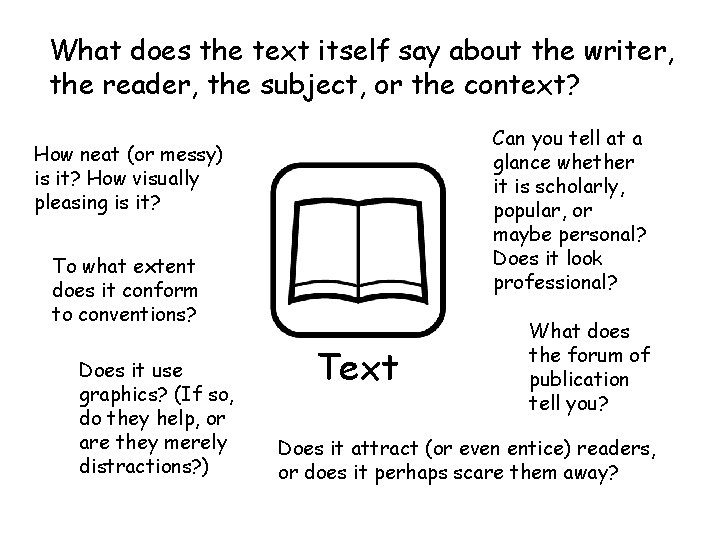
What does the text itself say about the writer, the reader, the subject, or the context? Can you tell at a glance whether it is scholarly, popular, or maybe personal? Does it look professional? How neat (or messy) is it? How visually pleasing is it? To what extent does it conform to conventions? Does it use graphics? (If so, do they help, or are they merely distractions? ) Text What does the forum of publication tell you? Does it attract (or even entice) readers, or does it perhaps scare them away?
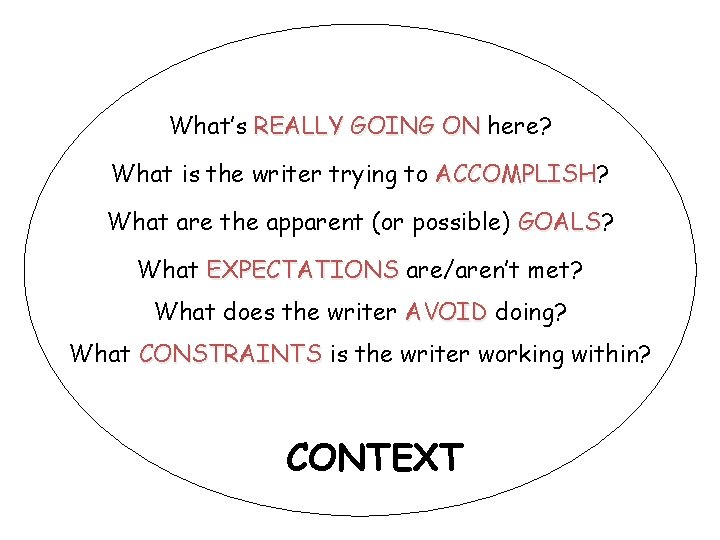
What’s REALLY GOING ON here? What is the writer trying to ACCOMPLISH? ACCOMPLISH What are the apparent (or possible) GOALS? GOALS What EXPECTATIONS are/aren’t met? What does the writer AVOID doing? What CONSTRAINTS is the writer working within? CONTEXT
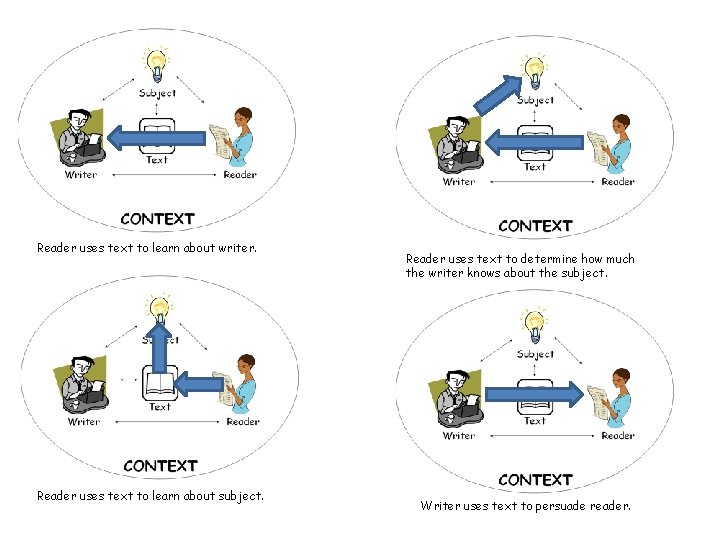
Reader uses text to learn about writer. Reader uses text to learn about subject. Reader uses text to determine how much the writer knows about the subject. Writer uses text to persuade reader.
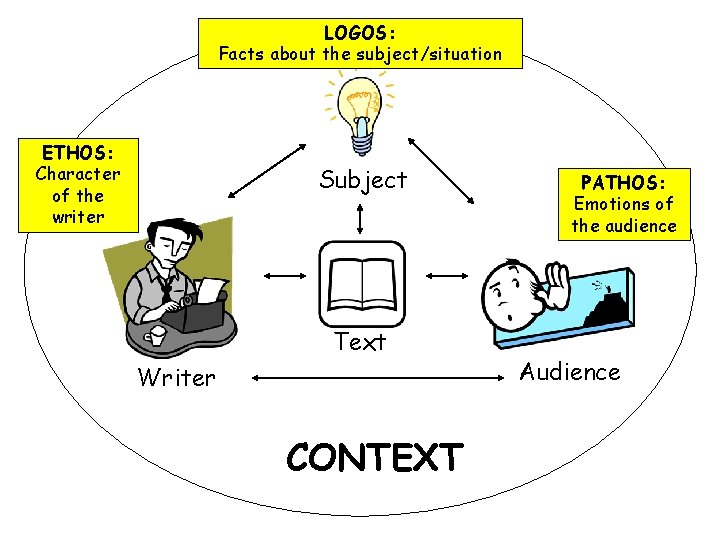
LOGOS: Facts about the subject/situation ETHOS: Character of the writer Subject Text Writer CONTEXT PATHOS: Emotions of the audience Audience
- Slides: 11