
The Rhetorical Situation Chapter 1 Norton Field Guide


- Slides: 20
The Rhetorical Situation Chapter 1 Norton Field Guide
Students will be able to… • Identify, define, and discuss the necessity and elements of the rhetorical situation • Discuss the definition of rhetoric • And begin to identify these elements in their own writing • Complete an in class assignment involving elements of rhetorical situation
In class assignment • Students will have 15 minutes to write three different responses • One to me, the instructor • One to their best friend • One to an internet blog post • On their opinions on one of these individuals as two possible presidential candidates: Michelle Obama vs Beyonce
Rhetoric- www. merriamwebster. com/dictionary/rhetoric • Rhetoric- n. 1. the art of speaking or writing effectively • A. the study of principles and rules of composition formulated by critics of ancient times • B. the study of writing or speaking as a means of communication or persuasion 2. Language that is intended to influence people but could lack sincerity (think political speeches)
Rhetorical Situation (dictionary. reference. com/browse/rhetor) (pwr. la. psu. edu/about-the-rhetorical-situation) • All the features of audience, purpose, and exigence that serve to create a moment suitable for a rhetorical response • Can be understood as the circumstances under which the rhetor (teacher of rhetoric or speaker) writes or speaks
Elements of the rhetorical situation • Purpose • Audience • Stance • Genre • Medium/Design • Exigence
Audience • Who will read (or hear) what you’re writing. • Always ask, who are you writing (speaking) to? • Types of audiences • Known • Multiple • Unknown • Assume they know nothing about your topic- be thorough with explanations • Requires more formal writing
Writing for Multiple Audiences • If you think that your document will have a number of readers, consider making it modular- breaking it up into components addressed to different readers (Markel 107) • What might modular reports have?
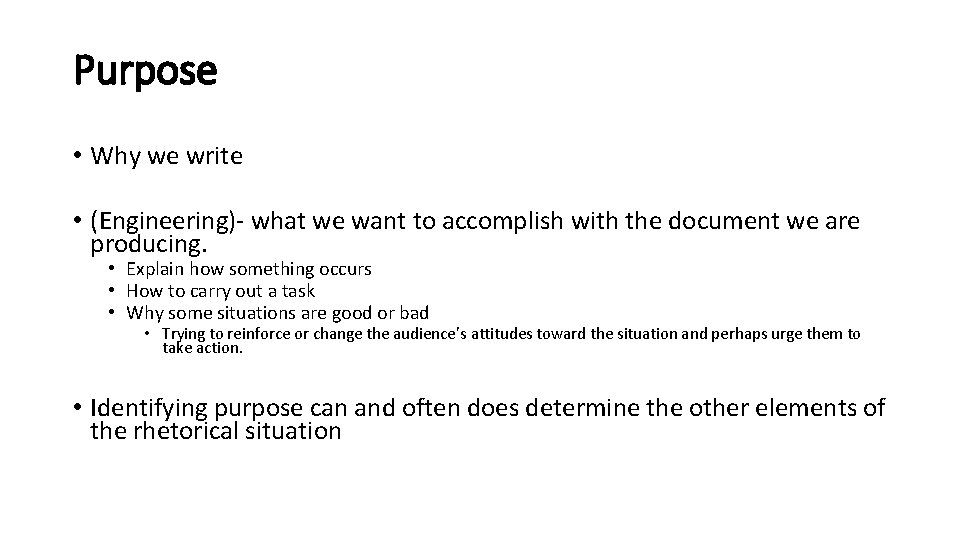
Purpose • Why we write • (Engineering)- what we want to accomplish with the document we are producing. • Explain how something occurs • How to carry out a task • Why some situations are good or bad • Trying to reinforce or change the audience’s attitudes toward the situation and perhaps urge them to take action. • Identifying purpose can and often does determine the other elements of the rhetorical situation
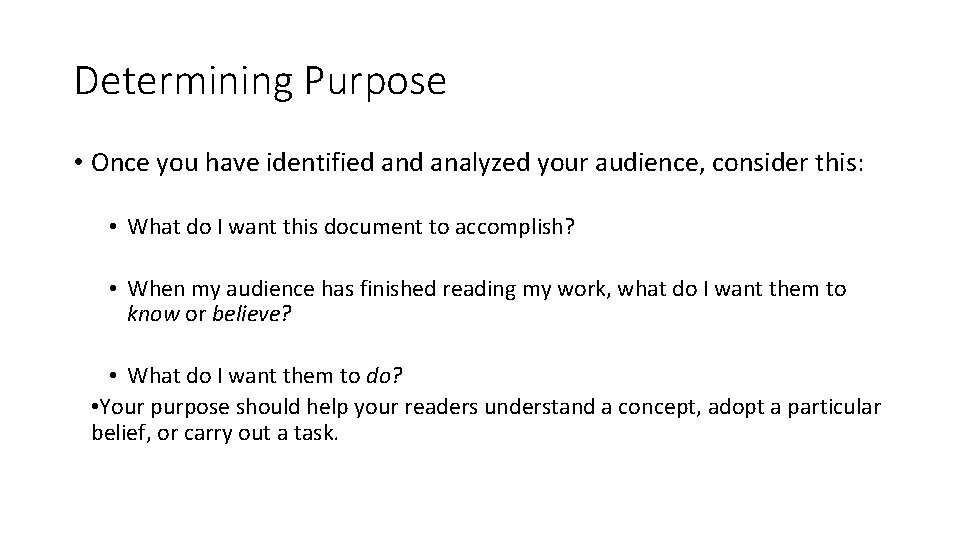
Determining Purpose • Once you have identified analyzed your audience, consider this: • What do I want this document to accomplish? • When my audience has finished reading my work, what do I want them to know or believe? • What do I want them to do? • Your purpose should help your readers understand a concept, adopt a particular belief, or carry out a task.
Question: • How can your real purpose differ from your expressed purpose? Why? • What happens when you have a new audience or a new purpose?
In Writing for Engineers (especially)… • Audience and Purpose impact content! How? • The audience of the engineer is often times known, and can be a multiple audience.
Question • How does the engineer find out who is in his/her audience? By using an audience profile sheet (Markel 85 -86) A form that prompts you to consider various audience characteristics as you plan your document. What are SIX things one must consider in audience analysis? Why?
Question: • Why is the audience reading your document? They have some connection, purpose, necessity, or interest in reading it Audience breakdown Primary- people to whom the communication is directed. Secondary- people who are more distant from the writer who need to stay aware of developments in the organization but who will not directly act or respond to the document. Tertiary- people even further removed from the writer but might take an interest In the content.
Question: • How do we tackle potential language barriers between ourselves and the audience?
Genre • Kinds of writing
Stance • Attitude toward your topic
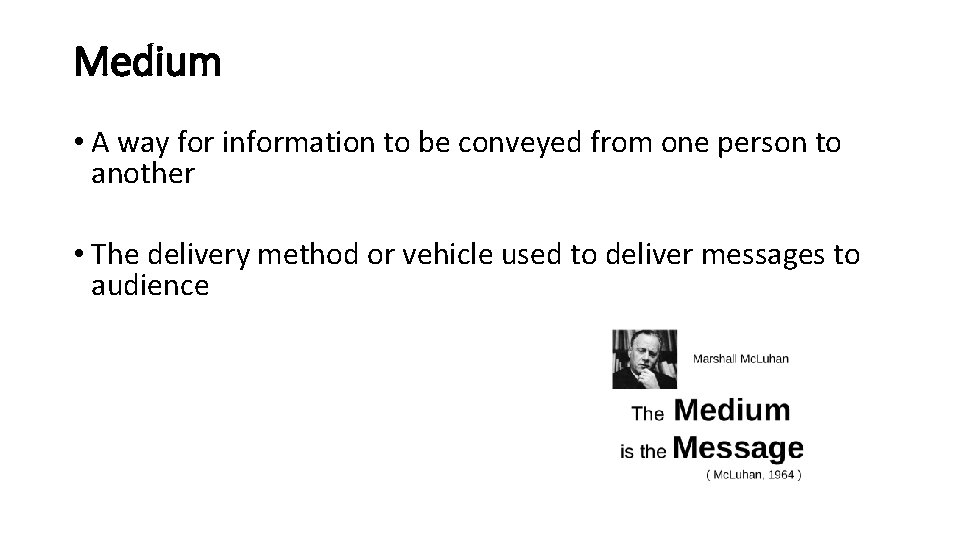
Medium • A way for information to be conveyed from one person to another • The delivery method or vehicle used to deliver messages to audience
Exigence • Issue or situation that leads to demands for rhetoric speech or writing • Moment in which something happens or fails to happen • Why is one compelled to speak out (write)?