
The Rh Blood Group System ABO blood compatibility
The Rh Blood Group System
ABO blood compatibility enough…? Besides ABO blood compatibility, the compatibility of the Rh blood system must also be checked. In addition, it is of fundamental importance for the safety of blood transfusion to perform tests to detect the agents of the main blood-transmitted infectious diseases, such as HIV (AIDS), hepatitis B and C.
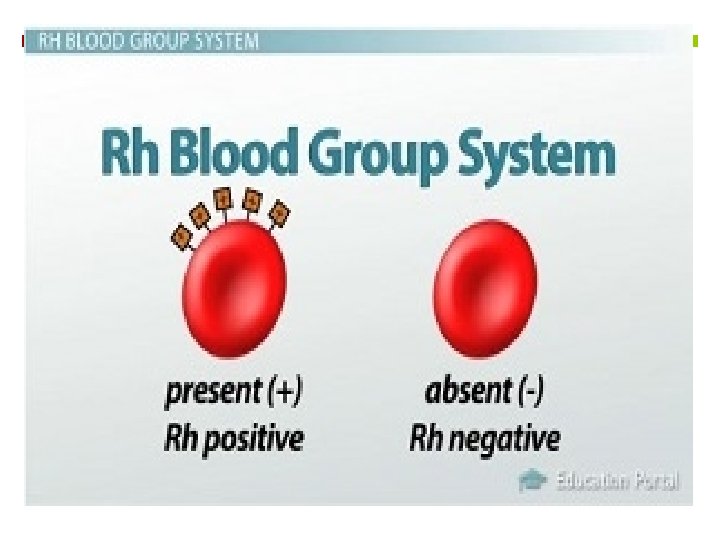
Rh factor The Rh factor is a protein in the red blood cell plasma membrane that behaves like an antigen in blood transfusions, triggering a humoral (antibody-based) immune response. Most people present the protein in their red blood cells and are part of the Rh+ group. People that do not have the protein classify as Rh -.
Origin The origin of the name Rh factor is related to the fact that the research that discovered this blood antigen was carried out in rhesus monkeys (Macaca mulatta). Rh factor was first discovered by Landsteiner and Wiener in 1940.
Formation of Anti-Rh antibodies are produced by a humoral immune response. When an Rh- individual comes into contact with the Rh factor, it is recognized as foreign agent (antigen); the primary immune response begins and small amounts of anti-Rh antibodies and lymphocytes are produced. In future contact with the antigen, antibodies will already be circulating, and immune cells will be prepared to carry out an intense and effective attack against the Rh factor.

Genetics of the Rh Blood Group System The inheritance pattern of the Rh blood system is autosomal dominant, meaning that the heterozygous individual is Rh+. The dominance is complete (R is dominant over r). The possible genotypes are RR, Rr (both Rh+) and rr (Rh-). The complexity of the Rh blood group is due to the highly polymorphic genes that encode them. The genes that control the Rh system are located on the short arm of chromosome 1.
An Rh+ donor can only donate blood to an Rh+ recipient. A person that lacks the Rh factor (Rh-) can donate to individuals in both the Rh+ and Rhgroups.
Hemolytic Disease of the Newborn In hemolytic disease of the newborn, the mother is Rh- and the fetus Rh+. In this disease, antibodies produced by the mother attack fetal red blood cells. Hemolytic disease of the newborn is also known as erythroblastosis fetalis.
In hemolytic disease of the newborn, the mother has Rh- blood. This mother, when pregnant with first Rh+ child, comes into contact, possibly during delivery, with Rh+ red blood cells from the child and her immune system triggers the primary immune response against the Rh factor. In her next pregnancy, in which the fetus is Rh+, the mother will already have much more anti-Rh antibodies in her blood and these antibodies cross the placental barrier and enter fetal circulation, causing fetal hemolysis (destruction of the red blood cells of the fetus).

Prevention Erythroblastosis fetalis can be prevented if, during the first delivery of a Rh+ child from a Rh- mother, serum containing anti-Rh antibodies is given to the mother in the first 72 hours (after delivery). As result, the administered anti-Rh antibodies destroy the fetal red blood cells that entered the mother’s circulation before her primary immune response is triggered.
- Slides: 11