
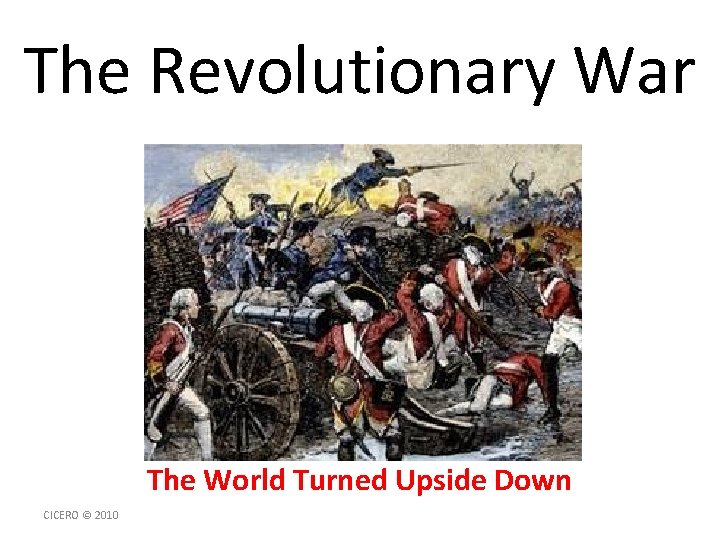
The Revolutionary War The World Turned Upside Down
- Slides: 38
The Revolutionary War The World Turned Upside Down CICERO © 2010
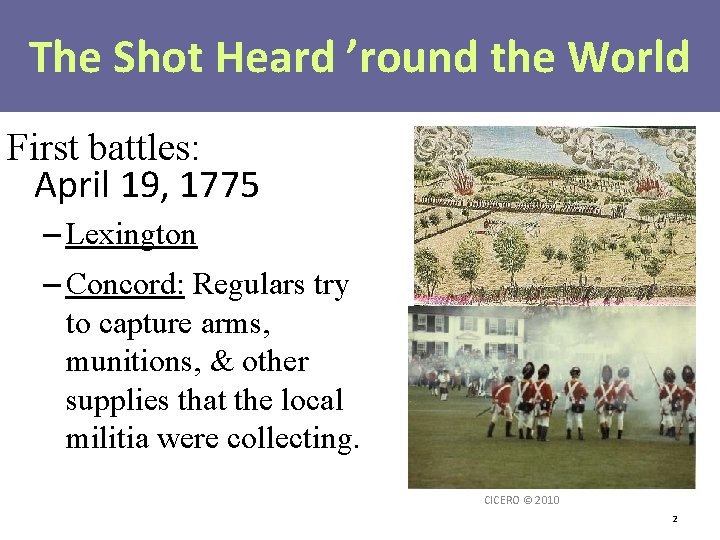
The Shot Heard ’round the World First battles: April 19, 1775 – Lexington – Concord: Regulars try to capture arms, munitions, & other supplies that the local militia were collecting. CICERO © 2010 2
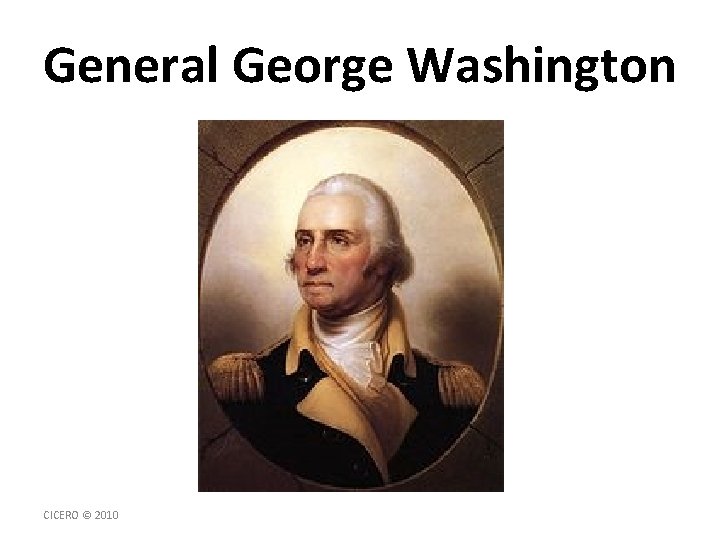
General George Washington CICERO © 2010
Fort Ticonderoga New York May 10, 1775 • After Concord, two armies move to capture Fort Ticonderoga to use the fort’s cannons to chase the British out of Boston. • Ethan Allen led the Green Mountain Boys (Vermont west to New York). • Benedict Arnold moved north toward Ticonderoga. CICERO © 2010 Fort Ticonderoga defended the Hudson River entrance to Lake Champlain.
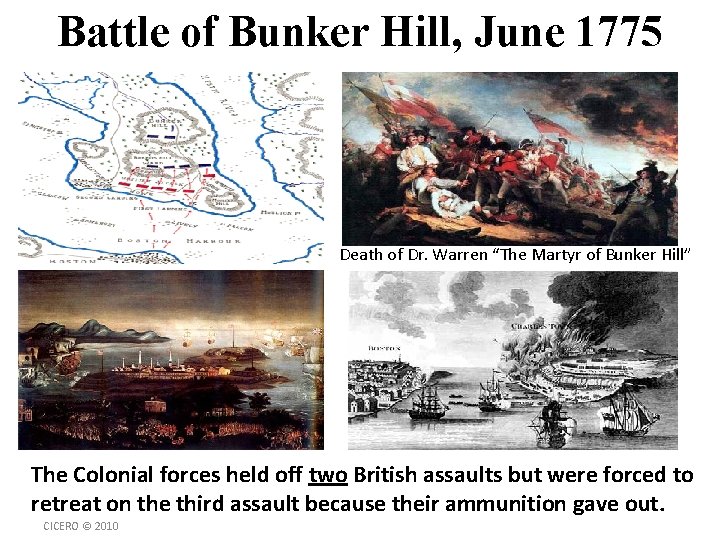
Battle of Bunker Hill, June 1775 Death of Dr. Warren “The Martyr of Bunker Hill” The Colonial forces held off two British assaults but were forced to retreat on the third assault because their ammunition gave out. CICERO © 2010
Patriots go on the Offensive • Allen & Arnold go after Canada! • French Canadians do not rise against the British. • British commander Montgomery was killed but the British counterattack forced the Patriots to retreat. CICERO © 2010 6
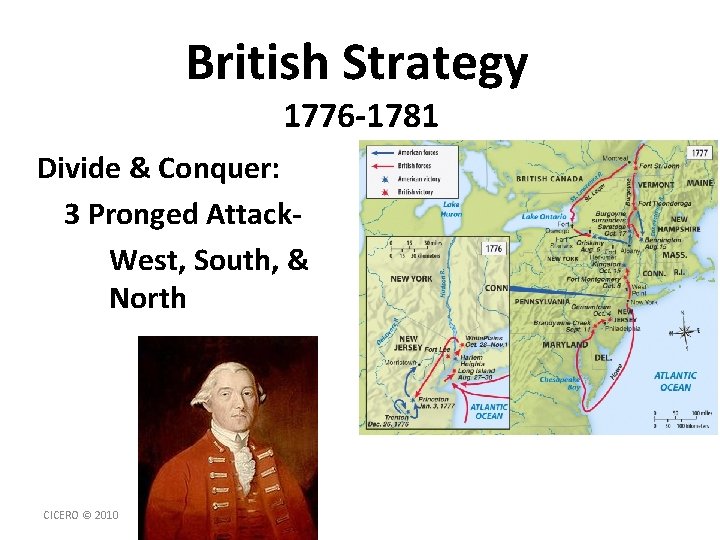
British Strategy 1776 -1781 Divide & Conquer: 3 Pronged Attack. West, South, & North CICERO © 2010
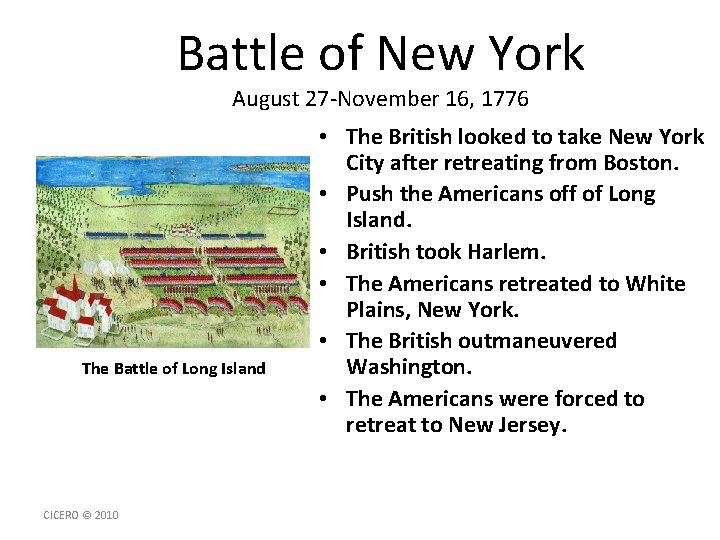
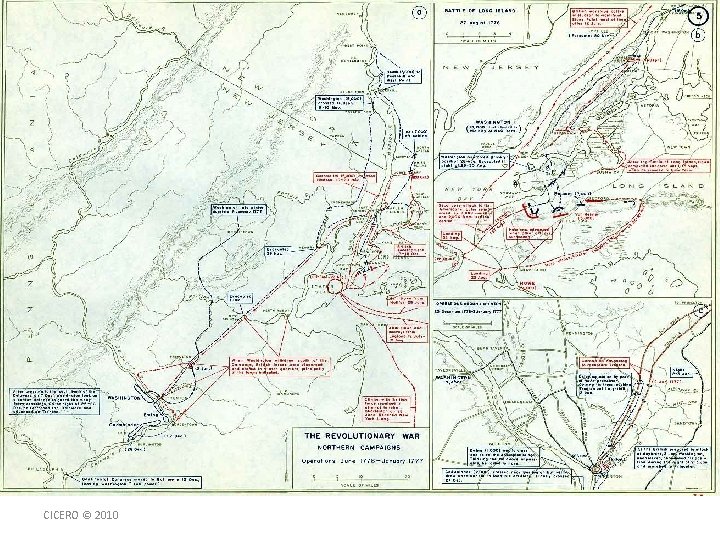
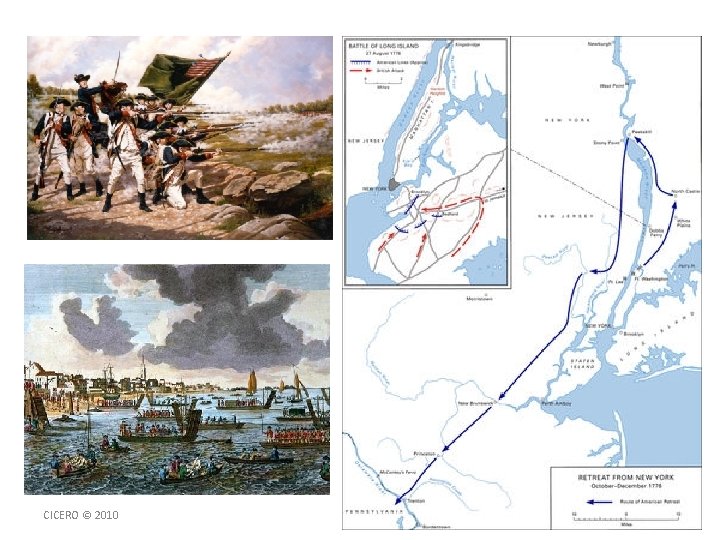
Battle of New York August 27 -November 16, 1776 The Battle of Long Island CICERO © 2010 • The British looked to take New York City after retreating from Boston. • Push the Americans off of Long Island. • British took Harlem. • The Americans retreated to White Plains, New York. • The British outmaneuvered Washington. • The Americans were forced to retreat to New Jersey. Cicero © 2007
CICERO © 2010
CICERO © 2010
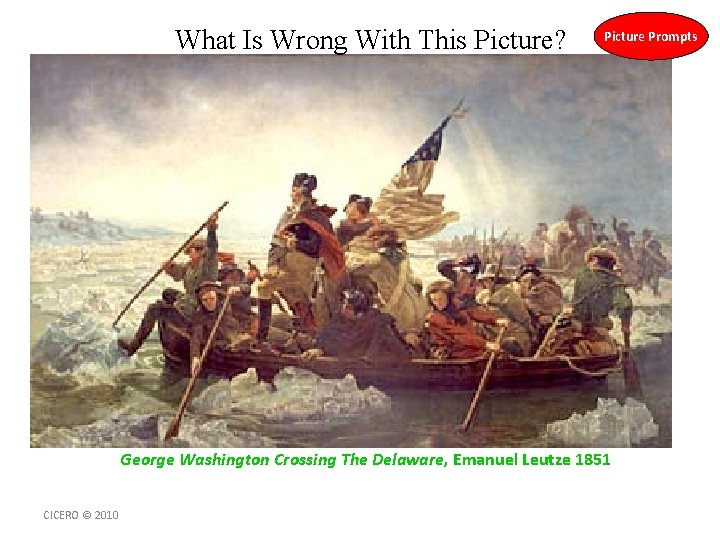
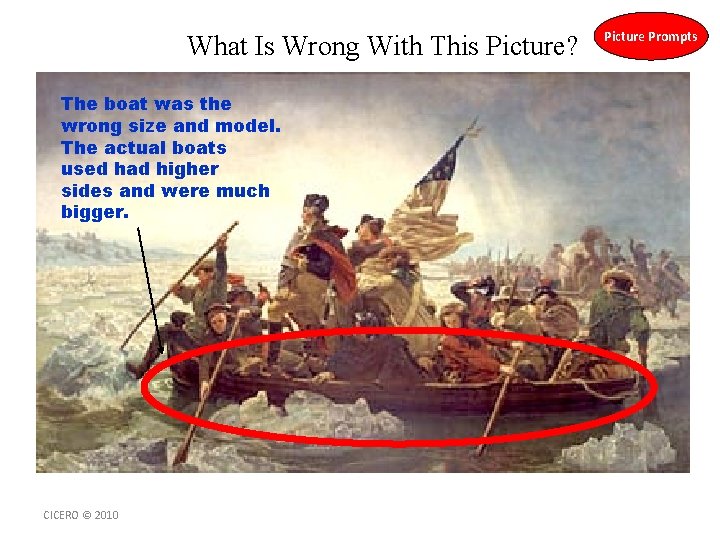
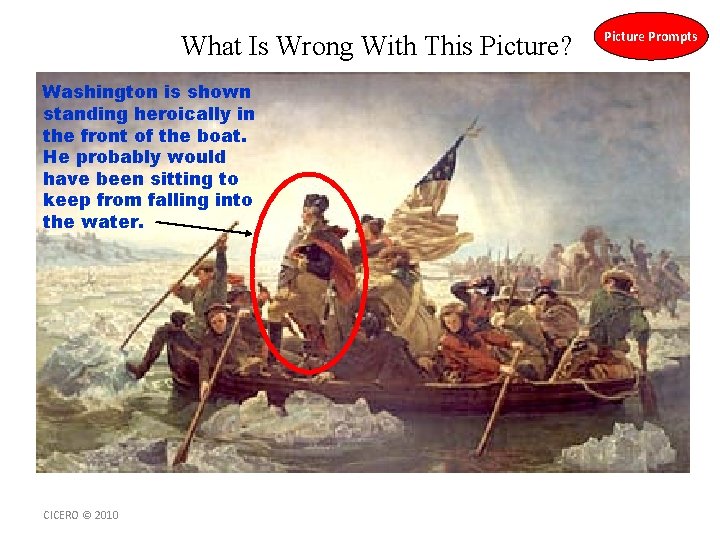
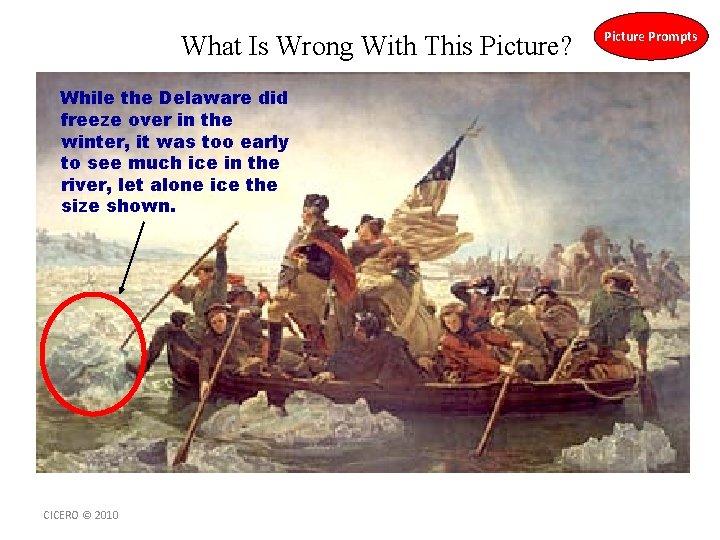
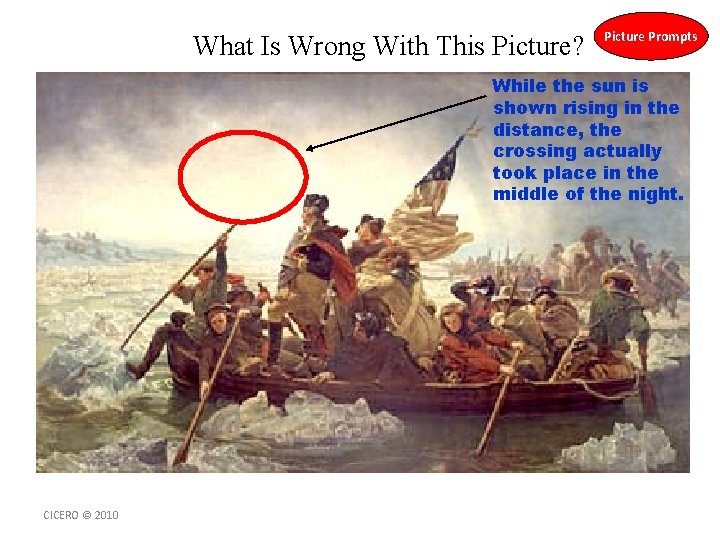
What Is Wrong With This Picture? Picture Prompts George Washington Crossing The Delaware, Emanuel Leutze 1851 CICERO © 2010
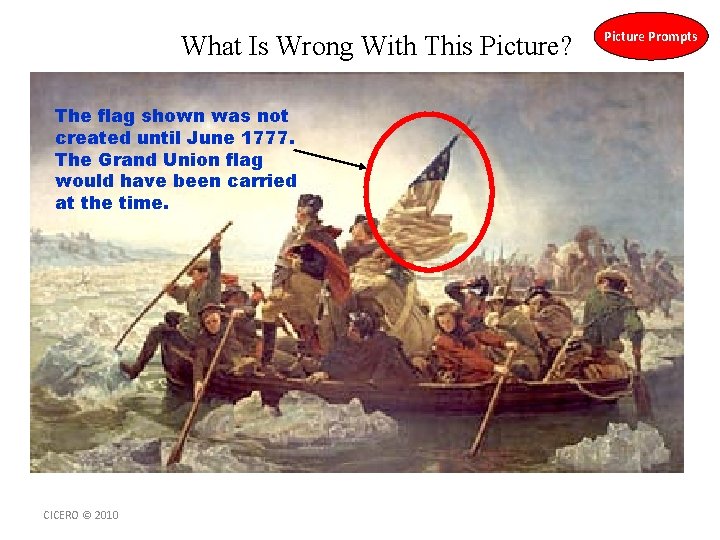
What Is Wrong With This Picture? The flag shown was not created until June 1777. The Grand Union flag would have been carried at the time. CICERO © 2010 Picture Prompts
What Is Wrong With This Picture? The boat was the wrong size and model. The actual boats used had higher sides and were much bigger. CICERO © 2010 Picture Prompts
What Is Wrong With This Picture? Washington is shown standing heroically in the front of the boat. He probably would have been sitting to keep from falling into the water. CICERO © 2010 Picture Prompts
What Is Wrong With This Picture? While the Delaware did freeze over in the winter, it was too early to see much ice in the river, let alone ice the size shown. CICERO © 2010 Picture Prompts
What Is Wrong With This Picture? Picture Prompts While the sun is shown rising in the distance, the crossing actually took place in the middle of the night. CICERO © 2010
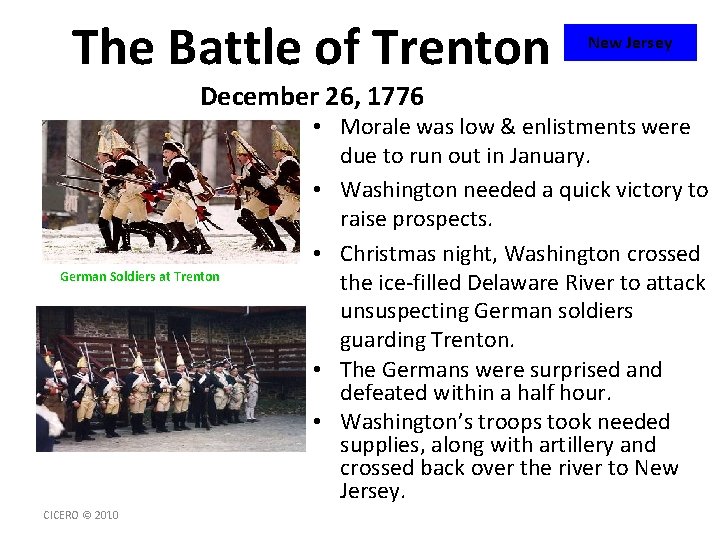
The Battle of Trenton December 26, 1776 German Soldiers at Trenton CICERO © 2010 Hessian Barracks at Trenton New Jersey • Morale was low & enlistments were due to run out in January. • Washington needed a quick victory to raise prospects. • Christmas night, Washington crossed the ice-filled Delaware River to attack unsuspecting German soldiers guarding Trenton. • The Germans were surprised and defeated within a half hour. • Washington’s troops took needed supplies, along with artillery and crossed back over the river to New Jersey. Cicero © 2007
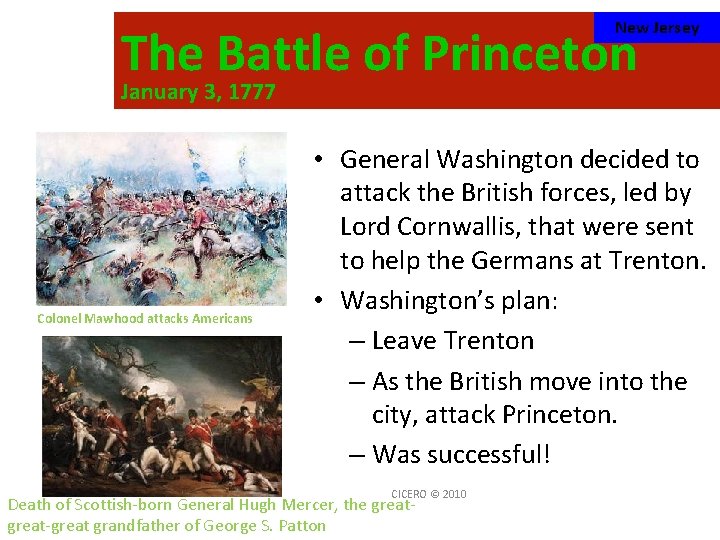
New Jersey The Battle of Princeton January 3, 1777 Colonel Mawhood attacks Americans • General Washington decided to attack the British forces, led by Lord Cornwallis, that were sent to help the Germans at Trenton. • Washington’s plan: – Leave Trenton – As the British move into the city, attack Princeton. – Was successful! CICERO © 2010 Death of Scottish-born General Hugh Mercer, the great-great grandfather of George S. Patton Cicero © 2007
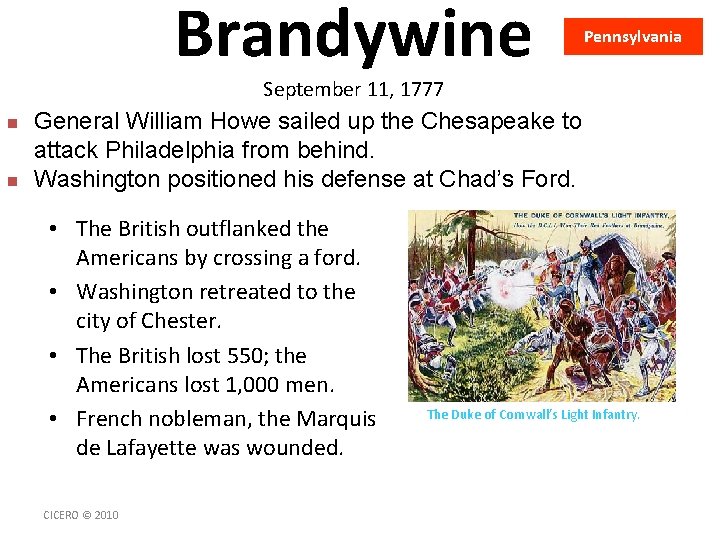
Brandywine Pennsylvania September 11, 1777 n n General William Howe sailed up the Chesapeake to attack Philadelphia from behind. Washington positioned his defense at Chad’s Ford. • The British outflanked the Americans by crossing a ford. • Washington retreated to the city of Chester. • The British lost 550; the Americans lost 1, 000 men. • French nobleman, the Marquis de Lafayette was wounded. CICERO © 2010 Cicero © 2007 The Duke of Cornwall’s Light Infantry.
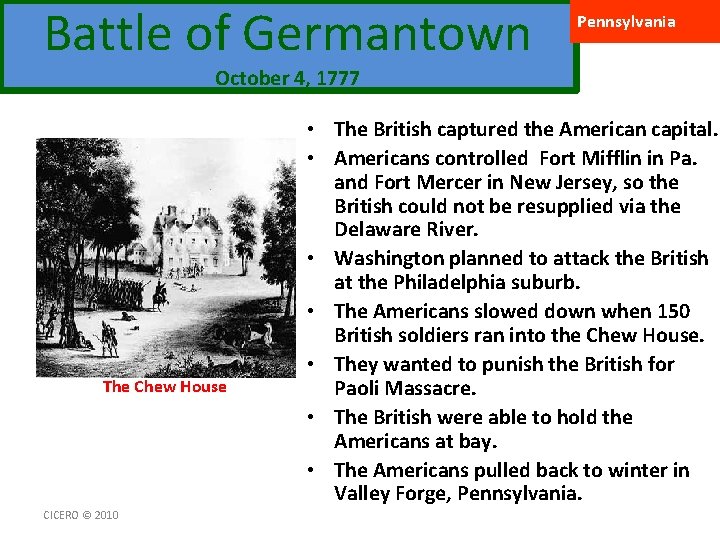
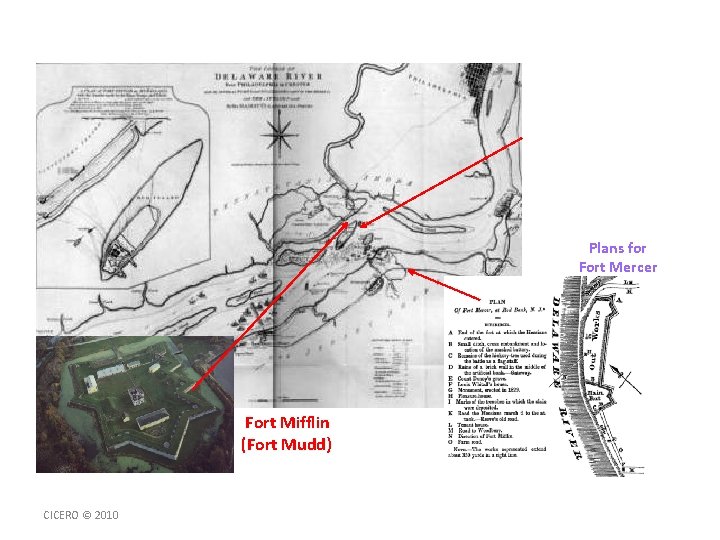
Battle of Germantown Pennsylvania October 4, 1777 The Chew House CICERO © 2010 • The British captured the American capital. • Americans controlled Fort Mifflin in Pa. and Fort Mercer in New Jersey, so the British could not be resupplied via the Delaware River. • Washington planned to attack the British at the Philadelphia suburb. • The Americans slowed down when 150 British soldiers ran into the Chew House. • They wanted to punish the British for Paoli Massacre. • The British were able to hold the Americans at bay. • The Americans pulled back to winter in Valley Forge, Pennsylvania. Cicero © 2007
Plans for Fort Mercer Fort Mifflin (Fort Mudd) CICERO © 2010
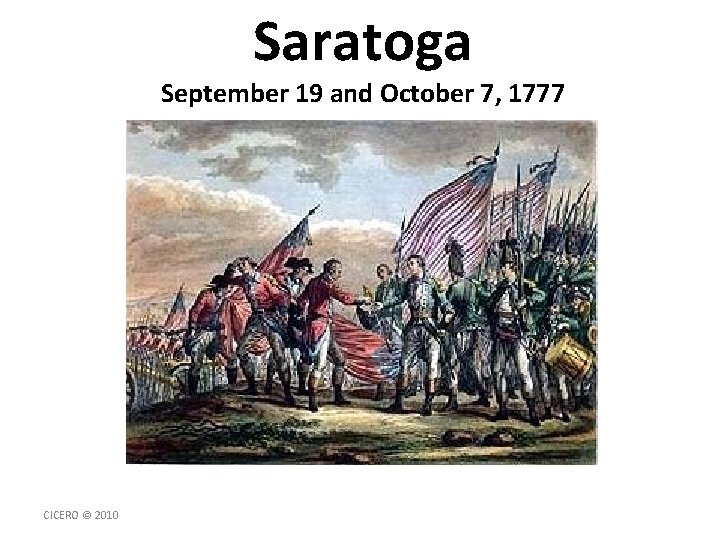
Saratoga September 19 and October 7, 1777 CICERO © 2010
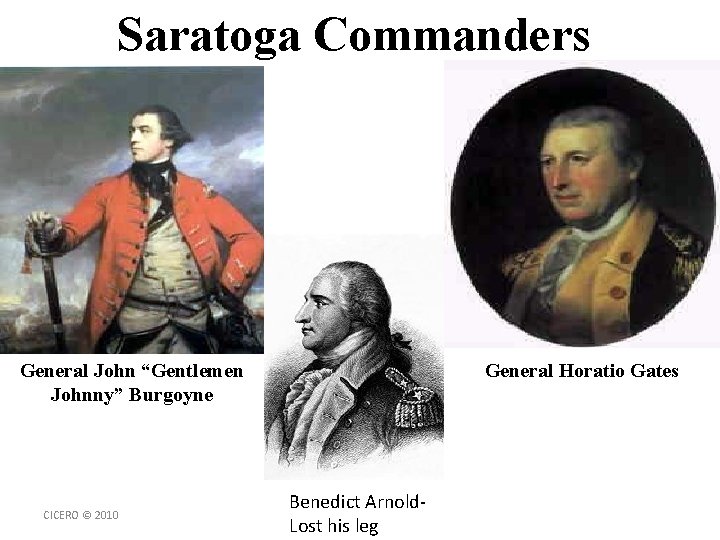
Saratoga Commanders General John “Gentlemen Johnny” Burgoyne CICERO © 2010 General Horatio Gates Benedict Arnold. Lost his leg
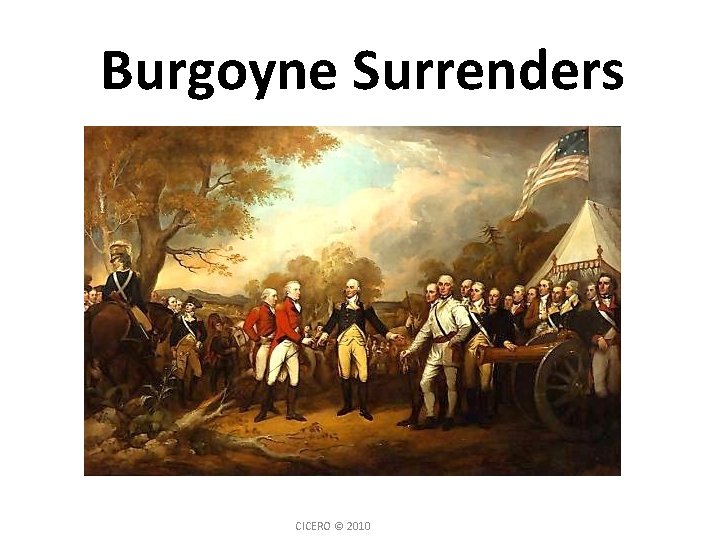
Burgoyne Surrenders CICERO © 2010
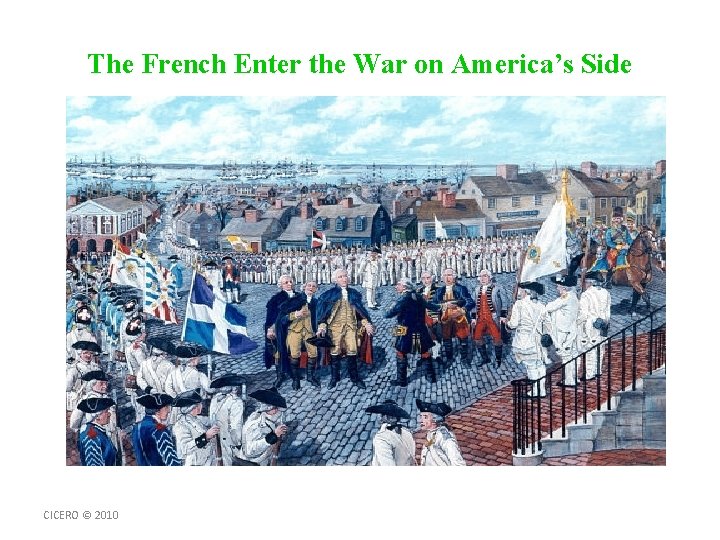
The French Enter the War on America’s Side CICERO © 2010
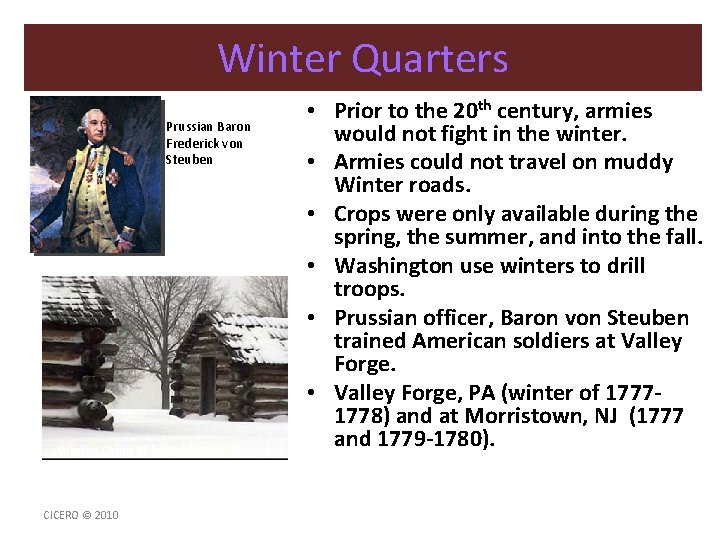
Winter Quarters Prussian Baron Frederick von Steuben Winter Cabin at Morristown • Prior to the 20 th century, armies would not fight in the winter. • Armies could not travel on muddy Winter roads. • Crops were only available during the spring, the summer, and into the fall. • Washington use winters to drill troops. • Prussian officer, Baron von Steuben trained American soldiers at Valley Forge. • Valley Forge, PA (winter of 17771778) and at Morristown, NJ (1777 and 1779 -1780). Twelve men to a cabin CICERO © 2010 Cicero © 2007
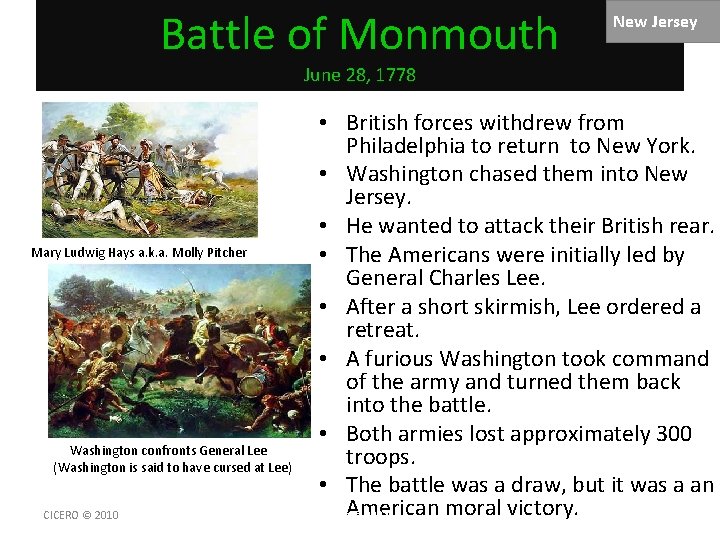
Battle of Monmouth New Jersey June 28, 1778 Mary Ludwig Hays a. k. a. Molly Pitcher Washington confronts General Lee (Washington is said to have cursed at Lee) CICERO © 2010 • British forces withdrew from Philadelphia to return to New York. • Washington chased them into New Jersey. • He wanted to attack their British rear. • The Americans were initially led by General Charles Lee. • After a short skirmish, Lee ordered a retreat. • A furious Washington took command of the army and turned them back into the battle. • Both armies lost approximately 300 troops. • The battle was a draw, but it was a an moral victory. Cicero. American © 2007
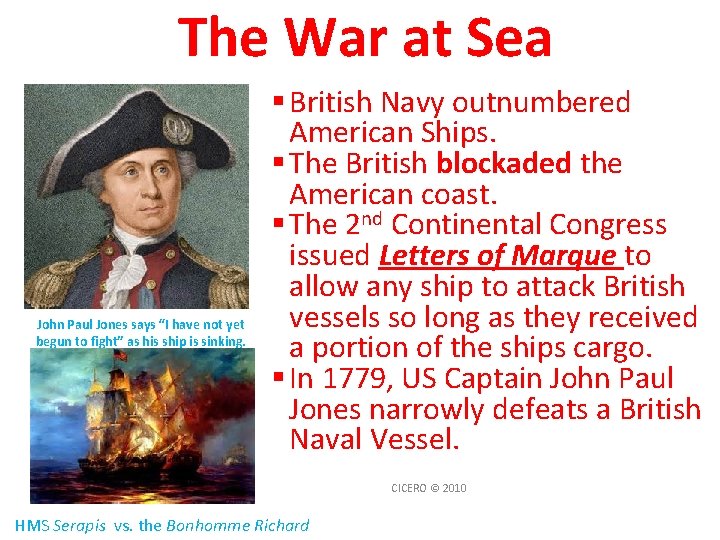
The War at Sea John Paul Jones says “I have not yet begun to fight” as his ship is sinking. § British Navy outnumbered American Ships. § The British blockaded the American coast. § The 2 nd Continental Congress issued Letters of Marque to allow any ship to attack British vessels so long as they received a portion of the ships cargo. § In 1779, US Captain John Paul Jones narrowly defeats a British Naval Vessel. CICERO © 2010 HMS Serapis vs. the Bonhomme Richard
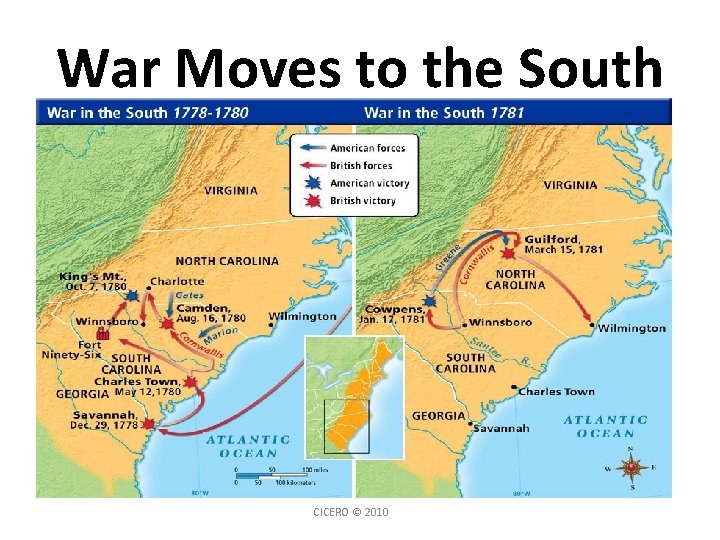
War Moves to the South CICERO © 2010
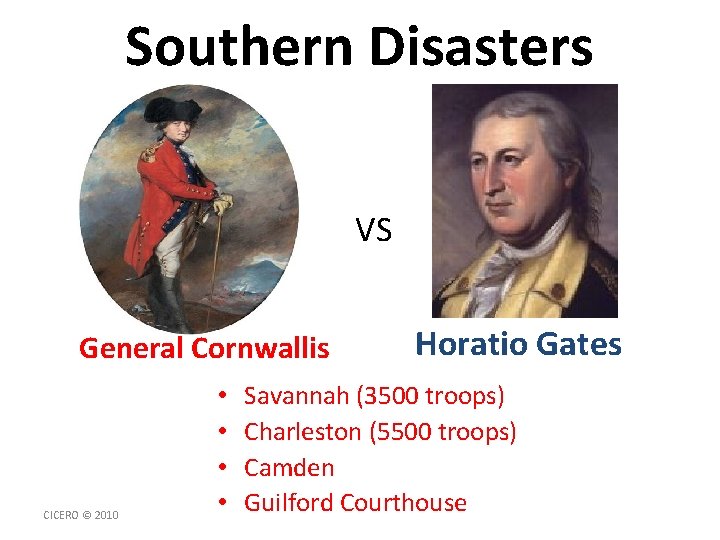
Southern Disasters VS General Cornwallis CICERO © 2010 • • Horatio Gates Savannah (3500 troops) Charleston (5500 troops) Camden Guilford Courthouse
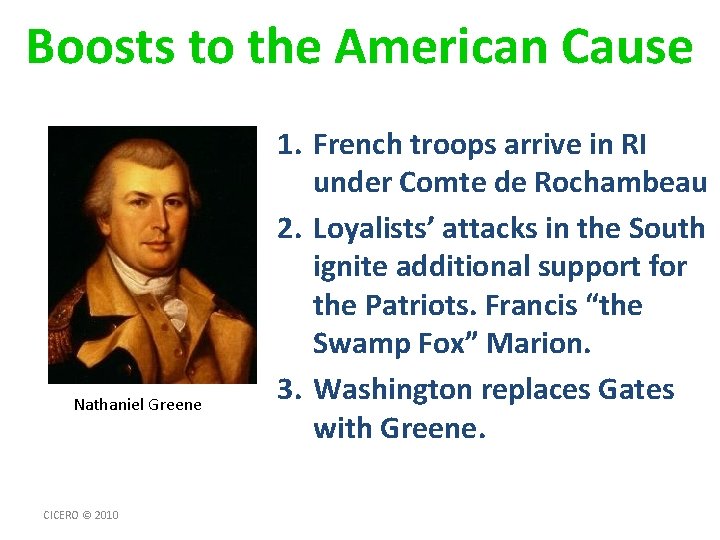
Boosts to the American Cause Nathaniel Greene CICERO © 2010 1. French troops arrive in RI under Comte de Rochambeau 2. Loyalists’ attacks in the South ignite additional support for the Patriots. Francis “the Swamp Fox” Marion. 3. Washington replaces Gates with Greene.
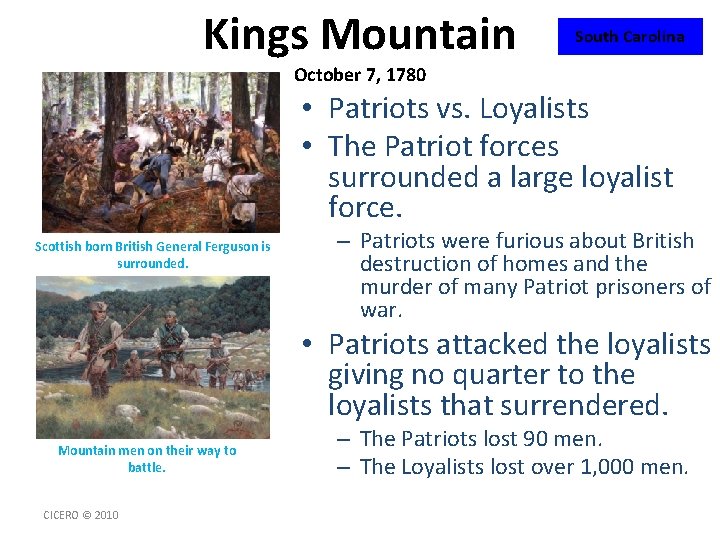
Kings Mountain South Carolina October 7, 1780 • Patriots vs. Loyalists • The Patriot forces surrounded a large loyalist force. Scottish born British General Ferguson is surrounded. – Patriots were furious about British destruction of homes and the murder of many Patriot prisoners of war. • Patriots attacked the loyalists giving no quarter to the loyalists that surrendered. Mountain men on their way to battle. CICERO © 2010 – The Patriots lost 90 men. – The Loyalists lost over 1, 000 men.
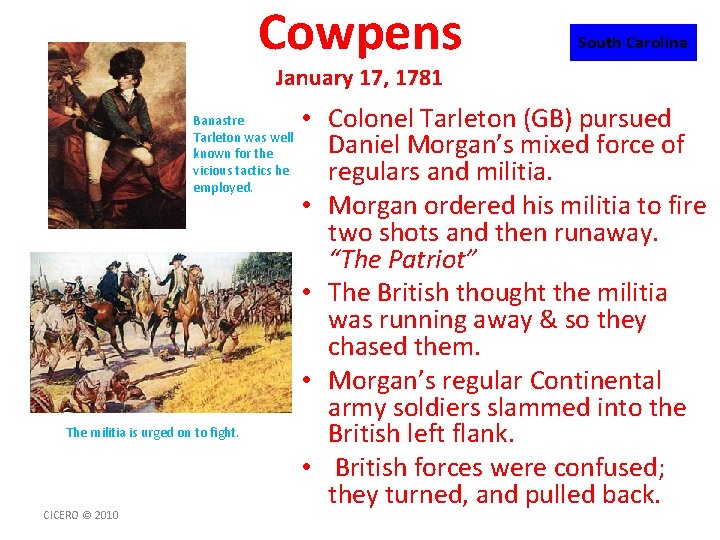
Cowpens South Carolina January 17, 1781 Banastre Tarleton was well known for the vicious tactics he employed. The militia is urged on to fight. CICERO © 2010 • Colonel Tarleton (GB) pursued Daniel Morgan’s mixed force of regulars and militia. • Morgan ordered his militia to fire two shots and then runaway. “The Patriot” • The British thought the militia was running away & so they chased them. • Morgan’s regular Continental army soldiers slammed into the British left flank. • British forces were confused; they turned, and pulled back.
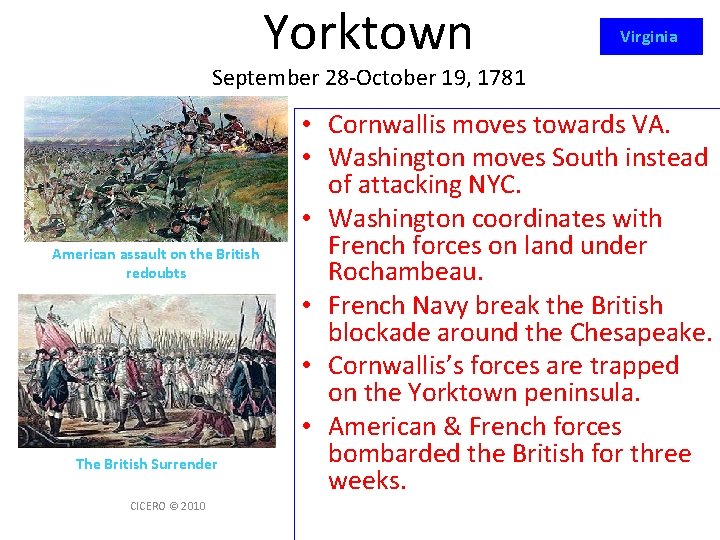
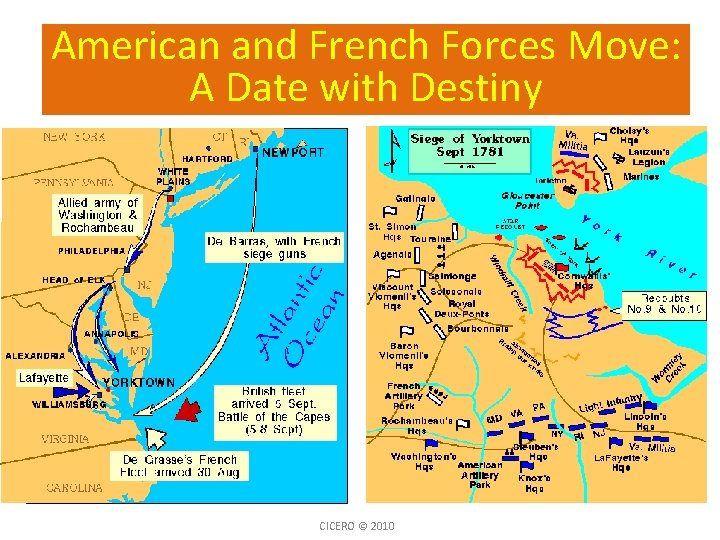
Yorktown Virginia September 28 -October 19, 1781 American assault on the British redoubts The British Surrender CICERO © 2010 • Cornwallis moves towards VA. • Washington moves South instead of attacking NYC. • Washington coordinates with French forces on land under Rochambeau. • French Navy break the British blockade around the Chesapeake. • Cornwallis’s forces are trapped on the Yorktown peninsula. • American & French forces bombarded the British for three weeks.
American and French Forces Move: A Date with Destiny CICERO © 2010
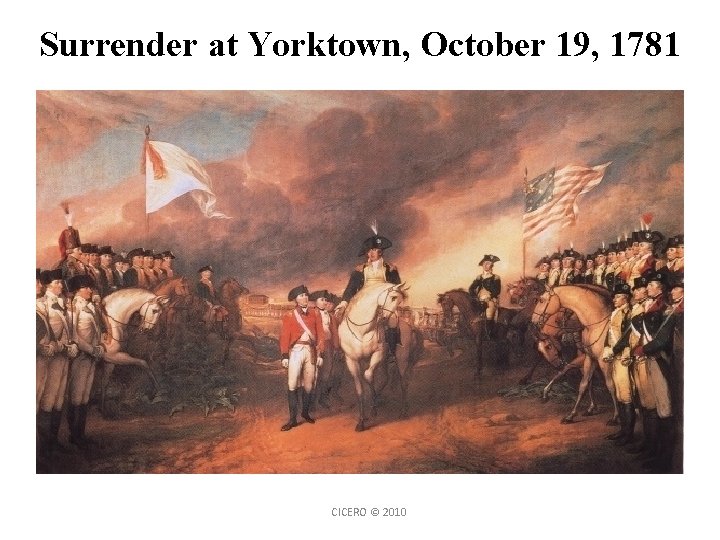
Surrender at Yorktown, October 19, 1781 CICERO © 2010
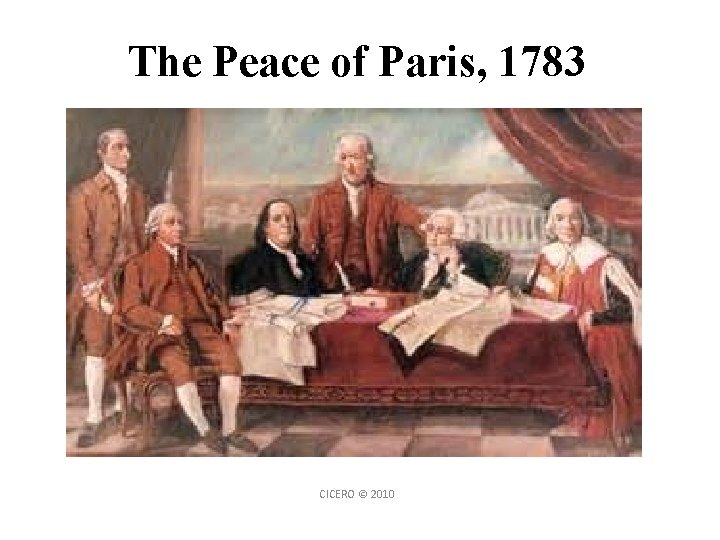
The Peace of Paris, 1783 CICERO © 2010
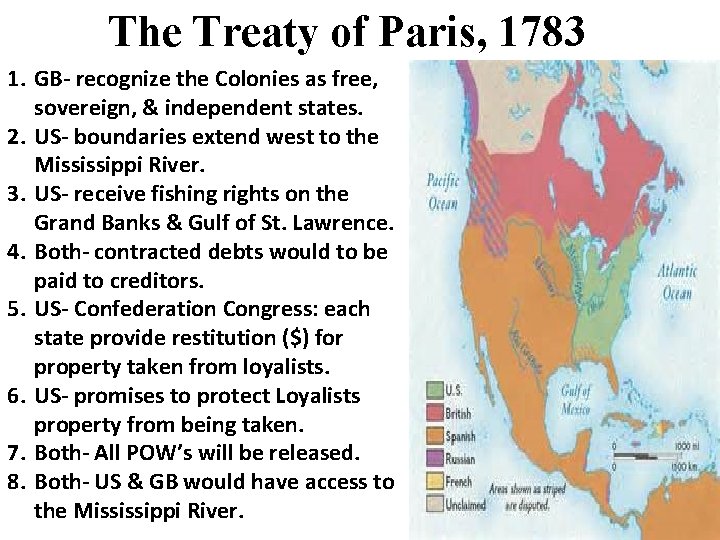
The Treaty of Paris, 1783 1. GB- recognize the Colonies as free, sovereign, & independent states. 2. US- boundaries extend west to the Mississippi River. 3. US- receive fishing rights on the Grand Banks & Gulf of St. Lawrence. 4. Both- contracted debts would to be paid to creditors. 5. US- Confederation Congress: each state provide restitution ($) for property taken from loyalists. 6. US- promises to protect Loyalists property from being taken. 7. Both- All POW’s will be released. 8. Both- US & GB would have access to the Mississippi River.